
Wyoming
Wyoming Scam and Fraud Laws: Where to Report, Your Right to Sue (2026)
Independently fact-checked against primary sources (last audited October 3, 2026). · 18 primary sources cited on this page. How we verify our legal content
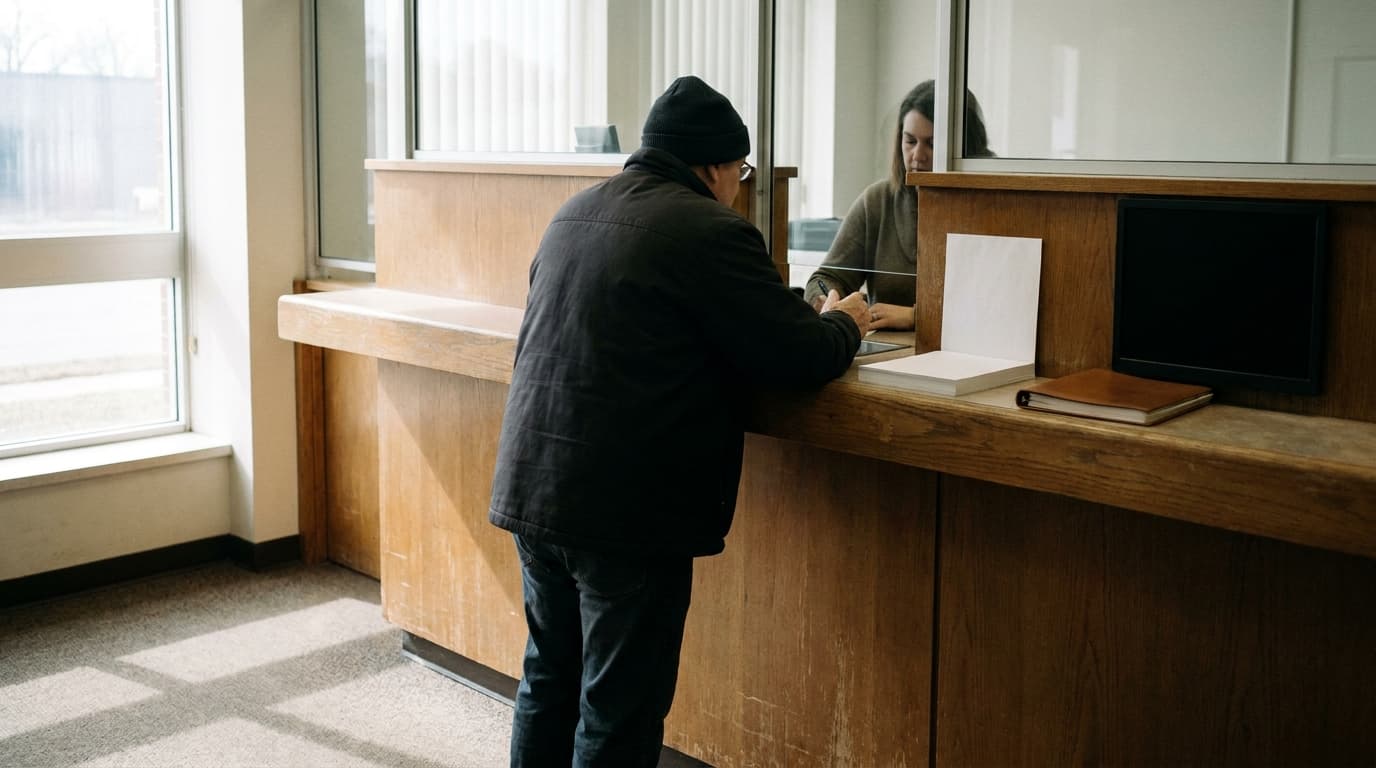
Wyoming's consumer protection law gives a scam victim only a limited right to sue. Under the Wyoming Consumer Protection Act, a person who relied on a business's deceptive practice in a consumer transaction can recover the damages they "actually suffered as a consumer." The act adds nothing to that for most individual cases: no minimum award, no multiplier and no attorney's fee clause, except where an older person or a person with disabilities was victimized (40-12-111). Before suing, you must send the business written notice and give it 15 days to offer to make things right.
Two other Wyoming rules matter more for many families. Exploiting a "vulnerable adult" is a crime that reaches any person, including a stranger, and the exploited adult can sue for actual damages, punitive damages and attorney's fees. And since March 6, 2026, anyone operating a crypto ATM in Wyoming must hold a money transmitter license or a state bank charter, although the new law does not include the daily limits or waiting periods that news coverage described.
Information last verified on October 2, 2026. This article has not been reviewed by a licensed lawyer.
Jurisdiction scope: This guide covers Wyoming state law: the Wyoming Consumer Protection Act (Wyoming Statutes 40-12-101 to 40-12-114 and its telephone solicitation article), Wyoming complaint offices, Wyoming protections for vulnerable adults, the 2026 virtual currency kiosk law, and Wyoming court deadlines for suing. Federal refund and reporting rights are summarized briefly and covered in depth on our national guides. Out of scope: criminal defense, and the law of other states (if the scammer or business is elsewhere, that state's law may also matter).
First steps if you were scammed in Wyoming
Contact the bank, card issuer, payment app, wire company or crypto exchange that moved your money right away; that company is usually the one that can stop or reverse a payment. Your federal rights depend on how you paid. Our guide on how to get money back after a scam walks through each payment method, and the Zelle and payment app guide covers app transfers.
Then report it. Most scams go to the FTC at ReportFraud.ftc.gov and online crime to the FBI's IC3; our where to report a scam guide lists every federal channel. The Wyoming offices below are in addition to those, not instead of them. For an overview of scam types and your rights, start at our scams and fraud hub.
Where to report a scam in Wyoming
| What happened | Wyoming office | What it does with your report |
|---|---|---|
| A business misled you, billed you for something you did not authorize, or used aggressive door-to-door tactics | Wyoming Attorney General, Consumer Protection and Antitrust Unit (online form or printable form), (307) 777-6397 or (307) 777-8962, ag.consumer@wyo.gov | Reviews properly filed complaints and responds in writing. It may forward a complaint to the business and ask for a written response. It cannot act as your lawyer. |
| An investment, securities or investment-adviser fraud | Wyoming Secretary of State, Compliance Division (Investing), using its complaint form | Has authority to investigate violations of Wyoming's Uniform Securities Act. The form is mailed or emailed to the Compliance Division with supporting documents. |
| A problem with a state-chartered bank or a business that lends to consumers | Wyoming Division of Banking, (307) 777-7797, wyomingbankingdivision@wyo.gov | Investigates written complaints involving state-chartered institutions and consumer lenders, generally responding within three weeks. It says it is not empowered to intervene in private disputes or to represent individuals seeking personal remedies not involving state banking or consumer credit law. |
| An older or disabled adult is being financially exploited | Wyoming Department of Family Services, through your local DFS office, or law enforcement; call 911 in an emergency | Receives reports of abuse, neglect and exploitation of vulnerable adults. |
What the Attorney General will and will not take. The complaint page lists examples it can examine, including "Misleading advertising," "Deceptive or unauthorized billing," "Overly aggressive door-to-door sales tactics" and "Unfair trade practices." It will not examine business-to-business deals, Lemon Law enforcement, "Private contractual disputes" or landlord and tenant matters. The unit describes its complaints as arising from a purchase made for personal, family or household purposes; its page does not say how it handles an impostor or romance scam by someone who cannot be located.
Be realistic about what a complaint does. The office says: "The Attorney General represents the State of Wyoming and cannot represent you or act as your private attorney." Its stated purpose for complaints is to "identify and devote limited resources to the most serious matters involving a pattern of unfair or deceptive trade practices inflicting widespread injury." It asks you to try to resolve the problem with the business first, handles everything in writing, returns incomplete forms unprocessed, and warns that your complaint "may be subject to disclosure under the Wyoming Public Records Act," so leave off Social Security and card numbers.
The Division of Banking also licenses money transmitters, which matters for crypto ATMs (see below). For a bank that is federally chartered rather than state-chartered, its page points you to the federal regulators instead.
Wyoming's consumer protection law: can you sue?
Sometimes, against a business you can identify, and the rules are strict. The private right of action is Wyoming Statute 40-12-108(a):
"A person relying upon an uncured unlawful deceptive trade practice may bring an action under this act for the damages he has actually suffered as a consumer as a result of such unlawful deceptive trade practice."
Three conditions are built into that sentence. You must have relied on the practice. The practice must be "uncured," which depends on the notice process below. And you recover only the damages you actually suffered as a consumer.
Who and what the act covers
The act reaches a person who, "in the course of his business and in connection with a consumer transaction," knowingly does one of the practices listed in section 40-12-105(a). The list includes claiming "a sponsorship, approval or affiliation he does not have" and the catch-all, engaging "in unfair or deceptive acts or practices." A "consumer transaction" means "the advertising, offering for sale, sale or distribution of any merchandise to an individual for purposes that are primarily personal, family or household," and merchandise includes services and almost any property.
That framing fits a dishonest seller, contractor or fake online store. It is a much less certain fit for an impostor who sold you nothing, such as a fake bank officer or a romance scammer, and we did not find a Wyoming court decision deciding the question. A Wyoming lawyer can tell you whether your facts fit.
The act does not displace other claims. Section 40-12-114 says it "shall not prohibit actions under other statutory or common-law provisions" against similar conduct, so a common-law fraud claim (below) remains available.
Notice first, and a chance for the business to cure
Section 40-12-109 bars a private suit unless you first give the business written notice "(a) within one (1) year after the initial discovery of the unlawful deceptive trade practice, (b) within two (2) years following such consumer transaction, whichever occurs first." The notice "shall state fully the nature of the alleged unlawful deceptive trade practice and the actual damage suffered therefrom."
The business then has a chance to cure. Under section 40-12-102(a)(viii), a cure is a written offer to adjust the transaction to meet your reasonable expectations, or a written offer to rescind it, and performing that offer if you accept. The practice becomes "uncured," and you can sue, if "No offer to cure has been made to such consumer within fifteen (15) days after such notice," or if the practice "has not been cured as to such consumer within a reasonable time after his acceptance of the offer to cure."
Then a second clock runs: the suit must be "initiated within one (1) year after the furnishing of notice." Those deadlines are much shorter than the four years for common-law fraud, so send notice early.
What you can recover
For an individual, section 40-12-108(a) allows actual damages and nothing else is added by the act: there is no minimum award, no multiplier and no individual attorney's fee clause. Attorney's fees for consumers appear in two places only:
- Class actions. Under section 40-12-108(b), if the court finds actual damages in a class action, it "shall award reasonable attorney's fees to the plaintiffs," measured by the time the lawyer reasonably spent, not the size of the judgment.
- Older persons and persons with disabilities. Section 40-12-111(b) says a person who willfully uses a prohibited practice that victimizes or attempts to victimize "an older person" (someone "over sixty (60) years of age") or a person with disabilities, knowing or having reason to know it was unfair or deceptive, "shall make restitution or reimbursement to the older person or person with disabilities including reasonable attorney fees and costs." The section does not say in so many words whether the older person collects that through their own lawsuit or through the Attorney General's case; ask a lawyer before relying on it.
Penalties go to the state, not to you. The same section adds a civil penalty of up to $15,000 per violation "recoverable by the office of the attorney general," and section 40-12-113 allows a penalty of up to $10,000 per violation recovered by the enforcing authority. Those are enforcement penalties paid to the state, not money a victim receives.
The honest limit
A Consumer Protection Act case needs a business you can identify, notify, serve and collect from. That can work against a Wyoming seller or contractor with a real address. It usually does not work against an anonymous scammer who called from a spoofed number or vanished with crypto, and a judgment does not help if nobody can be found to pay it. Our guide on when a lawyer helps after a scam covers how to tell the difference.
Protections for older adults in Wyoming
Wyoming's elder protections turn on the term "vulnerable adult," not on an age. Section 35-20-102(a)(xviii) defines it as "any person eighteen (18) years of age or older who is unable to manage and take care of himself or his money, assets or property without assistance as a result of advanced age or physical or mental disability." An older person who manages their own money may fall outside it.

Exploitation is a crime, by anyone. Under section 6-2-507(d), "Exploitation of a vulnerable adult is a felony punishable by not more than ten (10) years in prison, a fine of not more than ten thousand dollars ($10,000.00), or both," plus registration on the state's central registry. Subsection (b) separately lists reckless exploitation as a misdemeanor punishable by up to one year in jail and a $1,000 fine. "Exploitation" covers "the reckless or intentional act taken by any person" to "Obtain control through deception, harassment, intimidation or undue influence" over a vulnerable adult's money or property. Because it says "any person," a stranger who scams a vulnerable adult is covered, not only a caregiver or family member.
The victim can sue. Since July 1, 2024, section 35-20-117 says: "A vulnerable adult shall have a cause of action against any person who has exploited the vulnerable adult. The vulnerable adult may recover actual damages, punitive damages and reasonable attorney's fees for the exploitation of the vulnerable adult." The suit can also be brought by the adult's guardian or conservator, agent, spouse, parent or descendant, the personal representative of a deceased adult's estate, a presumptive heir or beneficiary, a caregiver, and others the statute lists. As with any lawsuit, it only produces money from someone who can be found.
Everyone must report. Section 35-20-103(a) requires "Any person or agency who knows or has reasonable cause to believe that a vulnerable adult is being or has been abused, neglected, exploited, intimidated or abandoned" to report it "immediately to a law enforcement agency or the department." The Department of Family Services tells callers to contact the local DFS office, or 911 in an emergency. People who report in good faith are immune from liability.
Banks must assess and report, and can hold the money. Under section 13-1-702(b), a financial institution that suspects financial exploitation of a vulnerable adult must assess it and, if warranted, report to the Department of Family Services no later than when it finishes the assessment or five business days after it has cause to believe, whichever is earlier. For this purpose "financial institution" includes broker-dealers and investment advisers. Section 13-1-704 then provides:
- The institution may hold a transaction involving the vulnerable adult's account if it has reported and "Has cause to believe the transaction is related to the suspected financial exploitation alleged in the report."
- It shall hold a transaction "if the hold is requested by the department or a law enforcement agency."
- A hold "shall not exceed five (5) business days," but can be extended for up to 30 more business days at the request of a state or federal agency or law enforcement agency investigating the case, and the institution may petition a court for a longer hold.
If you are worried about a parent's account, tell the bank directly that you suspect a scam, and report to DFS or the police: a request from either one turns the bank's option to hold into a duty. For fraud against anyone 60 or older, the federal DOJ National Elder Fraud Hotline (833-372-8311) can also help you report. Our elder fraud guide covers the federal side.
Wyoming scam laws on the books
Crypto ATMs (virtual currency kiosks)

House Bill 75 of the 2026 budget session (Enrolled Act No. 19, Chapter 60) was signed on March 6, 2026 and took effect immediately. It is codified at Wyoming Statutes 40-32-101 to 40-32-103. Its core rule, section 40-32-102(a): "No person shall own, operate or manage a virtual currency kiosk in this state unless the person: (i) Has been issued a license under the Wyoming Money Transmitters Act ... or (ii) Is a financial institution and has been granted a charter under title 13 of the Wyoming statutes."
A knowing violation is a felony "punishable by imprisonment for not less than three (3) years, a fine of not less than ten thousand dollars ($10,000.00), or both." The banking commissioner must adopt rules regulating kiosk operations. Existing operators had to comply from the effective date.
What the law does not do. The enacted text contains no daily or per-transaction limits, no waiting period for new customers, no refund right, no scam warning or receipt requirement, and no right for a victim to sue. Some news coverage during the session described waiting periods and limits on new users; amendments along those lines were proposed in the House, but they are not in the law that was signed. Any penalty under the kiosk law comes through a state prosecution, not a payment to you.
An open question. The kiosk law requires a license "under the Wyoming Money Transmitters Act," but that act's exemption list (section 40-22-104(a)(vi)) excludes buying, selling or transmitting virtual currency. We could not confirm how operators are being licensed in practice or whether the commissioner has adopted kiosk rules yet; the Division of Banking pages we checked did not mention kiosks. If a crypto ATM was involved in your loss, the Division of Banking licenses money transmitters and publishes a licensee list (start at its money transmitter page), and our crypto and investment scams guide explains what usually can and cannot be recovered.
Telephone sales calls
The Consumer Protection Act's telephone solicitation article (sections 40-12-301 to 40-12-305) requires a telemarketer making an unsolicited sales call to disclose at the start the caller's name, the seller's identity, phone number and address, that the purpose is to sell, and what is being sold. It bars blocking caller ID, calls before 8 a.m. or after 8 p.m. local time, and most automated or recorded sales calls.
It also bars sales calls to numbers on the "national do-not-call list" more than 60 days after they are listed, but Wyoming defines that list as the one kept by the Direct Marketing Association's Telephone Preference Service. The Attorney General's page says the FTC's National Do Not Call List "is separate from Wyoming's Do-Not-Call List." These rules are aimed at sales calls for consumer goods or services, not at callers impersonating an agency or a bank. In civil litigation over a violation of the article, section 40-12-304(c) gives the prevailing party, whichever side that is, its reasonable attorney's fees and costs.
Door-to-door and telephone sales: three days to cancel
Section 40-12-104 gives a buyer the right to cancel a "home solicitation sale" (a cash sale or lease of merchandise, other than farm equipment, over $25, solicited in person or by telephone at the buyer's home) "until midnight of the third business day after the day on which the buyer signs an agreement or offer to purchase." Cancel in writing to the address in the agreement; a mailed notice counts when it is deposited in the mail. The three days do not start until you receive a copy of the contract, the cancellation address and a written statement of your right to cancel.
The seller must return your payments within ten days and may keep a cancellation fee of 5% of the cash price, capped at your down payment. There are exceptions, including emergency repairs you asked to start right away and telephone sales where the seller offers at least a ten-day full refund.
Impersonation online and caller ID spoofing
Section 6-3-902 makes it a misdemeanor to knowingly and intentionally impersonate another person or their digital identity online or "by other electronic means, including, but not limited to spoofing" (falsifying the name or number on caller ID) to cause harm, harass, or deceptively make contact. A person "who suffers damage or loss" from a violation may sue the violator "for compensatory damages and injunctive relief or other equitable relief." For how phishing, smishing and vishing work, see our phishing guide.
Suing a scammer or a business in Wyoming
Small claims. Wyoming circuit courts use small claims procedure when "the amount claimed, exclusive of costs, does not exceed six thousand dollars ($6,000.00)" (section 1-21-201). Your affidavit must state that "demand has been made and payment refused," so ask for your money in writing first. You can appear without a lawyer; if the other side's lawyer appears, you are entitled to a continuance.
Deadlines. A fraud lawsuit must be brought "Within four (4) years" (section 1-3-105(a)(iv)(D)), and under section 1-3-106 a fraud claim "is not deemed to have accrued until the discovery of the fraud." A Consumer Protection Act claim has its own much shorter notice deadlines (above). Our Wyoming statute of limitations guide covers other civil deadlines.
Theft by deception is a crime. Wyoming's theft statute (section 6-3-402) covers obtaining another person's property "by deception" with intent to deprive them of it. It is a felony punishable by up to 10 years when the value is $1,000 or more, and thefts under a common scheme can be added together. Report it to local police; a prosecution is the state's case, not a lawsuit for your money.
Who you can actually reach. Lawsuits work against people and businesses with a name, an address and assets. A scammer who hid behind a fake identity, a spoofed caller ID or an overseas account is usually not reachable through a Wyoming court. In those cases the payment company, a fast report to law enforcement, and protecting your identity are where your effort pays off; if a scammer has your personal details, see what to do when a scammer has your information.
Related guides
- Scams and fraud: your rights and where to start
- How to get money back after a scam
- Where to report a scam
- Elder fraud
- Crypto and investment scams
- When a lawyer helps after a scam
- Wyoming identity theft laws
- Wyoming debt collection laws
- Wyoming statute of limitations
Last updated: October 2, 2026.
This article is general legal information, not legal advice. For your specific situation, contact your payment company, the Wyoming office named above, or a lawyer licensed in Wyoming.
Frequently Asked Questions
Can I sue a scammer under the Wyoming Consumer Protection Act?
Only in limited cases. Section 40-12-108(a) lets a person who relied on an uncured deceptive practice, done knowingly in the course of a business and in connection with a consumer transaction, sue for damages actually suffered as a consumer (actual damages only, with no attorney's fee award for an individual case unless an older person or a person with disabilities was victimized, section 40-12-111), after written notice under 40-12-109. An anonymous or overseas scammer who sold you nothing is a poor fit and is usually not reachable through a Wyoming court.
Does Wyoming award triple damages for consumer fraud?
No. The Wyoming Consumer Protection Act gives an individual plaintiff actual damages only, with no multiplier, no statutory minimum and no individual attorney's fee clause (section 40-12-108). Fees are awarded in class actions, and section 40-12-111 adds restitution with fees where an older person or person with disabilities was victimized.
Do I have to send a demand letter before suing under the Wyoming Consumer Protection Act?
Yes. Section 40-12-109 requires written notice to the business within one year of discovering the practice or two years after the transaction, whichever comes first, stating the practice and your actual damage. You can sue only if the business makes no written offer to cure within 15 days, or you accept its offer and it does not cure within a reasonable time, and you must file within one year after the notice.
Will the Wyoming Attorney General get my money back?
Do not expect it. The office says it cannot represent you or act as your private attorney; it reviews written complaints, may forward them to the business, and focuses on patterns of deceptive practices causing widespread injury.
Who do I call if an elderly person in Wyoming is being scammed?
Report it to your local Department of Family Services office or to law enforcement, and call 911 in an emergency. Wyoming law (section 35-20-103) requires anyone who suspects exploitation of a vulnerable adult to report it immediately. The DOJ Elder Fraud Hotline (833-372-8311) also helps with fraud against anyone 60 or older.
Can a Wyoming bank freeze a transaction if it suspects elder fraud?
Yes. Under section 13-1-704, after reporting suspected exploitation of a vulnerable adult, a financial institution may hold a related transaction, and must if DFS or law enforcement asks. The hold lasts up to 5 business days and can be extended up to 30 more business days at an agency's request.
Can an exploited older adult sue the scammer in Wyoming?
If the person is a vulnerable adult, meaning unable to manage their money without help because of advanced age or disability, section 35-20-117 lets them, or a listed relative, guardian or representative, sue anyone who exploited them for actual damages, punitive damages and reasonable attorney's fees.
Does Wyoming limit crypto ATM transactions?
No limits appear in the enacted law. The 2026 kiosk law (sections 40-32-101 to 40-32-103, effective March 6, 2026) requires operators to hold a money transmitter license or a bank charter, makes operating without one a felony and directs the banking commissioner to write rules. It has no waiting period, transaction cap or refund right.
What is the small claims limit in Wyoming?
Small claims procedure applies in circuit court when the amount claimed, exclusive of costs, does not exceed $6,000 (section 1-21-201). You must first demand payment, and your affidavit must say payment was refused.
How long do I have to sue for fraud in Wyoming?
Four years under section 1-3-105(a)(iv)(D), and under section 1-3-106 a fraud claim does not accrue until the fraud is discovered. Consumer Protection Act claims have shorter notice deadlines under section 40-12-109.
Updates
Independently fact-checked against the cited primary sources
The Law Behind This Article
This article rests on the statutory provisions below, held in our own legal record and retrieved from the official source. Tap a section to read the operative text.
Wyoming Statutes, Title 40 - Trade and Commerce - Chapter 12: Consumer Protection - Article 1: In General
§ 40-12-108Private remedies.In force
(a) A person relying upon an uncured unlawful deceptive trade practice may bring an action under this act for the damages he has actually suffered as a consumer as a result of such unlawful deceptive trade practice. (b) Any person who is entitled to bring an action under subsection (a) of this section on his own behalf against an alleged violator of this act for damages for an unlawful deceptive trade practice may bring a class action against such person on behalf of any class of persons of which he is a member and which has been damaged by such unlawful deceptive trade practice, subject to and pursuant to the Wyoming Rules of Civil Procedure governing class actions, except as herein expressly provided. If the court determines that actual damages have been suffered by reason of the unlawful deceptive trade practice, the court shall award reasonable attorney's fees to the plaintiffs in a class action under this subsection, provided that such fees shall be determined by the amount of time reasonably expended by the attorney for the plaintiffs and not by the amount of the judgment.
Official text (excerpt) · last checked 2026-07-30 · Read the full text in our law library · Verify at wyoleg.gov
§ 40-12-109Limitation of actions.In force
No action may be brought under this act, except under W.S. 40-12-106, unless the consumer bringing the action gives within the following time limits notice in writing to the alleged violator of the act, (a) within one (1) year after the initial discovery of the unlawful deceptive trade practice, (b) within two (2) years following such consumer transaction, whichever occurs first, and unless the unlawful deceptive trade practice becomes an uncured unlawful deceptive trade practice as defined in this act. The notice required under this section shall state fully the nature of the alleged unlawful deceptive trade practice and the actual damage suffered therefrom. No action may be brought under this act, except under W.S. 40-12-106, unless said action is initiated within one (1) year after the furnishing of notice as required under this section.
Official text (excerpt) · last checked 2026-07-30 · Read the full text in our law library · Verify at wyoleg.gov
§ 40-12-102Definitions.In force
(a) As used in this act: (i) "Person" means a natural person, corporation, trust, partnership, incorporated or unincorporated association or any other legal entity; (ii) "Consumer transactions" means the advertising, offering for sale, sale or distribution of any merchandise to an individual for purposes that are primarily personal, family or household; (iii) "Documentary material" means the original or a copy of any book, record, report, memorandum, paper, communication, tabulation, map, chart, photograph, mechanical transcription, other tangible document or recording, reproductions of information stored magnetically, file layout, code conversion tables or computer programs to convert file to readable printout, wherever situated; (iv) "Examination" of documentary material includes the inspection, study or copying of any such material, and the taking of testimony under oath or acknowledgement with respect to any such documentary material or copy thereof; (v) "Advertisement" includes the attempt by publication, dissemination, solicitation or circulation, whether oral, visual, written or otherwise, and whether in person, by telephone or by any other means to induce directly or…
Official text (excerpt) · last checked 2026-07-30 · Read the full text in our law library · Verify at wyoleg.gov
§ 40-12-105Unlawful practices.In force
(a) A person engages in a deceptive trade practice unlawful under this act when, in the course of his business and in connection with a consumer transaction, he knowingly: (i) Represents that merchandise has a source, origin, sponsorship, approval, accessories or uses it does not have; (ii) Represents that he has a sponsorship, approval or affiliation he does not have; (iii) Represents that merchandise is of a particular standard, grade, style or model, if it is not; (iv) Represents that merchandise is available to the consumer for a reason that does not exist; (v) Represents that merchandise has been supplied in accordance with a previous representation, if it has not; except that this subsection does not apply to merchandise supplied to the recipient by mistake or merchandise of equal or greater value supplied as a reasonably equivalent substitute for unavailable merchandise previously ordered by the recipient; (vi) Represents that replacement or repair is needed, if it is not; (vii) Makes false or misleading statements of fact concerning the price of merchandise or the reason for, existence of, or amounts of a price reduction; (viii) Represents that a consumer…
Official text (excerpt) · last checked 2026-07-30 · Read the full text in our law library · Verify at wyoleg.gov
§ 40-12-111Violations involving older persons or persons with disabilities; civil penalty.In force
(a) As used in this section: (i) "Person with disabilities" means any person who has a mental or educational impairment which substantially limits one (1) or more major life activities; (ii) "Major life activities" means functions associated with the normal activities of independent daily living such as caring for one's self, performing manual tasks, walking, seeing, hearing, speaking, breathing, learning and working; (iii) "Mental or educational impairment" means: (A) Any mental or psychological disorder or specific learning disability; (B) Any educational deficiency which substantially affects a person's ability to read and comprehend the terms of any contractual agreement entered into. (iv) "Older person" means a person who is over sixty (60) years of age.
Official text (excerpt) · last checked 2026-07-30 · Read the full text in our law library · Verify at wyoleg.gov
Wyoming Statutes, Title 35 - Public Health and Safety - Chapter 20: Adult Protective Services
§ 35-20-117Civil cause of action for exploitation of vulnerable adults.In force
(a) A vulnerable adult shall have a cause of action against any person who has exploited the vulnerable adult. The vulnerable adult may recover actual damages, punitive damages and reasonable attorney's fees for the exploitation of the vulnerable adult. The action may be brought in any court of competent jurisdiction. The action may be brought by the vulnerable adult or any of the following: (i) The vulnerable adult's guardian, conservator or other fiduciary acting for the vulnerable adult; (ii) The personal representative of the estate of a deceased vulnerable adult; (iii) The vulnerable adult's agent as defined by W.S.
Official text (excerpt) · last checked 2026-07-30 · Read the full text in our law library · Verify at wyoleg.gov
§ 35-20-102Definitions.In force
(a) As used in this act: (i) "Abandonment" means leaving a vulnerable adult without financial support or the means or ability to obtain food, clothing, shelter or health care; (ii) "Abuse" means the intentional or reckless infliction, by the vulnerable adult's caregiver, person of trust or authority, professional, family member or other individual of: (A) Injury; (B) Unreasonable confinement which threatens the welfare and well being of a vulnerable adult; (C) Cruel punishment with resulting physical or emotional harm or pain to a vulnerable adult; (D) Photographing vulnerable adults in violation of W.S. 6-4-304(b); (E) Sexual abuse; (F) Intimidation; or (G) Exploitation.
Official text (excerpt) · last checked 2026-07-30 · Read the full text in our law library · Verify at wyoleg.gov
§ 35-20-103Reports of abuse, neglect, exploitation, intimidation or abandonment of vulnerable adult; reports maintained in central registry.In force
(a) Any person or agency who knows or has reasonable cause to believe that a vulnerable adult is being or has been abused, neglected, exploited, intimidated or abandoned or is committing self neglect shall report the information immediately to a law enforcement agency or the department. Anyone who in good faith makes a report pursuant to this section is immune from civil liability for making the report. (b) The report may be made orally or in writing. The report shall provide to law enforcement or the department the following, to the extent available: (i) The name, age and address of the vulnerable adult; (ii) The name and address of any person responsible for the vulnerable adult's care; (iii) The nature and extent of the vulnerable adult's condition; (iv) The basis of the reporter's knowledge; (v) The names and conditions of the other residents, if the vulnerable adult resides in a facility with other vulnerable adults; (vi) An evaluation of the persons responsible for the care of the residents, if the vulnerable adult resides in a facility with other vulnerable adults; (vii) The adequacy of the facility environment; (viii) Any evidence of previous injuries; (ix) Any…
Official text (excerpt) · last checked 2026-07-30 · Read the full text in our law library · Verify at wyoleg.gov
Wyoming Statutes, Title 6 - Crimes and Offenses - Chapter 2: Offenses Against the Person - Article 5: Assault and Battery
§ 6-2-507Abuse, neglect, abandonment, intimidation or exploitation of a vulnerable adult; penalties.In force
(a) Except under circumstances constituting a violation of W.S. 6-2-502, a person is guilty of abuse, neglect, abandonment or exploitation of a vulnerable adult if the person intentionally or recklessly abuses, neglects, abandons, intimidates or exploits a vulnerable adult. (b) Reckless abuse, neglect, abandonment, intimidation or exploitation of a vulnerable adult is a misdemeanor, punishable by not more than one (1) year in jail, a fine of one thousand dollars ($1,000.00), or both, and registration of the offender's name on the central registry. (c) Intentional abuse, neglect or abandonment of a vulnerable adult is a felony punishable by not more than ten (10) years in prison, a fine of not more than ten thousand dollars ($10,000.00), or both, and registration of the offender’s name on the central registry. (d) Exploitation of a vulnerable adult is a felony punishable by not more than ten (10) years in prison, a fine of not more than ten thousand dollars ($10,000.00), or both, and registration of the offender’s name on the central registry. (e) As used in this section: (i) "Abandonment" means as defined in W.S. 35-20-102(a)(i); (ii) "Abuse" means as defined in W.S.
Official text (excerpt) · last checked 2026-07-30 · Read the full text in our law library · Verify at wyoleg.gov
Wyoming Statutes, Title 13 - Banks, Banking and Finance - Chapter 1: General Provisions - Article 7: Protection of Vulnerable Adults
§ 13-1-702Reporting financial exploitation of vulnerable adults.In force
(a) If a qualified person has cause to believe that financial exploitation of a vulnerable adult has occurred, is occurring or has been attempted, the qualified person shall notify the financial institution of the suspected financial exploitation. (b) If a financial institution is notified of suspected financial exploitation under subsection (a) of this section or otherwise has cause to believe that financial exploitation of a vulnerable adult has occurred, is occurring or has been attempted, the financial institution shall assess the suspected financial exploitation and, if warranted, submit a report to the department containing the same information under W.S. 35-20-103(b). The financial institution shall submit the report required by this subsection not later than the earlier of: (i) The date the financial institution completes its assessment of the suspected financial exploitation; or (ii) Five (5) business days after the date the financial institution is notified of the suspected financial exploitation under subsection (a) of this section or otherwise has cause to believe that the financial exploitation of a vulnerable adult has occurred, is occurring or has been attempted.
Official text (excerpt) · last checked 2026-07-30 · Read the full text in our law library · Verify at wyoleg.gov
§ 13-1-704Temporary hold on transactions.In force
(a) Notwithstanding any other state law, a financial institution: (i) May place a hold on any transaction that involves an account of a vulnerable adult or that contains the vulnerable adult's assets or property if the financial institution: (A) Submits a report of suspected financial exploitation of the vulnerable adult to the department as required under this article; and (B) Has cause to believe the transaction is related to the suspected financial exploitation alleged in the report. (ii) Shall place a hold on any transaction involving an account of a vulnerable adult if the hold is requested by the department or a law enforcement agency. (b) Subject to subsection (c) of this section, a hold placed on any transaction under subsection (a) of this section shall not exceed five (5) business days after the date the hold is placed.
Official text (excerpt) · last checked 2026-07-30 · Read the full text in our law library · Verify at wyoleg.gov
Wyoming Statutes, Title 40 - Trade and Commerce - Chapter 32: Virtual Currency Kiosks
§ 40-32-102Virtual currency kiosks authorized; regulation; penalty.In force
(a) No person shall own, operate or manage a virtual currency kiosk in this state unless the person: (i) Has been issued a license under the Wyoming Money Transmitters Act, W.S. 40-22-101 through 40-22-129; or (ii) Is a financial institution and has been granted a charter under title 13 of the Wyoming statutes. (b) Any person who knowingly violates subsection (a) of this section is guilty of a felony punishable by imprisonment for not less than three (3) years, a fine of not less than ten thousand dollars ($10,000.00), or both. (c) The commissioner shall adopt rules regulating the operation of virtual currency kiosks by persons authorized under this section.
Official text (excerpt) · last checked 2026-07-30 · Read the full text in our law library · Verify at wyoleg.gov
Wyoming Statutes, Title 40 - Trade and Commerce - Chapter 12: Consumer Protection - Article 3: Telephone Solicitation
§ 40-12-302Telephone solicitations.In force
(a) Any telephone solicitor or merchant who makes an unsolicited telephonic sales call to a residential or mobile telephone number shall disclose at the outset of the conversation and in a clear and conspicuous manner to the person receiving the call, the following information: (i) The name of the individual caller; (ii) The identity of the telephone solicitor or merchant and a telephone number and address at which the telephone solicitor or merchant may be contacted; (iii) That the purpose of the call is to sell consumer goods or services; and (iv) The nature of the consumer goods or services. (b) No telephone solicitor or merchant shall willfully make or cause to be made any unsolicited telephonic sales call to any residential, mobile or telephonic paging device telephone number more than sixty (60) days after the number for that telephone appears in the national do-not-call list. This subsection does not apply to any person who calls an actual or prospective seller or lessor of real property when the call is made in response to a yard sign or other form of advertisement placed by the seller or lessor.
Official text (excerpt) · last checked 2026-07-30 · Read the full text in our law library · Verify at wyoleg.gov
Wyoming Statutes, Title 1 - Code of Civil Procedure - Chapter 21: Procedure and Actions - Article 2: Procedure for Small Claims
§ 1-21-201Procedure generally; jurisdiction extended.In force
In the trial of civil cases before any circuit court in which the amount claimed, exclusive of costs, does not exceed six thousand dollars ($6,000.00), the procedure is as defined in W.S. 1-21-201 through 1-21-205. The department of revenue may consolidate claims for collection of taxes against a single taxpayer into a single case under the procedures in W.S. 1-21-201 through 1-21-205 subject to specified dollar limitations.
Official text (excerpt) · last checked 2026-07-30 · Read the full text in our law library · Verify at wyoleg.gov
Wyoming Statutes, Title 1 - Code of Civil Procedure - Chapter 3: Limitation of Actions
§ 1-3-105Actions other than recovery of real property.In forcecited in 12 of our articles
(a) Civil actions other than for the recovery of real property can only be brought within the following periods after the cause of action accrues: (i) Within ten (10) years, an action upon a specialty or any contract, agreement or promise in writing; (ii) Within eight (8) years, an action: (A) Upon a contract not in writing, either express or implied; or (B) Upon a liability created by statute other than a forfeiture or penalty. (iii) Within five (5) years after the debtor establishes residence in Wyoming, an action on a foreign claim, judgment or contract, express or implied, contracted or incurred and accrued before the debtor became a resident of Wyoming; (iv) Within four (4) years, an action for: (A) Trespass upon real property; (B) The recovery of personal property or for taking, detaining or injuring personal property; (C) An injury to the rights of the plaintiff, not arising on contract and not herein enumerated; and (D) For relief on the ground of fraud.
Official text (excerpt) · last checked 2026-09-14 · Read the full text in our law library · Verify at wyoleg.gov
Cited in 75 court opinions in our collectionLatest citing opinion in our collection: 2024
Opinions citing this section in our collection:
- Ultra Resources, Inc. v. Hartman (Wyoming Supreme Court 2010, 226 P.3d 889)“…year statute of limitations for breach of contract. See Wyo. Stat. Ann. § 1-3-105 (a)(i) (LexisNexis 2009). The defendant…”
- Union Pacific Resources Co. v. State (Wyoming Supreme Court 1992, 839 P.2d 356)“…Whether the eight-year statute of limitations contained in W.S. 1-3-105 operates to prevent counties from seeki…”
- Richardson Associates v. Lincoln-Devore, Inc. (Wyoming Supreme Court 1991, 806 P.2d 790)“…thrust of the statute of limitations defense is emplaced in W.S. 1-3-105 relating to civil actions on a contract…”
Identified automatically from the court opinions citing this section — not a ranking of which case controls.
Also relied on in: Wyoming Dog Bite Laws: Liability and Victim Rights, Wyoming Statute of Limitations: Filing Deadlines by Case Type, Wyoming Defamation Laws: Libel & Slander (2026)
§ 1-3-106When certain causes of action accrue.In force
A cause of action for the wrongful taking of personal property is not deemed to have accrued until the wrongdoer is discovered. A cause of action on the ground of fraud is not deemed to have accrued until the discovery of the fraud.
Official text (excerpt) · last checked 2026-07-30 · Read the full text in our law library · Verify at wyoleg.gov
Wyoming Statutes, Title 6 - Crimes and Offenses - Chapter 3: Offenses Against Property - Article 4: Larceny and Related Offenses
§ 6-3-402Theft; penalties.In force
(a) A person is guilty of theft if he knowingly takes, obtains, procures, retains or exercises control over or makes an unauthorized transfer of an interest in the property of another person without authorization or by threat or by deception, or he receives, loans money by pawn or pledge on or disposes of the property of another person that he knew or reasonably should have known was stolen, and he: (i) Intends to deprive the other person of the use or benefit of the property; (ii) Knowingly uses, receives, conceals, abandons or disposes of the property in such manner as to deprive the other person of its use or benefit; or (iii) Demands anything of value to which he has no legal claim as a condition for returning or otherwise restoring the property to the other person. (b) Repealed By Laws 2013, Ch. 191, § 3.
Official text (excerpt) · last checked 2026-07-30 · Read the full text in our law library · Verify at wyoleg.gov
Search our full record of US law — 2.1 million sections, every state + federal →
Sources and References
- Wyoming Statutes Title 40, ch. 12 (Wyoming Consumer Protection Act, incl. 40-12-102, -104, -105, -108, -109, -111, -113, -114, -302, -304) and ch. 32 (virtual currency kiosks)(wyoleg.gov).gov
- Wyoming Attorney General, Consumer Complaints(ag.wyo.gov).gov
- Wyoming Attorney General, Consumer Protection and Antitrust Unit(ag.wyo.gov).gov
- Wyoming Secretary of State, Investing(sos.wyo.gov).gov
- Wyoming Secretary of State, Investing Complaint Form(sos.wyo.gov).gov
- Wyoming Secretary of State, Investing Enforcement(sos.wyo.gov).gov
- Wyoming Division of Banking, How to File a Complaint(wyomingbankingdivision.wyo.gov).gov
- Wyoming Department of Family Services, Report Abuse, Neglect, Exploitation(dfs.wyo.gov).gov
- Wyoming Statutes Title 35 (35-20-102, 35-20-103, 35-20-117, vulnerable adults)(wyoleg.gov).gov
- Wyoming Statutes Title 6 (6-2-507 exploitation of a vulnerable adult; 6-3-402 theft; 6-3-902 electronic impersonation)(wyoleg.gov).gov
- 2024 SF 45 summary (civil action for exploited vulnerable adults)(wyoleg.gov).gov
- Wyoming Statutes Title 13 (13-1-701 to 13-1-706, financial exploitation reporting and holds)(wyoleg.gov).gov
- DOJ Office for Victims of Crime, National Elder Fraud Hotline(ovc.ojp.gov).gov
- 2026 HB 75, Enrolled Act No. 19 (virtual currency kiosks)(wyoleg.gov).gov
- 2026 HB 75 bill digest (amendment history)(wyoleg.gov).gov
- Wyoming Division of Banking, Money Transmitters(wyomingbankingdivision.wyo.gov).gov
- Wyoming Attorney General, Telephone Solicitation(ag.wyo.gov).gov
- Wyoming Statutes Title 1 (1-21-201 small claims; 1-3-105 and 1-3-106 limitations)(wyoleg.gov).gov