
Montana
Montana Knife Laws (2026): Preemption and the Firearm-Only Definition
Independently fact-checked against primary sources (last audited September 18, 2026). · 6 primary sources cited on this page. How we verify our legal content
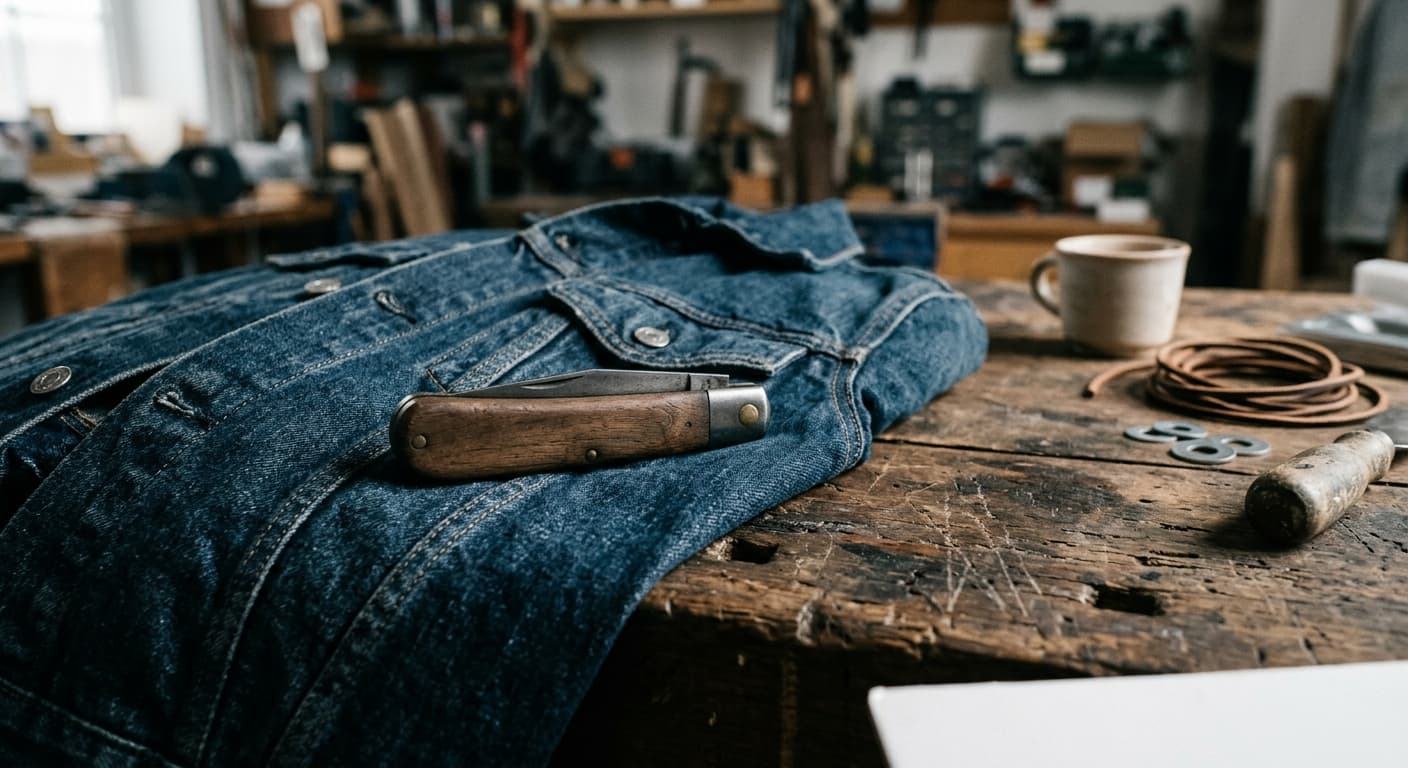
Montana's concealed-weapon permit scheme, prohibited-place rules, and carrying-while-intoxicated offense do not reach knives at all, because the state defines "concealed weapon" by statute as a firearm. Montana is also one of the few states with a knife-specific statewide preemption statute, and its only general knife restriction outside that framework applies inside a school building.
Jurisdiction scope: This page covers Montana state law only, principally MCA §§ 45-8-315, 45-8-352, 45-8-361, and 45-8-318. It does not cover Montana's firearms concealed-carry permit statutes in detail, since they do not apply to knives, or local municipal ordinances outside the preemption discussed below.
Can you carry a knife openly or concealed in Montana?
Yes, for an ordinary knife, both openly and concealed, outside a school building or correctional facility. Montana's entire body of "concealed weapon" law, spanning permits, prohibited places, and carrying while under the influence, defines its own subject matter narrowly. MCA § 45-8-315 provides: "'Concealed weapon' means a firearm that is wholly or partially covered by the clothing or wearing apparel of the person carrying or bearing the weapon." Because a knife is not a firearm, it does not meet this definition, and none of Montana's other concealed-carry statutes reach a knife either. MCA § 45-8-316 bans carrying a concealed firearm outright, naming "firearm" directly rather than the defined term, so it never reaches a knife in the first place; § 45-8-327 (while under the influence), § 45-8-328 (in a prohibited place), and the concealed-weapon permit statutes all turn on the "concealed weapon" definition above, which a knife does not meet. None of them apply to carrying a knife.
No general statewide knife-type or blade-length ban
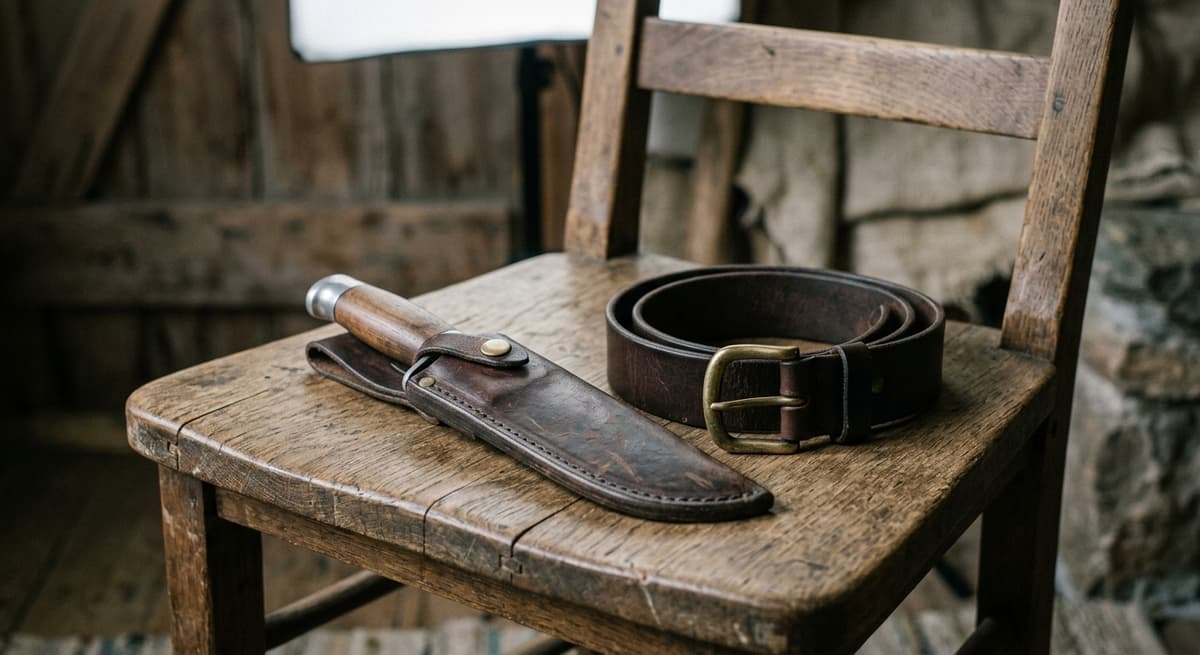
Montana's general criminal code contains no statute banning a specific knife type, such as a dirk, dagger, stiletto, or switchblade, or setting a blade-length threshold, for ordinary adult carry. MCA Title 45, chapter 8, part 3, the weapons part of the criminal code, names no switchblade or stiletto provision anywhere in its 71 sections. "Dirk" and "dagger" do appear, but only in the prisoner-and-youth-facility possession offense discussed below, MCA § 45-8-318, which is not a general-carry restriction. Montana once banned a switchblade outright under MCA § 45-8-331, which punished a person who carried, owned, possessed, used, stored, gave away, sold, or offered for sale a switchblade knife, defined as a knife with a blade of 1 1/2 inches or longer that opens automatically by hand pressure on a button, spring, or other device in the handle, by a fine of up to $500 or up to 6 months in county jail, subject to an exemption for a bona fide collector registered with the county sheriff. Section 45-8-331 is repealed, per the code's own history note, "45-8-331. Repealed. Sec. 2, Ch. 119, L. 2019." That is the same act, Ch. 119, L. 2019, that enacted the knife preemption statute, MCA § 45-8-352, discussed above: its own enactment note reads "En. Sec. 1, Ch. 119, L. 2019."
Montana's dedicated statewide knife preemption statute
MCA § 45-8-352 provides: "Except as provided in subsection (2), local governments may not enact or enforce an ordinance, rule, or regulation that restricts or prohibits the ownership, use, possession, or sale of any type of knife that is not specifically prohibited by state law." This is a direct, knife-specific preemption statute, distinct from Montana's separate firearms preemption law, MCA § 45-8-351. Subsection (2) carves out one exception: "Subsection (1) does not apply to a local government ordinance, rule, or regulation prohibiting the possession of a knife on property or in a building owned, leased, or possessed by the local government entity." A city or county cannot ban or restrict knife ownership, use, possession, or sale generally, but it can still bar knives from its own government-owned property and buildings. The preemption statute's qualifier, "not specifically prohibited by state law," also means it does not preempt a state-law knife restriction that already exists elsewhere in the code; the school-building weapon offense discussed below, MCA § 45-8-361, is itself a state statute, so it is unaffected by this local-preemption provision.
School buildings: a defined 4-inch-blade threshold
MCA § 45-8-361 makes it an offense to "purposely and knowingly possess[], carr[y], or store[] a weapon in a school building." "Weapon," for this section only, "means any type of firearm, a knife with a blade 4 or more inches in length, a sword, a straight razor, a throwing star, nun-chucks, or brass or other metal knuckles," and also includes "any other article or instrument possessed with the purpose to commit a criminal offense." A knife shorter than 4 inches is not covered by this specific definition unless it was possessed with the purpose to commit a criminal offense. A parent or guardian who knowingly permits a minor to possess, carry, or store such a weapon in a school building commits a separate offense under subsection (2). Conviction is punished by a fine of up to $500, up to 6 months in county jail, or both, and the court must consider alternatives to incarceration available in the community. The statute exempts law enforcement personnel and a contracted or employed school marshal, and a district's trustees may grant advance permission to possess, carry, or store a weapon in a school building. A seized weapon may be forfeited upon conviction or returned to its lawful owner, including if it is later found to have been stolen.
Prisoners and youth in custody: a much heavier penalty
MCA § 45-8-318 makes it a separate, more serious offense for a person "committed to a state prison or incarcerated in a county jail, city jail, or regional jail," or a youth in a detention or correctional facility, to possess, carry, or have under their custody or control, without lawful authority, "a dirk, dagger, pistol, revolver, slingshot, sword cane, billy, knuckles made of any metal or hard substance, knife, razor not including a safety razor, or other deadly weapon." This applies while the person is at the facility, being transported to or from it, or under the custody of facility officials. A conviction is punished by imprisonment in the state prison for 5 to 15 years, a fine of up to $50,000, or both, a materially heavier penalty than any other knife-related offense in Montana's code. The youth court has jurisdiction over a youth-facility violation unless the charge is filed in district court.
Federal law: what it does and does not reach
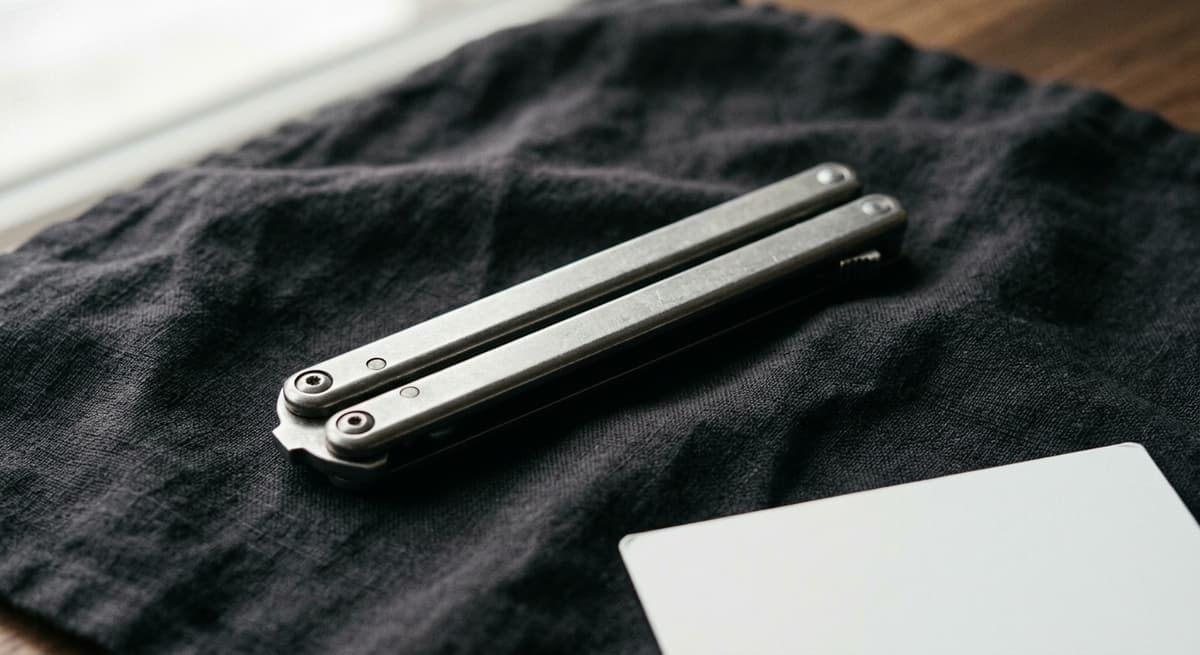
Federal law does not ban an individual from owning or carrying a switchblade. The Federal Switchblade Act, 15 U.S.C. §§ 1241 to 1245, instead restricts interstate commerce in switchblade knives, barring their manufacture for, or introduction, transport, and sale in, interstate commerce, and, in 15 U.S.C. § 1245, makes it a federal offense to knowingly possess, manufacture, sell, or import a ballistic knife in or affecting interstate commerce or within federal territorial jurisdiction. Sections 1242 and 1243 do not apply to certain knives and people, listed as exemptions in 15 U.S.C. § 1244. A 2009 amendment, § 1244(5), exempts any knife with a spring, detent, or other closure-bias mechanism that requires hand, wrist, or arm exertion on the blade itself to overcome the bias and assist opening, the carve-out that keeps modern assisted-opening folding knives legal in interstate commerce. A separate exemption, § 1244(4), covers a person with only one arm possessing or carrying a switchblade with a blade three inches or less. Montana's own code has no state-level switchblade ban to layer on top of these federal rules.
Disclaimer: This article provides general legal information about Montana's knife laws as of September 2026. It is not legal advice. Consult a lawyer licensed in Montana for advice about a specific situation. Montana's knife preemption statute limits, but does not entirely eliminate, local regulation of knives on government property.
For a state-by-state comparison, see knife laws by state. Montana's self-defense statutes are covered separately on the Montana self-defense laws page.
Statutes cited reflect their in-force version as of 2026-09-18. Last updated: 2026-09-18.
Frequently Asked Questions
Is it legal to carry a knife concealed in Montana?
Yes, for an ordinary knife outside a school building or correctional facility. Montana's 'concealed weapon' statutes, including the carrying-concealed offense and the concealed-weapon permit scheme, are defined under MCA 45-8-315 to reach only a firearm, so a knife does not fall within their scope regardless of how it is carried.
Does Montana preempt local knife ordinances?
Yes, directly. MCA 45-8-352 bars a local government from enacting or enforcing an ordinance that restricts or prohibits the ownership, use, possession, or sale of any type of knife not specifically prohibited by state law, with one exception: a local government may still prohibit knife possession on its own government-owned property and buildings.
What size knife is illegal in a Montana school?
A knife with a blade 4 or more inches in length is a 'weapon' for purposes of MCA 45-8-361's school-building possession offense. A shorter knife falls outside that specific definition unless it was possessed with the purpose to commit a criminal offense, in which case it can still qualify.
Are switchblades legal in Montana?
Yes. Montana's general criminal code has no current statute naming or banning a switchblade specifically: no Montana statute names a switchblade or a stiletto, and nothing in the weapons part of the criminal code, MCA Title 45, chapter 8, part 3, restricts either. 'Dirk' and 'dagger' do appear, but only in the prisoner-and-youth-facility possession offense, MCA 45-8-318, not in any general-carry restriction. Montana did once ban a switchblade: MCA 45-8-331 punished carrying, owning, possessing, or selling a switchblade knife (a blade 1 1/2 inches or longer that opens automatically by hand pressure on a button, spring, or other device) by up to $500 and 6 months in county jail. That section was repealed by the same 2019 act that enacted Montana's knife preemption statute, and no longer has any codified text.
Can a prisoner in Montana possess a knife?
No, not without lawful authority. MCA 45-8-318 makes it a felony, punishable by 5 to 15 years' imprisonment and a fine of up to $50,000, for a person in state or local custody, or a youth in a detention or correctional facility, to possess a dirk, dagger, knife, or several other listed items without lawful authority.
Updates
Independently fact-checked against the cited primary sources
Sources and References
- MCA 45-8-315 - Definition ('concealed weapon' means a firearm)(mca.legmt.gov).gov
- MCA 45-8-352 - Restriction on local government regulation of knives (statewide knife preemption)(mca.legmt.gov).gov
- MCA 45-8-361 - Possession or allowing possession of weapon in school building (4-inch knife blade threshold)(mca.legmt.gov).gov
- MCA 45-8-318 - Possession of deadly weapon by prisoner or youth in facility(mca.legmt.gov).gov
- MCA 45-8-351 - Restriction on local government regulation of firearms (separate firearms preemption statute)(mca.legmt.gov).gov
- MCA 45-8-331 (repealed Sec. 2, Ch. 119, L. 2019) - Montana's former switchblade-knife ban, preserved in the 2009 code archive(mca.legmt.gov).gov
- 15 U.S.C. 1241-1245 - Federal Switchblade Act, interstate commerce and ballistic-knife scope(law.cornell.edu)
- 15 U.S.C. 1244 - exceptions, including the 2009 assisted-opening carve-out and the one-arm exception(law.cornell.edu)