
Illinois
Illinois Fireworks Laws (2026): Are They Legal?
Independently fact-checked against primary sources (last audited September 18, 2026). · 12 primary sources cited on this page. How we verify our legal content
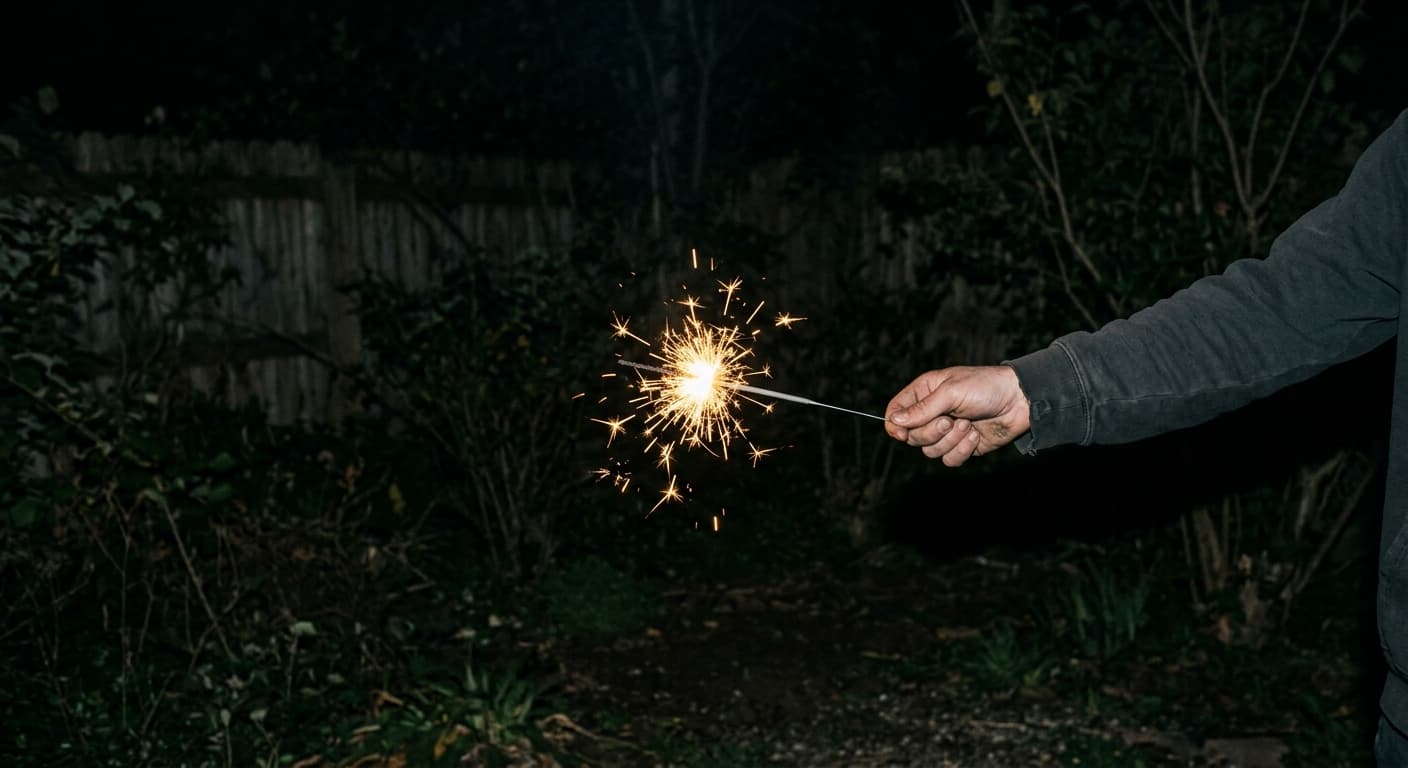
Illinois bans the general public from retail sale, possession, or use of both "display fireworks" and "consumer fireworks," under 425 ILCS 35/2. There is no walk-in-and-buy category for the public. The only lawful path for a private individual to use consumer fireworks is a local consumer-display permit, issued to an adult who has completed State Fire Marshal-approved training, for that specific display only. A fixed list of low-powered novelty items is excluded from the statutory definition of "consumer fireworks" and legal for anyone at all times.
Jurisdiction scope: This article addresses Illinois's statewide fireworks ban and the consumer-display permit pathway under the Illinois Fireworks Use Act, 425 ILCS 35, along with the underlying "fireworks" definition in the Fireworks Regulation Act, 425 ILCS 30. It does not address individual municipal display-permit procedures beyond the statewide minimum described below.
What Illinois Bans
Illinois's ban is broader than most states covered on this site: "Except as hereinafter provided it shall be unlawful for any person, firm, co-partnership, or corporation to knowingly possess, offer for sale, expose for sale, sell at retail, or use or explode any display fireworks, flame effects, or consumer fireworks; provided that city councils in cities, the president and board of trustees in villages and incorporated towns, and outside the corporate limits of cities, villages and incorporated towns, the county board, shall have power to adopt reasonable rules and regulations for the granting of permits for pyrotechnic and consumer displays."

"Fireworks" itself is defined broadly under the companion Fireworks Regulation Act: "any explosive composition or any substance or combination of substances, or article prepared for the purpose of producing a visible or audible effect of a temporary exhibitional nature by explosion, combustion, deflagration or detonation," expressly including "blank cartridges, toy cannons in which explosives are used, the type of balloons which require fire underneath to propel the same, firecrackers, torpedoes, sky rockets, Roman candles, bombs or other fireworks of like construction." That reaches both display-grade, professional fireworks and CPSC-compliant consumer fireworks, the category a majority of neighboring states, including Indiana, sell openly at retail. Illinois bans both for general public sale, possession, and use.
The Only Lawful Path: Consumer Display Permits
Illinois does not sell consumer fireworks to the public the way a "safe and sane" state does. Instead, the statute creates a single permit-based pathway: "Permits may be granted hereunder to any adult individual applying for a permit who provides proof that he or she has received the requisite training." Once the local jurisdiction grants that consumer-display permit, consumer fireworks may be sold, possessed, used, or distributed to that permit holder, but only for that specific, approved display.
The permit application must be filed in writing at least 15 days before the display date, unless the local jurisdiction and the local fire chief agree otherwise, and "a permit shall be issued only after inspection of the display site by the fire chief providing fire protection coverage to the area of display." The permit is non-transferable, and the local jurisdiction may also run a criminal background check and impose conditions stricter than the state minimum. A registered consumer-fireworks distributor or retailer must separately register with the Office of the State Fire Marshal before selling to any permitted individual, and may not sell more than 499 pounds of consumer fireworks to one person without the Office's prior approval.
A separate, related permit under 425 ILCS 35/2.1 covers professional pyrotechnic displays and pyrotechnic service, run by a licensed lead pyrotechnic operator rather than a permitted individual. That applicant must provide proof of liability insurance of at least $1,000,000 to the local governmental entity issuing the permit, and every indoor pyrotechnic display or service must take place in a building protected by an automatic sprinkler system, with written notice to the State Fire Marshal's Office at least 15 days before an indoor display. One statutory exemption applies to both tracks: "No permit shall be required under the provisions of this Act for supervised public displays by State or County fair associations."
Novelty Items Excluded From "Consumer Fireworks"
A short list of low-powered items sits outside this entire framework, excluded from the statutory definition of "consumer fireworks" by name rather than by a weight threshold, and legal for anyone in Illinois at all times without a permit: toy pistols, toy canes, toy guns, or other devices using paper or plastic caps containing 0.25 grains or less of explosive compound, "provided they are so constructed that the hand cannot come in contact with the cap when in place for the explosion," and toy pistol paper or plastic caps containing less than 0.20 grains of explosive mixture. The same excluded category also covers snake and glow-worm pellets, smoke devices, sparklers, and named trick noisemakers, meaning party poppers, booby traps, snappers, trick matches, cigarette loads, and auto burglar alarms. None of these carries its own numeric weight cap in the statute; they are excluded by category and name. Because 425 ILCS 35/2's ban reaches only display fireworks, flame effects, and consumer fireworks, an item that falls outside the "consumer fireworks" definition is not covered by that ban either, which is why these items are legal without a permit even though the statute technically excludes them from a narrower term than "fireworks" generally.

Illinois's Fireworks Use Act does not set a numeric purchaser-age minimum anywhere in its text. That gap exists because there is no lawful general retail sale of consumer fireworks to attach an age requirement to; the Act's only age term is that a consumer- or pyrotechnic-display permit applicant must be an "adult individual."
No Calendar Window; Distributor Sale Cap
Illinois sets no statewide calendar sale window and no statewide use window, because there is no general retail category to schedule around. Sale and use are authorized only for the display date named in an approved consumer-display or pyrotechnic-display permit, and the statute sets no separate hours-of-day restriction beyond whatever conditions the local permit itself imposes. The 499-pound single-sale cap described above governs how much a registered distributor may sell to one individual without extra State Fire Marshal sign-off; it is not a general public possession limit, since general public possession outside the permit pathway is not authorized at all.
Local Authority: More Restrictive Only
Illinois preserves local power to go further than the state ban, never to loosen it, but the savings clause names three specific units of government, not a fourth: "The provisions of this Act shall not be construed or held to abrogate or in any way affect the power of CITIES, VILLAGES, AND INCORPORATED TOWNS to regulate, restrain and prohibit the use of fireworks, firecrackers, torpedoes, Roman candles, skyrockets and other pyrotechnic displays within their corporate limits." A city, village, or incorporated town may adopt its own additional restrictions on top of the statewide ban.
Counties are not named in that clause, and their fireworks-specific power in this Act is different and narrower: outside the corporate limits of a city, village, or incorporated town, a county board may "adopt reasonable rules and regulations for the granting of permits for pyrotechnic and consumer displays," the same permit-granting power a city council or village board holds inside its own limits. Whether a particular Illinois county also has an independent fireworks-restriction power through its general home-rule authority is a separate question this Act does not answer. Any of these local governments also runs its own permit process for consumer and pyrotechnic displays, with conditions that may be stricter than the state's 15-day and inspection minimums.
Regulations
The Office of the State Fire Marshal is authorized to adopt rules carrying the force of law, including audience-proximity distances for consumer display fireworks, based on national standards such as NFPA 1123 for outdoor displays, NFPA 1126 for proximate-audience displays, NFPA 160 for flame effects, and NFPA 140 for motion-picture and television production soundstages. The Office must also "maintain a list of approved consumer fireworks and update the list annually," meaning even a permitted consumer display is limited to items on that current approved list.
Penalties
Violating the Act, whether by unpermitted sale, possession, or use, is a flat Class A misdemeanor: "Any person, firm, co-partnership, or corporation violating the provisions of this Act shall be guilty of a Class A misdemeanor." The Act does not tier that penalty by device weight, category, or repeat offense.
Crossing State Lines
Federal law adds a layer on top of Illinois's own ban for anyone bringing consumer fireworks in from elsewhere. Under 18 U.S.C. § 836, it is a federal offense, punishable by a fine, up to one year in prison, or both, to transport fireworks into a state whose law specifically prohibits or regulates their use, or to deliver them for that transportation, knowing they will be delivered, possessed, stored, sold, or otherwise dealt with in a manner that state's law forbids; the statute excludes fireworks merely passing through a state in continuous interstate transportation, and it does not apply to common or contract carriers, to water carriers engaged in interstate commerce, or to transportation for the use of a federal agency. Separately, the U.S. Postal Service bans all fireworks from the mail entirely, for both international and domestic shipment (USPS Publication 52 § 341.22); federal consumer-product-safety rules set the device and packaging standards fireworks must meet to be sold anywhere in the country (16 C.F.R. § 1500.17 and Part 1507); and a federal explosives-licensing exemption (27 C.F.R. § 555.141(a)(7)) covers only the importation, distribution, and storage of consumer fireworks, not their manufacture. Illinois residents who buy consumer fireworks in a neighboring broad-allow state, such as Indiana, and bring them back into Illinois risk both the state possession ban and this federal transport offense at once.
For the complete state-by-state picture, see the fireworks laws by state comparison. Illinois also maintains a separate open container law worth knowing if fireworks and holiday drinking overlap.
Disclaimer: This article provides general legal information about fireworks laws in the United States as of September 2026. It is not legal advice. Fireworks statutes, local ordinances, sale and use windows, and penalties change frequently and are often further restricted by county or city ordinance beyond what state law requires; verify the current rule for your specific city and county before buying, selling, or using fireworks, and consult a lawyer licensed in your state for advice about a specific situation.
Statutes cited reflect their in-force version as of 2026-09-17. Last updated: 2026-09-17.
Frequently Asked Questions
Are fireworks legal in Illinois?
General public retail sale, possession, and use of both display fireworks and consumer fireworks is banned under 425 ILCS 35/2. The only lawful path to use consumer fireworks is a local consumer-display permit issued to an adult who completed State Fire Marshal-approved training, for that specific display.
Are sparklers legal in Illinois?
Yes. Sparklers, along with toy caps below 0.25 grains of explosive compound, toy pistol caps below 0.20 grains, snake and glow-worm pellets, smoke devices, and named trick noisemakers like party poppers and snappers, are excluded from the statutory definition of "consumer fireworks" and legal for anyone at all times, since the general ban only reaches display fireworks, flame effects, and consumer fireworks.
Can you get a permit to use fireworks in Illinois?
Yes, a consumer-display permit. An adult who completes State Fire Marshal-approved training may apply to the local jurisdiction, which reviews the application (filed at least 15 days ahead) and inspects the display site through the local fire chief before issuing the permit for that specific display. A related pyrotechnic-display permit, run by a licensed operator, covers professional shows and requires at least $1,000,000 in liability insurance.
Can Illinois cities and counties ban fireworks entirely?
Cities, villages, and incorporated towns can, under 425 ILCS 30/24's savings clause, which names only those three units. Counties are not named in that clause; outside city, village, or town limits, a county board instead holds the narrower power to grant permits for pyrotechnic and consumer displays under 425 ILCS 35/2. Either way, a locality cannot loosen the state ban, only add to it.
What happens if you bring fireworks bought in another state into Illinois?
It can violate Illinois's possession ban under 425 ILCS 35/2 and, separately, the federal crime under 18 U.S.C. § 836 of transporting fireworks into a state whose law specifically prohibits or regulates their use, not only a state with a full ban, knowing they will be delivered, possessed, or used unlawfully there.
Updates
Independently fact-checked against the cited primary sources
Sources and References
- 425 ILCS 35/2 - Illinois Fireworks Use Act: unlawful acts; local permit authority(ilga.gov).gov
- 425 ILCS 30/2 - Fireworks Regulation Act: definition of fireworks; novelty-item exclusions(ilga.gov).gov
- 425 ILCS 35/2.1 - Pyrotechnic-display permit: licensed operator, $1,000,000 minimum liability insurance, sprinklered-building requirement for indoor displays, State/County fair-association exemption(ilga.gov).gov
- 425 ILCS 35/2.2 - Consumer-display permit application, training, and inspection requirements(ilga.gov).gov
- 425 ILCS 35/2.3 - Distributor sale cap (499 pounds without prior Office of the State Fire Marshal approval)(ilga.gov).gov
- 425 ILCS 30/24 - Local power to regulate, restrain, or prohibit fireworks preserved for CITIES, VILLAGES, AND INCORPORATED TOWNS ONLY; counties are not named in this clause (see 425 ILCS 35/2 for the county display-permit power instead)(ilga.gov).gov
- 425 ILCS 35/4.1 - State Fire Marshal rulemaking authority; annual approved consumer fireworks list(ilga.gov).gov
- 425 ILCS 35/5 - Penalty: Class A misdemeanor(ilga.gov).gov
- 18 U.S.C. § 836 - Transportation of fireworks into a state that specifically prohibits or regulates their use; carrier and federal-agency exclusions; one-year maximum penalty(uscode.house.gov).gov
- USPS Publication 52 § 341.22 - All fireworks are nonmailable explosives, prohibited from domestic and international mail(pe.usps.com).gov
- 16 C.F.R. § 1500.17 - CPSC banned-hazardous-substance device standards for fireworks(ecfr.gov).gov
- 27 C.F.R. § 555.141(a)(7) - ATF explosives-licensing exemption for the importation, distribution, and storage (not manufacture) of consumer fireworks(ecfr.gov).gov