
Vermont
Vermont Final Paycheck Laws: The 72-Hour Rule for Firings
Independently fact-checked against primary sources (last audited August 13, 2026). · 4 primary sources cited on this page. How we verify our legal content

Vermont requires an employer to pay a discharged worker's final wages within 72 hours, under 21 V.S.A. § 342(b). A worker who quits is instead paid on the last regular payday, or the following Friday if there is no regular payday.
Information last verified on 2026-08-12. This article has not yet been reviewed by a licensed lawyer.
When Is Your Final Paycheck Due in Vermont?
Vermont's statute, 21 V.S.A. § 342(b), splits the deadline by why you left. If you're discharged, your employer must pay you within 72 hours.
"shall be paid within 72 hours of discharge"
If you quit, the deadline is different and slower: you're paid on the last regular payday, or on the following Friday if there is no regular payday.
"shall be paid on the last regular pay day, or if there is no regular pay day, on the following Friday"
Watch out: Don't assume a Vermont quit gets the same fast 72-hour treatment as a firing. It doesn't. Only a discharge triggers the accelerated deadline.
Vermont's Penalty for a Late Final Paycheck
Vermont does not use a self-executing daily-accrual "waiting time" penalty the way Utah or California do. Instead, it runs two separate tracks.
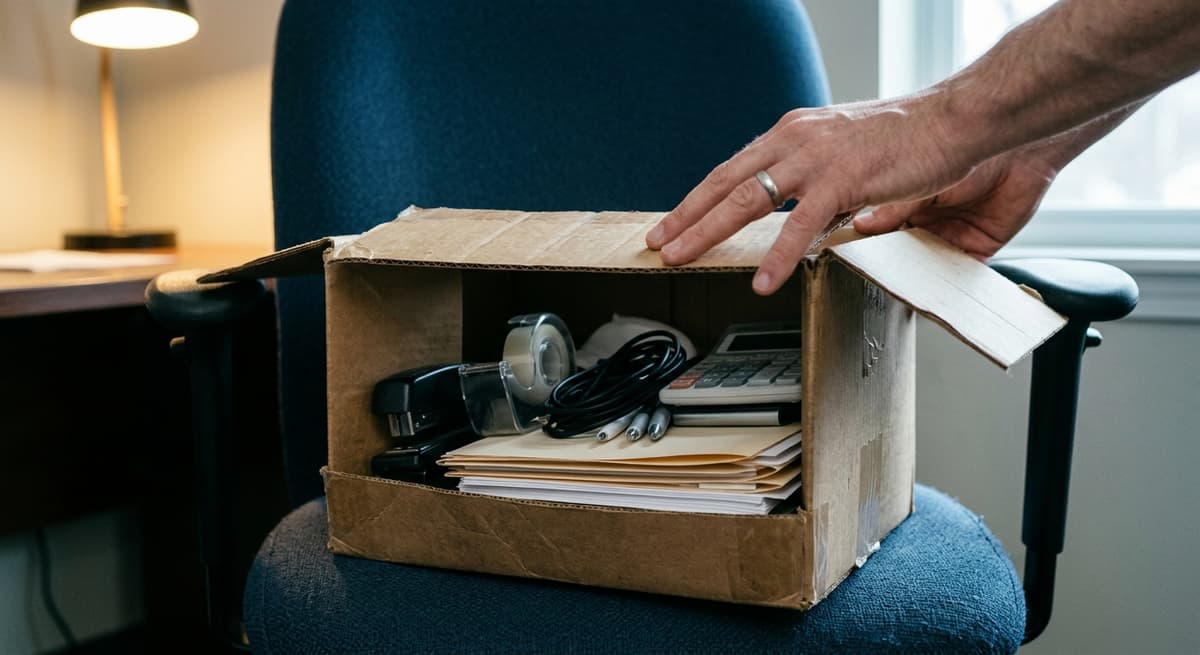
The real employee remedy is a private civil action under 21 V.S.A. § 347: an employer who violates the payment deadline forfeits to the injured employee twice the value of the unpaid wages, plus the costs of the action and reasonable attorney's fees.
"An employer who violates section 342 or 343 of this title shall forfeit to the individual injured twice the value thereof, to be recovered in a civil action, and all costs and reasonable attorney's fees."
Separately, § 345 lets the Commissioner of Labor pursue a fine of not more than $5,000 against a violating employer, and makes a corporate officer with payroll control who knowingly participates personally liable to the employee for the actual wages owed. A related subsection addresses unpaid fringe BENEFITS specifically, allowing actual damages plus a Commissioner-imposed civil penalty of up to $5,000 for a knowing or willful violation that remains overdue 30 or more days.
Does Vermont Require PTO or Vacation Payout?
No, not currently. 21 V.S.A. § 342 was read in full for this article and contains no vacation or PTO provision. A bill, H.295 (introduced February 20, 2025, and as of this session sitting in the House Committee on General & Housing), would add a mandate requiring payout of unused accrued vacation at separation, but it has not been enacted.
Correcting a common claim: You may see a claim online that "all unused paid vacation accrued on or after January 1, 2023 must be paid out" in Vermont. That figure does not appear anywhere in the current statute text. It appears to describe the pending, not-yet-enacted H.295 bill, not current Vermont law. Until H.295 is enacted, PTO payout in Vermont is governed entirely by your employer's own policy.
What We Could Not Verify: Deductions
Vermont's specific rules for deducting from a final paycheck, for equipment, shortages, or similar items, were not found in the statute text available this session. Neither § 342 nor § 343 sets out a rule governing deductions of that kind. Those rules likely live in a Vermont Department of Labor rule (Code of Vermont Rules, Agency 24-090-003) that could not be reached on an official state-hosted source this session. If a deduction from your final pay is at issue, contact the Vermont Department of Labor's Wage and Hour Program directly rather than relying on an unconfirmed source.

Filing a Wage Complaint in Vermont
A complaint must be filed with the Commissioner of Labor no later than TWO YEARS after the date wages were due.
"not later than two years after the date the wages were due"
Once filed, the Commissioner notifies the employer by service or certified mail, and the employer has 10 calendar days to respond. The Commissioner may examine records, inspect the workplace, question employees, subpoena witnesses, attempt a settlement, and issue a written determination if the matter isn't resolved. Either party can appeal to an administrative law judge within 30 days, and then to the Employment Security Board within another 30 days. A private right of action under § 347 (the double-damages remedy above) is also available independently of the administrative process.
Related Vermont Employment Resources
- Vermont At-Will Employment Laws
- Vermont Whistleblower Laws
- Vermont Statute of Limitations
- Vermont Debt Collection Laws
- How to Stop Wage Garnishment
- Vermont Unclaimed Property
- Vermont Bankruptcy Laws
- Final Paycheck Laws by State
- PTO Payout Laws by State

Last updated: 2026-08-12.
More Vermont Laws
- Vermont At-Will Employment Laws
- Vermont Debt Collection Laws
- Vermont Statute of Limitations
- Vermont Whistleblower Laws
Frequently Asked Questions
How long does an employer have to give you your last paycheck in Vermont?
72 hours if you're discharged, under 21 V.S.A. § 342(b). If you quit, you're paid on your last regular payday instead, or the following Friday if there's no regular payday.
Does Vermont require PTO or vacation payout when you leave a job?
Not currently. Vermont's wage-payment statute contains no vacation provision. A bill, H.295, would add a payout mandate, but it remains pending and is not law. A claim that vacation accrued since January 1, 2023 must be paid out describes that pending bill, not current law.
What happens if my Vermont employer misses the 72-hour deadline?
You can bring a civil action under 21 V.S.A. § 347 for double the value of the unpaid wages plus attorney's fees and costs, and the Commissioner of Labor can separately pursue a fine of up to $5,000 against the employer.
How do I file a wage complaint in Vermont?
With the Vermont Department of Labor's Commissioner, within two years of the date the wages were due. The Commissioner investigates and can issue a written determination, appealable to an administrative law judge and then the Employment Security Board.
Can my Vermont employer deduct from my final paycheck for equipment or shortages?
Vermont's specific deduction rules could not be confirmed against a state-hosted source this session. They likely live in a Vermont Department of Labor rule. Contact the department directly if a deduction from your final pay is in dispute.
Updates
Corrected the subsection citation for Vermont’s final-paycheck deadlines from 21 V.S.A. § 342(c) to § 342(b), and narrowed the deductions note after confirming § 342(c) governs wage-payment methods rather than deadlines.
Independently fact-checked against the cited primary sources
The Law Behind This Article
This article rests on the statutory provisions below, held in our own legal record and retrieved from the official source. Tap a section to read the operative text.
Vermont Statutes Annotated, Title 21: Labor, Chapter 5: Employment Practices, Subchapter: WAGES AND MEDIUM OF PAYMENT
§ 342Weekly payment of wagesIn forcecited in 2 of our articles
(a)(1) Any employer that is doing business within the State shall pay each week, in lawful money or checks, the wages earned by each employee to a day not more than six days prior to the date of payment. (2) Notwithstanding subdivision (1) of this subsection, any employer having one or more employees that is doing business within the State may, either: (A) after giving notice to each employee, pay biweekly or semimonthly, in lawful money or checks, each employee the wages earned by the employee to a day not more than six days prior to the date of payment; or (B) pursuant to the terms of a collective bargaining agreement pay any employee who is subject to that agreement the wages earned by the employee to a day not more than 13 days prior to the date of payment. (3)(A) An employee of a school district or supervisory union may elect in writing to have a set amount or set percentage of the employee’s after-tax wages withheld by the school district in a district-held bank account each pay period. The percentage or amount withheld shall be determined by the employee.
Official text (excerpt) · last checked 2026-09-03 · Read the full text in our law library · Verify at legislature.vermont.gov
Cited in 15 court opinions in our collectionLatest citing opinion in our collection: 2026
In the courts (editorial summary, independently checked):In Stowell v. Action Moving & Storage, Inc. (2007) the Vermont Supreme Court held that commission payments are wages under section 342 and that withholding them violated section 342(c), entitling the employee to double damages and fees under section 347. State v. Harty (1986) affirmed a conviction under sections 342(a) and 345.
Opinions citing this section in our collection:
- Stowell v. Action Moving & Storage, Inc. (Supreme Court of Vermont 2007, 182 Vt. 98)✓A long-haul trucker resigned and his employer refused to pay the remaining commissions, claiming it had overpaid him; the court held commission payments are wages under section 342, found the employer violated section 342(c), and awarded double damages under section 347.
- State v. Harty (Supreme Court of Vermont 1986, 147 Vt. 400)✓A restaurant operator who was his corporation's sole owner, director, and shareholder was convicted on three counts of not paying employees weekly; the court held he was properly charged as an employer under sections 342(a) and 345 and strictly liable without proof of fraud.
- Zablow v. Department of Employment Security (Supreme Court of Vermont 1979, 137 Vt. 8)“…this was not done, the employer would be violating the law. 21 V.S.A. § 342(a). On other occasions the employer had…”
Identified automatically from the court opinions citing this section — not a ranking of which case controls.
Also relied on in: PTO Payout Laws: Does Your State Require It When You Leave a Job?
§ 347ForfeitureIn force
An employer who violates section 342 or 343 of this title shall forfeit to the individual injured twice the value thereof, to be recovered in a civil action, and all costs and reasonable attorney’s fees. However, an action may not be maintained under this section unless at the time the action is brought, the wages remain unpaid or improperly paid. (Amended 1977, No. 244 (Adj. Sess.), § 6, eff. May 1, 1978; 1979, No. 100 (Adj. Sess.), § 2; 2013, No. 15, § 6.)
Official text (excerpt) · last checked 2026-08-01 · Read the full text in our law library · Verify at legislature.vermont.gov
Cited in 8 court opinions in our collectionLatest citing opinion in our collection: 2026
Opinions citing this section in our collection:
- Stowell v. Action Moving & Storage, Inc. (Supreme Court of Vermont 2007, 182 Vt. 98)“…r court’s order denying penalties and attorney’s fees under 21 V.S.A. § 347, claiming his employer, defendant Actio…”
- Lanphear v. Tognelli (Supreme Court of Vermont 1991, 157 Vt. 560)“…claiming the court erred in doubling actual damages under 21 V.S.A. § 347. We reverse and remand for recomputatio…”
- Handverger v. City of Winooski (Supreme Court of Vermont 2011, 191 Vt. 556)“…cedure 75 and a related wage claim for double damages under 21 V.S.A. § 347. Plaintiff complains that the Winooski…”
Identified automatically from the court opinions citing this section — not a ranking of which case controls.
§ 345Nonpayment of wages and benefitsIn force
(a) An employer who violates section 342, 343, 482, or 483 of this title shall be fined not more than $5,000.00. If the employer is a corporation, the president or other officers who have control of the payment operations of the corporation shall be considered employers and liable to the employee for actual wages due when the officer has willfully and without good cause participated in knowing violations of this subchapter. (b) In addition to any other penalty or punishment prescribed by law, any employer who, pursuant to an oral or written employment agreement, is required to provide benefits to an employee shall be liable to the employee for actual damages caused by the failure to pay for the benefits, and where the failure to pay is knowing and willful and continues for 30 days after the payments are due shall be assessed a civil penalty by the Commissioner of not more than $5,000.00. (c) The Commissioner may enforce collection of the penalties assessed under this section in the Civil Division of the Superior Court. (Amended 1963, No. 188, § 1; 2013, No. 15, § 4; 2015, No. 69 (Adj. Sess.), § 5, eff. Jan. 1, 2017; 2017, No. 74, § 33; 2023, No. 85 (Adj. Sess.), § 82, eff.
Official text (excerpt) · last checked 2026-08-01 · Read the full text in our law library · Verify at legislature.vermont.gov
Cited in 5 court opinions in our collectionLatest citing opinion in our collection: 2022
Opinions citing this section in our collection:
- State v. Carpenter (Supreme Court of Vermont 1980, 138 Vt. 140)“…reatment accorded to employers and corporate officers under 21 V.S.A. § 345. The intent of the statute is to foster…”
- Hubacz v. Village of Waterbury (Vermont Superior Court 2016)“…relief for the nonpayment of wages and benefits pursuant to 21 V.S.A. §§ 345, 347 (Counts 2 and 3 of the Complaint)…”
- State v. Harty (Supreme Court of Vermont 1986, 147 Vt. 400)“…f his employees, the wages earned by such employee . . . .” 21 V.S.A. § 345 provides, in part, that “[e]ach employe…”
Identified automatically from the court opinions citing this section — not a ranking of which case controls.
§ 342aInvestigation of complaints of unpaid wagesIn force
(a) An employee or the Department on its own motion may file a complaint that wages have not been paid to an employee, not later than two years after the date the wages were due. The Commissioner shall provide notice and a copy of the complaint to the employer by service, or by certified mail sent to the employer’s last known address, together with an order to file a response to the specific allegation in the complaint filed by the employee or the Department with the Department within 10 calendar days after receipt. (b) The Commissioner shall investigate the complaint, and may examine the employer’s records, enter and inspect the employer’s business premises, question employees, subpoena witnesses, and compel the production of books, papers, correspondence, memoranda, and other records necessary and material to investigate the complaint. If a person fails to comply with any lawfully issued subpoena, or a witness refuses to testify to any matter on which the witness may be lawfully interrogated, the Commissioner may seek an order from the Civil Division of the Superior Court compelling testimony or compliance with the subpoena.
Official text (excerpt) · last checked 2026-08-01 · Read the full text in our law library · Verify at legislature.vermont.gov
Cited in 5 court opinions in our collectionLatest citing opinion in our collection: 2025
Opinions citing this section in our collection:
- Stowell v. Action Moving & Storage, Inc. (Supreme Court of Vermont 2007, 182 Vt. 98)“…complaints by the Commissioner of the Department of Labor, 21 V.S.A. § 342a, informs our review. This statute gives…”
- Commissioner of Labor v. American Empire (Vermont Superior Court 2024)“…t seeking enforcement of a Final Order for Collection under 21 V.S.A. § 342a(g). Plaintiff has moved for summary jud…”
- Commissioner of Labor, State of Vermont v. American Empire General Contracting Corp. (Supreme Court of Vermont 2025)“…ion, which it filed in superior court in December 2023. See 21 V.S.A. § 342a(g) (“The Commissioner may enforce a fin…”
Identified automatically from the court opinions citing this section — not a ranking of which case controls.
Search our full record of US law — 2.1 million sections, every state + federal →
Sources and References
- 21 V.S.A. § 342, Wages, payment upon separation (72-hour discharge deadline; quit deadline)(legislature.vermont.gov).gov
- 21 V.S.A. § 345, Enforcement; penalty for nonpayment(legislature.vermont.gov).gov
- 21 V.S.A. § 347, Civil forfeiture for violation (double damages + attorney's fees)(legislature.vermont.gov).gov
- 21 V.S.A. § 342a, Complaints; enforcement procedure (2-year filing deadline)(legislature.vermont.gov).gov