
Oregon
Oregon AI Meeting Recording Laws: Split Consent and Video Conferencing Exception (2026)
Independently fact-checked against primary sources (last audited August 16, 2026). · Reviewed by the RecordingLaw editorial team. · Law checked current as of August 16, 2026. · 3 primary sources cited on this page. How we verify our legal content
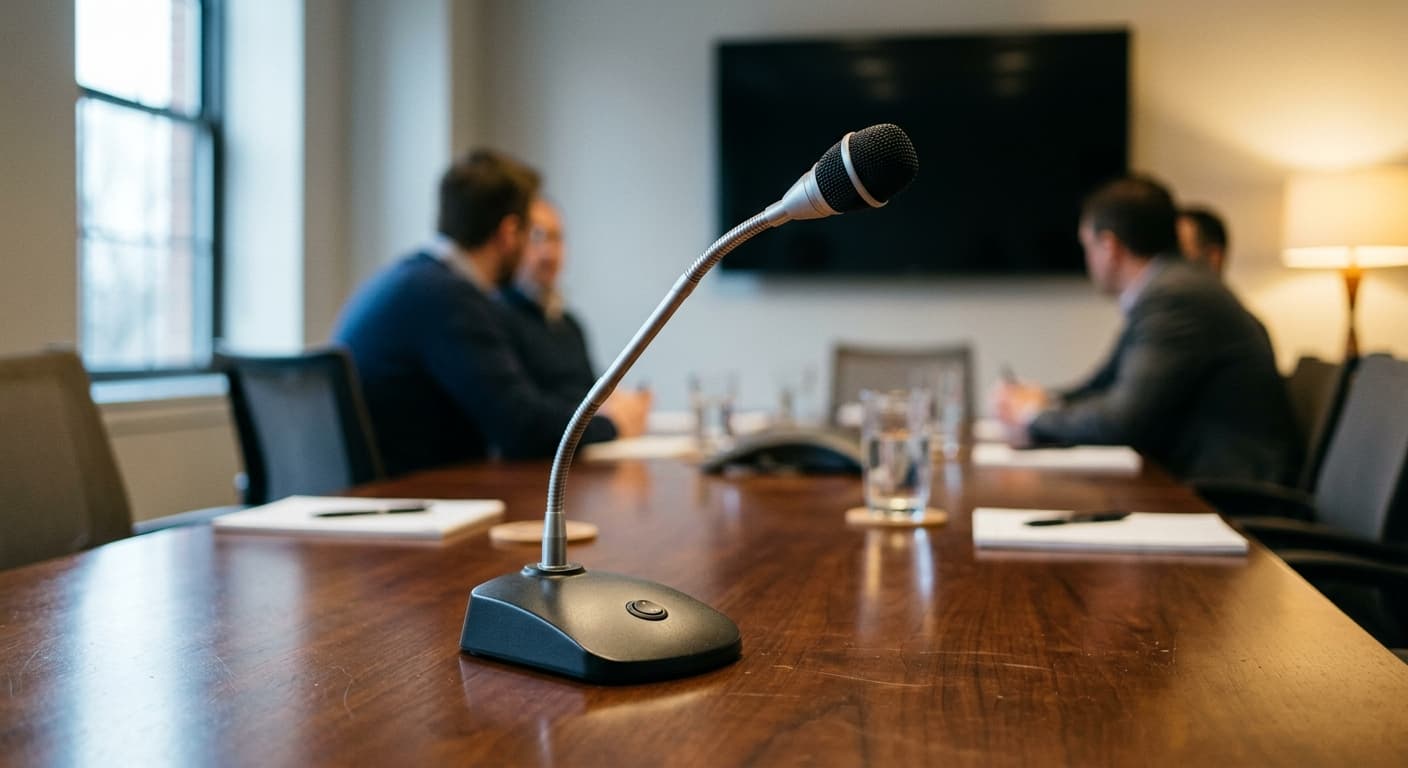
AI meeting recorders are lawful in Oregon, but a Zoom or Teams call is not a one-party consent call. ORS 165.535(1) defines a "conversation" to include a communication occurring through a video conferencing program, so the all-party notice rule in ORS 165.540(1)(c) reaches virtual meetings the same way it reaches face-to-face ones. Oregon's one-party consent rule covers telephone and radio communications only.
Oregon's recording consent framework occupies a unique position among U.S. states. Rather than following a simple one-party or all-party consent model, Oregon splits its requirements based on the type of communication and the recording method used. For AI meeting recording tools, this split framework creates both opportunities and obligations that differ significantly from most other states.
Under ORS 165.540, conversations require that all participants be "specifically informed" before recording, and ORS 165.535(1) puts video conferencing communications inside the definition of "conversation." Telephone and radio communications are the part of Oregon law that runs on one-party consent. A Zoom, Microsoft Teams, or Google Meet call in Oregon is therefore governed by the same all-party notice rule as a face-to-face meeting, subject only to the conditional carve-outs in ORS 165.540(6).
The Ninth Circuit's January 2025 decision upholding this framework's constitutionality, followed by the U.S. Supreme Court's refusal to hear the case in October 2025, confirmed that Oregon's split consent model is here to stay.
Oregon's Split Consent Framework
ORS 165.540: The Core Statute
Oregon's conversational privacy statute is codified at ORS 165.540. Unlike most state wiretap laws, Oregon's statute creates different consent standards depending on how the communication takes place.
Section 165.540(1)(a) addresses telecommunications. It prohibits obtaining or attempting to obtain the contents of a telecommunication or radio communication without being a participant, unless at least one participant consents. This is a standard one-party consent rule for phone calls. Note its limit: ORS 165.535(3)(b) and (4)(b) expressly provide that neither "radio communication" nor "telecommunication" includes a communication occurring through a video conferencing program, so subsection (1)(a) does not reach a Zoom or Teams call.
Section 165.540(1)(c) addresses conversations. It prohibits obtaining or attempting to obtain any part of a conversation "by means of any device, contrivance, machine, or apparatus" unless "all participants in the conversation are specifically informed that their conversation is being obtained." Under ORS 165.535(1), a "conversation" is an oral communication that is not a telecommunication or radio communication, and it "includes a communication occurring through a video conferencing program." Subsection (1)(c) is therefore an all-party notice requirement for face-to-face communications and for video meetings alike.
The critical distinction: Oregon's conversation provision requires notice, not consent. Participants must be "specifically informed" that recording is taking place, but the statute does not require them to agree to it. A participant who has been informed and chooses to continue the conversation has effectively accepted the recording. This is a meaningful difference from states like California and Pennsylvania, where affirmative consent (not just notice) is required.
The Video Conferencing Exception
ORS 165.540(6)(a) contains a provision that is directly relevant to AI meeting recording tools, though it is considerably narrower than it first appears.
The prohibitions in subsection (1)(c) do not apply to persons who intercept "oral communications that are part of any of the following proceedings, if the person uses an unconcealed recording device or if the communications occur through a video conferencing program." The enumerated proceedings are public or semipublic meetings such as hearings, trials, press conferences, public speeches, rallies and sporting events; regularly scheduled classes or similar educational activities; and private meetings or conferences "if all others involved knew or reasonably should have known that the recording was being made."
The enumerated proceedings are the gate. The unconcealed device and the video conferencing program are methods that qualify a person for the exception within those proceedings. Neither method on its own lifts the notice requirement.
For AI meeting tools, that means an ordinary private business meeting held over Zoom, Microsoft Teams, or Google Meet escapes the (1)(c) notice requirement only under subparagraph (C), which carries its own knowledge condition: everyone else on the call must have known, or reasonably should have known, that the recording was being made. That is a notice-equivalent standard, not one-party consent. Subsection (1)(a) cannot fill the gap, because ORS 165.535 removes video conferencing from the two definitions that subsection depends on.
An Oregon employee who switches on an AI meeting recorder during a Zoom call therefore cannot rely on their own participation alone. The practical compliance path is to make the recording knowable to everyone on the call: announce it at the start, leave the platform's recording banner and AI indicator visible, and let the bot's join announcement stand in the chat.
Additional Video Conferencing Exception for Alleged Unlawful Activity
ORS 165.540(6)(b) provides a separate exception for recording alleged unlawful activity through video conferencing. A person who, "with the intent to capture alleged unlawful activity," records a conversation occurring through a video conferencing program may do so if they are a participant (or one participant consents) and they meet one of three conditions: they are a law enforcement officer or acting in coordination with law enforcement, they are acting in coordination with an attorney or enforcement or regulatory entity, or they reasonably believe the recording may be used as evidence in a judicial or administrative proceeding. This is a targeted evidence-gathering provision, not a general business-meeting exception.
The Unconcealed Recording Device Exception
Oregon's unconcealed recording device exception under ORS 165.540(6)(a) is the in-person half of that same provision, and it carries the same limits. An open, visible device removes the (1)(c) notice requirement only for the three enumerated categories of proceedings, and at an ordinary private meeting that means subparagraph (C): all others involved must have known or reasonably should have known that the recording was being made.
For AI meeting tools, this matters in in-person meetings where a laptop, phone, or other device running recording software sits visible on the table. Visibility alone is not the test. The question is whether the other participants knew or reasonably should have known that the device was recording, which is hard to establish when software rather than a physical recorder is doing the capturing. The safer practice for in-person meetings is to inform all participants directly.

The Ninth Circuit Decision: Project Veritas v. Schmidt
Background
Project Veritas, known for undercover journalism, challenged ORS 165.540(1)(c)'s all-party notice requirement as an unconstitutional restriction on First Amendment rights. The organization planned to conduct secret recordings in Oregon and sought a court declaration that the statute was unconstitutional before proceeding.
The Ruling
On January 7, 2025, the Ninth Circuit issued an en banc decision (10-2) in Project Veritas v. Schmidt (No. 22-35271) upholding Oregon's conversational privacy statute. The court held that Project Veritas's recording of conversations in connection with its newsgathering activities is protected speech under the First Amendment, but that Oregon's statute is content-neutral because it does not discriminate on the basis of viewpoint or restrict discussion of an entire topic; it places neutral, content-agnostic limits on the circumstances under which an unannounced recording of a conversation may be made.
Applying intermediate scrutiny (the standard for content-neutral speech regulations), the court concluded that Oregon's interest in protecting conversational privacy was substantial enough to justify the notice requirement. The statute survived because it left open alternative channels for obtaining information (including with notice or in public settings) and was narrowly tailored to the state's privacy interest.
Supreme Court Denial
On October 6, 2025, the U.S. Supreme Court denied Project Veritas's petition for certiorari in the same case, by then captioned Project Veritas v. Vasquez (No. 24-1061) because Multnomah County's district attorney's office changed hands between the Ninth Circuit's ruling and the Supreme Court petition, and the successor official was automatically substituted as the named party. This leaves the Ninth Circuit's decision in place as binding law throughout the western United States, including Oregon, California, Washington, and other Ninth Circuit states.
Impact on AI Meeting Recording
The Project Veritas decision rejected both an as-applied and a facial First Amendment challenge to the notice requirement in ORS 165.540(1)(c). The case involved an undercover journalism organization and did not address AI meeting tools.
The court's analysis addressed in-person conversations, which is where the challenge was aimed. Virtual meetings sit inside the same subsection (1)(c) rule by operation of ORS 165.535(1), and the conditional carve-outs in ORS 165.540(6) were not at issue in the case.
Penalties for Violations
Criminal Penalties: Both ORS 165.540 and ORS 165.543 Are Class A Misdemeanors
Violations of ORS 165.540 are classified as Class A misdemeanors in Oregon. So is ORS 165.543, the related statute covering interception by someone who is not a party to the conversation and has no party's consent. Oregon's misdemeanor sentencing statutes (ORS 161.615 and ORS 161.635) set the maximum penalties as:
| Offense | Classification | Maximum Jail | Maximum Fine |
|---|---|---|---|
| Unlawful recording of a conversation (ORS 165.540) | Class A misdemeanor | Up to 364 days | Up to $6,250 |
| Interception without being a party or having consent (ORS 165.543) | Class A misdemeanor | Up to 364 days | Up to $6,250 |
Oregon does not elevate either offense to a felony. Oregon caps its misdemeanor maximum jail term at 364 days rather than a full year, a deliberate legislative choice that keeps most misdemeanor convictions below the 365-day threshold that can trigger federal immigration consequences.
This distinction still matters for AI meeting tools. A participant who records without providing the required notice, and a non-participant, such as an AI bot with no human participant's authorization, that intercepts a conversation, both risk Class A misdemeanor liability under Oregon law, plus the civil exposure described below. Neither scenario carries felony risk under Oregon's conversational privacy statutes specifically, though other Oregon laws cover unrelated categories of unlawful recording more harshly. Video voyeurism, for example, is a Class C felony under ORS 163.701 (covertly recording a nude person without consent).
Civil Liability
Oregon provides a statutory civil remedy under ORS 133.739 for unlawful interception, disclosure, or use of a wire, electronic, or oral communication. A prevailing plaintiff can recover actual damages, or statutory damages of $100 per day of violation or $1,000, whichever is greater, plus punitive damages and, at the court's discretion, reasonable attorney fees. This is a real, if modest, statutory floor: it does not match California's $5,000-per-violation CIPA framework, but it removes the burden of proving actual monetary harm that a pure common-law privacy claim would require. Victims can also pursue common-law claims such as invasion of privacy or intentional infliction of emotional distress where the facts support them.
Exclusionary Rule
Evidence obtained in violation of ORS 165.540 may be inadmissible in Oregon court proceedings. This applies to AI-generated transcripts, summaries, and any content derived from an unlawfully obtained recording.

Federal Law and National AI Recording Litigation
18 U.S.C. § 2511 and Oregon's Split Framework
Federal wiretap law (18 U.S.C. § 2511) follows a one-party consent standard. For Oregon telephone calls, the federal and state standards align: one-party consent is sufficient. For in-person conversations and for video conferencing calls, Oregon's all-party notice requirement is stricter than federal law, so Oregon law is the controlling standard for conversations that take place within the state.
The Otter.ai Litigation
The Otter.ai class action (In re Otter.AI Privacy Litigation, N.D. Cal., No. 5:25-cv-06911) is relevant to Oregon users despite being filed in California. Several related suits filed in August and September 2025 were consolidated under Judge Eumi K. Lee, with a consolidated complaint filed December 5, 2025. The case's federal wiretap claims under 18 U.S.C. § 2511 have nationwide reach. Otter moved to dismiss; after several continuances the court heard argument on August 3, 2026, and on August 13, 2026 the court granted the motion in part with leave to amend and denied it in all other respects, so the core privacy claims are proceeding. No court has found Otter's recording practices unlawful.
Oregon law narrows rather than widens the compliance margin for tools like Otter.ai. A participant who activates Otter on a Zoom or Teams call is recording a "conversation" as ORS 165.535(1) defines it, so ORS 165.540(1)(c) applies unless the knowledge condition in ORS 165.540(6)(a)(C) is satisfied. Separately, the federal "crime-tort" exception could apply if plaintiffs establish that Otter intercepted communications for the tortious purpose of converting conversational data to train its AI models.
The Ambriz v. Google Capability Test
The Ambriz v. Google ruling from the Northern District of California introduced the "capability test" for AI recording tools. Under this test, if an AI tool has the capability to use intercepted data for its own purposes (model training, analytics), that alone can support a wiretap claim regardless of actual use.
For Oregon users, this precedent applies primarily to federal wiretap claims, and it stacks on top of state law rather than being displaced by it. A recording made through Zoom or Teams carries a state-law notice obligation under ORS 165.540(1)(c) and potential federal exposure under the capability test at the same time.
AI Meeting Tools and Oregon Compliance
Video Conferencing Compliance
Oregon's treatment of video conferencing leaves AI meeting tools in a narrower position than platform marketing suggests. For meetings conducted through video conferencing programs, the following analysis applies:
| Tool | Oregon Compliance (Video Conferencing) | Oregon Compliance (In-Person) |
|---|---|---|
| Otter.ai | Participant activation alone is not sufficient; the 165.540(6)(a)(C) knowledge condition must be met, and the tool faces separate federal wiretap litigation (see below) | Must inform all participants |
| Fireflies.ai | Sends an opt-in email notice before the meeting and posts an in-meeting chat announcement when it joins, which supports the 165.540(6)(a)(C) knowledge condition | Must inform all participants |
| Zoom AI Companion | Since Jan. 26, 2026 every participant must accept an in-meeting AI Companion disclaimer or lose microphone and camera access, which supports the 165.540(6)(a)(C) condition | Must inform all participants |
| Microsoft Copilot | All participants get a recording-start notice, and a July 2026 in-meeting toggle shows an AI status indicator to everyone present | Must inform all participants |
| Google Gemini in Meet | Workspace admins can require explicit participant consent before notes, recording, or transcription begin, which exceeds what Oregon requires | Must inform all participants |
| Fathom | The host should announce the recording so that all others on the call know it is being made | Must inform all participants |
Several of these platforms added participant-facing consent or notice layers of their own in 2026. Those layers are platform policy choices, but in Oregon they do real legal work: they are the most reliable way to establish that all others on the call knew or reasonably should have known that the recording was being made, which is exactly what ORS 165.540(6)(a)(C) requires. Switching them off does not lower the legal standard. It removes the evidence that the standard was met.
In-Person Meeting Requirements
For in-person meetings in Oregon, AI recording tools must comply with the all-party notice requirement of ORS 165.540(1)(c). All participants must be "specifically informed" that recording is taking place. Simply placing a recording device on the table may qualify under the unconcealed device exception, but only within the enumerated proceedings in ORS 165.540(6)(a), so the safer practice is to verbally announce that the meeting is being recorded and by what tool.
A company that uses an AI-enabled conference room system (such as a smart speaker or meeting room device with transcription capabilities) should inform participants at the start of the meeting that the system is recording and generating transcripts.
Notice vs. Consent: A Critical Distinction
Oregon's statute requires notice ("specifically informed"), not consent. This means participants do not have to agree to the recording; they only need to know about it. A participant who is informed that an AI tool is recording and continues participating in the conversation has been given the required notice under Oregon law.
This is a meaningful practical difference from California and Pennsylvania, where participants must affirmatively consent. In Oregon, the burden is on the recording party to provide clear notice, but participants cannot "veto" a recording by withholding consent. Their remedy is to leave the conversation.
Employer and Workplace Considerations
Virtual Meetings
Oregon employers do not get a free hand from the video conferencing provisions. An employer conducting a Zoom or Teams meeting from Oregon is recording a "conversation" as ORS 165.535(1) defines it, so ORS 165.540(1)(c) requires that all participants be specifically informed, unless the meeting fits ORS 165.540(6)(a), which for an ordinary private business meeting means everyone else knew or reasonably should have known that the recording was being made. Announcing the recording at the start of the call and leaving the platform's recording and AI indicators visible is the straightforward way to satisfy that.
For employers with multi-state workforces, participants from states requiring affirmative consent (California, Pennsylvania, Illinois) add a further layer on top of Oregon's notice rule. The strictest applicable law governs the entire recording.
In-Person Workplace Meetings
Oregon employers recording in-person workplace meetings with AI tools must inform all participants. This can be accomplished through posted notices in conference rooms, verbal announcements at the start of meetings, or written disclosures in meeting invitations. The key is that every participant must be "specifically informed" before the recording begins.
Employee Privacy and ORS 165.540
Oregon's conversational privacy statute applies equally to employer-employee communications. An employer cannot secretly record in-person conversations with employees, and the same is true of video meetings, which Oregon classifies as conversations. Telephone calls fall under the one-party consent rule of ORS 165.540(1)(a), but transparency policies help maintain workplace trust and reduce litigation risk across all three settings.

Cross-State Considerations
Oregon's Framework and Interstate Meetings
Oregon's split consent model creates an unusual dynamic in interstate meetings, though not the one that is usually assumed. For video conferencing calls, Oregon sits with the notice-requiring states rather than the permissive ones, because a video meeting is a conversation under ORS 165.535(1). Where participants join from California, Pennsylvania, or other states that require affirmative consent rather than notice, that stricter standard applies on top of Oregon's.
For in-person meetings in Oregon with out-of-state participants, Oregon's notice requirement governs the recording. The recording party must inform all participants. If participants are from one-party consent states, they do not gain any additional recording privileges while in Oregon; they must comply with Oregon's notice requirement.
Practical Compliance Strategy
Companies operating across state lines should treat an Oregon video meeting the way they treat an Oregon in-person meeting: announce the recording, keep the platform's notice indicators switched on, and document that the announcement was made. Layer affirmative consent collection on top whenever participants from consent states are involved. The mistake to avoid is treating Oregon video calls as a one-party consent scenario, which the statute's definitions do not support.
Oregon's AI Regulatory Landscape
Recent and Pending AI Legislation
Oregon has been active in AI regulation. SB 1546, passed by the legislature in March 2026 and signed by Governor Tina Kotek on April 1, 2026, regulates "AI companions," systems that simulate a sustained human-like relationship and retain context to personalize engagement. It requires regular AI-disclosure reminders, self-harm detection and crisis-referral protocols, added protections when a user is a minor, and a private right of action with $1,000 in statutory damages per violation; it takes effect January 1, 2027. While SB 1546 targets chatbot companionship rather than meeting recording, it reflects Oregon's broader regulatory posture toward AI transparency and consumer protection.
HB 2748 (effective January 1, 2026) prohibits AI systems from impersonating licensed nurses. HB 3936 restricts the use of AI developed by foreign entities on state information technology assets. HB 2299 expanded the definition of "image" to include AI-generated deepfakes for purposes of intimate image laws.
None of these bills directly address AI meeting recording, but they signal Oregon's willingness to regulate AI across multiple domains. Future legislation could extend transparency requirements to AI meeting tools, particularly if the tools fail to adequately disclose their recording and data practices.
This article provides general legal information about Oregon recording laws as they apply to AI meeting tools. Oregon's split consent framework creates different obligations for different types of communications, and multi-state meetings may trigger stricter requirements from other jurisdictions. Consult an attorney for advice specific to your situation.
More Oregon Laws
Frequently Asked Questions
Does Oregon require all-party consent for AI meeting recording on Zoom?
Oregon requires that all participants be specifically informed. ORS 165.535(1) defines a conversation to include a communication occurring through a video conferencing program, so the notice requirement in ORS 165.540(1)(c) covers Zoom, Microsoft Teams, and Google Meet, not just in-person conversations. Being a participant and activating the tool is not sufficient on its own. The carve-out in ORS 165.540(6)(a) can lift the notice requirement, but for an ordinary private meeting only if all others involved knew or reasonably should have known that the recording was being made. Oregon requires notice rather than affirmative consent, so announcing the recording at the start of the call is normally enough.
What is Oregon's split consent framework for recording?
Oregon treats different types of communications differently, but not along the line most people expect. Telephone and radio communications follow a one-party consent standard under ORS 165.540(1)(a). Conversations require all-party notice under ORS 165.540(1)(c): all participants must be specifically informed that recording is taking place. ORS 165.535(1) places video conferencing communications in the conversation category, and ORS 165.535(3)(b) and (4)(b) exclude them from radio communication and telecommunication, so a virtual meeting follows the notice rule rather than the one-party rule.
What are the penalties for illegally recording a conversation in Oregon?
Violations of ORS 165.540 are Class A misdemeanors carrying up to 364 days in jail and a $6,250 fine. ORS 165.543, which covers a non-participant intercepting a conversation without any party's consent, is also a Class A misdemeanor with the same maximum penalties; Oregon does not treat it as a felony. Victims can also pursue civil damages under ORS 133.739, which allows recovery of actual damages or a statutory minimum of $100 per day of violation (or $1,000, whichever is greater), plus punitive damages and possible attorney fees.
Did the Ninth Circuit rule that Oregon's recording law is constitutional?
Yes. In Project Veritas v. Schmidt, the Ninth Circuit issued a 10-2 en banc decision on January 7, 2025, upholding Oregon's in-person recording notice requirement as constitutional. The court found the statute is content-neutral and survives intermediate scrutiny. The U.S. Supreme Court denied certiorari on October 6, 2025, by then under the case's Supreme Court caption, Project Veritas v. Vasquez, leaving the Ninth Circuit's decision in place.
Can employers in Oregon record workplace meetings with AI tools without employee consent?
Employers must provide notice. For in-person workplace meetings, all participants must be specifically informed that recording is occurring. Video conferencing meetings work the same way, because Oregon defines a video conferencing communication as a conversation; an employer can rely on ORS 165.540(6)(a) only if the other participants knew or reasonably should have known about the recording. Telephone calls follow the one-party consent rule. Oregon requires notice, not consent, so employees do not need to agree to the recording, but they must be told it is happening.
Updates
Corrected the description of Project Veritas v. Schmidt to the Ninth Circuit's actual holdings: newsgathering recording by Project Veritas is protected speech, the statute is content-neutral, and the challenges were rejected as applied to Project Veritas and on their face, without addressing AI meeting tools.
Corrected the article's central rule: Oregon treats a video conferencing call as a conversation under ORS 165.535(1), so ORS 165.540(1)(c) requires that all participants be specifically informed, and the ORS 165.540(6)(a) carve-out applies only to enumerated proceedings, which for an ordinary private meeting requires that all others knew or reasonably should have known about the recording.
Corrected the Otter.ai litigation hearing date and added the August 2026 ruling.
Independently fact-checked against the cited primary sources; governing law re-checked for recent changes
Governing law re-checked for recent changes
Governing law re-checked for recent changes
Corrected a factual error: ORS 165.543 (non-participant interception) is a Class A misdemeanor under Oregon law, not a Class B felony; removed the incorrect "up to 5 years / $125,000" felony penalty figures and replaced with the correct 364-day / $6,250 misdemeanor maximums, and added the ORS 133.739 civil damages remedy the prior version omitted. Fixed a subsection-lettering error in the video conferencing exception citations (correct cite is ORS 165.540(6)(a), not (6)(b); the alleged-unlawful-activity carve-out is (6)(b), not (6)(c)). Corrected the Ninth Circuit case caption to Project Veritas v. Schmidt (the case was later recaptioned Vasquez at the Supreme Court after Multnomah County's district attorney changed). Updated the AI meeting tool table with 2026 developments: Zoom's Jan. 26, 2026 AI Companion participant disclaimer, Microsoft Teams' expanded recording consent and July 2026 Meeting AI toggle, and Google Meet's admin-configurable explicit consent setting for Gemini notes. Added the Otter.ai litigation's procedural status (motion-to-dismiss later argued August 3, 2026 after continuances and decided August 13, 2026) and Oregon SB 1546's signing (April 1, 2026) and effective date (Jan. 1, 2027). Fixed a broken internal link and added Oregon [Expungement](/us-laws/expungement) Laws to the related-pages list.
Reviewed and approved by an editor
The Law Behind This Article
This article rests on the statutory provisions below, held in our own legal record and retrieved from the official source. Tap a section to read the operative text.
Oregon Revised Statutes, Chapter 165: Offenses Involving Fraud or Deception
§ 165.540Obtaining contents of communicationsIn forcecited in 49 of our articles
(1) Except as otherwise provided in ORS 133.724 or 133.726 or subsections (2) to (8) of this section, a person may not: (a) Obtain or attempt to obtain the whole or any part of a telecommunication or a radio communication to which the person is not a participant, by means of any device, contrivance, machine or apparatus, whether electrical, mechanical, manual or otherwise, unless consent is given by at least one participant. (b) Tamper with the wires, connections, boxes, fuses, circuits, lines or any other equipment or facilities of a telecommunication or radio communication company over which messages are transmitted, with the intent to obtain unlawfully the contents of a telecommunication or radio communication to which the person is not a participant. (c) Obtain or attempt to obtain the whole or any part of a conversation by means of any device, contrivance, machine or apparatus, whether electrical, mechanical, manual or otherwise, if not all participants in the conversation are specifically informed that their conversation is being obtained.
Official text (excerpt) · last checked 2026-09-24 · Read the full text in our law library · Verify at oregonlegislature.gov
Cited in 76 court opinions in our collectionLatest citing opinion in our collection: 2026
In the courts (editorial summary, independently checked):State v. Fleetwood (2000) applied ORS 165.540 to body wire evidence, holding that words spoken into a telephone are a telecommunication under subsection (1)(a) and that the (5)(a)(B) exception fails unless the officer or the officer's agent shares reciprocally in the conversation, so the recordings were inadmissible.
Opinions citing this section in our collection:
- State v. Klein (Oregon Supreme Court 2012, 352 Or. 302)“…eing 3 recorded. Conversations recorded in violation of ORS 165.540 are not admissible in 4 court excep…”
- North Pacific Lumber Co. v. Oliver (Oregon Supreme Court 1979, 286 Or. 639)✓A lumber wholesaler secretly monitored traders' calls; on de novo review the court said the practice may have violated ORS 165.540 but refused to rest unclean hands on it, since the ex-employee's calls were never monitored. The employer's noncompete suit failed on other grounds.
- State v. Fleetwood (Oregon Supreme Court 2000, 331 Or. 511)✓A detective wired an informant and recorded the suspect's side of a phone call and his talks with his mother and a juvenile seller; the court held those interceptions violated ORS 165.540(1)(a) and (1)(c) because the informant was not a participant, and upheld suppression.
Identified automatically from the court opinions citing this section — not a ranking of which case controls.
§ 165.543Interception of communicationsIn forcecited in 2 of our articles
(1) Except as provided in ORS 133.724 or as provided in ORS 165.540 (2)(a), any person who willfully intercepts, attempts to intercept or procures any other person to intercept or attempt to intercept any wire or oral communication where such person is not a party to the communication and where none of the parties to the communication has given prior consent to the interception, is guilty of a Class A misdemeanor. (2) As used in this section, the terms “intercept” and “wire or oral communication” have the meanings provided under ORS 133.721.
Official text (excerpt) · last checked 2026-07-29 · Read the full text in our law library · Verify at oregonlegislature.gov
Cited in 5 court opinions in our collectionLatest citing opinion in our collection: 2025
Opinions citing this section in our collection:
- State v. Lissy (Court of Appeals of Oregon 1987, 85 Or. App. 484)“…in ORS 165.540(1) (a) was enacted. Section 3 is codified as ORS 165.543, with a note that the legislature did n…”
- State v. Baker (Court of Appeals of Oregon 2006, 205 Or. App. 514)“…ntercepting the contents of a communication, a misdemeanor. ORS 165.543. Defendant appealed. While defendant’s…”
- Project Veritas v. Michael Schmidt (Court of Appeals for the Ninth Circuit 2023, 72 F.4th 1043)“…as is not a party, without the consent of the participants. Or. Rev. Stat. § 165.543(1). Instead, Project Veritas plans to r…”
Identified automatically from the court opinions citing this section — not a ranking of which case controls.
§ 165.535Definitions applicable to obtaining contents of communicationsIn force
As used in ORS 41.910, 133.723, 133.724, 165.540 and 165.545: (1) “Conversation” means the transmission between two or more persons of an oral communication which is not a telecommunication or a radio communication, and includes a communication occurring through a video conferencing program. (2) “Person” has the meaning given that term in ORS 174.100 and includes: (a) Public officials and law enforcement officers of: (A) The state and of a county, municipal corporation or any other political subdivision of the state; and (B) A police department established by a university under ORS 352.121 or 353.125; and (b) Authorized tribal police officers as defined in ORS 181A.940. (3)(a) “Radio communication” means the transmission by radio or other wireless methods of writing, signs, signals, pictures and sounds of all kinds, including all instrumentalities, facilities, equipment and services (including, among other things, the receipt, forwarding and delivering of communications) incidental to such transmission. (b) “Radio communication” does not include a communication occurring through a video conferencing program.
Official text (excerpt) · last checked 2026-07-29 · Read the full text in our law library · Verify at oregonlegislature.gov
Cited in 15 court opinions in our collectionLatest citing opinion in our collection: 2026
Opinions citing this section in our collection:
- State v. Fleetwood (Oregon Supreme Court 2000, 331 Or. 511)“…nstituted a “conversation” or a “telecommunication.” ORS 165.535(1) provides that a “conversation” consi…”
- State v. Evensen (Court of Appeals of Oregon 2019, 298 Or. App. 294)“…y definition, do not include telephone conversations. See ORS 165.535(1) (1959) (defining "conversation" to e…”
- State v. Jones (Oregon Supreme Court 2005, 339 Or. 438)“…between an attorney and the client of the attorney.” ORS 165.535 provides, in part: “As used in O…”
Identified automatically from the court opinions citing this section — not a ranking of which case controls.
United States Code Title 18
§ 2511Interception and disclosure of wire, oral, or electronic communications prohibitedIn forcecited in 441 of our articles
Except as otherwise specifically provided in this chapter any person who— intentionally intercepts, endeavors to intercept, or procures any other person to intercept or endeavor to intercept, any wire, oral, or electronic communication; intentionally uses, endeavors to use, or procures any other person to use or endeavor to use any electronic, mechanical, or other device to intercept any oral communication when— such device is affixed to, or otherwise transmits a signal through, a wire, cable, or other like connection used in wire communication; or such device transmits communications by radio, or interferes with the transmission of such communication; or such person knows, or has reason to know, that such device or any component thereof has been sent through the mail or transported in interstate or foreign commerce; or such use or endeavor to use (A) takes place on the premises of any business or other commercial establishment the operations of which affect interstate or foreign commerce; or (B) obtains or is for the purpose of obtaining information relating to the operations of any business or other commercial establishment the operations of which affect interstate or foreign…
Official text (excerpt) · last checked 2026-09-17 · Read the full text in our law library · Verify at uscode.house.gov
Cited in 2,045 court opinions in our collectionLatest citing opinion in our collection: 2026
In the courts (editorial summary, independently checked):Griggs-Ryan v. Smith (1990) applied the Section 2511(2)(d) prior-consent exception, treating a tenant repeatedly told that all incoming calls were taped as having impliedly consented. United States v. United States District Court (1972) read the then-current Section 2511(3) as conferring no presidential surveillance power.
Opinions citing this section in our collection:
- Mitchell v. Forsyth (Supreme Court of the United States 1985, 472 U.S. 511)✓The Attorney General authorized a warrantless 1970 national security wiretap that caught the plaintiff's calls; the Court held the since-repealed Section 2511(3) disclaimer left the tap lawful under Title III, and that Mitchell had qualified immunity.
- United States v. United States District Court for the Eastern District of Michigan (Supreme Court of the United States 1972, 407 U.S. 297)✓The Attorney General approved warrantless wiretaps on members of a domestic group accused of bombing a CIA office; the Court read Section 2511(3) as a congressional disclaimer conferring no surveillance power, then held the Fourth Amendment required prior judicial approval.
- Forsyth v. Barr (Court of Appeals for the Fifth Circuit 1994, 19 F.3d 1527)✓Dallas police used, in an internal affairs probe of an officer, calls private parties allegedly intercepted illegally; assuming that was unlawful, the Fifth Circuit held Section 2517(1) and (2) allowed the disclosure and use, defeating the Section 2511(1)(c) and (d) claims.
Identified automatically from the court opinions citing this section — not a ranking of which case controls.
Oregon Revised Statutes, Chapter 161: General Provisions
§ 161.615Maximum terms of imprisonment for misdemeanorsIn forcecited in 8 of our articles
Sentences for misdemeanors shall be for a definite term. The court shall fix the term of imprisonment within the following maximum limitations: (1) For a Class A misdemeanor, 364 days. (2) For a Class B misdemeanor, 6 months. (3) For a Class C misdemeanor, 30 days. (4) For an unclassified misdemeanor, as provided in the statute defining the crime.
Official text (excerpt) · last checked 2026-07-29 · Read the full text in our law library · Verify at oregonlegislature.gov
Cited in 77 court opinions in our collectionLatest citing opinion in our collection: 2025
Opinions citing this section in our collection:
- City of Portland v. Dollarhide (Oregon Supreme Court 1986, 300 Or. 490)“…aximum sentence of one year imprisonment and a $2,500 fine (ORS 161.615, 161.635). The City argues that its man…”
- MacCrone v. Edwards Center, Inc. (Court of Appeals of Oregon 1999, 160 Or. App. 91)“…tly punishable by imprisonment up to a maximum of one year, ORS 161.615(1), and a maximum fine of $5,000, ORS 1…”
- State v. Wright (Court of Appeals of Oregon 1983, 63 Or. App. 482)“…1981, ch390, § 2), and a maximum prison term of one year. ORS 161.615(1). The only reason that the defendant’…”
Identified automatically from the court opinions citing this section — not a ranking of which case controls.
Oregon Revised Statutes, Chapter 163: Offenses Against Persons
§ 163.701Invasion of personal privacy in the first degreeIn forcecited in 12 of our articles
(1) Except as provided in ORS 163.702, a person commits the crime of invasion of personal privacy in the first degree if: (a)(A) The person knowingly makes or records a photograph, motion picture, videotape or other visual recording of another person in a state of nudity without the consent of the other person; and (B) At the time the visual recording is made or recorded the person being recorded is in a place and circumstances where the person has a reasonable expectation of personal privacy; or (b) The person violates ORS 163.700 and, at the time of the offense, has a prior conviction for: (A) Invasion of personal privacy in any degree, public indecency, private indecency or a sex crime as defined in ORS 163A.005; or (B) The statutory counterpart of an offense described in subparagraph (A) of this paragraph in another jurisdiction. (2)(a) Invasion of personal privacy in the first degree is a Class C felony. (b) The Oregon Criminal Justice Commission shall classify invasion of personal privacy in the first degree as crime category 6 of the sentencing guidelines grid of the commission.
Official text (excerpt) · last checked 2026-07-29 · Read the full text in our law library · Verify at oregonlegislature.gov
Cited in 6 court opinions in our collectionLatest citing opinion in our collection: 2023
Opinions citing this section in our collection:
- State v. Parra-Sanchez (Court of Appeals of Oregon 2023, 324 Or. App. 712)“…y, a Class A misdemeanor (ORS 163.700) or Class C fel- ony (ORS 163.701), but intended overt voyeurs to be guil…”
- State v. McQueen (Court of Appeals of Oregon 2020, 307 Or. App. 540)“…acknowl- edges that his conduct was “likely criminal” under ORS 163.701, the statute setting forth the crime of…”
- State v. Murphy (Court of Appeals of Oregon 2022, 319 Or. App. 330)“…was convicted of first-degree invasion of personal privacy, ORS 163.701, based on an incident involving his 15-…”
Identified automatically from the court opinions citing this section — not a ranking of which case controls.
Explore the law
This article also draws on these acts and chapters (opening at their first section): Oregon Revised Statutes, Chapter 165: Offenses Involving Fraud or Deception § 165.002 (Definitions for ORS 165.002 to 165.070)
Related law for further reading — not part of this article’s citations.
Search our full record of US law — 2.1 million sections, every state + federal →
Sources and References
- ORS 165.540 - Obtaining Contents of Communications(oregon.public.law)
- ORS 165.543 - Interception of Communications (Class A Misdemeanor)(oregon.public.law)
- Oregon Legislature - ORS Chapter 165 Full Text(oregonlegislature.gov).gov
- ORS 133.739 - Civil Damages for Unlawful Interception(oregon.public.law)
- ORS 161.615 - Maximum Terms of Imprisonment for Misdemeanors(oregon.public.law)
- Ninth Circuit Decision: Project Veritas v. Schmidt (Jan. 7, 2025)(cdn.ca9.uscourts.gov).gov
- U.S. Supreme Court Denies Cert in Project Veritas v. Vasquez (Oct. 2025)(oregoncapitalchronicle.com)
- 18 U.S.C. § 2511 - Federal Wiretap Act(law.cornell.edu)
- In re Otter.AI Privacy Litigation, N.D. Cal., No. 5:25-cv-06911 (Consolidated Dec. 2025; MTD Argued May 2026)(courtlistener.com)
- Ninth Circuit Upholds Oregon Recording Notice Requirement (Barran Liebman Analysis)(barran.com)
- Oregon SB 1546 - AI Companion Chatbot Law (2026, Chapter 85)(olis.oregonlegislature.gov).gov
- Google Workspace Updates: Explicit Consent for Gemini Notes/Recording in Meet (Apr. 2026)(workspaceupdates.googleblog.com)
- Microsoft Learn: Manage Teams Meeting Recording and Consent Options(learn.microsoft.com)
- Zoom AI Companion Policy Disclaimer, Effective Jan. 26, 2026 (Stanford University IT)(uit.stanford.edu)
- ORS 165.535 - Definitions (a conversation includes a communication occurring through a video conferencing program)(oregon.public.law)