
Oregon
Oregon Pepper Spray and Stun Gun Laws (2026)
Independently fact-checked against primary sources (last audited September 23, 2026). · 13 primary sources cited on this page. How we verify our legal content

Oregon regulates pepper spray and stun guns almost entirely through how they're used and where they're carried, not through a purchase or possession ban. A civilian can buy and carry either device without a permit, but Oregon's criminal code names both devices specifically in three different places, a two-tier discharge-against-a-person offense, a court-facility weapons rule that names them outright, and a public-building rule that reaches them only if the circumstances make them "dangerous."
Jurisdiction scope: This page covers Oregon state law only, principally ORS 163.211 to 163.213, 166.170, 166.173, 166.240, and 166.360 to 166.370. It does not cover Oregon's separate concealed-handgun-license statutes (ORS 166.291-166.292) except where they intersect with the public-building exceptions described below.
Is pepper spray legal to carry in Oregon?
Yes, to buy, possess, and carry openly, without a permit. No section of the Oregon Revised Statutes that names either device (ORS 163.211 to 163.213, 166.360, or 161.015) imposes an age minimum, a capacity or formula cap, or a licensed-dealer requirement on pepper spray. Concealed carry is less certain. ORS 166.240 makes it a Class B misdemeanor to carry concealed "any knife having a blade that projects or swings into position by force of a spring or by centrifugal force, any dirk, dagger, ice pick, slungshot, metal knuckles, or any similar instrument by the use of which injury could be inflicted upon the person or property of any other person." That list does not name pepper spray, mace, or tear gas, but it does not close at "metal knuckles" either; it ends in the residual "or any similar instrument by the use of which injury could be inflicted" clause. Whether a concealed canister of pepper spray falls within that residual language is not resolved by the statute's own text. The Oregon Supreme Court has read that residual clause narrowly in a related context: citing City of Portland v. Lodi, 308 Or 468, 473-475 (1989), the court's 2025 decision in State v. Cortes explains the catchall was "not intended to outlaw the concealed carrying of any knife that was not a switchblade, dirk, or dagger," because the legislature meant to restrict only bladed instruments historically used in combat, a reading of the clause as applied to knives, not sprays or stun guns.

Oregon regulates pepper spray through use, not possession, and the use statutes carry no built-in self-defense exception. ORS 163.212 makes it a Class A misdemeanor, unlawful use of an electrical stun gun, tear gas or mace in the second degree, to "recklessly discharge an electrical stun gun, tear gas weapon, mace, tear gas, pepper mace or any similar deleterious agent against another person." That is the entire offense; the culpable mental state is recklessness as to the discharge, with no justification language written into the section. ORS 163.213 raises the offense to a Class C felony, first degree, but only if the person "knowingly discharges or causes to be discharged" one of those agents against someone the discharger knows "to be a peace officer, corrections officer, parole and probation officer, firefighter or emergency medical services provider" acting "in the course of official duty." ORS 163.211 defines "mace, tear gas, pepper mace or any similar deleterious agent" broadly, covering sternutators, lacrimators, oleoresin capsicum, and any chemically similar substance capable of generating offensive, noxious, or suffocating fumes or immobilizing a person. Justification for using pepper spray in self-defense comes from Oregon's general criminal-code defenses (ORS 161.190 to 161.209), which a defendant raises separately; it is not an element or exception inside ORS 163.212 or 163.213 themselves, so a person who sprays an attacker and also catches a bystander has recklessly discharged the substance against that bystander regardless of the justified spray at the attacker.
Are stun guns legal to carry in Oregon?
The same framework applies. No section of the Oregon Revised Statutes that names a stun gun sets a permit, age floor, or capacity rule for buying, possessing, or openly carrying one, and the same open-ended residual clause in ORS 166.240, rather than a closed list, governs whether concealed carry is restricted; the Oregon Supreme Court has read that clause narrowly as applied to knives (State v. Cortes, 2025, citing City of Portland v. Lodi, 1989), restricting it to bladed instruments historically used in combat, though it has not construed the clause as applied to a spray or stun gun. The same two-tier discharge offense described above for pepper spray, ORS 163.212 (reckless discharge against any person, a Class A misdemeanor, with no self-defense exception written into the section) and ORS 163.213 (knowing discharge against a peace officer, corrections officer, parole and probation officer, firefighter, or EMS provider acting in official duty, a Class C felony), applies word-for-word to "an electrical stun gun."
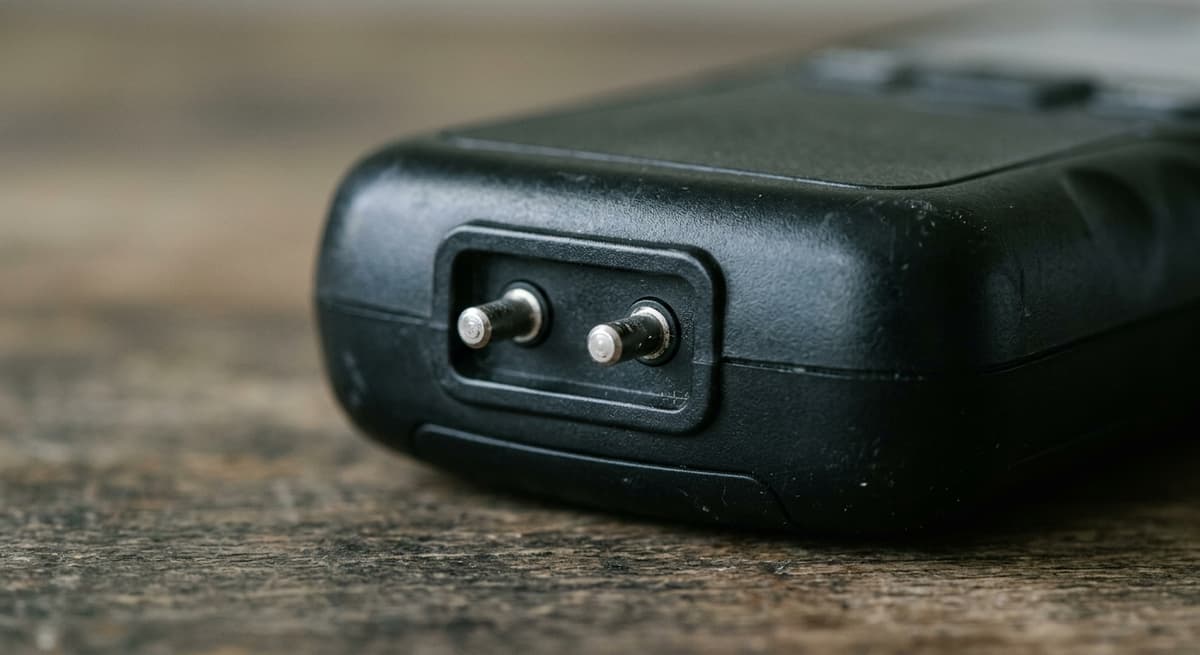
ORS 161.015(6), Oregon's general criminal-code definitions section, states that "'Physical force' includes, but is not limited to, the use of an electrical stun gun, tear gas or mace," which is the state's own textual acknowledgment that a stun gun is treated as capable of inflicting physical force under Oregon law generally, a point that matters for the public-building analysis below. No published Oregon decision squarely decides whether an ordinary self-defense stun gun or pepper spray canister is a "dangerous weapon" under ORS 161.015(1). In a separate context, construing a probation weapons condition, the Oregon Supreme Court's November 2025 decision in State v. Cortes, 374 Or 461, read the 1971 Criminal Code commentary to suggest that an unmodified "weapon," unlike a "deadly" or "dangerous" one, is an instrument "designed to produce injury short of serious physical injury or death such as pepper spray or tear gas." Cortes also recounts that in considering Senate Bill 334 (1993), which amended ORS 166.370 and ORS 166.280 to add an "intentionally" element, the legislature was told "almost anything could constitute a 'dangerous weapon.'"
Where you can't carry either device
Oregon draws a real distinction between two kinds of restricted locations, and the two use different legal tests.

Court facilities. ORS 166.360(10) defines "weapon," for purposes of ORS 166.360 to 166.380, to include, among other items, "(c) Mace, tear gas, pepper mace or any similar deleterious agent as defined in ORS 163.211" and "(d) An electrical stun gun or any similar instrument," by name, alongside firearms, dirks, daggers, slingshots, metal knuckles, clubs, batons, and any dangerous or deadly weapon under ORS 161.015. "Court facility" reaches further than the name suggests. ORS 166.360(2) defines it as "a courthouse or that portion of any other building occupied by a circuit court, the Court of Appeals, the Supreme Court or the Oregon Tax Court, or occupied by personnel related to the operations of those courts, or in which activities related to the operations of those courts take place." That reaches a clerk's counter, judicial or court-staff offices, a jury assembly area, or any part of a building where circuit or appellate court activities take place, not only a courtroom, and a "courthouse" as a whole qualifies regardless of which other courts also sit inside it. A municipal court, justice court, probate court, or juvenile court occupying a building of its own, one that is not also a courthouse and not itself a public building, is a separate "local court facility" under ORS 166.360(7), where ORS 166.370(2)(a)(C) is the only weapons rule, and it reaches firearms only: a person who intentionally possesses "a firearm in a local court facility is guilty, upon conviction, of a Class C felony if, prior to the offense, the presiding judge of the local court facility entered an order prohibiting firearms in the area in which the court conducts business and during the hours in which the court operates." A municipal court or justice of the peace district that shares a courthouse with a circuit court is still inside that courthouse's "court facility," so it remains subject to the surrender-or-remove duty described below, and it cannot cut against the circuit court's own weapons order: under ORS 166.370(2)(c), "within a shared court facility, the presiding judge of a municipal court or justice of the peace district may not enter an order concerning the possession of weapons in the court facility that is in conflict with an order entered by the presiding judge of the circuit court." Inside a true court facility, ORS 166.370(2)(a)(B) provides that a person who intentionally possesses "a weapon, other than a firearm, in a court facility may be required to surrender the weapon to a law enforcement officer or to immediately remove it from the court facility," and "a person who fails to comply with this subparagraph is guilty, upon conviction, of a Class C felony." The felony attaches to failing to comply once surrender or removal is required, not to possession by itself, and ORS 166.370(2)(b) separately lets "the presiding judge of a judicial district or a municipal court" enter an order permitting specified weapons in a court facility outright. So pepper spray or a stun gun carried into a circuit, appellate, Supreme, or Tax Court facility, including its non-courtroom areas, falls within the named "weapon" definition and its surrender-or-remove duty. That duty does not reach a municipal, justice, probate, or juvenile court sitting in a building of its own that is neither a shared courthouse nor a public building, because the duty and the "weapon" definition it uses apply only to a "court facility," not a "local court facility." But a courthouse shared with a circuit court remains a "court facility" regardless of which court is sitting, and a local court that meets in a city hall or other agency building instead falls within the "public building" definition below, where the dangerous-weapon offense, not the named-weapon surrender duty, applies.
Public buildings. ORS 166.360(9) defines "public building" to include a hospital, a capitol building, a public or private school as defined in ORS 339.315, a college or university, a city hall, the residence of any state official elected by the state at large, "and the grounds adjacent to each such building," the passenger terminal of a commercial service airport with more than one million passenger boardings a year, and the portion of any other building occupied by a state, city, county, or district agency, other than a court facility. "Capitol building" is itself defined in ORS 166.360(1) to reach beyond the Capitol itself: it includes "the State Office Building, the State Library Building, the Labor and Industries Building, the State Transportation Building, the Agriculture Building or the Public Service Building," plus new buildings later built on the same grounds. The "grounds adjacent to each such building" clause means the statute is not limited to indoor spaces: a school parking lot, a hospital forecourt, or the grounds around the Capitol are within its reach the same as the building itself. Here, the operative offense, ORS 166.370(1)(a), is written differently: it criminalizes possessing "a loaded or unloaded firearm or any other instrument used as a dangerous weapon," a Class C felony, using the term "dangerous weapon" rather than the "weapon" definition that names pepper spray and stun guns by name. ORS 166.370(8) makes the link explicit: "As used in this section, 'dangerous weapon' means a dangerous weapon as that term is defined in ORS 161.015." That definition, at ORS 161.015(1), is "any weapon, device, instrument, material or substance which under the circumstances in which it is used, attempted to be used or threatened to be used, is readily capable of causing death or serious physical injury." Whether an ordinary pepper spray canister or stun gun meets that circumstance-based test in a public building depends on how it is used, attempted to be used, or threatened to be used in the specific encounter, not on a flat statutory listing the way it is inside a court facility. Several exceptions apply to the public-building offense: ORS 166.370(3)(h) exempts "a person who is authorized by the officer or agency that controls the public building to possess a firearm or dangerous weapon in that public building," and subsection (4)(a) makes that exception, along with the others in subsection (3)(d) to (k), an affirmative defense the defendant must raise rather than an element the state must disprove. Subsection (6) subjects any weapon carried in violation of the section to forfeiture under ORS 166.279.
Local ordinances and state preemption
ORS 166.170(1) states: "Except as expressly authorized by state statute, the authority to regulate in any matter whatsoever the sale, acquisition, transfer, ownership, possession, storage, transportation or use of firearms or any element relating to firearms and components thereof, including ammunition, is vested solely in the Legislative Assembly." Subsection (2) uses the same "except as expressly authorized by state statute" opening and voids a conflicting local ordinance that attempts to regulate those same firearm-related activities. That opening qualifier matters, because the Legislative Assembly has used it: ORS 166.173(1) states that "a city or county may adopt ordinances to regulate, restrict or prohibit the possession of loaded firearms in public places as defined in ORS 161.015," subject to exceptions for law enforcement, military personnel on duty, and a person licensed to carry a concealed handgun. Pepper spray and stun guns are not named anywhere in either statute, so Oregon cities, counties, and other municipal corporations are not state-blocked from adopting their own ordinances regulating either device, the same room ORS 166.173 shows the legislature knows how to grant, but has granted only for loaded firearms in public places, not for pepper spray or stun guns.
Federal law: what it does and does not reach
No federal statute regulates a civilian's purchase or possession of pepper spray or a stun gun. Federal law matters in three places.
Federal buildings. Under 18 U.S.C. § 930(a), whoever knowingly possesses or causes to be present "a firearm or other dangerous weapon in a Federal facility (other than a Federal court facility)" faces a fine, imprisonment of up to 1 year, or both. Subsection (e) sets up to 2 years for a federal court facility, and subsection (b) up to 5 years where the weapon is intended to be used in a crime. Section 930(g)(2) defines the term:
The term "dangerous weapon" means a weapon, device, instrument, material, or substance, animate or inanimate, that is used for, or is readily capable of, causing death or serious bodily injury, except that such term does not include a pocket knife with a blade of less than 2½ inches in length.
The definition names neither device. Whether a particular spray or stun gun is "readily capable of" causing serious bodily injury is a question of fact the statute does not answer. Subsection (d)(3) exempts "the lawful carrying of firearms or other dangerous weapons in a Federal facility incident to hunting or other lawful purposes," and subsection (h) requires notice of the ban to be posted at each public entrance. A "Federal facility" is "a building or part thereof owned or leased by the Federal Government, where Federal employees are regularly present for the purpose of performing their official duties."
Air travel. The Transportation Security Administration's screening rules, which are agency policy rather than statute, bar both devices from carry-on bags. One 4 fl. oz. (118 ml) container of mace or pepper spray is permitted in checked baggage if it has a safety mechanism to prevent accidental discharge, and sprays containing more than 2 percent by mass of tear gas (CS or CN) are prohibited in checked baggage. Tasers, stun guns and other electro-shock weapons may travel in checked baggage only if transported so the device cannot discharge accidentally. Airlines may set stricter rules.
National parks. National Park Service regulations prohibit possessing, carrying or using a "weapon" in a park area except as the regulations provide (36 CFR 2.4(b)(1)). 36 CFR 1.4 defines "weapon" to include an "irritant gas device" and any "weapon the possession of which is prohibited under the laws of the State in which the park area or portion thereof is located."
Disclaimer: This article provides general legal information about Oregon's pepper spray and stun gun laws as of September 2026. It is not legal advice. Consult a lawyer licensed in Oregon for advice about a specific situation.
For a state-by-state comparison, see pepper spray and stun gun laws by state. Oregon's self-defense statutes are covered separately on the Oregon self-defense laws page.
Statutes cited reflect their in-force version as of 2026-09-18. Last updated: 2026-09-18.
Frequently Asked Questions
Do you need a permit for pepper spray or a stun gun in Oregon?
No permit is required to buy or openly possess and carry either device; no section of the Oregon Revised Statutes that names pepper spray or a stun gun sets a permit, age minimum, or dealer-license requirement. Concealed carry is a separate question: ORS 166.240's concealed-weapons statute does not name either device, but its list ends in an open 'or any similar instrument by the use of which injury could be inflicted' clause rather than closing after metal knuckles, so whether it reaches a concealed spray or stun gun is not resolved by the statute's own text. The Oregon Supreme Court has read that residual clause narrowly in a related context involving knives, not sprays or stun guns: State v. Cortes (2025), citing City of Portland v. Lodi (1989), says the clause was meant to restrict only bladed instruments historically used in combat.
What happens if you discharge pepper spray or a stun gun against someone in Oregon?
It depends on intent and the target, and neither offense carries a written self-defense exception. ORS 163.212 makes reckless discharge against any person a Class A misdemeanor, full stop; justification for a self-defense spray comes from Oregon's general defenses, raised separately, not from an exception inside the statute, so hitting a bystander while justifiably spraying an attacker is still a reckless discharge against that bystander. ORS 163.213 raises the offense to a Class C felony only if the person knowingly discharges it against someone known to be a peace officer, corrections officer, parole and probation officer, firefighter, or EMS provider acting in official duty.
Can you bring pepper spray or a stun gun into an Oregon courthouse?
It depends which court, and 'court facility' reaches further than the courtroom itself. ORS 166.360(2) defines 'court facility' as a courthouse or the portion of a building occupied by a circuit court, the Court of Appeals, the Supreme Court, or the Oregon Tax Court, or occupied by personnel related to the operations of those courts, or in which activities related to the operations of those courts take place, so a clerk's counter or a judge's office counts too. ORS 166.360(10) defines 'weapon' there to include mace, tear gas, pepper mace, and an electrical stun gun by name, and ORS 166.370(2)(a)(B) says a person possessing one 'may be required' to surrender it to a law enforcement officer or immediately remove it, with failing to comply once required a Class C felony (the presiding judge may also permit specified weapons by order). A municipal, justice, probate, or juvenile court occupying a building of its own, and not itself a public building, is a separate 'local court facility,' where the only weapons rule reaches firearms only. But a municipal or justice court that shares a courthouse with a circuit court is still inside that courthouse's 'court facility,' so the surrender-or-remove duty for pepper spray or a stun gun applies there too, and such a court cannot enter an order conflicting with the circuit court's own; a local court that sits in a city hall or other agency building instead falls under the public-building rule.
Is pepper spray or a stun gun banned from Oregon schools and hospitals?
It is not a flat ban the way it is in a courthouse. Schools, hospitals, and similar sites are 'public buildings' under ORS 166.360(9), a definition that also reaches the grounds adjacent to each such building, not just its interior, and the offense that applies there, ORS 166.370(1)(a), reaches 'a dangerous weapon' as defined by cross-reference in ORS 161.015(1), any device 'readily capable of causing death or serious physical injury' under the circumstances of its use, rather than the named 'weapon' list used for court facilities. The agency or officer controlling the building can authorize possession under ORS 166.370(3)(h), which the defendant raises as an affirmative defense under subsection (4)(a).
Can Oregon cities regulate pepper spray or stun guns locally?
Yes. Oregon's firearms preemption statute, ORS 166.170, reserves regulation of firearms and their components to the Legislative Assembly 'except as expressly authorized by state statute,' a carve-out the legislature has used for loaded firearms in public places specifically, under ORS 166.173. Neither statute mentions pepper spray or stun guns, so a city or county is not state-blocked from adopting its own ordinance for either device.
Updates
Independently fact-checked against the cited primary sources
Sources and References
- ORS 163.211 - Definitions for ORS 163.211 to 163.213(oregonlegislature.gov).gov
- ORS 163.212 - Unlawful use of an electrical stun gun, tear gas or mace in the second degree(oregonlegislature.gov).gov
- ORS 163.213 - Unlawful use of an electrical stun gun, tear gas or mace in the first degree(oregonlegislature.gov).gov
- ORS 166.170 - State preemption (authority to regulate firearms)(oregonlegislature.gov).gov
- ORS 166.173 - Authority of city or county to regulate possession of loaded firearms in public places(oregonlegislature.gov).gov
- ORS 166.240 - Carrying of concealed weapons(oregonlegislature.gov).gov
- ORS 166.360 - Definitions for ORS 166.360 to 166.380 ('public building,' 'court facility,' 'weapon')(oregonlegislature.gov).gov
- ORS 166.370 - Possession of firearm or dangerous weapon in public building or court facility(oregonlegislature.gov).gov
- ORS 161.015 - General definitions ('dangerous weapon,' 'physical force')(oregonlegislature.gov).gov
- State v. Cortes, 374 Or 461 (2025)(courtlistener.com)
- 18 U.S.C. § 930 - Possession of firearms and dangerous weapons in Federal facilities(law.cornell.edu)
- Transportation Security Administration - What Can I Bring? Pepper Spray(tsa.gov).gov
- Transportation Security Administration - What Can I Bring? Stun Guns/Shocking Devices(tsa.gov).gov
- 36 CFR 1.4 - National Park Service definitions (weapon)(ecfr.gov).gov
- 36 CFR 2.4 - Weapons, traps and nets(ecfr.gov).gov