AI in Court: Rules, Sanctions and Judges' Use (2027)
Independently fact-checked against primary sources (last audited November 6, 2026). · Law checked current as of November 6, 2026. · 35 primary sources cited on this page. How we verify our legal content
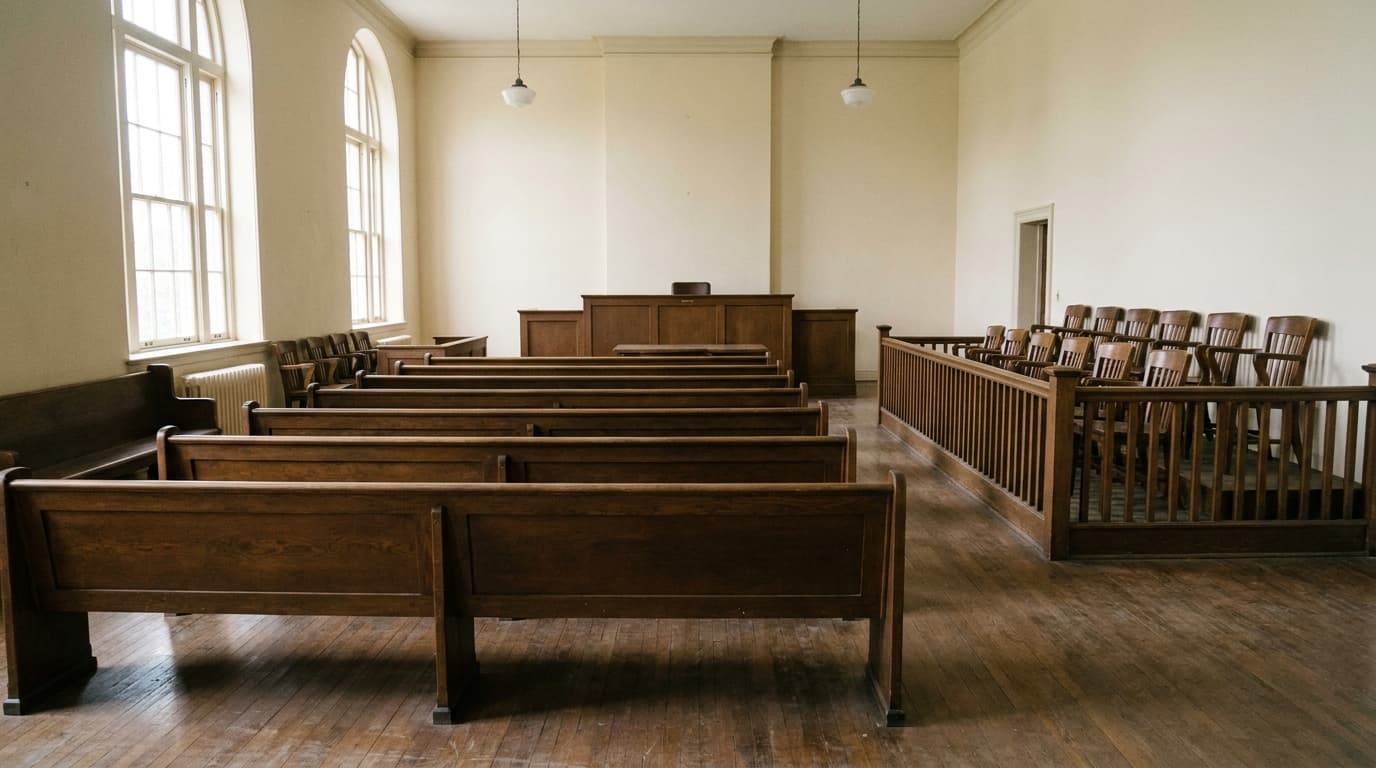
"AI in court" covers how judges, lawyers and self-represented litigants may use generative AI tools such as ChatGPT in court cases, and what happens when the tools get things wrong. As of November 6, 2026, no national federal rule bans or specifically regulates the use of AI in court filings; what courts enforce is the existing duty to check every citation, under Federal Rule of Civil Procedure 11, its state equivalents and the ethics rules, and courts have sanctioned both lawyers and self-represented litigants for filing fake, AI-generated citations.
Some states, some federal district courts and many individual judges add their own requirements. Among the states we checked, Florida, Connecticut and Indiana have adopted statewide filing rules: Florida makes every signer certify that cited authorities exist, Connecticut requires anyone who uses generative AI on a filing to verify what it produced, and Indiana's trial rules make a signature certify that any cited legal authority is authentic. Illinois and New York say lawyers and parties should not be required to disclose that they used AI.
Status as of November 6, 2026: The federal Civil Rules Advisory Committee dropped AI rulemaking in April 2026, and a new suggestion to add a citation-accuracy line to Rule 11 was on its October 21, 2026 agenda with a staff recommendation to drop it; the outcome of that meeting is not yet confirmed. Maryland's proposed citation-verification rule is open for comment until November 19, 2026, and Texas's proposed rule changes have preliminary approval only.
This page covers US federal and state courts. It does not cover how AI-generated evidence is admitted, which has its own page on deepfake evidence in court, and it does not cover AI laws outside the courtroom, which are tracked in our AI laws hub.
What courts require when lawyers and litigants use AI
The short answer is that courts care about what you file, not which tool helped write it. Anyone who signs a court filing vouches for it, and that duty does not change because a chatbot produced the first draft.
In the case that made the issue famous, Judge P. Kevin Castel of the Southern District of New York wrote in June 2023 that there is "nothing inherently improper about using a reliable artificial intelligence tool for assistance. But existing rules impose a gatekeeping role on attorneys to ensure the accuracy of their filings." The Second Circuit put the floor plainly in Park v. Kim (January 30, 2024): "At the very least, the duties imposed by Rule 11 require that attorneys read, and thereby confirm the existence and validity of, the legal authorities on which they rely."
State appellate courts say the same. In Noland v. Land of the Free, a published opinion filed September 12, 2025, the California Court of Appeal held that "no brief, pleading, motion, or any other paper filed in any court should contain any citations--whether provided by generative AI or any other source--that the attorney responsible for submitting the pleading has not personally read and verified."
ABA Formal Opinion 512
The American Bar Association's Standing Committee on Ethics and Professional Responsibility issued Formal Opinion 512, "Generative Artificial Intelligence Tools," on July 29, 2024. It says lawyers using these tools "must fully consider their applicable ethical obligations," and it maps them onto the ABA Model Rules:
- Competence (Rule 1.1): relying on AI output without "an appropriate degree of independent verification or review" could violate the duty of competence, and the amount of checking depends on the tool and the task.
- Confidentiality (Rule 1.6): for self-learning tools, "a client's informed consent is required prior to inputting information relating to the representation into such a GAI tool." Boilerplate consent language in an engagement letter is not enough.
- Communication (Rule 1.4): whether a lawyer must tell a client about AI use depends on the facts, though lawyers must disclose it if the client asks or the engagement terms require it.
- Candor and meritorious claims (Rules 3.1, 3.3 and 8.4(c)): before filing, lawyers must review AI output, "including analysis and citations to authority," and correct errors.
- Supervision (Rules 5.1 and 5.3): supervising lawyers must make reasonable efforts to ensure that the firm's lawyers and nonlawyers follow these duties when using AI.
- Fees (Rule 1.5): lawyers who bill hourly "must bill for their actual time."
Opinion 512 is an ethics opinion interpreting the ABA Model Rules. It is not binding law; each state's courts and bar regulator apply that state's own professional conduct rules. The opinion also notes that "some courts have responded by requiring lawyers to disclose their use of GAI" and tells lawyers to check the applicable court's local rules.
Federal courts: no national AI rule
As of November 6, 2026, no national federal rule on AI in court filings, in the Federal Rules of Civil, Criminal or Appellate Procedure, has been adopted or published for public comment. Some district courts and individual judges have their own AI orders, described below.
The Advisory Committee on Civil Rules considered two proposals about AI "hallucinations" at its April 14, 2026 meeting. According to its minutes, the committee "agreed that rulemaking would not be appropriate at this time, while also recognizing that AI may return to the agenda as warranted," and then "unanimously voted to drop this item from the agenda."
A new suggestion followed. On May 29, 2026, a federal magistrate judge in the Middle District of Florida proposed adding a Rule 11(b)(5) under which a signer would certify that "the legal authorities exist and are accurately cited" (suggestion 26-CV-21). The reporters' memo in the committee's October 21, 2026 agenda book says "for now it seems that current Rule 11 is sufficient to support appropriate judicial action" and suggests dropping the item. That memo is a staff recommendation, not a committee vote, and the outcome of the October meeting is not yet confirmed.
The Fifth Circuit went through the same exercise. Its February 18, 2026 opinion in Fletcher v. Experian explains that the court studied a rule, published notice of it dated January 4, 2024, that would have required counsel and pro se litigants to certify either that no generative AI was used or that a human checked any AI-generated text. The court declined to adopt it and instead "issued a notice on our court website reminding counsel of their obligation to review all filings for accuracy," concluding that existing rules, including Federal Rule of Appellate Procedure 46(c) and its inherent power, were sufficient.
Local orders and judges' standing orders
Below the national level, the picture is a patchwork. Some federal district courts have court-wide orders: the District of Wyoming's General Order 25-01 on the use of AI in preparing filings warns that filing AI-generated citations to non-existent cases "is strictly prohibited and subject to sanction." Many individual federal judges also have their own standing orders or practice rules on AI, and the requirements differ from judge to judge.
If you have a federal case, read the local rules and general orders of your district and the individual practices page of the judge assigned to your case before you file. Those pages, not a national rule, tell you whether that judge wants any AI certification.
State courts: from no disclosure to citation certification
State courts have taken different approaches, and they fall into a few groups. The table below shows examples, each as of November 6, 2026; it is not a list of every state.
Our court AI rules by state page has a row for every state and the District of Columbia, covering court rules on filings, courts' own AI policies and bar ethics guidance.

| State | What it is | Who it covers | Status |
|---|---|---|---|
| Florida | Rule 2.515(d)(2): signer certifies the legal authorities "exist and are accurately cited"; AOSC26-12 bars local AI disclosure requirements | Attorneys and unrepresented parties | In force since June 15, 2026 |
| Connecticut | Practice Book Sec. 4-9(b): anyone who uses generative AI to create or edit a filing must "independently verify all citations, legal authorities or evidence produced by generative AI"; under Sec. 4-2(b), signing certifies compliance with Sec. 4-9; appellate Secs. 60-4, 62-6 and 85-2 apply the same duty on appeal | Attorneys and self-represented parties | Superior Court rules in force since June 23, 2026; appellate rules since July 14, 2026 |
| Indiana | Trial Rule 11(B) and new Trial Rule 11.1(C): a signature certifies "that any cited legal authority is authentic"; both rules expressly cover filings "prepared with the assistance of artificial intelligence"; courts may strike noncompliant filings | Attorneys and unrepresented parties in trial-court civil cases | In force since August 1, 2026 |
| Illinois | Supreme Court AI policy: AI use "is authorized" if it complies with legal and ethical standards; disclosure "should not be required in a pleading" | Litigants, attorneys, judges and court staff | In force since January 1, 2025 |
| New York | Part 161 (AO/75/2026): AI use by attorneys and parties "should not be prohibited," and they "should not be required" to disclose it; a model certification rule is optional for each court | Attorneys and parties in all courts of the Unified Court System | In force since June 1, 2026 |
| California | Rule of Court 10.430 (court AI use policies) and Standard 10.80 (judicial officers) | Court staff and judicial officers | Rule and standard effective September 1, 2025; court policies were due December 15, 2025 |
| Pennsylvania | Supreme Court interim policy on generative AI (No. 643 Judicial Administration Docket) | Judicial officers and court personnel, not lawyers | Effective December 8, 2025 |
| Maryland | Proposed amendment to Rule 1-311: an attorney's signature would certify the attorney "has confirmed the existence and authenticity of each legal authority cited" | Attorneys | Proposed in the Rules Committee's 229th Report; comments due November 19, 2026 |
| Texas | Proposed amendments to Civil Procedure Rule 13 and Appellate Rules 9 and 52: the signer represents that citations, quotations and holdings "are not fabricated" | Attorneys and self-represented parties | Preliminary approval June 26, 2026 (Misc. Docket No. 26-9054); final approval not confirmed |
No mandatory disclosure. Illinois and New York chose not to require anyone to disclose AI use. New York's Part 161 lets each court adopt a model rule under which an attorney or party who uses AI certifies, by signing, that the paper was reviewed and contains no fabricated cases; adopting it is up to each court, so it is not a statewide certification requirement.
Citation certification instead of AI disclosure. Among the states we checked, Florida, Connecticut and Indiana have adopted statewide rules. The Florida Supreme Court's opinion amending Rule 2.515 (No. SC2026-0673, May 28, 2026) says the rule applies "both to filings prepared by attorneys and to filings prepared by unrepresented parties," and that it was adopted "principally to create a statewide, uniform replacement" for varied local orders on AI disclosure and certification. The companion administrative order AOSC26-12 says that "courts may not impose such requirements" through local orders, policies or practices. The rule asks whether the citations are real and accurate, not whether AI was used.
Connecticut's rule turns on AI use but does not require disclosing it. Practice Book Section 4-9(b), effective on publication in the Connecticut Law Journal on June 23, 2026, says "any person who uses generative AI in the creation or editing of any document filed with the court shall independently verify all citations, legal authorities or evidence produced by generative AI," and a failure may bring sanctions including a nonsuit or default judgment. Revised Section 4-2(b) makes signing a certificate that "the signer has complied with" Section 4-9 "regarding generative AI." Appellate Sections 60-4, 62-6 and 85-2, effective July 14, 2026, carry the same duty into the appellate courts for counsel and self-represented parties.
Indiana's rule does not turn on AI use at all. The Indiana Supreme Court's July 14, 2026 order (Cause No. 26S-MS-8), effective August 1, 2026, says trial judges had reported "filings prepared with the assistance of artificial intelligence and filings containing fictitious legal authority or fabricated legal citations." Amended Trial Rule 11(B) now makes an attorney's signature certify "that any cited legal authority is authentic," new Trial Rule 11.1 applies the same certification to parties without a lawyer, and both rules say they cover submissions "prepared with the assistance of artificial intelligence, the internet, or other resources." A court may strike a filing that does not comply.
Proposals under review. Maryland and Texas have proposals for citation-verification rules like Florida's. Maryland's Rules Committee also proposed AI-related comments to the state's versions of the professional conduct rules on competence, confidentiality, candor and nonlawyer assistance. Texas's preliminary order says that verifying a filing for accuracy "is important, regardless of whether artificial intelligence was used." Neither is in force.
For state-specific AI legislation outside the courts, see our pages on California AI laws, Illinois AI laws and New York AI laws.
Fake AI citations and sanctions
When a filing cites cases that do not exist, courts have a range of tools: fines paid to the court, orders to pay the other side's fees, striking the filing, referral to a grievance panel or state bar, disqualification from the case, required ethics training and orders to send the ruling to the client. The legal basis varies: Rule 11 in federal trial courts, appellate rules and inherent power in the courts of appeals, and each state's own court rules.

| Case | Court and date | Sanction | Basis |
|---|---|---|---|
| Mata v. Avianca, Inc., No. 22-cv-1461 | S.D.N.Y., June 22, 2023 | $5,000 jointly against two lawyers and their firm, plus letters to the client and to each judge falsely named as the author of a fake opinion | Rule 11 and, alternatively, the court's inherent power; the court declined to sanction separately under 28 U.S.C. 1927 |
| Park v. Kim, No. 22-2057 | Second Circuit, January 30, 2024 | Referral of the lawyer to the court's Grievance Panel; no fine | Rule 11 duties; referral under the court's Local Rule 46.2 |
| Noland v. Land of the Free, L.P., No. B331918 | California Court of Appeal, Second District, September 12, 2025 (published) | $10,000 payable to the court; opinion served on the client and on the State Bar | California Rules of Court, rule 8.276 |
| Fletcher v. Experian Information Solutions, Inc., No. 25-20086 | Fifth Circuit, February 18, 2026 | $2,500 against the appellant's lawyer | Federal Rule of Appellate Procedure 46(c) and inherent power |
Candor can affect the outcome. In Fletcher, the lawyer admitted using AI only when asked directly, and the Fifth Circuit wrote that "had Hersh accepted responsibility and been more forthcoming, it is likely that the court would have imposed lesser sanctions."
Other courts have chosen non-monetary or training sanctions. In Johnson v. Dunn (N.D. Ala., July 23, 2025), the court imposed no fine but publicly reprimanded three lawyers, disqualified them from the case and referred the matter to the Alabama State Bar. In Gauthier v. Goodyear (E.D. Tex., November 25, 2024), the court ordered a $2,000 penalty and at least one hour of continuing legal education on generative AI.
How many cases are there? There is no official national count. In Fletcher, the Fifth Circuit reported that an independent researcher's database had identified 239 cases of hallucination by lawyers in the United States as of February 18, 2026, a figure that excluded cases involving pro se litigants and judges. That is a tracker's number as quoted by the court, not a court finding.
Fake citations can hurt a party even without a sanction. In September 2026 the Idaho Supreme Court affirmed a defamation judgment, declined to reach most of the appellant's issues for failing its appellate standards, and said only six of twenty-two quotations in her brief were accurate; we covered that Idaho defamation appeal with apparent AI citations separately.
Self-represented litigants are sanctioned too
Representing yourself does not lower the standard. In Lothamer Tax Resolution, Inc. v. Kimmel (W.D. Mich.), the court found on December 1, 2025 that a pro se defendant violated Rule 11 and fined him $2,900, $100 for each of 29 false citations. He denied using generative AI, and the court said it did not need to decide whether he did; the sanction rested on the false citations themselves.
In Everett J. Prescott, Inc. v. Beall (D. Me., July 24, 2025), a pro se defendant admitted using AI software that produced inaccurate and fictitious citations. The court imposed no fine. Instead it ordered him to include, with every future filing, "a written representation that he has personally checked each legal citation and each citation is accurate and stands for its asserted proposition."
Our AI fake citation sanctions tracker lists more of these decisions, newest first, with each court's sanction and legal basis.
Judges' and courts' own use of AI
Several state court systems have written rules for how judges and court staff may use AI:
- California: Rule of Court 10.430 required every court that does not prohibit generative AI to adopt a use policy by December 15, 2025, covering staff and judicial officers' tasks outside their adjudicative role. Standard 10.80, effective September 1, 2025, says judicial officers "should take reasonable steps to verify" AI material, including material prepared for them by others, and "should consider whether to disclose" AI use in content provided to the public.
- Illinois: the Supreme Court's policy, effective January 1, 2025, says "Judges remain ultimately responsible for their decisions, irrespective of technological advancements."
- New York: the Unified Court System's Interim Policy on the Use of AI, effective October 2025, applies "to all judges and nonjudicial employees" and limits them to AI products the court system has approved.
- Pennsylvania: the Supreme Court's interim policy for judicial officers and court personnel took effect December 8, 2025.
- Delaware: the Supreme Court's interim policy for judicial officers and court personnel, in effect since October 21, 2024, says that authorized users "may not delegate their decision-making function" to approved generative AI.
Can AI be the judge? None of the state judicial AI policies we read lets an AI tool decide a case. Delaware's policy bars handing decision-making to AI, and Illinois's keeps judges responsible for their decisions. That is a negative limited to the policies listed above, as of November 6, 2026.
Federal judges' orders replaced or removed in 2025
Two federal judges replaced or removed orders containing errors in July 2025. In a Southern District of Mississippi challenge to the state's anti-DEI law (on appeal as Jackson Federation of Teachers v. Fitch), Judge Henry Wingate's July 20, 2025 temporary restraining order was removed from the docket and replaced with a corrected version that, according to the Fifth Circuit, was docketed on July 22, 2025 and backdated to July 20, and an August 1, 2025 order described the errors as "clerical." In a published opinion filed October 22, 2026, the Fifth Circuit recorded that the judge later "admitted the errors, claiming that a law clerk had used AI to assist drafting an earlier version of the TRO that was docketed by mistake," vacated the preliminary injunction, and directed that the case be reassigned to a different district judge. Our news report on the Fifth Circuit reassignment covers that opinion in detail.
In In re CorMedix Inc. Securities Litigation (D.N.J.), Judge Julien Xavier Neals issued a text order on July 23, 2025 saying a June 30, 2025 opinion and order "were entered in error" and directing that they be removed from the docket. The text order does not give a reason and does not mention AI.
If you represent yourself
Courts that have published guidance for self-represented filers generally allow AI help, but you are responsible for every word you file. The U.S. District Court for the Northern District of California tells pro se filers that "using AI in arguing your case is permitted" but "regardless of which tools you use, you are responsible for everything you file with the Court." The same page tells filers to "confirm that any cited case exists" and warns that AI use may be discoverable by the other side.
California's Fourth Appellate District put it more briefly in an October 31, 2025 self-help notice: "You must make sure all court papers are correct, even if AI helped," and "AI is not a lawyer." Illinois's policy expressly covers self-represented litigants, New York's Part 161 applies to parties as well as attorneys, Florida's citation rule applies to unrepresented parties, and Connecticut's rule applies to any person who uses generative AI on a filing.
Before you file, open and read every case, statute and quotation you cite in an official source, and check your judge's standing orders. Court self-help centers, legal aid programs funded by the Legal Services Corporation, and state bar lawyer referral services can help you find a person to review your papers. Our page on whether AI can give legal advice covers unauthorized practice of law, what AI providers' own terms say, and where to find free or low-cost legal help.
Are your AI chats private?
Not necessarily, at least when you use a public chatbot on your own. In United States v. Heppner (S.D.N.Y., No. 25 Cr. 503), Judge Jed S. Rakoff ruled from the bench on February 10, 2026 and explained in a February 17, 2026 memorandum that about 31 documents memorializing a criminal defendant's own exchanges with Anthropic's Claude were not protected by attorney-client privilege or the work product doctrine. The court wrote: "No such relationship exists, or could exist, between an AI user and a platform such as Claude."
The court also found the exchanges were not confidential, given a privacy policy reserving the right to disclose data to third parties, and that they were not prepared at the direction of counsel. The ruling addresses a defendant acting on his own with a consumer AI tool; it did not decide whether AI use directed by a lawyer is protected. The legal-advice page covers privilege in more detail.
AI-generated evidence
Whether AI-generated or AI-altered evidence is admissible is a separate question from AI in filings. Proposed Federal Rule of Evidence 707, on machine-generated evidence offered without an expert, was not advanced at the Evidence Rules Committee's May 2026 meeting; the committee revised it for further study and did not republish it for comment. Our page on deepfake evidence in court covers Rule 707 and authentication rules in full.
Lawsuits over AI chatbot harm
Separate from courtroom rules, families and state attorneys general have filed lawsuits alleging that AI chatbots harmed users, including minors. Those cases are allegations under product-liability and consumer-protection law, and their status is tracked on our AI chatbot lawsuit page.
Outside the US, some courts have taken a different approach; Ireland's High Court and Court of Appeal, for example, adopted practice directions on generative AI in court documents in 2026.
What to Watch in 2027
These are the dated and pending events in the record as of November 6, 2026. None has a confirmed 2027 date unless stated.
- Maryland Rule 1-311: comments on the Rules Committee's 229th Report are due November 19, 2026. The Supreme Court of Maryland would act on the proposal by a later rules order; no date is set.
- Texas Rule 13 and Appellate Rules 9 and 52: the June 26, 2026 preliminary-approval order said the court expected the changes to take effect October 1, 2026, but we found no final approval order on the court's 2026 administrative orders list as of November 6, 2026. Until a final order issues, the changes are proposals.
- Federal Rule 11 suggestion 26-CV-21: the Civil Rules Advisory Committee's decision at its October 21, 2026 meeting is not yet confirmed. No further date is set.
- Federal Rule of Evidence 707: the Evidence Rules Committee said a revised Rule 707 would need to be republished for comment if it goes forward. Its October 15, 2026 meeting outcome is not yet confirmed, and no publication date is set.
- Florida Rule 2.515: the rule is in force; the Florida Supreme Court accepted comments through August 11, 2026, and no later amendment was found as of November 6, 2026.
- New York Part 161 model rule: individual courts may adopt the optional certification rule at any time; there is no statewide deadline.
Related pages
- Can AI give legal advice?
- Court AI rules by state
- AI fake citation sanctions tracker
- Deepfake evidence in court
- AI chatbot lawsuits
- AI laws by state
- Fifth Circuit orders reassignment after hallucinated citations
This page is general legal information about US federal and state court rules on AI, verified as of November 6, 2026. It is not legal advice. For advice about a specific case, talk to a lawyer licensed in your state.
Frequently Asked Questions
Can you use AI in court?
Generally yes, with limits. As of November 6, 2026, no national federal rule bans AI in court filings; Illinois's court policy authorizes it, and New York's says it should not be prohibited. But whoever signs a filing is responsible for it, and courts have sanctioned lawyers and self-represented litigants for fake AI-generated citations. Some individual judges have standing orders on AI, so check the assigned judge's rules.
Do you have to tell the court you used AI?
Usually not. As of November 6, 2026, no national federal rule requires disclosure, Illinois and New York court policies say lawyers and parties should not be required to disclose AI use, and Florida bars its local courts from imposing AI disclosure requirements. Connecticut requires anyone who uses generative AI on a filing to verify what it produced, but does not require disclosing the use, and Indiana requires a signer to certify that cited authority is authentic without asking whether AI was used. Some individual federal judges do require a certification, so read the local rules and the assigned judge's standing orders before filing.
What happens if a lawyer cites fake AI cases?
Courts have fined lawyers, referred them to grievance panels and state bars, disqualified them from cases and ordered ethics training. Examples include a $5,000 sanction in Mata v. Avianca (S.D.N.Y., 2023), a $10,000 sanction in Noland v. Land of the Free (California Court of Appeal, 2025) and a $2,500 sanction in Fletcher v. Experian (Fifth Circuit, 2026).
Can a self-represented person use ChatGPT for court papers?
Courts such as the Northern District of California say pro se filers may use AI, but they are responsible for everything they file. A federal court in Michigan fined a pro se defendant $2,900 under Rule 11 in December 2025 for 29 false citations, and a federal court in Maine required a pro se defendant who admitted using AI to certify every citation in future filings. Check every case you cite in an official source.
Do judges use AI?
Some court systems allow it under written policies. California, Illinois, New York, Pennsylvania and Delaware have AI policies covering judges or court staff, and, as of November 6, 2026, none we read lets AI decide a case. In October 2026 the Fifth Circuit recorded that a Mississippi federal judge admitted a law clerk had used AI to help draft an earlier version of a 2025 order that contained errors.
Are my ChatGPT conversations privileged?
Not necessarily. In United States v. Heppner (S.D.N.Y., February 2026), the court held that a criminal defendant's own exchanges with a public AI chatbot, made without his lawyer's direction, were not protected by attorney-client privilege or work product. The court did not decide whether AI use directed by a lawyer is protected.
Is there a federal rule on AI in court?
No national rule as of November 6, 2026, though some district courts and judges have their own AI orders. The federal Civil Rules Advisory Committee declined AI rulemaking in April 2026, and the Fifth Circuit declined to adopt an AI certification rule. A suggestion to add a citation-accuracy line to Rule 11 was on the committee's October 21, 2026 agenda with a staff recommendation to drop it; the outcome is not yet confirmed. Federal courts rely on Rule 11 and their inherent power.
Updates
Independently fact-checked against the cited primary sources; governing law re-checked for recent changes
Sources and References
- In re Amendments to Florida Rule of General Practice and Judicial Administration 2.515, No. SC2026-0673 (Fla. May 28, 2026)(flcourts-media.flcourts.gov).gov
- Advisory Committee on Civil Rules, minutes of April 14, 2026 meeting(www.uscourts.gov).gov
- Advisory Committee on Civil Rules, agenda book for October 21, 2026 meeting (Tab 15)(www.uscourts.gov).gov
- Maryland Standing Committee on Rules of Practice and Procedure, 229th Report(www.mdcourts.gov).gov
- Supreme Court of Texas, Misc. Docket No. 26-9054, Preliminary Approval of Amendments to Tex. R. Civ. P. 13 and Tex. R. App. P. 9 and 52 (June 26, 2026)(www.txcourts.gov).gov
- Mata v. Avianca, Inc., No. 22-cv-1461 (S.D.N.Y.), Opinion and Order on Sanctions, June 22, 2023(storage.courtlistener.com).gov
- Noland v. Land of the Free, L.P., No. B331918 (Cal. Ct. App. Sept. 12, 2025)(courts.ca.gov).gov
- Fletcher v. Experian Information Solutions, Inc., No. 25-20086 (5th Cir. Feb. 18, 2026)(www.ca5.uscourts.gov).gov
- Illinois Supreme Court Policy on Artificial Intelligence (effective January 1, 2025)(www.illinoiscourts.gov).gov
- New York Administrative Order AO/75/2026 adding 22 NYCRR Part 161 (effective June 1, 2026)(www.nycourts.gov).gov
- ABA Standing Committee on Ethics and Professional Responsibility, Formal Opinion 512, Generative Artificial Intelligence Tools (July 29, 2024)(www.americanbar.org).gov
- Delaware Supreme Court, Order adopting Interim Policy on the Use of Generative AI by Judicial Officers and Court Personnel (Oct. 21, 2024)(courts.delaware.gov).gov
- United States v. Heppner, No. 25 Cr. 503 (S.D.N.Y.), Memorandum, Feb. 17, 2026(storage.courtlistener.com).gov
- Park v. Kim, No. 22-2057 (2d Cir. Jan. 30, 2024)(storage.courtlistener.com).gov
- Suggestion 26-CV-21, proposed Fed. R. Civ. P. 11(b)(5)(www.uscourts.gov).gov
- U.S. District Court for the District of Wyoming, General Order 25-01, Use of Artificial Intelligence in the Preparation of Filings(www.wyd.uscourts.gov).gov
- Florida Supreme Court Administrative Order AOSC26-12 (May 28, 2026)(flcourts-media.flcourts.gov).gov
- California Rules of Court, rule 10.430, Generative artificial intelligence use policies(courts.ca.gov).gov
- California Standards of Judicial Administration, standard 10.80(courts.ca.gov).gov
- Pennsylvania Supreme Court, In re Interim Policy on the Use of Generative AI by Judicial Officers and Court Personnel, No. 643 Judicial Administration Docket(www.pacourts.us).gov
- Johnson v. Dunn, No. 2:21-cv-1701 (N.D. Ala.), Sanctions Order, July 23, 2025(storage.courtlistener.com).gov
- Gauthier v. Goodyear Tire & Rubber Co., No. 1:23-CV-281 (E.D. Tex.), Memorandum and Order, Nov. 25, 2024(storage.courtlistener.com).gov
- Lothamer Tax Resolution, Inc. v. Kimmel, No. 1:25-cv-00579 (W.D. Mich.), Order, Dec. 1, 2025(storage.courtlistener.com).gov
- Everett J. Prescott, Inc. v. Beall, No. 1:25-cv-00071 (D. Me.), Order, July 24, 2025(storage.courtlistener.com).gov
- New York Unified Court System, Interim Policy on the Use of Artificial Intelligence (October 2025)(www.nycourts.gov).gov
- Delaware Judicial Branch Interim Policy on the Use of Generative AI(courts.delaware.gov).gov
- S.D. Miss. No. 3:25-cv-00417, Order of Aug. 1, 2025 (ECF 65)(storage.courtlistener.com).gov
- Jackson Federation of Teachers v. Fitch, No. 25-60496 (5th Cir. Oct. 22, 2026)(www.ca5.uscourts.gov).gov
- In re CorMedix Inc. Securities Litigation (D.N.J.), docket, text order ECF 126 (July 23, 2025)(www.courtlistener.com)
- U.S. District Court for the Northern District of California, Using AI Tools in Your Case(cand.uscourts.gov).gov
- California Court of Appeal, Fourth Appellate District, Using AI for Your Court Case? Read This First (Oct. 31, 2025)(appellate.courts.ca.gov).gov
- Advisory Committee on Evidence Rules, report to the Standing Committee (May 2026)(www.uscourts.gov).gov
- Supreme Court of Texas, 2026 administrative orders(www.txcourts.gov).gov
- Connecticut Law Journal, June 23, 2026: Practice Book Sec. 4-9 (Generative AI Compliance) and revised Sec. 4-2(b)(www.jud.ct.gov).gov
- Connecticut Law Journal, July 14, 2026: Rules of Appellate Procedure Secs. 60-4, 62-6 and 85-2 (generative AI)(www.jud.ct.gov).gov
- Indiana Supreme Court, Order Amending Rules of Trial Procedure, Cause No. 26S-MS-8 (July 14, 2026; effective August 1, 2026)(www.in.gov).gov