Arkansas Voyeurism Laws: Hidden Cameras, Penalties, and Defenses (2026)
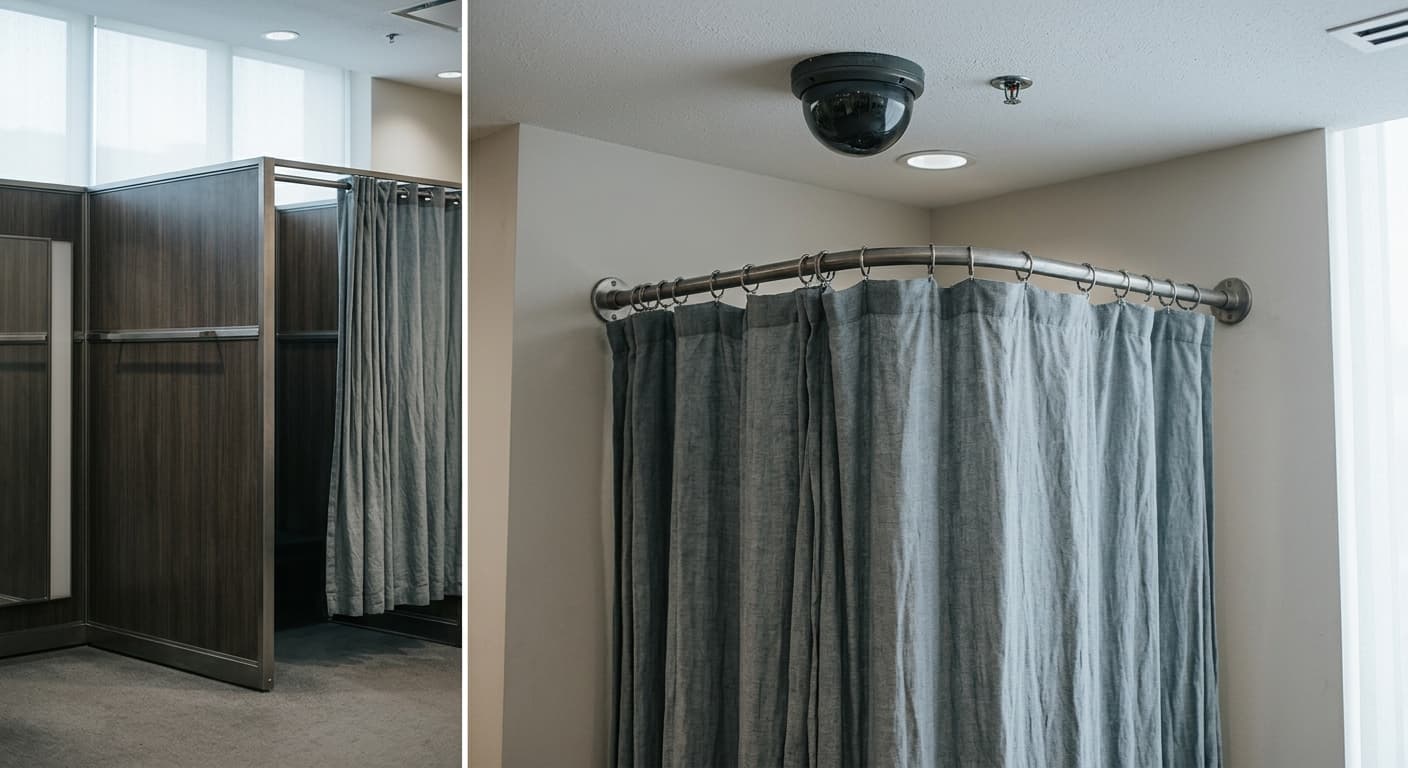
Arkansas takes video voyeurism seriously, imposing felony-level criminal penalties on individuals who use cameras or recording devices to secretly observe or record others in private settings. The primary statute is Ark. Code 5-16-101, which addresses two distinct categories of voyeuristic conduct and assigns different penalty levels to each.
This guide provides a comprehensive analysis of Arkansas voyeurism law, including the elements of each offense, the penalties, common scenarios, defenses, and the civil remedies available to victims.
What Is Video Voyeurism Under Arkansas Law?
Video voyeurism in Arkansas is defined by Ark. Code 5-16-101 and involves two separate criminal offenses. Both center on the use of recording or image-capturing technology to secretly observe or record someone in a setting where they have a reasonable expectation of privacy.

Section 5-16-101(a): Secret Observation or Recording in Private Areas
The first and more serious offense is defined in subsection (a). It is unlawful for any person to use a camera, videotape, photo-optical, photo-electric, or any image recording device for the purpose of secretly observing, photographing, filming, or videotaping another person in a private area where the person being recorded:
- Has a reasonable expectation of privacy, and
- Has not consented to the observation or recording
The key elements prosecutors must prove are: (1) the use of an image-capturing device, (2) the intent to secretly observe or record, (3) the victim was in a private area with a reasonable expectation of privacy, and (4) the victim did not consent.
Section 5-16-101(b): Secret Recording of Another Person's Body
The second offense addresses using concealed equipment to secretly record another person's body in situations where the person has a reasonable expectation of bodily privacy. This subsection targets conduct such as "upskirt" recordings, hidden cameras aimed at undressing individuals, and similar invasions of bodily privacy.
The distinction between subsections (a) and (b) is significant because the penalties differ substantially. Subsection (a) carries felony penalties, while subsection (b) is classified as a misdemeanor.
Penalties for Voyeurism in Arkansas
Felony Penalties Under Section 5-16-101(a)
The penalties for video voyeurism under subsection (a) escalate with repeat offenses.
First or second offense:
- Class D felony
- Up to 6 years in prison under Ark. Code 5-4-401
- Fines as determined by Ark. Code 5-4-201
Third or subsequent offense:
- Class C felony
- 3 to 10 years in prison
- Enhanced fines
A Class D felony conviction in Arkansas carries significant collateral consequences beyond imprisonment. These include a permanent felony record, potential loss of voting rights during incarceration, restrictions on firearm ownership, and difficulty obtaining employment, housing, and professional licenses.
Misdemeanor Penalty Under Section 5-16-101(b)
Secret body recording:
- Class B misdemeanor
- Up to 90 days in jail
- Fine up to $1,000
While the misdemeanor classification might seem relatively light, a conviction still creates a criminal record and carries lasting personal and professional consequences.
Penalty Comparison Table
| Offense | Statute | Classification | Maximum Imprisonment |
|---|---|---|---|
| Secret observation/recording in private area (1st/2nd) | 5-16-101(a) | Class D felony | Up to 6 years |
| Secret observation/recording in private area (3rd+) | 5-16-101(a) | Class C felony | 3 to 10 years |
| Secret recording of body | 5-16-101(b) | Class B misdemeanor | Up to 90 days |
Where Do People Have a Reasonable Expectation of Privacy?
The concept of "reasonable expectation of privacy" is central to the voyeurism statute. Arkansas courts assess whether a reasonable person in the victim's position would have expected privacy in the particular location and circumstances.
Locations That Typically Qualify
The following locations are almost always considered areas where a person has a reasonable expectation of privacy:
- Bathrooms and restrooms in homes, businesses, and public facilities
- Locker rooms in gyms, schools, swimming pools, and athletic facilities
- Changing rooms and fitting rooms in retail stores
- Bedrooms and private sleeping areas
- Hotel and motel rooms
- Medical examination rooms and patient treatment areas
- Tanning booths and spa treatment rooms
- Private offices with closed doors (in certain circumstances)
Locations That Typically Do Not Qualify
Areas where a person would not reasonably expect privacy generally include:
- Public streets and sidewalks
- Retail store sales floors
- Open-plan office spaces
- Parking lots
- Public parks and recreation areas
- Building lobbies and common hallways
Gray Areas
Some locations fall into a gray area depending on the circumstances. A cubicle in an open office may or may not carry a reasonable expectation of privacy depending on its layout and the norms of the workplace. A shared dormitory room might raise different expectations than a single-occupancy bedroom.
Common Scenarios and How the Law Applies
Hidden Cameras in Bathrooms
Installing a hidden camera in a bathroom, whether in a private home, a workplace, or a public restroom, is one of the most straightforward violations of Ark. Code 5-16-101(a). The victim is in a space where privacy expectations are at their highest, and the use of a recording device to secretly observe them is a Class D felony.
Hidden Cameras in Bedrooms
Placing a hidden camera in a bedroom to record sexual activity or nudity without the other person's consent falls squarely within the statute. This is true even if the person installing the camera owns the home or rents the bedroom. Property ownership does not override the other person's reasonable expectation of privacy in that space.
Upskirt or Downblouse Recordings
Using a concealed camera or phone to record beneath a person's clothing or down their shirt constitutes a violation of Section 5-16-101(b) at minimum. Depending on the circumstances, prosecutors may also charge under subsection (a) if the recording occurred in a private setting.
Peeping Through Windows
Using a camera or recording device to peer through windows into a person's home, even from a public space or from your own adjacent property, can violate the voyeurism statute. The person inside their home has a reasonable expectation of privacy, and using technology to defeat that privacy is the exact conduct the statute targets.
Nanny Cameras and In-Home Recordings
Homeowners who install cameras inside their own home for security purposes (often called "nanny cams") generally do not violate the voyeurism statute when cameras are placed in common areas like living rooms, kitchens, and hallways. However, placing cameras in bathrooms, guest bedrooms, or other areas where a guest or caretaker would reasonably expect privacy does violate the law.
Spy Cameras in Rental Properties
A landlord who installs hidden cameras inside a tenant's rental unit violates Ark. Code 5-16-101. The tenant has a reasonable expectation of privacy inside their own home, and the landlord's ownership of the property does not authorize secret surveillance of the tenant.
Consent as a Defense
Consent is the primary defense to a voyeurism charge under Ark. Code 5-16-101. If the person being recorded knowingly and voluntarily agreed to be observed or recorded, the conduct does not violate the statute.
What Constitutes Valid Consent?
Consent must be:
- Voluntary: Given freely, without coercion, threats, or deception
- Informed: The person must understand that they are being recorded or observed
- Specific: Consent to be recorded in one context (such as a professional photo shoot) does not extend to secret recordings in private moments
When Consent Is Not Valid
Consent obtained through deception, intoxication, or duress is not valid under Arkansas law. If a person agrees to be filmed for one purpose and the recorder secretly uses the footage for another, the original consent does not shield the recorder from liability.
Similarly, consent from a minor cannot validate voyeuristic recording. Additional child exploitation statutes may apply when minors are involved, carrying even harsher penalties.
Sex Offender Registration
Depending on the specific charges and circumstances, a conviction for video voyeurism in Arkansas may require registration as a sex offender under the Arkansas Sex Offender Registration Act (Ark. Code 12-12-903 et seq.). Whether registration is required depends on the specific offense, the court's determination, and whether the offense involved a minor.
Sex offender registration carries its own set of long-term consequences, including restrictions on where you can live and work, regular reporting requirements, and public listing on the state's sex offender registry maintained by the Arkansas Department of Public Safety.
Civil Remedies for Victims
Victims of voyeurism in Arkansas are not limited to criminal prosecution. They can also pursue civil lawsuits against the offender to recover damages.
Invasion of Privacy
Arkansas recognizes the tort of intrusion upon seclusion. A victim can file a civil lawsuit claiming that the offender intentionally intruded upon their private affairs in a manner that would be highly offensive to a reasonable person. Successful claims can result in compensatory damages for emotional distress, humiliation, and other harm.
Intentional Infliction of Emotional Distress
If the voyeuristic conduct is sufficiently extreme and outrageous, the victim may bring a claim for intentional infliction of emotional distress. This requires showing that the offender's conduct was so extreme as to go beyond all possible bounds of decency.
Distribution of Intimate Images
If the offender distributes the voyeuristic recordings, additional legal theories may apply. Arkansas enacted Ark. Code 5-26-314 to address the non-consensual distribution of sexual images (commonly known as "revenge porn"). This statute creates both criminal liability and a civil cause of action for victims.
Federal Civil Remedies
In cases involving electronic interception, the federal Wiretap Act (18 U.S.C. 2520) provides statutory damages of at least $10,000, plus punitive damages and attorney fees.
How Arkansas Voyeurism Law Compares to Federal Law
Federal law addresses voyeurism through 18 U.S.C. 1801, the Video Voyeurism Prevention Act of 2004. This federal statute applies specifically to conduct occurring on federal property, including military installations, federal buildings, and lands controlled by the federal government.
The federal statute prohibits capturing an image of a private area of an individual without their consent, knowingly doing so under circumstances in which the individual has a reasonable expectation of privacy. Violations carry up to one year in federal prison for a first offense.
In most cases, Arkansas state law provides the primary basis for prosecution because the conduct occurs on state or private property. Federal law applies when the conduct occurs on federal land within Arkansas, such as military bases (for example, Little Rock Air Force Base) or federal courthouses.
Relationship to Other Arkansas Statutes
Ark. Code 5-60-120: Wiretapping
If the voyeuristic recording captures audio, the offender may also face charges under the wiretapping statute (Ark. Code 5-60-120). Illegal audio interception is a Class A misdemeanor carrying up to one year in jail and a $2,500 fine.
Ark. Code 5-27-605: Sexual Exploitation of Children
If the victim of voyeurism is a minor, additional charges under Ark. Code 5-27-605 (distributing, possessing, or viewing sexually explicit material involving a child) may apply. These offenses carry significantly heavier penalties, including Class B felony charges with up to 20 years in prison.
Ark. Code 5-26-314: Non-Consensual Distribution of Sexual Images
If voyeuristic images or recordings are shared or distributed, the offender may face additional charges under the state's revenge porn statute, which carries its own penalties separate from the voyeurism statute.
Reporting Voyeurism in Arkansas
If you believe you are a victim of voyeurism in Arkansas, you should:
-
Contact local law enforcement immediately. File a police report and provide any evidence you have, including descriptions of the suspected recording device, photographs of the device if you found one, and any other relevant information.
-
Do not disturb the evidence. If you discover a hidden camera, do not remove or destroy it. Law enforcement will want to examine it and collect it as evidence.
-
Document everything. Write down when and where you discovered the device, who had access to the area, and any other relevant details.
-
Contact a victim advocate. The Arkansas Crime Victims Reparation Board and local victim services organizations can provide support and connect you with resources.
-
Consult an attorney. A lawyer experienced in privacy law can advise you on both criminal prosecution and civil remedies.
More Arkansas Laws
- Arkansas Recording Laws
- Arkansas Recording Laws
- Arkansas Recording Laws
- Arkansas Dog Bite Laws
- Arkansas Child Support Laws
- Arkansas Statute of Limitations
- Arkansas Recording Laws
- Arkansas Recording Laws
Explore More Arkansas Recording Law Topics
Audio Recording | Video Recording | Voyeurism Laws | Workplace Recording | Recording Police | Phone Call Recording | Security Cameras | Recording in Public | Landlord-Tenant | Dashcam Laws | School Recording | Medical Recording
Sources and References
- Ark. Code 5-16-101 - Crime of Video Voyeurism(law.justia.com)
- Ark. Code 5-4-401 - Sentencing for Misdemeanors and Felonies(law.justia.com)
- Ark. Code 5-4-201 - Fines and Limitations on Amount(law.justia.com)
- Arkansas Sex Offender Registry - Department of Public Safety(dps.arkansas.gov).gov
- 18 U.S.C. 1801 - Video Voyeurism Prevention Act(law.cornell.edu)
- 18 U.S.C. 2520 - Civil Remedies for Wiretap Violations(law.cornell.edu)
- Arkansas Department of Public Safety(dps.arkansas.gov).gov
- Arkansas General Assembly - Legislative Session(arkleg.state.ar.us).gov