Arkansas Landlord-Tenant Recording Laws: Cameras, Audio, and Privacy Rights (2026)
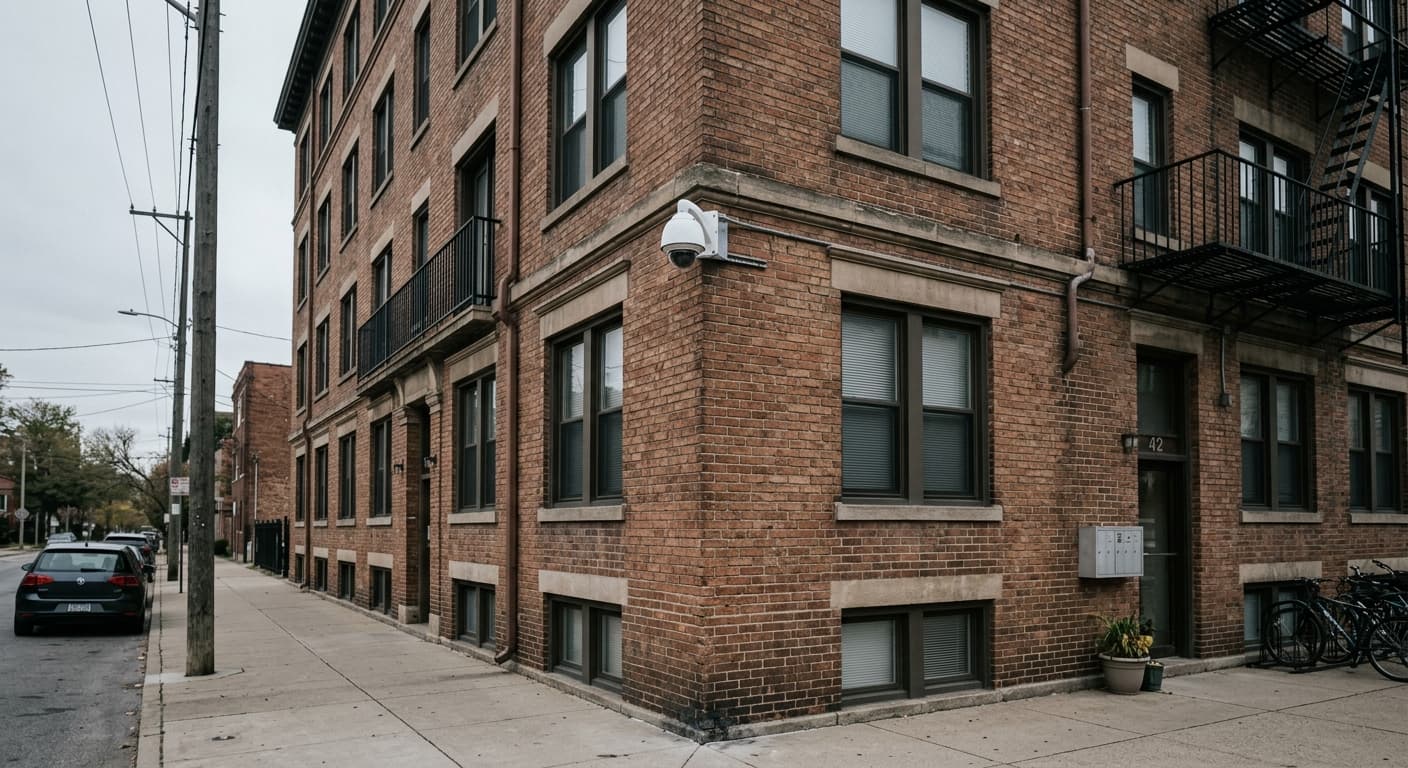
The landlord-tenant relationship in Arkansas frequently involves questions about recording rights. Tenants want to document conversations about repairs, record evidence of harassment or illegal entry, and install security cameras for safety. Landlords want to monitor common areas for security, document property conditions, and protect their investment. Arkansas law provides a framework for both parties, rooted in the one-party consent statute (Ark. Code 5-60-120), the video voyeurism statute (Ark. Code 5-16-101), and the Arkansas Residential Landlord-Tenant Act.
This guide covers every major recording scenario in the landlord-tenant context.
Tenant Recording Rights
Recording Conversations with Your Landlord
Under Arkansas one-party consent law, you can record any conversation with your landlord, property manager, or maintenance staff without their knowledge or permission. This applies to:
- In-person conversations at the property
- Phone calls about repairs, lease terms, or disputes
- Video calls through any platform
- Conversations with maintenance workers who enter your unit
As long as you are a participant in the conversation, your consent is sufficient. You do not need to inform the landlord that the conversation is being recorded.
Why Tenants Record Landlord Interactions
Recording interactions with your landlord can be valuable in several situations:
- Documenting repair requests. When you report a maintenance issue verbally, a recording creates proof that you notified the landlord and establishes a timeline.
- Preserving verbal agreements. Landlords sometimes make verbal promises about repairs, rent adjustments, or lease modifications that they later deny.
- Recording harassment. If your landlord engages in harassment, intimidation, or discriminatory behavior, recordings provide direct evidence.
- Documenting illegal entry. If your landlord enters your unit without proper notice (as required by the lease or Arkansas law), recordings can establish the violation.
- Eviction disputes. Recordings of interactions leading up to an eviction can support your defense if the eviction is challenged as retaliatory or improper.
Installing Security Cameras in Your Rental
Tenants generally have the right to install security cameras inside their own rental units. You can place cameras in:
- Your living room, kitchen, and hallway
- Pointed at your front door (interior or exterior-facing peephole cameras)
- At windows facing public areas
There are important limitations:
- Lease restrictions. Your lease may prohibit modifications to the property, and some camera installations (drilling holes, mounting hardware) could violate these provisions.
- Shared spaces. In a multi-unit building, you generally cannot install cameras in hallways, lobbies, or other common areas without the landlord's permission.
- Audio capture. Security cameras with audio capability must comply with one-party consent rules. Audio recording of conversations in hallways or common areas that you are not participating in could violate Ark. Code 5-60-120.
Doorbell Cameras
Tenants can generally use doorbell cameras (Ring, Nest, etc.) at their apartment or rental home entrance. However, in multi-unit buildings, check with your landlord about mounting requirements and whether the camera's field of view captures other tenants' doorways or private areas.
Landlord Recording Rights
Security Cameras in Common Areas
Landlords can install security cameras in common areas of multi-unit properties for legitimate security purposes. Appropriate locations include:
- Building entrances and exits
- Hallways and corridors
- Parking lots and garages
- Laundry rooms
- Mail areas
- Recreation areas and pools
- Building exteriors
These cameras serve legitimate security interests including theft prevention, vandalism documentation, and tenant safety.
Where Landlords Cannot Place Cameras
Landlords are strictly prohibited from placing cameras in:
- Inside tenant units. A tenant's rental unit is their private home, and landlords cannot install cameras inside without the tenant's knowledge and explicit consent.
- Bathrooms and restrooms in any location
- Inside any space where tenants have a reasonable expectation of privacy
A landlord who installs hidden cameras inside a tenant's unit violates Ark. Code 5-16-101 and faces Class D felony charges with up to 6 years in prison for a first or second offense.
Recording Conversations with Tenants
Landlords can record their own conversations with tenants under the same one-party consent framework. A landlord who participates in a conversation about rent, repairs, lease terms, or any other topic can record that conversation without informing the tenant.
Landlords may find this useful for:
- Documenting maintenance requests and the responses provided
- Recording lease negotiations
- Preserving evidence in disputes about property conditions
- Documenting tenant complaints or behavior issues
Property Inspections and Move-In/Move-Out Documentation
Landlords can record video of property conditions during inspections, move-in walkthroughs, and move-out assessments. This footage can be valuable for security deposit disputes. If the landlord is conducting the walkthrough with the tenant present, recording the interaction (including audio) is permitted under one-party consent.
Security Deposit Disputes and Recording Evidence
How Recordings Help
Security deposit disputes are one of the most common landlord-tenant conflicts in Arkansas. Recordings can help both parties:
- Move-in video: A video walkthrough documenting the property's condition at the start of the lease establishes a baseline.
- Move-out video: A similar walkthrough at lease end documents the condition at departure.
- Comparison evidence: Side-by-side comparison of move-in and move-out footage can resolve disputes about damage vs. normal wear and tear.
Arkansas Security Deposit Law
Under Ark. Code 18-16-304, landlords must return security deposits within 60 days after the tenant moves out. The landlord may withhold amounts for unpaid rent or damages beyond normal wear and tear. If the landlord wrongfully withholds the deposit, the tenant may recover the deposit amount plus penalties.
Video evidence of property conditions can be decisive in these disputes. Courts routinely accept video walkthroughs as evidence of property condition.
Illegal Entry and Recording
Arkansas Law on Landlord Entry
Arkansas does not have a comprehensive statutory framework for landlord entry comparable to some other states. Entry rights are primarily governed by the lease agreement. Most leases require landlords to provide reasonable notice (typically 24 hours) before entering a tenant's unit, except in emergencies.
Recording Unauthorized Entry
If your landlord enters your rental unit without proper notice or permission, security cameras inside your unit can document the unauthorized entry. This footage serves as evidence for:
- Lease violation claims
- Invasion of privacy claims
- Harassment documentation
- Requests for lease termination
- Law enforcement reports if the entry constitutes trespassing
Motion-Activated Cameras
Tenants who are concerned about unauthorized entry often use motion-activated cameras that begin recording when movement is detected. These cameras conserve storage while capturing any entry into the unit, authorized or otherwise.
Eviction Proceedings and Recording
Recording as Evidence in Eviction Cases
Both landlords and tenants can use recordings as evidence in eviction proceedings in Arkansas.
Landlords may use recordings to show:
- Lease violations documented on camera
- Noise complaints supported by audio or video evidence
- Property damage captured by security cameras
- Non-payment discussions where the tenant acknowledged the debt
Tenants may use recordings to show:
- Retaliatory eviction following repair requests
- Discriminatory statements by the landlord
- Failure to maintain the property (recorded during inspections)
- Verbal agreements that modify lease terms
Admissibility Standards
Recordings used in eviction cases must be:
- Legally obtained (compliant with one-party consent or public recording principles)
- Authenticated (the party offering it must establish it is genuine)
- Relevant to the dispute
Fair Housing and Recording
Documenting Discrimination
Tenants who believe they are experiencing housing discrimination can record interactions with landlords as evidence. Under the Fair Housing Act (42 U.S.C. 3601 et seq.), it is illegal to discriminate in housing based on race, color, religion, sex, national origin, familial status, or disability.
The Arkansas Fair Housing Commission and the U.S. Department of Housing and Urban Development (HUD) both accept recordings as evidence in discrimination complaints.
What to Record
If you suspect discrimination, recordings of the following may be relevant:
- Comments about your race, religion, family status, or disability
- Different treatment compared to other tenants
- Refusal to rent based on protected characteristics
- Failure to provide reasonable accommodations for disabilities
- Retaliatory actions after you file a discrimination complaint
Practical Tips for Landlords
Developing a Camera Policy
Landlords who install security cameras in multi-unit properties should:
- Post visible signage indicating that video surveillance is in use
- Include camera disclosure in the lease so tenants are aware before signing
- Limit cameras to common areas and never place them in or pointed at tenant windows
- Disable audio recording on common area cameras to avoid potential wiretapping issues
- Establish a data retention policy for how long footage is stored
- Restrict access to footage to authorized personnel only
Responding to Tenant Camera Installations
When a tenant installs their own cameras:
- Review the lease for provisions about modifications or equipment installation
- If the camera does not damage the property and is inside the unit, it is generally the tenant's right
- If the camera is pointed at other tenants' units or common areas, discuss adjusting the angle
- Consider whether the tenant has a legitimate security concern that you should address
Practical Tips for Tenants
Before You Record
- Check your lease. Look for clauses about recording, modifications, or security equipment.
- Know your rights. Arkansas one-party consent law allows you to record your own conversations.
- Use your own device. Record on your personal phone or camera, not on your landlord's equipment.
- Preserve originals. Keep unedited copies of all recordings in a secure location.
If You Find a Hidden Camera
If you discover a hidden camera in your rental unit:
- Do not remove it. It is evidence of a crime.
- Document it. Photograph the camera and its location.
- Call the police. File a report for violation of Ark. Code 5-16-101.
- Contact an attorney. You may have civil claims for invasion of privacy and emotional distress.
- Notify the landlord in writing. If you believe the landlord installed it, document your notification.
More Arkansas Laws
- Arkansas Recording Laws
- Arkansas Recording Laws
- Arkansas Recording Laws
- Arkansas Dog Bite Laws
- Arkansas Child Support Laws
- Arkansas Statute of Limitations
- Arkansas Recording Laws
- Arkansas Recording Laws
Explore More Arkansas Recording Law Topics
Audio Recording | Video Recording | Voyeurism Laws | Workplace Recording | Recording Police | Phone Call Recording | Security Cameras | Recording in Public | Landlord-Tenant | Dashcam Laws | School Recording | Medical Recording
Sources and References
- Ark. Code 5-60-120 - Interception and Recording(law.justia.com)
- Ark. Code 5-16-101 - Crime of Video Voyeurism(law.justia.com)
- Ark. Code 18-16-304 - Security Deposit Return(law.justia.com)
- HUD - Fair Housing Act Overview(hud.gov).gov
- Arkansas Attorney General(arkansasag.gov).gov
- Arkansas General Assembly(arkleg.state.ar.us).gov
- 18 U.S.C. 2511 - Federal Wiretap Act(law.cornell.edu)