Washington Supreme Court Upholds L&I Entry Into Locked Gym
Independently fact-checked against primary sources (last audited November 22, 2026). · 6 primary sources cited on this page. How we verify our legal content
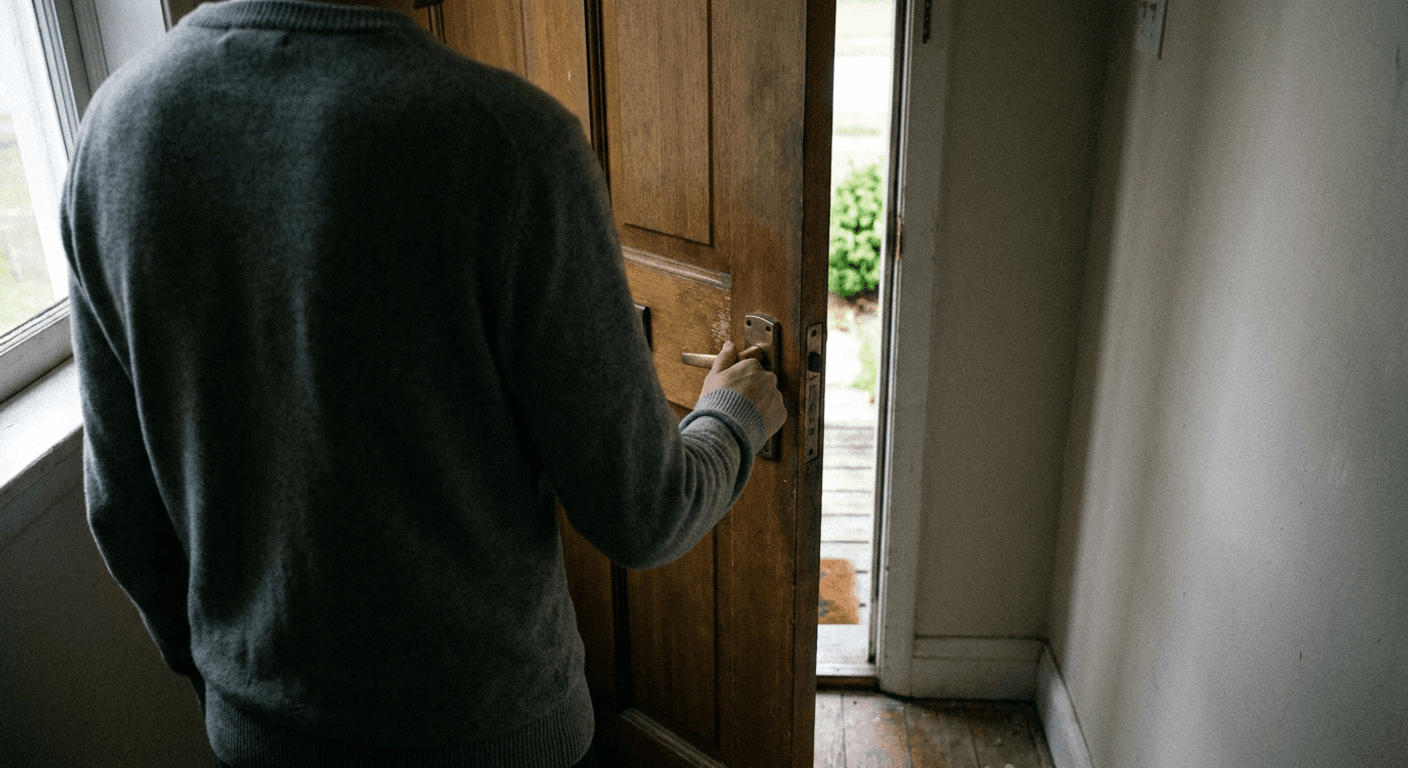
Washington's Supreme Court held on November 19, 2026, by a 5 to 4 vote, that Labor and Industries inspectors who followed a customer through a key card door into a Selah gym did not violate the state inspection statute or the Fourth Amendment. It left the state constitutional question open.
Information last verified on November 22, 2026. This is a developing story; we update it as the record changes.
Jurisdiction scope: This article covers a Washington Supreme Court decision about state workplace safety inspectors entering the public facing entrance area of a Washington business. It does not address entry into a home, entry into the nonpublic areas of a business, police or federal immigration entry, or the law of any other state.
What Happened
The case is Bradshaw Development, Inc., doing business as Anytime Fitness, v. Washington State Department of Labor & Industries, No. 104579-4. The Washington Supreme Court decided it en banc, and the opinion was filed for record at 8 a.m. on November 19, 2026. Justice González wrote for the majority, which was signed by Chief Justice Stephens and Justices Montoya-Lewis, Melody and Angelis.
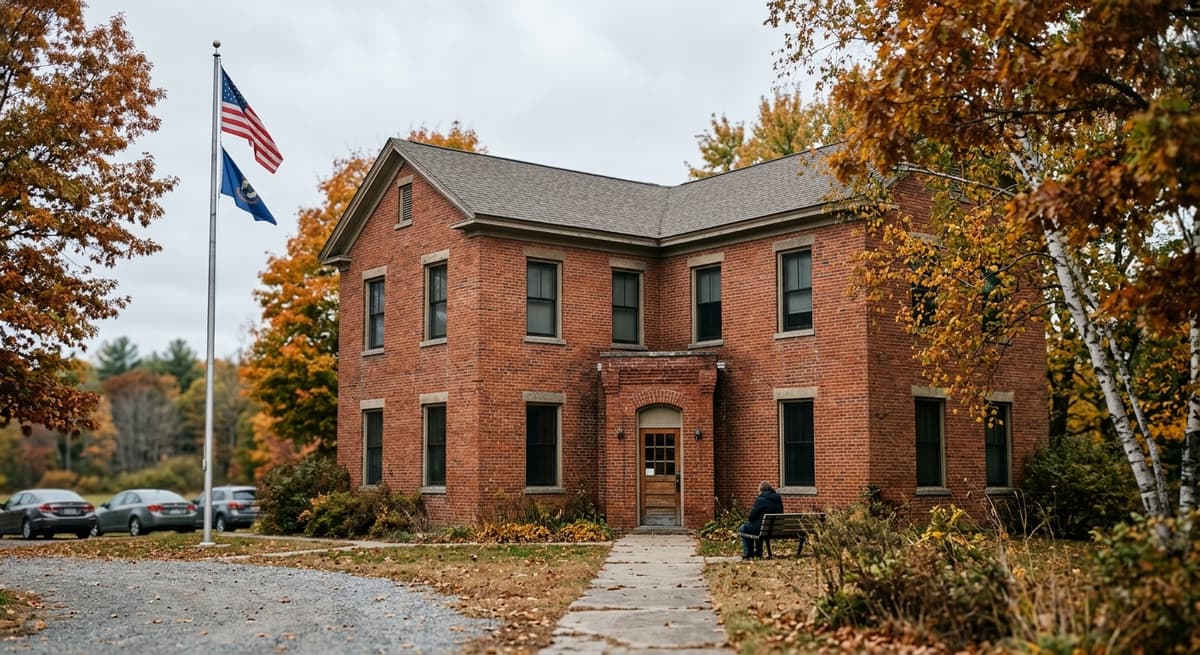
On June 15, 2020, two Department of Labor and Industries inspectors visited a Selah location of Anytime Fitness, operated by Bradshaw Development Inc. Gyms in Yakima County were closed at the time under Governor Jay Inslee's Proclamation 20-25.4, and the department had received a complaint that this gym was open and operating as usual. The rule it was enforcing, former WAC 296-800-14035, provided that where an emergency proclamation prohibits a business activity, "an employer shall not allow employees to perform work."
The inspectors found a lit neon "open" sign in the window and a door that opened only for key card holders. The Board of Industrial Insurance Appeals found this was the gym's "only obvious entrance." The inspectors called the phone number posted at the door and nobody answered. When a woman carrying a gym bag opened the door with her key card, the inspectors, in the words of the hearing testimony, "grabbed the door and followed her in."
Inside, they saw people exercising and what appeared to be an employee signing up a new member. They presented their credentials and asked for consent to inspect. The first employee refused and told them to wait for the general manager. They waited roughly 20 minutes, watching several more people enter and noting a chalkboard that read "Welcome back." The general manager arrived, refused consent, and the inspectors left.
The department cited Bradshaw for a willful violation of the emergency rule and assessed a $9,639 penalty. An industrial appeals judge vacated the citation; the Board reinstated it, finding the inspectors "had the right to enter the building for the sole purpose of obtaining consent to inspect the premises." The Yakima County Superior Court adopted the Board's findings of fact but vacated the citation anyway, reasoning that "A business that limits entry to keycard holders is not open to the public." The Court of Appeals affirmed on different grounds. Bradshaw Dev., Inc. v. Dep't of Lab. & Indus., 34 Wn. App. 2d 705, 571 P.3d 300 (2025). The American Civil Liberties Union of Washington Foundation filed an amicus brief supporting Bradshaw.
What the Law Actually Says
RCW 49.17.070 is the right of entry provision of the Washington Industrial Safety and Health Act. Subsection (3), added by the legislature in 2006, requires inspectors to obtain consent from the owner, manager, operator or on-site person in charge before entering a worksite on private property, except where subsection (4) or RCW 49.17.075 applies, and then describes how an inspector may approach to ask for it:
Solely for the purpose of requesting the consent required by this section, the director or his or her authorized representative shall, in a safe manner, enter a worksite at an entry point designated by the employer or, in the event no entry point has been designated, at a reasonably recognizable entry point.
The same 2006 act added RCW 49.17.075, which lets the department apply to a court for a warrant covering a workplace. The majority read the entry point sentence literally: Bradshaw designated no entry point, the front door was the only obvious one, the neon sign was lit, and nothing in the text conditions a "reasonably recognizable entry point" on the door being unlocked. Reading that condition in would add words the legislature chose not to include.
The constitutional half of the opinion sits on older ground, and that ground cuts both ways. Marshall v. Barlow's, Inc., 436 U.S. 307 (1978), struck down the federal OSHA provision that purported to authorize warrantless workplace inspections, holding it "unconstitutional insofar as it purports to authorize inspections without warrant or its equivalent" (436 U.S. at 325), and See v. City of Seattle, 387 U.S. 541 (1967), reached a similar result for a locked commercial warehouse. The majority leaned on a different passage of Barlow's: "What is observable by the public is observable, without a warrant, by the Government inspector as well" (436 U.S. at 315). The dissent read See as controlling here; the majority answered in a footnote that See concerned a nonpublic space and is "not analogous." Maryland v. Macon, 472 U.S. 463, 469 (1985), holds there is no reasonable expectation of privacy "in areas of the store where the public was invited to enter and to transact business." The majority put a working gym's front entrance area on the Macon side of that line, and the workout floor and locker rooms on the other.
Washington also has its own search and seizure clause. Article I, section 7 reads: "No person shall be disturbed in his private affairs, or his home invaded, without authority of law." Washington privacy protections often run ahead of the federal floor in other areas too, including the all party consent rule for recording conversations that we set out in our guide to Washington recording and privacy law.

What the Court Did Not Decide
The majority drew three limits itself, and the third is the one a privacy reader should mark.
First, scope inside the building. The court disagreed "with the State that the constitution permits its inspectors to go beyond the front entrance area and freely go wherever a member of the gym is entitled to access," and said Bradshaw holds a greater privacy interest in the equipment areas and locker rooms. The decisive fact was not the lock but the empty record around it: no evidence of a policy excluding nonmembers, no members only sign, no screening mechanism. As the opinion put it, "The lock on an open business' front entrance manifests an intent to exclude trespassers, but it does not manifest an intent to exclude members of the public with legitimate business inquiries from entering the premises' front entrance area."
Second, genuinely private clubs. The court adopted the Eighth Circuit's reservation in United States v. Perry, 548 F.3d 688, 692 (8th Cir. 2008), that it was not deciding whether a member of a private club that strictly and consistently enforces a restrictive admissions policy has an objectively reasonable expectation of privacy there.
Third, the Washington Constitution. The majority acknowledged that article I, section 7 protections are "qualitatively different from," and often broader than, the Fourth Amendment's, and that the state charter "requires actual authority of law before the State may disturb the individual's private affairs." But under State v. Mayfield, 192 Wn.2d 871, 881 (2019), a party seeking a more protective state result must argue the constitutional text, the historical treatment of the interest and the current implications of recognizing it. Bradshaw did not do so adequately, so the court declined to reach the issue and took no position on the dissent's article I, section 7 arguments. That question stays open in Washington.
Justice Melody, who joined the majority in full, wrote separately to mark the same gap from the other side, noting that "Not all workplaces, though, are open to members of the public" and listing warehouses, shipyards, construction sites, farms and manufacturing plants. The concurrence closed by saying it read nothing in the majority opinion "as prejudging a future case involving a workplace that has a locked, reasonably recognizable entry point."
Justice Gordon McCloud, joined by Justices Johnson, Whitener and Mungia, dissented. The dissent quoted the inspectors' own hearing testimony that they did not have permission to enter, argued that the government rather than the business carries the burden of proving a warrant or consent, and concluded that "the state and U.S. constitutions bar government agents from gaining warrantless entry into locked, private, membership-only businesses for administrative searches based solely on the inspectors' preference for immediate action."
Analysis: Why This Matters
The following is analysis from the Recording Law Editorial Team.
The organizing idea here is implied invitation, the same idea that lets an officer walk up a front path and knock, though the majority added in a footnote that it did not mean to imply an open business yields the same license to enter as the curtilage of a house. Washington's formulation, from State v. Seagull, 95 Wn.2d 898, 902 (1981), is that a state actor has the same license to intrude as a "reasonably respectful citizen." The majority applied that standard to a commercial lobby: a prospective member, a vendor or a delivery driver could have grabbed the same door behind the same key card holder to make an inquiry, so an inspector could too, and could stay only where that kind of visitor would be tolerated.
What actually divided the court was burden. The majority ran the case through the Fourth Amendment expectation of privacy test and put the burden on the business to show both a subjective and an objectively reasonable expectation. The dissent ran it through the warrant requirement and put the burden on the government to prove consent or an exception. The same record points in opposite directions depending on which framing controls, which is why the silence about the gym's admission practices decided the case. The majority read those gaps against the business; the dissent would have read them against the department. The physical lock did less work than the paper trail around it.
Reach matters too. This is a doctrine about physical entry into space, and it does not transfer to interception of communications or to data held by a service provider, which run on separate statutory tracks covered in our federal recording and surveillance overview and our plain language guide to the ECPA.
The state constitutional question is the one left standing. A litigant who does the Mayfield briefing, in a workplace that is locked and genuinely closed to the public, would be arguing on ground this court deliberately left untouched.
How This Affects You
For readers in Washington, the decision describes how courts there now analyze a state inspector's entry into the public facing part of an operating business. It does not reach the parts of a business a casual visitor would not be tolerated in, and it does not reach homes, where warrant rules and the curtilage cases apply with full force. The opinion identifies the facts it treated as legally relevant: whether an entry point was designated, whether the business displayed itself as open, whether a policy limited who could come in, and whether that policy was enforced.
The court also repeated that "What is reasonable cannot be determined by a fixed formula. It must be based on the facts and circumstances of each case," so any other dispute turns on its own record. Readers outside Washington should not generalize from this ruling: it construes a Washington statute and applies Washington precedent to the federal question, and other states analyze administrative entry under their own statutes and constitutions.
What Happens Next
The Supreme Court reversed the Court of Appeals, vacated the superior court's order dismissing the citation, and remanded for further proceedings consistent with the opinion. That is not a judgment entered on the citation itself. The majority did, however, describe the inspectors as having "observed Bradshaw's employees working in violation of the emergency workplace safety rule," and said in passing that the gym "openly violated the emergency proclamation," so the case returns to the trial court already characterized unfavorably to Bradshaw. The majority held that everything the inspectors saw inside the gym was admissible because they were lawfully occupying the front entrance area, and the citation dispute returns to the Yakima County Superior Court.
This is a signed en banc opinion filed for record with the clerk of the Supreme Court; it carries no unpublished designation and no note of a pending motion for reconsideration. Under RAP 12.4(b), any motion for reconsideration must be filed within 20 days after the decision is filed, which from the November 19, 2026 filing date runs into the first half of December 2026. If one were filed and granted, RAP 12.4(g) lets the court modify the decision or call for new argument.
This is general legal information, not legal advice. It covers Washington State and the federal Fourth Amendment, and reflects sources verified on November 22, 2026. Laws change and this story is developing; consult a lawyer licensed in your jurisdiction about your specific situation.
Related articles
- How Washington treats recording and private conversations
- Federal recording and surveillance law, explained
- What the ECPA actually protects
- When the government can reach stored messages and account data
Last updated: 2026-11-22. This is a developing story; details verified as of 2026-11-22.
Frequently Asked Questions
Did the Washington Supreme Court say inspectors can enter any locked business?
No. The November 19, 2026 opinion in No. 104579-4 is limited to the front entrance area of a Washington business that was displaying an 'open' sign and had no proven policy excluding nonmembers, and the majority expressly rejected the state's argument that inspectors could go anywhere a member may go.
What is a 'reasonably recognizable entry point' under RCW 49.17.070?
RCW 49.17.070(3) lets a Labor and Industries representative enter a worksite in a safe manner, solely to request consent to inspect, at an entry point the employer designated or, if none was designated, at a reasonably recognizable one. The Washington Supreme Court held the statute does not require that entry point to be unlocked.
Does the decision mean the gym broke the law?
No. The court reversed, vacated the superior court order dismissing the $9,639 citation, and remanded for further proceedings, so the citation dispute continues in Yakima County Superior Court rather than ending in a finding of violation.
Why did the court not rule on the Washington Constitution?
The majority said article I, section 7 protections are often broader than the Fourth Amendment but declined to reach them because Bradshaw did not adequately present an independent state constitutional analysis under State v. Mayfield, 192 Wn.2d 871 (2019). The court took no position on the dissent's state constitutional arguments.
Does this ruling apply outside Washington?
No. The decision construes RCW 49.17.070 and applies Washington precedent to the Fourth Amendment question, so it binds only Washington courts. Other states regulate administrative entry under their own statutes and constitutions.
Updates
Independently fact-checked against the cited primary sources
Sources and References
- Bradshaw Development, Inc. v. Washington State Department of Labor & Industries, No. 104579-4 (Wash. Nov. 19, 2026) (en banc) (González, J.), slip opinion including the Melody, J. concurrence and the Gordon McCloud, J. dissent. Cited for the holdings under RCW 49.17.070(3) and the Fourth Amendment, the facts of the June 15, 2020 inspection, the $9,639 citation, the refusal to reach article I, section 7, and the reverse, vacate and remand disposition.(courts.wa.gov).gov
- RCW 49.17.070, Right of entry, inspections and investigations, subpoenas, contempt (2006 c 31 s 2; 1973 c 80 s 7), Washington State Legislature. Cited for the text of subsection (3) on consent and a reasonably recognizable entry point, and for the 2006 intent note.(app.leg.wa.gov).gov
- RCW 49.17.075, Search warrants (2006 c 31 s 3), Washington State Legislature. Cited for the department's authority to apply to a court for a workplace search warrant.(app.leg.wa.gov).gov
- Constitution of the State of Washington, article I, section 7 (Invasion of private affairs or home prohibited), official text published by the Washington State Legislature. Cited for the verbatim text of the state search and seizure clause.(leg.wa.gov).gov
- Washington Rule of Appellate Procedure 12.4, Motion for Reconsideration of Decision Terminating Review, Washington Courts. Cited for the 20 day filing window in RAP 12.4(b) and the court's options under RAP 12.4(g).(courts.wa.gov).gov
- Marshall v. Barlow's, Inc., 436 U.S. 307 (1978), official United States Reports text (Library of Congress), cited for the holding that the OSHA inspection provision is unconstitutional insofar as it purports to authorize inspections without warrant or its equivalent (at 325) and for the observable-by-the-public passage the Washington majority relied on (at 315).(tile.loc.gov).gov