Ohio Anti-SLAPP Dismissal Reversed Over a Cancelled UPEPA Hearing
Independently fact-checked against primary sources (last audited October 5, 2026). · 5 primary sources cited on this page. How we verify our legal content
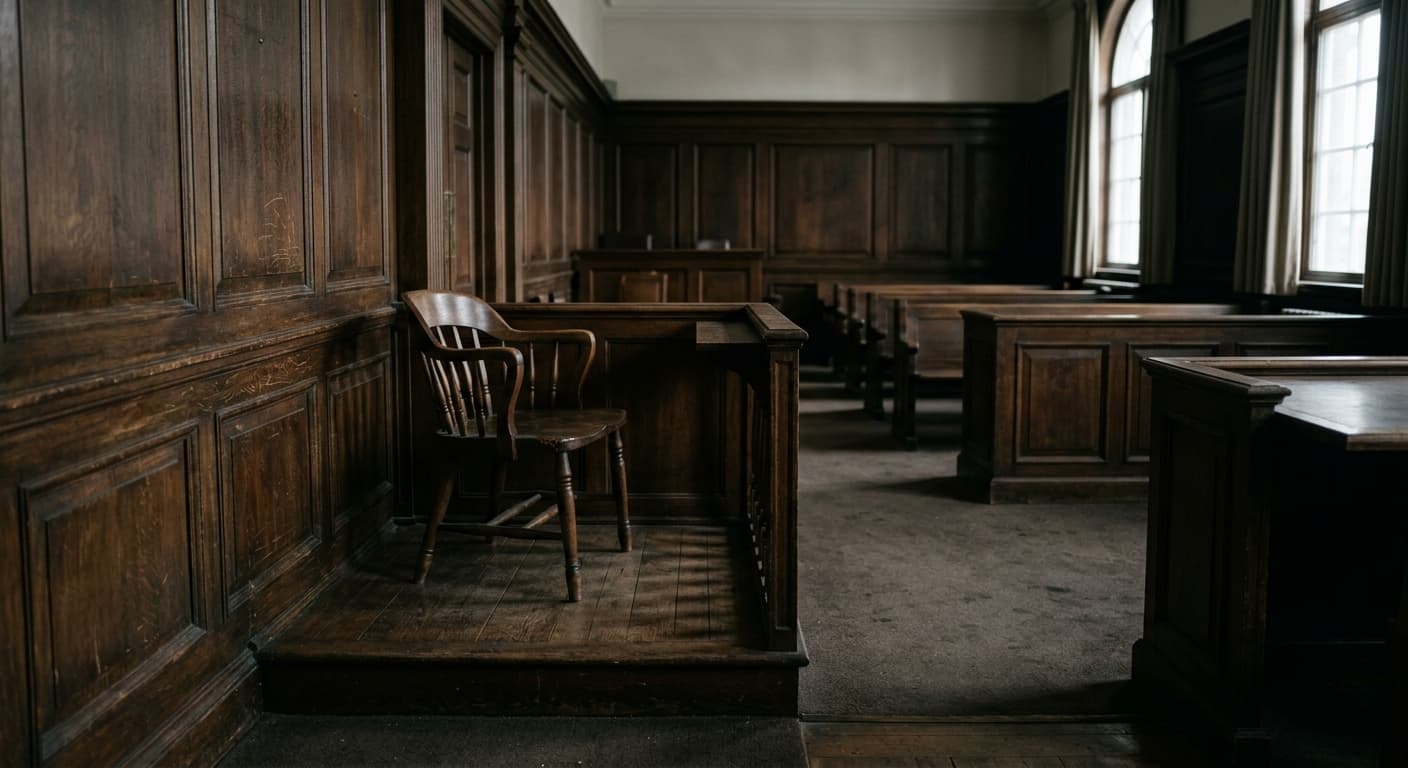
Ohio Anti-SLAPP Hearing Requirement: Appeals Court Reverses a UPEPA Dismissal Over a Cancelled Hearing
Ohio's Eighth District Court of Appeals reversed a UPEPA anti-SLAPP dismissal on October 1, 2026, holding that a Cuyahoga County judge who cancelled the scheduled hearing by a one-line docket entry and ruled the next day never conducted the hearing R.C. 2747.04(A)(1) requires.
Information last verified on October 5, 2026. This is a developing story; we update it as the record changes.
Status: Released and journalized October 1, 2026. The Eighth District sustained the first assignment of error, reversed the judgment of dismissal on procedural grounds, and remanded Cuyahoga C.P. No. CV-25-127392 for the trial court to conduct the hearing required by R.C. 2747.04(A)(1). Nothing was decided on the merits: no court has found that anyone defamed anyone, and both Gary Walker's claims and the defendants' motion for expedited relief return to the trial court undecided. As of October 5, 2026 we have not reviewed the trial court docket since remand.
Jurisdiction scope: This article covers one Ohio intermediate appellate decision on the hearing requirement in R.C. 2747.04(A)(1), part of Ohio's anti-SLAPP statute. It does not address the merits of the underlying defamation claims, the statute's substantive burdens, or the anti-SLAPP procedure of any other state, whose statutes differ in text and structure. For how the rules vary, see our comparison of defamation law state by state.
What Happened
The Court of Appeals of Ohio, Eighth Appellate District, Cuyahoga County, decided Walker v. Arrington, No. 116469, 2026-Ohio-3881. Judge Deena R. Calabrese wrote, and Presiding Judge Michael John Ryan and Judge Timothy W. Clary concurred. The appeal came from the Cuyahoga County Court of Common Pleas, Case No. CV-25-127392. Gary Walker appeared pro se; Speech Law, LLC and Brian D. Bardwell appeared for the appellees.
Walker commenced the underlying tort action on October 31, 2025 against Jasmine Arrington and The Trash Boys LLC, pleading defamation, intentional infliction of emotional distress, business disparagement and tortious interference, plus injunctive relief. The court describes it as essentially a dispute between competing businesses, based partly on social media posts attributed to the appellees. On March 11, 2026, after counsel appeared for all appellees, they filed a motion for expedited relief under the UPEPA.
The trial court held a telephone conference the next day. Its order memorializing that conference directed the parties to complete briefing, set no briefing deadline, and scheduled a hearing for a specific date and time: May 6, 2026 at 1:30 p.m.
Walker timely opposed, and his responsive brief folded in a request for leave to amend based on allegations of post-filing defamation and retaliation, with no proposed amended complaint attached. The appellees' reply brief, filed March 24, 2026, answered on the substance and opposed leave on two grounds: the UPEPA's automatic stay in R.C. 2747.03, and Cuyahoga C.P., Gen.Div., Loc.R. 8.0(C)(2), which requires a proposed amended pleading as an exhibit.
Then, on May 5, 2026, one day before the hearing was to occur, the trial court cancelled it. The opinion reproduces the docket entry in full:
"Hearing scheduled for 05/06/2026 at 01:30 pm is cancelled."
That was the whole entry: no corresponding signed journal entry, no explanation. The next day the trial court granted the motion, having considered it under Ohio Rev. Code Chapter 2747 and the briefing that followed, finding no genuine issues of material fact and the appellees entitled to judgment as a matter of law, and dismissing all of Walker's claims with prejudice. A timely appeal followed.
Walker raised two assignments of error: that dismissal with prejudice without the mandatory R.C. 2747.04(A)(1) hearing was contrary to law, and that denying leave to amend was an abuse of discretion. The court sustained the first and found the second moot. Its stated reason for reversal:
"We find merit to Walker's argument, principally because the trial court canceled the scheduled hearing without converting it to a nonoral hearing or otherwise establishing a substitute hearing procedure. This occurred just one day before the trial court issued its decision."
Walker's other argument did not survive, and that matters for how far the decision reaches. He contended that due process independently entitled him to an evidentiary hearing where he could appear, present evidence and cross-examine Arrington, citing the Fourteenth Amendment and Article I, Section 16 of the Ohio Constitution. Beyond reciting those provisions he offered no cases, no other authority and no principled argument, so under App.R. 12(A)(2) and App.R. 16(A)(7), following Lewicki v. Grange Ins. Co., 2023-Ohio-4544 (8th Dist.), the court disregarded it; pro se status was no excuse, because Ohio holds self-represented litigants to the same standard as all other litigants. The reversal rests on the statute, not the Constitution.
What the Law Actually Says
Ohio's anti-SLAPP statute is the Uniform Public Expression Protection Act, codified at R.C. Chapter 2747 and effective April 9, 2025 under Senate Bill 237 of the 135th General Assembly. The provision at the center of this appeal is one sentence:
"The court shall conduct a hearing not later than sixty days after the filing of a motion for expedited relief, unless the court orders a later hearing to allow for limited discovery under section 2747.03 of the Revised Code or delays the hearing for other good cause."
Three neighboring provisions give it shape: R.C. 2747.04(A)(2) extends the deadline to sixty days after an order allowing limited discovery, absent other good cause; R.C. 2747.04(B) directs the court to consider the pleadings, the motion, any response, and any evidence that could be considered on summary judgment under Civ.R. 56; and R.C. 2747.04(D) requires a ruling not later than sixty days after the hearing, so the hearing is the event from which the decision clock runs. Filing the motion also freezes the case under R.C. 2747.03, the automatic stay behind the appellees' argument against leave to amend.
The statute's substantive test, the conditions in R.C. 2747.04(C) and the prima facie showing a plaintiff must make, is not what this appeal was about. We covered that framework in our report on the Fifth District's Watson Horse Farms decision, which on September 21, 2026 affirmed a judgment that granted the UPEPA motion as to intentional infliction of emotional distress but denied it as to defamation, because the plaintiffs had made a prima facie showing on each element of the defamation claim. Walker never reaches that screen. The elements and defenses that would eventually decide a case like Walker's are in our guide to what Ohio requires a defamation plaintiff to prove. Each adopting state enacted its own text, which is why the reasoning below turns on Ohio's words; our newsroom saw the same when Missouri's version of UPEPA took effect and when a New Jersey judge applied that state's version to a law firm blog post.
How the Eighth District Read the Words Conduct a Hearing
The appellees' argument was serious. Ohio courts have let a nonoral paper hearing satisfy an unelaborated statutory hearing requirement, especially absent a request for an oral one: the opinion cites Blue Technologies Smart Sols., L.L.C. v. Ohio Collaborative Learning Solutions, Inc., 2020-Ohio-806 (8th Dist.), for the point that because R.C. 2711.03 does not specifically provide for an oral hearing, Civ.R. 7(B) lets a trial court hear the matter nonorally, and Costin v. Midwest Vision Partners, L.L.C., 2024-Ohio-463 (8th Dist.), and Bello v. Highland Pointe Health, 2026-Ohio-265 (8th Dist.), for the narrower proposition that an oral hearing is required only on a party's specific and unequivocal request. They added Panzica Constr. Co. v. Zaremba, Inc., 2011-Ohio-620 (8th Dist.): when the General Assembly wants a formal hearing it says so in detail, as in R.C. 2323.51(B)(2) and R.C. 2903.214(D)(2).
They also invoked the model act, whose hearing provision says the court shall hear a motion no later than sixty days after filing and whose Comment 2 leaves live hearing versus written submission to the local customs of the jurisdiction. The court granted the premise: that language arguably mirrors R.C. 2711.03(A), which directs that the court shall hear the parties, so had Ohio enacted it unchanged a paper hearing would likely satisfy it. Then came the distinction:
"While the model UPEPA may be informative, the language adopted by the General Assembly controls. Ohio's General Assembly did not adopt the model UPEPA's hearing language verbatim. Rather than specify that a trial court 'hear a motion' for expedited relief, its version of the UPEPA states that a trial court must 'conduct a hearing.'"
That, the court said, inches closer to the frivolous-conduct and protection-order language, and the structure reinforces it: the UPEPA requires the court to conduct a hearing and then fixes a decision deadline sixty days from the hearing date, arguably contemplating some form of explicit hearing event.
The opinion is candid about the limits of that reading: the directive to conduct a hearing lacks the detail about form and scope those other statutes supply, and the court agreed with the appellees that R.C. 2747.04(B) makes the UPEPA's framework explicitly consistent with summary judgment practice.
What resolves the tension is Pruszynski v. Reeves, 2008-Ohio-510, decided under Ohio's prejudgment-interest statute, R.C. 1343.03(C)(1). The Ohio Supreme Court there confirmed a trial court's discretion to choose between an oral hearing and written submissions, but held that a trial judge is required to schedule a date certain for the evidentiary review or oral hearing upon the filing of the motion, because that notice respects the parties' right to an evidentiary hearing while imposing a deadline. Critically, a trial court may not rule based solely on the motion and briefs unless it previously has ordered a date certain for the submission of evidentiary materials, because the plain terms of the statute require that a hearing be held.
Applied to this record, that test failed. The Eighth District found that the trial court never plainly established a date certain for the submission of evidentiary materials: the entry ordering the parties to complete briefing is the same entry that "scheduled a hearing" with "the format of said hearing left undefined" for a specific date and time, nothing marked May 6 as merely the day the motion became ripe, and the reference to a specific time suggests a formal hearing with the decision to follow within sixty days. Nor did the record support the appellees' contention that the court had converted that hearing to a nonoral one: no signed journal entry converted anything, none said the court would decide on the briefs and evidentiary submissions, none substituted a nonoral hearing for the scheduled one.
"Simply canceling the hearing, without more, means that no hearing as required by R.C. 2747.04(A)(1), was held."
Two fallback arguments failed. On waiver, the court saw no reason a litigant should have to request a hearing already scheduled, and with the cancellation coming without explanation one day before the hearing and judgment the next day, Walker had no reasonable opportunity to ask for a new date. On harmless error, accepting the argument would read the express hearing requirement out of the statute.
What the Remand Orders, and What It Does Not
The Eighth District sustained the first assignment of error, reversed, and remanded for the trial court to conduct the hearing required by R.C. 2747.04(A)(1). It then told the trial court three things about how that hearing may be held. First, the statute does not require that the hearing be oral, and the trial court retains discretion to conduct it orally or nonorally. Second, if it opts for a nonoral hearing, it must provide the parties reasonable notice of that procedure and establish a date certain on which the nonoral hearing will occur. Third, it may conduct that hearing on the evidentiary materials already properly submitted by the parties, and the remand does not require reopening briefing or permitting additional evidentiary submissions. So it is not an order to start over, but an order to hold the event the statute names on the record that already exists.
The second assignment of error was resolved without decision: because the reversal undid the judgment that had implicitly denied Walker's request to amend, and because the case was remanded, the court held it moot under App.R. 12(A)(1)(c), leaving the amendment question and the appellees' two arguments against leave unresolved on appeal and available in the trial court. The court taxed the costs of appeal to the appellees, found reasonable grounds for the appeal, and ordered a special mandate under App.R. 27.
Analysis: Why This Matters
The following is analysis from the Recording Law Editorial Team.
A trial court may decide a UPEPA motion on the papers. The court said so directly in its instructions on remand, resting on the summary-judgment architecture the legislature built into R.C. 2747.04(B) and on the nonoral-hearing line running through State v. Bostick, 2025-Ohio-5559, and Hooten v. Safe Auto Ins. Co., 2003-Ohio-4829. Because the appeal was resolved on the absence of any hearing, that guidance is the court directing the trial court rather than a holding the judgment turned on. And because the constitutional argument for an evidentiary hearing was disregarded on briefing grounds rather than rejected on the merits, this opinion leaves the due process question undecided.
What a trial court may not do is skip the event. The Pruszynski rule supplies the missing detail: a hearing the statute requires has to be scheduled, noticed and fixed to a date. A paper hearing under this reading is a hearing with a calendar entry, not the absence of one, and the date is what tells each side when the evidentiary record closes.
The drafting point matters beyond this case. Ohio rewrote one phrase of the uniform act, and the Eighth District treated that rewrite as decisive. Comment 2 leaves the live-hearing question to local custom; Ohio's choice of conduct a hearing over hear a motion led the court to read the statute as requiring a scheduled hearing event, oral or not.
One structural point is worth making plainly: Ohio's anti-SLAPP statute is roughly eighteen months old, and the two appellate decisions we are aware of on its hearing mandate, the Sixth District's Lawrence and this one, both arose because a trial court disposed of a motion quickly and without a hearing. Read together they suggest the requirement cuts in whichever direction the shortcut was taken: Lawrence undid a summary denial that favored the plaintiffs, Walker a summary grant that favored the defendants. Each reversal then cost the parties a full appeal before the motion could be decided, so a statute whose selling point is speed has twice been delayed by courts trying to be fast with it.
We take no position on how the remand, the pending motion for expedited relief, or any claim in this case should or will be resolved; nothing in the opinion suggests an answer.
This is general legal information, not legal advice. It reports one Ohio appellate decision and the text of R.C. 2747.03 and 2747.04 as verified on October 5, 2026, and it does not assess any reader's statement, claim, defense or deadline. The case has been remanded and the posture can change. For advice about your own facts, consult an attorney licensed in your jurisdiction.
Related articles
- Ohio appeals court reaches the substance of a UPEPA motion in Watson Horse Farms, the Fifth District decision on a prima facie defamation showing.
- Ohio defamation laws, the elements, defenses and deadlines behind claims like the ones in this case.
- Missouri's UPEPA anti-SLAPP law takes effect, another state working through the same uniform act, plus defamation laws by state, our fifty-state comparison hub.
Last updated: 2026-10-05. This is a developing story; details verified as of 2026-10-05.
Frequently Asked Questions
Did this ruling decide whether anyone defamed anyone?
No. The Eighth District reversed on a procedural ground only: that the trial court did not conduct the hearing R.C. 2747.04(A)(1) requires. The opinion does not evaluate the defendants' showing or the strength of Walker's claims. Its own summary of the reason for reversal is that the trial court 'canceled the scheduled hearing without converting it to a nonoral hearing or otherwise establishing a substitute hearing procedure.' The appellate decision makes no finding of liability, and the claims and the motion for expedited relief both return to the Cuyahoga County Court of Common Pleas undecided.
Does Ohio's anti-SLAPP statute require an in-person hearing?
Not according to this opinion. In its instructions on remand, the court said the statute does not require that the hearing be oral and that the trial court keeps discretion to proceed orally or nonorally. Walker had argued that R.C. 2747.04(A)(1) requires an in-person hearing rather than a decision on the papers alone, and the court did not adopt that position. It also declined to reach his separate due process argument for an evidentiary hearing, because he cited the constitutional provisions without supporting authority, so this opinion does not decide whether a constitutional right to an evidentiary hearing exists in this context.
So what exactly did the trial court do wrong?
It cancelled the scheduled hearing and ruled the next day without putting anything in its place. The Eighth District found no signed journal entry converting the May 6, 2026 hearing to a nonoral one, no entry stating the court would decide on the briefs and evidentiary submissions, and no date certain for the submission of evidentiary materials. Its conclusion is that 'simply canceling the hearing, without more, means that no hearing as required by R.C. 2747.04(A)(1), was held.'
If a court wants to decide an Ohio UPEPA motion on the briefs, what does it have to do?
Under this opinion, two things. It must provide the parties reasonable notice of that procedure, and it must establish a date certain on which the nonoral hearing will occur. The court drew that requirement from the Ohio Supreme Court's decision in Pruszynski v. Reeves, 2008-Ohio-510, which held that a trial judge must schedule a date certain for the evidentiary review or oral hearing, and may not rule on the motion and briefs alone unless the court previously ordered a date certain for the submission of evidentiary materials.
How does this compare with the other recent Ohio UPEPA decisions?
It sits between them. What the Eighth District describes as apparently the first Ohio decision on the hearing mandate is the Sixth District's Lawrence v. Gilby's Pizza Craven, L.L.C., 2026-Ohio-1797, decided May 15, 2026: the defendants in a Huron County case filed a UPEPA motion on September 26, 2025, and on October 2, 2025 the trial court found Chapter 2747 inapplicable to the defamation count and summarily dismissed the motion six days after it was filed. The Eighth District calls that opinion thin on procedural history, and it is, at six numbered paragraphs with its entire analysis in one: the Sixth District found no hearing was conducted as R.C. 2747.04(A)(1) requires, reversed, and remanded for a hearing on the motion, without reaching the coverage question its assignment of error actually raised. That reversal favored the moving defendants; Walker reverses the opposite ruling, a grant of the motion, on the same statutory ground. The Fifth District's Watson Horse Farms, L.L.C. v. Avena, 2026-Ohio-3694, decided September 21, 2026, by contrast reached the substance: it affirmed a judgment that granted the UPEPA motion as to intentional infliction of emotional distress but denied it as to defamation, because the plaintiffs had made a prima facie showing on each element of the defamation claim.
Is the case still stayed while this plays out?
The opinion does not address the stay's status, and we do not calculate it here. In general terms, R.C. 2747.03(A)(1) requires the court to stay all other proceedings in the action between the moving and responding parties once a motion for expedited relief is filed, including discovery and any other pending hearing or motion, and R.C. 2747.03(B) keeps that stay in effect until thirty days after entry of a ruling on the motion or the conclusion of an appeal of the ruling, whichever is later. R.C. 2747.03(C) allows limited discovery on a showing that specific information is necessary to establish whether a party has satisfied a burden under R.C. 2747.04 and cannot be obtained otherwise.
Does this decision apply outside Ohio?
No. It is a decision of the Ohio Eighth District Court of Appeals construing R.C. 2747.04(A)(1), and its central move is to distinguish Ohio's enacted text from the model act. Because the General Assembly wrote 'conduct a hearing' rather than the model UPEPA's 'hear a motion,' the court read Ohio's provision as closer to statutes requiring a formal hearing. Other states that adopted the uniform act may have kept the model wording, so hearing practice in those states is governed by their own text and case law, not by this opinion.
Updates
Independently fact-checked against the cited primary sources
Sources and References
- Journal Entry and Opinion, Walker v. Arrington, 2026-Ohio-3881, No. 116469 (Ohio Ct. App. 8th Dist., Cuyahoga Cty., released and journalized Oct. 1, 2026), appeal from Cuyahoga C.P. No. CV-25-127392(supremecourt.ohio.gov).gov
- Decision and Judgment, Lawrence v. Gilby's Pizza Craven, L.L.C., 2026-Ohio-1797, No. H-25-025 (Ohio Ct. App. 6th Dist., Huron Cty., decided May 15, 2026), appeal from Huron C.P. No. CVH 2025-486(supremecourt.ohio.gov).gov
- Opinion, Watson Horse Farms, L.L.C. v. Avena, 2026-Ohio-3694, No. 2026-CA-00039 (Ohio Ct. App. 5th Dist., Licking Cty., Sept. 21, 2026), judgment affirmed(supremecourt.ohio.gov).gov
- Ohio Rev. Code 2747.04, Motion for expedited relief: timing of hearing and ruling; factors considered at hearing (effective April 9, 2025; Senate Bill 237, 135th General Assembly)(codes.ohio.gov).gov
- Ohio Rev. Code 2747.03, Stay of proceedings on the filing of a motion for expedited relief (effective April 9, 2025; Senate Bill 237, 135th General Assembly)(codes.ohio.gov).gov