
Australia
Recording Colleagues and Managers at Work in Tasmania
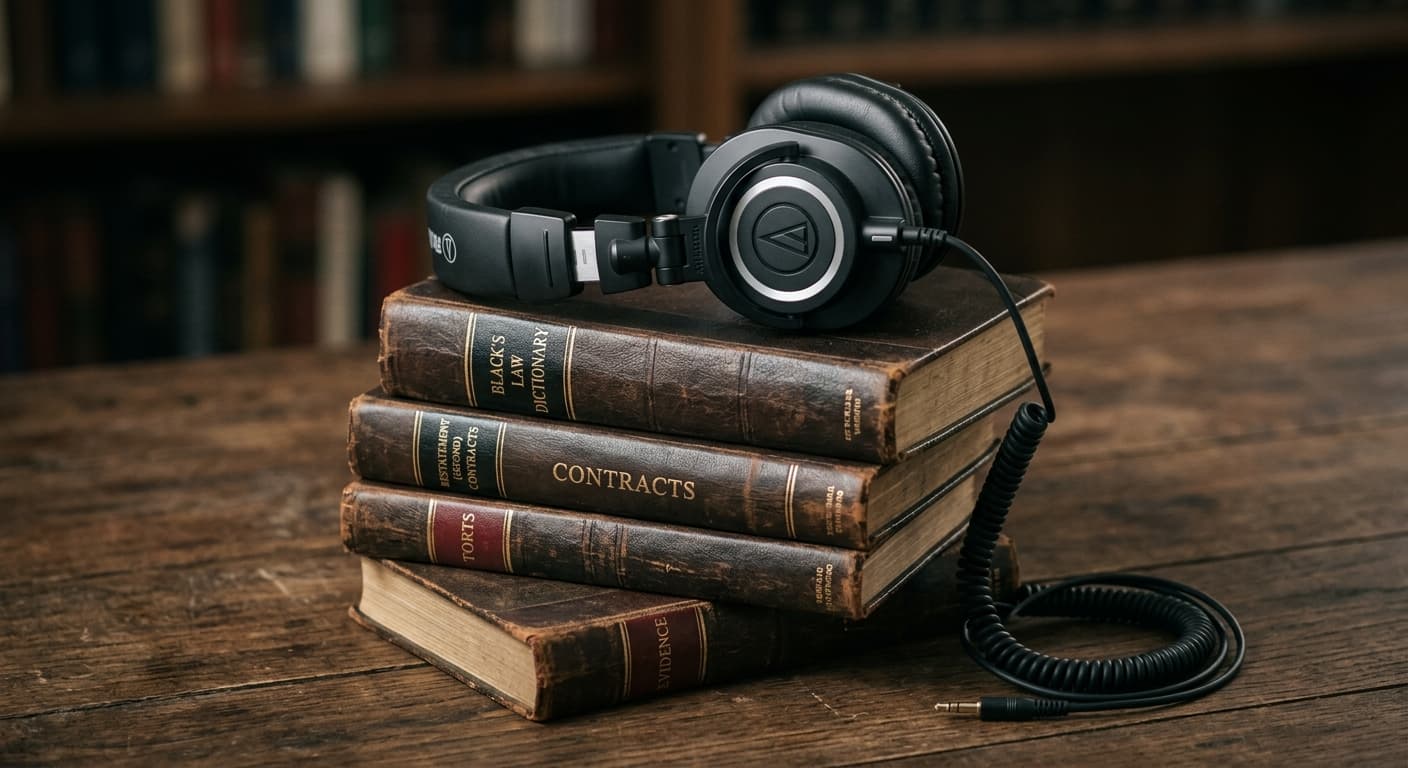
Tasmania has no standalone workplace surveillance statute. A conversation with a manager or a colleague is governed by the same Listening Devices Act 1991 (Tas) s.5 that applies to every other private conversation in the state, and section 5(3)'s broad personal-use exception means most private workplace recording is lawful, provided you never intend to share it outside the room.
Does Tasmania Have a Workplace Surveillance Law?
Tasmania has never enacted a dedicated workplace surveillance statute. Unlike New South Wales, whose Workplace Surveillance Act 2005 sets specific notice periods and a covert-authority process, or the Australian Capital Territory, whose Workplace Privacy Act 2011 does the same for optical and tracking surveillance, Tasmania relies entirely on the general Listening Devices Act 1991 (Tas). Section 5 governs audio, and because Tasmania has no civilian optical-surveillance statute at all, workplace video (a security camera in a common area, for example) is not independently regulated the way it is in states such as New South Wales or South Australia. There is no workplace-specific notice period, no requirement for a court-issued covert authority, and no dedicated workplace regulator in Tasmania.
Jurisdiction scope: This article addresses workplace recording in Tasmania under the Listening Devices Act 1991 (Tas), the federal Fair Work Act 2009 (Cth), and the federal Privacy Act 1988 (Cth). It does not address workplace surveillance law in other Australian states or territories; for the national picture, see workplace surveillance and monitoring in Australia. For Tasmania's general recording rules outside the workplace, see Tasmania recording laws.
Can You Record a Conversation With Your Manager or a Colleague?
Usually yes, if you keep it private. Section 5(1)(b) of the Listening Devices Act 1991 (Tas) prohibits recording a private conversation you are a party to, and a meeting with your manager or a one-on-one conversation with a colleague in a closed office will usually meet the Act's definition of a private conversation. Section 5(3) then supplies two independent bases for lawfully recording it anyway: every principal party consents, or one principal party (you) consents and either the recording is reasonably necessary to protect your own lawful interests, or, separately, the recording is simply not made for the purpose of communicating or publishing it to anyone who was not part of the conversation.
That second, no-publication basis is the one most everyday workplace recording relies on. A Tasmanian employee who records a difficult performance conversation purely to keep an accurate private record of what was said, with no plan to show it to anyone outside the room, is generally covered by s.5(3)(b)(ii) without needing to prove any lawful interest at all. The lawful-interests basis becomes relevant instead when the employee does intend to use the recording, for example to raise a complaint with HR or a regulator, or to support a Fair Work Commission application, because documenting a genuine safety concern, discriminatory conduct, or unlawful treatment is more likely to satisfy that test than recording a routine disagreement out of general caution.
Employer Monitoring: CCTV, Computer Use and Vehicle Tracking
From the employer's side, because Tasmania has no optical-surveillance statute, video-only CCTV in common work areas is not independently restricted by state law the way audio recording is. The practical constraints instead come from the Police Offences Act 1935 (Tas) ss.13A-13C, which prohibit observing or recording a person's body or a genuinely private act without consent (for example in a bathroom or change room), and from the federal Privacy Act's data-handling obligations for larger employers. Computer monitoring, email surveillance and vehicle GPS tracking are similarly outside the Listening Devices Act's scope, because none of them involve recording spoken conversation; they instead sit with the federal Privacy Act 1988 (Cth) for organisations above the $3 million turnover threshold, and with ordinary employment-law principles for smaller employers.
The Privacy Act's Employee-Records Exemption
The federal Privacy Act 1988 (Cth) and the Australian Privacy Principles apply to Tasmanian employers with annual turnover exceeding $3 million, and to all health service providers regardless of turnover. Within that group, section 7B(3) of the Act creates an employee-records exemption: an APP entity's handling of an employee record, directly related to a current or former employment relationship, is exempt from most of the Australian Privacy Principles. This is narrower than it sounds. The exemption does not cover job applicants or unsuccessful candidates, does not cover contractors handling another organisation's employee records, and does not remove the underlying Listening Devices Act 1991 requirement to have a lawful basis for the recording itself. Tasmanian public-sector employers sit outside the federal Privacy Act altogether and instead answer to the Personal Information Protection Act 2004 (Tas), overseen by the Tasmanian Ombudsman.
Covert Recording and Your Job: The Fair Work Risk
Even where a recording is clearly lawful under s.5(3), that is a separate question from whether it costs an employee their job. The Fair Work Commission has repeatedly treated covert recording of workplace conversations as conduct that damages the trust the employment relationship depends on. In Karen Altham-Wooding v PKDK Adventures Pty Ltd [2024] FWC 2753, the Commission held that secretly recording workplace conversations is "highly inappropriate, irrespective of whether it constitutes an offence in the relevant jurisdiction," reflecting a consistent national approach: a legal right to record under state law does not protect against a finding that covert recording justified disciplinary action or dismissal. A Tasmanian employee weighing whether to record a difficult conversation should treat the criminal-law question and the employment-law question as two separate risks.
Sharing a Workplace Recording
A recording that was lawful to make under the no-publication basis in s.5(3)(b)(ii) loses that basis the moment it is shared with someone outside the conversation. Sections 9 and 10 of the Listening Devices Act 1991 separately restrict communicating or publishing a private conversation, and this applies even to a recording that was entirely lawful to make. Forwarding a covert recording of a manager to a colleague, or posting it online, engages ss.9 and 10 independently of whether the original recording breached s.5.
The New Civil Layer: The Statutory Tort at Work
Since 10 June 2025, Schedule 2 to the Privacy Act 1988 (Cth) creates a federal statutory tort for serious invasions of privacy, actionable without proof of damage, alongside the state criminal offence. A colleague covertly recorded and then shared, without consent and without a lawful basis for the sharing, may have a civil claim as well as a possible criminal complaint. The tort is new and untested in workplace fact patterns specifically; this article does not predict how a court would decide any particular case.
Practical Guidance
If you are an employee considering recording a workplace conversation: if you plan to keep it strictly private, the no-publication basis generally covers you. If you plan to use it as evidence or share it with anyone, treat that as a separate, more serious legal question requiring a genuine lawful interest.
If you are an employer: put monitoring policies in writing, disclose them to staff, and never install recording devices in toilets, change rooms or other areas covered by the Police Offences Act's privacy provisions.
Disclaimer: This article presents general legal information about workplace recording law in Tasmania. It does not constitute legal advice. The information covers the Listening Devices Act 1991 (Tas) and applicable Commonwealth legislation as in force as of 2026-07-22. Laws can change. If you have a specific legal situation, consult a legal practitioner admitted in Tasmania or the relevant Australian state or territory.
For Tasmania's general consent rules, see Tasmania recording laws. For recording your own phone calls in Tasmania, see phone call recording in Tasmania. For security cameras and CCTV in Tasmania, see security camera laws in Tasmania. For the national picture on workplace monitoring, see workplace surveillance and monitoring in Australia.
Last updated: 2026-07-22. Statutes cited reflect their in-force versions as of 2026-07-22.
Frequently Asked Questions
Can I record a meeting with HR in Tasmania without telling them?
Often yes, if you keep it for your own reference. Section 5(3)(b)(ii) of the Listening Devices Act 1991 (Tas) excuses a participant's recording that is not made for the purpose of sharing it with anyone outside the meeting. If you intend to show the recording to a third party, you instead need consent or a genuine lawful-interests justification under s.5(3)(b)(i).
Does my employer have to tell me if there are cameras at work in Tasmania?
There is no dedicated statutory notice period in Tasmania, and video-only CCTV falls outside the Listening Devices Act 1991 entirely, because Tasmania has no civilian optical-surveillance statute. Recording a person's body or a genuinely private act without consent, such as in a bathroom or change room, is separately restricted by the Police Offences Act 1935 (Tas) ss.13A-13C.
Can I be fired for secretly recording a colleague in Tasmania?
Yes, this is possible even where the recording did not breach the Listening Devices Act 1991 (Tas). In Karen Altham-Wooding v PKDK Adventures Pty Ltd [2024] FWC 2753, the Fair Work Commission held that secretly recording workplace conversations is highly inappropriate regardless of whether it is a criminal offence. The criminal-law and employment-law questions are assessed separately.
Does the Privacy Act protect my personal information at work in Tasmania?
Only partly, and only for private employers with turnover over $3 million or that provide health services. Section 7B(3) of the Privacy Act 1988 (Cth) exempts an employer's handling of an existing employee's own employment records from most Australian Privacy Principles. Tasmanian public-sector employers instead answer to the Personal Information Protection Act 2004 (Tas), overseen by the Tasmanian Ombudsman.
Can I share a workplace recording with a lawyer or the Fair Work Commission in Tasmania?
Sharing a recording is governed separately from making it, under sections 9 and 10 of the Listening Devices Act 1991 (Tas). A recording made under the lawful-interests basis in s.5(3)(b)(i), for example to document a genuine safety concern, generally does not lose that basis by being shown to a lawyer or tendered in proceedings, but a recording that was only lawful because it was never meant to be shared changes character once it is shared.
Can I sue my employer for recording me without permission in Tasmania?
Potentially. Since 10 June 2025, the federal statutory tort for serious invasions of privacy under Schedule 2 to the Privacy Act 1988 (Cth) allows a civil claim for an intentional or reckless serious invasion of privacy, without needing to prove financial loss, alongside any criminal complaint under the Listening Devices Act 1991 (Tas). Courts have not yet extensively tested how this applies to workplace scenarios.
The Law Behind This Article
This article rests on the statutory provisions below, held in our own legal record and retrieved from the official source. Tap a section to read the operative text.
Listening Devices Act 1991 (Tas)
s 3InterpretationIn forcecited in 4 of our articles
(1) In this Act, unless the contrary intention appears – listen to includes hear; listening device means any instrument, apparatus, equipment or device capable of being used to record or listen to a private conversation simultaneously with its taking place; party, in relation to a private conversation, means – (a) a person by or to whom words are spoken in the course of the conversation; or (b) a person who, with the consent, express or implied, of any of the persons by or to whom words are spoken in the course of the conversation, records or listens to those words; [Section 3 Subsection (1) amended by No. 18 of 2018, s. 4, Applied:05 Oct 2018] personal camera has the same meaning as in the Police Powers (Surveillance Devices) Act 2006 ; [Section 3 Subsection (1) amended by No. 76 of 2003, Sched.
Official text (excerpt) · last checked 2026-08-14 · Read the full text in our law library · Verify at legislation.tas.gov.au
Also relied on in: Tasmania Recording Laws: Consent Rules, Exceptions and Penalties (2026), Home Security Cameras and CCTV Law in Tasmania, Recording Phone Calls in Tasmania: What the Law Requires
Search our full record of US law — 2.1 million sections, every state + federal →
Sources and References
- Listening Devices Act 1991 (Tas), consolidated text, ss.3, 5, 9, 10, 11, 14, 23, 24(legislation.tas.gov.au).gov
- Personal Information Protection Act 2004 (Tas)(legislation.tas.gov.au).gov
- Tasmanian Ombudsman, Personal Information Protection(ombudsman.tas.gov.au).gov
- Penalty Units Indexed Amounts, Department of Justice Tasmania(justice.tas.gov.au).gov
- OAIC, Workplace Monitoring and Surveillance(oaic.gov.au).gov
- OAIC, Statutory Tort for Serious Invasions of Privacy (commenced 10 June 2025)(oaic.gov.au).gov
- Fair Work Act 2009 (Cth), Federal Register of Legislation(legislation.gov.au).gov
- Karen Altham-Wooding v PKDK Adventures Pty Ltd [2024] FWC 2753(fwc.gov.au).gov