
Australia
Recording Phone Calls in the Northern Territory: What the Law Requires
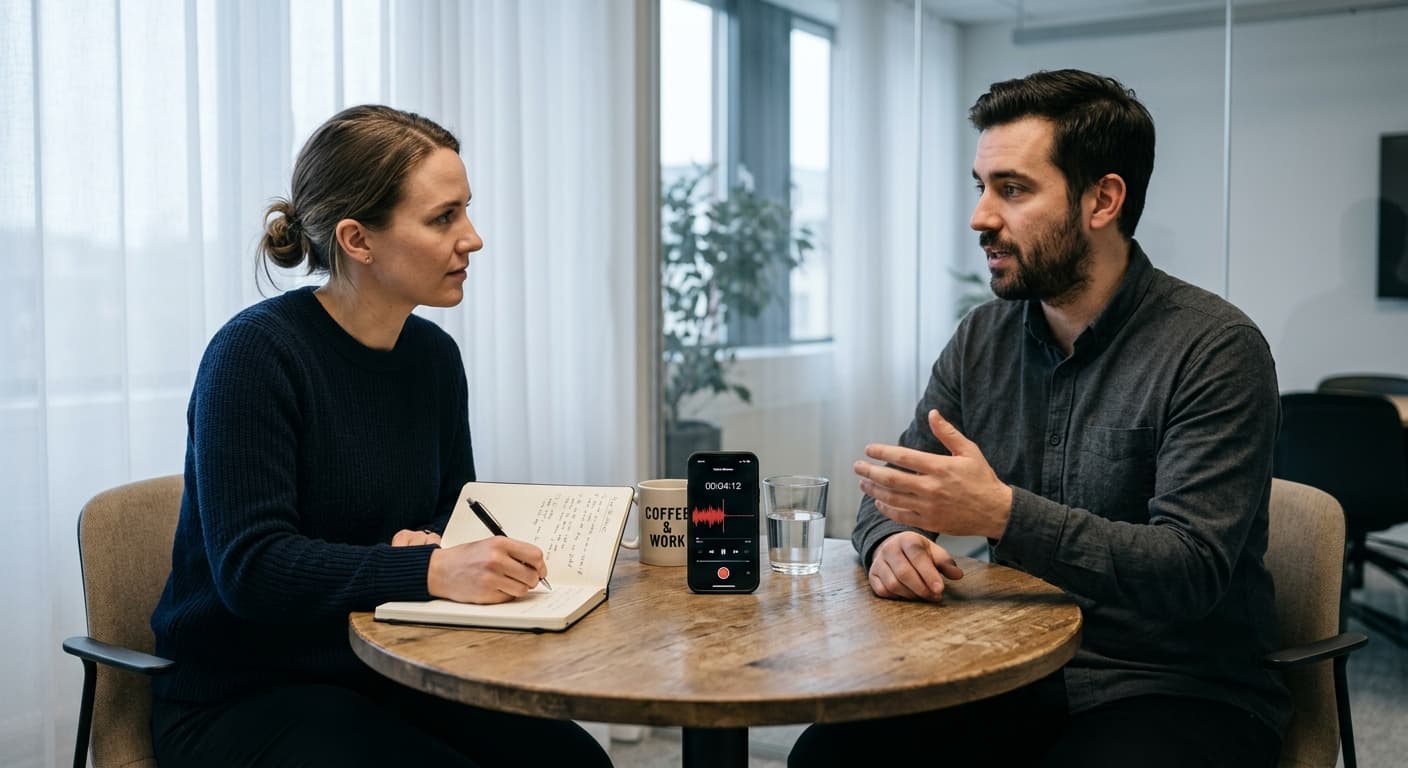
Recording your own phone call in the Northern Territory is generally lawful without needing anyone's consent, because the Surveillance Devices Act 2007 (NT) is drafted so it only catches recording a conversation you are not a party to. The more useful legal question for most NT callers is not whether they can record the call, but what they can do with the recording afterward.
Can You Record Your Own Phone Call in the Northern Territory?
Yes, generally, without needing consent or any exception. Section 11(1) of the Surveillance Devices Act 2007 (NT) makes it an offence to use a listening device to record a private conversation to which the person is not a party, and knowing it is used without each party's consent. Both elements of that offence require the recorder to be a non-party. A participant on a phone call, whether a personal call or a call made in a professional capacity, is a party to it, so section 11 simply does not reach their own recording.
Jurisdiction scope: This article addresses phone call recording law in the Northern Territory under the Surveillance Devices Act 2007 (NT) and the federal Telecommunications (Interception and Access) Act 1979 (Cth). It does not address the phone recording rules of other Australian states or territories; for a national comparison, see recording a phone call in Australia. For the Northern Territory's general recording rules, see Northern Territory recording laws.
Why the Drafting Technique Matters
The distinction between the NT's approach and Tasmania's or the ACT's is not just a difference in outcome; it is a difference in legal structure. In Tasmania and the ACT, the baseline offence catches a participant's own recording outright, and it falls to the person who made the recording to establish that a statutory exception, most often the no-publication limb, applies. In the NT, the prosecution must prove non-party status as an element of the offence before a conviction can occur at all. If the prosecution cannot prove the recorder was not a party, the case fails on that element regardless of anything else. Practically, an NT caller facing a complaint about their own recording starts from a stronger position than a caller in Tasmania or the ACT: there is no exception to argue, because the conduct was never captured by the offence in the first place.
The Federal Layer: Why the TIA Act Doesn't Change This
The Telecommunications (Interception and Access) Act 1979 (Cth) prohibits intercepting a communication passing over a telecommunications system "without the knowledge of the person making the communication." A participant recording their own phone call generally falls outside that definition, because the person doing the recording has knowledge of the communication, and the recording is made at the point of receipt, not in passage over the network. The TIA Act's central concern is carrier-level interception by third parties and the warrant framework for law enforcement telecommunications access, not personal recording by a participant. This means the NT's Surveillance Devices Act, not the federal Act, is what actually governs the question, and in the NT that state-law question resolves in the caller's favour before any exception analysis is even needed.
Sharing a Recorded Call Is the Real Question
Because recording your own call raises no issue under section 11, the practical legal risk in the NT sits almost entirely with what happens after the recording is made. Section 15 makes it an offence to communicate or publish a record of a private conversation, knowing it was obtained through a listening device, with a maximum penalty of 250 penalty units or two years imprisonment, the same maximum as the recording offence itself. Section 15(2) provides exceptions for communication or publication made with the express or implied consent of each party, that is reasonably necessary in the public interest or to protect the lawful interests of the person making it, made in the course of legal or disciplinary proceedings, or made by a law enforcement or ICAC officer in the performance of duty. A caller who records a threatening phone call and shares it with police to support a complaint would likely fall within the lawful-interests limb; a caller who records an ordinary personal call and posts it online to embarrass the other party would likely find none of the exceptions available.
Recording a Call You Are Not Part Of
The NT's participant-based structure cuts the other way for anyone not on the call. Planting a recording device to capture a conversation between two other people, or listening in on an extension without being part of the discussion, falls squarely inside section 11's prohibition and carries the full 250-penalty-unit, two-year maximum, since the recorder is genuinely not a party in that scenario.
Cross-Border and Interstate Calls
If you are in the NT calling someone in another state, your own conduct is governed by NT law, which places you outside the recording offence as a participant. The other party's conduct, however, is governed by the law of wherever they are, and that jurisdiction may apply a stricter rule to their own end of the conversation, or to the use of the recording in later proceedings there. Your NT-lawful recording does not automatically resolve how it will be treated in a proceeding conducted under another jurisdiction's law.
Disclaimer: This article presents general legal information about phone call recording law in the Northern Territory. It does not constitute legal advice. The information covers the Surveillance Devices Act 2007 (NT) and the Telecommunications (Interception and Access) Act 1979 (Cth) as in force as of 2026-07-22. Laws can change. If you have a specific legal situation, consult a legal practitioner admitted in the Northern Territory or the relevant Australian state or territory.
For the Northern Territory's general consent rules, see Northern Territory recording laws. For recording conversations at work in the Northern Territory, see workplace recording in the Northern Territory. For security cameras and CCTV in the Northern Territory, see security camera laws in the Northern Territory. For the national picture on phone recording, see recording a phone call in Australia.
Last updated: 2026-07-22. Statutes cited reflect their in-force versions as of 2026-07-22.
Frequently Asked Questions
Is it legal to record a phone call in the Northern Territory without telling the other person?
Yes, if you are a party to the call. Section 11 of the Surveillance Devices Act 2007 (NT) is defined so it only catches recording by someone who is not a party to the conversation, so as a participant you may record it without informing the other side and without needing any exception.
Does the federal wiretapping law apply if I record my own call in the Northern Territory?
No, generally. The Telecommunications (Interception and Access) Act 1979 (Cth) targets interception of a communication in transit over a telecommunications system by someone without knowledge of the sender. A participant recording their own call at their own handset has knowledge of the communication, so the Northern Territory's Surveillance Devices Act 2007, which places a participant outside the offence entirely, governs the question.
Can I share a phone call recording I made in the Northern Territory?
Not automatically. Section 15 of the Surveillance Devices Act 2007 (NT) separately restricts communicating or publishing a recording, even one you were entitled to make as a participant, unless a consent, proceedings, or public-interest or lawful-interests exception applies. Sharing without an exception carries the same maximum as unlawful recording: 250 penalty units or 2 years imprisonment.
What happens if I record a call I am not part of in the Northern Territory?
You face serious criminal exposure. Section 11 of the Surveillance Devices Act 2007 (NT) prohibits recording a private conversation you are not a party to, without consent from every participant, carrying up to 250 penalty units (approximately $48,500 at the 2026-27 rate) or two years imprisonment.
Can a business record customer service calls in the Northern Territory?
Yes. As a party to the call, a business may record it under section 11 of the Surveillance Devices Act 2007 (NT) without needing customer consent, though playing an automated notice at the start of the call remains standard good practice and helps establish transparency for other purposes, such as compliance with the federal Privacy Act.
The Law Behind This Article
This article rests on the statutory provisions below, held in our own legal record and retrieved from the official source. Tap a section to read the operative text.
Surveillance Devices Act 2007 (NT)
s 11Installation, use and maintenance of listening devicesIn forcecited in 10 of our articles
(1) A person is guilty of an offence if the person: (a) installs, uses or maintains a listening device to listen to, monitor or record a private conversation to which the person is not a party; and (b) knows the device is installed, used or maintained without the express or implied consent of each party to the conversation. Maximum penalty: 250 penalty units or imprisonment for 2 years. (2) Subsection (1) does not apply to: (a) the installation, use or maintenance of a listening device under: (i) a warrant, emergency authorisation, corresponding warrant or corresponding emergency authorisation; or (ii) under a law of the Commonwealth; or (b) the use of a listening device by a law enforcement officer or an ICAC officer to monitor or record a private conversation to which the officer is not a party if: (i) at least 1 party to the conversation expressly or impliedly consents to the monitoring or recording; and (ii) the officer is acting in the performance of the officer's duty; and (iii) the officer reasonably believes it is necessary to monitor or record the conversation for the protection of someone's safety; or (ba) the use, in accordance with section 14A, of body-worn video by a
Official text (excerpt) · last checked 2026-08-14 · Read the full text in our law library · Verify at legislation.nt.gov.au
Cited in 1 court opinions in our collectionLatest citing opinion in our collection: 2022
Opinions citing this section in our collection:
- Farm Transparency International Ltd v New South Wales (High Court of Australia 2022, [2022] HCA 23)
Identified automatically from the court opinions citing this section — not a ranking of which case controls.
Also relied on in: Home Security Cameras and CCTV Law in the Northern Territory, Dash Cam Laws in Australia: What's Legal to Record, Is It Illegal to Record Someone Without Consent in Australia?
s 15Communication and publication of private conversations and activitiesIn forcecited in 2 of our articles
(1) A person is guilty of an offence if the person: (a) communicates or publishes a record or report of a private conversation or private activity; and (b) knows the record or report has been made as a direct or indirect result of the use of a listening device, optical surveillance device or tracking device. Maximum penalty: 250 penalty units or imprisonment for 2 years. (2) Subsection (1) does not apply: (a) to a communication or publication made with the express or implied consent of each party to the private conversation or private activity; or (b) to a communication or publication that is reasonably necessary: (i) in the public interest; or (ii) for protecting the lawful interests of the person making it; or (c) to a communication or publication in the course of a legal or disciplinary proceeding; or (d) to a communication or publication of protected information; or (e) to a communication or publication made by a law enforcement officer: (i) to a person authorised by the chief officer of the law enforcement agency for investigating or prosecuting an offence; or (ii) to the occupier of a place of a record or report of a private activity made as a direct or indirect result of th
Official text (excerpt) · last checked 2026-08-14 · Read the full text in our law library · Verify at legislation.nt.gov.au
Cited in 1 court opinions in our collectionLatest citing opinion in our collection: 2022
Opinions citing this section in our collection:
- Farm Transparency International Ltd v New South Wales (High Court of Australia 2022, [2022] HCA 23)
Identified automatically from the court opinions citing this section — not a ranking of which case controls.
Also relied on in: Northern Territory Recording Laws: When You Can Record a Private Conversation (2026)
Search our full record of US law — 2.1 million sections, every state + federal →
Sources and References
- Surveillance Devices Act 2007 (NT), Northern Territory Legislation(legislation.nt.gov.au).gov
- Surveillance Devices Act 2007 (NT) s 11, Listening Devices, AustLII(classic.austlii.edu.au)
- Surveillance Devices Act 2007 (NT) s 15, Communication and Publication, AustLII(classic.austlii.edu.au)
- Penalty Units, NT Attorney-General's Department (current and historical rates)(agd.nt.gov.au).gov
- Telecommunications (Interception and Access) Act 1979 (Cth)(legislation.gov.au).gov
- OAIC, Statutory Tort for Serious Invasions of Privacy (commenced 10 June 2025)(oaic.gov.au).gov