
New Jersey
New Jersey Car Seat Laws (2026): Ages, Weight & Fines
Independently fact-checked against primary sources (last audited September 17, 2026). · 4 primary sources cited on this page. How we verify our legal content
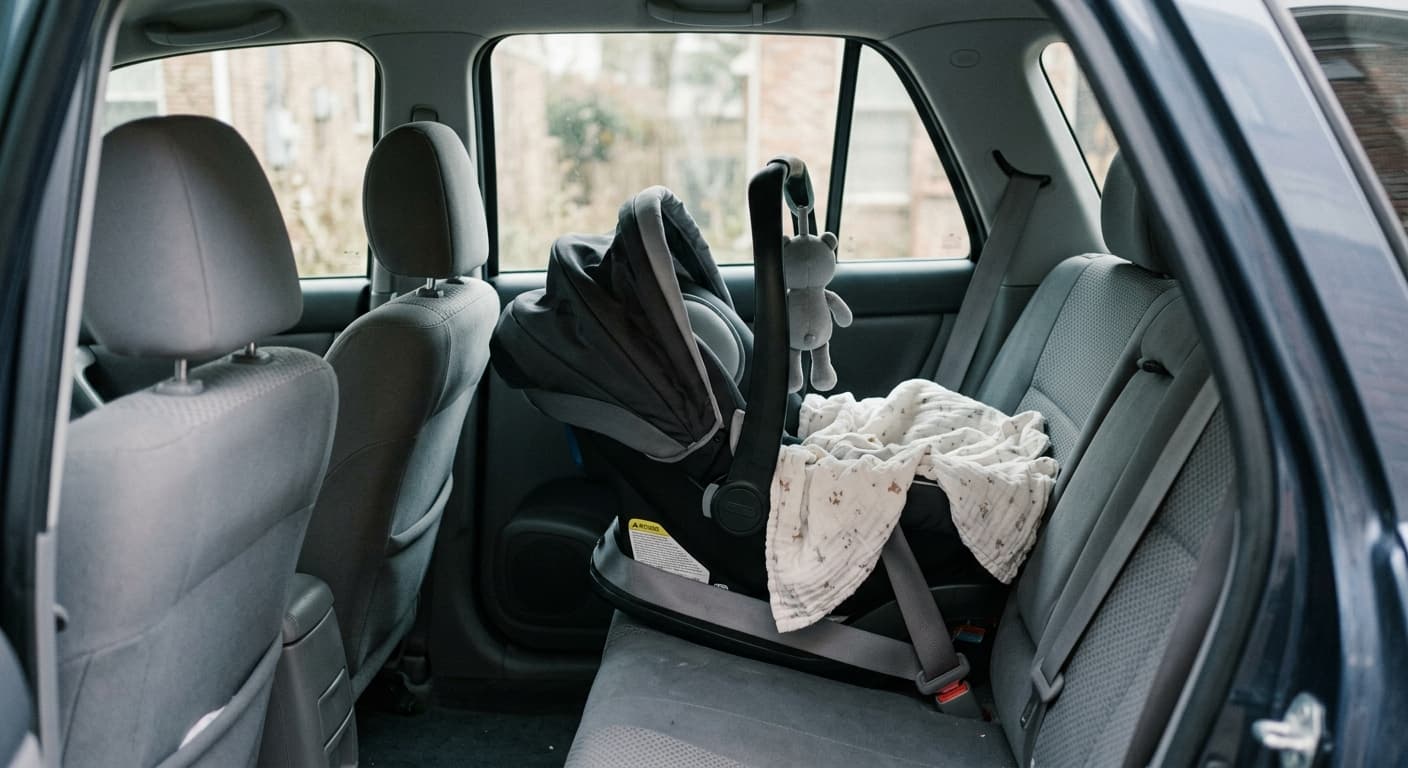
New Jersey requires a rear-facing seat until age 2 or 30 pounds, a forward-facing harness seat until age 4 or 40 pounds, and a booster seat until age 8 or 57 inches tall, whichever comes first at each stage, all in a rear seat, under N.J.S.A. 39:3-76.2a. This page reflects the statute's text as of September 2026.
Jurisdiction scope: This article covers car seat and child-restraint law in the state of New Jersey only. It does not address any other state. For other states, see the car seat laws hub.
| Stage | Who | Rule | Statute |
|---|---|---|---|
| Rear-facing | Under 2 AND under 30 lb | Rear-facing restraint system with a five-point harness, in a rear seat | N.J.S.A. 39:3-76.2a(a) |
| Forward-facing harness | Under 4 AND under 40 lb | Rear-facing until outgrown then forward-facing with a five-point harness in a rear seat, or forward-facing directly | N.J.S.A. 39:3-76.2a(b) |
| Booster | Under 8 AND less than 57 in | Forward-facing until outgrown then booster in a rear seat, or booster directly | N.J.S.A. 39:3-76.2a(c) |
| Seat belt | 8 through 17 (any height), or under 8 and at least 57 in | Properly adjusted and fastened safety seat belt | N.J.S.A. 39:3-76.2f(a) |
Birth through age 1: rear-facing
New Jersey's rear-facing requirement applies conjunctively: "A child under the age of two years and weighing less than 30 pounds shall be secured in a rear facing child passenger restraint system, which is equipped with a five-point harness," in a rear seat. Both the age-2 and 30-pound conditions define who's covered, so crossing either one, turning 2 or reaching 30 pounds, ends this stage even if the other threshold hasn't been reached yet.
The forward-facing harness stage
New Jersey requires a restraint with a five-point harness for a child under 4 years old and under 40 pounds, and it gives two ways to satisfy that: the child can be secured in a rear-facing restraint until outgrowing the manufacturer's top height or weight recommendations, at which point the child moves to a forward-facing restraint with a five-point harness in a rear seat; or the child can be secured directly in a forward-facing restraint with a five-point harness from the start. As with the rear-facing stage, this is an age-and-weight conjunctive test for who's covered, crossing either the age-4 or 40-pound threshold ends it, not an either/or on the thresholds themselves.
The booster stage
The same pattern continues for the booster stage: a child under 8 years old and less than 57 inches tall can be secured either in a forward-facing restraint with a five-point harness until outgrowing its top height or weight recommendations, at which point the child moves to a booster seat in a rear seat, or directly in a booster seat from the start. The stage ends as soon as the child turns 8 or reaches 57 inches, whichever comes first.
The rear-seat requirement and the airbag rule
New Jersey's statute opens with a rear-seat umbrella that governs every stage above: a covered child has to be secured in a child passenger restraint system or booster seat in a rear seat. A front-seat exception exists only if the vehicle has no rear seats at all, and even then, a rear-facing restraint still can't go in the front seat of a vehicle equipped with a passenger-side airbag that hasn't been disabled or turned off. The rear-seat requirement and the airbag rule both reach the forward-facing and booster stages, not just the rear-facing stage: a forward-facing seat or booster belongs in the rear seat unless the vehicle simply has none.
Exemptions to New Jersey's car seat law
The restraint duty's opening sentence carries two scope limits. It binds "every person operating a motor vehicle, other than a school bus, equipped with safety belts or a Lower Anchors and Tethers for Children system (LATCH)." That means a school bus is excluded outright, and a vehicle equipped with neither safety belts nor LATCH falls outside the section entirely. New Jersey's statute doesn't carry a separate taxi, for-hire, or physician-certification exemption beyond these two; a driver of a hired vehicle that does have safety belts or LATCH, and isn't a school bus, is still covered.
Seat belt after the booster stage
New Jersey's seat belt law, N.J.S.A. 39:3-76.2f, covers two groups of passengers under 18: every passenger who is at least 8 but under 18, regardless of height, and any passenger under 8 who has already reached 57 inches tall (the same either-threshold exit that ends the booster stage early). Either group must wear a properly adjusted and fastened safety seat belt, and the driver of the vehicle is responsible for securing a passenger who is at least 8 but under 18. A separate paragraph in the same statute requires an 18-or-older rear-seat passenger to wear a seat belt as well.
Penalty for a car seat violation
New Jersey's codified penalty is a flat fine: not less than $50 and not more than $75 for a violation of the child restraint requirement, with no separate, higher tier for a second or subsequent offense. A violation can't be treated as contributory negligence, and it can't be admitted as evidence in the trial of a civil action.
Leaving a child alone in a vehicle
New Jersey has no dedicated statute making it a specific offense to leave a child unattended in a vehicle. That gap does not mean a caregiver faces no legal exposure: New Jersey's general child endangerment statute, N.J.S.A. 2C:24-4, covers a parent, guardian, or other person having a legal duty for the care of a child who causes the child harm that would make the child an abused or neglected child. Separately, N.J.S.A. 2A:62A-35 protects a bystander who forcibly enters a vehicle to remove an unattended, unsupervised child from liability for property damage to the vehicle, as long as the vehicle is locked or there is no reasonable way to remove the child, the bystander has a reasonable, good-faith belief that forcible entry is necessary because the child is in imminent danger of death or serious bodily injury, and the bystander also calls 911 or emergency responders, leaves written notice, stays with the child, uses no more force than necessary, and tries to render aid; the immunity doesn't cover damage caused by the bystander's own recklessness or willful misconduct.
Federal guidance vs. New Jersey law
The federal standard that governs car seats as products, FMVSS 213 (49 CFR 571.213), regulates what a manufacturer may sell, not how a parent must use the seat; New Jersey's own statute, described above, already sets a conjunctive age-and-weight or age-and-height floor for each stage. NHTSA and the American Academy of Pediatrics separately recommend keeping a child rear-facing as long as the seat's own height and weight limits allow, which can extend past New Jersey's own age-2/30-pound floor for moving to a forward-facing seat. That's safety guidance describing a longer, voluntary rear-facing period; it is not a separate legal requirement layered on top of the statutory floor described above.
Related New Jersey traffic law pages
Disclaimer: This article provides general legal information about New Jersey's car seat law as of September 2026. It is not legal advice. Statutes, exemptions, and penalties change; verify the current text of the law before relying on it, and talk to a lawyer licensed in New Jersey about a specific situation.
Statutes cited reflect their in-force version as of 2026-09-16. Last updated: 2026-09-16.
Frequently Asked Questions
What does New Jersey law require for a rear-facing car seat?
A child under 2 years old AND weighing less than 30 pounds must be in a rear-facing restraint system with a five-point harness, in a rear seat, under N.J.S.A. 39:3-76.2a. Both conditions define who's covered, so crossing either one ends this stage.
Does a New Jersey car seat have to be in the back seat?
Yes. All three restraint stages, rear-facing, forward-facing, and booster, have to be in a rear seat. The only exception is when the vehicle has no rear seats at all, and even then a rear-facing restraint can't go in the front seat if there's an active, undisabled passenger-side airbag.
Are taxis and rideshare drivers exempt from New Jersey's car seat law?
No. New Jersey's statute exempts a school bus, and a vehicle equipped with neither safety belts nor a LATCH system, but it doesn't carry a separate taxi, for-hire, or rideshare exemption. A hired vehicle with safety belts or LATCH that isn't a school bus is still covered.
What is the fine for a car seat violation in New Jersey?
A flat fine of $50 to $75. New Jersey's codified statute doesn't create a higher fine for a second or later violation, and a violation can't be used as evidence of contributory negligence in a civil case.
Until what age does a child need a booster seat in New Jersey?
A child under 8 years old AND less than 57 inches tall must use a forward-facing restraint or a booster seat, under N.J.S.A. 39:3-76.2a. Once the child turns 8, or reaches 57 inches tall while still under 8, New Jersey's seat belt law, N.J.S.A. 39:3-76.2f, takes over through age 17.
Is it illegal to leave a child alone in a car in New Jersey?
There is no dedicated statute specifically addressing this. New Jersey's general child endangerment statute, N.J.S.A. 2C:24-4, can apply if leaving the child causes the child harm that would make the child an abused or neglected child.
Updates
Independently fact-checked against the cited primary sources
Sources and References
- N.J.S.A. 39:3-76.2a - Child passenger restraint systems (2025 New Jersey Revised Statutes, Justia)(law.justia.com)
- N.J.S.A. 39:3-76.2d - Violations, fines (2025 New Jersey Revised Statutes, Justia)(law.justia.com)
- N.J.S.A. 39:3-76.2f - Seat belt usage requirements; driver's responsibility (2025 New Jersey Revised Statutes, Justia)(law.justia.com)
- N.J.S.A. 2C:24-4 - Endangering welfare of children(lis.njleg.state.nj.us).gov
- N.J.S.A. 2A:62A-35 - Immunity from liability for property damages for entering a motor vehicle to remove an unattended, unsupervised child(lis.njleg.state.nj.us).gov
- 49 CFR 571.213 - FMVSS No. 213, Child restraint systems(ecfr.gov).gov
- N.J. Attorney General, Division of Highway Traffic Safety - Child Passenger Safety(njoag.gov).gov
- American Academy of Pediatrics - Car Safety Seats: Information for Families(healthychildren.org)