New Jersey Traffic Camera Ticket Laws: Speed Cameras Banned, and the Red Light Pilot That Already Expired
Independently fact-checked against primary sources (last audited August 12, 2026). · 4 primary sources cited on this page. How we verify our legal content
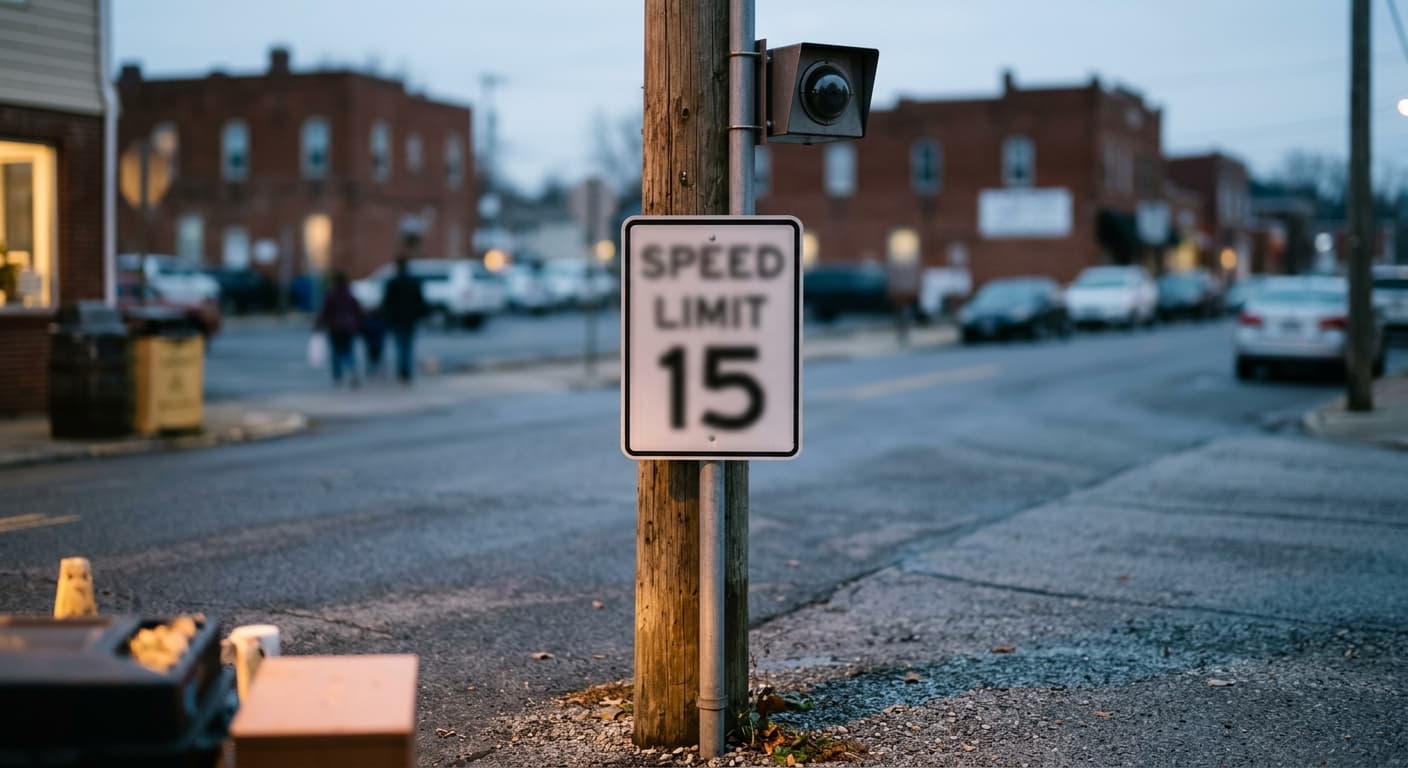
New Jersey bans automated speed enforcement outright, and its once-authorized red light camera program is no longer legal either, even though the statute sections that created it are still sitting in the code, unrepealed. New Jersey's story is really two separate laws: a flat, decades-old ban on photo radar, and a five-year red light camera pilot program that ran its course and ended in 2014 without the Legislature renewing it. Anyone reading the still-printed red light camera statutes today, including an AI tool summarizing New Jersey law, is reading text that no longer authorizes anything.
New Jersey Has Banned Photo Radar Speed Cameras Since 1992
N.J.S.A. 39:4-103.1, enacted by L. 1992, c. 91, states that a law enforcement officer or agency shall not use photo radar to enforce New Jersey's traffic laws. Photo radar, as the statute frames it, is a radar unit linked to a camera that automatically photographs speeding vehicles. That ban has been on the books for more than three decades and, unlike the red light camera story below, has never been paired with a pilot program or a sunset date. Speed cameras of that kind are simply not legal in New Jersey.
The Red Light Camera Pilot: Authorized, Then Expired
Red light cameras took a different path. P.L. 2007, c. 348 authorized a five-year pilot program, and the first monitoring system activated December 16, 2009, the date New Jersey's Department of Transportation identifies as the pilot's official start. By its own terms, the pilot ran five years. New Jersey's Department of Transportation, in both its program page and its Third Annual Report, is explicit about what happened next: as of December 16, 2014, the municipalities that had been running cameras «no longer have the statutory authority to capture violations through automated enforcement,» and «without action from the Legislature, New Jersey's Red Light Running (RLR) Automated Enforcement Pilot Program has ended.»
Why the Code Still Looks Like Red Light Cameras Are Legal
This is the trap. New Jersey never repealed N.J.S.A. 39:4-8.12 through 8.18, the code sections that established the red light camera pilot's mechanics: signage, notice, the owner-liability civil penalty, and so on. Those sections are still printed in the New Jersey statutes today, word for word as they read while the pilot was running.
The sunset is not hidden away in some uncodified session law. It is in the code. N.J.S.A. 39:4-8.14(a) directs the Commissioner of Transportation to establish a «five-year pilot program,» and N.J.S.A. 39:4-8.18 is a codified section captioned «Effective date, expiration date» providing that the act «shall take effect ninety days following enactment and shall expire upon the submission of the Commissioner of Transportation's fifth and final report.»
What the code does not give you is a date. Nothing in the printed text says the authority ended on December 16, 2014; that comes from the pilot's start date and from NJDOT. Combine a missing calendar date with sections that were never repealed, and a reader, or an automated legal-research tool, who pulls up 39:4-8.12 and stops there will conclude New Jersey currently authorizes red light cameras. It does not. An act that expired on its own terms stays printed until the Legislature deletes it.
What If You Get a Camera Ticket From Another State?
New Jersey does not run a camera program of its own, but a New Jersey driver can still receive a mailed camera ticket from New York, Pennsylvania, Delaware, or Maryland, all of which operate active owner-liability programs. Those notices come from the issuing state's own law, not New Jersey's, and the consequences of not paying, whether that is a late fee, a collections referral, or a registration hold on that state's plates, are set by the state that sent the ticket. In most owner-liability programs nationwide, the underlying penalty is explicitly not a criminal conviction, and it does not automatically transmit to a New Jersey driving record through the interstate Driver License Compact, which operates on convictions rather than this kind of civil penalty.

Do not assume New Jersey shields you from that program. The photo radar ban limits what New Jersey law enforcement may do to enforce New Jersey's own traffic laws; it says nothing about what another state may do under its program or with its own records. Treat the notice as that state's matter, and weigh the practical consequences it describes rather than assuming your home state cancels them.
Toll Cameras Are a Different System
New Jersey's toll facilities, including the Turnpike, the Parkway, and Port Authority crossings, use camera-based systems to bill drivers who pass through a toll point without an active transponder account. That toll-billing infrastructure is a separate legal system from the traffic-ticket camera ban discussed on this page. An unpaid toll notice is a real collections and fee-escalation risk in its own right, but it should not be confused with the red light or speed camera enforcement covered here.
Could New Jersey Bring Back Camera Enforcement?
Only through new legislation, and nothing has been enacted. The 1992 photo radar ban still reads the way it did when it passed, the expired pilot has not been renewed, and NJDOT still tells municipalities the program is over. A change of this kind has to come from Trenton, not from a local ordinance.
Bills touching automated enforcement move through the Legislature from one session to the next, and a pending bill changes nothing until it is signed. Check the Legislature's bill search for what is actually moving in the current session rather than relying on any summary, including this one, to tell you nothing is pending.
Information last verified on 2026-08-12. This article has not yet been reviewed by a licensed lawyer.
Related Resources
- Traffic Camera Ticket Laws by State
- Do You Have to Pay a Camera Ticket?
- How to Fight a Camera Ticket
- Can You Get a Speeding Ticket Without Being Pulled Over?
- New Jersey Police Bodycam Laws
Last updated: 2026-08-12.
More New Jersey Laws
Frequently Asked Questions
Are speed cameras legal in New Jersey?
No. N.J.S.A. 39:4-103.1 has banned photo radar speed enforcement since 1992.
Are red light cameras legal in New Jersey?
No, not currently. New Jersey ran a five-year red light camera pilot that expired December 16, 2014, and it was never renewed.
Why do New Jersey's red light camera statutes still look like they're in effect?
Because the code sections that created the pilot, N.J.S.A. 39:4-8.12 through 8.18, were never formally repealed. The sunset is codified: 39:4-8.14 calls it a five-year pilot program, and 39:4-8.18 is captioned «Effective date, expiration date» and ties expiration to the Commissioner of Transportation's fifth and final report. What the code never states is a calendar date, so the printed text can mislead a reader who doesn't know the pilot ended.
I got a camera ticket in the mail from New York, Pennsylvania, Delaware, or Maryland. Do I have to pay it?
New Jersey does not run those programs, but the state that mailed it does. Those are civil owner-liability penalties from that state's own camera program, and the consequences of not paying are set by the issuing state's law, not New Jersey's.
Does New Jersey have a law blocking other states from sharing camera-ticket data about New Jersey drivers?
Do not count on one. New Jersey's photo radar ban limits what New Jersey law enforcement may do to enforce New Jersey's traffic laws; it does not reach another state's owner-liability program or that state's own records. Treat a mailed notice from New York, Pennsylvania, Delaware, or Maryland as that state's matter.
Are toll cameras, like those on the New Jersey Turnpike or at Port Authority crossings, covered by the camera ban?
No. Toll-collection cameras are a separate billing system from the traffic-ticket camera ban and remain legal.
Could New Jersey bring back red light or speed cameras?
Only through new legislation, and none has been enacted. The photo radar ban stands and the expired pilot has not been renewed. Bills touching automated enforcement come and go each session, so check the Legislature's current bill list rather than assuming nothing is pending.
Will an out-of-state camera ticket show up on my New Jersey driving record?
No. A civil owner-liability penalty of that kind generally is not a conviction, and the interstate Driver License Compact operates on convictions, so there is no automatic mechanism to transmit that kind of penalty onto a New Jersey record.
Updates
Corrected how the expired red light camera pilot sunsets: the five-year term and the expiration clause are in the statute itself (N.J.S.A. 39:4-8.14 and 39:4-8.18), which set no calendar date, and removed statements about pending or absent legislation that could not be verified.
Independently fact-checked against the cited primary sources
The Law Behind This Article
This article rests on the statutory provisions below, held in our own legal record and retrieved from the official source. Tap a section to read the operative text.
New Jersey Statutes (Unannotated)
§ 39:4-103.1Photo radar defined, usage prohibitedIn force
1. a. Notwithstanding any law, rule or regulation to the contrary, a law enforcement officer or agency shall not use photo radar to enforce the provisions of chapter 4 of Title 39 of the Revised Statutes. b. As used in this act, "photo radar" means a device used primarily for highway speed limit enforcement substantially consisting of a radar unit linked to a camera, which automatically produces a photograph of a vehicle traveling at a speed in excess of the legal limit.
Official text (excerpt) · last checked 2026-09-16 · Read the full text in our law library · Verify at lis.njleg.state.nj.us
§ 39:4-8.12Findings, declarations relative to traffic control signal monitoring systems.In force
1. The Legislature finds: The disregard of traffic control devices at intersections impedes the efficient flow of traffic, and more importantly, dramatically increases the likelihood of accidents that endanger the safety and well being of motor vehicle occupants and pedestrians. The installation and use of a traffic control signal monitoring system, which complements the efforts of local law enforcement, could serve as an effective tool in encouraging drivers to strictly obey traffic control devices at intersections, facilitating the flow of traffic and protecting the safety and well being of motor vehicle occupants and pedestrians. The Legislature, therefore, declares: It is altogether fitting and proper, and within the public interest, to require the Commissioner of Transportation to establish a pilot program to determine the effectiveness of the installation and utilization of traffic control signal monitoring systems in this State and to approve applications from municipalities where such systems may be installed.
Official text (excerpt) · last checked 2026-08-01 · Read the full text in our law library · Verify at lis.njleg.state.nj.us
Search our full record of US law — 2.1 million sections, every state + federal →
Sources and References
- NJDOT Red Light Running Automated Enforcement Pilot Program page (pilot expiration, December 16, 2014)(nj.gov).gov
- N.J.S.A. 39:4-103.1, Photo Radar Prohibited (L. 1992, c. 91)(lis.njleg.state.nj.us).gov
- N.J.S.A. 39:4-8.12 et seq., Traffic Control Signal Monitoring Systems (pilot EXPIRED December 16, 2014; no current authorizing effect)(lis.njleg.state.nj.us).gov
- Driver License Compact, Article IV (Maine's enactment, illustrating the conviction-based interstate reporting standard)(mainelegislature.org).gov
- N.J.S.A. 39:4-8.14, Five-year pilot program relative to effectiveness of installation, utilization of traffic control signal monitoring systems (L.2007, c.348, s.3)(lis.njleg.state.nj.us)
- N.J.S.A. 39:4-8.18, Effective date, expiration date (act expires upon submission of the Commissioner of Transportation's fifth and final report; L.2007, c.348, s.7)(lis.njleg.state.nj.us)