Iowa Camera Ticket Laws: Speed Cameras and Red Light Rules
Independently fact-checked against primary sources (last audited August 12, 2026). · 6 primary sources cited on this page. How we verify our legal content
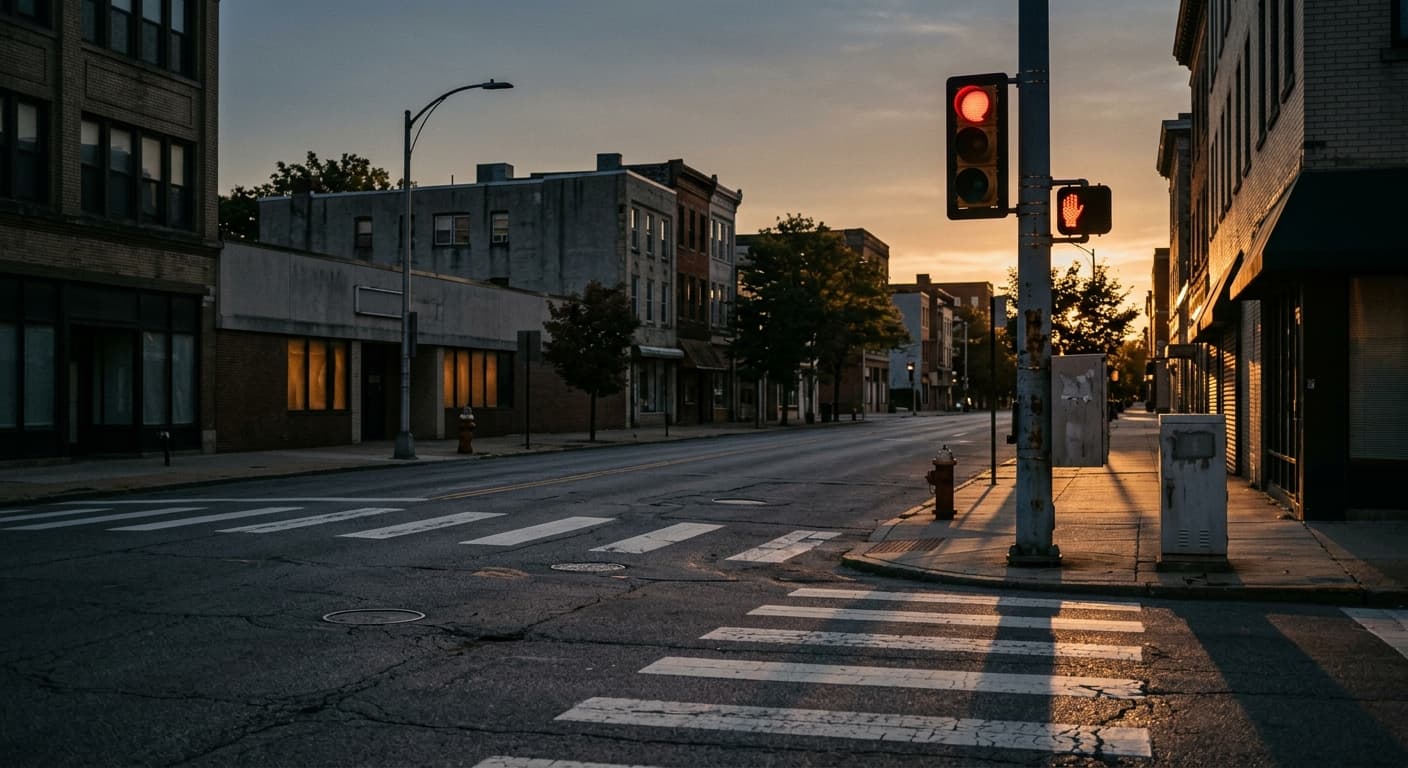
A common claim online is that Iowa «killed» red light cameras with its 2024 law. That is not accurate. Iowa's 2024 statute, Chapter 321P, is written to regulate speed-measuring camera systems specifically, and by its own definition it does not reach red light cameras at all. Red light enforcement in Iowa continues under the older, separate local-ordinance authority it always operated under, and cities like Cedar Rapids still run it.
Did Iowa Ban Red Light Cameras?
No, and the reason is worth understanding precisely because it explains a lot of confusing coverage. Iowa's 2024 law, codified at Iowa Code chapter 321P, defines the device it regulates as «a camera or other optical device designed to work in conjunction with a speed measuring device to detect motor vehicles being operated in violation of the speed limit.» Every substantive rule in the chapter, including its permit requirement, its citation limits, and its fine caps, applies only to systems that meet that definition.
A pure red light camera, one that does not measure speed at all, simply is not the kind of system chapter 321P describes. It falls outside the chapter entirely and continues operating under the older legal authority Iowa cities have relied on for red-light enforcement for years: local-ordinance authority upheld by Iowa courts well before chapter 321P existed. Cedar Rapids is a working example: the city continues running red light enforcement at $100 per violation under its own municipal code, unaffected by the 2024 speed-camera law.
The Speed Camera Rules Under Chapter 321P
For systems that do measure speed, chapter 321P imposes real structure. A local authority needs a Department of Transportation permit before deploying a system. The department issues only one permit per local authority, and that single permit «shall set forth all locations at which a local authority is authorized to use a system,» so adding a camera means applying to update the existing permit rather than obtaining a separate one for that spot. The Iowa DOT reports it has received applications for 348 locations from 28 jurisdictions, approving 154 and denying 194 as of this article's research. A transitional provision in the 2024 act, Section 10 of House File 2681, was uncodified session law rather than part of chapter 321P, and it barred the department from issuing a permit to a local authority that first used a system at a location on or after January 1, 2024 «before July 1, 2026.» That window has now closed, so the provision no longer blocks new permits.
Citations can only be issued for speeds more than 10 mph over the posted limit. Fine caps rise with how far over the limit a driver was going: $75 for 11-20 mph over, $100 for 21-25 mph over, $250 for 26-30 mph over, and $500 for more than 30 mph over. Inside road work zones, all of those caps double, up to $1,000 for the highest tier. Localities with 20,000 residents or fewer cannot use mobile speed camera units at all; where mobile systems are allowed, they are restricted to neighborhoods, construction zones, school and college zones, and locations that are hard to enforce with an officer present.
Every citation also requires a human check before it can issue: «A local authority shall not issue a citation or warning memorandum for a violation detected by a system until a peace officer of the local authority, or an individual trained and certified by the local authority, has reviewed and approved the recorded photograph or video to affirm a traffic violation occurred.» If a system does not meet the chapter's requirements, any citation it generates «is void and unenforceable.»
Points, Insurance, and Your License
Speed camera violations under chapter 321P are explicitly kept off your driving record and out of insurance calculations. Section 321P.6(4) states: «A violation detected by an automated or remote system for traffic law enforcement is a civil infraction. Such a violation shall not be considered by the department of transportation for purposes of driver's license sanctions, and shall not be considered by an insurer for purposes of a person's automobile insurance rates.»
Owner Liability
The citation is initially addressed to the registered owner of the vehicle. Chapter 321P gives the owner a chance to identify the actual driver: if the owner can show they were not driving at the time, «the citation may be amended and issued to the person identified» as the actual driver. For leased vehicles, the lessee is deemed the owner for purposes of the statute, and for vehicles under a security agreement, the debtor is deemed the owner.
What Happens If You Don't Pay
Chapter 321P does not itself contain a nonpayment mechanism, no registration hold, no license suspension, nothing spelled out in the statutory text. An unpaid speed camera fine follows Iowa's ordinary civil-infraction or municipal-infraction collection process, and the specific steps a city takes can vary by local ordinance. This is a real gap in the statute worth being aware of: do not assume a specific consequence like a registration hold applies statewide, since chapter 321P does not create one.
Signage and Fair Warning
Iowa's law requires warning to drivers before they can be ticketed. Fixed camera systems need permanent signs posted 500 to 1,000 feet ahead of the enforcement point, and jurisdictions using mobile systems must post boundary signs at every highway entrance into the area, in place at least 30 days before enforcement begins.
Information last verified on 2026-08-12. This article has not yet been reviewed by a licensed lawyer.

Related Resources
- Traffic Camera Ticket Laws by State
- Do You Have to Pay a Camera Ticket?
- How to Fight a Camera Ticket
- Can You Get a Speeding Ticket Without Being Pulled Over?
- Automated License Plate Reader Laws
Last updated: 2026-08-12.
More Iowa Laws
Frequently Asked Questions
Did Iowa really ban red light cameras in 2024?
No. Iowa's 2024 law, chapter 321P, is defined to cover only systems that work in conjunction with a speed measuring device. Pure red light cameras fall outside that definition entirely and continue to operate under separate, older local-ordinance authority.
Are speed cameras legal in Iowa?
Yes, under a Department of Transportation permit system created by Iowa Code chapter 321P (2024). Citations can only be issued for speeds more than 10 mph over the posted limit, and every location where a camera may run must be listed on the local authority's single DOT permit.
Will an Iowa camera ticket affect my license or insurance?
No. Iowa Code 321P.6(4) states the violation cannot be considered for driver's license sanctions or by an insurer for setting automobile insurance rates.
What are Iowa's camera ticket fine amounts?
Fines are capped at $75 (11-20 mph over), $100 (21-25 mph over), $250 (26-30 mph over), and $500 (more than 30 mph over), and these caps double inside road work zones.
What if I wasn't the one driving my car when the camera caught the violation?
Iowa's law lets the registered owner identify the actual driver; if confirmed, the citation can be amended and reissued to that person instead of the owner.
Can a mobile speed camera ticket me in my own neighborhood?
Possibly, in jurisdictions larger than 20,000 residents. Iowa restricts mobile speed camera units to neighborhoods, construction zones, school and college zones, and other hard-to-enforce locations, and requires boundary signage posted at least 30 days before enforcement begins.
What happens if I don't pay an Iowa speed camera ticket?
Chapter 321P does not set a specific statewide nonpayment consequence. Unpaid fines follow Iowa's ordinary civil or municipal infraction collection process, which can vary by the city or county that issued the ticket.
Updates
Corrected the permit rule (Iowa issues one Department of Transportation permit per local authority listing all of its camera locations, not one permit per location), restored the exact statutory wording of the human-review requirement in Iowa Code 321P.6(1), and updated the 2024 transitional limit on new permits, which expired on July 1, 2026.
Independently fact-checked against the cited primary sources
The Law Behind This Article
This article rests on the statutory provisions below, held in our own legal record and retrieved from the official source. Tap a section to read the operative text.
Iowa Code, Chapter 321P: AUTOMATED TRAFFIC ENFORCEMENT
§ 321P.6Enforcement.In forcecited in 2 of our articles
1. A local authority shall not issue a citation or warning memorandum for a violation detected by a system until a peace officer of the local authority, or an individual trained and certified by the local authority, has reviewed and approved the recorded photograph or video to affirm a traffic violation occurred. 2. a. For an excessive speed violation detected by a system other than as provided in paragraph “b”, the fine shall not exceed the following amounts: (1) Seventy-five dollars for speed greater than ten miles per hour in excess of the limit but not more than twenty miles per hour in excess of the limit. (2) One hundred dollars for speed greater than twenty miles per hour in excess of the limit but not more than twenty-five miles per hour in excess of the limit. (3) Two hundred fifty dollars for speed greater than twenty-five miles per hour in excess of the limit but not more than thirty miles per hour in excess of the limit. (4) Five hundred dollars for speed greater than thirty miles per hour in excess of the limit. b.
Official text (excerpt) · last checked 2026-09-16 · Read the full text in our law library · Verify at legis.iowa.gov
Also relied on in: How to Fight a Camera Ticket: Real Defenses by State
§ 321P.3Use limited.In force
1. A local authority shall not use an automated or remote system for traffic law enforcement to issue a citation for a traffic violation unless the violation is for exceeding the speed limit by more than ten miles per hour. 2. A local authority with a population of twenty thousand or less based on the most recent federal decennial census shall not use a mobile system to issue a citation for a traffic violation. The department shall adopt rules pursuant to chapter 17A otherwise authorizing and regulating the operation of mobile systems, taking into consideration a mobile system’s mobility, flexible usage, and the needs of a local authority to control traffic speed to address critical traffic safety issues at a location. However, the rules shall not authorize the use of a mobile system other than in neighborhoods, construction zones, school zones, including collegiate zones, and locations where traffic enforcement is difficult or dangerous to enforce by alternative methods. 3.
Official text (excerpt) · last checked 2026-07-29 · Read the full text in our law library · Verify at legis.iowa.gov
§ 321P.1Definitions.In force
As used in this chapter, unless the context otherwise requires: 1. “Automated or remote system for traffic law enforcement” or “system” means a camera or other optical device designed to work in conjunction with a speed measuring device to detect motor vehicles being operated in violation of the speed limit, the use of which results in the issuance of citations sent through the mail or by electronic means. 2. “Critical traffic safety issues” include traffic violations resulting in a traffic collision or accident and traffic collisions and accidents resulting in serious injury or death occurring at a location. 3. “Department” means the state department of transportation. 4. “Local authority” means a county or municipality having authority to adopt local police regulations under the Constitution of the State of Iowa and laws of this state.
Official text (excerpt) · last checked 2026-07-29 · Read the full text in our law library · Verify at legis.iowa.gov
§ 321P.7Liability for violations detected.In force
1. A citation for a violation detected by an automated or remote system for traffic law enforcement shall be issued to the owner of the identified motor vehicle. 2. a. Notwithstanding subsection 1, a local authority shall provide the owner of a motor vehicle who receives a citation for a violation detected by a system with an opportunity to submit evidence that the owner was not operating the motor vehicle at the time of the violation. As part of the proceeding, the owner shall provide the name and address of the person who was operating the motor vehicle at the time of the violation. b. Notwithstanding subsection 1, a citation issued to the owner of a motor vehicle may be amended and issued to the person identified under paragraph “a” who was operating the motor vehicle. 3. For purposes of this section, “owner” means a person who holds the legal title to a motor vehicle. However, if the motor vehicle is the subject of a security agreement with a right of possession in the debtor, the debtor is deemed the owner for purposes of this section, or if the motor vehicle is leased as defined in section 321.493, the lessee is deemed the owner for purposes of this section.
Official text (excerpt) · last checked 2026-07-29 · Read the full text in our law library · Verify at legis.iowa.gov
Search our full record of US law — 2.1 million sections, every state + federal →
Sources and References
- Iowa Code 321P.1, Definitions (automated or remote system for traffic law enforcement)(legis.iowa.gov).gov
- Iowa Code 321P.3, Restrictions on use; citation limits(legis.iowa.gov).gov
- Iowa Code 321P.6, Civil infraction; fine caps; points and insurance exclusion(legis.iowa.gov).gov
- Iowa Code 321P.7, Owner and lessee liability(legis.iowa.gov).gov
- Iowa DOT, Automated Traffic Enforcement program page(iowadot.gov).gov
- City of Cedar Rapids, Automated Traffic Enforcement program page(cedar-rapids.org).gov
- Iowa Code 321P.2, Permit required; one permit per local authority listing all authorized locations(legis.iowa.gov)
- 2024 Iowa Acts House File 2681, Division II, Sec. 10 (uncodified transitional limit on new permits, expired July 1, 2026)(legis.iowa.gov)