California Vehicle Code 22350: Basic Speed Law Explained
Independently fact-checked against primary sources (last audited October 21, 2026). · 9 primary sources cited on this page. How we verify our legal content
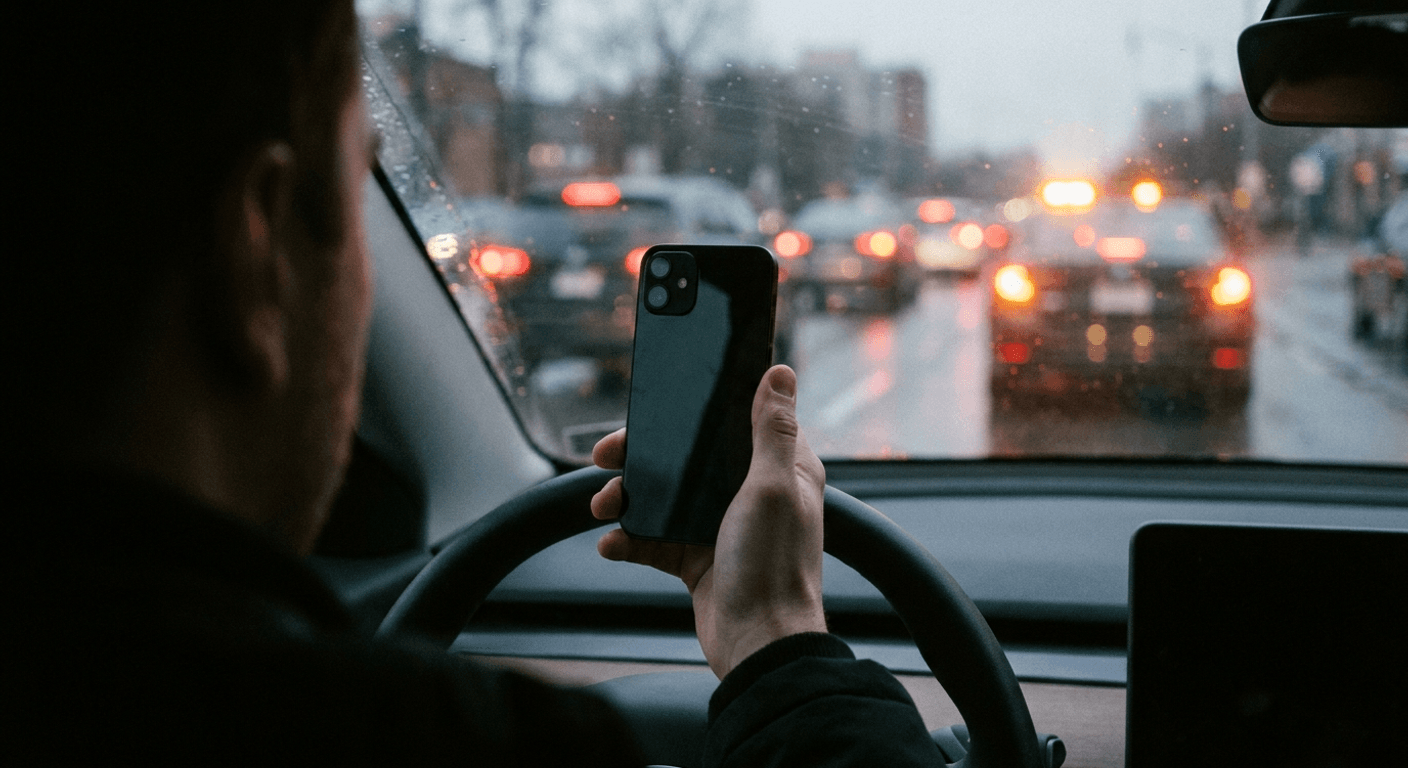
California Vehicle Code section 22350 is the basic speed law. It prohibits driving on a highway faster than is reasonable or prudent for the conditions, and in any event at a speed that endangers the safety of persons or property. A violation is ordinarily a traffic infraction. Under Vehicle Code 40000.28, it is a misdemeanor if the driver has been convicted of three or more violations of the Vehicle Code (or of local ordinances adopted under it) in the 12 months before the offense and those prior convictions are admitted by the driver or alleged in the charging document.
This page covers what section 22350 says as published on the California Legislature's official site, how California's jury instructions describe the basic speed law, how it fits with the speed-limit sections around it, and the fines set for an infraction. It covers California state law only.
Information last verified against primary sources on October 20, 2026. This article has not yet been reviewed by a licensed lawyer.
What Vehicle Code 22350 says
Section 22350 is one sentence long. It sits in Article 1, "Generally," of Chapter 7, "Speed Laws," in Division 11 of the Vehicle Code, "Rules of the Road." The full text is:
"No person shall drive a vehicle upon a highway at a speed greater than is reasonable or prudent having due regard for weather, visibility, the traffic on, and the surface and width of, the highway, and in no event at a speed which endangers the safety of persons or property."
The sentence sets two separate limits:
- Reasonable or prudent for the conditions. The speed must take account of the weather, visibility, traffic, and the surface and width of the highway.
- No speed that endangers safety. The words "in no event" make this limit apply regardless of any posted number.
Section 22350 does not state a number of miles per hour. The leginfo history note reads "Amended by Stats. 1963, Ch. 252." The text quoted here is the version published on the Legislature's site as of October 20, 2026.
How the basic speed law is proved
There is no stand-alone CALCRIM jury instruction for a 22350 violation. The basic speed law is defined inside CALCRIM No. 595, "Vehicular Manslaughter: Speeding Laws Defined," part of the vehicular manslaughter series of instructions published by the Judicial Council of California (2026 edition). Its 22350 portion says the prosecution must prove that:

- The defendant drove a vehicle on a highway; and
- The defendant drove faster than a reasonable person would have driven considering the weather, visibility, traffic, and conditions of the highway, or at a speed that endangered the safety of other people or property.
The instruction adds:
"The speed of travel, alone, does not establish whether a person did or did not violate the basic speed law. When determining whether the defendant violated the basic speed law, consider not only the speed, but also all the surrounding conditions known by the defendant and also what a reasonable person would have considered a safe rate of travel given those conditions."
It describes a highway as "any area publicly maintained and open to the public for purposes of vehicular travel" and says the term includes a street.
How 22350 fits with speed limits
Two neighboring sections in the same article help explain what 22350 does and does not do.
Section 22351: prima facie limits
Section 22351 ties the basic speed law to prima facie speed limits, meaning the limits in section 22352 or limits "established as authorized in this code."
- Under 22351(a), a speed not over those limits "is lawful unless clearly proved to be in violation of the basic speed law."
- Under 22351(b), a speed over those limits "is prima facie unlawful unless the defendant establishes by competent evidence that the speed in excess of said limits did not constitute a violation of the basic speed law at the time, place and under the conditions then existing."
So a speed under a prima facie limit can still violate section 22350 if that is clearly proved, and a speed over one is prima facie unlawful under the statute's wording unless the defendant establishes by competent evidence that it did not violate the basic speed law. The vehicular manslaughter instruction, CALCRIM No. 595, adds a point about the burden of proof: when the defendant presents evidence that the speed did not violate the basic speed law, the jury is told that the People must prove beyond a reasonable doubt that the speed was not reasonable for the overall conditions, even if it was over the prima facie limit.
Section 22349: maximum speeds
Section 22349 is the maximum speed law. Subdivision (a) provides that, except as provided in section 22356, "no person may drive a vehicle upon a highway at a speed greater than 65 miles per hour." Subdivision (b) sets 55 miles per hour on a two-lane, undivided highway unless the highway has been posted for a higher speed by the Department of Transportation or the appropriate local agency on the basis of an engineering and traffic survey.
Section 22349 sets a ceiling. Section 22350 can apply below it.
Penalties under Vehicle Code 22350
Section 22350 does not contain a penalty. Vehicle Code section 40000.1 sets the default rule:
"Except as otherwise provided in this article, it is unlawful and constitutes an infraction for any person to violate, or fail to comply with any provision of this code, or any local ordinance adopted pursuant to this code."
Section 22350 is not named in any of the provisions of that article (sections 40000.1 through 40008) that list particular violations as misdemeanors, including the lists in sections 40000.11 and 40000.15. A violation is therefore ordinarily an infraction.
One general rule in the same article changes that for drivers with recent convictions. It names no section number, so it applies to section 22350 like any other infraction. Vehicle Code 40000.28 provides:
"Any offense which would otherwise be an infraction is a misdemeanor if a defendant has been convicted of three or more violations of this code or any local ordinance adopted pursuant to this code within the 12-month period immediately preceding the commission of the offense and such prior convictions are admitted by the defendant or alleged in the accusatory pleading. For this purpose, a bail forfeiture shall be deemed to be a conviction of the offense charged."
The same section adds that it does not apply to violations by pedestrians.
The fines for a Vehicle Code infraction are in section 42001(a), which applies "except as provided in this code":
"(1) By a fine not exceeding one hundred dollars ($100). (2) For a second infraction occurring within one year of a prior infraction that resulted in a conviction, a fine not exceeding two hundred dollars ($200). (3) For a third or subsequent infraction occurring within one year of two or more prior infractions that resulted in convictions, a fine not exceeding two hundred fifty dollars ($250)."
Those are maximum base fines for an infraction; section 42001(a) applies to a person convicted of an infraction, so it does not set the punishment when section 40000.28 makes the violation a misdemeanor, and this page does not cover that punishment. Section 42001(a) does not state the total amount due on a citation, and this page does not cover other amounts, traffic school, or effects on a driving record. It also does not cover whether any other section raises the fine for a 22350 violation in particular locations.
Related sections
- Vehicle Code section 22351. Prima facie speed limits and how they relate to the basic speed law. Official text.
- Vehicle Code section 22349. The 65 and 55 miles-per-hour maximum speed law. Official text.
- Vehicle Code section 40000.1. The default rule that a Vehicle Code violation is an infraction. Official text.
- Vehicle Code section 40000.28. Makes an offense that would otherwise be an infraction a misdemeanor when the defendant has three or more Vehicle Code convictions in the preceding 12 months that are admitted or alleged. Official text.
- Vehicle Code section 42001. Fine limits for Vehicle Code infractions. Official text.
- Vehicle Code section 23103 (reckless driving). A separate misdemeanor that requires driving with willful or wanton disregard for safety. CALCRIM No. 2200 says driving over the speed limit does not by itself establish that. See our VC 23103 explainer.
Other statute explainers are collected in our statutes library.
What happens after a 22350 citation
A 22350 violation is ordinarily an infraction, and section 42001(a) sets a fine as its punishment. Section 40000.28 makes it a misdemeanor when the driver has three or more Vehicle Code convictions in the prior 12 months that are admitted or alleged in the charging document. A "22350" on a citation is the citing officer's description of the alleged violation.
If a 22350 appears alongside other codes after an arrest, our California charge code lookup translates booking codes, and What Happens After You Get Arrested explains the steps in a criminal case.
Disclaimer
This page explains what California Vehicle Code section 22350 and the related sections quoted here say, as published on official state sources and checked on October 20, 2026. It is general legal information, not legal advice, and reading it does not create an attorney-client relationship. Whether a speed was unsafe for the conditions depends on the facts, so anyone contesting a citation and wanting advice should speak with a lawyer licensed in California.
Last updated: October 20, 2026.
Frequently Asked Questions
What is California Vehicle Code 22350?
It is the basic speed law. It prohibits driving on a highway at a speed greater than is reasonable or prudent given the weather, visibility, traffic, and the surface and width of the highway, and in no event at a speed that endangers the safety of persons or property.
Is a 22350 violation a misdemeanor?
Usually not. Vehicle Code 40000.1 makes a violation of the Vehicle Code an infraction except as otherwise provided in that article, and section 22350 is not named in the article's misdemeanor lists, including sections 40000.11 and 40000.15. But section 40000.28 makes any offense that would otherwise be an infraction a misdemeanor if the defendant has been convicted of three or more Vehicle Code violations (or local ordinances adopted under the code) within the 12 months before the offense, and those prior convictions are admitted by the defendant or alleged in the charging document. A bail forfeiture counts as a conviction for this purpose.
What is the fine for violating 22350?
Vehicle Code 42001(a) sets the fine for a Vehicle Code infraction, except as provided elsewhere in the code: up to $100, up to $200 for a second infraction within one year of a prior infraction that resulted in a conviction, and up to $250 for a third or subsequent infraction within one year of two or more such prior infractions.
Can someone get a 22350 ticket while driving under the speed limit?
The statute can apply below a speed limit. It bars any speed greater than is reasonable or prudent for the conditions and any speed that endangers safety. Section 22351(a) says a speed within the prima facie limits is lawful unless clearly proved to violate the basic speed law.
What does prima facie speed limit mean under 22351?
Under section 22351(b), a speed over the prima facie limits in section 22352, or limits otherwise established under the code, is prima facie unlawful unless the defendant establishes by competent evidence that the speed did not violate the basic speed law at that time, place, and under the conditions then existing. In the vehicular manslaughter instruction, CALCRIM No. 595, when the defendant presents such evidence, the jury is told that the People must still prove beyond a reasonable doubt that the speed was not reasonable for the overall conditions.
What is the difference between 22350 and 22349?
Section 22349 sets maximum speeds: 65 miles per hour on a highway except as provided in section 22356, and 55 miles per hour on a two-lane, undivided highway unless posted higher based on an engineering and traffic survey. Section 22350 sets no number and turns on whether the speed was reasonable and safe for the conditions.
Updates
Independently fact-checked against the cited primary sources
The Law Behind This Article
This article rests on the statutory provisions below, held in our own legal record and retrieved from the official source. Tap a section to read the operative text.
California Vehicle Code
§ 22350In forcecited in 2 of our articles
No person shall drive a vehicle upon a highway at a speed greater than is reasonable or prudent having due regard for weather, visibility, the traffic on, and the surface and width of, the highway, and in no event at a speed which endangers the safety of persons or property.
Official text (excerpt) · last checked 2026-07-28 · Read the full text in our law library · Verify at leginfo.legislature.ca.gov
Also relied on in: California Reckless Driving Laws: VC 23103 Penalties and Points
Search our full record of US law — 2.1 million sections, every state + federal →
Sources and References
- California Vehicle Code § 22350 (basic speed law)(leginfo.legislature.ca.gov).gov
- Judicial Council of California Criminal Jury Instructions (CALCRIM), 2026 edition, No. 595, Vehicular Manslaughter: Speeding Laws Defined(courts.ca.gov).gov
- California Vehicle Code § 22351 (prima facie speed limits)(leginfo.legislature.ca.gov).gov
- California Vehicle Code § 22349 (maximum speed law)(leginfo.legislature.ca.gov).gov
- California Vehicle Code § 40000.1 (violations are infractions by default)(leginfo.legislature.ca.gov).gov
- California Vehicle Code § 40000.11 (misdemeanor list)(leginfo.legislature.ca.gov).gov
- California Vehicle Code § 40000.15 (misdemeanor list)(leginfo.legislature.ca.gov).gov
- California Vehicle Code § 42001 (infraction fines)(leginfo.legislature.ca.gov).gov
- California Vehicle Code § 40000.28 (infraction becomes a misdemeanor after three convictions in 12 months)(leginfo.legislature.ca.gov).gov
Paid attorney referral. RecordingLaw may receive compensation when you use an attorney-help link. RecordingLaw is not a law firm. Submitting a request does not guarantee that an attorney will accept your case and does not create an attorney-client relationship.