
Hawaii
Hawaii Slip and Fall Laws: Proving Premises Liability
Independently fact-checked against primary sources (last audited August 17, 2026). · Reviewed by the RecordingLaw editorial team. · Law checked current as of August 17, 2026. · 4 primary sources cited on this page. How we verify our legal content
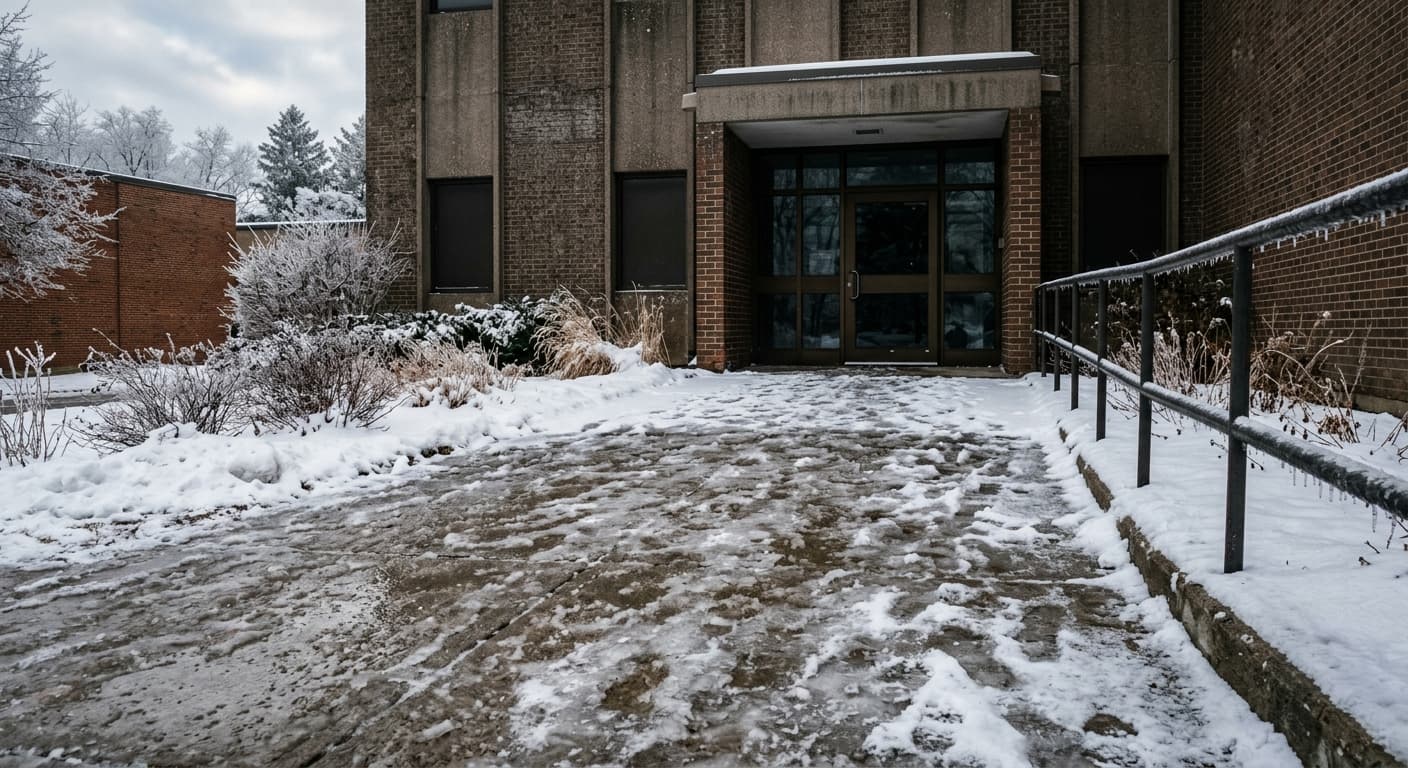
To win a slip and fall claim in Hawaii, you must show that a property owner was negligent: they owed you a duty of reasonable care, failed to address a hazardous condition, and that failure caused your injuries. Hawaii applies modified comparative negligence under HRS 663-31, with a 51% bar that reduces (but does not eliminate) recovery when you share some fault.
Proving a slip and fall claim in Hawaii
Every premises liability claim in Hawaii requires four elements: duty, breach, causation, and damages. Hawaii took a significant step toward a plaintiff-friendly framework in Pickard v. City & County of Honolulu, 51 Haw. 134, 452 P.2d 445 (1969), which abolished the traditional common-law categories (invitee, licensee, trespasser) and replaced them with a single, unified duty of reasonable care owed to all foreseeable entrants. Whether you are a customer, a social guest, or even an uninvited visitor, the owner's obligation is to exercise reasonable care to keep the premises safe.
The notice element is usually the battleground in slip and fall cases. You must show that the owner had either actual notice (an employee saw the spill, for example, or created the condition) or constructive notice (the hazard existed for long enough that a reasonable inspection and correction program would have caught it). The longer a puddle, a torn carpet, or a slick floor had been present before your fall, the stronger the argument for constructive notice.
Causation links the hazardous condition to your harm. You must show that the dangerous condition, not a separate intervening factor, was the proximate cause of your fall and injuries. Strong medical records, photographs of the scene, and prompt incident documentation all support the causal connection. Hawaii courts apply standard proximate-cause analysis in premises cases.
The open-and-obvious doctrine in Hawaii
In a number of states, an open-and-obvious hazard is a complete bar to recovery: if you could see the danger, the owner had no duty to protect you from it. Hawaii has explicitly rejected this approach.

In Steigman v. Outrigger Enterprises, Inc., 126 Hawai'i 133, 267 P.3d 1238 (Haw. 2011), the Hawaii Supreme Court held that the obviousness of a danger does not negate the landowner's duty of reasonable care. Instead, any known or obvious characteristics of the hazard are factors weighed in the comparative-negligence analysis under HRS 663-31. The court reasoned that treating open-and-obvious as a no-duty rule was incompatible with Hawaii's comparative-negligence statute and modern tort policy.
This framework was built on the foundation laid in Pickard (1969), which imposed a unitary duty of care toward all foreseeable entrants. Because Hawaii's negligence system is designed to apportion fault rather than create categorical bars, an obvious hazard reduces (but never eliminates) a landowner's potential liability. Your awareness of the risk may increase your share of comparative fault, but it does not wipe out the owner's obligation to maintain safe premises. An obvious wet floor near the only store exit, a visibly cracked walkway customers must cross, or a clearly pooled area of rainwater inside a building can all still support a claim.
Ice, snow, and natural accumulation in Hawaii
Many cold-weather states follow the "natural accumulation" doctrine, which holds that property owners have no duty to remove or warn of ice and snow that accumulated naturally from weather. Hawaii does not follow this rule, and the reason is straightforward: as a tropical jurisdiction, Hawaii has no body of native ice-and-snow case law developing a natural-accumulation immunity.
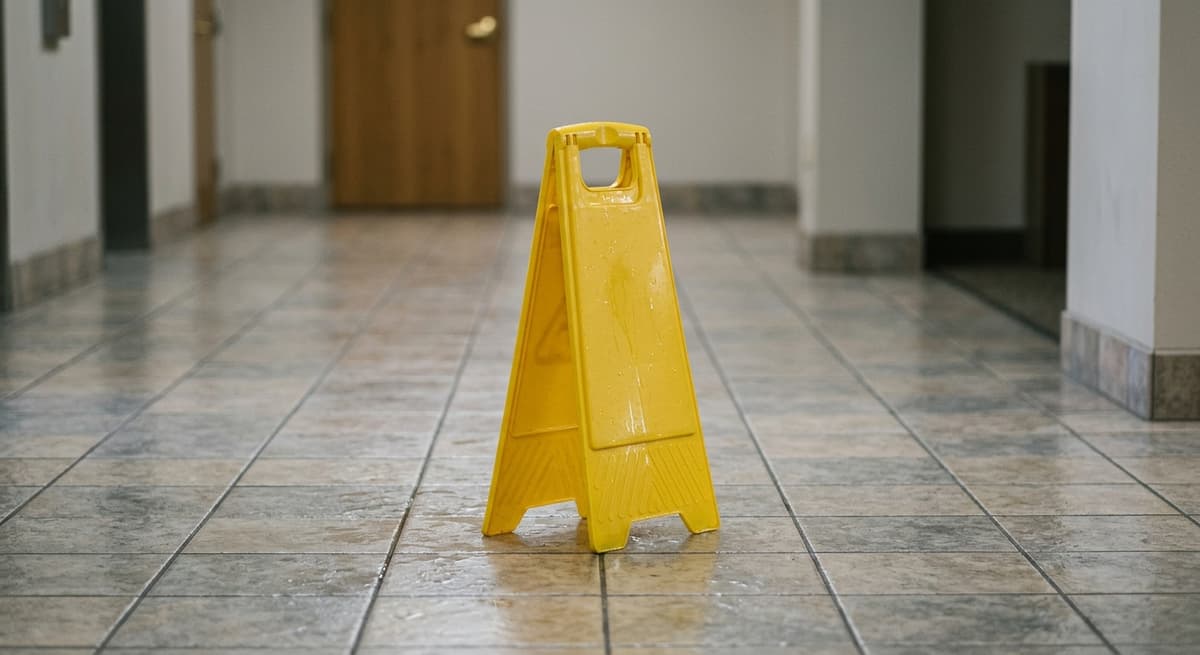
Instead, Hawaii applies the general duty of reasonable care established in Pickard v. City & County of Honolulu (1969) and reaffirmed in Steigman (2011): an occupier of land has a duty to use reasonable care for the safety of all persons reasonably anticipated to be upon the premises, regardless of their legal status. Pickard arose from a fall through a hole in an unlit courthouse restroom floor and did not discuss weather conditions. Steigman did involve rain: a hotel guest slipped on a wet lanai after she and her family were caught in a rainstorm. Everyday wet-surface hazards in Hawaii include water or rain tracked into a hotel lobby, a wet entrance mat after a tropical downpour, or a slick tile floor in a high-humidity environment.
There is no special immunity for naturally occurring conditions in Hawaii. Ordinary notice-of-hazard principles govern: you must show the owner knew or should have known about the dangerous accumulation and failed to act within a reasonable time. Regular inspections, drying surfaces, placing wet-floor signs, and similar measures are part of what reasonable care requires for a Hawaii property owner.
How fault is shared: Hawaii's negligence rule
Hawaii follows modified comparative negligence under HRS 663-31, which abolished contributory negligence as a complete bar. Under this system, a plaintiff may recover only if their fault "was not greater than" the aggregate fault of the defendant or defendants. Because the statute bars recovery when the plaintiff's fault is "greater than" the defense (51% or more), Hawaii is a modified-51 ("greater than") state.
In practical terms: if you are found 40% at fault and the owner 60% at fault, you recover 60% of your damages. If you are exactly 50% at fault, you still recover (50% is not "greater than" 50%). If the jury assigns you 51% of the fault, you recover nothing. In jury trials, Hawaii requires a special verdict form stating both the total damages and each party's percentage of negligence, so the allocation is transparent and on the record.
When more than one defendant shares the fault (a property owner plus a janitorial or maintenance contractor, for example), HRS 663-10.9 controls how much you can actually collect from each. Economic damages stay jointly and severally recoverable against any joint tortfeasor under HRS 663-10.9(1), so a solvent defendant can be made to pay the whole economic award. Non-economic damages work differently: under HRS 663-10.9(3), joint and several liability survives only against a tortfeasor whose individual degree of negligence is found to be 25 percent or more under HRS 663-31. Where a defendant's assigned share is less than 25 percent, your non-economic recovery against that defendant is limited to its proportional share. That distinction matters most when one defendant is uninsured or insolvent.
This rule is more plaintiff-friendly than pure contributory negligence states (Alabama, Maryland, North Carolina, Virginia, and DC, where any fault bars all recovery), but it does have a ceiling unlike the pure comparative fault states (such as Alaska or California), where even a plaintiff found 99% at fault can recover 1%.
Deadlines: statute of limitations and government claims
Under HRS 657-7, Hawaii sets a 2-year statute of limitations for personal injury actions, requiring suit to be filed within two years after the cause of action accrued. Hawaii applies a discovery rule: the clock starts when the plaintiff discovers, or through reasonable diligence should have discovered, the negligent act, the resulting damage, and the causal connection between them. Minors and persons under legal incapacity may qualify for tolling of the limitations period.
For falls on government property, Hawaii's framework is notably victim-friendly compared to many mainland states that impose short 60-, 90-, or 180-day notice-of-claim traps.
For state property: the Hawaii State Tort Liability Act (HRS 662-4) sets a 2-year limitations period to begin suit with no separate pre-suit notice prerequisite.
For county or municipal property (a fall on a Honolulu, Maui, Kauai, or Hawaii County sidewalk, park, or public building): HRS 46-72 requires written notice to the designated county officer describing when, where, and how the injury occurred and the amount claimed. The important point is that this notice window is now two years. The old 6-month notice period was struck down as unconstitutional (violating equal protection under Hawaii's constitution) in Silva v. City and County of Honolulu, 115 Haw. 1, 165 P.3d 247 (Haw. 2007), and the Legislature amended HRS 46-72 to conform to the 2-year period. Practical tip: give the county written notice as early as possible, since it remains a statutory condition precedent to suing a county even though the deadline is now two years. If you fell on a county sidewalk, park, or building, ask a Hawaii premises liability lawyer for a free consultation on preparing that HRS 46-72 notice (attorney advertising).
For more on Hawaii's personal injury time limits, see the Hawaii statute of limitations page.
What a Hawaii slip and fall claim is worth
The value of a Hawaii slip and fall claim depends on the nature and severity of your injuries, the degree of the owner's fault, and your own comparative-fault percentage as assigned by the jury or negotiated in settlement.

Economic damages (medical bills, lost wages, rehabilitation costs, future medical needs, and lost future earning capacity) are not subject to a statutory cap in Hawaii and are recoverable in full based on proof. The strength and documentation of your medical treatment and your earnings record directly affect this number.
Non-economic damages are recoverable in Hawaii premises cases, but only one slice of them is capped. HRS 663-8.7 limits "damages recoverable for pain and suffering as defined in section 663-8.5" to a maximum of $375,000, and HRS 663-8.5(b) defines that term narrowly: pain and suffering means the actual physical pain and suffering that is the proximate result of a physical injury. The other non-economic categories listed in HRS 663-8.5(a), including mental anguish, disfigurement, loss of enjoyment of life, loss of consortium, and other nonpecuniary losses, are separate species of damage that HRS 663-8.7 does not reach.
Ordinary premises-liability claims like slip and falls are not among the exemptions listed in HRS 663-10.9(2) (intentional torts, environmental or toxic torts, aircraft accidents, products liability, and motor vehicle accidents), so the $375,000 physical pain-and-suffering ceiling does apply to them, and the amount within that ceiling turns on the jury's assessment of the evidence and the severity of harm.
Both economic and non-economic damages are subject to reduction by your comparative-fault percentage under HRS 663-31. If your total proven damages are $300,000 and you are found 30% at fault, your net recovery is $210,000. That example assumes a single defendant; where fault is split among several defendants, HRS 663-10.9(3) limits what you can collect in non-economic damages from any defendant assigned less than 25 percent of the negligence. Use the Hawaii slip and fall settlement calculator to model how fault percentages and damage categories interact in your specific scenario.
This article is general legal information, not legal advice. Premises liability law varies by state and changes, and case values depend on the specific facts. For advice about a specific fall, consult a licensed attorney in Hawaii.
Related: Slip and Fall Laws by State (hub) | Hawaii Slip and Fall Settlement Calculator | Hawaii Statute of Limitations
More Hawaii Laws
Frequently Asked Questions
How do I prove a slip and fall in Hawaii?
You must prove four elements: (1) the property owner owed you a duty of reasonable care (owed to all foreseeable entrants under Pickard v. City & County of Honolulu), (2) a hazardous condition existed on the premises, (3) the owner had actual or constructive notice of the hazard and failed to fix or warn of it, and (4) that failure caused your injury and damages. Document the scene with photos, gather witness contact information, request an incident report, and seek medical attention immediately to establish the causal link.
Is Hawaii an open-and-obvious state?
No, not in the way that bars recovery. In Steigman v. Outrigger Enterprises, Inc. (2011), the Hawaii Supreme Court rejected open-and-obvious as a no-duty rule. An obvious hazard does not automatically defeat your claim; it is one factor weighed in the comparative-negligence analysis under HRS 663-31. Your awareness of the hazard may increase your share of comparative fault and reduce your recovery, but it does not eliminate the owner's duty of care.
Can I sue for falling on ice in Hawaii?
Yes. Hawaii has no natural-accumulation immunity. Hawaii's general premises duty comes from Pickard v. City & County of Honolulu (1969): an occupier of land must use reasonable care for the safety of all persons reasonably anticipated to be upon the premises. Pickard itself involved a hole in an unlit restroom floor, not ice or water. You must show the owner knew or should have known about the dangerous condition and failed to address it within a reasonable time. This commonly arises with pooled rainwater, wet entries, and slick tile surfaces in Hawaii's tropical climate.
How long do I have to file a slip and fall lawsuit in Hawaii?
Generally 2 years from the date of injury under HRS 657-7. Hawaii applies a discovery rule, so the clock may start later if the injury or its connection to the fall was not immediately apparent. For falls on state property, the same 2-year period applies (HRS 662-4). For falls on county property, you must also give written notice under HRS 46-72 (a condition precedent to suit), but the notice deadline is now 2 years (the old 6-month rule was struck down in Silva v. City and County of Honolulu, 2007).
Can I recover if I was partly at fault for my fall?
Yes, as long as your fault is 50% or less. Hawaii uses modified comparative negligence under HRS 663-31 with a 51% bar: your damages are reduced by your share of fault, but you can still recover if your fault does not exceed 50%. If the jury finds you 51% or more responsible, you recover nothing. For example, if you are 30% at fault and your damages are $100,000, you recover $70,000.
How much is a Hawaii slip and fall claim worth?
Every case depends on its specific facts. Economic damages (medical expenses, lost wages, future care needs) are fully recoverable with no statutory cap. The $375,000 cap in HRS 663-8.7 applies only to physical pain and suffering as defined in HRS 663-8.5(b); other non-economic damages, such as mental anguish, disfigurement, loss of enjoyment of life, and loss of consortium, are not capped by that section. Both categories are reduced by your comparative-fault percentage under HRS 663-31. Use the Hawaii slip and fall settlement calculator to model how fault percentages and damage types affect your potential recovery.
Do I need to file a notice of claim before suing the government in Hawaii?
For state property, no pre-suit notice is required; the 2-year limitations period under HRS 662-4 governs. For county or municipal property, yes: HRS 46-72 requires written notice to the county officer describing when, where, and how the injury occurred and the amount claimed, as a condition precedent to filing suit. The good news is that the notice deadline is now 2 years (not 6 months), after the old short-notice rule was struck down in Silva v. City and County of Honolulu (2007). File the notice as early as possible.
Updates
Corrected the description of Pickard v. City & County of Honolulu to the holding the court actually reached, which concerned entrant status and did not address rainwater or natural accumulation.
Corrected Hawaii's $375,000 damages cap, which applies only to physical pain and suffering under HRS 663-8.7 and not to other non-economic damages, and added the HRS 663-10.9 rule governing what you can collect from each defendant when more than one is at fault.
Corrected the article to reflect Hawaii's $375,000 statutory cap on non-economic (pain-and-suffering) damages in ordinary premises-liability claims (HRS 663-8.7), and fixed a misattributed case citation for the county-notice-deadline holding, which belongs to Silva v. City and County of Honolulu (2007), not 'Salavea.'
Independently fact-checked against the cited primary sources; governing law re-checked for recent changes
Governing law re-checked for recent changes
Reviewed and approved by an editor
The Law Behind This Article
This article rests on the statutory provisions below, held in our own legal record and retrieved from the official source. Tap a section to read the operative text.
Hawaii Revised Statutes, Chapter 663: TORT ACTIONS
§ 663-31Contributory negligence no bar; comparative negligence; findings of fact and special verdictsIn forcecited in 8 of our articles
(a) Contributory negligence shall not bar recovery in any action by any person or the person's legal representative to recover damages for negligence resulting in death or in injury to person or property, if such negligence was not greater than the negligence of the person or in the case of more than one person, the aggregate negligence of such persons against whom recovery is sought, but any damages allowed shall be diminished in proportion to the amount of negligence attributable to the person for whose injury, damage or death recovery is made. (b) In any action to which subsection (a) of this section applies, the court, in a nonjury trial, shall make findings of fact or, in a jury trial, the jury shall return a special verdict which shall state: (1) The amount of the damages which would have been recoverable if there had been no contributory negligence; and (2) The degree of negligence of each party, expressed as a percentage.
Official text (excerpt) · last checked 2026-09-08 · Read the full text in our law library · Verify at capitol.hawaii.gov
Cited in 48 court opinions in our collectionLatest citing opinion in our collection: 2025
Opinions citing this section in our collection:
- Kealoha v. County of Hawaii (Hawaii Supreme Court 1993, 74 Haw. 308)“…ages. Judgment was entered in favor of Kealoha, pursuant to HRS § 663-31, in the amount of $21,250. Having preva…”
- Dorrance v. Lee (Hawaii Supreme Court 1999, 90 Haw. 143)“…d Dorrance’s negligence to be larger than Lee’s negligence, HRS § 663-31 (governing contributory negligence),…”
- Mist v. Westin Hotels, Inc. (Hawaii Supreme Court 1987, 69 Haw. 192)“…See 21 A.L.R.3d 469 (1968). Under HRS § 663-31, contributory negligence is no longer a…”
Identified automatically from the court opinions citing this section — not a ranking of which case controls.
Also relied on in: Hawaii Hit and Run Laws: Penalties and What to Do, Medical Malpractice Laws in Hawaii (2026): Deadlines & Caps, Truck Accident Laws in Hawaii (2026): Deadlines & Liability
§ 663-8.7Limitation on pain and sufferingIn forcecited in 6 of our articles
Damages recoverable for pain and suffering as defined in section 663-8.5 shall be limited to a maximum award of $375,000; provided that this limitation shall not apply to tort actions enumerated in section 663-10.9(2). [L Sp 1986, c 2, §20; am L 1989, c 300, §2; am L 1991, c 62, §1; am L 1993, c 238, §1; am L 1995, c 130, §1]
Official text (excerpt) · last checked 2026-07-30 · Read the full text in our law library · Verify at capitol.hawaii.gov
Cited in 3 court opinions in our collectionLatest citing opinion in our collection: 2011
Opinions citing this section in our collection:
- Ray v. KAPIOLANI MEDICAL SPECIALISTS (Hawaii Supreme Court 2011, 125 Haw. 253)“…g damages from $2 million to $375,000 “in accordance with” HRS § 663-8.7 (1993). The court denied KM…”
- Castaneda Ex Rel. Estate of Castaneda v. United States (Court of Appeals for the Ninth Circuit 2008, 546 F.3d 682)“…million, Ind.Code § 34 — 18—14—3(a); see also Haw.Rev.Stat. § 663-8.7 ($375,000); Fla. Stat. § 766.118 (2) (…”
- Castaneda v. Henneford (Court of Appeals for the Ninth Circuit 2008)“…(b), to $1.25 million, Ind. Code § 34-18-14- 3(a); see also Haw. Rev. Stat. § 663-8.7 ($375,000); Fla. Stat. § 766.118(2) ($5…”
Identified automatically from the court opinions citing this section — not a ranking of which case controls.
Also relied on in: Hawaii Dog Bite Laws: Liability and Victim Rights
§ 663-10.9Abolition of joint and several liability; exceptionsIn forcecited in 5 of our articles
Joint and several liability for joint tortfeasors as defined in section 663-11 is abolished except in the following circumstances: (1) For the recovery of economic damages against joint tortfeasors in actions involving injury or death to persons; (2) For the recovery of economic and noneconomic damages against joint tortfeasors in actions involving: (A) Intentional torts; (B) Torts relating to environmental pollution; (C) Toxic and asbestos-related torts; (D) Torts relating to aircraft accidents; (E) Strict and products liability torts; or (F) Torts relating to motor vehicle accidents except as provided in paragraph (4); (3) For the recovery of noneconomic damages in actions, other than those enumerated in paragraph (2), involving injury or death to persons against those tortfeasors whose individual degree of negligence is found to be twenty-five per cent or more under section 663-31.
Official text (excerpt) · last checked 2026-07-30 · Read the full text in our law library · Verify at capitol.hawaii.gov
Cited in 27 court opinions in our collectionLatest citing opinion in our collection: 2021
Opinions citing this section in our collection:
- Troyer v. Adams (Hawaii Supreme Court 2003, 102 Haw. 399)“…11 is abolished except in certain circumstances defined in HRS § 663-10.9 (Supp.2002). With respect to the presen…”
- Mr. & Mrs. Doe Parents No. 1 v. State, Department of Education (Hawaii Supreme Court 2002, 100 Haw. 34)“…asmuch as Norton and the DOE are not “joint tortfeasors[,]” HRS § 663-10.9 (Supp.2001), which generally repealed j…”
- Kaho'ohanohano ex rel. Morales-Kaho'ohanohano v. Department of Human Services (Hawaii Supreme Court 2008, 117 Haw. 262)“…in this case but before judgment was issued), which amended HRS § 663-10.9 (2006) to eliminate joint and several l…”
Identified automatically from the court opinions citing this section — not a ranking of which case controls.
§ 663-8.5Noneconomic damages; definedIn forcecited in 3 of our articles
(a) Noneconomic damages which are recoverable in tort actions include damages for pain and suffering, mental anguish, disfigurement, loss of enjoyment of life, loss of consortium, and all other nonpecuniary losses or claims. (b) Pain and suffering is one type of noneconomic damage and means the actual physical pain and suffering that is the proximate result of a physical injury sustained by a person. [L Sp 1986, c 2, §19]
Official text (excerpt) · last checked 2026-07-30 · Read the full text in our law library · Verify at capitol.hawaii.gov
Cited in 9 court opinions in our collectionLatest citing opinion in our collection: 2024
Opinions citing this section in our collection:
- Castro v. Melchor. (Hawaii Supreme Court 2018, 142 Haw. 1)“…nic damages are “indisputably” recoverable in Hawai#i, as “HRS § 663-8.5(a) (Supp. 1992)7 provides that nonecon…”
- Ozaki v. Association of Apartment Owners of Discovery Bay (Hawaii Intermediate Court of Appeals 1998, 87 Haw. 273)“…489, 889 P.2d 66 (1994), the supreme court, in construing HRS § 663-8.5, stated “that, indisputably, hedonic da…”
- Montalvo v. Lapez (Hawaii Supreme Court 1994, 77 Haw. 282)“…first that, indisputably, hedonic damages are recoverable. HRS § 663-8.5(a) (Supp.1992) provides that "[n]onecon…”
Identified automatically from the court opinions citing this section — not a ranking of which case controls.
Hawaii Revised Statutes, Chapter 657: LIMITATION OF ACTIONS
§ 657-7Damage to persons or propertyIn forcecited in 6 of our articles
Actions for the recovery of compensation for damage or injury to persons or property shall be instituted within two years after the cause of action accrued, and not after, except as provided in section 657-13. [L 1907, c 113, §1; am L 1913, c 19, §1; RL 1925, §2645; RL 1935, §3916; RL 1945, §10427; RL 1955, §241-7; am L 1957, c 138, §1; HRS §657-7; am L 1972, c 105, §1(e)]
Official text (excerpt) · last checked 2026-07-30 · Read the full text in our law library · Verify at capitol.hawaii.gov
Cited in 161 court opinions in our collectionLatest citing opinion in our collection: 2026
Opinions citing this section in our collection:
- Pele Defense Fund v. Paty (Hawaii Supreme Court 1992, 73 Haw. 578)“…hold that the two-year statute of limitations set forth in HRS § 657-7 governs § 1983 actions, 11…”
- Au v. Au (Hawaii Supreme Court 1981, 63 Haw. 263)“…was never briefed or discussed previously. They argue that HRS § 657-7 encompasses and applies to the kinds of…”
- Larsen v. Pacesetter Systems, Inc. (Hawaii Supreme Court 1992, 74 Haw. 1)“…ns is the two year period for personal injury actions under HRS § 657-7 (1985), and argues that plaintiff has f…”
Identified automatically from the court opinions citing this section — not a ranking of which case controls.
Also relied on in: Hawaii Car Accident Laws: No-Fault, PIP, and Your Claim, Motorcycle Accident Laws in Hawaii (2026): Deadlines & Helmets, Hawaii Statute of Limitations: Filing Deadlines by Case Type
Hawaii Revised Statutes, Chapter 662: STATE TORT LIABILITY ACT
§ 662-4Statute of limitationsIn forcecited in 3 of our articles
A tort claim against the State shall be forever barred unless action is begun within two years after the claim accrues, except in the case of a medical tort claim when the limitation of action provisions set forth in section 657-7.3 shall apply. [L 1957, c 312, pt of §1; Supp, §245A-4; HRS §662-4; am L 1976, c 219, §16]
Official text (excerpt) · last checked 2026-07-30 · Read the full text in our law library · Verify at capitol.hawaii.gov
Cited in 24 court opinions in our collectionLatest citing opinion in our collection: 2026
Opinions citing this section in our collection:
- Kahale v. City and County of Honolulu (Hawaii Supreme Court 2004, 104 Haw. 341)“…s actually brought their claim against the City pursuant to HRS § 662-4 (1993), [3] rather than HRS *235 § 6…”
- Orso v. City and County of Honolulu (Hawaii Supreme Court 1975, 56 Haw. 241)“…City and County of Honolulu; *247 b. That HRS § 662-4, the two-year statute of limitations fo…”
- Hays v. City and County of Honolulu (Hawaii Supreme Court 1996, 81 Haw. 391)“…further appears from the record that the city also asserted HRS § 662-4 (1993) as a basis for summary judgment.…”
Identified automatically from the court opinions citing this section — not a ranking of which case controls.
Also relied on in: Hawaii Wrongful Death Laws (2026): Deadlines & Who Can Sue
Hawaii Revised Statutes, Chapter 46: 46 General Provisions
§ 46-72Liability for injuries or damages; noticeIn forcecited in 3 of our articles
Before the county shall be liable for damages to any person for injuries to person or property received upon any of the streets, avenues, alleys, sidewalks, or other public places of the county, or on account of any negligence of any official or employee of the county, the person injured, or the owner or person entitled to the possession, occupation, or use of the property injured, or someone on the person's behalf, within two years after the injuries accrued shall give the individual identified in the respective county's charter, or if none is specified, the chairperson of the council of the county or the clerk of the county in which the injuries occurred, notice in writing of the injuries and the specific damages resulting, stating fully when, where, and how the injuries or damage occurred, the extent of the injuries or damages, and the amount claimed. [L 1943, c 181, §1; RL 1945, §6013; RL 1955, §138-21; HRS §46-72; am L 1998, c 124, §1; am L 2007, c 152, §8]
Official text (excerpt) · last checked 2026-07-30 · Read the full text in our law library · Verify at capitol.hawaii.gov
Cited in 20 court opinions in our collectionLatest citing opinion in our collection: 2025
Opinions citing this section in our collection:
- Kahale v. City and County of Honolulu (Hawaii Supreme Court 2004, 104 Haw. 341)“…which the Plaintiffs filed their complaint. We hold that HRS § 46-72 (1993) [4] is the statute of limitatio…”
- Salavea v. City and County of Honolulu (Hawaii Supreme Court 1973, 55 Haw. 216)“…e Charter of the City and County of Honolulu, [1] and with HRS § 46-72. Both provisions [2] provide *53 tha…”
- Silva v. City and County of Honolulu (Hawaii Supreme Court 2007, 115 Haw. 1)“…mitations in wrongful death actions against the County, not HRS § 46-72 (Supp.1998);- 2 (2) in any…”
Identified automatically from the court opinions citing this section — not a ranking of which case controls.
Search our full record of US law — 2.1 million sections, every state + federal →
Sources and References
- Steigman v. Outrigger Enterprises, Inc., 126 Hawai'i 133, 267 P.3d 1238 (Haw. 2011)(courtlistener.com)
- Pickard v. City & County of Honolulu, 51 Haw. 134, 452 P.2d 445 (1969)(courtlistener.com)
- Silva v. City and County of Honolulu, 115 Haw. 1, 165 P.3d 247 (Haw. 2007)(courtlistener.com)
- HRS 663-31 (modified comparative negligence, 51% bar)(capitol.hawaii.gov).gov
- HRS 657-7 (2-year personal injury statute of limitations)(capitol.hawaii.gov).gov
- HRS 662-4 (State Tort Liability Act, 2-year limitations period)(capitol.hawaii.gov).gov
- HRS 46-72 (county injury notice, 2-year period)(capitol.hawaii.gov).gov
- HRS 663-8.7 (limitation on pain and suffering, $375,000)(capitol.hawaii.gov)
- HRS 663-8.5 (noneconomic damages defined; pain and suffering means physical pain and suffering)(capitol.hawaii.gov)
- HRS 663-10.9 (abolition of joint and several liability; 25 percent rule for noneconomic damages)(capitol.hawaii.gov)
Paid attorney referral. RecordingLaw may receive compensation when you use an attorney-help link. RecordingLaw is not a law firm. Submitting a request does not guarantee that an attorney will accept your case and does not create an attorney-client relationship.