
Arkansas
Arkansas Ring Doorbell Laws: What You Need to Know in 2026
Independently fact-checked against primary sources (last audited August 17, 2026). · Reviewed by the RecordingLaw editorial team. · Law checked current as of August 17, 2026. · 3 primary sources cited on this page. How we verify our legal content
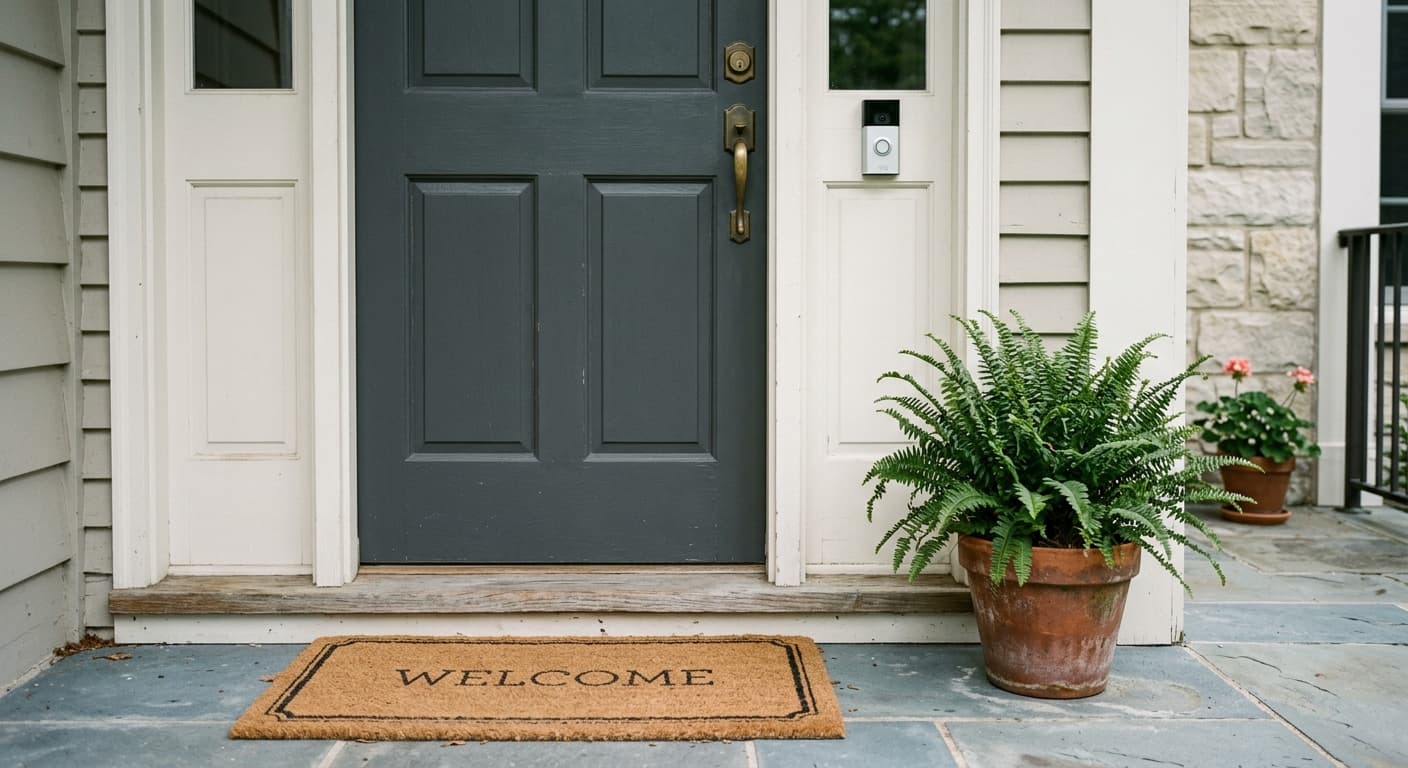
Arkansas follows a one-party consent rule for audio recordings, making it one of the more permissive states for Ring doorbell camera owners. Under Ark. Code 5-60-120, only one party to a conversation needs to consent to a recording. But the audio captured by a Ring doorbell raises specific legal questions that every Arkansas homeowner and renter should understand before pressing "record."
Audio Recording Laws and Ring Doorbells in Arkansas
The central legal issue with any Ring doorbell is its audio recording capability. Ring devices capture both video and audio by default, and the audio component carries the greatest legal risk in every state.
Arkansas law addresses audio recording through Ark. Code 5-60-120, the state's wiretapping and eavesdropping statute. This law makes it unlawful to intercept or record any wire, landline, oral, telephonic, or wireless communication unless at least one party to the conversation has given prior consent.
Because Arkansas is a one-party consent state, a Ring doorbell owner who is present during a conversation captured by the device satisfies the consent requirement. The homeowner is a party to the conversation, and that single party's consent is enough under state law.

When Audio Recording Gets Complicated
The legal picture becomes less clear when a Ring doorbell records conversations between visitors or passersby when the homeowner is not present. In those situations, the homeowner is not a party to the conversation. If none of the people being recorded have consented, the recording could technically violate Ark. Code 5-60-120.
Ring doorbells equipped with motion-activated recording can capture audio of delivery drivers, mail carriers, neighbors, and anyone else who approaches the front door. Arkansas courts have not directly addressed whether passive, automated audio capture by a doorbell camera constitutes "interception" under the statute. However, the safest legal approach is to provide visible notice that audio recording is in progress.
It is also worth noting that federal law, 18 U.S.C. 2511(2)(d), invalidates the one-party consent exception when a recording is made "for the purpose of committing any criminal or tortious act." Recording a neighbor's private conversations with intent to harass or blackmail, for example, would not be protected even with one-party consent.
Video Recording Laws for Ring Doorbells
Video surveillance carries fewer legal restrictions than audio in Arkansas. As a general rule, recording video of areas visible from public view is legal. A Ring doorbell mounted on a front door that captures the porch, walkway, driveway, and public sidewalk operates within legal boundaries.
Arkansas does impose limits through its video voyeurism statute, Ark. Code 5-16-101. This law prohibits using any camera or image recording device for the purpose of secretly observing, viewing, photographing, filming, or videotaping a person in a residence, place of business, school, or other structure where the person is in a private area, out of public view, and has a reasonable expectation of privacy.
That statute carries an exemption that matters more to doorbell camera owners than any other provision in Arkansas surveillance law. Ark. Code 5-16-101(d)(2) states that the section does not apply to "security monitoring operated by or at the direction of an occupant of a residence." A Ring doorbell that a homeowner or tenant installs on their own door is exactly that, so the ordinary residential doorbell camera sits outside the video voyeurism statute rather than inside it.
The exemption does not cover every use of the device. Subsection (a) reaches a camera used "for the purpose of secretly observing" a person who is in a private area with a reasonable expectation of privacy, and a camera repositioned or configured to watch a neighbor's bedroom window is no longer functioning as residential security monitoring. A doorbell camera that covers your own front porch and the public street, and that incidentally takes in part of a neighbor's yard, is a different situation from one deliberately aimed through a neighbor's window. The first falls within the (d)(2) exemption. The second is where Class D felony exposure under Ark. Code 5-16-101 becomes a realistic concern.

Reasonable Expectation of Privacy
Arkansas courts apply the "reasonable expectation of privacy" standard when evaluating surveillance disputes. Front porches, driveways, and public sidewalks generally do not carry a reasonable expectation of privacy. Backyards with fences, interior rooms, and bathrooms do.
Ring doorbell cameras typically have a wide-angle lens (up to 180 degrees on some models). Arkansas homeowners should review their camera's field of view to confirm it does not capture private areas belonging to neighbors.
HOA Rules and Ring Doorbells in Arkansas
Homeowners' associations in Arkansas have broad authority to regulate the exterior appearance of homes within their communities, including the installation of security cameras and video doorbells.
An HOA's covenants, conditions, and restrictions (CC&Rs) may prohibit exterior modifications, restrict the placement of visible electronics on front doors, or require architectural review board approval before installing a Ring doorbell. As of 2026, Arkansas does not have a state law that specifically protects homeowners' rights to install security cameras over HOA objections.
Before purchasing a Ring doorbell, homeowners in an HOA community should review their CC&Rs and any architectural guidelines. Some HOAs have adopted specific policies addressing video doorbells, either permitting them with conditions (such as disabling audio recording in common areas) or prohibiting them entirely.
If an HOA denies a Ring doorbell installation request, the homeowner's options are typically limited to appealing through the HOA's internal process or working to change the CC&Rs through a community vote.
Landlord and Tenant Rights
Arkansas tenants who want to install a Ring doorbell face additional considerations. Because Ring doorbells typically require drilling into a door frame or exterior wall, most lease agreements require landlord approval before making exterior modifications.

Arkansas landlord-tenant law does not specifically address doorbell cameras. However, tenants generally have the right to install security devices inside their rental unit. Exterior installations, including doorbell cameras, usually require written landlord permission.
Tenants should check their lease for clauses covering exterior modifications, security devices, and property alterations. Many Arkansas landlords now include specific provisions about doorbell cameras in their lease agreements, given the popularity of these devices.
For landlords, installing surveillance cameras on rental properties is legal in common areas as long as tenants are informed. Cameras cannot be placed in areas where tenants have a reasonable expectation of privacy, such as inside the rental unit, without explicit consent.
Practical Tips for Renters
Tenants considering a Ring doorbell in Arkansas should request written permission from their landlord before installation. Battery-powered Ring models that do not require hardwiring may be easier to get approved since they avoid permanent modifications to the property. Tenants should also confirm that the camera's field of view does not capture neighboring units' private spaces, particularly in apartment or duplex settings.
Law Enforcement Access to Ring Footage
Arkansas law enforcement officers generally need a search warrant supported by probable cause to compel access to a homeowner's Ring doorbell footage. The Fourth Amendment to the U.S. Constitution and Article 2, Section 15 of the Arkansas Constitution protect against unreasonable searches and seizures, including digital evidence.
Police can ask a Ring owner to voluntarily share footage at any time. Homeowners are free to comply or decline. Voluntary sharing does not require a warrant.

Ring's Evolving Relationship with Police
Ring's policies on law enforcement access have shifted significantly in recent years. In January 2024, Ring announced it would no longer allow police to request footage directly from users through the Neighbors app without a warrant.
However, in 2025, Ring partnered with Axon (the company behind Taser and police body cameras) to create a new system for law enforcement evidence requests. Under this partnership, police can send footage requests through Axon's platform, and Ring users can opt in to share short recordings. Ring also maintains an emergency disclosure exception, allowing the company to release footage without user consent when it believes someone faces "danger of death or serious physical injury."
As of April 2026, Arkansas has not enacted any state-specific legislation governing law enforcement access to doorbell camera footage.
Penalties for Illegal Recording in Arkansas
Violations of Arkansas recording and surveillance laws carry significant consequences.
Audio recording violations (Ark. Code 5-60-120): Illegal interception or recording of communications is a Class A misdemeanor, punishable by up to one year in county jail and a fine of up to $2,500.
Video voyeurism (Ark. Code 5-16-101): Using a camera for the purpose of secretly observing someone in a private place is a Class D felony, carrying up to six years in prison. A third or subsequent offense, or an offense where the victim is under fourteen, is enhanced to a Class C felony. This statute does not reach ordinary residential security cameras: Ark. Code 5-16-101(d)(2) exempts security monitoring operated by or at the direction of an occupant of a residence.
Voyeurism (Ark. Code 5-16-102): This is a separate offense that does not describe doorbell camera conduct. Ark. Code 5-16-102(b) requires that a person act for the purpose of sexual arousal or gratification and either look into a private place that is part of a public accommodation where someone may reasonably be expected to be nude or partially nude, or personally enter another person's private property without consent in order to look into a dwelling. A fixed camera mounted on the owner's own door cannot satisfy either alternative. Where the offense is committed, it is a Class A misdemeanor, enhanced to a Class D felony where the victim is under seventeen and the offender holds a position of trust or authority, and to a Class C felony where the victim is under fourteen.
Federal penalties: The FTC's 2023 enforcement action against Ring resulted in a $5.8 million settlement after the agency found that Ring employees had illegally surveilled customers and the company failed to prevent hackers from accessing approximately 55,000 customer accounts.
Civil liability: Beyond criminal penalties, a person whose privacy has been violated through illegal recording may pursue civil damages in Arkansas courts.
How to Use a Ring Doorbell Legally in Arkansas
Following these practices can help Arkansas residents stay within the law when using a Ring doorbell.
Post visible signage. Place a small sign or sticker near the doorbell indicating that audio and video recording is in progress. This provides constructive notice to visitors and strengthens a consent argument under Ark. Code 5-60-120.
Review the camera's field of view. Confirm that the Ring doorbell captures only your property and public areas. Adjust the camera angle or use Ring's privacy zones feature to exclude neighboring windows, fenced backyards, and other private areas.
Consider disabling audio when away. If the Ring doorbell records conversations when no household member is present, the one-party consent protection may not apply. Disabling audio recording through the Ring app eliminates this risk entirely.
Check HOA and lease terms. Review governing documents before purchasing and installing a Ring doorbell. Obtaining written approval avoids disputes later.
Enable end-to-end encryption. Ring offers optional end-to-end encryption for video recordings. Enabling this feature limits who can access stored footage, including Ring employees.
Keep firmware updated. Regular updates patch security vulnerabilities. The FTC's 2023 findings against Ring highlighted the importance of strong account security, including two-factor authentication.
More Arkansas Laws
Arkansas has specific laws covering many areas of daily life. Here are other Arkansas legal guides available on RecordingLaw.com:
- Arkansas Recording Laws covers the full scope of one-party consent rules.
- Arkansas Security Camera Laws addresses broader surveillance regulations.
- Arkansas Video Recording Laws details video-specific rules.
- Arkansas Audio Recording Laws explains audio consent requirements.
- Arkansas Hit and Run Laws covers accident reporting obligations.
- Arkansas Lemon Law explains vehicle warranty protections.
- Arkansas Data Privacy Laws covers data breach notification requirements.
- Arkansas Landlord-Tenant Recording Laws addresses surveillance in rental properties.
This article provides general legal information about Ring doorbell laws in Arkansas, not legal advice. Laws and their interpretations can change. Consult an attorney for advice specific to your situation.
Frequently Asked Questions
Is it legal to use a Ring doorbell in Arkansas?
Yes. Ring doorbells are legal in Arkansas. The state follows a one-party consent rule for audio recording under Ark. Code 5-60-120, and video recording of publicly visible areas is generally permitted. However, audio recording of conversations where no consenting party is present, and video aimed at private spaces, can create legal issues.
Can my neighbor complain about my Ring doorbell in Arkansas?
A neighbor can raise concerns if your Ring doorbell's camera captures private areas of their property, such as windows or fenced backyards. Arkansas's video voyeurism statute generally does not apply to a normally installed doorbell camera, because Ark. Code 5-16-101(d)(2) exempts 'security monitoring operated by or at the direction of an occupant of a residence.' The statute becomes a concern only where a camera is deliberately aimed for the purpose of secretly viewing a person in a private area, which is no longer residential security monitoring. Adjusting the camera angle or using Ring's privacy zones feature resolves most neighbor disputes, and a neighbor may still raise a civil privacy claim regardless of the criminal statute.
Can my HOA ban Ring doorbells in Arkansas?
Yes. Arkansas HOAs have broad authority to regulate exterior modifications through their CC&Rs. An HOA can prohibit or restrict doorbell cameras, require architectural review approval, or impose conditions on their use. Arkansas does not have a state law that overrides HOA restrictions on security cameras as of 2026.
Do police need a warrant to access my Ring footage in Arkansas?
Generally, yes. Law enforcement typically needs a search warrant to compel access to your Ring footage. Police can request voluntary sharing at any time, but homeowners have the right to decline. Ring also has an emergency disclosure exception for situations involving imminent danger of death or serious physical injury.
Can I install a Ring doorbell in my Arkansas apartment?
Tenants in Arkansas typically need landlord permission to install a Ring doorbell, especially if installation requires drilling or modifications to the exterior. Battery-powered Ring models that avoid permanent changes may be easier to get approved. Check your lease agreement for clauses about security devices and exterior modifications before installing.
Updates
Corrected the video voyeurism discussion to include the Ark. Code 5-16-101(d)(2) exemption for security monitoring operated by an occupant of a residence, which covers an ordinary doorbell camera, and added the elements of the separate voyeurism offense under Ark. Code 5-16-102 to show why it does not apply to a fixed doorbell camera.
Corrected a citation that misattributed a federal wiretap-law consent exception to the wrong Arkansas statute subsection, and deep-linked four of the page's five generic citation links to their specific Arkansas Code sections. The claimed Ring-Axon law enforcement partnership was verified as real and accurately described; no change was needed there.
Independently fact-checked against the cited primary sources; governing law re-checked for recent changes
Corrected the Ark. Code 5-16-101 (video voyeurism) felony enhancement: it is triggered by a third-or-subsequent offense or a victim under fourteen, not by a 'position of trust' over a minor (that enhancement belongs to the separate voyeurism statute, 5-16-102).
Governing law re-checked for recent changes
Reviewed and approved by an editor
The Law Behind This Article
This article rests on the statutory provisions below, held in our own legal record and retrieved from the official source. Tap a section to read the operative text.
Arkansas Code of 1987 Annotated
§ 5-60-120Interception and recording.In forcecited in 18 of our articles
(a) It is unlawful for a person to intercept a wire, landline, oral, telephonic communication, or wireless communication, and to record or possess a recording of the communication unless the person is a party to the communication or one (1) of the parties to the communication has given prior…
Official text (excerpt) · last checked 2026-09-23 · Read the full text in our law library · Verify at arkleg.state.ar.us
Cited in 10 court opinions in our collectionLatest citing opinion in our collection: 2022
In the courts (editorial summary, independently checked):Lewis v. State (1999) applied Section 5-60-120(a) to a man who taped his ex-wife's calls without being a party or having consent, affirming revocation. Elliott v. State (1998) held that while such recording by a private citizen is unlawful, the statute does not bar the tape from evidence.
Opinions citing this section in our collection:
- Lewis v. State (Supreme Court of Arkansas 1999, 336 Ark. 469)✓A man on probation admitted attaching a recorder to the telephone box outside his ex-wife's house and taping her calls; the court found that violated Section 5-60-120(a) because he was not a party and no party consented, and affirmed the revocation.
- Opinion No. (Arkansas Attorney General Reports 1998)“…consented to the recording. This provision is set forth in A.C.A. § 5-60-120 , as follows: 5-60-120 . Interceptio…”
- King v. State (Supreme Court of Arkansas 2019, 571 S.W.3d 476)✓A friend's phone app secretly recorded a murder suspect's call with a detective; the court held that although Section 5-60-120 makes such a recording by a non-party unlawful, it does not bar admissibility, and affirmed the refusal to exclude the tape.
Identified automatically from the court opinions citing this section — not a ranking of which case controls.
Also relied on in: Arkansas Recording Laws (2026): One-Party Consent Rules, Arkansas Audio Recording Laws: One-Party Consent Rules and Penalties (2026), Arkansas Dashcam Laws: Mounting, Audio, and Legal Uses (2026)
§ 5-16-101Crime of video voyeurism.In forcecited in 15 of our articles
(a) It is unlawful for a person to use a camera, videotape, photo- optical, photoelectric, or other image recording device for the purpose of secretly observing, viewing, photographing, filming, or videotaping another person who is present in a residence, place of business, school, or other structu
Official text (excerpt) · last checked 2026-08-31 · Read the full text in our law library · Verify at arkleg.state.ar.us
Cited in 5 court opinions in our collectionLatest citing opinion in our collection: 2023
In the courts (editorial summary, independently checked):Courts have applied the video voyeurism statute in Devries (2019), where children had a reasonable expectation of privacy behind closed bedroom and bathroom doors in a parent's home, and in Powell (2020), holding the crime is complete on using a camera for the prohibited purpose even if the images are never viewed.
Opinions citing this section in our collection:
- Opinion No. (Arkansas Attorney General Reports 2001)“…tice of the surveillance would also negate any violation of A.C.A. § 5-16-101 , which criminalizes "video voyeurism."…”
- Bruce Wayne Devries v. State of Arkansas (Court of Appeals of Arkansas 2019, 2019 Ark. App. 478)✓One adopted daughter testified she caught Devries watching her through the bathroom window and found a baby monitor in her bathroom and bedroom; another caught him filming under her door. The court affirmed the video voyeurism convictions, rejecting his no-privacy-at-home claim.
- Robert Powell v. State of Arkansas (Court of Appeals of Arkansas 2020, 605 S.W.3d 532)✓Powell hid a camera in a fake outlet in a cabin he rented to a family and argued he could not be guilty because police took the SD card before he viewed the footage; the court held the statute punishes using a camera for that secret purpose, so never watching is no defense.
Identified automatically from the court opinions citing this section — not a ranking of which case controls.
Also relied on in: Arkansas Landlord-Tenant Recording Laws: Cameras, Audio, and Privacy Rights (2026), Arkansas Workplace Recording Laws: Employee and Employer Rights (2026), Arkansas Video Recording Laws: Public Filming, Private Property, and Consent (2026)
§ 5-16-102Voyeurism.In forcecited in 2 of our articles
(a) As used in this section: (1) "Nude or partially nude" means a state of undress of a person who has less than a fully opaque covering over the genitals, pubic area, buttocks, or breast of a female; (2) "Private place" means a place where a person may reasonably expect to be safe from being obse
Official text (excerpt) · last checked 2026-08-06 · Read the full text in our law library · Verify at arkleg.state.ar.us
Cited in 1 court opinions in our collectionLatest citing opinion in our collection: 2026
Opinions citing this section in our collection:
- United States v. Watkins (Court of Appeals for the Tenth Circuit 2026)“…v. Stat. Ann. § 13- 1424;2 Ariz. Rev. Stat. Ann. § 13-3019; Ark. Code Ann. § 5-16-102;1 (in part),2 Ark. Code Ann. § 5-71-213…”
Identified automatically from the court opinions citing this section — not a ranking of which case controls.
Also relied on in: Arkansas Surveillance Camera Laws (2026 Guide)
§ 5-4-401Sentence.In forcecited in 11 of our articles
(a) A defendant convicted of a felony shall receive a determinate sentence according to the following limitations: (1) For a Class Y felony, the sentence shall be not less than ten (10) years and not more than forty (40) years, or life; (2) For a Class A felony, the sentence shall be not less…
Official text (excerpt) · last checked 2020-11-06 · Read the full text in our law library
Cited in 248 court opinions in our collectionLatest citing opinion in our collection: 2026
Opinions citing this section in our collection:
- Radford v. State (Court of Appeals of Arkansas 2018, 538 S.W.3d 894)“…r a Class B felony is five to twenty years' imprisonment. Ark. Code Ann. § 5-4-401 (a)(3). The final sentencing order tha…”
- Romario Waller v. State of Arkansas (Supreme Court of Arkansas 2020, 2020 Ark. 381)“…onment for first-degree murder is not illegal on its face. Ark. Code Ann. § 5-4-401(a)(1) (Repl. 1993). Moreover, this cour…”
- James Sherwood Edwards v. State of Arkansas (Court of Appeals of Arkansas 2024, 2024 Ark. App. 431)“…nge for Class D felony at not more than fifteen years) with Ark. Code Ann. § 5-4-401(a)(2) (Repl. 2013) (setting sentencing…”
Identified automatically from the court opinions citing this section — not a ranking of which case controls.
Also relied on in: Arkansas Security Camera Laws: Home, Business, and HOA Rules (2026), Arkansas Voyeurism Laws: Hidden Cameras, Penalties, and Defenses (2026), Arkansas AI Meeting Recording Laws (2026)
United States Code Title 18
§ 2511Interception and disclosure of wire, oral, or electronic communications prohibitedIn forcecited in 441 of our articles
Except as otherwise specifically provided in this chapter any person who— intentionally intercepts, endeavors to intercept, or procures any other person to intercept or endeavor to intercept, any wire, oral, or electronic communication; intentionally uses, endeavors to use, or procures any other person to use or endeavor to use any electronic, mechanical, or other device to intercept any oral communication when— such device is affixed to, or otherwise transmits a signal through, a wire, cable, or other like connection used in wire communication; or such device transmits communications by radio, or interferes with the transmission of such communication; or such person knows, or has reason to know, that such device or any component thereof has been sent through the mail or transported in interstate or foreign commerce; or such use or endeavor to use (A) takes place on the premises of any business or other commercial establishment the operations of which affect interstate or foreign commerce; or (B) obtains or is for the purpose of obtaining information relating to the operations of any business or other commercial establishment the operations of which affect interstate or foreign…
Official text (excerpt) · last checked 2026-09-17 · Read the full text in our law library · Verify at uscode.house.gov
Cited in 2,045 court opinions in our collectionLatest citing opinion in our collection: 2026
In the courts (editorial summary, independently checked):Griggs-Ryan v. Smith (1990) applied the Section 2511(2)(d) prior-consent exception, treating a tenant repeatedly told that all incoming calls were taped as having impliedly consented. United States v. United States District Court (1972) read the then-current Section 2511(3) as conferring no presidential surveillance power.
Opinions citing this section in our collection:
- Mitchell v. Forsyth (Supreme Court of the United States 1985, 472 U.S. 511)✓The Attorney General authorized a warrantless 1970 national security wiretap that caught the plaintiff's calls; the Court held the since-repealed Section 2511(3) disclaimer left the tap lawful under Title III, and that Mitchell had qualified immunity.
- United States v. United States District Court for the Eastern District of Michigan (Supreme Court of the United States 1972, 407 U.S. 297)✓The Attorney General approved warrantless wiretaps on members of a domestic group accused of bombing a CIA office; the Court read Section 2511(3) as a congressional disclaimer conferring no surveillance power, then held the Fourth Amendment required prior judicial approval.
- Forsyth v. Barr (Court of Appeals for the Fifth Circuit 1994, 19 F.3d 1527)✓Dallas police used, in an internal affairs probe of an officer, calls private parties allegedly intercepted illegally; assuming that was unlawful, the Fifth Circuit held Section 2517(1) and (2) allowed the disclosure and use, defeating the Section 2511(1)(c) and (d) claims.
Identified automatically from the court opinions citing this section — not a ranking of which case controls.
Also relied on in: Connecticut Recording Laws (2026): Hybrid Consent Rules Explained, Oregon Recording Laws (2026): Hybrid One-Party and All-Party Rules, US Recording Laws by State (2026): All 50 States Explained
Search our full record of US law — 2.1 million sections, every state + federal →
Sources and References
- Ark. Code 5-60-120 - Interception and Recording(law.justia.com)
- Ark. Code 5-16-101 - Crime of Video Voyeurism(law.justia.com)
- Ark. Code 5-16-102 - Voyeurism(law.justia.com)
- Ark. Code 5-4-401 - Sentencing (Misdemeanor Penalties)(law.justia.com)
- FTC v. Ring LLC - Settlement and Enforcement Action(ftc.gov).gov
- FTC Ring Customer Refunds (2024)(ftc.gov).gov
- Ring Law Enforcement Information Requests Policy(ring.com)
- Arkansas Constitution, Article 2, Section 15 - Unreasonable Searches(arkleg.state.ar.us).gov
- Consumer Reports - Federal Law Enforcement Access to Ring Videos(consumerreports.org)
- Act 187 of 2007 (Arkansas General Assembly) - Ark. Code 5-16-101 video voyeurism, including the subsection (d)(2) residential security monitoring exemption(arkleg.state.ar.us)
- Act 597 of 2021 (Arkansas General Assembly) - penalties for voyeurism and video voyeurism, Ark. Code 5-16-101(c) and 5-16-102(c)(arkleg.state.ar.us)