
Hawaii
Hawaii Punitive Damages Laws: Guieb Standard, Caps and Rules
Independently fact-checked against primary sources (last audited October 19, 2026). · 16 primary sources cited on this page. How we verify our legal content

Hawaii allows punitive damages as a common-law remedy, and since July 1, 2025 the test is the one the Hawaii Supreme Court adopted in Guieb v. Guieb: a plaintiff must establish recoverable tort liability and prove by clear and convincing evidence that the defendant intended to harm, recklessly disregarded a substantial risk of harm, or otherwise acted in an outrageous or malicious manner. Hawaii has no general cap on punitive damages and no general statute that sends part of an award to the State, though a few statutes for particular claims set their own limits.
The State of Hawaii is not liable for punitive damages under its tort waiver (HRS 662-2), punitive damages are not recoverable in a wrongful death action itself, and a Hawaii insurance policy is not read to cover them unless it specifically includes them (HRS 431:10-240). For how other states compare, see punitive damages laws by state.
Information last verified on 2026-10-19. This article has not been reviewed by a licensed lawyer.
Jurisdiction scope: This article covers Hawaii state law on punitive damages in civil cases: the common-law standard stated in Guieb v. Guieb (2025) and Masaki v. General Motors Corp. (1989), and the Hawaii Revised Statutes sections named below. It does not cover compensatory damages or the pain-and-suffering limit in detail, wrongful-death procedure, deadlines and beneficiaries (see Hawaii wrongful death law), federal claims, or every statute that authorizes punitive or multiplied damages for a particular claim beyond those named here.
Does Hawaii allow punitive damages?
Yes. Hawaii has no general punitive damages statute; the remedy comes from the Hawaii Supreme Court's decisions. Statutes address punitive damages only for particular situations: claims against the State, tort claims arising from a breach of contract, wrongful death, small claims, arbitration, insurance policies, motor vehicle no-fault, and a handful of specific causes of action.
One of those statutes limits when a contract dispute can support punitive damages. Under HRS 663-1.2, "No person may recover damages, including punitive damages, in tort for a breach of a contract in the absence of conduct that: (1) Violated a duty that is independently recognized by principles of tort law; and (2) Transcended the breach of the contract." Both conditions are required.
What must be proven: the Guieb standard
In Guieb v. Guieb, 156 Hawaiʻi 162, 571 P.3d 382 (2025), decided July 1, 2025, the Hawaii Supreme Court restated the test, citing section 39 of the American Law Institute's draft Restatement (Third) of Torts: Remedies (Tentative Draft No. 3, 2024):
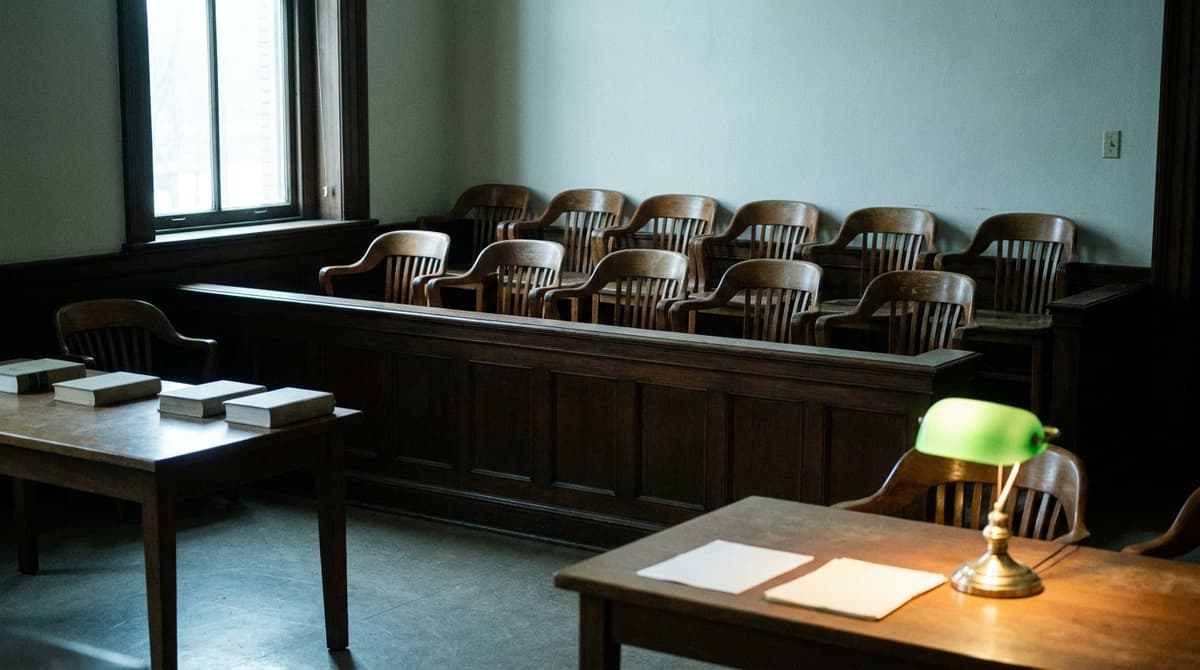
"To recover punitive damages, we hold that a plaintiff must (1) establish recoverable tort liability, and (2) establish by clear and convincing evidence that the defendant intended to harm the plaintiff or others, or recklessly disregarded a substantial risk of harm to the plaintiff or others, or otherwise acted in an outrageous or malicious manner."
The earlier test. Before Guieb, Hawaii courts applied the formulation from Masaki v. General Motors Corp., 71 Haw. 1, 780 P.2d 566 (1989), which Guieb quoted: the plaintiff "must prove by clear and convincing evidence that the defendant has acted wantonly or oppressively or with such malice as implies a spirit of mischief or criminal indifference to civil obligations, or where there has been some wilful misconduct or that entire want of care which would raise the presumption of a conscious indifference to consequences." Many older opinions and secondary sources still recite this wording; Guieb now states the test.
Burden of proof. The clear and convincing standard dates to Masaki, where the Hawaii Supreme Court held "that the trial court erred in instructing the jury that they may award punitive damages by a preponderance of the evidence" and reversed the punitive award for a new trial on that issue. The Guieb test keeps the clear and convincing burden.
Negligence and strict liability claims. Punitive damages in Hawaii are not limited to intentional torts. Discussing Masaki, the Guieb court wrote that "Hawaiʻi's punitive damages standard allows juries to award punitive damages for negligence or strict liability." The aggravated conduct still has to be proved by clear and convincing evidence.
Is there a cap on punitive damages in Hawaii?
Hawaii has no general cap or multiplier on punitive damages. Some statutes for particular claims set their own limits:
- Trade secrets. Under the Uniform Trade Secrets Act, "If wilful and malicious misappropriation exists, the court may award exemplary damages in an amount not exceeding twice any award made under subsection (a)" (HRS 482B-4(b)).
- Credit applicants. A creditor who fails to comply with any requirement of chapter 477E "shall be liable to the aggrieved applicant for punitive damages in an amount not greater than $10,000, as determined by the court," and an applicant pursuing that recovery "may proceed only in an individual capacity and not as a representative of a class" (HRS 477E-4(b)).
- Hazardous substance orders. A person liable for a release or threatened release of hazardous substances who fails, without sufficient cause, to carry out removal or remedial action under the director's administrative order "may be liable to the department for punitive damages up to three times the amount of any costs incurred by the fund" as a result of that failure (HRS 128D-8(a)).
The pain-and-suffering limit is not a punitive cap. HRS 663-8.7 provides that "Damages recoverable for pain and suffering as defined in section 663-8.5 shall be limited to a maximum award of $375,000," with exceptions for the tort actions listed in section 663-10.9(2). Its text reaches pain and suffering damages only.
The U.S. Supreme Court's due-process limits on the size of punitive awards also apply to Hawaii verdicts; the punitive damages hub explains them.
Does Hawaii take a share of the award?
No general Hawaii statute sends any part of a punitive award to the State or a fund. The hazardous substance statute above works differently: there the department itself is the party to which the punitive damages are owed (HRS 128D-8(a)).
Punitive damages in Hawaii wrongful death cases
Hawaii keeps the wrongful death claim and the decedent's own claims separate, and punitive damages follow the decedent's claims.
The wrongful death action. HRS 663-3(b) allows "such damages ... as under the circumstances shall be deemed fair and just compensation, with reference to the pecuniary injury and loss of love and affection," followed by a list of compensatory items. Punitive damages are not on the list.
The survival action. Under HRS 663-7, a cause of action "shall not be extinguished by reason of the death of the injured person" (defamation and malicious prosecution excepted), and "any damages recovered shall form part of the estate of the deceased."
In Ozaki v. Association of Apartment Owners of Discovery Bay, 954 P.2d 652 (1998), the Hawaii Intermediate Court of Appeals connected the two: because "a cause of action for punitive damages survives the death of the decedent, punitive damages are not recoverable in an action under HRS § 663-3." Who may bring each claim, and the deadlines, are on the Hawaii wrongful death page.
Government defendants
The State. HRS 662-2 waives the State's immunity for its employees' torts and makes it liable "in the same manner and to the same extent as a private individual under like circumstances, but shall not be liable for interest prior to judgment or for punitive damages." A second waiver of immunity, HRS 673-1(a), ends the same way: the State "shall not be liable for punitive damages."
State board and commission members. "The State shall not indemnify a member for any portion of a judgment that represents punitive or exemplary damages" (HRS 26-35.5(d)).
Counties. In Lauer v. Young Men's Christian Association of Honolulu, 57 Haw. 390, 557 P.2d 1334 (1976), the Hawaii Supreme Court held that public policy dictates that the City and County of Honolulu, "as a municipal corporation, should not be held liable for punitive damages," because "The innocent taxpayers, the intended beneficiary from the public example which the punishment makes of the wrongdoer, should not be made to suffer." The county statute on liability for injuries, HRS 46-72, separately requires written notice of the injuries and the specific damages within two years after the injuries accrued.
Punitive damages against an employer or company
In Kealoha v. Halawa Plantation, Ltd., 24 Haw. 579 (1918), the Hawaii Supreme Court held that a plantation company was not answerable in punitive damages for its manager's acts "not expressly authorized or approved or ratified by the company," so the trial court was not authorized to assess punitive damages against the company.
In Lauer (1976), the court added that the deterrent effect of punitive damages belongs on the wrongdoer, and that "A wrongdoer in this context includes a person superior in authority who expressly authorizes, ratifies or condones the tortious act of the employee."
Car accidents and drunk driving
Hawaii's motor vehicle no-fault law includes a section titled "Abolition of tort liability," HRS 431:10C-306. Subsection (e)(2) preserves liability for serious misconduct: no provision of the motor vehicle insurance article "shall be construed to exonerate, or in any manner to limit" the criminal or civil liability of a person who, in the maintenance, operation or use of a motor vehicle, "(A) Intentionally causes injury or damage to a person or property; (B) Engages in criminal conduct that causes injury or damage to person or property; (C) Engages in conduct resulting in punitive or exemplary damages; or (D) Causes death or injury to another person in connection with the accident while operating the vehicle in violation of section 291E-61 or section 291-4 or 291-7, as those sections were in effect on or before December 31, 2001."
Whether a jury may award punitive damages in a particular crash case still turns on the Guieb standard. For the rest of a crash claim, see Hawaii car accident law.
Other statutes that address punitive damages
Civil rights remedies. Under HRS 368-17(a), "The remedies ordered by the commission or the court under this chapter may include compensatory and punitive damages and legal and equitable relief."

Arbitration. "An arbitrator may award punitive damages or other exemplary relief if such an award is authorized by law in a civil action involving the same claim and the evidence produced at the hearing justifies the award under the legal standards otherwise applicable to the claim" (HRS 658A-21(a)). In Navatek Capital Inc. v. Kao (Haw. Sept. 30, 2026), the Hawaii Supreme Court held that this section "does not require arbitrators to award punitive damages, but it grants them discretion to do so," and found no ground to vacate an arbitrator's punitive award because a reviewing court "lacks authority to correct an arbitrator's findings, even if clearly erroneous, or an arbitrator's conclusions of law, even if wrong"; review is limited to the statutory grounds for vacatur in HRS 658A-23(a).
Small claims. The small claims division of the district court may grant monetary relief, but "Monetary relief shall not include punitive damages" (HRS 633-27(c)(1)).
How the claim is tried
No Hawaii statute requires a separate punitive damages phase. In Masaki, the Hawaii Supreme Court noted that the decision to hold separate trials on liability and damages is a matter within the sound discretion of the trial judge and will not be reversed on appeal unless prejudice is shown.
In Guieb, the court explained that the trial judge "simply determines if there is any legally sufficient evidence to instruct the jury on punitive damages," and "The jury then evaluates the quality of that evidence and whether it meets the clear and convincing standard."
Does insurance pay punitive damages in Hawaii?
HRS 431:10-240 sets the rule for reading policies:
"Coverage under any policy of insurance issued in this State shall not be construed to provide coverage for punitive or exemplary damages unless specifically included."
The statute is a rule of construction: a policy is not read to cover punitive damages unless it specifically includes them.
Hawaii punitive damages at a glance
| Question | Hawaii rule | Source |
|---|---|---|
| Source of the remedy | Common law; no general statute | Guieb v. Guieb (Haw. 2025) |
| Conduct standard | Recoverable tort liability, plus intent to harm, reckless disregard of a substantial risk of harm, or otherwise outrageous or malicious conduct | Guieb v. Guieb (Haw. 2025) |
| Earlier standard | Wanton, oppressive or malicious conduct, wilful misconduct, or an entire want of care raising a presumption of conscious indifference | Masaki v. General Motors (Haw. 1989) |
| Burden of proof | Clear and convincing evidence | Masaki (1989); Guieb (2025) |
| Negligence or strict liability claims | Punitive damages may be awarded on the aggravated-conduct showing | Guieb v. Guieb (Haw. 2025) |
| General cap | None; some claim-specific limits | HRS 482B-4(b), 477E-4(b), 128D-8(a) |
| State share | No general split-recovery statute | HRS 128D-8(a) (department as the party owed) |
| Tort claim from a breach of contract | Independent tort duty and conduct that transcended the breach both required | HRS 663-1.2 |
| Wrongful death | Not in the 663-3 action; the claim survives under 663-7 | Ozaki (Haw. Ct. App. 1998) |
| The State | Not liable for punitive damages | HRS 662-2, 673-1(a) |
| Counties | City and County of Honolulu, as a municipal corporation, not liable for punitive damages | Lauer v. YMCA (Haw. 1976) |
| Employer liability | Company not liable for an employee's act it did not authorize, approve or ratify | Kealoha v. Halawa Plantation (Haw. 1918); Lauer (1976) |
| Separate trial | Discretionary with the trial judge | Masaki (1989) |
| Judge and jury | Judge decides whether the evidence is legally sufficient to instruct; jury applies the clear and convincing standard | Guieb (2025) |
| Small claims | Not available | HRS 633-27(c)(1) |
| Insurance | Not read to cover them unless the policy specifically includes them | HRS 431:10-240 |
Recent changes
The most significant recent change is Guieb v. Guieb, decided by the Hawaii Supreme Court on July 1, 2025, which replaced the Masaki conduct wording with the Restatement-based test above while keeping the clear and convincing burden. The history notes of sections 662-2, 663-1.2, 663-3, 663-7 and 431:10-240 list no amendment after 2001.
Related pages
This article provides general legal information about Hawaii punitive damages law as of 2026-10-19. It is not legal advice. For advice about a specific situation, contact a lawyer licensed in Hawaii.
Last updated: 2026-10-19.
Frequently Asked Questions
Does Hawaii allow punitive damages?
Yes. Punitive damages are a common-law remedy in Hawaii. Under Guieb v. Guieb (Haw. 2025), a plaintiff must establish recoverable tort liability and prove by clear and convincing evidence that the defendant intended to harm, recklessly disregarded a substantial risk of harm, or otherwise acted in an outrageous or malicious manner.
What is the standard for punitive damages in Hawaii?
Since July 1, 2025, the Guieb v. Guieb standard: intent to harm the plaintiff or others, reckless disregard of a substantial risk of harm to them, or otherwise outrageous or malicious conduct, proved by clear and convincing evidence. The wording from Masaki v. General Motors (1989), which spoke of wanton, oppressive or malicious conduct or conscious indifference to consequences, was the test before Guieb.
Is there a cap on punitive damages in Hawaii?
There is no general cap. Some statutes for particular claims set their own limits, such as exemplary damages of up to twice the subsection (a) award for willful and malicious trade secret misappropriation (HRS 482B-4(b)), punitive damages of not more than $10,000 under HRS 477E-4(b), and up to three times the fund's costs under HRS 128D-8(a). The $375,000 limit in HRS 663-8.7 applies to pain and suffering damages, not punitive damages.
Are punitive damages available in a Hawaii wrongful death case?
Not in the wrongful death action under HRS 663-3. The Hawaii Intermediate Court of Appeals held in Ozaki (1998) that because a cause of action for punitive damages survives the decedent's death under HRS 663-7, punitive damages are not recoverable in a 663-3 action; damages recovered in the survival action form part of the estate.
Are punitive damages available against the State of Hawaii?
No, under the State's tort waiver. HRS 662-2 makes the State liable for its employees' torts like a private individual but provides that it shall not be liable for punitive damages, and HRS 673-1(a) contains the same exclusion. The State also does not indemnify a board or commission member for the punitive part of a judgment (HRS 26-35.5(d)). In Lauer (1976), the Hawaii Supreme Court held that the City and County of Honolulu, as a municipal corporation, should not be held liable for punitive damages.
Are punitive damages available against an employer in Hawaii?
In Kealoha v. Halawa Plantation (1918), the Hawaii Supreme Court held that a company was not answerable in punitive damages for its manager's acts not expressly authorized or approved or ratified by the company. In Lauer (1976), the court said the wrongdoer includes a person superior in authority who expressly authorizes, ratifies or condones the employee's tortious act.
Does insurance cover punitive damages in Hawaii?
HRS 431:10-240 provides that coverage under a policy issued in Hawaii shall not be construed to provide coverage for punitive or exemplary damages unless specifically included, so the policy wording controls.
Are punitive damages available after a car accident in Hawaii?
The no-fault section on abolition of tort liability, HRS 431:10C-306(e)(2), provides that the motor vehicle insurance article does not exonerate or limit the liability of a person whose conduct in using a motor vehicle results in punitive or exemplary damages, or who causes death or injury while operating in violation of section 291E-61 or the other listed statutes. Whether punitive damages are awarded still depends on the Guieb standard.
Are punitive damages available in Hawaii small claims court?
No. Under HRS 633-27(c)(1), monetary relief in the small claims division of the district court shall not include punitive damages.
Updates
Independently fact-checked against the cited primary sources
The Law Behind This Article
This article rests on the statutory provisions below, held in our own legal record and retrieved from the official source. Tap a section to read the operative text.
Hawaii Revised Statutes, Chapter 663: TORT ACTIONS
§ 663-1.2Tort liability for breach of contract; punitive damagesIn force
No person may recover damages, including punitive damages, in tort for a breach of a contract in the absence of conduct that: (1) Violated a duty that is independently recognized by principles of tort law; and (2) Transcended the breach of the contract. [L 1999, c 237, §1]
Official text (excerpt) · last checked 2026-07-30 · Read the full text in our law library · Verify at capitol.hawaii.gov
§ 663-7Survival of cause of actionIn forcecited in 2 of our articles
A cause of action arising out of a wrongful act, neglect, or default, except a cause of action for defamation or malicious prosecution, shall not be extinguished by reason of the death of the injured person. The cause of action shall survive in favor of the legal representative of the person and any damages recovered shall form part of the estate of the deceased. [L 1955, c 205, §2; RL 1955, §246-6; HRS §663-7; am L 1972, c 144, §2(f)]
Official text (excerpt) · last checked 2026-07-30 · Read the full text in our law library · Verify at capitol.hawaii.gov
Cited in 21 court opinions in our collectionLatest citing opinion in our collection: 2024
Opinions citing this section in our collection:
- Roxas v. Marcos (Hawaii Supreme Court 1998, 89 Haw. 91)“…Bagalay , this court construed the former version of HRS § 663-7 (1955), which allowed survival of actio…”
- Greene v. Texeira (Hawaii Supreme Court 1973, 54 Haw. 231)“…th Act, HRS § 663-3, and $5,000 under the Survival Statute, HRS § 663-7. Judgment was entered in accordance wit…”
- Castro v. Melchor. (Hawaii Supreme Court 2018, 142 Haw. 1)“…governs recovery by the decedent’s survivors[,]” and that HRS § 663-7,4 the survival statute, “governs recov…”
Identified automatically from the court opinions citing this section — not a ranking of which case controls.
Also relied on in: Hawaii Wrongful Death Laws (2026): Deadlines & Who Can Sue
§ 663-3Death by wrongful actIn forcecited in 6 of our articles
(a) When the death of a person is caused by the wrongful act, neglect, or default of any person, the deceased's legal representative, or any of the persons enumerated in subsection (b), may maintain an action against the person causing the death or against the person responsible for the death. The action shall be maintained on behalf of the persons enumerated in subsection (b), except that the legal representative may recover on behalf of the estate the reasonable expenses of the deceased's last illness and burial.
Official text (excerpt) · last checked 2026-09-06 · Read the full text in our law library · Verify at capitol.hawaii.gov
Cited in 56 court opinions in our collectionLatest citing opinion in our collection: 2025
Opinions citing this section in our collection:
- Masaki v. General Motors Corp. (Hawaii Supreme Court 1989, 71 Haw. 1)“…oreover, we note that in wrongful death actions pursuant to HRS § 663-3, no arbitrary age limit is placed upon…”
- Bertelmann v. Taas Associates (Hawaii Supreme Court 1987, 69 Haw. 95)“…independent cause of action for wrongful death pursuant to HRS § 663-3 (1985). 4 This point, howe…”
- Hun v. Center Properties (Hawaii Supreme Court 1981, 63 Haw. 273)“…Yamasaki where the two-year limitations period set forth in HRS § 663-3 bars appellants’ claim. This Cou…”
Identified automatically from the court opinions citing this section — not a ranking of which case controls.
Also relied on in: Medical Malpractice Laws in Hawaii (2026): Deadlines & Caps, Hawaii Statute of Limitations: Filing Deadlines by Case Type, Truck Accident Laws in Hawaii (2026): Deadlines & Liability
§ 663-8.7Limitation on pain and sufferingIn forcecited in 7 of our articles
Damages recoverable for pain and suffering as defined in section 663-8.5 shall be limited to a maximum award of $375,000; provided that this limitation shall not apply to tort actions enumerated in section 663-10.9(2). [L Sp 1986, c 2, §20; am L 1989, c 300, §2; am L 1991, c 62, §1; am L 1993, c 238, §1; am L 1995, c 130, §1]
Official text (excerpt) · last checked 2026-07-30 · Read the full text in our law library · Verify at capitol.hawaii.gov
Cited in 3 court opinions in our collectionLatest citing opinion in our collection: 2011
Opinions citing this section in our collection:
- Ray v. KAPIOLANI MEDICAL SPECIALISTS (Hawaii Supreme Court 2011, 125 Haw. 253)“…g damages from $2 million to $375,000 “in accordance with” HRS § 663-8.7 (1993). The court denied KM…”
- Castaneda Ex Rel. Estate of Castaneda v. United States (Court of Appeals for the Ninth Circuit 2008, 546 F.3d 682)“…million, Ind.Code § 34 — 18—14—3(a); see also Haw.Rev.Stat. § 663-8.7 ($375,000); Fla. Stat. § 766.118 (2) (…”
- Castaneda v. Henneford (Court of Appeals for the Ninth Circuit 2008)“…(b), to $1.25 million, Ind. Code § 34-18-14- 3(a); see also Haw. Rev. Stat. § 663-8.7 ($375,000); Fla. Stat. § 766.118(2) ($5…”
Identified automatically from the court opinions citing this section — not a ranking of which case controls.
Also relied on in: Hawaii Dog Bite Laws: Liability and Victim Rights, Hawaii Slip and Fall Laws: Proving Premises Liability, Motorcycle Accident Laws in Hawaii (2026): Deadlines & Helmets
Hawaii Revised Statutes, Chapter 662: STATE TORT LIABILITY ACT
§ 662-2Waiver and liability of StateIn force
The State hereby waives its immunity for liability for the torts of its employees and shall be liable in the same manner and to the same extent as a private individual under like circumstances, but shall not be liable for interest prior to judgment or for punitive damages. [L 1957, c 312, pt of §1; Supp, §245A-2; HRS §662-2; am L 1972, c 164, §2(a)]
Official text (excerpt) · last checked 2026-07-30 · Read the full text in our law library · Verify at capitol.hawaii.gov
Hawaii Revised Statutes, Chapter 431: Insurance Code, Article 10C: Motor Vehicle Insurance
§ 431:10C-306Abolition of tort liabilityIn forcecited in 3 of our articles
§431:10C-306 Abolition of tort liability. (a) Except as provided in subsection (b), this article abolishes tort liability of the following persons with respect to accidental harm arising from motor vehicle accidents occurring in this State: (1) Owner, operator, or user of an insured motor vehicle; or (2) Operator or user of an uninsured motor vehicle who operates or uses such vehicle without reason to believe it to be an uninsured motor vehicle. (b) Tort liability is not abolished as to the following persons, their personal representatives, or their legal guardians in the following circumstances: (1) Death occurs to the person in such a motor vehicle accident; (2) Injury occurs to the person which consists, in whole or in part, in a significant permanen
Official text (excerpt) · last checked 2026-09-17 · Read the full text in our law library · Verify at capitol.hawaii.gov
Also relied on in: Hawaii Car Accident Laws: No-Fault, PIP, and Your Claim
Hawaii Revised Statutes, Chapter 673
§ 673-1Waiver of immunityIn force
(a) The State waives its immunity for any breach of trust or fiduciary duty resulting from the acts or omissions of its agents, officers and employees in the management and disposition of trust funds and resources of: (1) The Hawaiian home lands trust under article XII, sections 1, 2, and 3 of the Constitution of the State of Hawaii, implementing sections 4 and 5(f) of the Admission Act (Act of March 18, 1959, Public Law 86-3, 73 Stat. 4); and (2) The native Hawaiian public trust under article XII, sections 4, 5, and 6 of the Constitution of the State of Hawaii implementing section 5(f) of the Admission Act; and shall be liable in the same manner and to the same extent as a private individual under like circumstances, but shall not be liable for punitive damages.
Official text (excerpt) · last checked 2026-07-30 · Read the full text in our law library · Verify at capitol.hawaii.gov
Hawaii Revised Statutes, Chapter 26: 26 Executive and Administrative Departments
§ 26-35.5Members of boards and commissions; immunity from or indemnification for civil liability; defense of membersIn force
(a) For purposes of this section, "member" means any person who is appointed, in accordance with the law, to serve on a temporary or permanent state board, including members of the board of education, the governing board of any charter school established under chapter 302D, council, authority, committee, or commission, established by law or elected to the board of trustees of the employees' retirement system under section 88-24, or the corporation board of the Hawaii health systems corporation under section 323F-3 and its regional system boards under section 323F-3.5; provided that "member" shall not include any person elected to serve on a board or commission in accordance with chapter 11. (b) Notwithstanding any law to the contrary, no member shall be liable in any civil action founded upon a statute or the case law of this State, for damage, injury, or loss caused by or resulting from the member's performing or failing to perform any duty which is required or authorized to be performed by a person holding the position to which the member was appointed, unless the member acted with a malicious or improper purpose, except when the plaintiff in a civil action is the State.
Official text (excerpt) · last checked 2026-07-30 · Read the full text in our law library · Verify at capitol.hawaii.gov
Hawaii Revised Statutes, Chapter 658A
§ 658A-21Remedies; fees and expenses of arbitration proceedingIn force
(a) An arbitrator may award punitive damages or other exemplary relief if such an award is authorized by law in a civil action involving the same claim and the evidence produced at the hearing justifies the award under the legal standards otherwise applicable to the claim. (b) An arbitrator may award reasonable attorney's fees and other reasonable expenses of arbitration if such an award is authorized by law in a civil action involving the same claim or by the agreement of the parties to the arbitration proceeding. (c) As to all remedies other than those authorized by subsections (a) and (b), an arbitrator may order such remedies as the arbitrator considers just and appropriate under the circumstances of the arbitration proceeding. The fact that such a remedy could not or would not be granted by the court is not a ground for refusing to confirm an award under section 658A-22 or for vacating an award under section 658A-23. (d) An arbitrator's expenses and fees, together with other expenses, shall be paid as provided in the award.
Official text (excerpt) · last checked 2026-07-30 · Read the full text in our law library · Verify at capitol.hawaii.gov
Hawaii Revised Statutes, Chapter 633: SMALL CLAIMS, DISTRICT COURTS
§ 633-27District courts; powersIn forcecited in 5 of our articles
(a) All district courts, except as otherwise provided, shall exercise jurisdiction conferred by this chapter, and while sitting in the exercise of that jurisdiction, shall be known and referred to as the small claims division of the district court; provided that the jurisdiction of the court when sitting as a small claims division of the district court shall be confined to: (1) Cases for the recovery of money only where the amount claimed does not exceed $5,000 exclusive of interest and costs, except as provided by section 633‑30; (2) Cases involving disagreement between landlord and tenant about the security deposit in a residential landlord-tenant relationship; and (3) Cases for the return of leased or rented personal property worth less than $5,000 where the amount claimed owed for that lease or rental is less than $5,000 exclusive of interest and costs.
Official text (excerpt) · last checked 2026-07-30 · Read the full text in our law library · Verify at capitol.hawaii.gov
Cited in 6 court opinions in our collectionLatest citing opinion in our collection: 2018
Opinions citing this section in our collection:
- Sherman v. Sawyer (Hawaii Supreme Court 1980, 63 Haw. 55)“…diction of the small claims division of the district court. HRS § 633-27 states in relevant part: (a) All…”
- Alaka'i Na Keiki, Inc. v. Matayoshi (Hawaii Supreme Court 2012, 127 Haw. 263)“…jurisdiction of the courts in enacting HRS § 603- 21.5 and HRS § 633-27. HRS § 603-21.5 (Supp. 2005) provid…”
- Chambers v. Leavey (Hawaii Supreme Court 1978, 60 Haw. 52)“…ttempts to accomplish that which she is not entitled to do. HRS § 633-27 provides that in cases involving…”
Identified automatically from the court opinions citing this section — not a ranking of which case controls.
Also relied on in: Hawaii Defamation Laws: Libel, Slander & Suing (2026), Hawaii Landlord-Tenant Laws (2026): Deposits, Notice, and Tenant Rights, Hawaii Scam and Fraud Laws: Where to Report, Your Right to Sue (2026)
Hawaii Revised Statutes, Chapter 368: CIVIL RIGHTS COMMISSION
§ 368-17RemediesIn force
(a) The remedies ordered by the commission or the court under this chapter may include compensatory and punitive damages and legal and equitable relief, including, but not limited to: (1) Hiring, reinstatement, or upgrading of employees with or without back pay; (2) Admission or restoration of individuals to labor organization membership, admission to or participation in a guidance program, apprenticeship training program, on-the-job training program, or other occupational training or retraining program, with the utilization of objective criteria in the admission of persons to those programs; (3) Admission of persons to a public accommodation or an educational institution; (4) Sale, exchange, lease, rental, assignment, or sublease of real property to a person; (5) Extension to all persons of the full and equal enjoyment of the goods, services, facilities, privileges, advantages, or accommodations of the respondent; (6) Reporting as to the manner of compliance; (7) Requiring the posting of notices in a conspicuous place that the commission may publish or cause to be published setting forth requirements for compliance with civil rights law or other relevant information that…
Official text (excerpt) · last checked 2026-07-30 · Read the full text in our law library · Verify at capitol.hawaii.gov
Hawaii Revised Statutes, Chapter 482B
§ 482B-4DamagesIn forcecited in 2 of our articles
(a) Except to the extent that a material and prejudicial change of position prior to acquiring knowledge or reason to know of misappropriation renders a monetary recovery inequitable, a complainant is entitled to recover damages for misappropriation. Damages can include both the actual loss caused by misappropriation and the unjust enrichment caused by misappropriation that is not taken into account in computing actual loss. In lieu of damages measured by any other methods, the damages caused by misappropriation may be measured by imposition of liability for a reasonable royalty for a misappropriator's unauthorized disclosure or use of a trade secret. (b) If wilful and malicious misappropriation exists, the court may award exemplary damages in an amount not exceeding twice any award made under subsection (a). [L 1989, c 221, pt of §1]
Official text (excerpt) · last checked 2026-07-30 · Read the full text in our law library · Verify at capitol.hawaii.gov
Cited in 2 court opinions in our collectionLatest citing opinion in our collection: 2011
Opinions citing this section in our collection:
- Teller v. Teller (Hawaii Supreme Court 2002, 99 Haw. 101)“…18 and *110 damages, see HRS § 482B-4 (1993), 19 in the event th…”
- BlueEarth Biofuels, LLC v. Hawaiian Electric Co. (District Court, D. Hawaii 2011, 780 F. Supp. 2d 1061)“…may recover damages for misappropriation of trade secrets. Haw.Rev.Stat. § 482B-4. Misappropriation is defined as an '[a]…”
Identified automatically from the court opinions citing this section — not a ranking of which case controls.
Also relied on in: Hawaii Trade Secret Laws: UTSA, Remedies & Deadlines
Hawaii Revised Statutes, Chapter 477E
§ 477E-4Civil remediesIn force
(a) Any creditor who fails to comply with any requirement imposed under this chapter shall be liable to the aggrieved applicant in an amount equal to the sum of any actual damages sustained by such applicant. (b) Any creditor who fails to comply with any requirement imposed under this chapter shall be liable to the aggrieved applicant for punitive damages in an amount not greater than $10,000, as determined by the court, in addition to any actual damages provided in subsection (a); provided that in pursuing the recovery allowed under this subsection, the applicant may proceed only in an individual capacity and not as a representative of a class. (c) Whenever a creditor fails to comply with any requirement imposed under this chapter, an aggrieved applicant may institute a civil action for preventive relief, including an application for a permanent or temporary injunction, restraining order, or other action.
Official text (excerpt) · last checked 2026-07-30 · Read the full text in our law library · Verify at capitol.hawaii.gov
Hawaii Revised Statutes, Chapter 128D: ENVIRONMENTAL RESPONSE LAW
§ 128D-8Civil penaltiesIn force
(a) Any person who is liable for a release, or threat of a release, of hazardous substances, and who fails, without sufficient cause, to properly provide removal or remedial action pursuant to an administrative order issued by the director, may be liable to the department for punitive damages up to three times the amount of any costs incurred by the fund pursuant to this chapter as a result of the failure to perform the actions specified in the order. The director is authorized to commence a civil action against any such person to recover the punitive damages, which shall be in addition to any costs recovered from such person pursuant to section 128D-5. (b) In addition to liability for costs incurred by the State for the investigation, assessment, containment, and removal of a release or a threat of a release of hazardous substances, any person who wilfully, knowingly, or recklessly violates or fails or refuses to comply with any provision of this chapter, or any order issued, or rule adopted under this chapter, shall be subject to a civil penalty not to exceed $50,000 for each separate violation. Each day a violation continues shall constitute a separate violation.
Official text (excerpt) · last checked 2026-07-30 · Read the full text in our law library · Verify at capitol.hawaii.gov
Hawaii Revised Statutes, Chapter 46: 46 General Provisions
§ 46-72Liability for injuries or damages; noticeIn forcecited in 4 of our articles
Before the county shall be liable for damages to any person for injuries to person or property received upon any of the streets, avenues, alleys, sidewalks, or other public places of the county, or on account of any negligence of any official or employee of the county, the person injured, or the owner or person entitled to the possession, occupation, or use of the property injured, or someone on the person's behalf, within two years after the injuries accrued shall give the individual identified in the respective county's charter, or if none is specified, the chairperson of the council of the county or the clerk of the county in which the injuries occurred, notice in writing of the injuries and the specific damages resulting, stating fully when, where, and how the injuries or damage occurred, the extent of the injuries or damages, and the amount claimed. [L 1943, c 181, §1; RL 1945, §6013; RL 1955, §138-21; HRS §46-72; am L 1998, c 124, §1; am L 2007, c 152, §8]
Official text (excerpt) · last checked 2026-07-30 · Read the full text in our law library · Verify at capitol.hawaii.gov
Cited in 20 court opinions in our collectionLatest citing opinion in our collection: 2025
Opinions citing this section in our collection:
- Kahale v. City and County of Honolulu (Hawaii Supreme Court 2004, 104 Haw. 341)“…which the Plaintiffs filed their complaint. We hold that HRS § 46-72 (1993) [4] is the statute of limitatio…”
- Salavea v. City and County of Honolulu (Hawaii Supreme Court 1973, 55 Haw. 216)“…e Charter of the City and County of Honolulu, [1] and with HRS § 46-72. Both provisions [2] provide *53 tha…”
- Silva v. City and County of Honolulu (Hawaii Supreme Court 2007, 115 Haw. 1)“…mitations in wrongful death actions against the County, not HRS § 46-72 (Supp.1998);- 2 (2) in any…”
Identified automatically from the court opinions citing this section — not a ranking of which case controls.
Search our full record of US law — 2.1 million sections, every state + federal →
Sources and References
- Guieb v. Guieb, 156 Hawaiʻi 162, 571 P.3d 382 (2025)(www.courtlistener.com)
- HRS 662-2: Waiver and liability of State(www.capitol.hawaii.gov).gov
- HRS 431:10-240: Coverage for punitive or exemplary damages(www.capitol.hawaii.gov).gov
- HRS 663-1.2: Tort liability for breach of contract; punitive damages(www.capitol.hawaii.gov).gov
- Masaki v. General Motors Corp., 71 Haw. 1, 780 P.2d 566 (Haw. 1989)(www.courtlistener.com)
- HRS 482B-4: Damages (Uniform Trade Secrets Act)(www.capitol.hawaii.gov).gov
- HRS 477E-4: Civil remedies(www.capitol.hawaii.gov).gov
- HRS 128D-8: Civil penalties(www.capitol.hawaii.gov).gov
- HRS 663-8.7: Limitation on pain and suffering(www.capitol.hawaii.gov).gov
- HRS 663-3: Death by wrongful act(www.capitol.hawaii.gov).gov
- HRS 663-7: Survival of cause of action(www.capitol.hawaii.gov).gov
- Ozaki v. Association of Apartment Owners of Discovery Bay, 954 P.2d 652 (Haw. Ct. App. 1998)(www.courtlistener.com)
- HRS 673-1: Waiver of immunity(www.capitol.hawaii.gov).gov
- HRS 26-35.5: Members of boards and commissions; immunity from or indemnification for civil liability; defense of members(www.capitol.hawaii.gov).gov
- HRS 46-72: Liability for injuries or damages; notice(www.capitol.hawaii.gov).gov
- HRS 431:10C-306: Abolition of tort liability(www.capitol.hawaii.gov).gov
- HRS 368-17: Remedies(www.capitol.hawaii.gov).gov
- HRS 658A-21: Remedies; fees and expenses of arbitration proceeding(www.capitol.hawaii.gov).gov
- HRS 633-27: District courts; powers(www.capitol.hawaii.gov).gov
- Lauer v. Young Men's Christian Association of Honolulu, 57 Haw. 390, 557 P.2d 1334 (1976)(static.case.law)
- Kealoha v. Halawa Plantation, Ltd., 24 Haw. 579 (1918)(static.case.law)
- Ricapor-Hall v. Philip Morris USA Inc. (Haw. Aug. 6, 2026)(www.courtlistener.com)
- Navatek Capital Inc. v. Kao (Haw. Sept. 30, 2026)(courtlistener.com)
Paid attorney referral. RecordingLaw may receive compensation when you use an attorney-help link. RecordingLaw is not a law firm. Submitting a request does not guarantee that an attorney will accept your case and does not create an attorney-client relationship.