How to Revoke a Power of Attorney: Steps and State Rules
Independently fact-checked against primary sources (last audited November 10, 2026). · 31 primary sources cited on this page. How we verify our legal content
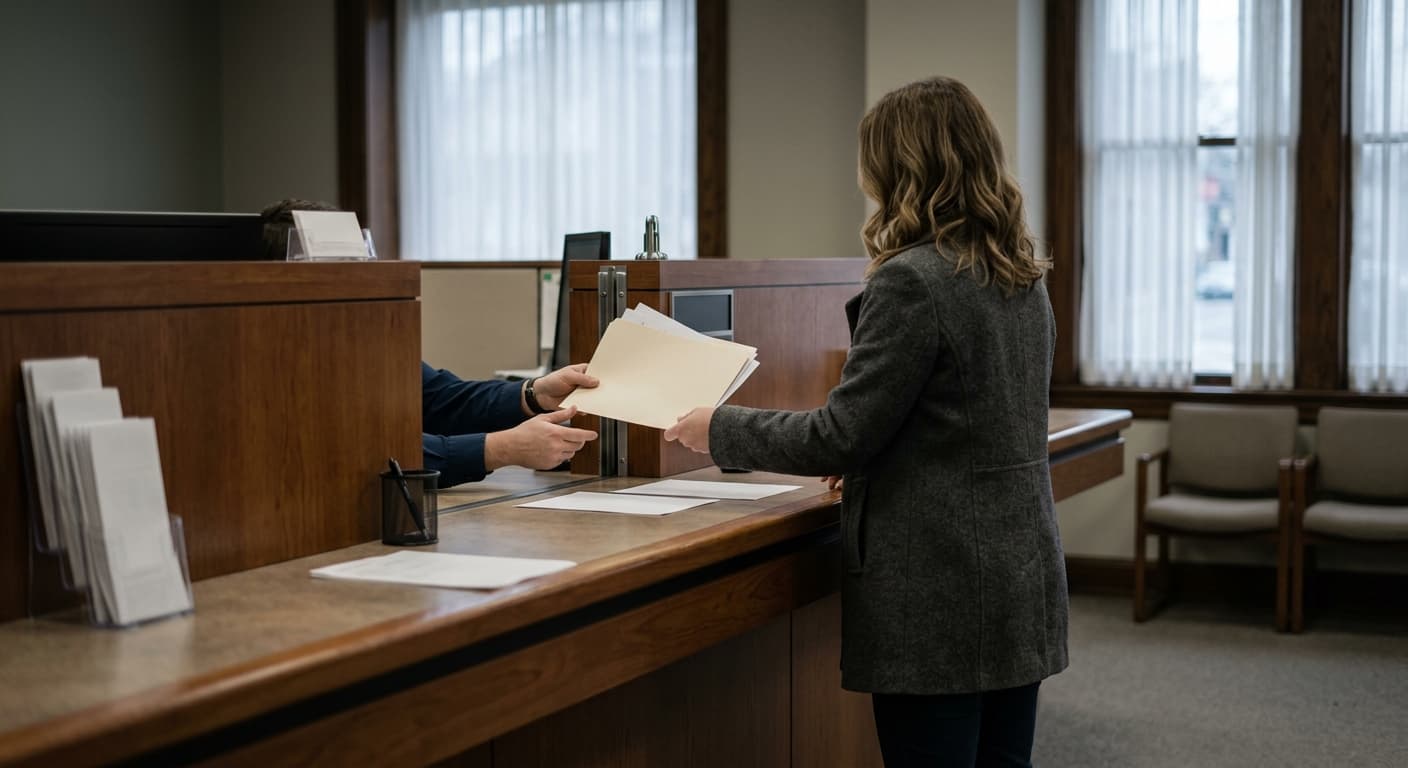
Yes, a power of attorney can be revoked: a principal who is still able to make decisions can revoke the whole POA, or just one agent's authority, by deciding to end it and making that known, because under the Uniform Power of Attorney Act a POA terminates when "the principal revokes the power of attorney" (Section 110(a)(3)).
In practice, revoking means a signed, dated written revocation delivered to the agent and to every bank, brokerage and office that has a copy of the POA. Telling people matters as much as signing: until someone actually knows of the revocation, a good-faith act under the old POA can still bind the principal (Section 110(d)). A new POA does not cancel an old one unless it says so (Section 110(f)).
Scope: This page covers how to revoke a US financial power of attorney under the Uniform Power of Attorney Act and the statutes of the states named below. Health care powers of attorney follow separate state laws with their own revocation rules. Other states have their own rules too, and the words of your document matter. For the basics of how a POA works in every state, see our power of attorney guide for all 50 states. This is legal information, not legal advice.
Can a Power of Attorney Be Revoked? (UPOAA Section 110)
Yes. The model act lists revocation among the events that end a POA. A power of attorney terminates when "the principal revokes the power of attorney" (Section 110(a)(3)), and an agent's authority terminates when "the principal revokes the authority" (Section 110(b)(1)).
That gives you two choices. You can revoke the whole document, or you can remove one agent and leave the POA in place for a co-agent or successor. If you revoke the only agent's authority and the POA names no one else to act, the POA itself ends (Section 110(a)(6)).
The federal Consumer Financial Protection Bureau's guide for agents describes the principal's right this way: the principal "can take away (or revoke) your authority to act as her agent at any time if she wants to and is still able to make decisions. If she does take away your authority as her agent, you must stop making decisions for her."
Do I need a reason or the agent's agreement?
The uniform act's termination section lists revocation as an event without requiring a reason or the agent's consent (Section 110). The real limit is capacity. The model act does not set a test for capacity to revoke, but its court-review section shows the question a judge asks: on the principal's motion, a court must dismiss a petition about the POA "unless the court finds that the principal lacks capacity to revoke the agent's authority or the power of attorney" (Section 116(b)).
How to Revoke a Power of Attorney: Step by Step
These are practical steps, not a statutory checklist. Where your state's statute sets a method, follow it; the state table below shows the ones our research found.
- Write the revocation. A revocation commonly identifies you, the POA being revoked (its date and the agent's name), and whether you are revoking the whole POA or one agent's authority, and it carries your signature and the date.
- Notarize it where required, and consider it anyway. North Carolina requires a written revocation to be signed and acknowledged while the principal is not incapacitated (N.C.G.S. 32C-1-110(g)), and an acknowledgment there is a notarial act (10B-3(1)). New Jersey lists an acknowledged revocation as one of its three routes. The other revocation statutes in our research do not require notarization, but a notarized revocation is easier to prove, and a land records office may require an acknowledged document for recording.
- Deliver it to the agent. Delivery to the agent is part of the statutory method in New York and one of New Jersey's routes. In New York, a revocation is not effective as to the agent until the agent has received it (Gen. Oblig. Law 5-1511(5)(b)), and under the uniform act's good-faith rule an agent who knows of the revocation is no longer protected.
- Notify every institution. Send a copy to each bank, brokerage, insurer, care facility, government office and professional that has the old POA, and keep proof of what you sent and when.
- Collect the originals and copies. Ask the agent to return the original and any copies. In New Jersey, destroying all executed originals is one of the ways to revoke.
- Record it if the POA was recorded. If the old POA was recorded for a real estate transaction, record the revocation in the same office (see below).
- Sign a new POA if you want one. If you name a new agent, consider having the new POA state that it revokes all earlier POAs, and still revoke the old one in writing (in New York, signing a new POA does not revoke an earlier one unless the statutory form says so under Modifications). Our free power of attorney generator drafts a state-specific document; check its signing steps against your state page.

Why telling the bank matters
A revocation protects you only once people know about it. Under the model act, ending a POA "is not effective as to the agent or another person that, without actual knowledge of the termination, acts in good faith under the power of attorney. An act so performed, unless otherwise invalid or unenforceable, binds the principal and the principal's successors in interest" (Section 110(d)).
So a bank that never received your revocation may be protected for honoring the old POA. Some states define the notice more precisely.
In New York, termination is not effective as to a third party "who has not received actual notice of the termination and acts in good faith," and a financial institution is treated as having actual notice once it has had a reasonable opportunity to act on a written notice received at the office where the account is located (Gen. Oblig. Law 5-1511(5)(a)). In California, a third person "who does not have notice of the revocation is protected from liability" under the Power of Attorney Law's protection chapter (Probate Code 4151(b), 4153(b)).
Recording a revocation
If the POA was recorded, a revocation that is not recorded may not count. Ohio says a recorded real estate POA is not revoked by any act "unless the instrument containing such revocation is also recorded in the same office" (R.C. 1337.05). Oregon says a recorded letter of attorney is not deemed revoked "unless the instrument containing such revocation is also recorded in the same office" (ORS 93.670(2)).
New York requires a revocation of a recorded POA to be recorded in the same office (Gen. Oblig. Law 5-1511(4)). In North Carolina, a POA registered with a register of deeds is revoked by registering in that office a revocation the principal signed and acknowledged while not incapacitated, with proof of service on the agent under Rule 5 of the state's Rules of Civil Procedure (N.C.G.S. 32C-1-110(g)(1)). Check your state page for your state's recording rule.
How Each State Says a Power of Attorney Is Revoked
The uniform act lists revocation as an event but does not prescribe a method. Some states wrote one in; others did not. This table covers the states our research read; a state not listed has its own rule.
| State | How the statute says to revoke | Does a new POA revoke an old one? |
|---|---|---|
| Alabama | No method prescribed in 26-1A-110 | Only if the new POA says so (26-1A-110(f)) |
| Arizona | No method in 14-5503, 14-5504 or 14-5505 | See the state page |
| California | "(1) In accordance with the terms of the power of attorney. (2) By a writing." (Prob. Code 4151(a)); the agent's authority also ends when the principal informs the agent "orally or in writing" that it is revoked, a rule the POA cannot limit (4153(a)(2)) | See the state page |
| Florida | "by expressing the revocation in a subsequently executed power of attorney or other writing signed by the principal," with optional notice to an agent who has accepted (Fla. Stat. 709.2110(1)) | Only if the new POA expresses the revocation (709.2110(1)-(2)) |
| Georgia | "The principal revokes" (O.C.G.A. 10-6B-10(a)(3)); a principal who notifies the agent by certified mail or statutory overnight delivery may file the notice and proof of receipt with the clerk of superior court to establish the agent's knowledge (10-6B-10(g)) | Only if the new POA says so (10-6B-10(f)) |
| Illinois | "at any time and in any manner communicated to the agent or to any other person related to the subject matter of the agency" (755 ILCS 45/2-5) | Only if the new POA says so (2-5) |
| Michigan | "The principal revokes" (MCL 556.210(1)(c), (2)(a)); no method stated | Only if the new POA says so (556.210(6)) |
| New Jersey | Destroy all executed originals, or sign an acknowledged written revocation, or deliver a written revocation to the agent (N.J.S.A. 46:2B-8.10) | "Unless expressly so provided," no (46:2B-8.10) |
| New York | As the POA provides, or by delivering a revocation to the agent in person, or by sending "a signed and dated revocation by mail, courier, electronic transmission or facsimile to the agent's last known address" (Gen. Oblig. Law 5-1511(3)) | "The execution of a power of attorney does not revoke any power of attorney previously executed by the principal" (5-1511(6)); the statutory short form says it does not revoke earlier POAs unless the principal states otherwise under "Modifications" (5-1513) |
| North Carolina | A registered POA: register in the same register of deeds office a revocation signed and acknowledged while the principal is not incapacitated, with proof of Rule 5 service on the agent. An unregistered POA: a later written revocation signed and acknowledged while not incapacitated, or burning, tearing, canceling or otherwise destroying the POA with intent to revoke (N.C.G.S. 32C-1-110(g)). An agent's authority ends when "The principal revokes the authority in writing" (32C-1-110(b)(1)) | Only if the new POA says so (32C-1-110(f)) |
| Ohio | "The principal revokes" (R.C. 1337.30(A)(3)); no method stated | For a financial POA, only if the new one says so (1337.30(F)) |
| Pennsylvania | No method in 20 Pa.C.S. ch. 56 | See the state page |
| Texas | No method in Estates Code ch. 751 (751.131(2), 751.132(a)(1) say only that the principal revokes) | Only if the new POA says so (751.135) |
| Virginia | "revokes" only, in the sections our research read (Va. Code 64.2-1608) | Only if the new POA says so (64.2-1608(F)) |
| Washington | "The principal revokes" (RCW 11.125.100(1)(c), (2)(a)); no method stated | Only if the new POA says so (11.125.100(7)) |
Where the statute names no method, a written, signed and dated revocation delivered to the agent and to each institution is the practical route, because it creates proof of when people learned of it. The Georgia and Ohio rows rest on statute text we have not matched against each state's current official code, so check those state pages.
Does a New Power of Attorney Revoke an Old One? (UPOAA Section 110(f))
Not automatically. The model act says "The execution of a power of attorney does not revoke a power of attorney previously executed by the principal unless the subsequent power of attorney provides that the previous power of attorney is revoked or that all other powers of attorney are revoked" (Section 110(f)).
The official comment explains why: "The requirement of express revocation prevents inadvertent revocation when the principal intends for one agent to have limited authority that overlaps with broader authority held by another agent." Texas words it the same way for durable POAs (Estates Code 751.135), and the other states marked "only if the new POA says so" in the table above follow the same approach. New York's termination section has no exception in its wording: "The execution of a power of attorney does not revoke any power of attorney previously executed by the principal" (Gen. Oblig. Law 5-1511(6)). New York's statutory short form adds one: "This POWER OF ATTORNEY DOES NOT REVOKE any Powers of Attorney previously executed by me unless I have stated otherwise below, under 'Modifications'" (5-1513), and it tells a principal revoking a prior POA to give written notice to the prior agents and to any third parties who may have acted on it. So in New York, revoke the old POA by its own method.
This is one of the most common mistakes. If you sign a new POA naming a new agent and it does not expressly revoke the old one, both may be in effect, and the old agent may still be able to act. If your goal is to replace an agent, revoke the old POA in writing, or make sure the new POA expressly revokes earlier ones, and notify the old agent and the institutions either way.
Ohio shows that health care POAs can work differently: Ohio's rule that a new POA does not revoke an old one applies to financial POAs, while a later Ohio health care POA revokes an earlier one unless it says otherwise (R.C. 1337.30(F), 1337.14(C)).
Does Divorce Revoke a Power of Attorney?
Often, yes, for a spouse who is the agent, but the trigger and the exceptions vary by state. Under the model act, an agent's authority ends when "an action is filed for the [dissolution] or annulment of the agent's marriage to the principal or their legal separation, unless the power of attorney otherwise provides" (Section 110(b)(3)). The act's comment notes that this rule "is not mandatory and may be overridden in the power of attorney."
States split on timing. In some, the filing of the divorce action ends a spouse-agent's authority; in others, it is the final judgment or decree. Some states put the rule in the POA act, and some put it in the probate or domestic relations code, which can also reach the former spouse's relatives. The two tables below cover the states our research checked.
States where filing for divorce ends a spouse-agent's authority
| State | Statute and trigger | Exception | Former spouse's relatives too? |
|---|---|---|---|
| Alabama | An action filed for divorce or annulment, or legal separation (Ala. Code 26-1A-110(b)(3)) | Unless the POA otherwise provides | Yes, on the final divorce or annulment: a nomination of the former spouse or a relative of the former spouse as "agent" in an instrument signed before the divorce is revoked (30-4-17(b)(1)c.), unless the instrument, a court order or a marital property contract provides otherwise |
| Florida | An action filed for dissolution or annulment, or legal separation (Fla. Stat. 709.2109(2)(b)) | Unless the POA otherwise provides | - |
| Georgia | An action filed for dissolution or annulment, or legal separation (O.C.G.A. 10-6B-10(b)(3)) | Unless the POA otherwise provides | - |
| Michigan | An action filed for dissolution or annulment, or legal separation (MCL 556.210(2)(c)) | Unless the POA provides otherwise | - |
| Ohio | An action filed for divorce, dissolution or annulment, or legal separation (R.C. 1337.30(B)(3)) | Unless the POA otherwise provides | - |
| Oregon | An action filed for dissolution or annulment of the marriage or registered domestic partnership, or for separation (ORS 127.015(1)(e)) | Unless the POA, an agreement or a court order provides otherwise | - |
| Pennsylvania | Either the principal or the agent-spouse "files an action in divorce"; the designation is revoked as of the filing (20 Pa.C.S. 5605(c)) | Unless the POA shows the designation was intended to survive | - |
| Virginia | An action filed for divorce, annulment or legal separation, or by either spouse for separate maintenance or for custody or visitation of a child in common (Va. Code 64.2-1608(B)(3)) | Unless the POA otherwise provides | - |
| Washington | An action filed for dissolution, annulment or legal separation, including the domestic partnership equivalents (RCW 11.125.100(2)(c)) | Unless the POA otherwise provides; authority is reinstated if the action is dismissed with both parties' consent or the petition is withdrawn (11.125.100(3)) | - |
Alabama has both kinds of rule. The POA act ends a spouse-agent's authority when the case is filed, and a separate domestic relations section then revokes nominations of the former spouse's relatives once the divorce is final.
States where the final judgment or decree ends it
| State | Statute and trigger | Exception or revival | Former spouse's relatives too? |
|---|---|---|---|
| Arizona | Divorce or annulment revokes a "nomination in a governing instrument" of the former spouse or a relative of the former spouse "to serve in any fiduciary or representative capacity, including a personal representative, executor, trustee, conservator, agent or guardian" (A.R.S. 14-2804(A)(1)(c)) | Unless the instrument, a court order or a marital property contract provides otherwise; revived by remarriage or nullification of the divorce (14-2804(D)) | Yes (14-2804(A)(1)(c)) |
| California | The marriage "is dissolved or annulled": the designation of the former spouse as attorney-in-fact is revoked (Prob. Code 4154(a)) | Revived by remarriage to the former spouse (4154(b)) | - |
| Illinois | A judgment of dissolution of marriage or legal separation: the spouse is "deemed to have died at the time of the judgment for all purposes of the agency" (755 ILCS 45/2-6(b)) | See the state page | - |
| New Jersey | Divorce or annulment, including a judgment of divorce from bed and board, revokes a nomination of the former spouse or a relative of the former spouse to serve in any fiduciary or representative capacity under a governing instrument signed before the divorce, a term New Jersey's probate code defines to include a power of attorney (N.J.S.A. 3B:3-14, 3B:1-1) | Unless the instrument, a court order or a marital property contract provides otherwise; revived by remarriage or by revocation, suspension or nullification of the divorce | Yes (3B:3-14) |
| New York | The agent's marriage to the principal "is terminated by divorce or annulment" as defined in EPTL 5-1.4(f)(2), which also covers a final judgment of separation "rendered against the spouse" (Gen. Oblig. Law 5-1511(2)(c)) | Unless the POA expressly provides otherwise; revived by remarriage to the former spouse | - |
| North Carolina | "The court enters a decree of divorce between the principal and the agent" (N.C.G.S. 32C-1-110(b)(3)) | Unless the POA otherwise provides | - |
| Texas | The marriage "is dissolved by court decree of divorce or annulment or is declared void by a court" (Est. Code 751.132(a)(3)) | Unless the POA otherwise provides | - |
A dash means the section cited does not address the former spouse's relatives. It does not mean the state has no such rule elsewhere: New Jersey's divorce rule is in its probate code, not its POA act, and other states may have a similar section. Check your state page before relying on either table.
Whatever the statute says, the practical step is the same: if you are divorcing a spouse who is your agent and you want that authority to end now, revoke it in writing and notify the institutions. The CFPB guide tells agents only that their authority "may end if you get divorced or legally separated," because the answer depends on the state and the document.
Revoking When the Principal Cannot: Guardians, Conservators and Courts
A principal who has lost capacity generally cannot revoke a financial POA; North Carolina's methods, for example, must be used while the principal is not incapacitated (N.C.G.S. 32C-1-110(g)). New York is an exception: the agent must comply with the principal's revocation "notwithstanding the actual or perceived incapacity of the principal unless the principal is subject to a guardianship under article eighty-one of the mental hygiene law" (Gen. Oblig. Law 5-1511(3)). Someone else may also be able to revoke, but only as state law allows. Under the model act, if a court later appoints a conservator, guardian or other fiduciary for the principal's estate, "the agent is accountable to the fiduciary as well as to the principal," and in states that adopted the bracketed text the POA "is not terminated and the agent's authority continues unless limited, suspended, or terminated by the court" (Section 108(b)).
States take different approaches:
- The fiduciary may revoke: in California, the principal's legal representative may revoke with court approval, and a conservator only after the court orders it (Probate Code 4153(a)(3), 4206). In Arizona, a court-appointed conservator "has the same power to revoke or amend the power of attorney that the principal would have" (A.R.S. 14-5503(A)). In North Carolina, a POA ends when "A guardian of the principal's estate or general guardian terminates it" (N.C.G.S. 32C-1-110(a)(7)).
- Automatic on appointment: in Texas, when a permanent guardian of the estate qualifies, the agent's powers "are automatically revoked unless the court enters an order that the powers of the agent be suspended" (Estates Code 751.133(a)(1)).
- Suspended during the case: in Florida, an agent's authority is suspended when incapacity or guardian advocate proceedings are started, with a narrower rule for an agent who is the principal's parent, spouse, child or grandchild (Fla. Stat. 709.2109(3)).
- The POA continues unless a court acts: Ohio (R.C. 1337.28(C)) and Virginia (Va. Code 64.2-1606(B)) keep the POA in place unless the court limits, suspends or ends it. In New Jersey, "No person, other than the principal, shall revoke a durable power of attorney except upon a court order for good cause" (N.J.S.A. 46:2B-8.4(c)).
If you are worried about an agent's conduct, a court can review it. Under the model act, the people who may petition include the principal or the agent, a guardian or conservator, a health care decision maker, the principal's spouse, parent or descendant, a presumptive heir, certain beneficiaries, a government agency protecting the principal, a caregiver or other person with sufficient interest in the principal's welfare, and a person asked to accept the POA (Section 116(a)). If there is no workable POA and the principal has lost capacity, our guardianship guide explains when a court appointment is the route.

Revoking a Health Care Power of Attorney
A health care POA is revoked under the state's health care law, not the financial POA act, and the rules can be looser. Texas is an example: a medical POA is revoked by "oral or written notification at any time by the principal to the agent or a licensed or certified health or residential care provider or by any other act evidencing a specific intent to revoke the power, without regard to whether the principal is competent or the principal's mental state," or by signing a later medical POA (Health and Safety Code 166.155(a)). Our medical power of attorney guide and the state pages cover health care POAs.
Common Mistakes When Revoking a Power of Attorney
Signing a new POA and assuming the old one is gone. Unless the new one expressly revokes it, the old POA may still be in effect (UPOAA Section 110(f)).
Telling the agent but not the bank. An institution that does not actually know of the revocation may be protected for honoring the old POA (Section 110(d)).
Assuming every state uses the same formality. Most state statutes in our research do not require a notarized revocation, but North Carolina requires an acknowledged written revocation (or destroying the POA with intent to revoke), and a notarized revocation helps with proof and recording everywhere.
Assuming divorce takes care of it. Depending on the state, a spouse-agent's authority may end at filing, at the final judgment, or not at all if the POA says it survives. Revoke it expressly if that is what you want.
Waiting too long. A principal who loses capacity generally can no longer revoke a financial POA (New York is an exception unless the principal is under guardianship); then a court or a court-appointed fiduciary may be the only route.
Getting Help
- Suspected financial exploitation of an older or vulnerable adult by an agent: report it to Adult Protective Services, the state or county office that takes reports of abuse, neglect and exploitation. Under the model act, a bank may refuse a POA when it has made, or actually knows another person has made, such a report (Section 120(b)).
- An agent who will not stop or return the documents: the court in the principal's county that handles estates and guardianships can review an agent's conduct; its clerk or self-help center can tell you how to file.
- Legal aid: legal aid organizations help people with low incomes.
- Your state bar's lawyer referral service: it can connect you with a lawyer who handles estate planning or elder law.
By State
Our state guides cover each state's revocation, divorce and recording rules:
- Alabama
- Arizona
- California
- Florida
- Georgia
- Illinois
- Michigan
- New Jersey
- New York
- North Carolina
- Ohio
- Oregon
- Pennsylvania
- Texas
- Virginia
- Washington
For every other state, use the all-states table in the power of attorney guide linked above. If the principal has died, the POA has already ended; see does a power of attorney end at death.
Legal information, not legal advice. This page summarizes how to revoke a power of attorney under the Uniform Power of Attorney Act and the statutes of the states named above, as our research read them in November 2026. Laws change and documents differ. Before revoking a power of attorney or acting after a revocation, consider talking with a lawyer licensed in your state.
Frequently Asked Questions
Can a power of attorney be revoked?
Yes. A principal who is still able to make decisions can revoke the whole POA or one agent's authority. Under the uniform act, a POA terminates when the principal revokes it.
How do I revoke a power of attorney?
Put the revocation in writing, sign and date it, deliver it to the agent, and send copies to every institution that has the old POA. Follow your state's method if its statute sets one, such as New York's delivery rule, New Jersey's three routes or North Carolina's acknowledged-revocation rule, and record the revocation if the POA was recorded.
How do I cancel a power of attorney without a lawyer?
Many people revoke a POA themselves with a signed, dated written revocation delivered to the agent and the institutions. A lawyer can help if your state's method is unclear, the POA was recorded, the agent will not cooperate, or the principal's capacity may be questioned.
Does a revocation of power of attorney need to be notarized?
It depends on the state. North Carolina requires a written revocation to be signed and acknowledged before a notary, unless the POA is destroyed with intent to revoke, and a POA registered with a register of deeds is revoked by registering an acknowledged revocation there and serving the agent. New Jersey lists an acknowledged written revocation as one of three ways to revoke. The other state statutes in our research do not require notarization, but a notarized revocation helps as proof and may be needed to record it with a land records office.
Does a new power of attorney cancel the old one?
Not automatically. Under the uniform act and in several states, a new POA revokes an earlier one only if it expressly says so; otherwise both may remain in effect. New York's statute says signing a new POA does not revoke an earlier one, and its statutory form allows an exception only if the principal says so under Modifications, so revoke the old POA separately there.
Do I have to tell the bank I revoked my power of attorney?
You should. Under the uniform act, a person who acts in good faith without actual knowledge of the revocation can be protected, and the act binds the principal. In New York, a financial institution is treated as having notice once it has had a reasonable opportunity to act on a written notice.
Can I remove just one agent?
Yes. You can revoke one agent's authority and leave the POA in place for a co-agent or successor agent. If that agent was the only one and the POA names no one else, the POA itself ends.
Does divorce revoke a power of attorney?
Often, for a spouse who is the agent, but it depends on the state and the document. In states such as Florida, Pennsylvania and Virginia the filing of the divorce action ends the spouse-agent's authority; in California, New York and Texas it is the final divorce. Many statutes let the POA say otherwise.
Can I revoke a power of attorney for a parent with dementia?
It depends on the document and the state. A financial POA can generally be revoked by the principal only while able to make decisions, though New York makes the agent honor the principal's revocation despite incapacity unless a guardian has been appointed. Some health care POAs can be revoked regardless of capacity: in Texas, a medical POA is revoked by oral or written notice without regard to whether the principal is competent. If the parent has lost capacity, a guardian, conservator or court may be able to revoke, depending on the state, and a court can review an agent's conduct on a petition by family members and others.
What if the agent will not give back the power of attorney?
A revocation does not depend on getting the document back. Deliver the written revocation to the agent and notify every institution. If the agent keeps acting, the court that handles estates and guardianships can review the agent's conduct.
Does revoking a power of attorney revoke a medical power of attorney too?
Not necessarily. A health care POA is a separate document under a separate state law with its own revocation rules. Revoke each document you want to end.
Updates
Independently fact-checked against the cited primary sources
Sources and References
- Uniform Power of Attorney Act (Uniform Law Commission final act), Sections 108, 110, 116 and 120(www.sos.ms.gov).gov
- CFPB, Managing Someone Else's Money: Help for agents under a power of attorney(files.consumerfinance.gov).gov
- N.Y. Gen. Oblig. Law 5-1511, Termination or revocation of power of attorney; notice(legislation.nysenate.gov).gov
- Cal. Prob. Code 4151, Revocation of power of attorney(leginfo.legislature.ca.gov).gov
- Cal. Prob. Code 4153, Revocation of attorney-in-fact's authority(leginfo.legislature.ca.gov).gov
- Ohio Rev. Code 1337.05, Revocation of recorded power of attorney(codes.ohio.gov).gov
- ORS 93.670, Recording letters of attorney; revocation(www.oregonlegislature.gov).gov
- Ala. Code 26-1A-110, Termination of power of attorney or agent's authority(alison.legislature.state.al.us).gov
- A.R.S. 14-5503, Relation of agent to court-appointed fiduciary(www.azleg.gov).gov
- Fla. Stat. 709.2110, Revocation of power of attorney(www.leg.state.fl.us).gov
- O.C.G.A. 10-6B-10, Termination of power of attorney or agent's authority(law.justia.com)
- 755 ILCS 45/2-5, Duration of agency; amendment and revocation(www.ilga.gov).gov
- MCL 556.210, Termination of power of attorney or agent's authority(www.legislature.mi.gov).gov
- N.C.G.S. 32C-1-110, Termination of power of attorney or agent's authority(www.ncleg.gov).gov
- Ohio Rev. Code 1337.30, Termination of power of attorney or agent's authority(codes.ohio.gov).gov
- 20 Pa.C.S. ch. 56 (5605)(www.legis.state.pa.us).gov
- Tex. Est. Code ch. 751 (751.131 to 751.135)(statutes.capitol.texas.gov).gov
- Va. Code 64.2-1608, Termination of power of attorney or agent's authority(law.lis.virginia.gov).gov
- RCW 11.125.100, Termination of power of attorney or agent's authority(app.leg.wa.gov).gov
- Ohio Rev. Code 1337.14, Revocation of durable power of attorney for health care(codes.ohio.gov).gov
- Fla. Stat. 709.2109, Termination or suspension of power of attorney(www.leg.state.fl.us).gov
- ORS 127.015, Termination of power of attorney(www.oregonlegislature.gov).gov
- Ala. Code 30-4-17, Revocation of certain transferable interests in property upon divorce or annulment(alison.legislature.state.al.us).gov
- A.R.S. 14-2804, Termination of marriage; revocation of probate and nonprobate transfers(www.azleg.gov).gov
- Cal. Prob. Code 4154, Dissolution or annulment of marriage(leginfo.legislature.ca.gov).gov
- 755 ILCS 45/2-6, Dissolution or legal separation(www.ilga.gov).gov
- N.J.S.A. 3B:3-14, Revocation of probate and non-probate transfers by divorce or annulment(lis.njleg.state.nj.us).gov
- Cal. Prob. Code 4206, Relation of attorney-in-fact to court-appointed fiduciary(leginfo.legislature.ca.gov).gov
- Tex. Health and Safety Code 166.155, Revocation of medical power of attorney(statutes.capitol.texas.gov).gov
- N.Y. Gen. Oblig. Law 5-1513, Statutory short form power of attorney(legislation.nysenate.gov).gov
- N.Y. Est. Powers and Trusts Law 5-1.4, Revocatory effect of divorce, annulment or judicial separation(legislation.nysenate.gov).gov
- N.C.G.S. 10B-3, Definitions (acknowledgment as a notarial act)(www.ncleg.gov).gov
Paid attorney referral. RecordingLaw may receive compensation when you use an attorney-help link. RecordingLaw is not a law firm. Submitting a request does not guarantee that an attorney will accept your case and does not create an attorney-client relationship.