
Montana
Montana Police Bodycam Laws (2026): No Statute, Court Fights
Independently fact-checked against primary sources (last audited August 20, 2026). · Reviewed by the RecordingLaw editorial team. · Law checked current as of August 20, 2026. · 2 primary sources cited on this page. How we verify our legal content
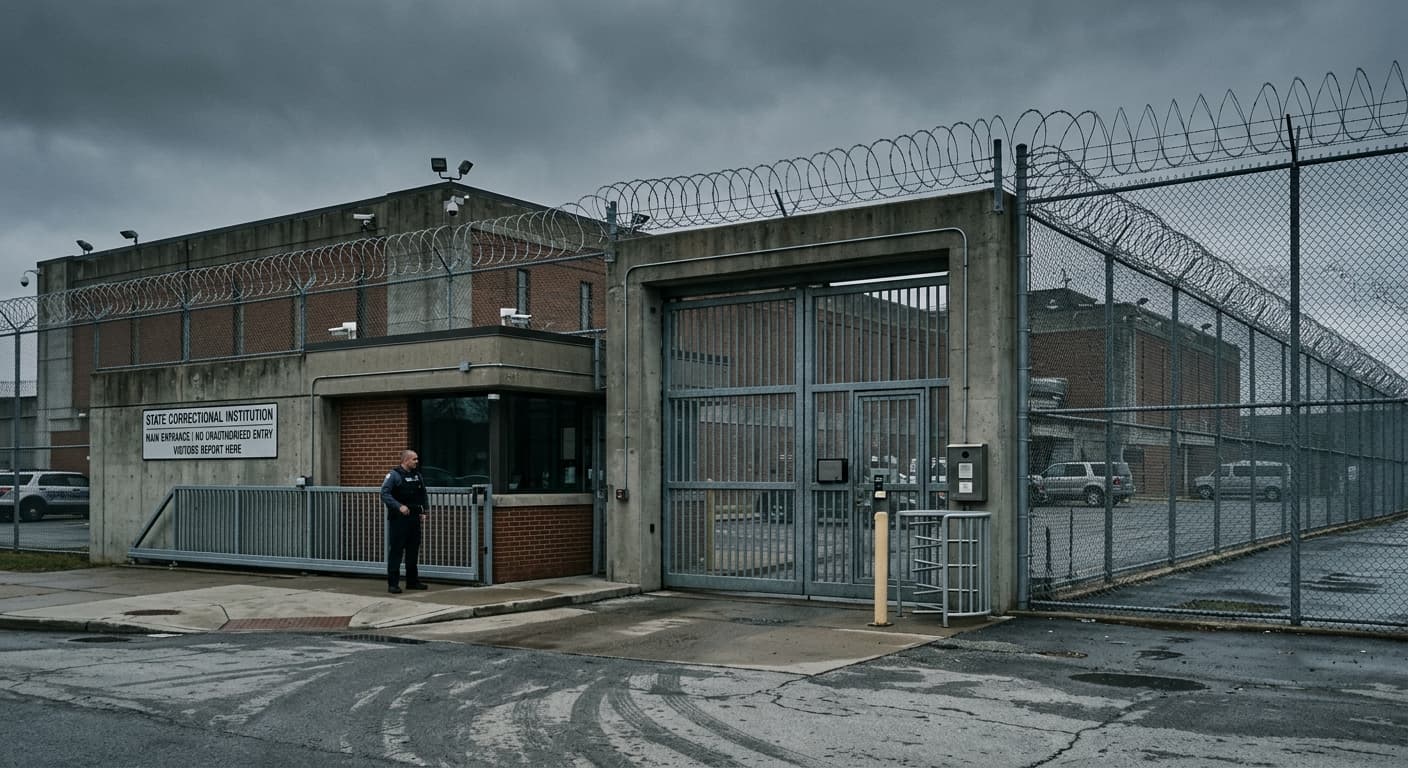
Montana has no statute dedicated to police body cameras at all, not for when they must be on, how long footage is kept, or how the public can see it. Access instead runs through Montana's constitutional right to know, Mont. Const. art. II, section 9, balanced against the constitutional right of privacy in section 10.
Information last verified on 2026-07-08. This article has not yet been reviewed by a licensed lawyer.
Jurisdiction scope: This article addresses Montana law, specifically Mont. Const. art. II, sections 9 and 10, the Criminal Justice Information Act, Mont. Code Ann. sections 44-5-103, 44-5-301 and 44-5-303, and Montana's public information statute, Mont. Code Ann. Title 2, chapter 6, part 10. It does not address whether a civilian may lawfully record an on-duty police officer; that question is settled separately and covered in Is It Illegal to Record Someone in Public?. This page addresses the reverse question: what happens to footage Montana police record of the public.
Does Montana require police to wear body cameras?
No, and adoption across the state is genuinely uneven. Montana has never passed a law requiring any city police department, county sheriff's office, or the Montana Highway Patrol to use body cameras. Some Montana agencies have used them for years; the Jefferson County Sheriff's Office, for example, has run a body camera program for over a decade. Others started far more recently: the Montana Highway Patrol did not equip any of its roughly 250 troopers with body cameras until a rollout that began in 2025, funded by a $4 million appropriation the Montana Legislature approved in 2023 and distributed over five years. Colonel Kurt Sager has said the cameras, which activate automatically when emergency lights engage or can be triggered manually, are meant to streamline report writing and capture incidents like foot pursuits away from a patrol vehicle. Whether a given Montana department has body cameras at all still depends entirely on that department's own budget and choices, not on state law.
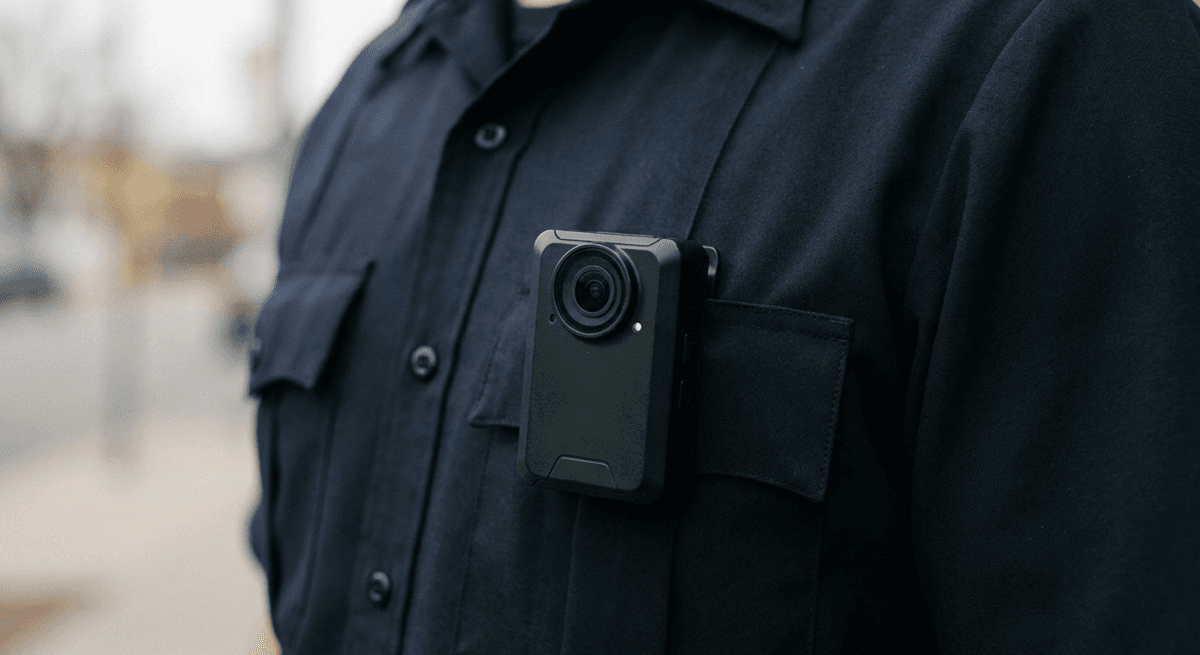
Is there a Montana law that specifically governs bodycam footage?
No. The Reporters Committee for Freedom of the Press, which tracks state-by-state access law nationally, states plainly in its Montana guide that the state "does not have law that addresses access to body-worn camera footage." That gap matters because it means a records custodian, a requester, and a court all have to reason by analogy from Montana's general public-records and criminal-justice-information law rather than from a rule written for bodycams specifically. The Montana Legislature has considered bodycam-specific proposals in past sessions, but no dedicated statute governing activation, retention, or release has been enacted.
How does Montana classify footage without a bodycam statute?
By default, footage recorded by a law enforcement officer likely falls under Montana's Criminal Justice Information Act, Title 44, chapter 5 of the Montana Code Annotated. Mont. Code Ann. section 44-5-103 is the definitions section, and it divides "criminal justice information" into two buckets. "Public criminal justice information" is a defined list: things like arrest records, booking photographs, bail records, jail rosters, court records, and information about convictions and deferred prosecutions. "Confidential criminal justice information" includes criminal investigative information, criminal intelligence information, and, as a catch-all, any other criminal justice information not clearly defined as public.
Which bucket a record falls into then decides how it can be released, and that rule lives in a different part of the chapter. Mont. Code Ann. section 44-5-301 places no restrictions on the dissemination of public criminal justice information. Mont. Code Ann. section 44-5-303(1) restricts confidential criminal justice information to criminal justice agencies, to those authorized by law to receive it, and to "those authorized to receive it by a district court upon a written finding that the demands of individual privacy do not clearly exceed the merits of public disclosure." Section 44-5-303(5) adds a separate route once a case is over: a prosecutor who receives a written request after a declination of prosecution, a dismissal, an acquittal, or an entry of judgment may file a declaratory judgment action asking the district court to authorize release.
Bodycam footage is not named in either list, so an agency deciding how to treat a request often defaults to the confidential side of that catch-all, particularly while an investigation is open, unless the constitutional balancing test described below pulls it back toward disclosure.
What is Montana's constitutional balancing test?
This is the mechanism that actually decides most contested requests. Mont. Const. art. II, section 9 states that no person shall be deprived of the right to examine documents of state government and its subdivisions, "except in cases in which the demand of individual privacy clearly exceeds the merits of public disclosure." Section 10 separately guarantees a right of individual privacy that cannot be infringed "without the showing of a compelling state interest." Montana courts apply these two provisions together, asking whether the person shown in a record had an actual, reasonable expectation of privacy, and if so, whether that interest clearly outweighs the public's interest in disclosure. Montana's Supreme Court has applied this test to favor disclosure of police-related records more than once. In Bozeman Daily Chronicle v. City of Bozeman Police Department, 260 Mont. 218, 859 P.2d 435 (1993), the court held that a police officer's alleged sexual misconduct, although he was off duty at the time, went directly to his breach of his position of public trust and was a proper matter for public scrutiny, and that his privacy interest in the investigative records did not clearly exceed the public's right to know. The court also said the public has the right to be informed of the actions and conduct of law enforcement officers, given the position of great public trust they occupy. A similar result followed in Great Falls Tribune Co. v. Cascade County Sheriff, 238 Mont. 103, 775 P.2d 1267 (1989), which affirmed an order requiring the City of Great Falls to release the names of the officers disciplined after a 1988 high-speed chase, together with which of them had been terminated and which had resigned. That order reached the officers' identities, not their disciplinary files as a whole. Neither case is about bodycam video specifically, but both signal how Montana courts are likely to weigh bodycam footage of an officer's own conduct: an officer's privacy interest in records of that conduct is unlikely to clearly exceed the public's right to know.
When must a Montana officer turn the camera on, and how long is footage kept?
There is no state answer to either question. Because Montana has no bodycam statute, activation triggers (when the camera must be recording) and retention periods (how long footage is stored before deletion) are set entirely by each agency's own policy. The Montana Highway Patrol's newly deployed system, for instance, activates automatically when a trooper's emergency lights come on or can be triggered by hand, but that is MHP policy, not a rule that binds any other Montana agency. Local government retention schedules, maintained through Montana's Local Government Records Committee, provide general guidance for how long local agencies must keep records, but there is no bodycam-specific numeric retention period set in state law.
A real example: the Billings traffic stop
On May 1, 2023, three Billings police officers, Matthew Bistline, Ian Busta, and Blaine Lane, stopped a vehicle on the city's north side. Body camera footage later showed the officers discussing how to get the driver's written consent to search the vehicle using what an attorney for the driver called a deceptive tactic. During part of that conversation, officers turned off or removed their body cameras, an act that itself became a central fact in the case once other footage and internal records surfaced it. Yellowstone County Attorney Scott Twito's office dismissed the resulting case and reviewed roughly 140 to 180 other cases involving the same three officers; about 49 were ultimately dismissed. Bistline was not reinstated after arbitration, and Busta and Lane were disciplined. The footage itself only became public after MTN News petitioned Yellowstone County District Court for its release, which is the route Mont. Code Ann. section 44-5-303(1) provides for confidential criminal justice information, because no Montana statute sets an automatic release timeline for bodycam video. The case shows both halves of Montana's bodycam gap: no state law keeps a camera on, and no state law guarantees a fast route to the footage when it goes off.
What happens if a Montana agency refuses to release footage?
Start with Montana's general public information statute, which does give a requester a defined process even though no bodycam law does. Mont. Code Ann. section 2-6-1003(1) gives every person the right to examine and obtain a copy of any public information held by a public agency. Mont. Code Ann. section 2-6-1006 sets the response rules, and they are not the same for every agency: a public agency that is not a local government must acknowledge a request within 5 business days and, where the request is for a record that is single, specific, clearly identifiable, and readily available, provide it within 5 working days of that acknowledgment. That deadline reaches a state agency like the Montana Highway Patrol. It does not reach a city police department or a county sheriff's office, which are local governments and are required under section 2-6-1006(2) only to respond in a timely manner.
If the agency refuses, Mont. Code Ann. section 2-6-1009 requires it to give the requester a written explanation of the denial, lets the requester file a complaint in district court under the Montana Rules of Civil Procedure, and allows costs and reasonable attorney fees to a person who prevails in an action brought to enforce rights under Article II, section 9 of the Montana Constitution. That fee provision is the practical lever for anyone weighing whether a suit is worth filing.
The catch specific to bodycam video is what counts as public information in the first place. Section 2-6-1002(11) defines public information to exclude confidential information that must be protected from disclosure under applicable law, so an agency treating footage as confidential criminal justice information will point the requester back to Mont. Code Ann. section 44-5-303(1), where release runs through a district court finding that the demands of individual privacy do not clearly exceed the merits of public disclosure. That is the petition MTN News filed in the Billings case above.
So what Montana lacks is not a statutory route, it is a bodycam-specific one: no dedicated release process for footage, no bodycam response deadline, and no penalty aimed at an agency that sits on video. See the Police Bodycam Laws by State hub for how states with a specific bodycam statute typically build in a response deadline that Montana currently lacks.
Disclaimer
This article provides general legal information about Montana law governing police body cameras and public access to footage, as verified on 2026-07-08. It does not constitute legal advice and does not create an attorney-client relationship. Readers should consult a lawyer licensed in Montana for advice about a specific records request or incident.
Related articles
- Police Bodycam Laws by State: the complete hub
- Is It Illegal to Record Someone in Public?
- Montana Recording Laws: Announcement Exception, Penalties, and AI Deepfakes
Last updated: 2026-07-08. Statutes cited reflect their in-force version as of 2026-07-08.
More Montana Laws
Frequently Asked Questions
Does Montana have a body camera law?
No. Montana has no statute governing when officers must activate body cameras, how long footage must be kept, or how the public can obtain a copy. Access is worked out under Montana's general public information statute at Mont. Code Ann. Title 2, chapter 6, part 10, the Criminal Justice Information Act, and the constitutional right-to-know balancing test.
Are Montana police required to wear body cameras?
No statewide mandate exists. Adoption is agency by agency; some Montana departments have used body cameras for over a decade, while the Montana Highway Patrol only began equipping troopers in 2025.
How do I get a copy of Montana bodycam footage?
Submit a public information request to the agency under Mont. Code Ann. section 2-6-1003. A state agency such as the Montana Highway Patrol must acknowledge the request within 5 business days under section 2-6-1006(3), while a city police department or county sheriff, as a local government, need only respond in a timely manner. A denial must come with a written explanation under section 2-6-1009, which also lets you file a complaint in district court and allows costs and reasonable attorney fees if you prevail. If the footage is withheld as confidential criminal justice information, release instead runs through a district court finding under Mont. Code Ann. section 44-5-303(1). No bodycam-specific statute sets a faster path.
Does an officer have privacy rights that block release of bodycam footage in Montana?
Montana courts have held that a police officer's privacy interest in records of alleged misconduct that breaches the officer's position of public trust does not clearly outweigh the public's right to know. In Bozeman Daily Chronicle v. City of Bozeman Police Department, 260 Mont. 218, 859 P.2d 435 (1993), the Montana Supreme Court found that a police officer's privacy interest in investigative records of his alleged misconduct did not clearly exceed the public's right to know, even though he was off duty at the time.
Is Montana bodycam footage 'public' or 'confidential' criminal justice information?
It is not clearly listed as either under Mont. Code Ann. section 44-5-103, which is the definitions section. Agencies often default to treating it as confidential criminal investigative information, particularly during an open case. The classification decides the release rule: section 44-5-301 places no restrictions on disseminating public criminal justice information, while section 44-5-303(1) limits confidential information to criminal justice agencies, those authorized by law, and those a district court authorizes after a written finding on the privacy balance.
Do Montana officers need my consent to record me on a body camera?
No. Consent rules under Montana's recording statutes are not implicated by an on-duty officer's open, uniformed use of a body camera.
What happens if a Montana officer turns off their body camera during an encounter?
No Montana statute directly penalizes non-activation. In a 2023 Billings case, officers who turned off their cameras during a disputed vehicle search faced internal discipline and a dismissed case, but through department policy and litigation, not a dedicated bodycam law.
Updates
Corrected the description of Bozeman Daily Chronicle v. City of Bozeman Police Department to the holding the Montana Supreme Court actually reached about a police officer's privacy interest in misconduct investigation records.
Added Montana's public information statute (Mont. Code Ann. sections 2-6-1003, 2-6-1006 and 2-6-1009) and the criminal justice information release rules (sections 44-5-301 and 44-5-303) as the actual statutory route for a footage request, and narrowed the Great Falls Tribune holding to the release of disciplined officers' names.
Independently fact-checked against the cited primary sources; governing law re-checked for recent changes
Governing law re-checked for recent changes
Reviewed and approved by an editor
The Law Behind This Article
This article rests on the statutory provisions below, held in our own legal record and retrieved from the official source. Tap a section to read the operative text.
Montana Constitution
§ Art. II, § 9Right To KnowIn force
Section 9. Right to know. No person shall be deprived of the right to examine documents or to observe the deliberations of all public bodies or agencies of state government and its subdivisions, except in cases in which the demand of individual privacy clearly exceeds the merits of public disclosure.
Official text (excerpt) · last checked 2026-08-31 · Read the full text in our law library · Verify at mca.legmt.gov
Montana Code Annotated, Title 44
§ 44-5-303Dissemination Of Confidential Criminal Justice Information -- Procedure For Dissemination Through Court -- Notice And Objection To DisclosureIn forcecited in 3 of our articles
44-5-303. Dissemination of confidential criminal justice information -- procedure for dissemination through court -- notice and objection to disclosure. (1) Except as provided in subsections (2) through (4), dissemination of confidential criminal justice information is restricted to criminal justice agencies, to those authorized by law to receive it, and to those authorized to receive it by a district court upon a written finding that the demands of individual privacy do not clearly exceed the merits of public disclosure. Permissible dissemination of confidential criminal justice information under this subsection includes receiving investigative information from and sharing investigative information with a chief of a governmental fire agency organized under Title 7, chapter 33, or fire marshal concerning the criminal investigation of a fire. (2) If the prosecutor determines that dissemination of confidential criminal justice information would not jeopardize a pending investigation or other criminal proceeding, the information may be disseminated to a victim of the offense by the prosecutor or by the investigating law enforcement agency after consultation with the prosecutor.
Official text (excerpt) · last checked 2026-07-29 · Read the full text in our law library · Verify at mca.legmt.gov
Cited in 25 court opinions in our collectionLatest citing opinion in our collection: 2025
Opinions citing this section in our collection:
- Bozeman Daily Chronicle v. City of Bozeman Police Department (Montana Supreme Court 1993, 260 Mont. 218)“…not clearly exceed the merits of public disclosure[.] Section 44-5-303, MCA. In this case, because the Chronic…”
- Prindel v. Ravalli County (Montana Supreme Court 2006, 331 Mont. 338)“…les containing information concerning Russell. Pursuant to § 44-5-303, MCA, the first motion sought disclosure by…”
- Allstate Insurance v. City of Billings (Montana Supreme Court 1989, 239 Mont. 321)“…te when this information would be subject to dissemination. Section 44-5-303, MCA, provides that “dissemination of confid…”
Identified automatically from the court opinions citing this section — not a ranking of which case controls.
Also relied on in: Montana Court Records: How to Search the New Public Access Portals, What's Public, and How Expungement Works, Are Autopsy Reports Public in Montana? (2026)
§ 44-5-301Dissemination Of Public Criminal Justice InformationIn forcecited in 4 of our articles
44-5-301. Dissemination of public criminal justice information. (1) There are no restrictions on the dissemination of public criminal justice information. (2) (a) All public criminal justice information is available from the department or the agency that is the source of the original documents and that is authorized to maintain the documents according to applicable law. These documents must be open, subject to the restrictions in this section, during the normal business hours of the agency. A reasonable charge may be made by a criminal justice agency for providing a copy of public criminal justice information. (b) (i) A criminal justice agency shall charge a clerking fee of $100 for the release of a booking photograph prior to the termination of criminal proceedings against the individual depicted in the photograph. This fee may be waived in the case of extenuating circumstances. (ii) If a person is convicted of an offense related to the arrest for which the booking photograph was taken, the criminal justice agency may not charge a clerking fee for the release of the booking photograph.
Official text (excerpt) · last checked 2026-09-02 · Read the full text in our law library · Verify at mca.legmt.gov
Cited in 3 court opinions in our collectionLatest citing opinion in our collection: 2007
Opinions citing this section in our collection:
- Bozeman Daily Chronicle v. City of Bozeman Police Department (Montana Supreme Court 1993, 260 Mont. 218)“…e information may be disseminated without restriction. Section 44-5-301, MCA. The dissemination of confidential crim…”
- Engrav v. Cragun (Montana Supreme Court 1989, 236 Mont. 260)“…e appears to be a distinct conflict between S S 44-5-103 and 44-5-301, MCA. Section 44-5-103(12) clearly states th…”
- Harp v. Matthews (Montana Supreme Court 2007, 175 P.3d 304)“…dissemination is unrestricted. Sections 44-5-103(13) and 44-5-301, MCA. Even if we determined that Matthews’…”
Identified automatically from the court opinions citing this section — not a ranking of which case controls.
Also relied on in: Montana Police Reports: How to Get a Crash Report, Incident Report, or Bodycam Video, Montana Warrant Search: How to Check If You Have a Warrant (2026), Montana Background Check Laws (2026 Guide)
§ 44-5-103DefinitionsIn forcecited in 6 of our articles
44-5-103. Definitions. As used in this chapter, the following definitions apply: (1) "Access" means the ability to read, change, copy, use, transfer, or disseminate criminal justice information maintained by criminal justice agencies. (2) "Administration of criminal justice" means the performance of any of the following activities: detection, apprehension, detention, pretrial release, posttrial release, prosecution, adjudication, correctional supervision, or rehabilitation of accused persons or criminal offenders. It includes criminal identification activities and the collection, storage, and dissemination of criminal justice information. (3) "Confidential criminal justice information" means: (a) criminal investigative information; (b) criminal intelligence information; (c) fingerprints and investigative or intelligence photographs; (d) criminal justice information or records made confidential by law; and (e) any other criminal justice information not clearly defined as public criminal justice information.
Official text (excerpt) · last checked 2026-07-29 · Read the full text in our law library · Verify at mca.legmt.gov
Cited in 4 court opinions in our collectionLatest citing opinion in our collection: 2014
Opinions citing this section in our collection:
- Jefferson County v. Montana Standard (Montana Supreme Court 2003, 318 Mont. 173)“…information into two categories: public and confidential. Section 44-5-103, MCA (1999). Information pertaining to a cr…”
- Montana State Fund v. Simms (Montana Supreme Court 2012, 364 Mont. 14)“…That determination is made by statute [in particular, § 44-5-103, MCA]. Mont. State Fund v. Simms, 2010 MTWC…”
- Engrav v. Cragun (Montana Supreme Court 1989, 236 Mont. 260)“…ring new employees. This is beneficial to the public. Section 44-5-103, MCA, specifically declares what information…”
Identified automatically from the court opinions citing this section — not a ranking of which case controls.
Montana Code Annotated, Title 2
§ 2-6-1003Access To Public Information -- Safety And Security Exceptions -- Additional ExceptionsIn forcecited in 5 of our articles
2-6-1003. Access to public information -- safety and security exceptions -- additional exceptions. (1) Except as provided in subsections (2) through (4), every person has a right to examine and obtain a copy of any public information of this state. (2) A public officer may withhold from public scrutiny information relating to individual or public safety or the security of public facilities, including public schools, jails, correctional facilities, private correctional facilities, and prisons, if release of the information jeopardizes the safety of facility personnel, the public, students in a public school, or inmates of a facility. A public officer may not withhold from public scrutiny any more information than is required to protect individual or public safety or the security of public facilities. (3) The Montana historical society may honor restrictions imposed by private record donors as long as the restrictions do not apply to public information. All restrictions must expire no later than 50 years from the date the private record was received. On the expiration of the restriction, the private records must be made accessible to the public.
Official text (excerpt) · last checked 2026-09-02 · Read the full text in our law library · Verify at mca.legmt.gov
Also relied on in: Montana Right to Know: Public Records Deadlines, Fees, and How to Sue
§ 2-6-1006Public Information Requests -- FeesIn forcecited in 3 of our articles
2-6-1006. (Temporary) Public information requests -- fees. (1) (a) A person may request public information from a public agency. A public agency shall make the means of requesting public information accessible to all persons. (b) (i) All public agencies are governed by this subsection (1). (ii) A public agency that is not an executive branch agency must meet the requirements of subsection (2) when responding to a public information request. (iii) Except as provided in subsection (1)(b)(iv), all executive branch agencies must meet the requirements of subsection (3) when responding to a public information request. (iv) The secretary of state must meet the requirements of subsection (4) regarding fees. (c) A public agency other than the office of the secretary of state may charge a fee pursuant to subsections (1)(e) and (5) and this subsection (1)(c). The fee must be documented. The public agency may require the requesting person to pay the estimated fee prior to identifying and gathering the requested public information. (d) A public agency is not required to alter or customize public information to provide it in a form specified to meet the needs of the requesting person.
Official text (excerpt) · last checked 2026-07-29 · Read the full text in our law library · Verify at mca.legmt.gov
Cited in 1 court opinions in our collectionLatest citing opinion in our collection: 2024
Opinions citing this section in our collection:
- Gerdes v. Niemann (District Court, D. Montana 2024)“…information cannot be readily identified and gathered[].]” Mont. Code Ann. § 2-6-1006(2)(a). Public information means “inform…”
Identified automatically from the court opinions citing this section — not a ranking of which case controls.
Also relied on in: Public Records Laws by State: FOIA Guide for All 50 States (2026)
§ 2-6-1009Written Notice Of Denial -- Failure To Meet Response Deadline -- Civil Action -- Costs To Prevailing Party In Certain Actions To Enforce Constitutional Or Statutory RightsIn forcecited in 2 of our articles
2-6-1009. (Temporary) Written notice of denial -- failure to meet response deadline -- civil action -- costs to prevailing party in certain actions to enforce constitutional or statutory rights. (1) A public agency that denies an information request to release information or records shall provide a written explanation for the denial. (2) If a person who makes an information request receives a denial from a public agency and believes that the denial violates the provisions of this chapter, the person may file a complaint pursuant to the Montana Rules of Civil Procedure in district court. (3) If a person who makes an information request to an executive branch agency does not receive a response from the agency as required in 2-6-1006(3), the person may file a complaint in district court. (4) A person alleging a deprivation of rights who prevails in an action brought in district court to enforce the person's rights under Article II, section 9, of the Montana constitution or under the provisions of Title 2, chapter 6, parts 10 through 12, may be awarded costs and reasonable attorney fees.
Official text (excerpt) · last checked 2026-07-29 · Read the full text in our law library · Verify at mca.legmt.gov
Cited in 2 court opinions in our collectionLatest citing opinion in our collection: 2025
Opinions citing this section in our collection:
- MEIC v. Governor (Montana Supreme Court 2025, 2025 MT 112)“…rds laws are appropriately brought via petition pursuant to § 2-6-1009, MCA, which—like § 2-3-221, MCA—provides fo…”
- M. Ailer v. State (Montana Supreme Court 2022, 2022 MT 115N)“…t. Complaints or petitions filed under § 44-5-303, MCA, or § 2-6-1009, MCA, both require compliance with the Monta…”
Identified automatically from the court opinions citing this section — not a ranking of which case controls.
Search our full record of US law — 2.1 million sections, every state + federal →
Sources and References
- Montana Constitution art. II, sections 9-10, right to know and right of privacy(sosmt.gov).gov
- Mont. Code Ann. section 44-5-103, Criminal Justice Information Act definitions(mca.legmt.gov).gov
- Reporters Committee for Freedom of the Press, Open Government Guide: Montana(rcfp.org)
- KPAX/MTN News, 3 Billings police officers on leave as county attorney launches review of cases(kpax.com)
- KTVH, Montana Highway Patrol gets body cameras for the first time(ktvh.com)
- Mont. Code Ann. section 2-6-1003, access to public information(mca.legmt.gov)
- Mont. Code Ann. section 2-6-1006, public information requests and response deadlines(mca.legmt.gov)
- Mont. Code Ann. section 2-6-1009, written notice of denial, civil action, costs to prevailing party(mca.legmt.gov)
- Mont. Code Ann. section 44-5-301, dissemination of public criminal justice information(mca.legmt.gov)
- Mont. Code Ann. section 44-5-303, dissemination of confidential criminal justice information and procedure for dissemination through court(mca.legmt.gov)
- Great Falls Tribune Co. v. Cascade County Sheriff, 238 Mont. 103, 775 P.2d 1267 (1989), full opinion(courtlistener.com)