
South Dakota
South Dakota Nursing Home Camera Laws: Video Monitoring Rights
Independently fact-checked against primary sources (last audited August 14, 2026). · 4 primary sources cited on this page. How we verify our legal content
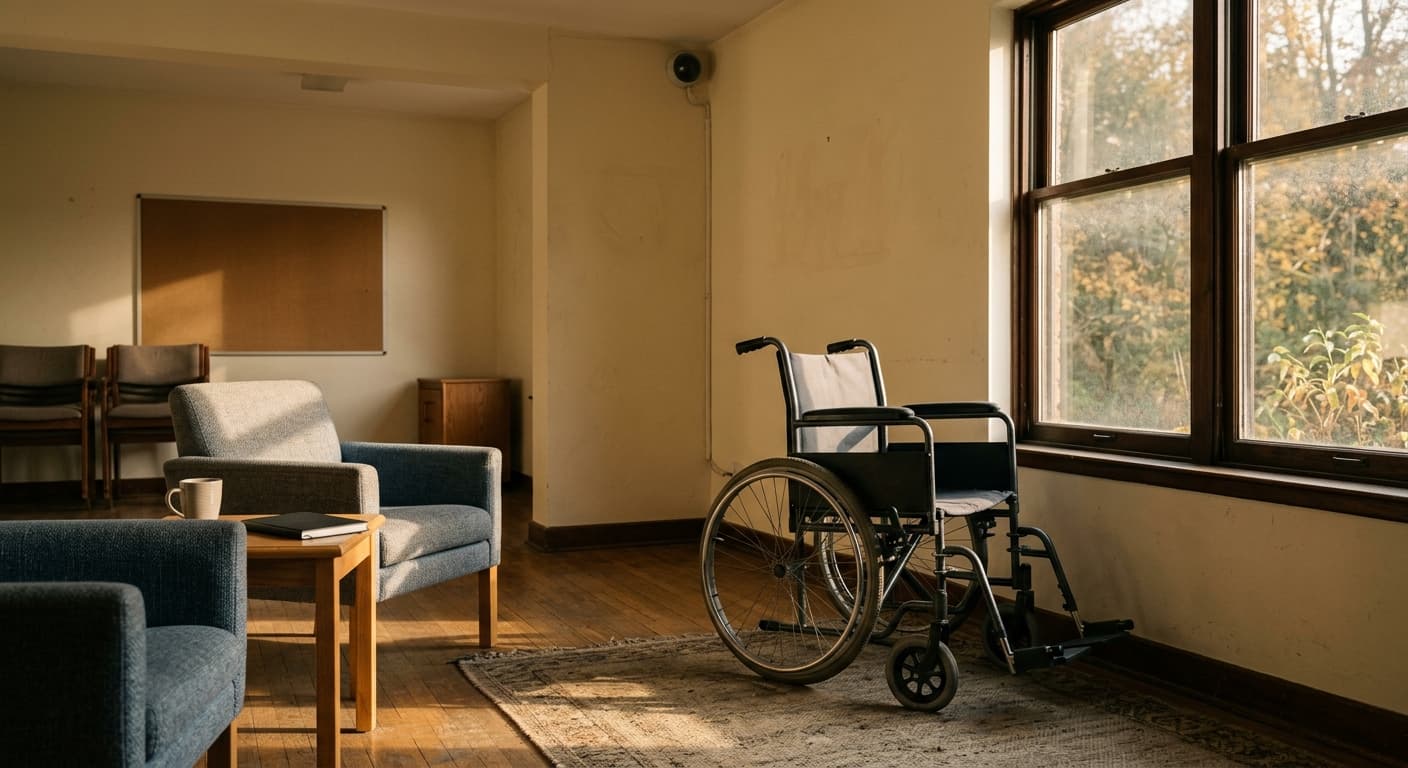
South Dakota lets an assisted living or nursing facility resident install a video monitoring device in their own room under S.D. Codified Laws chapter 34-12I, but the same chapter makes audio monitoring a class 1 misdemeanor with no lawful consent path.
Information last verified on 2026-08-14.
This page covers South Dakota's video-only monitoring statute, including the audio ban that makes it stand apart from every other state in this comparison. For South Dakota's general recording-consent law, see South Dakota Recording Laws. See the Nursing Home Camera Laws by State hub for how every state approaches this issue, and the existing 50-state statute comparison table for a side-by-side look at every enacted law.
Does South Dakota Law Allow Cameras in Nursing Home Rooms?
Yes, for video. Chapter 34-12I, titled "Video or Audio Monitoring in Assisted Living Centers and Nursing Facilities," defines a covered "facility" as an assisted living center or a nursing facility, section 34-12I-1, putting both settings on equal footing. A resident who is at least 18 may install a video monitoring device after completing and submitting a notice-and-consent form to the facility, section 34-12I-2. If the resident lacks decision-making capacity, as determined by a physician, an authorized representative, a court-authorized guardian or a durable power-of-attorney agent specifically empowered to consent to video monitoring, may complete and submit the form instead.
South Dakota Criminally Bans Audio Monitoring
This is the single most important fact for the South Dakota page. Section 34-12I-8 states plainly: "Any person who places or operates an audio monitoring device in a resident's room is guilty of a Class 1 misdemeanor." Unlike Connecticut or North Dakota, which authorize an audio-capable device within a consent framework, South Dakota's authorization sections describe only a "video monitoring device," and the audio ban applies with no consent-based safe harbor. A South Dakota resident or family considering any device with an audio-recording function should understand that, unlike the video provisions, there is no lawful way to operate it in a resident's room under this chapter.
Roommate Consent and What a Roommate Can Restrict
Under section 34-12I-3, a resident with a roommate may not conduct video monitoring unless the roommate, or the roommate's representative if the roommate lacks capacity, has provided written consent. The roommate may impose conditions, documented on the consent form, and section 34-12I-4 lists specific options a roommate can require: prohibiting recording outright, prohibiting broadcasting the recording, or requiring the device be turned off or blocked during a health care exam or procedure, during dressing, bathing or personal care, or during a visit with an attorney, financial planner, intimate partner, ombudsman or spiritual adviser.
The roommate may refuse or withdraw consent at any time. On refusal, the resident simply may not monitor. On withdrawal, the resident must remove the device, and if the resident fails to do so, the facility must remove it. If a roommate refuses to consent, the facility must, on the resident's written request, relocate the resident to another room as soon as circumstances permit, though the facility is not required to provide a private room unless the resident agrees to pay the increased charge.
Placement, Cost and Signage
The resident must place the device in a conspicuously visible location in the room, and the facility may impose placement conditions only to prevent damage, avoid a safety hazard, or comply with a building or electrical code, not as a pretext to restrict monitoring itself. The resident is liable for installation, operation, maintenance and removal costs, except that the facility may not charge for electricity. The facility must post conspicuous signage at the entrance to a monitored resident's room; no separate facility-entrance-level signage requirement appears in this chapter.
Tampering, Access Restrictions and Penalties
South Dakota criminalizes interference at two separate points. Intentionally removing, hampering, obstructing, tampering with or destroying a video monitoring device or a recording, without the resident's permission, is a class 1 misdemeanor under section 34-12I-12. Accessing or disseminating a recording without the resident's written consent is separately a class 1 misdemeanor under section 34-12I-13. A person possessing a compliant recording must provide a copy on the facility's written request if a neglect or abuse allegation has been filed against the facility and the recording contains pertinent evidence, with the facility reimbursing reasonable copying costs.
Using Recordings as Evidence
Section 34-12I-15 allows a compliant video recording to be admitted into evidence in a civil, criminal or administrative proceeding, provided the monitoring was conducted in accordance with the chapter, the recording was not edited or artificially enhanced, and it shows the date and time the events occurred, subject to the ordinary rules of evidence and procedure.

An important structural limit: section 34-12I-18 states that a violation of the chapter "may not form the basis of any private civil cause of action." Enforcement is administrative, through a complaint filed with the Secretary of the Department of Health, though the chapter's own criminal misdemeanor provisions remain independently enforceable through ordinary criminal process. A resident considering a lawsuit over a chapter violation should understand this limit before assuming the statute itself creates a direct right to sue.
Harmed by a product or exposure? Speak with an attorney about your options
If you or a loved one may have been harmed, you can speak with an attorney about your legal options at no cost. Whether you have a claim depends on the specific facts. This is attorney advertising, not a guarantee that you qualify or of any particular outcome.
Retaliation Ban and Facility Liability
Section 34-12I-16 bars a facility from discriminating or retaliating against any resident or roommate for consenting to or refusing to consent to video monitoring, and extends the same protection to potential residents and potential roommates. A facility is shielded from civil or criminal liability for privacy-rights violations arising from a video monitoring device's use, except where the violation was caused by the facility's own intentional violation of the chapter.
Audio Recording and South Dakota's General Consent Law
South Dakota is generally understood as a one-party consent state for recording conversations. Chapter 34-12I's audio ban is a facility-specific override that applies regardless of that general rule once a device is placed in a resident's room; it is not the same question as recording a conversation elsewhere in the facility or outside it. See South Dakota Recording Laws for the state's general framework.
Getting Help
South Dakota's Department of Health handles chapter 34-12I complaints, and the state's Long-Term Care Ombudsman is a practical first stop for a resident or family navigating a monitoring request, a roommate dispute, or a suspected abuse or neglect situation.
Related Resources
- Nursing Home Camera Laws by State is the hub page for this cluster, covering every state's regime at a glance.
- The 50-State Nursing Home Camera Law Comparison covers the full 18-state comparison and how South Dakota's video-only, audio-banned model compares to its peers.
- South Dakota Recording Laws covers the state's general recording-consent framework outside chapter 34-12I.
- South Dakota Power of Attorney Laws covers how a representative gets authority to request monitoring on a resident's behalf.
- Nursing Home Abuse & Neglect covers how an abuse or neglect claim works once evidence, including camera footage, is in hand.
- Surveillance Camera Laws by State covers the general legal framework for security cameras outside a nursing home setting.
Last updated: 2026-08-14.
Frequently Asked Questions
Can I put a video camera in a South Dakota nursing home or assisted living room?
Yes. S.D. Codified Laws chapter 34-12I covers both assisted living centers and nursing facilities and lets a resident install a video monitoring device after submitting a notice-and-consent form to the facility and, if there is a roommate, getting the roommate's written consent.
Can I put an audio monitoring device in a South Dakota nursing home room?
No. South Dakota is unusual among states with a camera law: section 34-12I-8 makes it a class 1 misdemeanor for any person to place or operate an audio monitoring device in a resident's room. There is no consent-based path to lawful audio monitoring under this chapter, unlike the video provisions.
What happens if my roommate refuses to consent to video monitoring in South Dakota?
The resident may not conduct video monitoring without the roommate's written consent. If the roommate refuses, section 34-12I-3 requires the facility, on the resident's written request, to relocate the resident to another room as soon as circumstances permit, though not necessarily a private room unless the resident pays the increased charge.
Can South Dakota nursing home video footage be used in a lawsuit?
It can be admitted into evidence in a civil, criminal or administrative proceeding if the monitoring complied with the chapter, the recording was not edited or artificially enhanced, and it shows the date and time of the events. However, a violation of the chapter itself cannot form the basis of a private civil lawsuit; complaints go to the Department of Health instead.
Is tampering with a South Dakota nursing home camera a crime?
Yes. Intentionally removing, hampering, obstructing, tampering with or destroying a video monitoring device or its recording without the resident's permission is a class 1 misdemeanor, as is accessing or disseminating a recording without the resident's written consent.
Who pays for a monitoring device in a South Dakota facility?
The resident is liable for the costs of installing, operating, maintaining and removing the device, except that the facility may not charge the resident for the electricity used to operate it.
Updates
Independently fact-checked against the cited primary sources
The Law Behind This Article
This article rests on the statutory provisions below, held in our own legal record and retrieved from the official source. Tap a section to read the operative text.
South Dakota Codified Laws, Chapter 34-12I: VIDEO OR AUDIO MONITORING IN ASSISTED LIVING CENTERS AND NURSING FACILITIES
§ 34-12I-2Consent form--Submission to facility.In force
Official text (excerpt) · last checked 2026-08-31 · Read the full text in our law library · Verify at sdlegislature.gov
§ 34-12I-8Audio monitoring device--Use--Violation as misdemeanor.In force
Official text (excerpt) · last checked 2026-07-30 · Read the full text in our law library · Verify at sdlegislature.gov
§ 34-12I-1Definitions.In force
Official text (excerpt) · last checked 2026-07-30 · Read the full text in our law library · Verify at sdlegislature.gov
§ 34-12I-3Roommate--Consent--Refusal--Restrictions--Relocation.In force
Official text (excerpt) · last checked 2026-07-30 · Read the full text in our law library · Verify at sdlegislature.gov
§ 34-12I-4Consent form--Content.In force
Official text (excerpt) · last checked 2026-07-30 · Read the full text in our law library · Verify at sdlegislature.gov
§ 34-12I-11Notice.In force
Official text (excerpt) · last checked 2026-07-30 · Read the full text in our law library · Verify at sdlegislature.gov
§ 34-12I-12Destruction prohibited--Violation as misdemeanor.In force
Official text (excerpt) · last checked 2026-07-30 · Read the full text in our law library · Verify at sdlegislature.gov
§ 34-12I-13Access and dissemination--Violation as misdemeanor.In force
Official text (excerpt) · last checked 2026-07-30 · Read the full text in our law library · Verify at sdlegislature.gov
§ 34-12I-15Evidentiary material.In force
Official text (excerpt) · last checked 2026-07-30 · Read the full text in our law library · Verify at sdlegislature.gov
§ 34-12I-16Discrimination--Retaliation--Prohibition.In force
Official text (excerpt) · last checked 2026-07-30 · Read the full text in our law library · Verify at sdlegislature.gov
§ 34-12I-18Complaint--Adjudication.In force
Official text (excerpt) · last checked 2026-07-30 · Read the full text in our law library · Verify at sdlegislature.gov
Search our full record of US law — 2.1 million sections, every state + federal →
Sources and References
- S.D. Codified Laws section 34-12I-1, Definitions, and section 34-12I-8, Audio monitoring device criminally prohibited(sdlegislature.gov).gov
- S.D. Codified Laws section 34-12I-3, Roommate consent, refusal and relocation(sdlegislature.gov).gov
- S.D. Codified Laws sections 34-12I-11 and 34-12I-15, Notice and evidence admissibility(sdlegislature.gov).gov
- S.D. Codified Laws sections 34-12I-12, 34-12I-13 and 34-12I-18, Tampering, dissemination and no private cause of action(sdlegislature.gov).gov