
Massachusetts
Massachusetts Minimum Wage 2026: $15.00 an Hour, Tipped $6.75
Independently fact-checked against primary sources (last audited September 29, 2026). · 11 primary sources cited on this page. How we verify our legal content
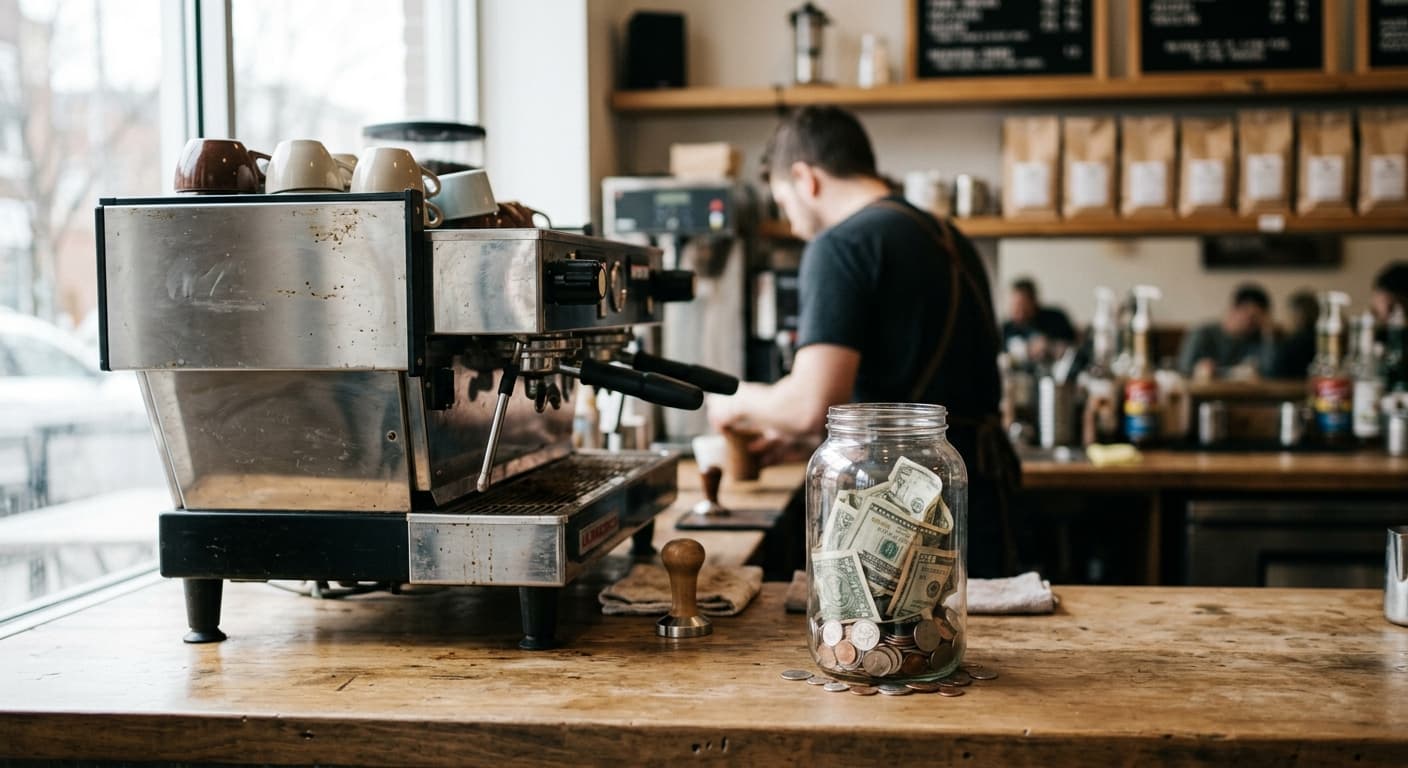
Massachusetts's minimum wage is $15.00 per hour under M.G.L. c. 151, section 1, and the statute schedules no increase for 2027. Tipped service employees can be paid a cash wage of $6.75 per hour if tips make up the difference. The state rate can never be less than $0.50 higher than the federal minimum wage.
Information last verified on September 29, 2026. This article has not been reviewed by a licensed lawyer.
Jurisdiction scope: This page covers the Massachusetts minimum fair wage law (M.G.L. c. 151) and the federal Fair Labor Standards Act (FLSA) minimum wage overlay. It does not cover overtime detail, city ordinances or any other state.
What is the minimum wage in Massachusetts in 2026?
The Massachusetts minimum wage is $15.00 per hour. Section 1 of M.G.L. c. 151 provides that a wage of less than $15.00 per hour, in any occupation covered by the chapter, is conclusively presumed to be oppressive and unreasonable. The section also provides that "in no case shall the minimum wage rate be less than $.50 higher than the effective federal minimum rate."
The $15.00 rate and the $6.75 tipped cash wage took effect on January 1, 2023 (Acts 2018, c. 121, ss. 21, 26 and 36).
Will the Massachusetts minimum wage go up in 2027?
No increase is scheduled. Section 1 sets a fixed statutory amount, and the text has no inflation indexing, so changing the $15.00 requires an act of the legislature or a ballot law. The only automatic adjustment is the federal floor: the state rate must be at least $0.50 above the federal minimum, which matters only if the federal rate rises above $14.50. It is currently $7.25.
The current text of sections 1 and 7 still shows $15.00 and $6.75 as of the September 29, 2026 check. This page did not search the legislature's bill list for pending proposals.
Massachusetts tipped minimum wage
Section 7 of c. 151 sets a service rate for employees who customarily and regularly receive more than $20 a month in tips. The employer must pay a cash wage of not less than $6.75 per hour. Tips can count toward the rest of the $15.00, but the amount credited on account of tips may not exceed the tips the employee actually received, and the employer must calculate it at the completion of each shift. If cash wage plus tips for a shift falls short of $15.00 an hour, the employer must make up the difference.

The lower cash wage is allowed only if the employer has informed the employee of this rule and the employee keeps all tips received, except that tips may be pooled among employees who customarily and regularly receive tips. If either condition is not met, section 7 does not permit the $6.75 cash wage.
At a $15.00 wage, the most that tips can cover is $8.25 per hour.
The current text of section 7 still shows $6.75 as the cash wage.
Learners, apprentices and other lower rates
Section 1 lets the commissioner approve lesser wages for some classes under sections 7 and 9. Section 7 authorizes lower rates for learners and apprentices, and in retail, merchandising or laundry establishments the learner and apprentice scale applies only to the first 80 hours of employment. It also authorizes lower rates for ushers, ticket sellers and takers (not below $1.25), janitors and caretakers of residential property with living quarters, and golf caddies. Section 9 also lets the commissioner issue special certificates allowing lower wages for learners, apprentices in approved programs, and employees whose earning capacity is impaired by age, disability or injury.
The $15.00 rate applies to an "occupation" as defined in section 2, which excludes professional service, agricultural and farm work, outside sales work by outside salespeople who regularly sell away from the employer's place of business and who do not make daily reports or visits to the employer's office or plant, seasonal camp counselors and counselor trainees, seasonal volunteer ski patrollers and ski personnel, members of religious orders, and people in rehabilitation or training programs at charitable, educational or religious institutions. Agricultural and farm work has a separate statutory minimum of $8.00 an hour under section 2A, which does not apply to a child 17 or under or to a member of the employer's immediate family.
The actual scales currently approved, and any further rules in the Department of Labor Standards regulations, were not verified for this page. If you think a lower rate or an exclusion applies to you, confirm it with the Massachusetts Attorney General's office or a lawyer licensed in Massachusetts.
How Massachusetts and federal minimum wage law fit together
The federal minimum wage is $7.25 per hour (29 U.S.C. 206(a)(1)(C)). Under 29 U.S.C. 218(a), the FLSA does not excuse noncompliance with a state law or municipal ordinance that sets a higher minimum wage, and DOL states the employee is entitled to the higher rate when both apply. The Massachusetts rate of $15.00 is well above the federal rate. On tips, the federal rule allows a direct wage of $2.13 per hour, but the Massachusetts $6.75 cash wage floor is higher. For federal coverage, subminimum certificates and pending federal bills, see the federal minimum wage page.
This page does not cover city or town ordinances. Check with your municipality if you have a question about a local rate.
What to do if you are paid less than the Massachusetts minimum wage
Section 20 of c. 151 allows a civil action for injunctive relief and for the full amount of the minimum wages owed. The employee is entitled to treble damages, as liquidated damages, for any loss of minimum wage, plus costs and reasonable attorneys' fees if the employee prevails. The Attorney General may take an assignment of wage claims. The Massachusetts Attorney General's Fair Labor Division enforces the state wage laws; check its official page for how to file a complaint. This page does not describe the complaint steps.
Section 19(1) protects employees from retaliation. An employer that discharges or discriminates against an employee because the employee complained of a violation, testified or is about to testify in a proceeding, or because the employer believes the employee may complain, is liable for damages of not less than one month's wages nor more than two months' wages, plus costs and attorneys' fees.
Under c. 151, s. 20A, the chapter does not apply to a cause of action that accrued more than 3 years before the case is filed in court. The period is paused from the date the employee or a similarly situated employee files a complaint with the Attorney General until the Attorney General issues a letter authorizing a private lawsuit or its enforcement action becomes final. For comparison, under federal law, 29 U.S.C. 255(a) allows two years, or three for a willful violation, and 29 U.S.C. 216(b) provides an equal amount as liquidated damages.
For related topics, see Massachusetts final paycheck laws, Massachusetts at-will employment laws and unpaid wages. To estimate overtime, use the overtime calculator.
Common Massachusetts minimum wage myths
Massachusetts does not index its minimum wage each year; $15.00 is a fixed statutory amount. The tipped cash wage in the statute is $6.75, not the full minimum wage. Voters rejected 2024 Question 5, which would have gradually raised the tipped wage over five years, by 64.1 percent to 35.9 percent, so the $6.75 tipped cash wage in section 7 still applies.
Disclaimer: This page is general legal information, not legal advice. It covers the Massachusetts minimum fair wage law (M.G.L. c. 151) and the federal Fair Labor Standards Act as verified on September 29, 2026. For a specific pay situation, consult a lawyer licensed in Massachusetts or the Massachusetts Attorney General's office.
Related pages
- Federal minimum wage rules
- Massachusetts final paycheck laws
- Massachusetts at-will employment laws
- Unpaid wages and how to claim them
- Overtime calculator
Last updated: September 29, 2026.
Frequently Asked Questions
What is the minimum wage in Massachusetts?
$15.00 per hour under M.G.L. c. 151, section 1. The state rate can never be less than $0.50 above the federal minimum wage.
Is the Massachusetts minimum wage going up in 2027?
No step is scheduled. Section 1 sets a fixed $15.00 with no inflation indexing, so a change would need new legislation or a ballot law.
What is the tipped minimum wage in Massachusetts?
The cash wage must be at least $6.75 per hour for employees who regularly receive more than $20 a month in tips, if the employer has informed them of the rule and they keep all their tips. If cash wage plus tips for a shift falls short of $15.00 an hour, the employer must make up the difference (c. 151, s. 7).
How much of the minimum wage can tips cover in Massachusetts?
At the current $15.00 wage, tips can cover up to $8.25 per hour, the difference between $6.75 and $15.00, but the credit may not exceed the tips actually received.
Can Massachusetts employers pay learners less than the minimum wage?
Section 7 lets the commissioner approve lower learner and apprentice rates, and in retail, merchandising or laundry establishments the scale applies only to the first 80 hours of employment.
What happens if my employer retaliates after I complain about pay?
Under c. 151, s. 19, the employer is liable for damages of not less than one month's wages nor more than two months' wages, plus costs and attorneys' fees.
Can I get more than my unpaid wages in Massachusetts?
Yes. Section 20 provides treble damages as liquidated damages for any loss of minimum wage, plus costs and reasonable attorneys' fees for a prevailing employee.
How long do I have to sue for unpaid minimum wage in Massachusetts?
Under c. 151, s. 20A, the chapter does not apply to a cause of action that accrued more than 3 years before the case is filed. The period is paused while a complaint to the Attorney General is pending, until the Attorney General authorizes a private lawsuit or its enforcement action becomes final.
Updates
Independently fact-checked against the cited primary sources
The Law Behind This Article
This article rests on the statutory provisions below, held in our own legal record and retrieved from the official source. Tap a section to read the operative text.
Massachusetts General Laws, Chapter 151
§ 1Oppressive and unreasonable wages; validity of contractsIn force
Section 1. It is hereby declared to be against public policy for any employer to employ any person in an occupation in this commonwealth at an oppressive and unreasonable wage as defined in section two, and any contract, agreement or understanding for or in relation to such employment shall be null and void. A wage of less than $15.00 per hour, in any occupation, as defined in this chapter, shall conclusively be presumed to be oppressive and unreasonable, wherever the term ''minimum wage'' is used in this chapter, unless the commissioner has expressly approved or shall expressly approve the establishment and payment of a lesser wage under the provisions of sections seven and nine. Notwithstanding the provisions of this section, in no case shall the minimum wage rate be less than $.50 higher than the effective federal minimum rate.
Official text (excerpt) · last checked 2026-07-29 · Read the full text in our law library · Verify at malegislature.gov
§ 7Investigation and classification of employments; establishment of minimum fair wage rates; exceptions; overtimeIn force
Section 7. The commissioner may, and upon the petition of fifty or more citizens of the commonwealth shall, undertake such investigation as may be required to ascertain whether any substantial number of persons in any occupation are receiving oppressive and unreasonable wages, as defined in section one. The commissioner may, subsequent to such investigation, differentiate and classify employments in any occupation according to the nature of the service rendered and recommend appropriate minimum fair wage rates for different classes of employment. The commissioner may establish minimum fair wage rates varying with localities if in its judgment conditions make such local differentiation proper and will not cause unreasonable discrimination against any locality.
Official text (excerpt) · last checked 2026-07-29 · Read the full text in our law library · Verify at malegislature.gov
§ 20Payment of less than minimum fair wage; recovery of deficiency; unclaimed award; deposit of fundsIn force
Section 20. If a person is paid by an employer less than the minimum fair wage to which the person is entitled under or by virtue of a minimum fair wage regulation, or less than $1.85 per hour in a manufacturing occupation or in any other occupation not covered by a minimum fair wage regulation, the person may institute and prosecute in his own name and on his own behalf, or for himself and for others similarly situated, a civil action for injunctive relief, for any damages incurred and for the full amount of the minimum wages less any amount actually paid to him by the employer. An agreement between the person and the employer to work for less than the minimum wage shall not be a defense to such action. An employee so aggrieved who prevails in such an action shall be awarded treble damages, as liquidated damages, for any loss of minimum wage and shall also be awarded the costs of the litigation and reasonable attorneys' fees.
Official text (excerpt) · last checked 2026-07-29 · Read the full text in our law library · Verify at malegislature.gov
§ 19Punishments for stated actsIn force
Section 19. (1) Any employer and his agent, or the officer or agent of any corporation who discharges or in any other manner discriminates against any employee, including any employee in the domestic service of any family or person at his home, because such employee has complained of a violation of the provisions of this chapter, or has testified or is about to testify in any investigation or proceeding under or related to this chapter, or because such employer believes that said employee or individual may complain of a violation of the provisions of this chapter, shall have violated this section and shall be punished or shall be subject to a civil citation or order as provided in section 27C of chapter 149, and shall be liable for damages which shall not be less than one month's wages nor more than two month's wages of such individual, and the costs of the suit, including a reasonable attorney's fee.
Official text (excerpt) · last checked 2026-07-29 · Read the full text in our law library · Verify at malegislature.gov
§ 1BOvertime compensation; failure to pay; penalties; collection proceedings; unclaimed awards; deposit of fundsIn force
Section 1B. Any employer or the officer or agent of any corporation who pays or agrees to pay to any employee less than the overtime rate of compensation required by section one A shall have violated this section and shall be punished or shall be subject to a civil citation or order as provided in section 27C of chapter 149, and each week in which such employee is paid less than such overtime rate of compensation and each employee so paid less, shall constitute a separate offense. In addition, if a person is paid by an employer less than such overtime rate of compensation, the person may institute and prosecute in his own name and on his own behalf, or for himself and for others similarly situated, a civil action for injunctive relief, for any damages incurred, and for the full amount of the overtime rate of compensation less any amount actually paid to him by the employer. An agreement between the person and the employer to work for less than the overtime rate of compensation shall not be a defense to such action.
Official text (excerpt) · last checked 2026-07-29 · Read the full text in our law library · Verify at malegislature.gov
§ 2DefinitionsIn force
Section 2. The following words and phrases as used in this chapter shall have the following meanings, unless the context clearly requires otherwise: ''A fair wage'', a wage fairly and reasonably commensurate with the value of the service or class of service rendered. In establishing a minimum fair wage for any service or class of service under this chapter the commissioner without being bound by any technical rules of evidence or procedure (1) may take into account the cost of living and all other relevant circumstances affecting the value of the service or class of service rendered, (2) may be guided by like considerations as would guide a court in a suit for the reasonable value of services rendered where services are rendered at the request of an employer in the absence of an express contract as to the amount of the wage to be paid, and (3) may consider the wages paid in the commonwealth for work of like or comparable character by employers who voluntarily maintain minimum fair wage standards. ''A mandatory order'', an order the violation of which is subject to the penalties prescribed in subsection (2) of section nineteen.
Official text (excerpt) · last checked 2026-07-29 · Read the full text in our law library · Verify at malegislature.gov
§ 3Powers of commissioner and attorney generalIn force
Section 3. The commissioner or the attorney general, or their authorized representatives, shall have full power and authority: 1. To investigate and ascertain the wages of persons employed in any occupation in the commonwealth; 2. To enter the place of business or employment of any employer of persons in any occupation, other than domestic service in the home of the employer, for the purpose of examining, inspecting and making a transcript of any and all books, registers, pay-rolls, and other records of any employer of persons that in any way appertain to or have a bearing upon the question of wages of any such persons and for the purpose of ascertaining whether the orders of the commissioner or the attorney general have been and are being complied with; and 3. To require from such employer full and correct statements in writing when the commissioner or the attorney general, or their authorized representatives, deem necessary, of the wages paid to all persons in his employ, such statements to be under oath or accompanied by a written declaration that they are made under the penalties of perjury. 4. To carry out the provisions of this chapter.
Official text (excerpt) · last checked 2026-07-29 · Read the full text in our law library · Verify at malegislature.gov
Search our full record of US law — 2.1 million sections, every state + federal →
Sources and References
- M.G.L. c. 151, section 1 (minimum fair wage)(malegislature.gov).gov
- M.G.L. c. 151, section 7 (service rate, learners and apprentices)(malegislature.gov).gov
- M.G.L. c. 151, section 2 (definitions, occupation)(malegislature.gov).gov
- M.G.L. c. 151, section 2A (agriculture and farming)(malegislature.gov).gov
- M.G.L. c. 151, section 9 (special certificates)(malegislature.gov).gov
- M.G.L. c. 151, section 20A (limitation period)(malegislature.gov).gov
- Massachusetts election statistics: 2024 ballot questions(electionstats.state.ma.us).gov
- M.G.L. c. 151, section 19 (retaliation and enforcement)(malegislature.gov).gov
- M.G.L. c. 151, section 20 (civil action)(malegislature.gov).gov
- 29 U.S.C. 206 (federal minimum wage)(www.law.cornell.edu)
- 29 U.S.C. 218 (relation to state law)(www.law.cornell.edu)
- DOL Wage and Hour Division minimum wage FAQ(www.dol.gov).gov
- 29 U.S.C. 216 (penalties and remedies)(www.law.cornell.edu)
- 29 U.S.C. 255 (statute of limitations)(www.law.cornell.edu)
- Acts 2018, Chapter 121 (Massachusetts), sections 21, 26 and 36(malegislature.gov).gov