
Connecticut
Connecticut Minimum Wage 2026: $16.94 an Hour ($17.48 in 2027)
Independently fact-checked against primary sources (last audited September 30, 2026). · 9 primary sources cited on this page. How we verify our legal content
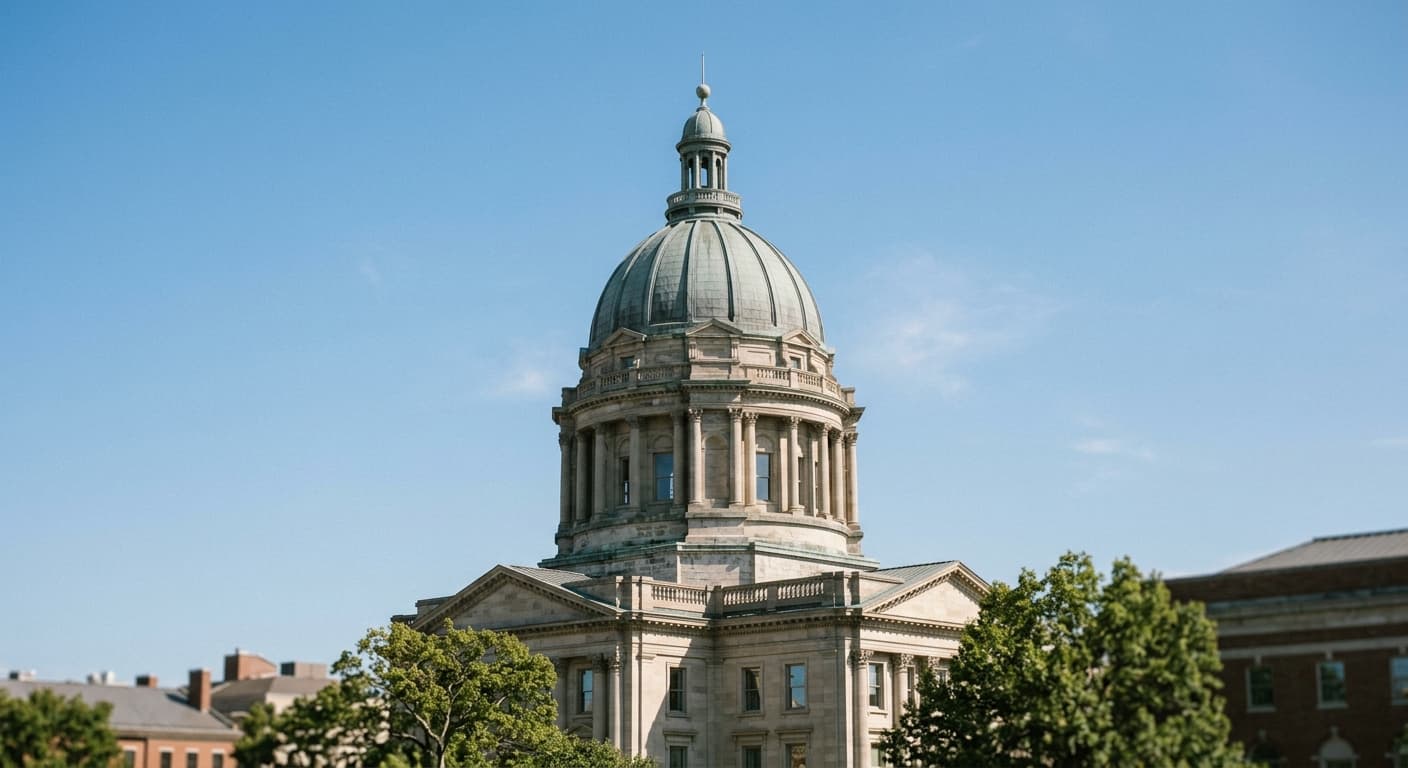
Connecticut's minimum wage is $16.94 an hour through December 31, 2026, under Conn. Gen. Stat. 31-58(i). The Governor and the Connecticut Department of Labor (CT DOL) announced in August 2026 that it will rise to $17.48 an hour on January 1, 2027, an increase of $0.54 tied to a 3.2 percent rise in the employment cost index for the 12 months ending June 30, 2026.
Connecticut's rate is more than double the federal minimum wage of $7.25 an hour (29 U.S.C. 206(a)(1)(C)), so the state rate is the one that applies to nearly every covered worker.
Information last verified on September 29, 2026. This article has not been reviewed by a licensed lawyer.
Jurisdiction scope: This article covers Connecticut's minimum fair wage law (Conn. Gen. Stat. chapter 558, including 31-58 and 31-68) and how the federal Fair Labor Standards Act (FLSA) overlays it. It does not cover overtime in detail, other states, or city or town ordinances. For overtime, see the overtime calculator.
What is the minimum wage in Connecticut?
The rate is $16.94 an hour from January 1, 2026, and $17.48 an hour starting January 1, 2027. The Governor's September 2025 release announced the 2026 increase to $16.94, and the Governor's August 2026 release lists $16.94 as the current rate and announces the increase to $17.48.
| Period | Connecticut minimum wage | Status |
|---|---|---|
| January 1, 2026 through December 31, 2026 | $16.94 | In force |
| Starting January 1, 2027 | $17.48 | Announced by the Governor and CT DOL |
How does Connecticut set the yearly increase?
Conn. Gen. Stat. 31-58(i) set the minimum fair wage at $15.00 as of June 1, 2023. It then adjusts by the percentage change in the employment cost index over the 12-month period ending June 30 of the preceding year. On October 15 of each year, the Labor Commissioner announces the adjustment, which becomes the new minimum fair wage on the following January 1.
The 2027 announcement came earlier than the October 15 deadline. The August 2026 announcement reports a 3.2 percent rise in the employment cost index, which is an increase of $0.54 from $16.94, and CT DOL's Wage and Workplace Standards page lists $17.48 effective January 1, 2027.
How much can hotel and restaurant tipped workers be paid in Connecticut?
Connecticut fixes the employer's share of pay for tipped hotel and restaurant workers in dollars: $6.38 an hour for service employees and $8.23 an hour for bartenders (Conn. Gen. Stat. 31-60(d)). Tips may count for the rest of the minimum fair wage, so the allowed tip credit grows each time the minimum wage rises while the employer's share stays the same. CT DOL's tip statement effective January 1, 2026 expresses the required gratuities as a percentage of the $16.94 minimum wage.

| Position (2026) | Minimum gratuities per hour | Guaranteed pay per hour (employer's share) |
|---|---|---|
| Service employees serving food or beverages at tables and booths | At least 62.98 percent of $16.94, or $10.67 | $6.38 |
| Bartenders | At least 51.42 percent of $16.94, or $8.71 | $8.23 |
The tip statement also limits non-service duties to two hours or 20 percent of the work shift. When the rate becomes $17.48 on January 1, 2027, the statute keeps the employer's share at $6.38 and $8.23; CT DOL had not posted its 2027 tip statement percentages when this page was verified. A worker whose tips do not reach the required amounts should ask CT DOL about the employer's obligation.
What is the cannabis tip credit ban in Public Act 26-12?
Connecticut Public Act 26-12 (Substitute House Bill 5003), signed May 11, 2026, amends Conn. Gen. Stat. 21a-421d in Section 6, effective October 1, 2026. The new subsection (g) reads: "The Labor Commissioner shall not recognize, as part of the minimum fair wage, gratuities for persons employed at a cannabis establishment, dispensary facility or producer."
In plain terms, an employer at one of those businesses cannot count tips toward the minimum fair wage, so the general minimum wage applies to those employees without a tip credit. The Governor's release on the minimum wage increase does not mention this change; the act itself does.
Who can be paid less, and who is not covered?
Minors. According to Conn. Gen. Stat. 31-58(i), minors under 18, other than emancipated minors, may be paid 85 percent of the minimum wage (but not less than $10.10) for their first 90 days of employment, and the full minimum wage after that. Under Conn. Gen. Stat. 31-58a, minors aged 16 to 18 employed by the state or a political subdivision of the state may be paid not less than 85 percent of the minimum wage. Agricultural employees aged 14 to 18 may be paid not less than 85 percent, or not less than 70 percent if the employer did not employ eight or more workers at the same time during the preceding calendar year.
Impaired earning capacity. Under Conn. Gen. Stat. 31-67, the Labor Commissioner may issue a special license allowing pay below the minimum wage to a person whose earning capacity is impaired by age, physical or mental deficiency, or injury, at the rate and for the period stated in the license.
Excluded employment. The definition of "employee" in Conn. Gen. Stat. 31-58(e) excludes:
- employees of camps or resorts that operate no more than six months a year
- domestic service in a private home (except domestic service as defined under the FLSA)
- bona fide executive, administrative and professional employees
- federal employees, and certain nonprofit volunteers
- resident assistants and babysitters
- outside salespersons
- employees of nonprofit theaters for up to seven months
- people on military duty
- starting October 1, 2026, minor league baseball players paid under a collective bargaining agreement (added by Public Act 26-12, Section 40)
Do Connecticut cities set their own minimum wage?
This page reports Connecticut's statewide rate. Connecticut's minimum wage chapter (Conn. Gen. Stat. chapter 558) contains no provision that either authorizes or bars a town minimum wage. This page did not verify whether any Connecticut town has adopted one, so check with your town if you think one applies. Under federal law, a higher municipal minimum wage would still have to be honored (29 U.S.C. 218(a)).

How does the federal minimum wage interact with Connecticut's?
The federal minimum wage is $7.25 an hour (29 U.S.C. 206(a)(1)(C)). Under 29 U.S.C. 218(a), nothing in the FLSA excuses noncompliance with a state law setting a higher minimum wage, and the Department of Labor says an employee covered by both laws gets the higher rate. Connecticut's rate is higher, so it controls. The FLSA still fills gaps and offers its own remedies; see the federal minimum wage guide. To compare other states, see minimum wage by state.
Neighboring Massachusetts sets a fixed $15.00 minimum wage under M.G.L. c. 151, section 1, which is lower than Connecticut's rate. See Massachusetts minimum wage if you work across the border.
What if my employer pays less than the minimum wage?
Workers can file a wage complaint with the Wage and Workplace Standards Division of CT DOL. Under Conn. Gen. Stat. 31-68, an employee paid less than the minimum fair wage may sue to recover twice the full amount of unpaid wages, plus costs and attorney fees. If the employer had a good-faith belief it was complying, the recovery is the full amount of the underpayment plus fees.
Act quickly. Conn. Gen. Stat. 52-596 generally gives two years to sue for unpaid wages, and filing a wage complaint with the Labor Commissioner pauses that clock. CT DOL says it limits wage investigations to the two years before the complaint is filed.
Connecticut law bars an employer from firing, disciplining or otherwise retaliating against an employee for filing a wage claim. The employee may complain to the Labor Commissioner, who may order reinstatement and back pay, and a prevailing employee is awarded attorney fees and costs (Conn. Gen. Stat. 31-69b).
Federal law provides a parallel remedy: unpaid minimum wages plus an equal amount as liquidated damages, and attorney fees (29 U.S.C. 216(b)), with a two-year limit, or three years for a willful violation (29 U.S.C. 255(a)). It is also unlawful to discharge or discriminate against an employee for filing an FLSA complaint (29 U.S.C. 215(a)(3)).
If you have left the job, see what to do about unpaid wages and Connecticut final paycheck laws. For questions about job security, see Connecticut at-will employment laws.
Common Connecticut minimum wage mistakes
- Using $16.35. That was the 2025 rate. The 2026 rate is $16.94, and $17.48 starts January 1, 2027.
- Assuming tipped pay can fall below $6.38 (or $8.23 for bartenders), or that it changes each January. Those employer shares are fixed by Conn. Gen. Stat. 31-60(d), and tips can count only for the difference between that share and the full minimum fair wage.
General legal information, not legal advice. This article presents general information about Connecticut minimum fair wage law and the federal Fair Labor Standards Act. It was last verified on September 29, 2026. For advice about a specific pay situation, consult a lawyer licensed in Connecticut or contact the state labor agency.
Related
- Federal minimum wage
- Massachusetts minimum wage
- Connecticut final paycheck laws
- Connecticut at-will employment laws
- Unpaid wages: how to recover them
- Overtime calculator
Last updated: September 29, 2026.
Frequently Asked Questions
What is the minimum wage in Connecticut in 2026?
It is $16.94 an hour from January 1, 2026, according to the Governor's announcements and CT DOL. The rate is set under Conn. Gen. Stat. 31-58(i).
What will the Connecticut minimum wage be in 2027?
The Governor and CT DOL announced $17.48 an hour, effective January 1, 2027. That is a $0.54 increase based on a 3.2 percent rise in the employment cost index.
What is the Connecticut tipped minimum wage?
In 2026, CT DOL's tip statement lists guaranteed pay of $6.38 an hour for restaurant service employees and $8.23 for bartenders, if their gratuities meet the stated percentages of $16.94. Conn. Gen. Stat. 31-60(d) fixes those amounts in dollars, so the statute keeps them the same in 2027.
Can cannabis workers in Connecticut be paid a tipped wage?
Not after October 1, 2026. Public Act 26-12, Section 6, adds subsection (g) to Conn. Gen. Stat. 21a-421d, barring gratuities from counting toward the minimum fair wage for employees of cannabis establishments, dispensary facilities and producers.
Can Connecticut minors be paid less than the minimum wage?
According to Conn. Gen. Stat. 31-58(i), minors under 18, other than emancipated minors, may be paid 85 percent of the minimum wage (but not less than $10.10) during their first 90 days of employment. Conn. Gen. Stat. 31-58a sets separate rules for minors in government and agricultural jobs.
How does Connecticut decide the yearly increase?
It follows the change in the employment cost index for the 12 months ending June 30. The Labor Commissioner announces the adjustment by October 15, effective the next January 1.
What can I recover if my Connecticut employer underpays me?
Conn. Gen. Stat. 31-68 allows an employee to recover twice the unpaid wages plus costs and attorney fees, or the full amount plus fees if the employer shows a good-faith belief that it complied.
How long do I have to file a Connecticut unpaid wage claim?
Conn. Gen. Stat. 52-596 generally allows two years to sue for unpaid wages, and filing a wage complaint with the Labor Commissioner pauses that period. CT DOL says it limits wage investigations to the two years before the complaint is filed.
Is the federal or the Connecticut minimum wage higher?
Connecticut's is higher. The federal rate is $7.25 an hour, and 29 U.S.C. 218(a) leaves a higher state minimum wage in force.
Updates
Independently fact-checked against the cited primary sources
The Law Behind This Article
This article rests on the statutory provisions below, held in our own legal record and retrieved from the official source. Tap a section to read the operative text.
Connecticut General Statutes, Title 31 (Labor), Chapter 558
§ 31-58Definitions.In forcecited in 2 of our articles
As used in this part: (a) “Commissioner” means the Labor Commissioner; (b) “Fair wage” means a wage fairly and reasonably commensurate with the value of a particular service or class of service rendered, and, in establishing a minimum fair wage for such service or class of service under this part, the commissioner, without being bound by any technical rules of evidence or procedure, (1) may take into account all relevant circumstances affecting the value of the services rendered, including hours and conditions of employment affecting the health, safety and general well-being of the workers, (2) may be guided by such considerations as would guide a court in a suit for the reasonable value of services rendered where services are rendered at the request of an employer without contract as to the amount of the wage to be paid, and (3) may consider the wages, including overtime or premium rates, paid in the state for work of like or comparable character by employers who voluntarily maintain minimum fair wage standards; (c) “Department” means the Labor Department; (d) “Employer” means any owner or any person, partnership, corporation, limited liability company or association of…
Official text (excerpt) · last checked 2026-07-29 · Read the full text in our law library · Verify at cga.ct.gov
Cited in 78 court opinions in our collectionLatest citing opinion in our collection: 2026
Opinions citing this section in our collection:
- Saunders v. Firtel (Supreme Court of Connecticut 2009, 293 Conn. 515)“…te for our review. A The defendants first claim that General Statutes § 31-58(f) [14] provides the applicable defini…”
- Del Rio v. Amazon.com Services, Inc. (Supreme Court of Connecticut 2026, 354 Conn. 151)“…General Statutes § 31-71a (3); see also General Statutes § 31-58 (h) (“ ‘[w]age’ means compens…”
- Vasquez v. Sliders Restaurant Group, LLC (Connecticut Appellate Court 2026)“…f’s cause of action under the Connecticut Minimum Wage Act (General Statutes § 31-58 et seq.) or violate due process, and, a…”
Identified automatically from the court opinions citing this section — not a ranking of which case controls.
Also relied on in: Connecticut Debt Collection Laws: Wage Garnishment, Statute of Limitations, and Repossession
§ 31-60Payment of less than minimum or overtime wage. Regulations.In force
(a) Except as provided in subdivision (5) of subsection (i) of section 31-58, any employer who pays or agrees to pay to an employee less than the minimum fair wage or overtime wage shall be deemed in violation of the provisions of this part. (b) The Labor Commissioner shall adopt such regulations, in accordance with the provisions of chapter 54, as may be appropriate to carry out the purposes of this part. Such regulations may include, but are not limited to, regulations defining and governing an executive, administrative or professional employee and outside salesperson; learners and apprentices, their number, proportion and length of service; and piece rates in relation to time rates; and shall recognize, as part of the minimum fair wage, gratuities in an amount (1) equal to twenty-nine and three-tenths per cent, and effective January 1, 2009, equal to thirty-one per cent of the minimum fair wage per hour, and effective January 1, 2014, equal to thirty-four and six-tenths per cent of the minimum fair wage per hour, and effective January 1, 2015, and ending on June 30, 2019, equal to thirty-six and eight-tenths per cent of the minimum fair wage per hour for persons, other than…
Official text (excerpt) · last checked 2026-07-29 · Read the full text in our law library · Verify at cga.ct.gov
§ 31-68Collection of minimum or overtime wage. Class action certifications. Collection of wages for employee whose whereabouts are unknown.In force
(a)(1) If any employee is paid by his or her employer less than the minimum fair wage or overtime wage to which he or she is entitled under sections 31-58, 31-59 and 31-60 or by virtue of a minimum fair wage order he or she shall recover, in a civil action, (A) twice the full amount of such minimum wage or overtime wage less any amount actually paid to him or her by the employer, with costs and such reasonable attorney's fees as may be allowed by the court, or (B) if the employer establishes that the employer had a good faith belief that the underpayment of such wages was in compliance with the law, the full amount of such minimum wage or overtime wage less any amount actually paid to him or her by the employer, with costs and such reasonable attorney's fees as may be allowed by the court.
Official text (excerpt) · last checked 2026-07-29 · Read the full text in our law library · Verify at cga.ct.gov
§ 31-58aMinimum wage for minors in government or agricultural employment.In force
Notwithstanding the provisions of subsection (i) of section 31-58, minors between the ages of sixteen and eighteen years who are employees of the state or any political subdivision thereof shall be paid a minimum wage of not less than eighty-five per cent of the minimum fair wage as defined in said subsection, and notwithstanding the provisions of said subsection, minors between the ages of fourteen and eighteen who are agricultural employees shall be paid a minimum wage of not less than eighty-five per cent of the minimum fair wage as defined in said section except agricultural employees between the ages of fourteen and eighteen who are employed by employers who did not, during the preceding calendar year, employ eight or more workers at the same time shall be paid a minimum wage of not less than seventy per cent of the minimum wage, as defined in said section 31-58.
Official text (excerpt) · last checked 2026-07-29 · Read the full text in our law library · Verify at cga.ct.gov
§ 31-72Civil action to collect wage claim, fringe benefit claim or arbitration award.In forcecited in 2 of our articles
When any employer fails to pay an employee wages in accordance with the provisions of sections 31-71a to 31-71i, inclusive, or fails to compensate an employee in accordance with section 31-76k or where an employee or a labor organization representing an employee institutes an action to enforce an arbitration award which requires an employer to make an employee whole or to make payments to an employee welfare fund, such employee or labor organization shall recover, in a civil action, (1) twice the full amount of such wages, with costs and such reasonable attorney's fees as may be allowed by the court, or (2) if the employer establishes that the employer had a good faith belief that the underpayment of wages was in compliance with law, the full amount of such wages or compensation, with costs and such reasonable attorney's fees as may be allowed by the court. Any agreement between an employee and his or her employer for payment of wages other than as specified in said sections shall be no defense to such action.
Official text (excerpt) · last checked 2026-07-29 · Read the full text in our law library · Verify at cga.ct.gov
Cited in 217 court opinions in our collectionLatest citing opinion in our collection: 2026
Opinions citing this section in our collection:
- Schoonmaker v. Lawrence Brunoli, Inc. (Supreme Court of Connecticut 2003, 265 Conn. 210)“…nd 31-76g. 6 The plaintiffs sought to recover, pursuant to General Statutes § 31-72, 7 double damages, costs and attorney’…”
- Butler ex rel. Skidmore v. Hartford Technical Institute, Inc. (Supreme Court of Connecticut 1997, 243 Conn. 454)“…of the department of labor, brought this action pursuant to General Statutes § 31-72, 1 on behalf of Marjorie Skid-more aga…”
- Harty v. Cantor Fitzgerald and Co. (Supreme Court of Connecticut 2005, 275 Conn. 72)“…annual bonus and, pursuant to the wage collection statute, General Statutes § 31-72, 1 double damages, attorne…”
Identified automatically from the court opinions citing this section — not a ranking of which case controls.
Also relied on in: Connecticut Final Paycheck Laws: Deadlines, Penalties, and PTO Rules
§ 31-66Employers' records. Orders to be posted.In force
Each employer subject to the provisions of this part, unless exempted by regulation issued by the commissioner or as hereinafter provided, shall keep at the place of employment for a period of three years a true and accurate record of the hours worked by, and the wages paid by him to, each employee, as required by the applicable regulations issued by the Labor Commissioner, and shall furnish to the commissioner or his authorized representative, upon demand, a sworn statement of the same provided if the place of employment is designed primarily as an establishment for the housing and use of coin-operated service or vending machines, such records may be kept by the employer in some location approved by the commissioner other than at the place of employment. Such records shall be open to inspection by the commissioner or his authorized representative at any reasonable time. Each employer subject to this part or to a minimum fair wage order shall keep a copy of such order and the regulations issued by the Labor Commissioner posted at the place of employment where it can be read easily by the employees.
Official text (excerpt) · last checked 2026-07-29 · Read the full text in our law library · Verify at cga.ct.gov
§ 31-67Exception for person with impaired capacity.In force
The commissioner may cause to be issued, to any person whose earning capacity is impaired by age or physical or mental deficiency or injury, a special license authorizing employment at such wages less than the minimum fair wage and for such period of time as is fixed by the commissioner and stated in the license.
Official text (excerpt) · last checked 2026-07-29 · Read the full text in our law library · Verify at cga.ct.gov
§ 31-69bDischarge, discipline, penalty or discrimination prohibited. Right of action.In force
(a) An employer shall not discharge, discipline, penalize or in any manner discriminate against any employee because the employee has filed a claim or instituted or caused to be instituted any investigation or proceeding under part III of chapter 557 or this chapter, or has testified or is about to testify in any such proceeding or because of the exercise by such employee on behalf of himself or others of any right afforded by part III of chapter 557 or this chapter. (b) Any employee who believes that he has been discharged, disciplined, penalized or otherwise discriminated against by any person in violation of this section may file a complaint with the Labor Commissioner alleging violation of the provisions of subsection (a) of this section. Upon receipt of any such complaint, the commissioner shall hold a hearing. After the hearing, the commissioner shall send each party a written copy of his decision.
Official text (excerpt) · last checked 2026-07-29 · Read the full text in our law library · Verify at cga.ct.gov
Cited in 4 court opinions in our collectionLatest citing opinion in our collection: 2015
Opinions citing this section in our collection:
- Schoonmaker v. Lawrence Brunoli, Inc. (Supreme Court of Connecticut 2003, 265 Conn. 210)“…sts and reasonable attorney’s fees to the employer.” General Statutes § 31-69b provides: “(a) An employer shall not di…”
- Skorupski v. Un. Bus., Ind. Fed. Cr. Un., No. Cv-98-0488029s (Mar. 9, 1999) (Connecticut Superior Court 1999, 1999 Conn. Super. Ct. 3253)“…ainst for complaining about not being paid. See Connecticut General Statutes § 31-69b ("An employer shall not discharge, dis…”
- Lombardi v. State, Department of Labor, No. Cv97 0571166 (Jul. 9, 1998) (Connecticut Superior Court 1998, 1998 Conn. Super. Ct. 8062)“…ng a wage and hours complaint is specifically prohibited by General Statutes § 31-69b . The DOL, pursuant to § 31-69b (b), i…”
Identified automatically from the court opinions citing this section — not a ranking of which case controls.
Connecticut General Statutes, Title 21a (Consumer Protection), Chapter 420h
§ 21a-421dLabor peace agreements with bona fide labor organizations. List of bona fide labor organizations. Arbitration. Civil action. Prohibition against sale, transport or transfer of cannabis while license suspended.In force
(a) As used in this section: (1) “Bona fide labor organization” means (A) with respect to a labor peace agreement entered into on or before September 30, 2023, a labor union that (i) represents employees in this state with regard to wages, hours and working conditions, (ii) whose officers have been elected by a secret ballot or otherwise in a manner consistent with federal law, (iii) is free of domination or interference by any employer and has received no improper assistance or support from any employer, and (iv) is actively seeking to represent cannabis workers in the state, and (B) with respect to a labor peace agreement entered into on or after October 1, 2023, a labor union that is included on the list established and periodically updated by the department pursuant to subsection (b) of this section; (2) “Labor peace agreement” means an agreement between a cannabis establishment and a bona fide labor organization under this section pursuant to which the owners and management of the cannabis establishment agree not to lock out employees and that prohibits the bona fide labor organization from engaging in picketing, work stoppages or boycotts against the cannabis…
Official text (excerpt) · last checked 2026-07-29 · Read the full text in our law library · Verify at cga.ct.gov
Connecticut General Statutes, Title 52 (Civil Actions), Chapter 926
§ 52-596Actions for payment of remuneration for employment.In forcecited in 2 of our articles
No action for the payment of remuneration for employment payable periodically shall be brought but within two years after the right of action accrues, except that this limitation shall be tolled upon the filing with the Labor Commissioner of a complaint of failure to pay wages pursuant to the provisions of chapter 558.
Official text (excerpt) · last checked 2026-07-29 · Read the full text in our law library · Verify at cga.ct.gov
Cited in 44 court opinions in our collectionLatest citing opinion in our collection: 2026
Opinions citing this section in our collection:
- Pieri v. City of Bristol (Connecticut Appellate Court 1996, 43 Conn. App. 435)“…barred by the applicable statute of limitations pursuant to General Statutes § 52-596, and (2) that the plaintiff received pa…”
- Schoonmaker v. Lawrence Brunoli, Inc. (Supreme Court of Connecticut 2003, 265 Conn. 210)“…ction were barred by the applicable statute of limitations, General Statutes § 52-596; 12 (2) that the claims arising out of…”
- Shortt v. New Milford Police Department (Supreme Court of Connecticut 1989, 212 Conn. 294)“…at term contained in General Statutes § 31-71a (1)?” General Statutes § 52-596 provides: “actions for payment of remun…”
Identified automatically from the court opinions citing this section — not a ranking of which case controls.
United States Code Title 29
§ 206Minimum wageIn forcecited in 49 of our articles
Every employer shall pay to each of his employees who in any workweek is engaged in commerce or in the production of goods for commerce, or is employed in an enterprise engaged in commerce or in the production of goods for commerce, wages at the following rates: except as otherwise provided in this section, not less than— $5.85 an hour, beginning on the 60th day after May 25, 2007; $6.55 an hour, beginning 12 months after that 60th day; and $7.25 an hour, beginning 24 months after that 60th day; if such employee is a home worker in Puerto Rico or the Virgin Islands, not less than the minimum piece rate prescribed by regulation or order; or, if no such minimum piece rate is in effect, any piece rate adopted by such employer which shall yield, to the proportion or class of employees prescribed by regulation or order, not less than the applicable minimum hourly wage rate. Such minimum piece rates or employer piece rates shall be commensurate with, and shall be paid in lieu of, the minimum hourly wage rate applicable under the provisions of this section.
Official text (excerpt) · last checked 2026-07-28 · Read the full text in our law library · Verify at uscode.house.gov
Cited in 6,250 court opinions in our collectionLatest citing opinion in our collection: 2026
Opinions citing this section in our collection:
- Mark D. Tourscher v. Martin Horn, Secretary of the Pa. Dept. Of Corrections John McCullough Superintendent ,(d.c. Civil No. 98-Cv-00176j) (Court of Appeals for the Third Circuit 1999, 184 F.3d 236)“…wage provisions of the Fair Labor Standards Act (“FLSA”), 29 U.S.C. § 206 (a), for the work he was compelled to d…”
- Christensen v. Harris County (Supreme Court of the United States 2000, 529 U.S. 576)“…in the private sector of the economy or the public sector. 29 U. S. C. §§ 206 , 207 (1994 ed. and Supp. III). In 1985…”
- Barrentine v. Arkansas-Best Freight System, Inc. (Supreme Court of the United States 1981, 450 U.S. 728)“…a minimum wage under § 6 of the Fair Labor Standards Act, 29 U. S. C. § 206 , may not be waived through a collectiv…”
Identified automatically from the court opinions citing this section — not a ranking of which case controls.
Also relied on in: Ohio Debt Collection Laws: Garnishment Formula, the 6-Year Consumer Debt Rule, and Repossession, Federal Minimum Wage 2026: $7.25 an Hour Since 2009, Minimum Wage by State 2026: All 50 States and DC
§ 215Prohibited acts; prima facie evidenceIn forcecited in 33 of our articles
After the expiration of one hundred and twenty days from June 25, 1938, it shall be unlawful for any person— to transport, offer for transportation, ship, deliver, or sell in commerce, or to ship, deliver, or sell with knowledge that shipment or delivery or sale thereof in commerce is intended, any goods in the production of which any employee was employed in violation of section 206 or section 207 of this title, or in violation of any regulation or order of the Secretary issued under section 214 of this title; except that no provision of this chapter shall impose any liability upon any common carrier for the transportation in commerce in the regular course of its business of any goods not produced by such common carrier, and no provision of this chapter shall excuse any common carrier from its obligation to accept any goods for transportation; and except that any such transportation, offer, shipment, delivery, or sale of such goods by a purchaser who acquired them in good faith in reliance on written assurance from the producer that the goods were produced in compliance with the requirements of this chapter, and who acquired such goods for value without notice of any such…
Official text (excerpt) · last checked 2026-07-28 · Read the full text in our law library · Verify at uscode.house.gov
Cited in 1,632 court opinions in our collectionLatest citing opinion in our collection: 2026
Opinions citing this section in our collection:
- Frank L. LOEB, Plaintiff, v. TEXTRON, INC., Et Al., Defendants (Court of Appeals for the First Circuit 1979, 600 F.2d 1003)“…available under the FLSA. A relevant starting point may be 29 U.S.C. § 215 (a)(3), which prohibits the retaliatory…”
- United States v. Universal C. I. T. Credit Corp. (Supreme Court of the United States 1952, 344 U.S. 218)“…1060 , *219 1068-1069, as amended, 63 Stat. 910 , 919, 29 U. S. C. §§ 215 , 216 (a), charging the defendant corpo…”
- Mitchell v. Robert DeMario Jewelry, Inc. (Supreme Court of the United States 1960, 361 U.S. 288)“…he three employees in violation of § 15 (a)(3) of the Act, 29 U. S. C. § 215 (a)(3), and' praying for an. order enj…”
Identified automatically from the court opinions citing this section — not a ranking of which case controls.
Also relied on in: Federal Whistleblower Laws: Protections and How to Report, Employer Threatening to Call Immigration? Your Rights in the U.S., Wage Theft in the U.S.: Your Rights Regardless of Immigration Status
§ 216PenaltiesIn forcecited in 46 of our articles
Any person who willfully violates any of the provisions of section 215 of this title shall upon conviction thereof be subject to a fine of not more than $10,000, or to imprisonment for not more than six months, or both. No person shall be imprisoned under this subsection except for an offense committed after the conviction of such person for a prior offense under this subsection. Any employer who violates the provisions of section 206 or section 207 of this title shall be liable to the employee or employees affected in the amount of their unpaid minimum wages, or their unpaid overtime compensation, as the case may be, and in an additional equal amount as liquidated damages. Any employer who violates the provisions of section 215(a)(3) or 218d of this title shall be liable for such legal or equitable relief as may be appropriate to effectuate the purposes of section 215(a)(3) or 218d of this title, including without limitation employment, reinstatement, promotion, and the payment of wages lost and an additional equal amount as liquidated damages.
Official text (excerpt) · last checked 2026-09-03 · Read the full text in our law library · Verify at uscode.house.gov
Cited in 9,526 court opinions in our collectionLatest citing opinion in our collection: 2026
In the courts (editorial summary, independently checked):The Supreme Court treats Section 216(b) as the FLSA's private-suit clause. Alden v. Maine (1999) held Article I gives Congress no power to subject nonconsenting states to such private damages suits in their own courts. Christensen v. Harris County (2000) applied Section 216(b)'s requirement that plaintiffs prove a Section 207 violation.
Opinions citing this section in our collection:
- Alyeska Pipeline Service Co. v. Wilderness Society (Supreme Court of the United States 1975, 421 U.S. 240)“…abor Standards Act, § 16 (b), 52 Stat. 1069 , as amended, 29 U. S. C. § 216 (b); Longshoremen's and Harbor Workers…”
- Roadway Express, Inc. v. Piper (Supreme Court of the United States 1980, 447 U.S. 752)“…ther taxable costs. Compare 42 U. S. C. § 2000a-3 (b) with 29 U. S. C. § 216 (b) (1970 ed., Supp. V).” Id., at 6…”
- Hutto v. Finney (Supreme Court of the United States 1979, 437 U.S. 678)“…ther taxable costs. Compare 42 U. S. C. § 2000a-3 (b) with 29 U. S. C. § 216 (b) (1970 ed., Supp. V). [29] See…”
Identified automatically from the court opinions citing this section — not a ranking of which case controls.
Also relied on in: Unpaid Wages: How to File a Claim and Recover What You're Owed, Independent Contractor vs. Employee: The IRS, DOL and ABC Tests, Alabama Minimum Wage 2026: $7.25 Federal, No State Rate
§ 218Relation to other lawsIn forcecited in 52 of our articles
No provision of this chapter or of any order thereunder shall excuse noncompliance with any Federal or State law or municipal ordinance establishing a minimum wage higher than the minimum wage established under this chapter or a maximum work week lower than the maximum workweek established under this chapter, and no provision of this chapter relating to the employment of child labor shall justify noncompliance with any Federal or State law or municipal ordinance establishing a higher standard than the standard established under this chapter. No provision of this chapter shall justify any employer in reducing a wage paid by him which is in excess of the applicable minimum wage under this chapter, or justify any employer in increasing hours of employment maintained by him which are shorter than the maximum hours applicable under this chapter.
Official text (excerpt) · last checked 2026-07-28 · Read the full text in our law library · Verify at uscode.house.gov
Cited in 312 court opinions in our collectionLatest citing opinion in our collection: 2026
Opinions citing this section in our collection:
- Philip Williamson Itzik Riefronda Kirlin Thomas Painter,plaintiffs-Appellants v. General Dynamics Corporation,opinion (Court of Appeals for the Ninth Circuit 2000, 208 F.3d 1144)“…wage, hour, and child labor legislation. See 29 U.S.C. § 218 (a). 1 *1151…”
- United States v. Klinghoffer Bros. Realty Corp., Irving Jacobson and Albert Klinghoffer (Court of Appeals for the Second Circuit 1961, 285 F.2d 487)“…agreement to accept reduced pay is valid, notwithstanding 29 U.S.C. § 218 . White v. Witwer Grocer Co., 8 Cir.,…”
- Pacific Merchant Shipping Ass'n v. Aubry (Court of Appeals for the Ninth Circuit 1990, 918 F.2d 1409)“…han the maximum workweek established under this chapter. 29 U.S.C. Section 218 (a). The employees and the United State…”
Identified automatically from the court opinions citing this section — not a ranking of which case controls.
Also relied on in: Alaska Minimum Wage 2026: $14.00 an Hour, $15.00 in July 2027, Arizona Minimum Wage 2026: $15.15 Per Hour, $15.65 in 2027, Arkansas Minimum Wage 2026: $11.00 an Hour, Tip Credit Rules
§ 255Statute of limitationsIn forcecited in 39 of our articles
Any action commenced on or after May 14, 1947, to enforce any cause of action for unpaid minimum wages, unpaid overtime compensation, or liquidated damages, under the Fair Labor Standards Act of 1938, as amended [29 U.S.C. 201 et seq.], the Walsh-Healey Act, or the Bacon-Davis Act 1 See References in Text note below. — if the cause of action accrues on or after May 14, 1947 —may be commenced within two years after the cause of action accrued, and every such action shall be forever barred unless commenced within two years after the cause of action accrued, except that a cause of action arising out of a willful violation may be commenced within three years after the cause of action accrued; if the cause of action accrued prior to May 14, 1947 —may be commenced within whichever of the following periods is the shorter: (1) two years after the cause of action accrued, or (2) the period prescribed by the applicable State statute of limitations; and, except as provided in paragraph (c), every such action shall be forever barred unless commenced within the shorter of such two periods; if the cause of action accrued prior to May 14, 1947, the action shall not be barred by paragraph (b)…
Official text (excerpt) · last checked 2026-07-28 · Read the full text in our law library · Verify at uscode.house.gov
Cited in 2,924 court opinions in our collectionLatest citing opinion in our collection: 2026
Opinions citing this section in our collection:
- Kimel v. Florida Board of Regents (Supreme Court of the United States 2000, 528 U.S. 62)“…added to the statute of limitations provision of the FLSA, 29 U. S. C. § 255 , a new subsection (d), which suspended…”
- Oscar Mayer & Co. v. Evans (Supreme Court of the United States 1979, 441 U.S. 750)“…title shall apply to actions under this chapter." Title 29 U. S. C. § 255 provides in relevant part: "Any acti…”
- Phyllis Miller v. Maxwell's International Inc., Dba Maxwell's Plum, Debtor in Possession Carlo Galazzo, Gen. Mgt., Dino La Rosa Don Bohn Don Schupak (Court of Appeals for the Ninth Circuit 1993, 991 F.2d 583)“…o a more generous three-year statute of limitations. See 29 U.S.C. § 255 (a) (1988) (three-year statute of limit…”
Identified automatically from the court opinions citing this section — not a ranking of which case controls.
Also relied on in: Colorado Minimum Wage 2026: $15.16, $15.71 in 2027, Georgia Minimum Wage 2026: $7.25 Federal, $5.15 State Rate, Hawaii Minimum Wage 2026: $16.00 an Hour, Next Step $18.00 in 2028
Search our full record of US law — 2.1 million sections, every state + federal →
Sources and References
- Governor Lamont: Minimum Wage Will Increase (August 2026)(portal.ct.gov).gov
- Governor Lamont: Minimum Wage Will Increase to $16.94 (September 2025)(portal.ct.gov).gov
- Connecticut General Statutes, Chapter 558 (Wages)(cga.ct.gov).gov
- CT DOL Tip Statement effective January 1, 2026(portal.ct.gov).gov
- Connecticut Public Act 26-12 (Substitute HB 5003)(cga.ct.gov).gov
- CT DOL: File a Wage Complaint(portal.ct.gov).gov
- Connecticut General Statutes, Chapter 926 (Statute of Limitations), including 52-596(cga.ct.gov).gov
- 29 U.S.C. 206 (Minimum wage)(law.cornell.edu)
- 29 U.S.C. 218 (Relation to other laws)(law.cornell.edu)
- U.S. Department of Labor: Minimum Wage FAQ(dol.gov).gov
- M.G.L. c. 151, section 1 (Massachusetts)(malegislature.gov).gov
- 29 U.S.C. 216 (Penalties)(law.cornell.edu)
- 29 U.S.C. 255 (Statute of limitations)(law.cornell.edu)
- 29 U.S.C. 215 (Prohibited acts)(law.cornell.edu)