
West Virginia
Is Lane Splitting Legal in West Virginia? (2026 Law)
Independently fact-checked against primary sources (last audited October 10, 2026). · 19 primary sources cited on this page. How we verify our legal content
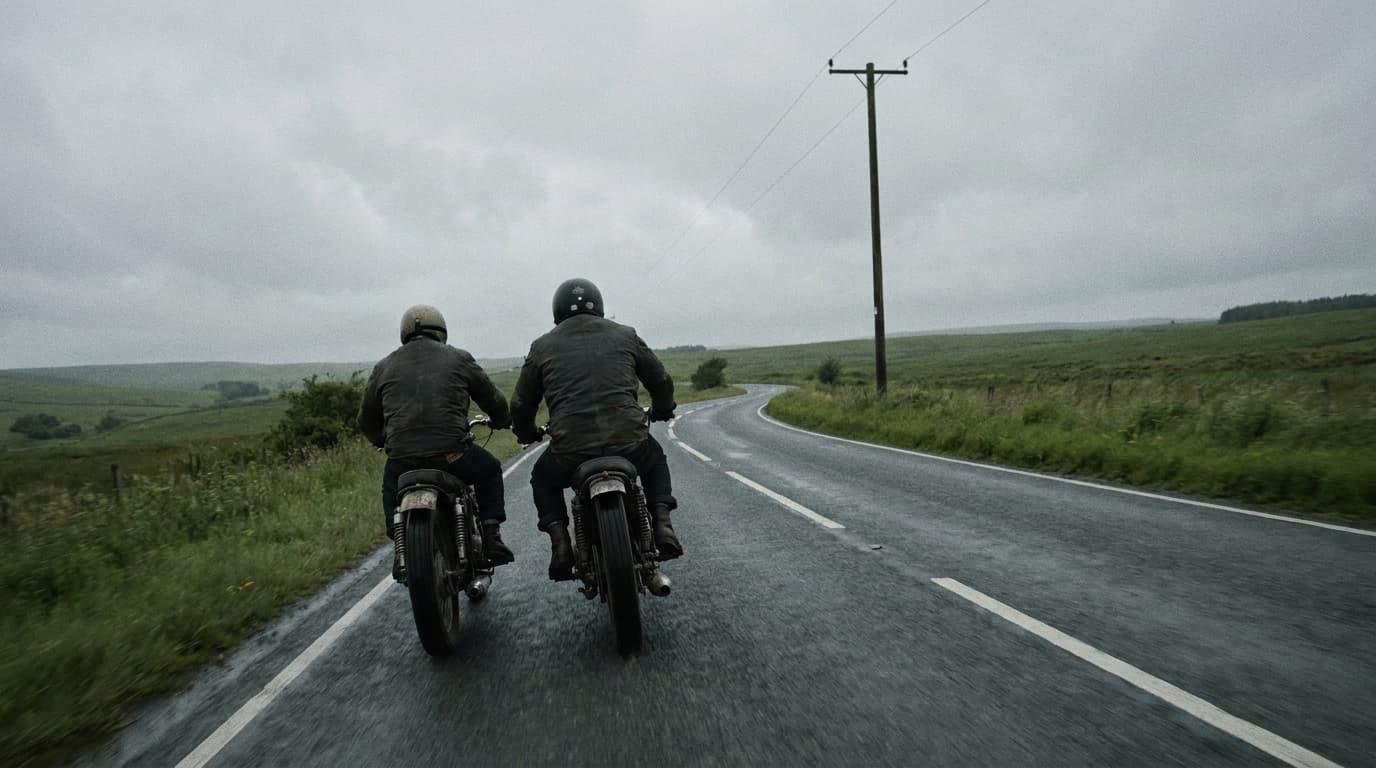
West Virginia has no statute that expressly bans or expressly allows lane splitting or lane filtering. A motorcycle riding between lanes is governed by the general lane rule in W. Va. Code 17C-7-9(a)(1), which requires every vehicle to be driven "as nearly as practicable entirely within a single lane," and by the passing-on-the-right limits in 17C-7-4. A violation of 17C-7-9 is a misdemeanor with a fine of up to $100 for a first conviction. For how other states handle the practice, see our guide to lane splitting laws by state.
Information last verified on 2026-10-09. This article has not been reviewed by a licensed lawyer.
Jurisdiction scope: This article covers West Virginia state law in Chapter 17C of the West Virginia Code: the lane rule in 17C-7-9, the passing rules in 17C-7-3 and 17C-7-4, the roadway definitions in 17C-1-37 and 17C-1-39, the motorcycle equipment section 17C-15-44, the basic speed rule in 17C-6-1, reckless driving in 17C-5-3 and the general penalty in 17C-18-1, plus the conviction rule in 17B-3-4, the West Virginia DMV point system and House Bill 4972 of the 2026 session. It does not cover city ordinances, insurance consequences, fault in a crash, or the law of other states.
What West Virginia law says about lane splitting
Lane splitting usually means riding a motorcycle between lanes of moving traffic. Lane filtering usually means riding between rows of cars stopped at a light. West Virginia's code names neither one.
Chapter 17C, the state's traffic code, contains no section that expressly prohibits or authorizes operating a motorcycle between lanes of traffic or between rows of vehicles. It also has no motorcycle rule on riding two abreast or on a motorcycle's right to the full use of a lane. The motorcycle operator section, W. Va. Code 17C-15-44, deals with helmets, eye protection, handlebar height, seating and passengers, mirrors and an autocycle exemption. For example, 17C-15-44(d) requires an operator to "face forward and either sit astride a permanent operator's seat attached to the vehicle or stand astride the vehicle with both feet on the vehicle's footpegs or pedals."
That silence does not make the practice legal. The code neither authorizes nor expressly prohibits it, so an officer who stops a rider between lanes would look to the general rules that apply to every vehicle, described below.
| Maneuver | West Virginia rule |
|---|---|
| Lane splitting (between lanes of moving traffic) | No express rule; the single-lane rule in 17C-7-9(a)(1) applies on marked multi-lane roads |
| Lane filtering (between rows of stopped vehicles) | No express rule; the same single-lane rule applies |
| Passing on the right | Only in the three situations in 17C-7-4(a), only when safe, never off the pavement or main-traveled portion of the roadway (17C-7-4(b)) |
| Riding on the shoulder to pass | The roadway excludes the berm or shoulder (17C-1-37), and 17C-7-4(b) bars passing on the right off the pavement or main-traveled portion |
| Two motorcycles side by side in one lane | No motorcycle-specific rule in Chapter 17C |
The single-lane rule
The rule most likely to reach a rider between lanes is W. Va. Code 17C-7-9, titled "Driving on roadways laned for traffic; penalty." Subsection (a)(1) reads:
"(a) Whenever any roadway has been divided into two or more clearly marked lanes for traffic the following rules in addition to all others consistent herewith shall apply: (1) A vehicle shall be driven as nearly as practicable entirely within a single lane and shall not be moved from such lane until the driver has first ascertained that such movement can be made with safety."
The rule applies to any "vehicle," not just motorcycles, and it applies on a "laned roadway," which 17C-1-39 defines as "a roadway which is divided into two or more clearly marked lanes for vehicular traffic." The section's bill history on the Legislature's code site lists no amendment after 2011.
Passing on the right and on the left
Passing on the right. W. Va. Code 17C-7-4 limits when a driver may pass on the right:
"(a) The driver of a vehicle may overtake and pass upon the right of another vehicle only under the following conditions: (1) When the vehicle overtaken is making or about to make a left turn; (2) Upon a street or highway with unobstructed pavement not occupied by parked vehicles of sufficient width for two or more lines of moving vehicles in each direction; (3) Upon a one-way street, or upon any roadway on which traffic is restricted to one direction of movement, where the roadway is free from obstructions and of sufficient width for two or more lines of moving vehicles. (b) The driver of a vehicle may overtake and pass another vehicle upon the right only under conditions permitting such movement in safety. In no event shall such movement be made by driving off the pavement or main-traveled portion of the roadway."
Passing on the left. Under W. Va. Code 17C-7-3(a)(1), a driver overtaking a vehicle going the same direction "shall give an audible signal and pass to the left of the overtaken vehicle at a safe distance and may not again drive to the right side of the roadway until safely clear of the overtaken vehicle." Subsection (b) makes a violation a misdemeanor with a fine of not more than $100, not more than $200 on a second conviction within one year, and not more than $500 on a third or subsequent conviction.
Can you ride on the shoulder in West Virginia?
Two definitions answer this. Under W. Va. Code 17C-1-37, "Roadway" means "that portion of a highway improved, designed, or ordinarily used for vehicular travel, exclusive of the berm or shoulder." Chapter 17C has no separate definition of "shoulder"; the word appears inside the roadway definition. The definitions in Article 1 apply "for the purpose of this chapter" (17C-1-1).
Passing on the right is allowed only in the situations 17C-7-4(a) lists, and 17C-7-4(b) says that "In no event shall such movement be made by driving off the pavement or main-traveled portion of the roadway." Because the shoulder is outside the roadway, using it to get past slower traffic falls outside what 17C-7-4 permits.
What happens if you are caught
Fines for the lane and passing rules
West Virginia treats these violations as misdemeanors. W. Va. Code 17C-18-1(a) says "It is a misdemeanor for any person to violate any of the provisions of this chapter unless such violation is by this chapter or other law of this state declared to be a felony."
The single-lane rule carries its own penalty in 17C-7-9(b):
"(b) Any person violating the provisions of this section is guilty of a misdemeanor and, upon conviction thereof, shall be fined not more than $100; upon a second conviction within one year thereafter, shall be fined not more than $200; and upon a third or subsequent conviction, shall be fined not more than $500."
That penalty is a fine only; 17C-7-9 states no jail term. Section 17C-7-4 (passing on the right) has no penalty clause, so the chapter default in 17C-18-1(b) applies to it. That default allows jail as an alternative to a fine:
| Conviction | 17C-7-9 single-lane rule and 17C-7-3 passing on the left | 17C-7-4 passing on the right (17C-18-1(b) default) |
|---|---|---|
| First | Fine up to $100 | Fine up to $100 or jail up to 10 days |
| Second within one year | Fine up to $200 | Fine up to $200, jail up to 20 days, or both |
| Third or subsequent | Fine up to $500 | Fine up to $500, jail up to six months, or both |
These are maximums. In magistrate court, W. Va. Code 50-3-2(a) adds costs to every criminal conviction "in addition to other costs, fines, forfeitures, or penalties allowed by law," including $60, $30 and an amount equal to the one-day per diem set by 15A-3-16(g). The total due on a particular citation comes from the court named on it.
Points and your driving record
The West Virginia DMV point system says that "Points for a given infraction remain on a driver's record for two (2) years from the conviction date; the infraction itself remains on the record for five years." Its suspension table runs from 30 days at 12 to 13 points up to 120 days at 20 or more points. Under the DMV's point rule, 91 CSR 5 (section 91-5-7.2), reckless driving carries 6 points, and driving too fast for conditions under 17C-6-1 and passing violations under 17C-7-3 carry 3 each. Sections 17C-7-9 and 17C-7-4 are not named in the schedule, which assigns 2 points to "All other moving violations." When several convictions arise from the same occurrence, the DMV assigns points for only one of them, the one with the greater point value (91-5-7.6).
Paying a ticket by forfeiting bail can count as a conviction. Under W. Va. Code 17B-3-4, "For the purposes of this chapter, a forfeiture of bail or collateral deposited to secure a defendant's appearance in court, which forfeiture has not been vacated, shall be equivalent to a conviction." Chapter 17B is the driver's license chapter.
Speed and reckless driving
Each of these is a separate charge with its own elements; whether a particular ride meets them depends on the facts.
Basic speed rule. W. Va. Code 17C-6-1(a) says "No person may drive a vehicle on a highway at a speed greater than is reasonable and prudent under the existing conditions and the actual and potential hazards." Under 17C-6-1(e), unless the section provides otherwise, a violation is a misdemeanor with a fine of not more than $100, not more than $200 on a second conviction within one year, and not more than $500 on a third or subsequent conviction within two years. If a third or subsequent conviction is for exceeding the speed limit by 15 mph or more, the penalty is a fine of up to $500, up to six months in jail, or both.
Reckless driving. Under W. Va. Code 17C-5-3(a), a person who drives a vehicle on a street or highway, or on several other listed kinds of public property, "in willful or wanton disregard for the safety of persons or property is guilty of reckless driving." The penalties in 17C-5-3(c) and (d):
| Reckless driving conviction | Penalty |
|---|---|
| First | Jail of not less than 5 nor more than 90 days, or a fine of not less than $25 nor more than $500, or both |
| Second or subsequent | Jail of not less than 10 days nor more than six months, or a fine of not less than $50 nor more than $1,000, or both |
| Proximately causing serious bodily injury to another | Jail of not less than 30 days nor more than one year, or a fine of not less than $50 nor more than $1,000, or both |
The Legislature amended 17C-5-3 in 2025 through House Bill 2871 (Chapter 79, Acts of 2025), which took effect July 10, 2025; the figures above are the current text.
Careless, inattentive and aggressive driving. Articles 5, 6, 7 and 14 of Chapter 17C, which hold the state's driving-offense and speed rules, contain no offense named careless driving, inattentive driving or aggressive driving. The nearest provisions are the basic speed rule, reckless driving, and the Electronically Distracted Driving Act in 17C-14-15.
Work zones
In a posted construction zone, W. Va. Code 17C-3-4b makes it a misdemeanor to exceed any posted speed restriction or traffic restriction. Exceeding one by less than 15 mph carries a fine of up to $200, or up to $500 when any worker is present; 15 mph or more adds possible jail time.
Under W. Va. Code 17C-3-4a, failing to obey the traffic-control instructions of an officer or flagger at a construction or maintenance site carries fines of up to $100, $200 and $500 for first, second and later convictions, or up to $250, $500 and $1,000 when any worker is present. Both sections were amended by House Bill 4538 (Chapter 198, Acts of 2026), effective June 12, 2026.
House Bill 4972 (2026): a proposed ban
In 2026, a bill was introduced to make West Virginia's position express. House Bill 4972, introduced by Delegate Linville, provides: "No person may engage in lane splitting or lane filtering on any public roadway in this state." The bill's note states that its purpose "is to expressly prohibit motorcycle lane splitting and lane filtering in West Virginia while preserving a motorcycle's full use of a lane."
The Legislature's bill status page shows the bill was introduced in the House on January 29, 2026 and referred to the Committee on the Judiciary the same day, and lists no later action, so the bill did not pass in the 2026 regular session. HB 4972 is not law, and the bill histories of 17C-7-9 and 17C-7-4 list no 2026 change.
Federal law and lane splitting
We found no federal statute or regulation that addresses lane splitting; the rules come from state traffic law.
If a crash happens
How a lane or passing violation bears on fault and an injury claim is covered in our guide to West Virginia motorcycle accident laws. For the crash rules that apply to every driver, see West Virginia car accident laws.
Related pages
This article provides general legal information about West Virginia law, not legal advice. For advice about a specific situation, contact a lawyer licensed in West Virginia or the court named on your citation.
Last updated: 2026-10-09.
Frequently Asked Questions
Is lane splitting legal in West Virginia?
West Virginia has no statute that expressly allows or bans it. A rider between lanes is subject to the single-lane rule in W. Va. Code 17C-7-9(a)(1), which requires driving as nearly as practicable entirely within a single lane on roads with two or more clearly marked lanes.
Is lane filtering legal in West Virginia?
Chapter 17C has no rule on riding between rows of stopped vehicles. The general single-lane rule in 17C-7-9(a)(1) and the passing-on-the-right limits in 17C-7-4 apply.
What is the fine for lane splitting in West Virginia?
No fine is set for lane splitting by name. A violation of the single-lane rule, 17C-7-9, is a misdemeanor with a fine of up to $100 for a first conviction, up to $200 for a second within one year and up to $500 for a third or subsequent conviction.
Can motorcycles ride on the shoulder in West Virginia?
Under 17C-1-37 the roadway excludes the berm or shoulder, and 17C-7-4(b) says passing on the right may never be made by driving off the pavement or main-traveled portion of the roadway.
Did West Virginia ban lane splitting in 2026?
No. House Bill 4972 would expressly prohibit lane splitting and lane filtering, but it was referred to the House Judiciary Committee on January 29, 2026 and its bill history lists no later action, so it did not pass in the 2026 regular session.
Does paying a West Virginia traffic ticket count as a conviction?
Under W. Va. Code 17B-3-4, a forfeiture of bail or collateral posted to secure a court appearance that has not been vacated is equivalent to a conviction for purposes of the driver's license chapter.
Updates
Independently fact-checked against the cited primary sources
The Law Behind This Article
This article rests on the statutory provisions below, held in our own legal record and retrieved from the official source. Tap a section to read the operative text.
West Virginia Code
§ 17C-7-9Driving on roadways laned for traffic; penalty.In forcecited in 3 of our articles
(a) Whenever any roadway has been divided into two or more clearly marked lanes for traffic the following rules in addition to all others consistent herewith shall apply: (1) A vehicle shall be driven as nearly as practicable entirely within a single lane and shall not be moved from such lane until the driver has first ascertained that such movement can be made with safety. (2) Upon a roadway which is divided into three lanes a vehicle shall not be driven in the center lane which is clearly marked as a left turn lane except in preparation for a left turn or where such center lane is at the time allocated exclusively to traffic moving in the direction the vehicle is proceeding and is signposted to give notice of such allocation. (3) Official signs may be erected directing slow-moving traffic to use a designated lane or designating those lanes to be used by traffic moving in a particular direction regardless of the center of the roadway and drivers of vehicles shall obey the directions of every such sign.
Official text (excerpt) · last checked 2026-07-30 · Read the full text in our law library · Verify at code.wvlegislature.gov
Also relied on in: Motorcycle Accident Laws in West Virginia (2026): Deadlines
§ 17C-7-4Same -- When overtaking on the right is permitted.In force
(a) The driver of a vehicle may overtake and pass upon the right of another vehicle only under the following conditions: (1) When the vehicle overtaken is making or about to make a left turn; (2) Upon a street or highway with unobstructed pavement not occupied by parked vehicles of sufficient width for two or more lines of moving vehicles in each direction; (3) Upon a one-way street, or upon any roadway on which traffic is restricted to one direction of movement, where the roadway is free from obstructions and of sufficient width for two or more lines of moving vehicles. (b) The driver of a vehicle may overtake and pass another vehicle upon the right only under conditions permitting such movement in safety. In no event shall such movement be made by driving off the pavement or main- traveled portion of the roadway.
Official text (excerpt) · last checked 2026-07-30 · Read the full text in our law library · Verify at code.wvlegislature.gov
§ 17C-18-1Violations of chapter; penalties for misdemeanor.In forcecited in 3 of our articles
(a) It is a misdemeanor for any person to violate any of the provisions of this chapter unless such violation is by this chapter or other law of this state declared to be a felony. (b) Every person convicted of a misdemeanor for a violation of any of the provisions of this chapter for which another penalty is not provided shall for a first conviction thereof be punished by a fine of not more than $100 or by imprisonment for not more than ten days; for a second such conviction within one year thereafter such person shall be punished by a fine of not more than $200 or by imprisonment for not more than twenty days or by both such fine and imprisonment; upon a third or subsequent conviction such person shall be punished by a fine of not more than $500 or by imprisonment for not more than six months or both such fine and imprisonment.
Official text (excerpt) · last checked 2026-07-30 · Read the full text in our law library · Verify at code.wvlegislature.gov
Also relied on in: West Virginia Windshield Mounting Laws
Search our full record of US law — 2.1 million sections, every state + federal →
Sources and References
- W. Va. Code 17C-7-9, driving on roadways laned for traffic; penalty(code.wvlegislature.gov).gov
- W. Va. Code 17C-7-4, when overtaking on the right is permitted(code.wvlegislature.gov).gov
- W. Va. Code 17C-15-44, motorcycle operator equipment and seating(code.wvlegislature.gov).gov
- W. Va. Code 17C-1-39, laned roadway defined(code.wvlegislature.gov).gov
- W. Va. Code 17C-7-3, passing on the left generally; penalty(code.wvlegislature.gov).gov
- W. Va. Code 17C-1-37, roadway defined(code.wvlegislature.gov).gov
- W. Va. Code 17C-18-1, penalties for misdemeanors(code.wvlegislature.gov).gov
- West Virginia DMV, Point System(dmv.wv.gov).gov
- W. Va. Code 17B-3-4, bail forfeiture equivalent to conviction(code.wvlegislature.gov).gov
- W. Va. Code 17C-6-1, speed limitations(code.wvlegislature.gov).gov
- W. Va. Code 17C-5-3, reckless driving; penalties(code.wvlegislature.gov).gov
- West Virginia Legislature, HB 2871 (2025 Regular Session) bill status(www.wvlegislature.gov).gov
- West Virginia Legislature, HB 4972 (2026 Regular Session) bill history(bills.wvlegislature.gov).gov
- West Virginia Legislature, HB 4972 (2026) bill status(www.wvlegislature.gov).gov
- W. Va. Code St. R. 91-5, Driver Improvement Program (point schedule, 91-5-7.2)(apps.sos.wv.gov).gov
- W. Va. Code 17C-3-4b, traffic violations in construction zones; criminal penalty(code.wvlegislature.gov).gov
- W. Va. Code 17C-3-4a, obedience to traffic-control instructions at construction or maintenance sites; penalty(code.wvlegislature.gov).gov
- West Virginia Legislature, House Bill 4538 (2026) bill status(wvlegislature.gov).gov
- W. Va. Code 50-3-2, costs in criminal proceedings in magistrate court(code.wvlegislature.gov).gov