
California
Is Lane Splitting Legal in California? CVC 21658.1 (2026)
Independently fact-checked against primary sources (last audited October 10, 2026). · 11 primary sources cited on this page. How we verify our legal content
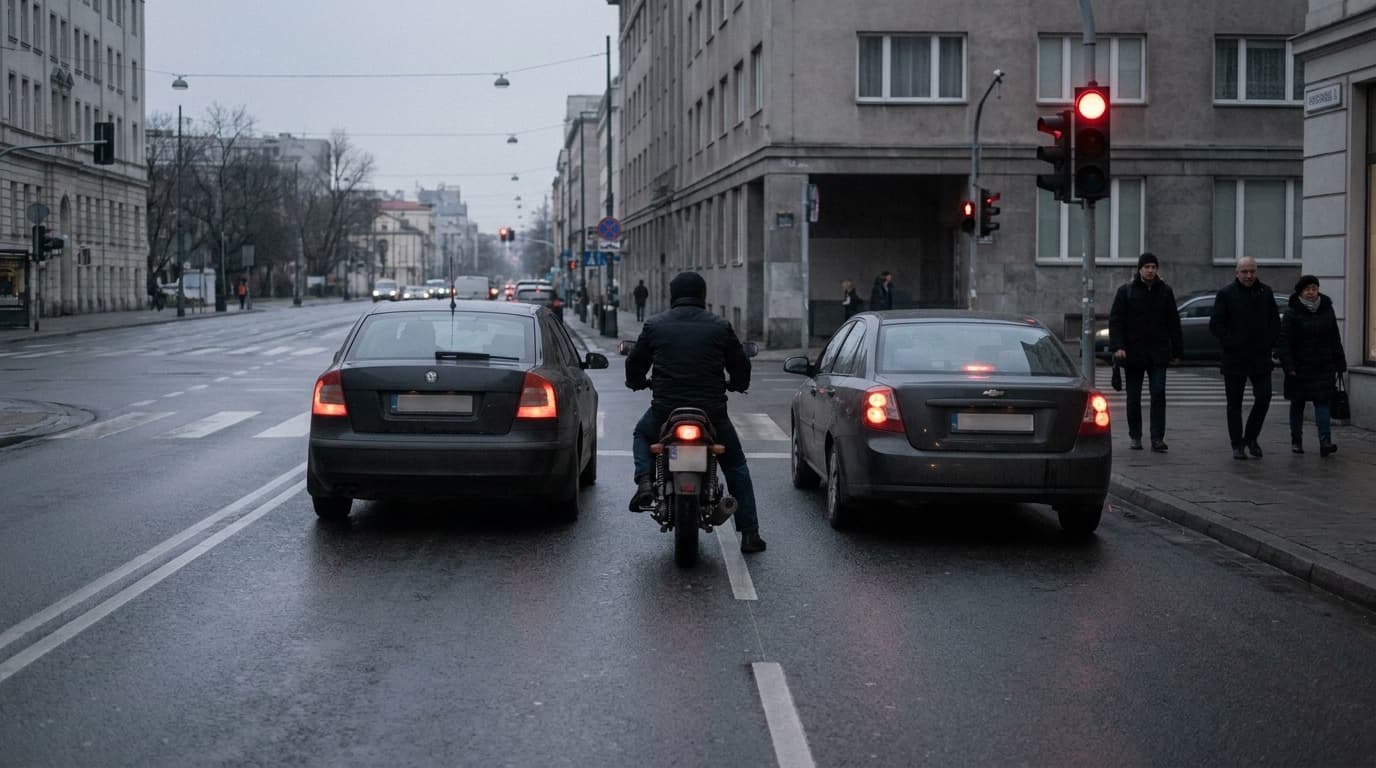
Lane splitting is legal in California, according to the California Highway Patrol, which tells drivers: "Lane splitting by motorcyclists is legal in California." The Vehicle Code addresses the practice in Section 21658.1, effective January 1, 2017, which defines lane splitting and lets the CHP develop safety guidelines but sets no speed limit, no stopped-traffic requirement and no penalty. For how other states handle the same maneuver, see our guide to lane splitting laws by state.
Information last verified on 2026-10-08. This article has not been reviewed by a licensed lawyer.
Jurisdiction scope: This article covers California state law and guidance on motorcycle lane splitting: California Vehicle Code 21658.1, the California Highway Patrol's motorcyclist safety guidance, the 2015 UC Berkeley study published by the California Office of Traffic Safety, and the general Vehicle Code rules on lane use, speed, passing on the right and reckless driving that still apply to a rider who splits. It does not cover city ordinances, insurance, or the law of other states.
Is lane splitting legal in California?
Yes. The California Highway Patrol, the agency Section 21658.1 names to develop lane splitting guidelines, states on its motorcyclist safety page: "Lane splitting by motorcyclists is legal in California."
How the Vehicle Code gets there is worth understanding. Section 21658.1 does not contain a sentence saying lane splitting is permitted. It defines the practice and authorizes educational guidelines, and nothing in it prohibits lane splitting, caps a rider's speed or attaches a penalty. The legal position the CHP describes predates the section: a 2015 UC Berkeley study, published before 21658.1 took effect, already said lane splitting "is legal in California, but it is controversial and has not been studied."
Legal is not the same as safe. The CHP's own disclaimer warns that "Lane splitting can be dangerous and extreme caution should be exercised."
What Vehicle Code 21658.1 says
Section 21658.1 has three subdivisions. As reproduced on the CHP's motorcyclist safety page, it reads:

"21658.1 (a) For the purposes of this section, "lane splitting" means driving a motorcycle, as defined in Section 400, that has two wheels in contact with the ground, between rows of stopped or moving vehicles in the same lane, including on both divided and undivided streets, roads, or highways. (b) The Department of the California Highway Patrol may develop educational guidelines relating to lane splitting in a manner that would ensure the safety of the motorcyclist and the drivers and passengers of the surrounding vehicles. (c) In developing guidelines pursuant to this section, the department shall consult with agencies and organizations with an interest in road safety and motorcyclist behavior, including, but not limited to, all of the following (1) The Department of Motor Vehicles. (2) The Department of Transportation. (3) The Office of Traffic Safety. (4) A motorcycle organization focused on motorcyclist safety."
Four details in that text matter to riders and drivers:
- Two wheels on the ground. The definition covers a motorcycle "that has two wheels in contact with the ground." It does not say whether a three-wheeled vehicle may ride between lanes; it simply falls outside this definition.
- Stopped or moving traffic. The definition covers riding "between rows of stopped or moving vehicles in the same lane." California does not separate filtering past stopped cars from splitting through moving traffic.
- Every kind of road. It applies "on both divided and undivided streets, roads, or highways."
- A limited definition. The definition applies "For the purposes of this section." It defines a term used in 21658.1 and does not rewrite other Vehicle Code sections.
Subdivision (b) is permissive. The CHP "may develop" guidelines; the section does not require it to, and it says nothing about the guidelines being binding. Subdivision (c) lists who the CHP must consult when it does develop them: the Department of Motor Vehicles, the Department of Transportation, the Office of Traffic Safety and a motorcycle safety organization.
Splitting, filtering, shoulders and riding two abreast
| Maneuver | What it means | California position |
|---|---|---|
| Lane splitting | Riding between rows of moving vehicles in the same lane | Within the 21658.1(a) definition; the CHP says lane splitting by motorcyclists is legal |
| Lane filtering | Riding between rows of stopped vehicles | Within the same definition, which covers "stopped or moving vehicles" |
| Shoulder riding | Using the shoulder to get around traffic | The CHP says riding on the shoulder is illegal and is not lane splitting; Vehicle Code 21755(a) bars passing on the right by driving off the paved or main-traveled portion of the roadway |
| Riding two abreast | Two motorcycles side by side in one lane | Section 21658.1 does not address it |
The CHP's lane splitting safety tips
The CHP publishes lane splitting safety tips on its motorcyclist safety page. They are advice, not statutes, and the current version gives no numeric speed limit. The CHP's disclaimer states:
"Lane splitting can be dangerous and extreme caution should be exercised. It should not be performed by inexperienced riders. The risk of death or serious injury during a lane splitting collision increases as speed and speed differential increases."
Among the tips, the CHP says:
"Danger increases at higher speed differentials. Danger increases as overall speed increases. It is typically safer to split between the far left lanes than between the other lanes of traffic. Avoid lane splitting next to large vehicles (big rigs, buses, motorhomes, etc.). Riding on the shoulder is illegal; it is not considered lane splitting."
The shoulder line is the one most often missed. Using the shoulder to pass a backup is a different maneuver from lane splitting, and the CHP describes it as illegal. Vehicle Code 21755(a) says passing on the right shall "In no event" be made "by driving off the paved or main-traveled portion of the roadway"; its only exception, in 21755(b), is for bicycles.
What drivers may not do
The same page has a section headed "Messages for Other Vehicle Drivers." It states:
"Lane splitting by motorcyclists is legal in California. Intentionally blocking or impeding a motorcyclist in a way that could cause harm to the rider is illegal. Opening a vehicle door to impede a motorcyclist is illegal. Drivers in the far left lane should move to the left of their lane to give motorcyclists ample room to pass."
The first three sentences describe conduct the CHP calls legal or illegal. The last is a request for courtesy, phrased as "should."
Is there a speed limit or a penalty?
Section 21658.1 contains no speed limit, no requirement that traffic be stopped, and no penalty. Its three subdivisions define the practice and set up the guideline process, and nothing more. The CHP's current tips warn about speed and speed differential without stating a number.
Because 21658.1 creates no offense, there is no lane splitting fine as such. A rider who splits is still bound by the general rules of the road. Where a road has two or more marked lanes in one direction, Vehicle Code 21658(a) allows a vehicle to be moved from its lane only "with reasonable safety." The basic speed law, 22350, bars driving "at a speed greater than is reasonable or prudent having due regard for weather, visibility, the traffic on, and the surface and width of, the highway."
Violating either rule is an infraction under Vehicle Code 40000.1. Under 42001(a), unless the code provides otherwise, an infraction carries a fine of up to $100, up to $200 for a second within one year, and up to $250 for a third or later within one year. Driving "in willful or wanton disregard for the safety of persons or property" is reckless driving under 23103, punishable by 5 to 90 days in county jail, a fine of $145 to $1,000, or both. For the amount on a specific ticket, check the citation or contact the court named on it.
What the 2015 California safety study found
A 2015 report by T. Rice, L. Troszak and T. Erhardt of UC Berkeley SafeTREC, published by the California Office of Traffic Safety, examined lane splitting in California crashes. The National Highway Traffic Safety Administration supported the project through a grant from the Office of Traffic Safety.

The study looked only at motorcyclists who had been in a collision: "Of the 5,969 collision-involved motorcyclists we studied, 997 were lane-splitting at the time of their collision (17%)." Comparing the two groups, it reported:
| Outcome | Lane-splitting riders | Other riders |
|---|---|---|
| Head injury | 9% | 17% |
| Torso injury | 19% | 29% |
| Extremity injury | 60% | 66% |
| Fatal injury | 1.2% | 3.0% |
| Rear-ended by another vehicle | 2.6% | 4.6% |
| Rear-ended another vehicle | 38% | 16% |
The authors found neck injuries equally likely in both groups. Their conclusion was conditional: "Lane-splitting appears to be a relatively safe motorcycle riding strategy if done in traffic moving at 50 MPH or less and if motorcyclists do not exceed the speed of other vehicles by more than 15 MPH." They also found that "Motorcycle speed differential was a stronger predictor of injury outcomes."
Those figures are a study's findings, not legal limits. No California statute adopts the 50 mph or 15 mph thresholds, and the CHP's current tips do not either. Because the study covered only riders who had already crashed, it describes what happened in collisions, not how often lane splitting leads to one.
Federal law
Lane use is set state by state. The federal motorcyclist safety grant rule, 23 CFR 1300.25, sets criteria for rider training and motorist awareness programs and says nothing about lane use, and NHTSA's motorcycle safety page does not mention lane splitting. A federally sponsored project to study lane splitting and filtering in live traffic, Transportation Research Board project BTS-50 (sponsors include NHTSA and the Governors Highway Safety Association), is listed as proposed; its project description notes that the debate has relied on "a single observational study conducted in California." Our lane splitting laws by state hub covers the national picture.
If a lane split leads to a crash
Whether a rider was lane splitting is one fact in a crash claim; it does not settle fault on its own. For how fault, insurance and filing deadlines work, see our guide to California motorcycle accident laws. For the rules that apply to vehicle crashes generally, see California car accident laws.
Related pages
- Lane splitting laws by state
- California motorcycle accident laws
- California car accident laws
- Nevada lane splitting laws
- Arizona lane splitting laws
This article provides general legal information about California law, not legal advice. For advice about a specific situation, contact a lawyer licensed in California or the California Highway Patrol.
Last updated: 2026-10-08.
Frequently Asked Questions
Is lane splitting legal in California?
Yes, according to the California Highway Patrol, which states: "Lane splitting by motorcyclists is legal in California." Vehicle Code 21658.1 defines lane splitting and lets the CHP develop safety guidelines, but it does not set conditions or a penalty.
Is lane filtering legal in California?
California law does not use a separate filtering category. The definition in Vehicle Code 21658.1(a) covers riding a two-wheeled motorcycle between rows of stopped or moving vehicles in the same lane, so riding between stopped cars falls within the same defined practice the CHP describes as legal.
Is there a speed limit for lane splitting in California?
No number appears in Vehicle Code 21658.1 or in the CHP's current safety tips. The CHP warns that danger increases with overall speed and with the speed difference between the motorcycle and surrounding traffic. The basic speed law, Vehicle Code 22350, still applies: no one may drive at a speed greater than is reasonable or prudent given the traffic and other conditions.
Can motorcycles ride on the shoulder in California?
The CHP states: "Riding on the shoulder is illegal; it is not considered lane splitting." Vehicle Code 21755(a) says passing on the right may in no event be made by driving off the paved or main-traveled portion of the roadway; the only exception, in 21755(b), is for bicycles.
Can a driver block a motorcycle that is lane splitting?
The CHP states that intentionally blocking or impeding a motorcyclist in a way that could cause harm to the rider is illegal, and that opening a vehicle door to impede a motorcyclist is illegal. It also asks drivers in the far left lane to move to the left of their lane to give motorcyclists room to pass.
When did California make lane splitting legal?
Vehicle Code 21658.1, which defines lane splitting, took effect January 1, 2017. A 2015 UC Berkeley study published before that section existed already described lane splitting as legal in California.
Can a three-wheeled motorcycle lane split in California?
Vehicle Code 21658.1(a) defines lane splitting, for the purposes of that section, as driving a motorcycle that has two wheels in contact with the ground. The section does not say whether a three-wheeled vehicle may ride between lanes.
What is the ticket for lane splitting in California?
Vehicle Code 21658.1 creates no offense and states no fine. A ticket written during a split rests on another section, such as the basic speed law (22350) or the rule that a vehicle may leave its lane only with reasonable safety (21658(a)). Those are infractions with a fine of up to $100 for a first offense under 42001(a). Reckless driving under 23103, which requires willful or wanton disregard for the safety of persons or property, is punishable by 5 to 90 days in county jail, a fine of $145 to $1,000, or both. For the amount on a specific ticket, check the citation or contact the court named on it.
Updates
Independently fact-checked against the cited primary sources
The Law Behind This Article
This article rests on the statutory provisions below, held in our own legal record and retrieved from the official source. Tap a section to read the operative text.
California Vehicle Code
§ 21658.1In forcecited in 4 of our articles
(a) For the purposes of this section, “lane splitting” means driving a motorcycle, as defined in Section 400, that has two wheels in contact with the ground, between rows of stopped or moving vehicles in the same lane, including on both divided and undivided streets, roads, or highways. (b) The Department of the California Highway Patrol may develop educational guidelines relating to lane splitting in a manner that would ensure the safety of the motorcyclist and the drivers and passengers of the surrounding vehicles. (c) In developing guidelines pursuant to this section, the department shall consult with agencies and organizations with an interest in road safety and motorcyclist behavior, including, but not limited to, all of the following: (1) The Department of Motor Vehicles. (2) The Department of Transportation. (3) The Office of Traffic Safety. (4) A motorcycle organization focused on motorcyclist safety.
Official text (excerpt) · last checked 2026-07-28 · Read the full text in our law library · Verify at leginfo.legislature.ca.gov
Also relied on in: California Motorcycle Accident Laws (2026): Deadlines & Helmets, Motorcycle Accident Laws in Washington DC (2026): Helmets, Texas Motorcycle Accident Laws (2026): Deadlines & Helmets
Search our full record of US law — 2.1 million sections, every state + federal →
Sources and References
- California Highway Patrol, California Motorcyclist Safety (lane splitting safety tips and text of Vehicle Code 21658.1)(chp.ca.gov).gov
- Cal. Veh. Code 21658.1, Lane splitting(leginfo.legislature.ca.gov).gov
- Cal. Veh. Code 21658, Laned roadways(leginfo.legislature.ca.gov).gov
- Cal. Veh. Code 21755, Passing on the right(leginfo.legislature.ca.gov).gov
- Cal. Veh. Code 22350, Basic speed law(leginfo.legislature.ca.gov).gov
- Cal. Veh. Code 23103, Reckless driving(leginfo.legislature.ca.gov).gov
- Cal. Veh. Code 40000.1, Infractions(leginfo.legislature.ca.gov).gov
- Cal. Veh. Code 42001, Infraction fines(leginfo.legislature.ca.gov).gov
- Rice, Troszak and Erhardt, Motorcycle Lane-splitting and Safety in California, UC Berkeley SafeTREC (2015), California Office of Traffic Safety(ots.ca.gov).gov
- 23 CFR 1300.25, Motorcyclist safety grants(ecfr.gov).gov
- NHTSA, Motorcycle Safety(nhtsa.gov).gov
- Transportation Research Board, project BTS-50, lane splitting and lane filtering study (proposed)(rip.trb.org)