
Tennessee
Tennessee Knife Laws (2026): Carry, School Property, Preemption
Independently fact-checked against primary sources (last audited September 18, 2026). · 2 primary sources cited on this page. How we verify our legal content

Tennessee has no standalone statute banning the open or concealed carry of an ordinary knife, and since a 2014 amendment it no longer bans possession of a switchblade either. The state's knife-specific law instead attaches to two things: carrying a knife on school or certain recreational property, and possessing a deadly weapon, including a switchblade, with intent to use it while committing another crime.
Jurisdiction scope: This page covers Tennessee state law only, principally Tenn. Code Ann. §§ 39-17-1301, 39-17-1302, 39-17-1306, 39-17-1307, 39-17-1309, 39-17-1311, and 39-17-1314. It does not cover Tennessee's handgun carry permit statutes, which govern firearms rather than knives.
Can you own, open carry, or conceal carry a knife in Tennessee?
Tennessee has no general statute restricting ownership or public carry, open or concealed, of an ordinary knife. The state's core weapons-carrying statute, § 39-17-1307(a)(1), provides only that "a person commits an offense who carries, with the intent to go armed, a firearm or a club." Neither a knife nor a switchblade knife appears in that subsection, and no companion section in Part 13 creates a separate general carry offense for a knife. Tennessee Code Annotated defines "knife" broadly, at § 39-17-1301(8), as "any bladed hand instrument that is capable of inflicting serious bodily injury or death by cutting or stabbing a person with the instrument," but that definition alone does not create an offense; it only supplies the meaning used elsewhere in the same part.
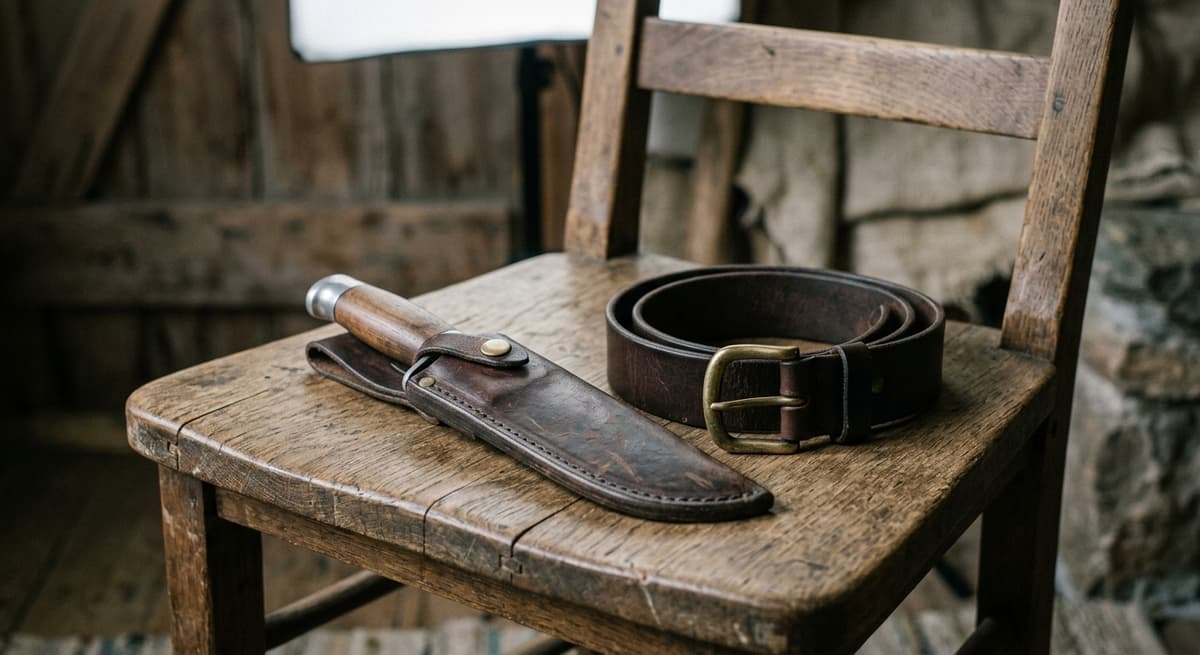
This was not always the rule for switchblades specifically. Before 2014, § 39-17-1302(a) listed a switchblade among the state's generally prohibited weapons, alongside items such as explosive weapons and short-barrel firearms. Public Chapter 647 (2014) (Senate Bill 1771), effective July 1, 2014, amended § 39-17-1302(a) to remove the switchblade. A later amendment, 2025 Public Chapter 513, removed the short-barrel rifle or shotgun item as well and renumbered the list; the current text of § 39-17-1302(a) lists only an explosive or explosive weapon, a device principally designed, made, or adapted for delivering or shooting an explosive weapon, a machine gun, a hoax device, knuckles, and a catch-all for "any other implement for infliction of serious bodily injury or death that has no common lawful purpose." No knife type appears by name, before or after either amendment. The 2014 act also removed a clause from § 39-17-1364, the antique-firearms-and-edged-weapons shipment statute, that had previously excluded a switchblade from that exemption; the current text of § 39-17-1364(2) exempts shipment of "a knife, even if the blade is in excess of four inches," with no switchblade carve-out, consistent with the 2014 amendment having taken effect.
Switchblade knife: the consequence that remains outside school property
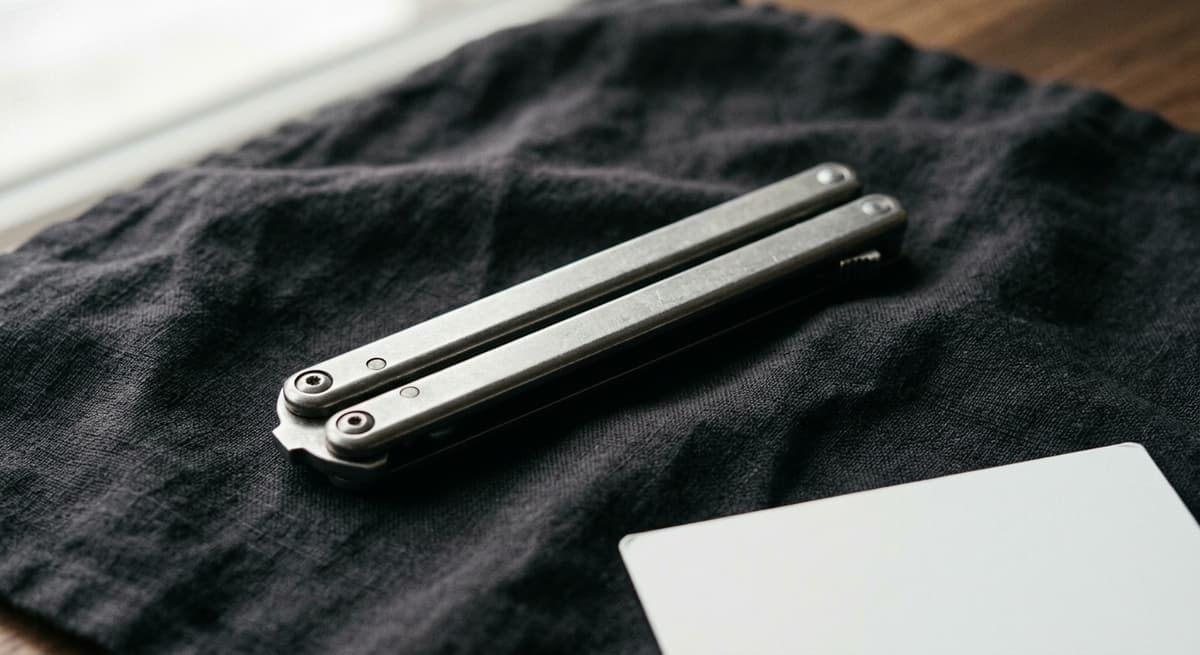
Outside school property, discussed below, the switchblade knife's only remaining state-law consequence is § 39-17-1307(d), a provision about intent rather than mere carrying. Subsection (d)(1) makes it an offense to possess "a deadly weapon other than a firearm with the intent to employ it during the commission of, attempt to commit, or escape from a dangerous offense," and (d)(2) extends the same rule to any offense not classified as dangerous. A violation of subsection (d) is generally a Class E felony, but § 39-17-1307(d)(3)(B) sets a higher maximum fine, $6,000 rather than the standard amount, "if the deadly weapon is a switchblade knife." This is an intent-based enhancement, not a possession ban: a person carrying a switchblade with no intent to use it during another crime does not violate this subsection. A switchblade knife is also named by type in § 39-17-1309(b)(1), Tennessee's school-property weapons statute, covered next; outside school property and outside this intent-based enhancement, no Tennessee statute names or restricts a switchblade knife specifically.
School property
Section 39-17-1309(b)(1) is Tennessee's broadest knife-restricted-place statute. It makes it an offense for any person to "possess or carry, whether openly or concealed, with the intent to go armed, any firearm, explosive, explosive weapon, bowie knife, hawk bill knife, ice pick, dagger, slingshot, leaded cane, switchblade knife, blackjack, knuckles or any other weapon of like kind, not used solely for instructional or school-sanctioned ceremonial purposes," on school property, defined to include a public or private school building or bus, campus, grounds, recreation area, or athletic field, or any property owned or used by a board of education, school, college, or university for administering the institution. Subsection (a) defines "weapon of like kind" to include "razors and razor blades, except those used solely for personal shaving, and any sharp pointed or edged instrument, except unaltered nail files and clips and tools used solely for preparation of food, instruction and maintenance."

Public Chapter 142 (2023), effective July 1, 2023, added the only civilian carve-out in subsection (b). Section 39-17-1309(b)(2)(A) now provides: "It is not an offense under this subsection (b) for a nonstudent adult to possess a pocket knife while the adult is on school property for the sole purpose of voting in an election if the pocket knife is concealed on the adult's person and is not handled by the adult, or by any other person acting with the expressed or implied consent of the adult." Subsection (b)(2)(B) defines "pocket knife" for this purpose as "a knife with one (1) or more blades that fold or collapse into the knife's attached handle and that can be carried inside a person's pocket when collapsed or folded." Outside that narrow poll-day exception, a nonstudent adult carrying a knife on school property has no carve-out under subsection (b). A violation of subsection (b) is a Class E felony under subsection (b)(3). Subsection (e) separately exempts a list of categories, including military and law enforcement personnel acting in an official capacity, certain school security officers, and students required to carry the listed items for ROTC or team duties, from subsections (b) and (c); none of the (e) exemptions covers an ordinary civilian carrying a knife for personal reasons.
Parks, playgrounds, civic centers, and courthouses
Section 39-17-1311(a) prohibits possessing or carrying, openly or concealed, with intent to go armed, "any weapon prohibited by § 39-17-1302(a)" on the grounds of a public park, playground, civic center, or other public recreational building or property owned or operated by a municipal, county, or state government. Because § 39-17-1302(a)'s current list no longer names a knife or switchblade by type, this cross-reference does not clearly reach an ordinary knife carried on park property; the only possible route is the subsection's catch-all for "any other implement for infliction of serious bodily injury or death that has no common lawful purpose," a standard whose application to an ordinary knife the statute's own text leaves open rather than resolves. A violation of subsection (a) is a Class A misdemeanor. Subsection (b) exempts several categories of people and conduct, including permit holders carrying handguns under specified conditions and people attending an approved "gun and knife show."
Section 39-17-1306(a) applies the identical § 39-17-1302(a) cross-reference to a second location: any building in which judicial proceedings are in progress. It reaches "any weapon prohibited by § 39-17-1302(a), for the purpose of going armed," so the same knife-related gap described above applies, and a violation is a Class E felony, a higher classification than the park-property misdemeanor. Subsection (c) exempts law enforcement officers, certain military and correctional personnel, court officers responsible for security, and specified judges and elected officials acting in their official capacities.
Statewide preemption reaches knives
Tennessee's preemption statute, § 39-17-1314, is unusual in that it names knives directly rather than leaving them to a firearms-only definition. Subsection (a) preempts "the whole field of the regulation of firearms, ammunition, or components of firearms or ammunition" to the exclusion of local government, and subsection (f) extends the same preemption to knives in separate terms: "It is the intent of the general assembly that this part is preemptive with respect to the transfer, ownership, possession or transportation of knives and other weapons and no city, county, or metropolitan government shall occupy any part of the field of regulation of the transfer, ownership, possession or transportation of knives or other weapons." A city or county in Tennessee cannot enact its own knife-specific ordinance regulating these subjects.
Federal law: what it does and does not reach
Federal law does not ban an individual from owning or carrying a switchblade. The Federal Switchblade Act, 15 U.S.C. §§ 1241 to 1245, restricts interstate commerce in switchblade knives and, in 15 U.S.C. § 1245, makes it a federal offense to knowingly possess, manufacture, sell, or import a ballistic knife in or affecting interstate commerce or within federal territorial jurisdiction; the operative offense sections, §§ 1242 and 1243, do not apply to certain knives and people, listed as exemptions in 15 U.S.C. § 1244. A 2009 amendment, § 1244(5), exempts a knife with a spring, detent, or other closure-bias mechanism that requires hand, wrist, or arm exertion on the blade itself to overcome the bias and assist opening, the carve-out that keeps modern assisted-opening folding knives legal in interstate commerce. A separate exemption, § 1244(4), covers a person with only one arm possessing or carrying a switchblade with a blade three inches or less.
Disclaimer: This article provides general legal information about Tennessee's knife laws as of September 2026. It is not legal advice. Consult a lawyer licensed in Tennessee for advice about a specific situation.
For a state-by-state comparison, see knife laws by state. Tennessee's self-defense statutes are covered separately on the Tennessee self-defense laws page.
Statutes cited reflect their in-force text under the 2025 Tennessee Code, including 2025 Public Chapter 513 (Tenn. Code Ann. §§ 39-17-1301, 39-17-1302, 39-17-1307), 2025 Public Chapter 329 (Tenn. Code Ann. § 39-17-1314), and 2023 Public Chapter 142 (Tenn. Code Ann. § 39-17-1309). Last updated: 2026-09-18.
Frequently Asked Questions
Is it legal to carry a switchblade in Tennessee?
Yes, for ordinary open or concealed carry. Tenn. Code Ann. § 39-17-1307(a) restricts only carrying a firearm or club with intent to go armed, and a 2014 amendment (SB 1771) removed the switchblade from the general prohibited-weapons list in § 39-17-1302(a). A switchblade is restricted only on school property under § 39-17-1309(b), or when possessed with intent to employ it during another crime under § 39-17-1307(d).
Does Tennessee have a blade-length limit for knives?
No. Tenn. Code Ann. § 39-17-1301(8) defines 'knife' without any blade-length threshold, and no Tennessee statute sets one for general public carry.
Can Tennessee cities pass their own knife ordinances?
No. Tenn. Code Ann. § 39-17-1314(f) expressly preempts local regulation of the transfer, ownership, possession, or transportation of knives, in addition to the broader firearms preemption in subsection (a).
What knives are banned on Tennessee school property?
Tenn. Code Ann. § 39-17-1309(b) makes it a Class E felony to possess or carry, openly or concealed, with intent to go armed, a bowie knife, hawk bill knife, ice pick, dagger, switchblade knife, or other sharp-pointed or edged instrument (with exceptions for personal shaving razors, unaltered nail files and clips, and food-preparation tools) on school property. A 2023 amendment, Public Chapter 142, added one narrow exception: a nonstudent adult may possess a concealed, unhandled pocket knife on school property for the sole purpose of voting in an election. No other exception in subsection (b) applies to an ordinary civilian.
Updates
Independently fact-checked against the cited primary sources
Sources and References
- Tenn. Code Ann. § 39-17-1301 - Part definitions(law.justia.com)
- Tenn. Code Ann. § 39-17-1302 - Prohibited weapons(law.justia.com)
- Tenn. Code Ann. § 39-17-1306 - Carrying weapons during judicial proceedings(law.justia.com)
- Tenn. Code Ann. § 39-17-1307 - Unlawful carrying or possession of a weapon(law.justia.com)
- Tenn. Code Ann. § 39-17-1309 - Carrying weapons on school property(law.justia.com)
- Tenn. Code Ann. § 39-17-1311 - Carrying weapons on public parks, playgrounds, civic centers and other public recreational buildings and grounds(law.justia.com)
- Tenn. Code Ann. § 39-17-1314 - Preemption of local regulation of firearms, ammunition, and knives(law.justia.com)
- Tennessee Public Chapter 647 (2014), Senate Bill 1771, effective July 1, 2014 - amended §§ 39-17-1302, 39-17-1307, 39-17-1364 as to knives(publications.tnsosfiles.com).gov
- Tennessee Public Chapter 142 (2023), Senate Bill 172, effective July 1, 2023 - amended § 39-17-1309(b) to add a school-property pocket-knife exemption for voting(publications.tnsosfiles.com).gov
- 15 U.S.C. §§ 1241-1245 - Federal Switchblade Act, interstate commerce and ballistic-knife scope(law.cornell.edu)
- 15 U.S.C. § 1244 - exceptions, including the 2009 assisted-opening carve-out and the one-arm exception(law.cornell.edu)