
Kansas
Kansas Knife Laws (2026): Carry, Preemption, and School Rules
Independently fact-checked against primary sources (last audited September 18, 2026). · 6 primary sources cited on this page. How we verify our legal content
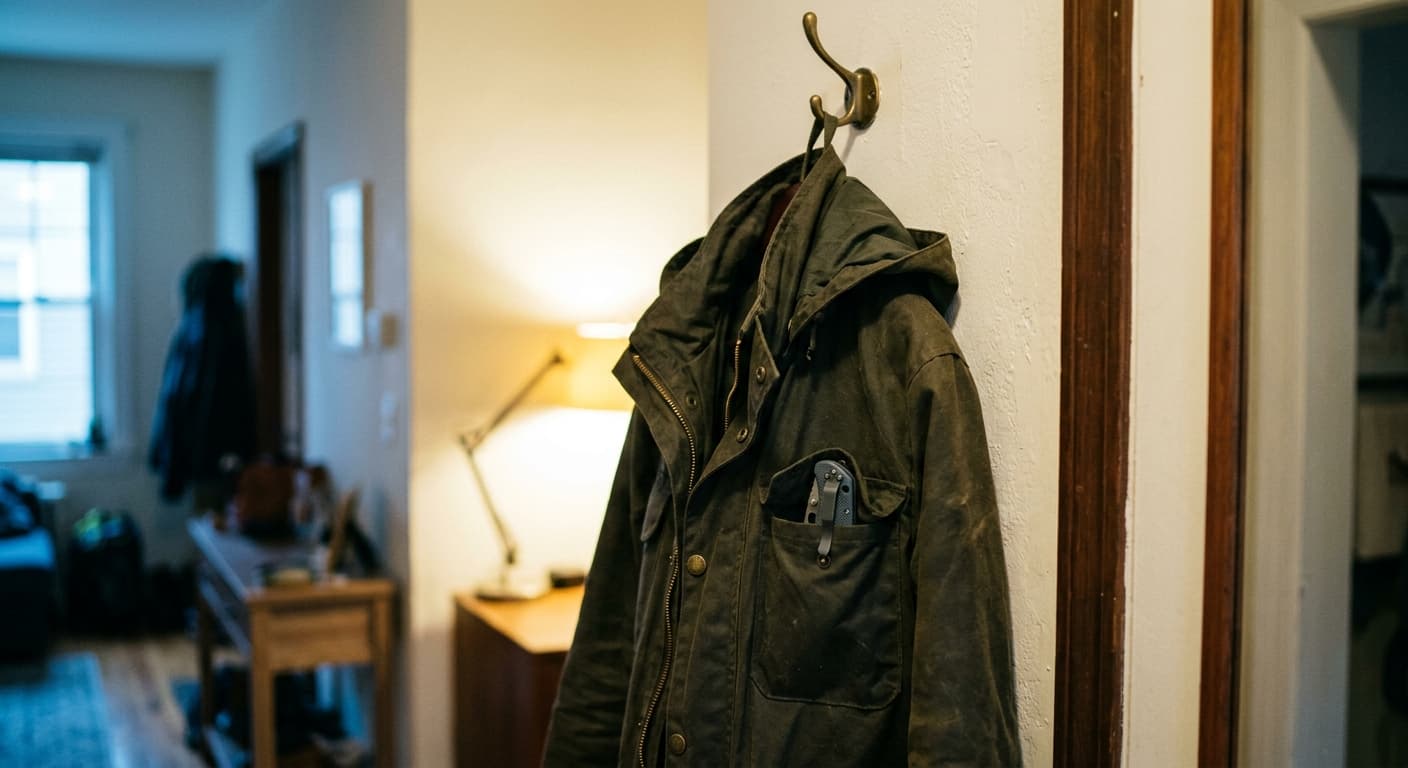
Kansas criminalizes knife carry generally only when it is paired with intent to use the knife unlawfully against another person, with one flat exception for throwing stars. K.S.A. 21-6301(a)(2), Kansas's criminal-use-of-weapons statute, names a dagger, dirk, billy, blackjack, slungshot, "dangerous knife," straight-edged razor, throwing star, and stiletto, but the offense requires possession "with intent to use the same unlawfully against another." A separate statute, K.S.A. 21-6302(a)(1), bans knowingly carrying a throwing star outright, with no concealment element and no intent element. Kansas also has one of the clearest statewide knife preemption statutes in the country, enacted in 2014.
Jurisdiction scope: This page covers Kansas state law only, principally K.S.A. §§ 21-6301, 21-6302, 21-6304, 12-16,134, 72-6131, and 72-6132. It does not cover Kansas's general assault and battery statutes, which can apply to a knife used as a weapon regardless of how it was carried.
Can you carry a knife openly or concealed in Kansas?
No general statewide statute bans open carry of an ordinary knife in Kansas. Kansas's operative knife-carry offense, criminal use of weapons under K.S.A. 21-6301(a)(2), requires unlawful intent:
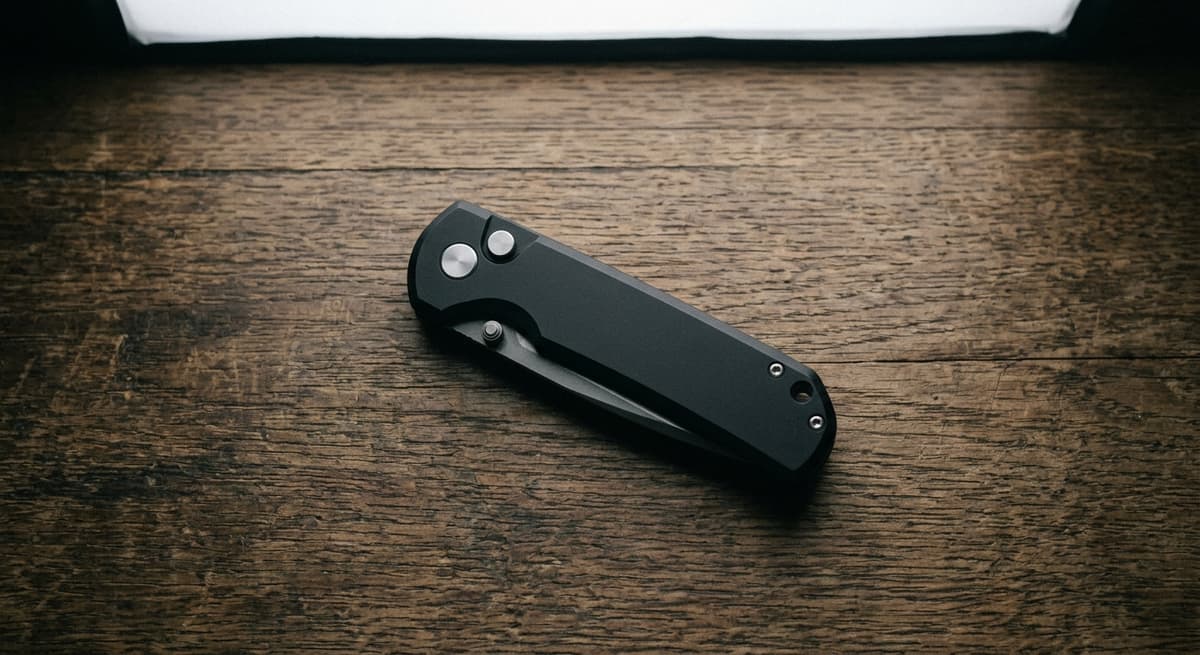
Criminal use of weapons is knowingly... possessing with intent to use the same unlawfully against another, a dagger, dirk, billy, blackjack, slungshot, dangerous knife, straight-edged razor, throwing star, stiletto or any other dangerous or deadly weapon or instrument of like character.
This offense applies regardless of whether the item is carried openly or concealed; what matters is the intent to use it unlawfully against another person, not how it is carried. Under K.S.A. 21-6301(b)(1), a violation of this subsection is a class A nonperson misdemeanor. Possessing one of these named items without the required unlawful intent is not, by this statute, a crime.
A separate statute, K.S.A. 21-6302 ("Criminal carrying of a weapon"), bans knowingly carrying certain items with no concealment element and no intent-to-use element at all. Subsection (a)(1) bans knowingly carrying "Any bludgeon, sandclub, metal knuckles or throwing star" outright, regardless of concealment and regardless of intent; subsection (a)(2) separately bans knowingly carrying "concealed on one's person, a billy, blackjack, slungshot or any other dangerous or deadly weapon or instrument of like character." Both are class A nonperson misdemeanors under § 21-6302(b)(1). A throwing star is therefore banned to carry in Kansas outright, unlike a dagger, dirk, dangerous knife, stiletto, or straight-edged razor, none of which is named in either subsection of § 21-6302. Subsection (a)(2)'s residual clause, "any other dangerous or deadly weapon or instrument of like character," is textually open and is not on its face limited to non-cutting instruments, so a knife carried concealed could in principle be charged under it even though no knife type is named.
School grounds: two different rules
Kansas has two separate, differently structured rules that touch weapons at school.

Criminal offense (firearms only). K.S.A. 21-6301(a)(11) makes it a class B nonperson select misdemeanor to possess "any firearm" on school property or grounds, or at a school-sponsored activity or event, subject to exceptions for authorized firearms-safety instruction, written authorization from school administration, a firearm secured in a vehicle during drop-off or pickup, and certain concealed-carry permit holders age 21 or older. By its own text, this criminal offense is scoped to firearms; it does not name knives.
Mandatory school-expulsion policy (includes knives). A separate statute, K.S.A. 72-6132, requires every Kansas school board to adopt a written policy expelling for at least one year any pupil found in possession of a "weapon" at school, on school property, or at a school-supervised activity, with a limited exception for authorized weapons-safety instruction or written administrative authorization. K.S.A. 72-6131(h)(1)(H) defines "weapon" for purposes of this policy requirement to include:
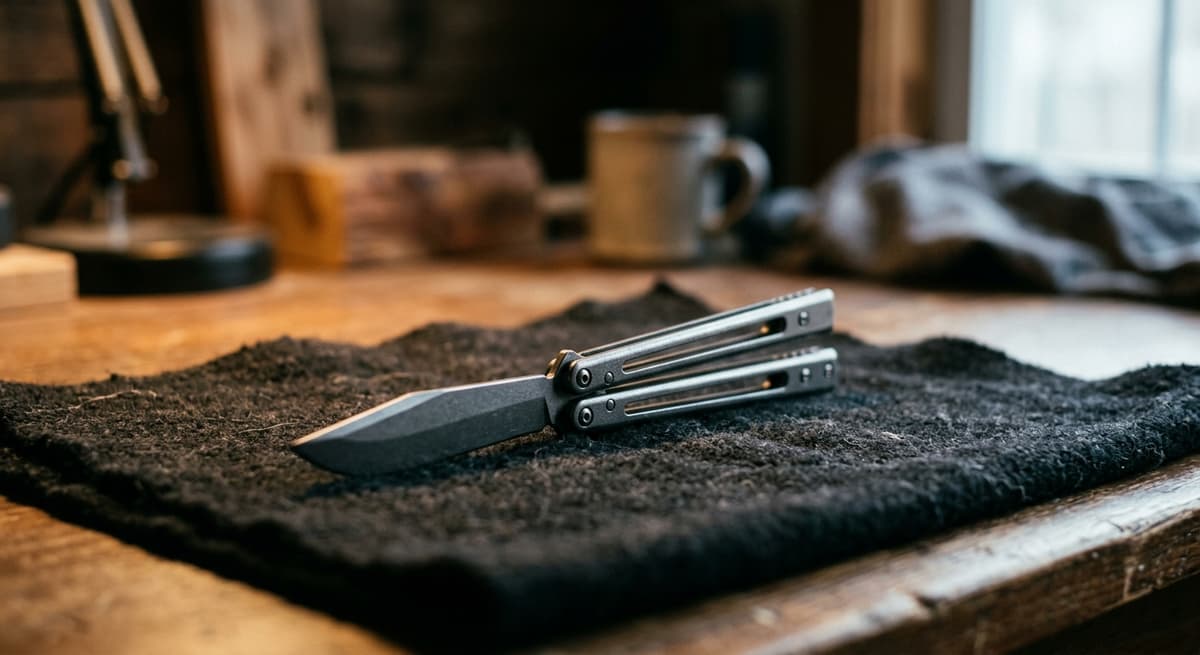
any knife, commonly referred to as a switch-blade, which has a blade that opens automatically by hand pressure applied to a button, spring or other device in the handle of the knife, or any knife having a blade that opens or falls or is ejected into position by the force of gravity or by an outward, downward or centrifugal thrust or movement.
In plain terms, a switchblade or gravity knife triggers this mandatory expulsion policy, alongside firearms, explosive devices, and stun guns. This is a school-discipline requirement directed at school boards, not a standalone criminal weapons offense the way § 21-6301(a)(11) is.
Does Kansas preempt local knife ordinances?
Yes. K.S.A. 12-16,134 states:
(a) A municipality shall not enact or enforce any ordinance, resolution, regulation or tax relating to the transportation, possession, carrying, sale, transfer, purchase, gift, devise, licensing, registration or use of a knife or knife making components. (b) A municipality shall not enact or enforce any ordinance, resolution or regulation relating to the manufacture of a knife that is more restrictive than any such ordinance, resolution or regulation relating to the manufacture of any other commercial goods.
Subsection (c) voids any conflicting local ordinance adopted before July 1, 2014, and subsection (d) bars prosecuting anyone for violating such a voided ordinance for conduct occurring on or after July 1, 2013. The statute defines "knife" broadly for its own purposes as "a cutting instrument and includes a sharpened or pointed blade," and expressly excludes unified school districts, jails, and juvenile correctional facilities from the definition of "municipality," meaning this preemption does not reach those institutions' own weapons policies, including the school-expulsion policy discussed above.
Felons: a separate, broader knife definition
K.S.A. 21-6304, Kansas's felon-in-possession statute, makes it a severity level 8, nonperson felony for a person with a qualifying prior conviction to possess a "weapon," defined in subsection (d) to mean a firearm or a knife, with "knife" defined there as "a dagger, dirk, switchblade, stiletto, straight-edged razor or any other dangerous or deadly cutting instrument of like character." This definition overlaps substantially with, but is not textually identical to, the criminal-use-of-weapons list in § 21-6301(a)(2): both name a dagger, dirk, stiletto, and straight-edged razor, but § 21-6304 substitutes "switchblade" where § 21-6301 uses "dangerous knife," and § 21-6304's felon-possession offense requires no separate intent to use the weapon unlawfully, unlike § 21-6301(a)(2).
Federal law: what it does and does not reach
Federal law does not ban an individual from owning or carrying a switchblade. The Federal Switchblade Act, 15 U.S.C. §§ 1241 to 1245, instead regulates interstate commerce in switchblade knives, barring their manufacture, sale, transport, or introduction into interstate commerce, and, in 15 U.S.C. § 1245, makes it a federal offense to knowingly possess, manufacture, sell, or import a ballistic knife in or affecting interstate commerce or within federal territorial jurisdiction. 15 U.S.C. § 1244 is captioned "Exceptions" and provides that the chapter "shall not apply to" the knives it lists, exempting them from the Act's prohibitions in 15 U.S.C. §§ 1242-1243 rather than changing the switchblade definition in 15 U.S.C. § 1241(b). Since a 2009 amendment, that exemption in § 1244(5) has covered any knife with a spring, detent, or other closure-bias mechanism that requires hand, wrist, or arm exertion to overcome the bias and assist opening, the carve-out that keeps modern assisted-opening folding knives legal in interstate commerce. A separate exception, § 1244(4), lets a person with only one arm possess and carry a switchblade with a blade three inches or less. None of this changes what Kansas allows for ordinary carry; Kansas's own intent-based statutes above govern that question within the state.
Disclaimer: This article provides general legal information about Kansas's knife laws as of September 2026. It is not legal advice. Consult a lawyer licensed in Kansas for advice about a specific situation. Whether conduct meets K.S.A. 21-6301(a)(2)'s "intent to use unlawfully" element depends heavily on the specific facts.
For a state-by-state comparison, see knife laws by state. Kansas's self-defense statutes are covered separately on the Kansas self-defense laws page.
Statutes cited reflect their in-force version as of 2026-09-18. Last updated: 2026-09-18.
Frequently Asked Questions
Is it legal to carry a knife in Kansas?
Carrying an ordinary knife, openly or concealed, is not itself a crime in Kansas. It becomes criminal use of weapons under K.S.A. 21-6301(a)(2), a class A nonperson misdemeanor, only when a dagger, dirk, dangerous knife, stiletto, straight-edged razor, or similar item is possessed with intent to use it unlawfully against another person. One exception runs the other way: K.S.A. 21-6302(a)(1) makes it a class A nonperson misdemeanor to knowingly carry a throwing star, with no concealment element and no intent element, so a throwing star is banned to carry outright regardless of intent.
Does Kansas preempt local knife ordinances?
Yes. K.S.A. 12-16,134, effective July 1, 2014, bars cities and counties from enacting or enforcing any ordinance regulating the transportation, possession, carrying, sale, or other handling of a knife, and voids any conflicting local ordinance adopted before that date.
Are switchblades illegal in Kansas?
Owning or carrying a switchblade is not itself a crime under Kansas's general criminal-use-of-weapons statute unless carried with intent to use it unlawfully. A switchblade does trigger Kansas's mandatory school-expulsion policy under K.S.A. 72-6132 if possessed at school, and it is named in the felon-in-possession statute, K.S.A. 21-6304.
Can a knife get a student expelled from a Kansas school?
Yes. K.S.A. 72-6132 requires every Kansas school board to adopt a policy expelling for at least one year any pupil found in possession of a 'weapon,' a term that under K.S.A. 72-6131 includes a switchblade or gravity knife by name, alongside firearms and explosives.
Updates
Independently fact-checked against the cited primary sources
Sources and References
- K.S.A. 21-6301 - Criminal use of weapons (intent-based knife list, class A nonperson misdemeanor)(ksrevisor.gov).gov
- K.S.A. 21-6302 - Criminal carrying of a weapon ((a)(1) outright throwing-star carry ban, (a)(2) concealed billy/blackjack/slungshot list, no dagger/dirk/dangerous knife/stiletto/razor named)(ksrevisor.gov).gov
- K.S.A. 21-6304 - Criminal possession of a weapon by a convicted felon (separate knife definition)(ksrevisor.gov).gov
- K.S.A. 12-16,134 - Knives and knife making components; regulation by municipality, limitations (statewide preemption, 2014)(ksrevisor.gov).gov
- K.S.A. 72-6131 - Definitions (school weapon definition, includes switchblade/gravity knife)(ksrevisor.gov).gov
- K.S.A. 72-6132 - Policies requiring expulsion of pupils for possession of weapons(ksrevisor.gov).gov
- 15 U.S.C. 1241-1245 - Federal Switchblade Act, interstate commerce and importation scope(law.cornell.edu)
- 15 U.S.C. 1244 - exceptions, including the 2009 assisted-opening carve-out and the one-arm exception(law.cornell.edu)