
Florida
Florida Knife Laws (2026): Carry, Pocketknives, Schools
Independently fact-checked against primary sources (last audited September 18, 2026). · 7 primary sources cited on this page. How we verify our legal content
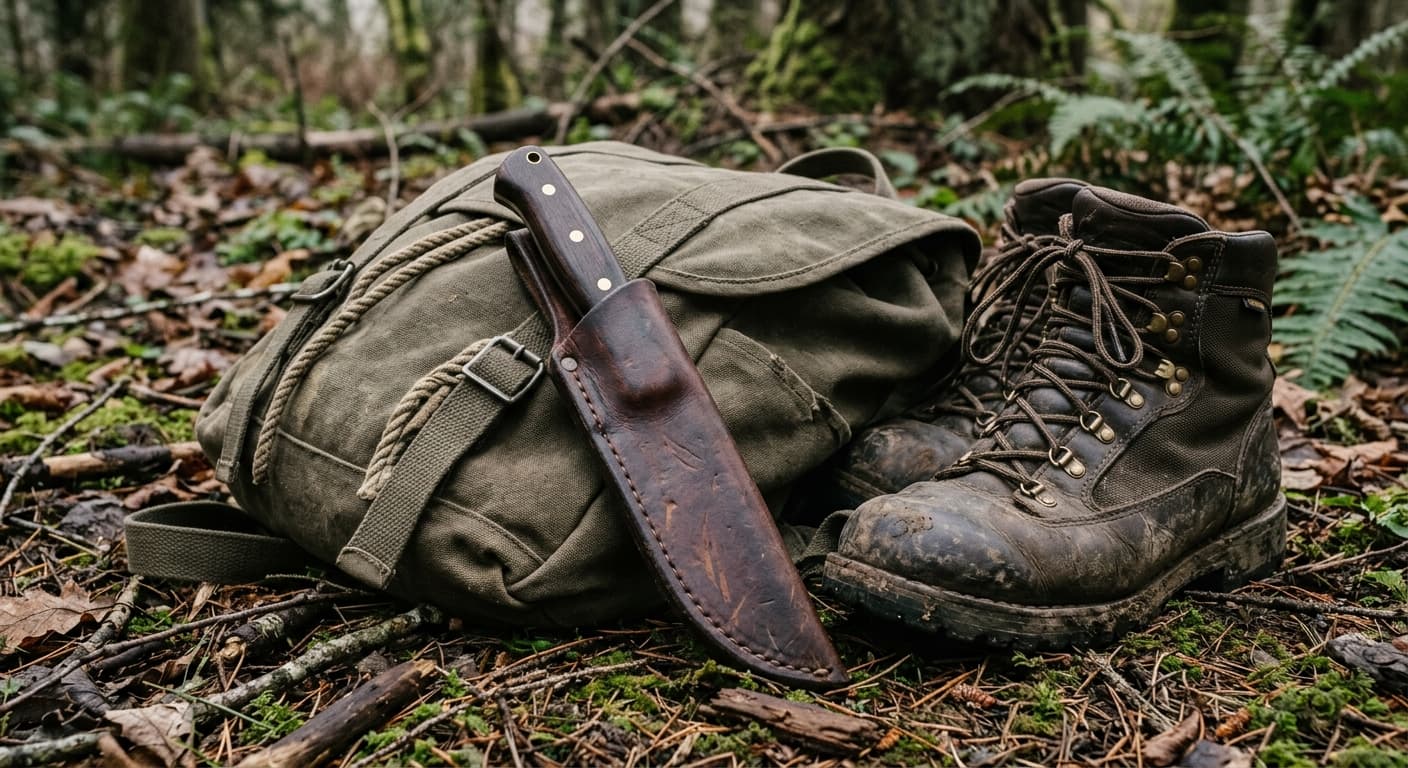
Florida's knife statutes run through three overlapping definitions rather than one. A "common pocketknife" is carved out of the broad "weapon" definition that governs the school statute and the licensing framework, but the criminal offense for carrying a concealed weapon without a license is keyed to a narrower definition that does not name "knife" at all, only "dirk." Reading only one of these sections gives an incomplete, and sometimes wrong, picture.
Jurisdiction scope: This page covers Florida state law only, principally Fla. Stat. §§ 790.001, 790.01, 790.06, 790.115, 790.18, 790.225, and 790.33. It does not cover Florida's separate assault, robbery, or aggravated-battery statutes, which apply to a knife used as a weapon regardless of how it was carried.
Can you own a knife in Florida?
Most knives can be owned in Florida. Fla. Stat. § 790.001(20) defines "weapon" broadly, then carves knives back out:
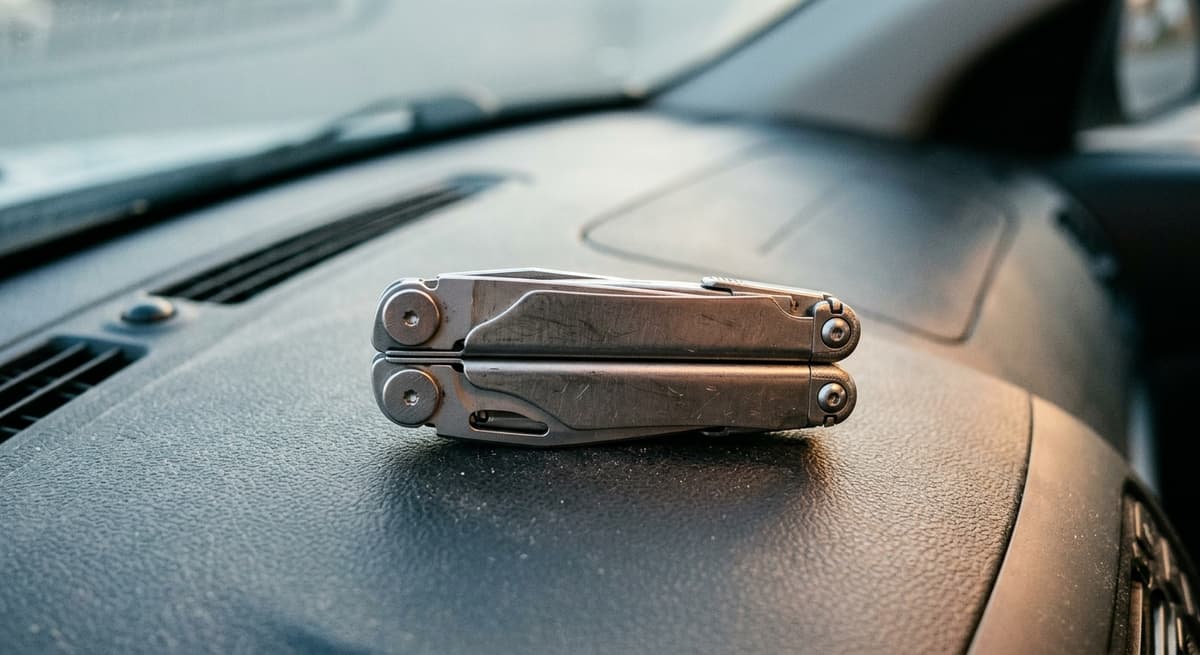
"Weapon" means any dirk, knife, metallic knuckles, slungshot, billie, tear gas gun, chemical weapon or device, or other deadly weapon except a firearm or a common pocketknife, plastic knife, or blunt-bladed table knife.
A common pocketknife, a plastic knife, and a blunt-bladed table knife are excluded from "weapon" outright. No numeric blade-length figure appears anywhere in this definitions section for what counts as a "common pocketknife." A frequently repeated figure of a 4-inch blade comes from an Attorney General opinion rather than the statute, so it is not a fixed legal line; treat any specific inch threshold for Florida's "common pocketknife" carve-out as unconfirmed rather than a hard statutory line.
Two items are banned outright regardless of how they are carried. A ballistic self-propelled knife, defined as "a device that propels a knifelike blade as a projectile and which physically separates the blade from the device by means of a coil spring, elastic material, or compressed gas," is unlawful to manufacture, display, sell, own, possess, or use under Fla. Stat. § 790.225, a first-degree misdemeanor; a device where the blade stays physically attached when it opens is excluded. No Florida statute bans switchblade knives by name; chapter 790 reaches only the ballistic self-propelled knife described above. A dealer in arms who sells or transfers a bowie knife or dirk knife to a minor commits a second-degree felony under Fla. Stat. § 790.18.
Open carry
No standalone statute bans openly carrying an ordinary knife in Florida. The concealed-carry offense discussed below applies only to concealment; carrying a knife visibly is not addressed by any separate open-carry statute in chapter 790.
Concealed carry: two different definitions matter here
Florida's concealed-carry offense is where the state's overlapping definitions matter most. Fla. Stat. § 790.01(2) states:

Except as provided in subsection (5), a person who does not meet the criteria in subsection (1) and who carries a concealed weapon or electric weapon or device, as those terms are defined in s. 790.001, on or about his or her person commits a misdemeanor of the first degree.
The offense's "concealed weapon" comes from § 790.001(4)(a), a narrower list than the "weapon" definition above:
"Concealed weapon" means any dirk, metallic knuckles, billie, tear gas gun, chemical weapon or device, or other deadly weapon carried on or about a person in such a manner as to conceal the weapon from the ordinary sight of another person.
That list names "dirk" specifically but does not name "knife" as a general term the way the "weapon" definition in subsection (20) does. A dirk carried concealed is a concealed weapon regardless of any pocketknife carve-out, since that carve-out appears only in subsection (20), not in this subsection (4)(a). An ordinary knife that is not a dirk falls under this concealed-carry offense only if it qualifies as "other deadly weapon" on the specific facts, not automatically by being a knife.
A separate, section-specific definition governs eligibility for a license to carry. Fla. Stat. § 790.06(1)(a) states: "For the purposes of this section, the term 'concealed weapon or concealed firearm' means a handgun, electric weapon or device, tear gas gun, knife, or billie, but does not include a machine gun." This definition, used only for the licensing section, names "knife" explicitly. A license applicant must be a U.S. citizen or permanent resident, 21 years of age or older, and meet a list of eligibility criteria in section 790.06(2), and a license is valid statewide for seven years. Section 790.01(1) lets a person carry a concealed weapon or firearm, as defined for licensing purposes in section 790.06(1), either by holding a license or by independently meeting the license eligibility criteria without holding the license itself.
Where you can't carry at all: schools
Florida's school-weapons statute, Fla. Stat. § 790.115, splits into two differently worded offenses, and the pocketknife carve-out applies to only one of them.
Subsection (1), the "exhibiting" offense, expressly overrides the common-pocketknife exclusion by name:
A person who exhibits any sword, sword cane, firearm, electric weapon or device, destructive device, or other weapon as defined in s. 790.001, including a razor blade, box cutter, or common pocketknife, except as authorized in support of school-sanctioned activities, in the presence of one or more persons in a rude, careless, angry, or threatening manner and not in lawful self-defense, at a school-sponsored event or on the grounds or facilities of any school, school bus, or school bus stop, or within 1,000 feet of the real property that comprises a public or private elementary school, middle school, or secondary school, during school hours or during the time of a sanctioned school activity, commits a felony of the third degree. This subsection does not apply to the exhibition of a firearm or weapon on private real property within 1,000 feet of a school by the owner of such property or by a person whose presence on such property has been authorized, licensed, or invited by the owner.
By naming "common pocketknife" specifically, this subsection reaches even the ordinary pocketknife that is excluded from "weapon" everywhere else, but only for the rude, careless, angry, or threatening exhibiting conduct it describes, not for merely carrying one, and only during school hours or a sanctioned school activity. The 1,000-foot zone is not a round-the-clock felony zone: the offense requires the conduct to occur during school hours or a sanctioned school activity, and it does not reach exhibiting a weapon on private property within that zone by the property's own owner or someone the owner authorized, licensed, or invited onto it.
Subsection (2)(a)-(b), the separate possession offense, bans possessing "any firearm, electric weapon or device, destructive device, or other weapon as defined in s. 790.001, including a razor blade or box cutter," except as authorized in support of school-sanctioned activities, at a school-sponsored event or on school property, also a third-degree felony. Unlike the exhibiting clause, this possession clause's own text does not name "common pocketknife," so a common pocketknife that is excluded from "weapon" under section 790.001(20) is not swept back in here by name the way it is in subsection (1). "School" is defined broadly for this section to include any preschool, elementary, middle, junior high, secondary school, career center, or postsecondary school, public or nonpublic.
Does Florida preempt local knife ordinances?
Florida's statewide preemption statute, Fla. Stat. § 790.33, "declares that it is occupying the whole field of regulation of firearms and ammunition, including the purchase, sale, transfer, taxation, manufacture, ownership, possession, storage, and transportation thereof," to the exclusion of local ordinances. Its text is scoped to "firearms and ammunition" throughout; it does not mention knives. Because the preemption statute's language does not extend to knives, it does not, on its own text, preempt a local government from regulating knives the way it preempts local firearms regulation. That means a city or county in Florida is free to impose its own knife ordinance on top of state law; check local city and county codes before assuming state law is the only rule that applies.
Federal law: what it does and does not reach
Federal law does not ban an individual from owning or carrying a switchblade nationwide. The Federal Switchblade Act, 15 U.S.C. §§ 1241 to 1245, instead regulates interstate commerce in switchblade knives, barring their manufacture, sale, transport, or introduction into interstate commerce, and, in 15 U.S.C. § 1245, makes it a federal offense to knowingly possess, manufacture, sell, or import a ballistic knife in or affecting interstate commerce or within federal territorial jurisdiction, a category that overlaps with Florida's own ban on ballistic self-propelled knives under section 790.225. 15 U.S.C. § 1244, captioned "Exceptions," provides that §§ 1242 and 1243 "shall not apply to" a list of specific knives; it is an exemption from those two interstate-commerce and importation offenses, not a change to the switchblade definition itself, which sits in § 1241(b) and was not amended. A 2009 addition, § 1244(5), exempts from §§ 1242 and 1243 any knife with a spring, detent, or other closure-bias mechanism that requires hand, wrist, or arm exertion to overcome the bias and assist opening, the exception that keeps modern assisted-opening folding knives legal in interstate commerce. A separate exception, § 1244(4), exempts a person with only one arm from those same two offenses when possessing or carrying a switchblade with a blade three inches or less.
Disclaimer: This article provides general legal information about Florida's knife laws as of September 2026. It is not legal advice. Consult a lawyer licensed in Florida for advice about a specific situation. Because Florida's "common pocketknife" carve-out has no numeric definition in the statute itself, whether a particular folding knife qualifies can depend on the specific facts and how an individual officer or prosecutor applies the term.
For a state-by-state comparison, see knife laws by state. Florida's self-defense statutes are covered separately on the Florida self-defense laws page.
Statutes cited reflect their in-force version as of 2026-09-18. Last updated: 2026-09-18.
Frequently Asked Questions
What size knife is legal to carry in Florida?
Florida's 'weapon' definition excludes a 'common pocketknife, plastic knife, or blunt-bladed table knife,' but the statute gives no numeric blade-length figure for a common pocketknife. A widely repeated 4-inch figure comes from an Attorney General opinion rather than the statute itself, so it should not be treated as a fixed legal line.
Do I need a permit to carry a knife concealed in Florida?
The criminal offense for carrying a concealed weapon without a license, section 790.01(2), is defined by section 790.001(4)(a), which names 'dirk' but not 'knife' generally, reaching an ordinary knife only through its 'other deadly weapon' catch-all. Florida's licensing statute, section 790.06(1)(a), separately defines 'concealed weapon' for licensing purposes to include 'knife' by name, and requires an applicant to be 21 or older.
Are switchblades illegal in Florida?
No Florida statute bans switchblades by name. Florida does ban a ballistic self-propelled knife, a device that fires a blade as a projectile, under Fla. Stat. 790.225.
Can I carry a pocketknife at a Florida school?
A common pocketknife is named specifically in the school 'exhibiting' offense, section 790.115(1), which makes it a third-degree felony to exhibit one in a rude, careless, angry, or threatening manner at a school-sponsored event, on school grounds, or within 1,000 feet of a school during school hours or a sanctioned school activity. That felony does not apply on private property within the 1,000-foot zone if you are the property owner or someone the owner authorized. The separate school possession offense, section 790.115(2)(a)-(b), does not name 'common pocketknife' in its own text.
Is it legal to carry a knife concealed in Florida without a license?
Usually yes, for an ordinary knife. The concealed-carry offense in section 790.01(2) applies only to the narrower 'concealed weapon' list in section 790.001(4)(a), which names 'dirk' but not 'knife' generally. An ordinary knife that is not a dirk falls under this offense only if it qualifies as 'other deadly weapon' on the specific facts, so carrying most knives concealed without a license does not by itself violate section 790.01(2). A dirk, or a knife a court finds to be an 'other deadly weapon,' still requires meeting the license criteria in section 790.06.
Updates
Independently fact-checked against the cited primary sources
Sources and References
- Fla. Stat. 790.001 - Definitions: 'weapon' (20) excludes a common pocketknife/plastic knife/blunt-bladed table knife; 'concealed weapon' (4)(a) names dirk but not knife generally(leg.state.fl.us).gov
- Fla. Stat. 790.01 - Carrying of concealed weapons or concealed firearms; first-degree misdemeanor(leg.state.fl.us).gov
- Fla. Stat. 790.06 - License to carry concealed weapon or concealed firearm; section-specific definition names 'knife,' age 21+(leg.state.fl.us).gov
- Fla. Stat. 790.115 - Possessing or discharging weapons or firearms at a school-sponsored event or on school property prohibited; (1) exhibiting names common pocketknife, limited to school hours/sanctioned activity, with a private-property owner carve-out; (2)(a)-(b) possession clause does not name common pocketknife(leg.state.fl.us).gov
- Fla. Stat. 790.18 - Sale or transfer of arms to minors by dealers (bowie knife or dirk knife); second-degree felony(leg.state.fl.us).gov
- Fla. Stat. 790.225 - Ballistic self-propelled knives; unlawful to manufacture, sell, or possess; first-degree misdemeanor(leg.state.fl.us).gov
- Fla. Stat. 790.33 - Field of regulation of firearms and ammunition preempted (firearms/ammunition only, no knife text)(leg.state.fl.us).gov
- 15 U.S.C. 1241-1245 - Federal Switchblade Act, interstate commerce and importation scope(law.cornell.edu)
- 15 U.S.C. 1244 - exceptions, including the 2009 assisted-opening carve-out and the one-arm exception(law.cornell.edu)