
South Dakota
Is Jaywalking Illegal in South Dakota? The $25 Petty Offense Rule
Independently fact-checked against primary sources (last audited October 10, 2026). · 9 primary sources cited on this page. How we verify our legal content
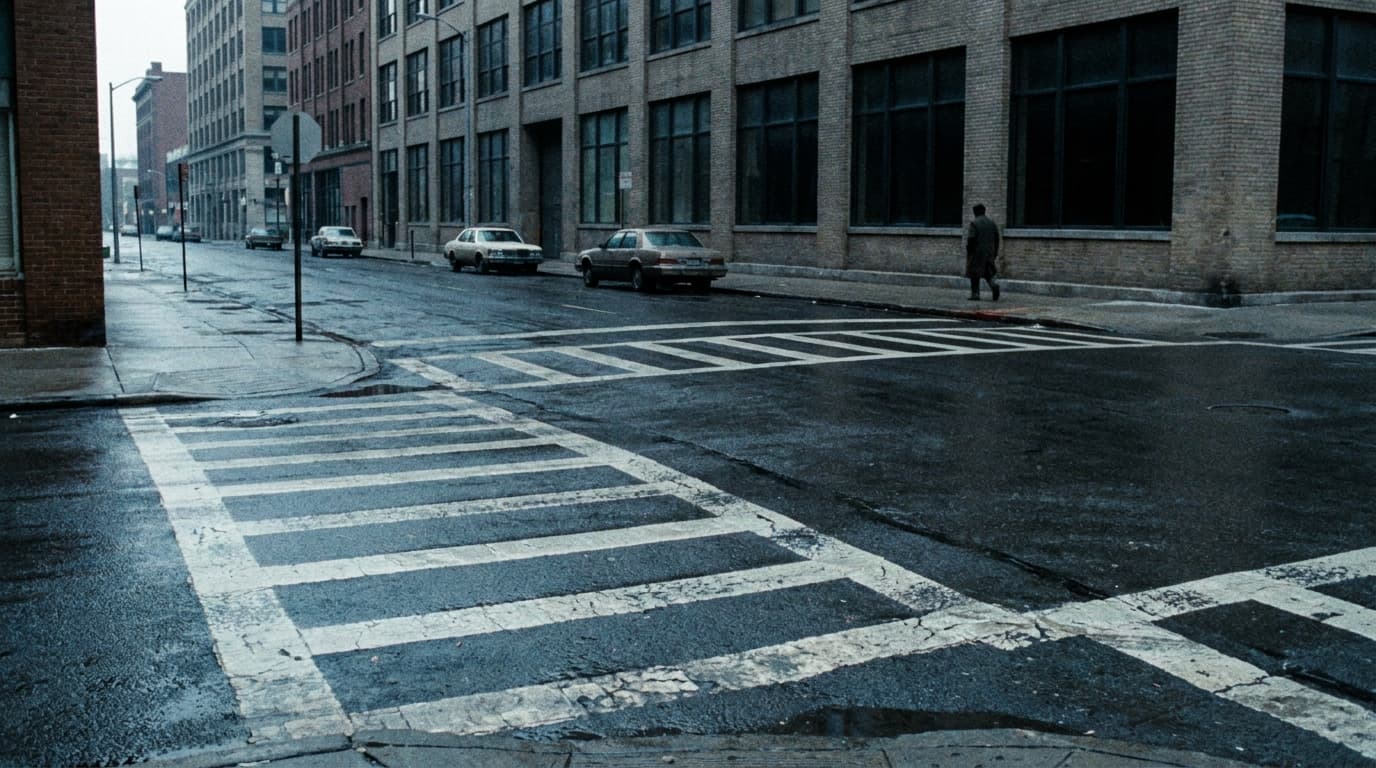
South Dakota's jaywalking rule is SDCL 32-27-4. A pedestrian crossing a highway within a business or residence district "at any point other than a pedestrian crossing, crosswalk, or intersection shall yield the right-of-way to vehicles upon the highway," and a violation is a petty offense. That is a duty to yield rather than a ban on mid-block crossing, but cities may go further: SDCL 32-27-3 lets local authorities require by ordinance that pedestrians cross only in a crosswalk between adjacent signal-controlled intersections and not cross against a red or stop signal. A petty offense case is a civil proceeding in which the state is the plaintiff (SDCL 22-6-7), and if the state prevails the judgment is $25, which the trial court may reduce or eliminate (SDCL 23-1A-22). To compare other states, see our guide to jaywalking laws by state.
Information last verified on 2026-10-10. This article has not been reviewed by a licensed lawyer.
Jurisdiction scope: This article covers South Dakota state law: the pedestrian chapter SDCL 32-27 (32-27-1 to 32-27-5 and 32-27-7), the crosswalk definition in SDCL 32-14-1(8), the traffic signal sections SDCL 32-28-1 to 32-28-5 and 32-28-9.1, the controlled-access roadway rule in SDCL 32-26-11, the petty offense and misdemeanor provisions in SDCL 22-6-2 and 22-6-7, the petty offense judgment in SDCL 23-1A-22, and the Unified Judicial System's FY27 Fine and Bond Schedule. It does not cover the text of any city or county ordinance, driver license consequences beyond the point schedule in SDCL 32-12-49.1, injury claims after a crash, or the law of other states.
Is jaywalking illegal in South Dakota?
Crossing outside a crosswalk is not banned by state law, but the pedestrian has to yield. SDCL 32-27-4 provides:
"Every pedestrian crossing a highway within a business or residence district at any point other than a pedestrian crossing, crosswalk, or intersection shall yield the right-of-way to vehicles upon the highway. A violation of this section is a petty offense."
A pedestrian who crosses mid-block, waits for a gap and lets vehicles pass meets that duty. A pedestrian who steps out and makes vehicles stop or swerve does not. The section is limited by its words to a highway "within a business or residence district."
Two things can make a particular mid-block crossing unlawful anyway:
- A city ordinance. SDCL 32-27-3 lets local authorities forbid crossing anywhere except a marked or unmarked crosswalk between adjacent intersections controlled by signals or police officers (covered below). Where a city has adopted that rule, crossing mid-block on such a block breaks the ordinance even if the pedestrian yields.
- Stepping into traffic. Under SDCL 32-27-1, "no pedestrian may suddenly leave a curb or other place of safety and walk or run into the path of a vehicle which is so close as to constitute an immediate hazard."
| Situation | South Dakota rule | How a violation is classed |
|---|---|---|
| Crossing in a business or residence district outside a pedestrian crossing, crosswalk or intersection | Pedestrian must yield the right-of-way to vehicles (32-27-4) | Petty offense (32-27-4) |
| Crossing between adjacent signal-controlled or officer-controlled intersections outside a crosswalk | Not a state rule; a city may require crosswalk use by ordinance (32-27-3) | Set by the local ordinance |
| Crossing against a red or stop signal at a controlled intersection | A city may forbid it by ordinance (32-27-3); at such intersections pedestrians yield to vehicles lawfully proceeding on green except where drivers must yield to them (32-27-2) | Petty offense for a pedestrian's violation of 32-27-2; otherwise set by the local ordinance |
| Starting to cross on DON'T WALK (or the lighted don't-walk symbol) | Prohibited; a pedestrian already crossing on WALK continues to a sidewalk or safety island (32-28-9.1) | Petty offense for a pedestrian (32-28-9.1) |
| Starting across on a steady yellow | Pedestrian must yield the right-of-way to all vehicles (32-28-3(2)) | 32-28-3(2) states no penalty in the text quoted here |
| Walking along a highway where no sidewalk is provided | When practicable, walk only on the left side of the roadway or its shoulder, facing traffic (32-27-5) | Petty offense (32-27-5) |
| Walking on a controlled-access roadway where the transportation commission or a local authority has prohibited pedestrians | Prohibited where adopted and signed (32-26-11) | Class 2 misdemeanor for failing to obey the regulatory sign (32-26-11) |
What counts as a crosswalk in South Dakota
Because the yield duty in 32-27-4 applies only "at any point other than a pedestrian crossing, crosswalk, or intersection," the definition of crosswalk matters. SDCL 32-14-1(8) defines a crosswalk as:

"that part of a roadway at an intersection included within the connections of the lateral lines of the sidewalks on opposite sides of the highway measured from the curbs or, in the absence of curbs, from the edges of the traversable roadway; or any portion of a roadway at an intersection or elsewhere distinctly indicated for pedestrian crossing by lines or other markings on the surface;"
The first part creates an unmarked crosswalk at an intersection, drawn from the lateral lines of the sidewalks on opposite sides of the highway, whether or not paint is on the road. The second part covers painted crossings, including mid-block ones ("at an intersection or elsewhere"). Section 32-27-4 also lists "intersection" separately, so its yield duty does not reach a pedestrian crossing at an intersection.
Chapter 32-27 uses a broad definition of who counts as a pedestrian. SDCL 32-27-1.1 provides: "The term, pedestrian, when used in this chapter means any person moving or traveling on foot, including any person wearing roller skates, riding on a skateboard, or riding on an electric personal assistive device." The definition is limited to chapter 32-27, the pedestrian chapter. For scooter and similar device rules, see South Dakota e-scooter laws.
Crossing between signals and against a red light: a local choice
Many states write the "only in a crosswalk between signals" rule into state law. South Dakota leaves it to cities. SDCL 32-27-3 provides:
"Local authorities in their respective jurisdictions may by ordinance require that at intersections where traffic is controlled by traffic control signals or by police officers, pedestrians shall not cross a roadway against a red or stop signal, and between adjacent intersections so controlled shall not cross at any place except in a marked or unmarked crosswalk."
Chapter 32-27 contains no statewide rule barring crossing between adjacent signal-controlled intersections, no statewide rule against diagonal crossing, and no rule requiring pedestrians to use a tunnel or overpass. Whether a given block is crosswalk-only therefore depends on the city's own code. If you live in or are visiting a South Dakota city, read its traffic ordinances or ask the city clerk or police department.
Traffic signals and WALK signals
Pedestrians are bound by ordinary traffic lights. SDCL 32-28-1 provides that the signal terms and lights "shall indicate and apply to drivers of vehicles and pedestrians as provided by 32-28-2 to 32-28-5, inclusive." For pedestrians:
- Green: "Pedestrians facing the signal may proceed across the roadway within any marked or unmarked crosswalk" (32-28-2(2)).
- Steady yellow: "Pedestrians facing such signal are thereby advised that there is insufficient time to cross the roadway, and any pedestrian then starting to cross shall yield the right-of-way to all vehicles" (32-28-3(2)).
- Steady red with green arrow: "No pedestrian facing such signal shall enter the roadway unless he can do so safely and without interfering with any vehicular traffic" (32-28-5(2)).
At intersections controlled by signals or police officers, SDCL 32-27-2 divides the right-of-way:
"At intersections where traffic is controlled by traffic control signals or police officers, drivers of vehicles, including those making turns, shall yield the right-of-way to pedestrians crossing or those who have started to cross the roadway on a green or go signal, and in all other cases pedestrians shall yield the right-of-way to vehicles lawfully proceeding directly ahead on a green or go signal. A violation of this section by a driver is a petty offense. A violation of this section by a pedestrian is a petty offense."
Where pedestrian signal heads are installed, SDCL 32-28-9.1 governs. Its WALK clause reads: "Walk or a lighted international pedestrian walk symbol.--Pedestrians facing the signal may proceed across the roadway in the direction of the signal and shall be given the right-of-way by the drivers of all vehicles." Its DON'T WALK clause reads: "Don't walk or a lighted international pedestrian don't walk symbol.--No pedestrian may start to cross the roadway in the direction of the signal, but any pedestrian who has partially completed crossing on the walk signal shall proceed to a sidewalk or safety island while the don't walk signal or lighted international pedestrian don't walk symbol is showing." The section ends: "Any failure by a driver to comply with the provisions of this section is a Class 2 misdemeanor. Any failure by a pedestrian to comply with the provisions of this section is a petty offense." So a driver who fails to give a pedestrian on WALK the right-of-way faces a criminal charge, while a pedestrian who disobeys the section faces a civil petty offense.
What drivers owe pedestrians
SDCL 32-27-1 sets the basic crosswalk duty for drivers in towns:
"The driver of any vehicle upon a highway within a business or residence district shall yield the right-of-way to a pedestrian crossing the highway within any clearly marked crosswalk or any regular pedestrian crossing included in the prolongation of the lateral boundary lines of the adjacent sidewalk at the end of a block, except at intersections where the movement of traffic is being regulated by traffic officers or traffic direction devices."
A driver's violation of 32-27-1 is a petty offense. At controlled intersections, the duty comes from 32-27-2 (drivers, including turning drivers, yield to pedestrians crossing or who have started to cross on a green or go signal) and from the WALK clause of 32-28-9.1, where a driver's failure to comply is a Class 2 misdemeanor. A Class 2 misdemeanor carries "thirty days imprisonment in a county jail or five hundred dollars fine, or both" (SDCL 22-6-2(2)).
When a pedestrian guided by a guide dog, or carrying a raised or extended white cane or a white cane tipped with red, is crossing or attempting to cross a public street or highway, every approaching driver "shall bring his vehicle to a full stop before arriving at such intersection or place of crossing, and before proceeding shall take such precautions as may be necessary to avoid injuring such pedestrian." A violation is a Class 2 misdemeanor (SDCL 32-27-7).
Walking along the road
Where there is no sidewalk, SDCL 32-27-5 sets the rule: "Where sidewalks are not provided any pedestrian walking along or upon a highway shall, when practicable, walk only on the left side of the roadway or its shoulder facing traffic which may approach from the opposite direction. A violation of this section is a petty offense."
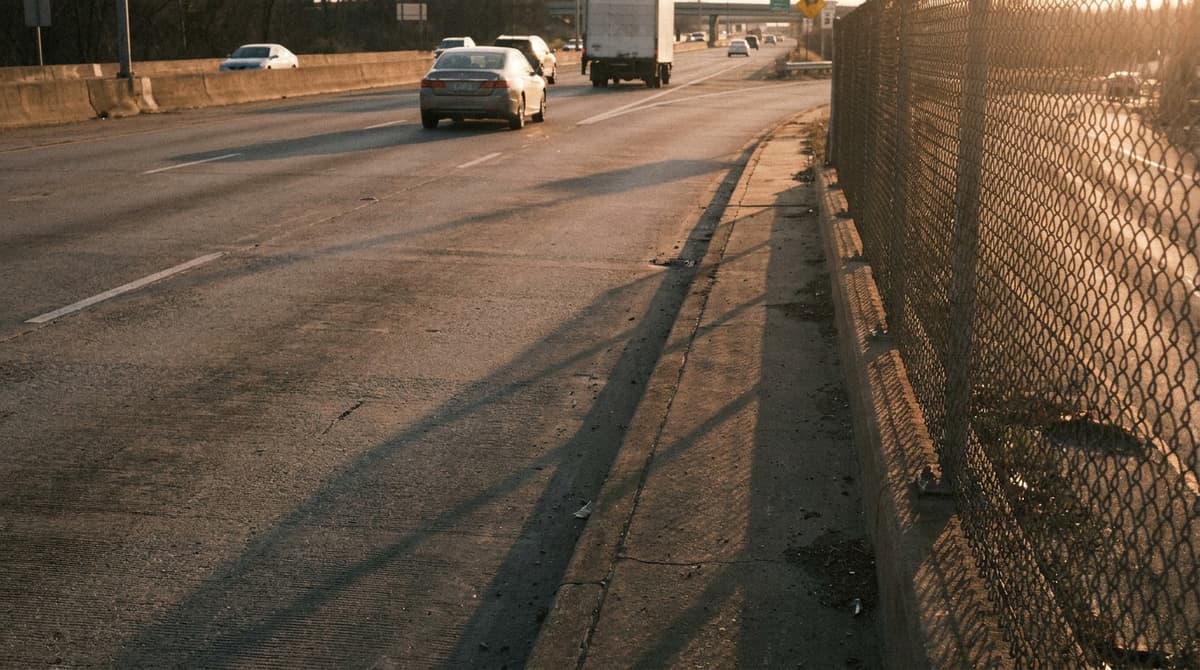
On controlled-access roadways, SDCL 32-26-11 provides that "The transportation commission may, by rule adopted pursuant to chapter 1-26, and local authorities may by ordinance, with respect to any controlled-access roadway under their respective jurisdictions, prohibit the use of any such roadway by pedestrians, bicycles, or other nonmotorized traffic or by any person operating a motor-driven cycle." The prohibition depends on signs: the Department of Transportation or the local authority "shall erect and maintain official signs on the controlled-access roadway on which such regulations are applicable. If so erected no person may disobey the restrictions stated on such signs." The section adds: "The violation for failure to obey a regulatory sign under this section is a Class 2 misdemeanor."
Jaywalking fine and penalty in South Dakota
A jaywalking violation under 32-27-4 is a petty offense, and South Dakota handles petty offenses as civil cases. SDCL 22-6-7 provides: "Actions for violations of petty offenses are civil proceedings in which the state is the plaintiff. Such actions are governed by chapter 23-1A."
The amount comes from SDCL 23-1A-22: "If the plaintiff prevails in a petty offense case, the plaintiff shall be granted a judgment of twenty-five dollars. However, the trial court may reduce or eliminate the award in the interest of justice."
The Unified Judicial System's FY27 Fine and Bond Schedule, effective July 1, 2026, repeats that figure: "The judgment amount for all petty offenses is $25 (SDCL 23-1A-22). No costs are assessed." The schedule has no separate line for 32-27-1, 32-27-2, 32-27-4 or 32-28-9.1, so the general petty offense rule is the one that applies to them.
| Violation | Class | Amount or range | Source |
|---|---|---|---|
| Pedestrian fails to yield when crossing outside a crossing, crosswalk or intersection (business or residence district) | Petty offense (civil) | $25 judgment, which the court may reduce or eliminate; no costs under the FY27 schedule | 32-27-4, 22-6-7, 23-1A-22, UJS FY27 schedule |
| Pedestrian violates the controlled-intersection right-of-way rule | Petty offense (civil) | $25 judgment; no costs under the FY27 schedule | 32-27-2, 23-1A-22, UJS FY27 schedule |
| Pedestrian fails to comply with the pedestrian signal section | Petty offense (civil) | $25 judgment; no costs under the FY27 schedule | 32-28-9.1, 23-1A-22, UJS FY27 schedule |
| Pedestrian walks on the wrong side where no sidewalk is provided | Petty offense (civil) | $25 judgment; no costs under the FY27 schedule | 32-27-5, 23-1A-22, UJS FY27 schedule |
| Driver fails to yield in a crosswalk (32-27-1) or at a controlled intersection (32-27-2) | Petty offense (civil) | $25 judgment; no costs under the FY27 schedule | 32-27-1, 32-27-2, 23-1A-22, UJS FY27 schedule |
| Driver fails to comply with the pedestrian signal section | Class 2 misdemeanor | 30 days in county jail or $500 fine, or both | 32-28-9.1, 22-6-2(2) |
| Failure to obey a regulatory sign barring pedestrians from a controlled-access roadway | Class 2 misdemeanor | 30 days in county jail or $500 fine, or both | 32-26-11, 22-6-2(2) |
For a driver, the state point schedule lists "Failure to yield right-of-way" at four points (SDCL 32-12-49.1), and for driver license purposes a conviction includes the trial court's judgment or an unvacated forfeiture of bail (SDCL 32-12-53). An operator who accumulates 15 points within 12 consecutive months, or 22 points within 24 consecutive months, is subject to suspension (SDCL 32-12-49.2).
A city ordinance adopted under 32-27-3 sets its own penalty; check the city's code for that amount. The no-costs rule above is for petty offenses: the FY27 schedule lists court costs of $72.50 ($50 liquidated costs, a $17.50 court automation surcharge and a $5 victim compensation surcharge) for all violations of county or municipal ordinances, added to the fine.
If a pedestrian is hit by a car
Who had the right-of-way under 32-27-1, 32-27-2, 32-27-4 or 32-28-9.1 can matter after a collision. For how fault and insurance claims work after a crash, see South Dakota car accident laws.
Related pages
- Jaywalking laws by state
- South Dakota car accident laws
- South Dakota e-scooter laws
- Nebraska jaywalking laws
- Minnesota jaywalking laws
This article provides general legal information about South Dakota law, not legal advice. For advice about a specific situation, contact a lawyer licensed in South Dakota or the court handling the citation.
Last updated: 2026-10-10.
Frequently Asked Questions
Is jaywalking illegal in South Dakota?
State law does not ban crossing mid-block; in a business or residence district a pedestrian crossing outside a pedestrian crossing, crosswalk or intersection must yield the right-of-way to vehicles (SDCL 32-27-4). Cities may by ordinance require crosswalk use between adjacent signal-controlled intersections (SDCL 32-27-3), so check local rules.
What is the fine for jaywalking in South Dakota?
A violation of SDCL 32-27-4 is a petty offense. If the state prevails, the judgment is $25, which the court may reduce or eliminate (SDCL 23-1A-22), and the court system's FY27 schedule states that no costs are assessed on petty offenses.
Is jaywalking a crime in South Dakota?
It is a petty offense, and actions for petty offenses are civil proceedings in which the state is the plaintiff (SDCL 22-6-7). A city ordinance adopted under SDCL 32-27-3 sets its own penalty, and the court system's FY27 schedule adds $72.50 in court costs to violations of county or municipal ordinances.
Can I cross the street between two traffic lights in South Dakota?
State law leaves that to cities: SDCL 32-27-3 lets local authorities require by ordinance that pedestrians cross only in a marked or unmarked crosswalk between adjacent intersections controlled by signals or police officers. Where no such ordinance applies, the yield rule in SDCL 32-27-4 governs.
Do drivers have to stop for pedestrians in a South Dakota crosswalk?
In a business or residence district, a driver must yield to a pedestrian crossing within a clearly marked crosswalk or a regular pedestrian crossing at the end of a block, except at intersections regulated by officers or traffic devices (SDCL 32-27-1). At signals, drivers including turning drivers yield to pedestrians crossing on green (SDCL 32-27-2), and a driver's failure to comply with the pedestrian signal section is a Class 2 misdemeanor (SDCL 32-28-9.1).
Can I start crossing on a DON'T WALK signal in South Dakota?
No. Under SDCL 32-28-9.1, no pedestrian may start to cross the roadway in the direction of a DON'T WALK signal or the lighted don't-walk symbol, and a pedestrian who has partially crossed on WALK must proceed to a sidewalk or safety island. A pedestrian's failure to comply is a petty offense.
Which side of the road should I walk on in South Dakota?
Where sidewalks are not provided, walk only on the left side of the roadway or its shoulder, facing traffic, when practicable; a violation is a petty offense (SDCL 32-27-5).
Do jaywalking rules apply to skateboarders in South Dakota?
Yes. In the pedestrian chapter, a pedestrian includes a person wearing roller skates, riding a skateboard or riding an electric personal assistive device (SDCL 32-27-1.1).
Updates
Independently fact-checked against the cited primary sources
The Law Behind This Article
This article rests on the statutory provisions below, held in our own legal record and retrieved from the official source. Tap a section to read the operative text.
South Dakota Codified Laws, Chapter 32-27: PEDESTRIANS' RIGHTS AND DUTIES
§ 32-27-4Jaywalking--Duty to yield right-of-way to vehicles--Violation as petty offense.In force
Every pedestrian crossing a highway within a business or residence district at any point other than a pedestrian crossing, crosswalk, or intersection shall yield the right-of-way to vehicles upon the highway. A violation of this section is a petty offense.
Official text (excerpt) · last checked 2026-07-30 · Read the full text in our law library · Verify at sdlegislature.gov
§ 32-27-1Yielding right-of-way to pedestrian making proper crossing--Regulated intersections--Violation as petty offense.In force
The driver of any vehicle upon a highway within a business or residence district shall yield the right-of-way to a pedestrian crossing the highway within any clearly marked crosswalk or any regular pedestrian crossing included in the prolongation of the lateral boundary lines of the adjacent sidewalk at the end of a block, except at intersections where the movement of traffic is being regulated by traffic officers or traffic direction devices. However, no pedestrian may suddenly leave a curb or other place of safety and walk or run into the path of a vehicle which is so close as to constitute an immediate hazard. A violation of this section by a driver is a petty offense.
Official text (excerpt) · last checked 2026-07-30 · Read the full text in our law library · Verify at sdlegislature.gov
Search our full record of US law — 2.1 million sections, every state + federal →
Sources and References
- SDCL chapter 32-27, Pedestrians' Rights and Duties (32-27-1 to 32-27-7, incl. 32-27-4, Jaywalking, duty to yield right-of-way to vehicles, and 32-27-7, Duty of motorist to stop for pedestrian carrying cane or guided by dog)(sdlegislature.gov).gov
- SDCL 22-6-7, Petty offense actions, procedure (chapter 22-6)(sdlegislature.gov).gov
- SDCL 23-1A-22, Judgment, amount, reduction or elimination(sdlegislature.gov).gov
- SDCL 32-14-1, Definitions (crosswalk, subdivision 8)(sdlegislature.gov).gov
- SDCL chapter 32-28 (32-28-1 to 32-28-5, traffic control signals; 32-28-9.1, Pedestrian control signals)(sdlegislature.gov).gov
- SDCL 22-6-2, Misdemeanor classes and penalties(sdlegislature.gov).gov
- SDCL 32-26-11, Prohibition of pedestrians and nonmotorized traffic on controlled-access highway(sdlegislature.gov).gov
- South Dakota Unified Judicial System, FY27 Fine and Bond Schedule (effective July 1, 2026)(ujs.sd.gov).gov
- SDCL chapter 32-12 (32-12-49.1, point schedule; 32-12-49.2, point accumulation; 32-12-53, Conviction defined)(sdlegislature.gov).gov