
North Carolina
Is Jaywalking Illegal in North Carolina? Rules and Fines (2026)
Independently fact-checked against primary sources (last audited October 10, 2026). · 19 primary sources cited on this page. How we verify our legal content
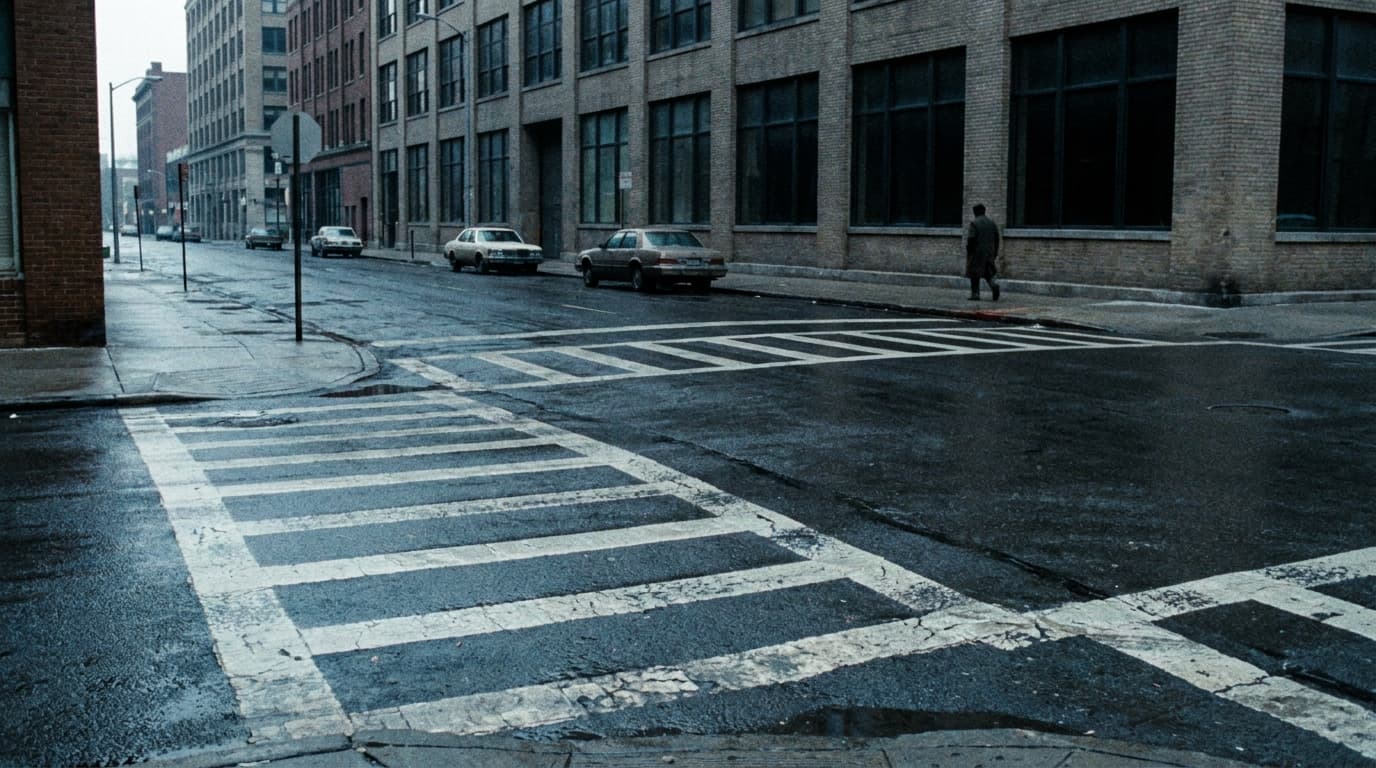
In North Carolina, crossing a street outside a crosswalk is allowed under state law as long as you yield the right-of-way to all vehicles on the roadway (G.S. 20-174(a)), but between adjacent intersections where traffic signals are in operation, you may cross only in a marked crosswalk (G.S. 20-174(c)). City ordinances may restrict crossing further (G.S. 160A-300). A violation is an infraction rather than a crime, with a penalty of not more than $100 unless a specific penalty applies (G.S. 20-176(a), (b)), and district court costs apply on top (G.S. 7A-304(e)). Pedestrians must also obey WALK / DON'T WALK signals (G.S. 20-172). To compare other states, see our guide to jaywalking laws by state.
Information last verified on 2026-10-10. This article has not been reviewed by a licensed lawyer.
Jurisdiction scope: This article covers North Carolina General Statutes in Chapter 20, Article 3: the pedestrian rules in Part 11 (G.S. 20-172 to 20-175) and Part 11A (G.S. 20-175.2), the penalty section 20-176, the signal section 20-158, the highway-obstruction offense in 20-174.1, the driver sections 20-155(c), 20-160.1 and 20-173(c), the local-authority sections 20-169 and 160A-300, the license point schedule in 20-16(c), the infraction and conviction definitions in G.S. 14-3.1 and 20-4.01(4a), the infraction stop rule in G.S. 15A-1113, and the controlled-access highway rule in G.S. 136-89.58, plus court costs under G.S. 7A-304. It does not cover the text of any city's or county's ordinances (including Charlotte and Raleigh), insurance consequences, injury claims after a crash beyond the negligence rule in 20-176(d), or the law of other states.
Is jaywalking illegal in North Carolina?
North Carolina's crossing rule is G.S. 20-174. Its first three subsections provide:
"(a) Every pedestrian crossing a roadway at any point other than within a marked crosswalk or within an unmarked crosswalk at an intersection shall yield the right-of-way to all vehicles upon the roadway. (b) Any pedestrian crossing a roadway at a point where a pedestrian tunnel or overhead pedestrian crossing has been provided shall yield the right-of-way to all vehicles upon the roadway. (c) Between adjacent intersections at which traffic-control signals are in operation pedestrians shall not cross at any place except in a marked crosswalk."
Subsection (a) is a duty to yield, not a ban. A pedestrian who crosses mid-block and gives way to every vehicle is complying with it. Subsection (c) is the flat rule: on a block bounded by two intersections that both have working traffic signals, the only lawful place to cross is a marked crosswalk. An unmarked crosswalk at the intersection does not satisfy (c), which names a marked crosswalk.
Part 11 (G.S. 20-172 through 20-175) contains no rule on crossing an intersection diagonally.
| Situation | State rule | Source |
|---|---|---|
| Crossing outside a marked crosswalk or an unmarked crosswalk at an intersection | Allowed under state law, but the pedestrian must yield the right-of-way to all vehicles; a city ordinance may restrict it | G.S. 20-174(a); 160A-300 |
| Crossing where a pedestrian tunnel or overhead crossing has been provided | Must yield the right-of-way to all vehicles | G.S. 20-174(b) |
| Crossing between adjacent intersections with traffic-control signals in operation | Only in a marked crosswalk | G.S. 20-174(c) |
| Starting to cross on DON'T WALK | Barred; finish to a sidewalk or safety island if already crossing on WALK | G.S. 20-172(b)(2) |
| Crossing where there are no pedestrian signals | Follow the vehicular signals as they apply to pedestrian traffic | G.S. 20-172(c) |
| Walking in the roadway where sidewalks are provided | Unlawful | G.S. 20-174(d) |
| Willfully standing, sitting or lying on a highway or street so as to impede the regular flow of traffic | Class 2 misdemeanor; Class A1 misdemeanor (first) or Class H felony (second or later) during a demonstration intended to impede the street; Class A1 misdemeanor if it obstructs an emergency vehicle | G.S. 20-174.1(a), (c), (d) |
| Climbing, crossing or breaching a fence along an interstate or other controlled-access highway | Class 2 misdemeanor | G.S. 136-89.58(6) |
What counts as a crosswalk in North Carolina
The general definitions section of Chapter 20, G.S. 20-4.01, contains no definition of "crosswalk." It does define a "safety zone" as a "Traffic island or other space officially set aside within a highway for the exclusive use of pedestrians and which is so plainly marked or indicated by proper signs as to be plainly visible at all times while set apart as a safety zone" (20-4.01(39)).

The pedestrian statutes describe the crosswalks they mean in their own words, and the wording differs slightly between sections. The pedestrian's yield rule in 20-174(a) speaks of "a marked crosswalk or ... an unmarked crosswalk at an intersection." The driver's yield rule in 20-173(a) speaks of "any marked crosswalk or ... any unmarked crosswalk at or near an intersection." The between-signals rule in 20-174(c) requires a marked crosswalk. The driver rule for business and residence districts in 20-155(c) refers to "any clearly marked crosswalk, or any regular pedestrian crossing included in the prolongation of the lateral boundary lines of the adjacent sidewalk at the end of a block."
WALK / DON'T WALK and traffic lights
Pedestrian signals are governed by G.S. 20-172(b):
"(1) WALK. - Pedestrians facing such signal may proceed across the highway in the direction of the signal and shall be given the right-of-way by the drivers of all vehicles. (2) DON'T WALK. - No pedestrian shall start to cross the highway in the direction of such signal, but any pedestrian who has partially completed his crossing on the "WALK" signal shall proceed to a sidewalk or safety island while the "DON'T WALK" signal is showing."
The violation is starting to cross on DON'T WALK. A pedestrian who began on WALK and is still in the street when the signal changes must keep going to a sidewalk or safety island.
Where an intersection has ordinary traffic lights but no pedestrian heads, G.S. 20-172(c) applies: "Where a system of traffic-control signals or devices does not include special pedestrian-control signals, pedestrians shall be subject to the vehicular traffic-control signals or devices as they apply to pedestrian traffic." On the driver side, the vehicle signal section provides that on a steady green, "vehicles may proceed with due care through the intersection subject to the rights of pedestrians and other vehicles as may otherwise be provided by law" (G.S. 20-158(b)(2a)).
Walking along the road and standing in the road
G.S. 20-174(d) covers walking along a road:
"(d) Where sidewalks are provided, it shall be unlawful for any pedestrian to walk along and upon an adjacent roadway. Where sidewalks are not provided, any pedestrian walking along and upon a highway shall, when practicable, walk only on the extreme left of the roadway or its shoulder facing traffic which may approach from the opposite direction. Such pedestrian shall yield the right-of-way to approaching traffic."
North Carolina's rule says "extreme left," and it adds a duty to yield to approaching traffic.
Two other rules cover people in the road:
- "A person who willfully stands, sits, or lies upon the highway or street in such a manner as to impede the regular flow of traffic is guilty of a Class 2 misdemeanor" (G.S. 20-174.1(a)). This section was last amended by S.L. 2024-16, effective December 1, 2024. Unlike the pedestrian rules in Part 11, it is a crime. The penalty rises if the person is "participating in a demonstration intended to prohibit or impede the use of the highway or street" (Class A1 misdemeanor for a first offense, Class H felony for a second or later offense, 20-174.1(c)) or obstructs an emergency vehicle (Class A1 misdemeanor, 20-174.1(d)). A person who organizes a demonstration that impedes a street can be civilly liable for injury or death caused by delays from obstructing an emergency vehicle (20-174.1(e)).
- "No person shall stand in any portion of the State highways, except upon the shoulders thereof, for the purpose of soliciting a ride from the driver of any motor vehicle" (G.S. 20-175(a)). Subsection (b) separately restricts standing or loitering in the main traveled portion of a State highway or street to solicit employment, business or contributions from vehicle occupants in a way that impedes traffic.
What drivers owe pedestrians in North Carolina
Drivers carry their own duties, some with heavier penalties than any pedestrian rule:
- "Where traffic-control signals are not in place or in operation the driver of a vehicle shall yield the right-of-way, slowing down or stopping if need be to so yield, to a pedestrian crossing the roadway within any marked crosswalk or within any unmarked crosswalk at or near an intersection, except as otherwise provided in Part 11 of this Article" (G.S. 20-173(a)).
- When a vehicle is stopped at a marked crosswalk or an unmarked crosswalk at an intersection to let a pedestrian cross, "the driver of any other vehicle approaching from the rear shall not overtake and pass such stopped vehicle" (G.S. 20-173(b)).
- "The driver of a vehicle emerging from or entering an alley, building entrance, private road, or driveway shall yield the right-of-way to any pedestrian, or person riding a bicycle, approaching on any sidewalk or walkway extending across such alley, building entrance, road, or driveway" (G.S. 20-173(c)).
- "The driver of any vehicle upon a highway within a business or residence district shall yield the right-of-way to a pedestrian crossing such highway within any clearly marked crosswalk, or any regular pedestrian crossing included in the prolongation of the lateral boundary lines of the adjacent sidewalk at the end of a block, except at intersections where the movement of traffic is being regulated by traffic officers or traffic direction devices" (G.S. 20-155(c)).
- A pedestrian facing a WALK signal "shall be given the right-of-way by the drivers of all vehicles" (G.S. 20-172(b)(1)).
- "Notwithstanding the provisions of this section, every driver of a vehicle shall exercise due care to avoid colliding with any pedestrian upon any roadway, and shall give warning by sounding the horn when necessary, and shall exercise proper precaution upon observing any child or any confused or incapacitated person upon a roadway" (G.S. 20-174(e)).
Right turn on red. A driver turning right on a red light must yield to "1. Other traffic and pedestrians using the intersection; and 2. Pedestrians who are moving towards the intersection, who are in reasonably close proximity to the intersection, and who are preparing to cross in front of the traffic that is required to stop at the red light" (G.S. 20-158(b)(2)b.). "Failure to yield to a pedestrian under this subdivision shall be an infraction, and the court may assess a penalty of not more than five hundred dollars ($500.00) and not less than one hundred dollars ($100.00)" (20-158(b)(2)c.). The license point schedule in G.S. 20-16(c) assigns 4 points for "Failure to yield right-of-way to pedestrian pursuant to G.S.20-158(b)(2)b."
Failure to yield causing serious bodily injury. Under G.S. 20-160.1(a), a driver who fails to yield while approaching or entering an intersection, turning at a stop or yield sign, entering a roadway, upon the approach of an emergency vehicle, or at highway construction or maintenance, where "there is serious bodily injury but no death resulting from the violation," is "guilty of a Class 2 misdemeanor, which shall include a fine of five hundred dollars ($500.00) and, upon conviction, revocation of the violator's drivers license or commercial drivers license for 90 days." That wording comes from S.L. 2025-70, section 12, effective December 1, 2025, for offenses committed on or after that date.
Blind pedestrians. Under G.S. 20-175.2, "Any person who fails to yield the right-of-way to a blind or partially blind pedestrian as required by this section is guilty of a Class 2 misdemeanor." The section was amended by S.L. 2025-70, section 13, which became effective December 1, 2025, and applies to offenses committed on or after that date.
Jaywalking fine and penalty in North Carolina
G.S. 20-176 sets the penalty for the pedestrian rules:

"(a) Violation of a provision of Part 9, 10, 10A, or 11 of this Article is an infraction unless the violation is specifically declared by law to be a misdemeanor or felony. ... (b) Unless a specific penalty is otherwise provided by law, a person found responsible for an infraction contained in this Article may be ordered to pay a penalty of not more than one hundred dollars ($100.00)."
The $100 is a maximum, not a set ticket amount. Court costs are separate: under G.S. 7A-304(e), "Unless otherwise provided by law, the costs assessed pursuant to this section for criminal actions disposed of in the district court are also applicable to infractions disposed of in the district court." The total for a given ticket depends on those costs, so check the citation or ask the clerk of court.
An infraction is "a noncriminal violation of law not punishable by imprisonment" (G.S. 14-3.1(a)). Even so, for Chapter 20 purposes a "conviction" includes "A determination that a person is responsible for an infraction, including a no contest plea" (G.S. 20-4.01(4a)a.2.). And an officer "who has probable cause to believe a person has committed an infraction may detain the person for a reasonable period in order to issue and serve him a citation" (G.S. 15A-1113(b)).
| Offense | Classification and penalty | Source |
|---|---|---|
| Pedestrian rule in Part 11 (crossing, signals, walking along the road) | Infraction; penalty of not more than $100 unless a specific penalty applies, plus court costs | G.S. 20-176(a), (b); 7A-304(e) |
| Willfully standing, sitting or lying on a highway or street, impeding traffic | Class 2 misdemeanor; higher during a demonstration intended to impede the street or if it obstructs an emergency vehicle | G.S. 20-174.1(a), (c), (d) |
| Driver turning right on red who fails to yield to a pedestrian | Infraction; penalty of $100 to $500; 4 license points | G.S. 20-158(b)(2)c.; 20-16(c) |
| Driver who fails to yield to a blind or partially blind pedestrian | Class 2 misdemeanor | G.S. 20-175.2 |
Why an infraction can matter after a crash
G.S. 20-176(d) provides: "For purposes of determining whether a violation of an offense contained in this Chapter constitutes negligence per se, crimes and infractions shall be treated identically." So the fact that a pedestrian or driver violation is only an infraction does not take it out of the negligence-per-se analysis in a civil case. For how fault and insurance work after a crash, see North Carolina car accident laws. Electric scooter riders follow separate rules, covered in North Carolina e-scooter laws.
Local rules in North Carolina cities
North Carolina limits what local governments can do with the traffic rules in Article 3. G.S. 20-169 provides that "Local authorities, except as expressly authorized by G.S. 20-141 and 20-158, shall have no power or authority to alter any speed limitations declared in this Article or to enact or enforce any rules or regulations contrary to the provisions of this Article, except that local authorities shall have power to provide by ordinances for any of the following:" and then lists specific subjects. Separately, G.S. 160A-300 provides that "A city may by ordinance prohibit, regulate, divert, control, and limit pedestrian or vehicular traffic upon the public streets, sidewalks, alleys, and bridges of the city." So a city ordinance can restrict where pedestrians cross. To check the rules where you are, look up your city's code of ordinances or ask the clerk of court named on a citation.
Related pages
- Jaywalking laws by state
- North Carolina car accident laws
- North Carolina e-scooter laws
- Virginia jaywalking laws
- South Carolina jaywalking laws
This article provides general legal information about North Carolina law, not legal advice. For advice about a specific situation, contact a lawyer licensed in North Carolina or the clerk of court named on your citation.
Last updated: 2026-10-10.
Frequently Asked Questions
Is jaywalking illegal in North Carolina?
Under state law, crossing outside a crosswalk is allowed if you yield the right-of-way to all vehicles on the roadway (G.S. 20-174(a)). Between adjacent intersections with traffic signals in operation, you may cross only in a marked crosswalk (G.S. 20-174(c)), and you may not start to cross on DON'T WALK (G.S. 20-172(b)(2)). City ordinances may restrict crossing further (G.S. 160A-300).
What is the fine for jaywalking in North Carolina?
A violation of the pedestrian rules is an infraction, and the penalty is not more than $100 unless a specific penalty applies (G.S. 20-176(a), (b)). District court costs apply to infractions in addition to the penalty (G.S. 7A-304(e)).
Is jaywalking a crime in North Carolina?
No. Violating the pedestrian rules in Part 11 of Article 3 is an infraction unless a statute specifically declares it a misdemeanor or felony (G.S. 20-176(a)). Willfully standing, sitting or lying on a highway or street so as to impede the regular flow of traffic is a separate offense and a Class 2 misdemeanor, or more during a demonstration (G.S. 20-174.1). An infraction is noncriminal (G.S. 14-3.1(a)), but for Chapter 20 purposes a finding of responsibility counts as a conviction (G.S. 20-4.01(4a)), and an officer with probable cause may detain a person for a reasonable period to issue a citation (G.S. 15A-1113(b)).
Can I cross in the middle of the block in North Carolina?
Under state law, yes, if you yield the right-of-way to all vehicles (G.S. 20-174(a)), unless the block lies between adjacent intersections with traffic signals in operation, where you may cross only in a marked crosswalk (G.S. 20-174(c)). City ordinances may restrict crossing further (G.S. 160A-300).
Do drivers have to stop for pedestrians in North Carolina?
Where traffic signals are not in place or not in operation, drivers must yield, slowing down or stopping if need be, to a pedestrian in a marked crosswalk or an unmarked crosswalk at or near an intersection (G.S. 20-173(a)). Drivers must also give pedestrians the right-of-way on a WALK signal (G.S. 20-172(b)(1)) and exercise due care to avoid colliding with any pedestrian (G.S. 20-174(e)).
What happens if a driver turning right on red does not yield to a pedestrian in North Carolina?
It is an infraction, and the court may assess a penalty of not less than $100 and not more than $500 (G.S. 20-158(b)(2)c.). The license point schedule assigns 4 points for failure to yield to a pedestrian under G.S. 20-158(b)(2)b. (G.S. 20-16(c)).
Which side of the road should I walk on in North Carolina?
Where sidewalks are provided, walking along the adjacent roadway is unlawful. Where they are not, walk when practicable only on the extreme left of the roadway or its shoulder, facing traffic, and yield the right-of-way to approaching traffic (G.S. 20-174(d)).
Updates
Independently fact-checked against the cited primary sources
The Law Behind This Article
This article rests on the statutory provisions below, held in our own legal record and retrieved from the official source. Tap a section to read the operative text.
North Carolina General Statutes, Chapter 20: Motor Vehicles.
§ 20-174Crossing at other than crosswalks; walking along highwayIn force
(a) Every pedestrian crossing a roadway at any point other than within a marked crosswalk or within an unmarked crosswalk at an intersection shall yield the right-of-way to all vehicles upon the roadway. (b) Any pedestrian crossing a roadway at a point where a pedestrian tunnel or overhead pedestrian crossing has been provided shall yield the right-of-way to all vehicles upon the roadway. (c) Between adjacent intersections at which traffic-control signals are in operation pedestrians shall not cross at any place except in a marked crosswalk. (d) Where sidewalks are provided, it shall be unlawful for any pedestrian to walk along and upon an adjacent roadway. Where sidewalks are not provided, any pedestrian walking along and upon a highway shall, when practicable, walk only on the extreme left of the roadway or its shoulder facing traffic which may approach from the opposite direction. Such pedestrian shall yield the right-of-way to approaching traffic.
Official text (excerpt) · last checked 2026-07-29 · Read the full text in our law library · Verify at ncleg.gov
§ 20-173Pedestrians' right-of-way at crosswalksIn force
(a) Where traffic-control signals are not in place or in operation the driver of a vehicle shall yield the right-of-way, slowing down or stopping if need be to so yield, to a pedestrian crossing the roadway within any marked crosswalk or within any unmarked crosswalk at or near an intersection, except as otherwise provided in Part 11 of this Article. (b) Whenever any vehicle is stopped at a marked crosswalk or at any unmarked crosswalk at an intersection to permit a pedestrian to cross the roadway, the driver of any other vehicle approaching from the rear shall not overtake and pass such stopped vehicle. (c) The driver of a vehicle emerging from or entering an alley, building entrance, private road, or driveway shall yield the right-of-way to any pedestrian, or person riding a bicycle, approaching on any sidewalk or walkway extending across such alley, building entrance, road, or driveway.
Official text (excerpt) · last checked 2026-07-29 · Read the full text in our law library · Verify at ncleg.gov
§ 20-158Vehicle control signs and signalsIn force
(a) The Department of Transportation, with reference to State highways, and local authorities, with reference to highways under their jurisdiction, are hereby authorized to control vehicles: (1) At intersections, by erecting or installing stop signs requiring vehicles to come to a complete stop at the entrance to that portion of the intersection designated as the main traveled or through highway. Stop signs may also be erected at three or more entrances to an intersection. (2) At appropriate places other than intersections, by erecting or installing stop signs requiring vehicles to come to a complete stop. (3) At intersections and other appropriate places, by erecting or installing steady-beam traffic signals and other traffic control devices, signs, or signals. All steady-beam traffic signals emitting alternate red and green lights shall be arranged so that the red light in vertical-arranged signal faces shall appear above, and in horizontal-arranged signal faces shall appear to the left of all yellow and green lights. (4) At intersections and other appropriate places, by erecting or installing flashing red or yellow lights. (b) Control of Vehicles at Intersections.
Official text (excerpt) · last checked 2026-07-29 · Read the full text in our law library · Verify at ncleg.gov
Search our full record of US law — 2.1 million sections, every state + federal →
Sources and References
- N.C. Gen. Stat. 20-174, Crossing at other than crosswalks; walking along highway(ncleg.gov).gov
- N.C. Gen. Stat. 20-176 (infraction penalty)(ncleg.gov).gov
- N.C. Gen. Stat. 7A-304 (court costs)(ncleg.gov).gov
- N.C. Gen. Stat. 20-172 (pedestrian-control signals)(ncleg.gov).gov
- N.C. Gen. Stat. 20-174.1 (standing, sitting or lying on a highway)(ncleg.gov).gov
- N.C. Gen. Stat. 20-175.2 (blind pedestrians)(ncleg.gov).gov
- N.C. Gen. Stat. 20-173, Pedestrians' right-of-way at crosswalks(ncleg.gov).gov
- N.C. Gen. Stat. 20-158, Vehicle control signs and signals(ncleg.gov).gov
- N.C. Gen. Stat. 20-16(c) (license point schedule)(ncleg.gov).gov
- N.C. Gen. Stat. 20-4.01 (definitions)(ncleg.gov).gov
- N.C. Gen. Stat. 20-175 (soliciting from highways and streets)(ncleg.gov).gov
- Session Law 2025-70, section 13(ncleg.gov).gov
- N.C. Gen. Stat. 20-169 (powers of local authorities)(ncleg.gov).gov
- N.C. Gen. Stat. 160A-300, Traffic control (city ordinances)(ncleg.gov).gov
- N.C. Gen. Stat. 14-3.1, Infraction defined; sanctions(ncleg.gov).gov
- N.C. Gen. Stat. 15A-1113, Prehearing procedure (infractions)(ncleg.gov).gov
- N.C. Gen. Stat. 20-155, Right-of-way(ncleg.gov).gov
- N.C. Gen. Stat. 20-160.1, Failure to yield causing serious bodily injury(ncleg.gov).gov
- N.C. Gen. Stat. 136-89.58, Unlawful use of interstate and other controlled-access highways(ncleg.gov).gov