
Maine
Is Jaywalking Illegal in Maine? Crossing Rules and Fines (2026)
Independently fact-checked against primary sources (last audited October 10, 2026). · 10 primary sources cited on this page. How we verify our legal content
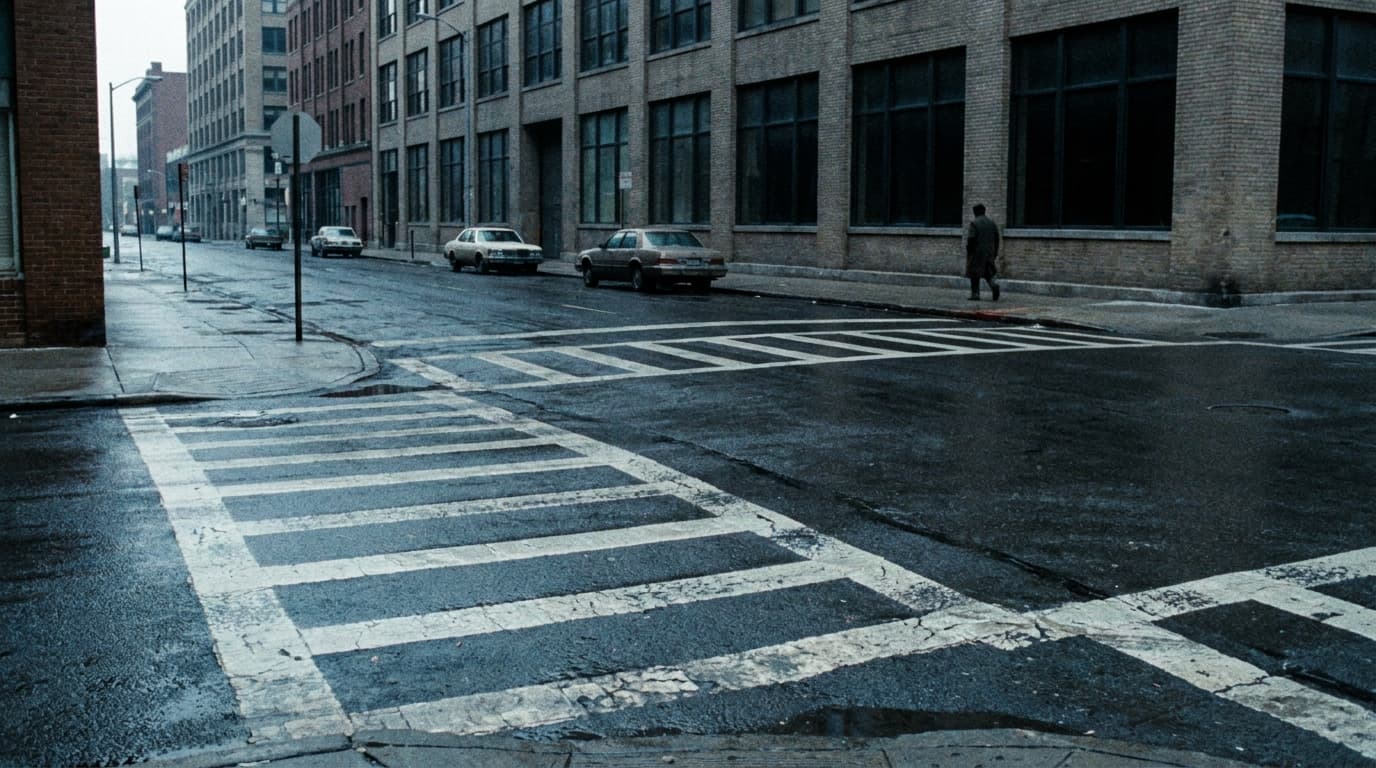
In Maine, what most people call jaywalking is governed by 29-A M.R.S. 2056. A pedestrian crossing anywhere other than within a marked crosswalk must yield the right-of-way to vehicles, and a pedestrian may not cross between adjacent intersections at which traffic-control devices operate except in a marked crosswalk, or cross an intersection diagonally unless a device allows it. A violation is a traffic infraction, which is not a crime, with a fine of $25 to $500 under 29-A M.R.S. 103 and 104, although intentionally refusing an officer's request for your correct name, address or date of birth is a Class E crime (29-A M.R.S. 105(4)). To compare other states, see our guide to jaywalking laws by state.
Information last verified on 2026-10-10. This article has not been reviewed by a licensed lawyer.
Jurisdiction scope: This article covers Maine state law: the pedestrian rules in 29-A M.R.S. 2056, the pedestrian signal rules in 29-A M.R.S. 2057, the crosswalk definition in 29-A M.R.S. 101, the traffic-infraction penalty in 29-A M.R.S. 103 and 104, the identification rule in 29-A M.R.S. 105, sign-posted pedestrian bans in 29-A M.R.S. 2052, the private-way yield rule in 29-A M.R.S. 2053, the Maine District Court Violations Bureau schedule of amounts due, and municipal ordinance authority in 30-A M.R.S. 3009. It does not cover the text of any municipal ordinance, driver license consequences, injury claims after a crash, or the law of other states.
Is jaywalking illegal in Maine?
It depends on where and how you cross. Maine's pedestrian section mixes a duty to yield with a short list of flat prohibitions. Under state law, crossing outside a marked crosswalk is allowed if the pedestrian lets vehicles go first, unless posted signs bar pedestrians from that way (29-A M.R.S. 2052(5-A)); a municipal ordinance may regulate pedestrian traffic further (30-A M.R.S. 3009(1)(A)). Crossing mid-block between two intersections where traffic-control devices operate, cutting diagonally through an intersection, or darting off a curb in front of a close vehicle is barred whether or not you yield.
| Situation | Maine rule |
|---|---|
| Crossing other than within a marked crosswalk | Allowed under state law, but the pedestrian must yield the right-of-way to vehicles (2056(5)(A)); a town may regulate pedestrian traffic further (30-A M.R.S. 3009(1)(A)) |
| Crossing where a pedestrian tunnel or overhead crossing is available | Allowed, but the pedestrian must yield the right-of-way to vehicles (2056(5)(B)) |
| Crossing between adjacent intersections at which traffic-control devices operate | Only in a marked crosswalk (2056(6)(A)) |
| Crossing an intersection diagonally | Barred unless authorized by official traffic-control devices (2056(6)(B)) |
| Suddenly leaving a curb into the path of a vehicle too close to yield | Barred (2056(6)(C)) |
| Starting to cross on a "don't walk" signal | Barred (2057(6)(B)) |
| Starting to cross on a steady yellow, or entering the way on a steady red, with no pedestrian signal directing otherwise | Barred (2057(5)(B), (C)) |
| Walking on the way where a sidewalk next to it is practicable to use | Barred (2056(1)) |
| Using a way where official signs prohibit pedestrians, such as a limited-access highway | Barred (2052(5), (5-A)) |
Crossing outside a crosswalk
The basic rule is 2056(5):
"5. Pedestrian crossing. A pedestrian must yield the right-of-way to a vehicle when crossing a way: A. Other than within a marked crosswalk; or B. With an available pedestrian tunnel or overhead pedestrian crossing."
This is a duty to yield, not a ban. A pedestrian who waits for a gap and lets vehicles pass first complies with subsection 5, subject to the prohibitions below and any municipal ordinance.
Subsection 5 exempts only a marked crosswalk. Maine's definition in 29-A M.R.S. 101(18) reads: "'Crosswalk' means the portion of a way: A. At an intersection that is included within extensions of the lateral lines of the sidewalks on opposite sides of the way beginning at the curbs or, in the absence of curbs, from the edge of traversable ways; or B. At an intersection or elsewhere that is distinctly indicated for pedestrian crossing by lines or other markings on the way surface." An intersection with sidewalks on opposite sides of the way can therefore have an unmarked crosswalk, but by the words of subsection 5 a pedestrian crossing there still yields to vehicles. The driver duty in subsection 4, covered below, likewise refers to marked crosswalks.
Prohibited crossings
Subsection 6 of 2056 lists the crossings that are barred outright:
"6. Pedestrian prohibitions. A pedestrian may not: A. Cross between adjacent intersections at which traffic-control devices operate, except in a marked crosswalk; B. Cross an intersection diagonally, unless authorized by official traffic-control devices; or C. Suddenly leave a curb or other place of safety and walk or run into the path of a vehicle that is so close that it is impossible for the operator to yield."
Paragraph A is the closest Maine comes to a flat mid-block ban. It applies only between adjacent intersections at which traffic-control devices operate. On that stretch, yielding is not enough: the crossing must be in a marked crosswalk.
A separate section lets road authorities close a way to pedestrians. Under 29-A M.R.S. 2052(5), "The Department of Transportation or a municipality, with respect to a way under that authority's jurisdiction, may prohibit the use of a way by: A. Pedestrians". Subsection 5-A adds: "On limiting the use of a way, the authority shall erect and maintain official signs stating the prohibition. A person may not disobey the restrictions stated on those signs." The Violations Bureau schedule lists $152 for "PED on lmt access way" (2052) and for "PED on turnpike" (23 M.R.S. 1980).
Walk signals and traffic lights
Where a pedestrian signal shows "walk" and "don't walk," 29-A M.R.S. 2057(6) controls:
"A. A pedestrian facing a "walk" signal may proceed across the way in the direction of the signal and must be given the right-of-way. B. A pedestrian may not start to cross a way in the direction of a "don't walk" signal, but a pedestrian who has partially completed crossing may proceed to a sidewalk or safety island."
Where there is no pedestrian signal, the ordinary traffic light governs pedestrians. Section 2057(5) provides that, unless otherwise directed by a pedestrian control signal, a pedestrian facing:
- a green signal, except when the sole green signal is a turn arrow, "may proceed across the way within a marked or unmarked crosswalk";
- a steady circular yellow or yellow arrow, "may not start to cross the way, as there is insufficient time to cross before a red indication is shown";
- a steady circular red or a steady red arrow, "may not enter the way."
Section 2057(1)(D) adds a phase used at some intersections: red and yellow illuminated together "means the operator may not enter the intersection, as the intersection is reserved for the exclusive use of pedestrians."
Walking along the road
Maine also regulates walking along a way, not just crossing it:
"1. Pedestrian traffic. When use of a sidewalk next to a public way is practicable, a pedestrian may not walk on that public way. 2. Pedestrian on way. Where sidewalks are not provided, a pedestrian shall walk facing approaching traffic on the left side of the public way or the way's shoulder when practicable."
Subsection 2 continues with a duty on drivers: a motor vehicle operator passing a pedestrian on a public way or its shoulder "shall exercise due care by leaving a distance between the motor vehicle and the pedestrian of not less than 3 feet while the motor vehicle is passing the pedestrian."
Town and city rules
Maine gives municipalities direct authority over pedestrian traffic. 30-A M.R.S. 3009(1) provides that "The municipal officers have the exclusive authority to enact all traffic ordinances in the municipality, subject to the following provisions," and paragraph A says:
"A. The municipal officers may regulate pedestrian traffic in the public ways, including, but not limited to, setting off portions of a municipality's public ways for sidewalks and regulating their use; providing for the removal of snow and ice from the sidewalks by the owner, occupant or agent having charge of the abutting property; and establishing crosswalks or safety zones for pedestrians. (1) The violation of any ordinance authorized by this paragraph is a civil violation. (2) The municipal officers may establish a method by which persons charged with the violation of ordinances governing pedestrian traffic on the public ways may waive all court action by payment of specified fees within stated periods of time."
A town ordinance can therefore add pedestrian rules and its own waiver fee. Check your municipality's traffic ordinance and posted signs.
What drivers owe pedestrians
A pedestrian's duty to yield sits alongside duties that 2056 and 2057 place on drivers:

"4. Pedestrians in marked crosswalks. When traffic-control devices are not in operation, an operator must yield the right-of-way to a pedestrian who is crossing within a marked crosswalk or to a pedestrian who has shown visible intent to enter the marked crosswalk."
The other driver duties:
- "An operator shall yield the right-of-way to a pedestrian on a sidewalk" (2056(3)).
- When a vehicle is stopped at an intersection or a marked crosswalk to let a pedestrian cross, a driver approaching from the rear "may not overtake and pass the stopped vehicle" (2056(7)).
- Notwithstanding other provisions of the chapter or of a local ordinance, a driver must exercise due care to avoid colliding with a pedestrian, sound the horn when necessary, and exercise proper caution on observing a child or any obviously confused, incapacitated or intoxicated person (2056(8)).
- At a green light, "Notwithstanding the light, the operator must yield the right-of-way to a vehicle or pedestrian lawfully within the intersection or crosswalk" (2057(1)(A)), and a driver turning on red "yields the right-of-way to pedestrians on a crosswalk" (2057(1)(C)). A pedestrian facing a "walk" signal "must be given the right-of-way" (2057(6)(A)).
- A driver who fails to yield to a visually impaired pedestrian carrying a cane that is predominately white or metallic in color, with or without a red tip, or using a guide or personal care dog, commits a traffic infraction with a fine of not less than $50 nor more than $1,000 (2056(9)).
- "An operator of a vehicle entering a public way from a private way must yield the right-of-way to a vehicle on the public way or to a pedestrian," and a private way includes "an alley, driveway or entrance" (29-A M.R.S. 2053(4)).
- A driver who goes past a yield sign and fails to yield to a pedestrian proceeding on the intersecting way commits a traffic infraction (2057(10-A)); colliding with that pedestrian is a Class E crime (2057(10)).
Jaywalking fine and penalty in Maine
Section 2056 sets no penalty for its pedestrian rules; subsections 1 through 8 state conduct rules, and only subsection 9, aimed at drivers, carries its own fine. The default comes from 29-A M.R.S. 104: "Except as otherwise provided, a person who violates a provision of this Title commits a traffic infraction."
Section 103 defines what that means:
"1. Traffic infraction. A traffic infraction is not a crime. ... 3. Exclusive penalty. The exclusive penalty for a traffic infraction is a fine of not less than $25 nor more than $500, unless specifically authorized, or suspension of a license, or both."
| Item | Rule | Source |
|---|---|---|
| Classification | Traffic infraction | 29-A M.R.S. 104 |
| Criminal status | Not a crime | 29-A M.R.S. 103(1) |
| Refusing to identify | Intentionally failing or refusing on request to give an officer a correct name, address or date of birth, when the officer has probable cause to believe the person violated Title 29-A, is a Class E crime | 29-A M.R.S. 105(4) |
| Scheduled amount if not contested | $152 for 2056 pedestrian violations listed in the schedule; $146 for 2057 pedestrian signal violations; surcharges included | Violations Bureau schedule, infractions on or after September 24, 2025 |
| Penalty range | Fine of $25 to $500, unless specifically authorized, or license suspension, or both | 29-A M.R.S. 103(3) |
| Municipal pedestrian ordinance | Civil violation; the town may allow payment of specified fees to waive court action | 30-A M.R.S. 3009(1)(A) |
The $25 to $500 range applies to traffic infractions generally. For a specific ticket, the Maine Judicial Branch Violations Bureau publishes a Schedule of Amounts Due for infractions occurring on or after September 24, 2025. It lists $152 for pedestrian violations of 2056 such as "PED ft yield to veh", "PED xing between adjacent intersections", "PED xing intersection diagonally" and "PED ft use sidewalk", and $146 for "PED disobeying control signal" and "PED ft obey red light" under 2057. "The amount due shown in this book includes all statutory surcharges," and to use it "the answer of 'Not Contested' must be filed within thirty-five (35) days after the Violation Summons and Complaint is served." Paying that way still counts: under 29-A M.R.S. 101(1), an "adjudication" "includes the acceptance by the clerk of the violations bureau or any judicial division of an answer of not contested."
The infraction is not a crime, but the stop can lead to one. Under 29-A M.R.S. 105(4), "A person is guilty of a Class E crime if a law enforcement officer has probable cause to believe the person violated or is violating this Title and the person intentionally fails or refuses upon request to give the person's correct name, address or date of birth to a law enforcement officer."
If a pedestrian is hit by a car
Whether a pedestrian was crossing lawfully under 2056 can come up after a collision, alongside the driver duties in 2056(4), (7) and (8). For how fault and insurance work after a crash, see Maine car accident laws. Electric scooter riders follow a separate set of rules, covered in Maine e-scooter laws.
Related pages
This article provides general legal information about Maine law, not legal advice. For advice about a specific situation, contact a lawyer licensed in Maine.
Last updated: 2026-10-10.
Frequently Asked Questions
Is jaywalking illegal in Maine?
Under state law, crossing outside a marked crosswalk is allowed if you yield the right-of-way to vehicles (29-A M.R.S. 2056(5)), unless official signs bar pedestrians from that way (2052(5-A)); a municipal ordinance may regulate pedestrian traffic further (30-A M.R.S. 3009(1)(A)). It is prohibited to cross between adjacent intersections at which traffic-control devices operate except in a marked crosswalk, or to cross an intersection diagonally unless official traffic-control devices authorize it (2056(6)).
What is the fine for jaywalking in Maine?
Section 2056 sets no fine for its pedestrian rules, so 29-A M.R.S. 104 makes a violation a traffic infraction. Under 29-A M.R.S. 103(3), the exclusive penalty for a traffic infraction is a fine of not less than $25 nor more than $500, unless specifically authorized, or suspension of a license, or both. The District Court Violations Bureau schedule lists $152 for most 2056 pedestrian violations and $146 for 2057 signal violations, including surcharges, when a not-contested answer is filed within 35 days; that answer counts as an adjudication (29-A M.R.S. 101(1)).
Is jaywalking a crime in Maine?
The violation itself is not. A violation of the pedestrian rules is a traffic infraction (29-A M.R.S. 104), and 29-A M.R.S. 103(1) states that a traffic infraction is not a crime. But if an officer has probable cause to believe you violated Title 29-A, intentionally failing or refusing on request to give your correct name, address or date of birth is a Class E crime (29-A M.R.S. 105(4)).
Do I have to yield to cars at an unmarked crosswalk in Maine?
29-A M.R.S. 2056(5) requires a pedestrian to yield the right-of-way to a vehicle when crossing a way other than within a marked crosswalk, so by its words the rule covers an unmarked crosswalk. At a traffic light, a pedestrian facing a green signal (other than a lone turn arrow) may cross within a marked or unmarked crosswalk, and drivers must yield to a pedestrian lawfully within the crosswalk (2057(1)(A), (5)(A)).
Can I cross in the middle of the block in Maine?
Yes under state law if you yield the right-of-way to vehicles (29-A M.R.S. 2056(5)), unless the block lies between adjacent intersections at which traffic-control devices operate; there you may cross only in a marked crosswalk (2056(6)(A)). A municipality may also regulate pedestrian traffic by ordinance (30-A M.R.S. 3009(1)(A)).
Which side of the road should I walk on in Maine?
Use the sidewalk when it is practicable; 29-A M.R.S. 2056(1) bars walking on the public way next to it. Where sidewalks are not provided, walk facing approaching traffic on the left side of the way or its shoulder when practicable (2056(2)).
Do drivers have to stop for pedestrians in Maine?
When traffic-control devices are not in operation, a driver must yield to a pedestrian crossing within a marked crosswalk or one who has shown visible intent to enter it (29-A M.R.S. 2056(4)). Drivers must also yield to pedestrians on sidewalks (2056(3)), may not pass a vehicle stopped for a pedestrian (2056(7)), must exercise due care (2056(8)), and, even on a green light, must yield to a pedestrian lawfully within the intersection or crosswalk (2057(1)(A)).
How much room must drivers give pedestrians in Maine?
A driver passing a pedestrian on a public way or its shoulder must leave a distance of not less than 3 feet while passing (29-A M.R.S. 2056(2)).
Updates
Independently fact-checked against the cited primary sources
The Law Behind This Article
This article rests on the statutory provisions below, held in our own legal record and retrieved from the official source. Tap a section to read the operative text.
Maine Revised Statutes, Title 29-A: MOTOR VEHICLES AND TRAFFIC, Chapter 19: OPERATION
§ 2056PedestriansIn force
1. Pedestrian traffic. When use of a sidewalk next to a public way is practicable, a pedestrian may not walk on that public way. 2. Pedestrian on way. Where sidewalks are not provided, a pedestrian shall walk facing approaching traffic on the left side of the public way or the way's shoulder when practicable. An operator of a motor vehicle who is passing a pedestrian on a public way or the way’s shoulder shall exercise due care by leaving a distance between the motor vehicle and the pedestrian of not less than 3 feet while the motor vehicle is passing the pedestrian. A motor vehicle operator may pass a pedestrian in a no-passing zone only when it is safe to do so. 3. Pedestrians on sidewalks. An operator shall yield the right-of-way to a pedestrian on a sidewalk. 4. Pedestrians in marked crosswalks. When traffic-control devices are not in operation, an operator must yield the right-of-way to a pedestrian who is crossing within a marked crosswalk or to a pedestrian who has shown visible intent to enter the marked crosswalk. 5. Pedestrian crossing. A pedestrian must yield the right-of-way to a vehicle when crossing a way: A. Other than within a marked crosswalk; or [PL 1993, c.
Official text (excerpt) · last checked 2026-07-30 · Read the full text in our law library · Verify at legislature.maine.gov
§ 2057Traffic-control devicesIn force
An operator shall obey a traffic-control device, unless otherwise directed by a law enforcement officer. A traffic-control device conforming to the requirements for these devices is presumed to comply with this chapter. [PL 1993, c. 683, Pt. A, §2 (NEW); PL 1993, c. 683, Pt. B, §5 (AFF).] 1. Lighted devices. A traffic-control device may emit only the colors green, red and yellow, except for a pedestrian signal carrying a legend. The lights have the following meanings. A. A green light: (1) If circular, means the operator may proceed straight through or turn right or left, unless a sign prohibits either turn; or (2) If an arrow, alone or in combination with another indication, means the operator may cautiously enter the intersection only to make the movement indicated by the arrow or other movement as is permitted by other indications shown at the same time. Notwithstanding the light, the operator must yield the right-of-way to a vehicle or pedestrian lawfully within the intersection or crosswalk. [PL 1993, c. 683, Pt. A, §2 (NEW); PL 1993, c. 683, Pt. B, §5 (AFF).] B.
Official text (excerpt) · last checked 2026-07-30 · Read the full text in our law library · Verify at legislature.maine.gov
Maine Revised Statutes, Title 29-A: MOTOR VEHICLES AND TRAFFIC, Chapter 1: GENERAL PROVISIONS
§ 103Traffic infractionIn forcecited in 4 of our articles
1. Traffic infraction. A traffic infraction is not a crime. The penalty for a traffic infraction may not be deemed for any purpose a penal or criminal punishment. 2. Jury trial. There is no right to trial by jury for a traffic infraction. 3. Exclusive penalty. The exclusive penalty for a traffic infraction is a fine of not less than $25 nor more than $500, unless specifically authorized, or suspension of a license, or both. 4. Standard of proof. The burden of proof that a traffic infraction has occurred is on the State and must be established by a standard of a preponderance of the evidence.
Official text (excerpt) · last checked 2026-07-30 · Read the full text in our law library · Verify at legislature.maine.gov
Cited in 11 court opinions in our collectionLatest citing opinion in our collection: 2025
Opinions citing this section in our collection:
- State v. LaPlante (Supreme Judicial Court of Maine 2011, 26 A.3d 337)“…posted speed limit. "A traffic infraction is not a crime.” 29-A M.R.S. § 103 (2010); but see 29-A M…”
- State v. Chittim (Supreme Judicial Court of Maine 2001, 775 A.2d 381)“…cifically authorized, or suspension of a license, or both.” 29-A M.R.S.A. § 103 (Supp.2000).…”
- State v. Chase (Supreme Judicial Court of Maine 2017, 157 A.3d 1291)“…ablished at trial by a preponderance of the evidence. See 29-A M.R.S. § 103(4) (2016); State v. Jeskey, 2016 ME…”
Identified automatically from the court opinions citing this section — not a ranking of which case controls.
Also relied on in: Maine Open Container Law (2026): Statute and Exemptions, Open Container Laws by State (2026): Passengers, Exemptions, Penalties, Is Lane Splitting Legal in Maine? (2026 Motorcycle Law)
§ 104Penalty for violation of provisions of TitleIn forcecited in 2 of our articles
Except as otherwise provided, a person who violates a provision of this Title commits a traffic infraction. When a violation of this Title has a designated minimum sentence, the court may not suspend the sentence. [PL 1993, c. 683, Pt. A, §2 (NEW); PL 1993, c. 683, Pt. B, §5 (AFF).]
Official text (excerpt) · last checked 2026-07-30 · Read the full text in our law library · Verify at legislature.maine.gov
Cited in 1 court opinions in our collectionLatest citing opinion in our collection: 2021
Opinions citing this section in our collection:
- State of Maine v. Jusko (Superior Court of Maine 2021)“…violation of this section constitutes a traffic infraction. 29-A M.R.S. § 104 (in pertinent part). Finally, "if an of…”
Identified automatically from the court opinions citing this section — not a ranking of which case controls.
Search our full record of US law — 2.1 million sections, every state + federal →
Sources and References
- 29-A M.R.S. 2056, Pedestrians(legislature.maine.gov).gov
- 29-A M.R.S. 103, Traffic infraction(legislature.maine.gov).gov
- 29-A M.R.S. 104, Penalty for violation of provisions of Title(legislature.maine.gov).gov
- 29-A M.R.S. 2057, Traffic-control devices(legislature.maine.gov).gov
- 29-A M.R.S. 101, Definitions (crosswalk)(legislature.maine.gov).gov
- 30-A M.R.S. 3009, Authority of municipal officers to enact ordinances(legislature.maine.gov).gov
- 29-A M.R.S. 105, Arrest and identification (subsection 4)(legislature.maine.gov).gov
- 29-A M.R.S. 2052, Limiting use of a way (subsections 5 and 5-A)(legislature.maine.gov).gov
- 29-A M.R.S. 2053, Right-of-way (subsection 4)(legislature.maine.gov).gov
- Maine Judicial Branch Violations Bureau, Schedule of Amounts Due for traffic infractions occurring on or after September 24, 2025(courts.informe.org).gov