
Kansas
Is Jaywalking Illegal in Kansas? Crossing Rules and the $45 Fine
Independently fact-checked against primary sources (last audited October 10, 2026). · 19 primary sources cited on this page. How we verify our legal content
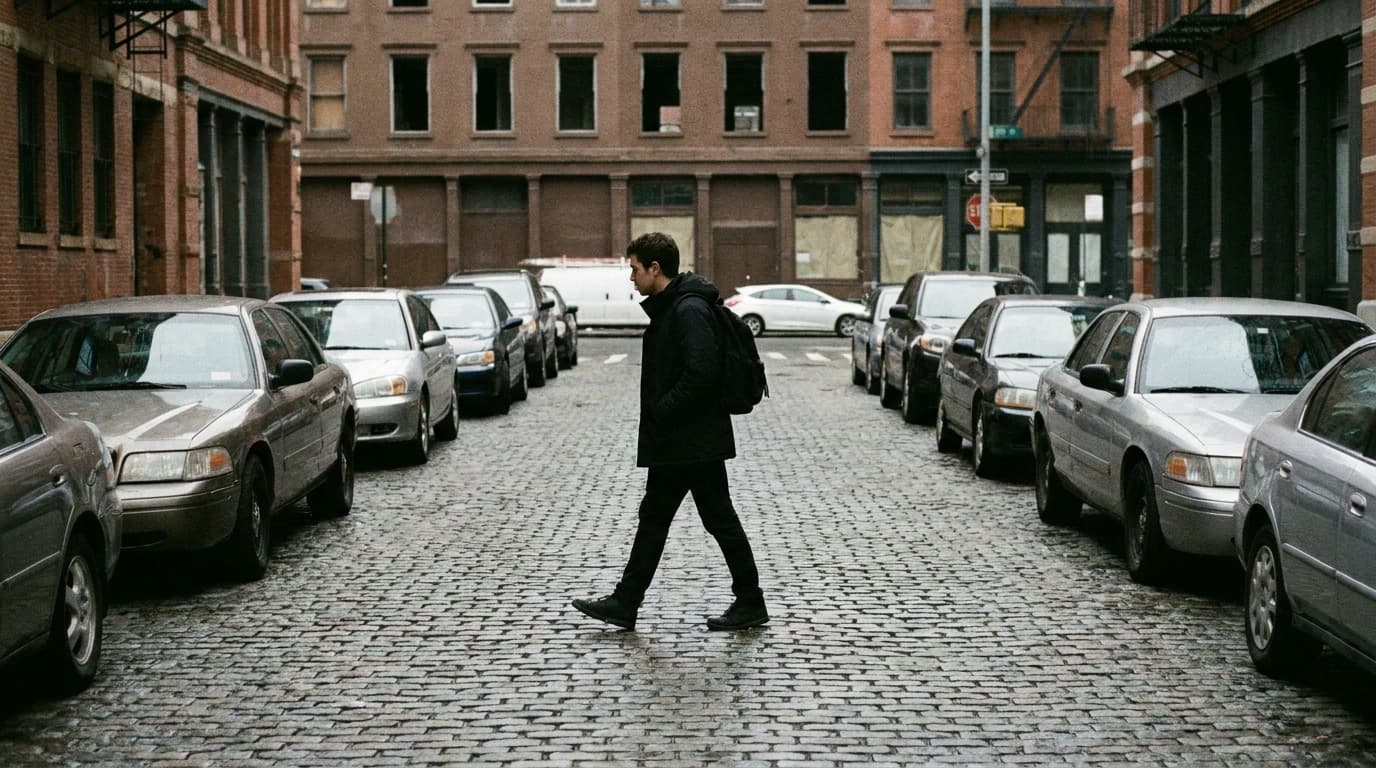
Kansas allows a pedestrian to cross outside a crosswalk only by yielding the right-of-way to all vehicles, and it bars two kinds of crossing outright: mid-block between adjacent signalized intersections except in a marked crosswalk, and diagonally across an intersection unless traffic-control devices authorize it (K.S.A. 8-1534). The uniform fine schedule lists "Improper pedestrian crossing" at $45 (K.S.A. 8-2118(c)), and a violation is a traffic infraction. For how other states handle the same question, see our guide to jaywalking laws by state.
Information last verified on 2026-10-10. This article has not been reviewed by a licensed lawyer.
Jurisdiction scope: This article covers Kansas state law: the pedestrian sections of the uniform act regulating traffic (K.S.A. 8-1509 and 8-1532 to 8-1538), the traffic infraction section 8-2116 and the uniform fine schedule in 8-2118, as published by the Kansas Revisor of Statutes. It does not cover the text of individual city ordinances, municipal court procedures, injury claims after a crash, or the law of other states.
Is jaywalking illegal in Kansas?
Crossing outside a crosswalk is lawful in Kansas when the pedestrian yields to traffic. Two rules are flat prohibitions: crossing mid-block between adjacent signalized intersections outside a marked crosswalk, and crossing an intersection diagonally without authorization from traffic-control devices.
| Situation | Kansas rule | Uniform fine schedule |
|---|---|---|
| Crossing outside a marked crosswalk or an unmarked crosswalk at an intersection | Allowed, but the pedestrian must yield to all vehicles (8-1534(a)) | $45 |
| Crossing where a pedestrian tunnel or overhead crossing is provided | Pedestrian must yield to all vehicles (8-1534(b)) | $45 |
| Crossing between adjacent intersections with traffic-control signals in operation | Only in a marked crosswalk (8-1534(c)) | $45 |
| Crossing an intersection diagonally | Only where official traffic-control devices authorize it (8-1534(d)) | $45 |
| Starting to cross on a flashing or steady Don't Walk or upraised palm | Barred (8-1509(b)) | $45 |
| Entering the roadway facing a steady red light where no pedestrian signal directs otherwise | Barred (8-1508(c)(5)) | $75 |
| Disobeying a traffic-control device that applies to pedestrians | Must obey unless a police officer directs otherwise (8-1532(a)) | $45 |
| Suddenly leaving a curb into the path of a vehicle so close as to be an immediate hazard | Barred (8-1533(b)) | $75 |
| Walking along a roadway next to a usable sidewalk | Unlawful (8-1537(a)) | $45 |
| Standing in a roadway to solicit a ride | Barred (8-1538(a)) | $45 |
| Walking in a crosswalk | On the right half whenever practicable (8-1536) | $45 |
| An emergency vehicle approaching with its audible and visual signals in use | Pedestrian must yield the right-of-way (8-1541) | $45 |
The amounts come from the uniform fine schedule in K.S.A. 8-2118(c). The $75 entry for 8-1533 is a single schedule line that covers both the driver's failure to yield in a crosswalk and a pedestrian suddenly entering the roadway.
Crossing outside a crosswalk in Kansas
K.S.A. 8-1534 sets the crossing rules:
"(a) Every pedestrian crossing a roadway at any point other than within a marked crosswalk or within an unmarked crosswalk at an intersection shall yield the right-of-way to all vehicles upon the roadway. (b) Any pedestrian crossing a roadway at a point where a pedestrian tunnel or overhead pedestrian crossing has been provided shall yield the right-of-way to all vehicles upon the roadway. (c) Between adjacent intersections at which traffic-control signals are in operation pedestrians shall not cross at any place except in a marked crosswalk. (d) No pedestrian shall cross a roadway intersection diagonally unless authorized by official traffic-control devices; and, when authorized to cross diagonally, pedestrians shall cross only in accordance with the official traffic-control devices pertaining to such crossing movements."
K.S.A. 8-1411 defines a crosswalk as "That part of a roadway at an intersection included within the connections of the lateral lines of sidewalks on opposite sides of the highway," or any portion of a roadway at an intersection or elsewhere "distinctly indicated for pedestrian crossing by lines or other markings on the surface." An unmarked crosswalk therefore exists at an intersection where sidewalks on opposite sides connect; at an intersection with no sidewalks and no markings, a crossing pedestrian falls under the yield rule in 8-1534(a).
Subsections (a) and (b) are duties to yield, so a mid-block crossing on most streets is lawful when the pedestrian lets traffic pass first. Subsections (c) and (d) are prohibitions. On a block with working signals at both ends, the only lawful mid-block crossing is in a marked crosswalk. The history line on the revisor's page for 8-1534 shows only its 1974 enactment, with no later amendment.
A pedestrian in a crosswalk has a duty too. Under 8-1533(b), "No pedestrian shall suddenly leave a curb or other place of safety and walk or run into the path of a vehicle which is so close as to constitute an immediate hazard." Where a pedestrian tunnel or overhead crossing is provided, the driver's crosswalk-yield duty in 8-1533(a) does not apply (8-1533(c)).
Walk and Don't Walk signals in Kansas
Pedestrians must follow the devices aimed at them. K.S.A. 8-1532 provides: "(a) A pedestrian shall obey the instructions of any official traffic-control device specifically applicable to such pedestrian, unless otherwise directed by a police officer. (b) Pedestrians shall be subject to traffic and pedestrian-control signals as provided in K.S.A. 8-1508 and 8-1509."
The pedestrian-signal rule in 8-1509(b) reads:
"(b) Flashing or steady don't walk or upraised palm. No pedestrian shall start to cross the roadway in the direction of such signal, but any pedestrian who has partially completed crossing on the "walk" or "walking person" signal shall proceed to a sidewalk or safety island while the "don't walk" or upraised palm signal is showing."
The rule bars starting to cross. A pedestrian who began on Walk keeps going to the sidewalk or a safety island. The uniform fine schedule lists "Violating pedestrian control signal" (8-1509) and "Disobeying pedestrian traffic control device" (8-1532) at $45 each.
Where no Walk or Don't Walk signal directs otherwise, the ordinary traffic light governs pedestrians under K.S.A. 8-1508. On a green, pedestrians "may proceed across the roadway within any marked or unmarked crosswalk," except when the only green is a turn arrow (8-1508(a)(3)). On a steady yellow, "no pedestrian shall then start to cross the roadway" (8-1508(b)(2)). On a steady red, pedestrians "shall not enter the roadway" (8-1508(c)(5)). The schedule lists "Violating traffic control signal" (8-1508) at $75.
Walking along the road in Kansas
K.S.A. 8-1537 sets where pedestrians walk:
"(a) Where a sidewalk is provided and its use is practicable, it shall be unlawful for any pedestrian to walk along and upon an adjacent roadway. (b) Where a sidewalk is not available, any pedestrian walking along and upon a highway shall walk only on a shoulder, as far as practicable from the edge of the roadway. (c) Where neither a sidewalk nor a shoulder is available, any pedestrian walking along and upon a highway shall walk as near as practicable to an outside edge of the roadway, and, if on a two-way roadway, shall walk only on the left side of the roadway. (d) Except as otherwise provided in this article, any pedestrian upon a roadway shall yield the right-of-way to all vehicles upon the roadway."
The schedule lists "Improper use of roadway by pedestrian" (8-1537) at $45.
K.S.A. 8-1538 bars standing in a roadway to solicit a ride (8-1538(a)) and standing on a highway to solicit employment, business or contributions from vehicle occupants (8-1538(b)). Soliciting contributions is not prohibited if the person or organization "has first obtained a permit authorizing such soliciting from the local authorities in their respective jurisdictions" (8-1538(d)). The schedule lists "Soliciting ride or business on roadway" at $45.
What drivers owe pedestrians in Kansas
A pedestrian's duty to yield outside a crosswalk does not erase the driver's duties.
Crosswalks without working signals. Under 8-1533(a), "When traffic-control signals are not in place or not in operation the driver of a vehicle shall yield the right-of-way, slowing down or stopping if need be to so yield, to a pedestrian crossing the roadway within a crosswalk when the pedestrian is upon the half of the roadway upon which the vehicle is traveling, or when the pedestrian is approaching so closely from the opposite half of the roadway as to be in danger." The schedule line for 8-1533, "Failure to yield to pedestrian in crosswalk; pedestrian suddenly entering roadway; passing vehicle stopped for pedestrian at crosswalk," lists $75.
At signals. A pedestrian facing Walk "shall be given the right-of-way by the drivers of all vehicles" (8-1509(a)). Drivers on a green, a green arrow, or a right or left turn on red must yield to pedestrians lawfully within the intersection or an adjacent crosswalk (8-1508(a)(1)-(2), (c)(2)-(3)).
Passing at a crosswalk. When a vehicle is stopped at a marked crosswalk or an unmarked crosswalk at an intersection to let a pedestrian cross, "the driver of any other vehicle approaching from the rear shall not overtake and pass such stopped vehicle" (8-1533(d)).
Sidewalks and blind pedestrians. Drivers must yield to any pedestrian on a sidewalk (8-1540) and to any blind pedestrian carrying a clearly visible white cane or accompanied by a guide dog (8-1542). The schedule lists each at $45.
Due care. K.S.A. 8-1535 provides: "Notwithstanding other provisions of this article or the provisions of any local ordinance, every driver of a vehicle shall exercise due care to avoid colliding with any pedestrian and shall give warning by sounding the horn when necessary and shall exercise proper precaution upon observing any child or any obviously confused or incapacitated person." The schedule lists "Failure to exercise due care in regard to pedestrian" at $45.
Jaywalking ticket fine in Kansas
A violation of a section listed in the uniform fine schedule is a traffic infraction. K.S.A. 8-2116(a) provides that every person "violating any of the sections listed in the uniform fine schedule in K.S.A. 8-2118, and amendments thereto, is guilty of a traffic infraction."
The pedestrian lines of the schedule in 8-2118(c):
| Section | Schedule description | Fine |
|---|---|---|
| 8-1508 | Violating traffic control signal | $75 |
| 8-1509 | Violating pedestrian control signal | $45 |
| 8-1532 | Disobeying pedestrian traffic control device | $45 |
| 8-1533 | Failure to yield to pedestrian in crosswalk; pedestrian suddenly entering roadway; passing vehicle stopped for pedestrian at crosswalk | $75 |
| 8-1534 | Improper pedestrian crossing | $45 |
| 8-1535 | Failure to exercise due care in regard to pedestrian | $45 |
| 8-1536 | Improper pedestrian movement in crosswalk | $45 |
| 8-1537 | Improper use of roadway by pedestrian | $45 |
| 8-1538 | Soliciting ride or business on roadway | $45 |
| 8-1540 | Failure to yield to pedestrian on sidewalk | $45 |
| 8-1541 | Failure of pedestrian to yield to emergency vehicle | $45 |
| 8-1542 | Failure to yield to blind pedestrian | $45 |
Three rules in 8-2118 shape what you pay:
- Court costs are separate. Under 8-2118(a), the fine for someone who appears or pleads "shall be no greater than that specified in the uniform fine schedule ... and court costs shall be taxed as provided by law." In a state case disposed of under 8-2118(a) and (b), "the docket fee to be paid as court costs shall be $86" (K.S.A. 28-172a(b)), so a $45 ticket paid in such a case also carries that $86 docket fee.
- The schedule is not a ceiling after a court appearance. The same subsection states that the schedule "shall not limit the fine that may be imposed following a court appearance."
- Paying is a plea. Under 8-2118(b), "When a person charged with a traffic infraction makes payment without executing a written waiver of right to trial and plea of guilty or no contest, the payment shall be deemed such an appearance, waiver of right to trial and plea of no contest."
Failure to comply with a traffic citation is a misdemeanor that can lead to suspension of driving privileges after a 30-day notice (K.S.A. 8-2110(a), (b)(1)(A)). That section lists 8-1532, 8-1534, 8-1536, 8-1537 and 8-1538 among the violations that "shall not provide the basis for a violation of this section" (8-2110(b)(1)(C)(i)); the signal sections 8-1508 and 8-1509 are not on that list.
The Kansas pedestrian sections (8-1532 to 8-1542) contain no limit on when police may stop a pedestrian for these infractions.
Local jaywalking rules in Kansas
Kansas lets local authorities, by ordinance or resolution, and the secretary of transportation, by erecting traffic-control devices, "prohibit pedestrians from crossing any roadway in a business district or any designated highways except in a crosswalk" (K.S.A. 8-2006). After an engineering and traffic investigation, they may also designate unmarked crosswalk locations where crossing is prohibited or where pedestrians must yield, and those restrictions apply "only when official traffic-control devices indicating the restrictions are in place" (8-2007).
A ticket under a city ordinance is an ordinance traffic infraction. Its fine comes from a schedule set by the municipal judge, and "Such fines may vary from those contained in the uniform fine schedule" (8-2118(d)). The city's municipal code and municipal court are the places to check the rule and fine on your street. One state rule applies regardless of local law: the driver's due-care duty in 8-1535 applies "notwithstanding ... the provisions of any local ordinance."
If a pedestrian is hit by a car in Kansas
Whether a pedestrian was crossing lawfully can come up after a collision, alongside the driver's due-care duty in 8-1535. For how no-fault coverage, fault and filing deadlines work in a crash claim, see Kansas car accident laws. Electric scooter riders follow a different set of rules, covered in Kansas e-scooter laws.
Related pages
This article provides general legal information about Kansas law, not legal advice. For advice about a specific situation, contact a lawyer licensed in Kansas.
Last updated: 2026-10-10.
Frequently Asked Questions
Is jaywalking illegal in Kansas?
Crossing outside a crosswalk is allowed if you yield the right-of-way to all vehicles (K.S.A. 8-1534(a)). Between adjacent intersections with working traffic signals you may cross only in a marked crosswalk, and diagonal crossing of an intersection is barred unless traffic-control devices authorize it (8-1534(c), (d)).
What is the fine for jaywalking in Kansas?
The uniform fine schedule in K.S.A. 8-2118(c) lists improper pedestrian crossing (8-1534) at $45, and court costs are taxed as provided by law (8-2118(a)); in a state case paid under 8-2118(a) and (b) the docket fee charged as court costs is $86 (K.S.A. 28-172a(b)). A city ordinance fine may vary from the state schedule (8-2118(d)). A violation is a traffic infraction (8-2116(a)).
Does paying a jaywalking ticket count as a plea in Kansas?
Yes. Under K.S.A. 8-2118(b), paying a traffic infraction fine without a written waiver and plea is deemed an appearance, waiver of the right to trial and plea of no contest.
Can you cross on a Don't Walk signal in Kansas?
No pedestrian may start to cross on a flashing or steady Don't Walk or upraised palm (K.S.A. 8-1509(b)). Someone who started on Walk proceeds to a sidewalk or safety island; the schedule lists a violation at $45.
Which side of the road should you walk on in Kansas?
Use the sidewalk where one is provided and practicable, otherwise the shoulder. With neither, walk near the outside edge and, on a two-way road, only on the left side (K.S.A. 8-1537).
Do drivers have to yield to pedestrians in Kansas?
Where signals are not in place or not operating, drivers must yield to a pedestrian in a crosswalk on their half of the road or approaching closely from the other half (K.S.A. 8-1533(a), listed at $75). K.S.A. 8-1535 requires due care toward any pedestrian notwithstanding any local ordinance.
Updates
Independently fact-checked against the cited primary sources
The Law Behind This Article
This article rests on the statutory provisions below, held in our own legal record and retrieved from the official source. Tap a section to read the operative text.
Kansas Statutes Annotated, Chapter 8: AUTOMOBILES AND OTHER VEHICLES
§ 8-1534Same; crossing roadway at location other than crosswalk.In force
(a) Every pedestrian crossing a roadway at any point other than within a marked crosswalk or within an unmarked crosswalk at an intersection shall yield the right-of-way to all vehicles upon the roadway. (b) Any pedestrian crossing a roadway at a point where a pedestrian tunnel or overhead pedestrian crossing has been provided shall yield the right-of-way to all vehicles upon the roadway. (c) Between adjacent intersections at which traffic-control signals are in operation pedestrians shall not cross at any place except in a marked crosswalk. (d) No pedestrian shall cross a roadway intersection diagonally unless authorized by official traffic-control devices; and, when authorized to cross diagonally, pedestrians shall cross only in accordance with the official traffic-control devices pertaining to such crossing movements.
Official text (excerpt) · last checked 2026-07-29 · Read the full text in our law library · Verify at ksrevisor.gov
§ 8-1533Same; right-of-way at crosswalks; interference with vehicular traffic; duties of drivers.In force
(a) When traffic-control signals are not in place or not in operation the driver of a vehicle shall yield the right-of-way, slowing down or stopping if need be to so yield, to a pedestrian crossing the roadway within a crosswalk when the pedestrian is upon the half of the roadway upon which the vehicle is traveling, or when the pedestrian is approaching so closely from the opposite half of the roadway as to be in danger. (b) No pedestrian shall suddenly leave a curb or other place of safety and walk or run into the path of a vehicle which is so close as to constitute an immediate hazard. (c) Subsection (a) shall not apply under the conditions stated in subsection (b) of K.S.A. 8-1534. (d) Whenever any vehicle is stopped at a marked crosswalk or at any unmarked crosswalk at an intersection to permit a pedestrian to cross the roadway, the driver of any other vehicle approaching from the rear shall not overtake and pass such stopped vehicle.
Official text (excerpt) · last checked 2026-07-29 · Read the full text in our law library · Verify at ksrevisor.gov
Search our full record of US law — 2.1 million sections, every state + federal →
Sources and References
- K.S.A. 8-1534 (crossing roadway at location other than crosswalk)(ksrevisor.org).gov
- K.S.A. 8-2118 (uniform fine schedule; payment as plea)(ksrevisor.org).gov
- K.S.A. 8-2116 (traffic infractions)(ksrevisor.org).gov
- K.S.A. 8-1509 (pedestrian-control signals)(ksrevisor.org).gov
- K.S.A. 8-1532 (pedestrians subject to traffic-control devices)(ksrevisor.org).gov
- K.S.A. 8-1533 (right-of-way at crosswalks; duties of drivers)(ksrevisor.org).gov
- K.S.A. 8-1537 (pedestrians on highways)(ksrevisor.org).gov
- K.S.A. 8-1538 (soliciting rides, business or contributions)(ksrevisor.org).gov
- K.S.A. 8-1535 (drivers to exercise due care)(ksrevisor.org).gov
- K.S.A. 8-1508 (traffic-control signal legend)(ksrevisor.gov).gov
- K.S.A. 8-1540 (pedestrians' right-of-way on sidewalks)(ksrevisor.gov).gov
- K.S.A. 8-1541 (pedestrians yield to emergency vehicles)(ksrevisor.gov).gov
- K.S.A. 8-1542 (blind pedestrian's right-of-way)(ksrevisor.gov).gov
- K.S.A. 8-1536 (movement in crosswalk)(ksrevisor.gov).gov
- K.S.A. 8-1411 (crosswalk defined)(ksrevisor.gov).gov
- K.S.A. 8-2006 (restrictions on pedestrian crossings)(ksrevisor.gov).gov
- K.S.A. 8-2007 (unmarked crosswalks)(ksrevisor.gov).gov
- K.S.A. 28-172a (docket fees; traffic cases)(ksrevisor.gov).gov
- K.S.A. 8-2110 (failure to comply with traffic citation)(ksrevisor.gov).gov