
California
Is Jaywalking Legal in California? 2023 Rules and Fines (2026)
Independently fact-checked against primary sources (last audited October 10, 2026). · 20 primary sources cited on this page. How we verify our legal content
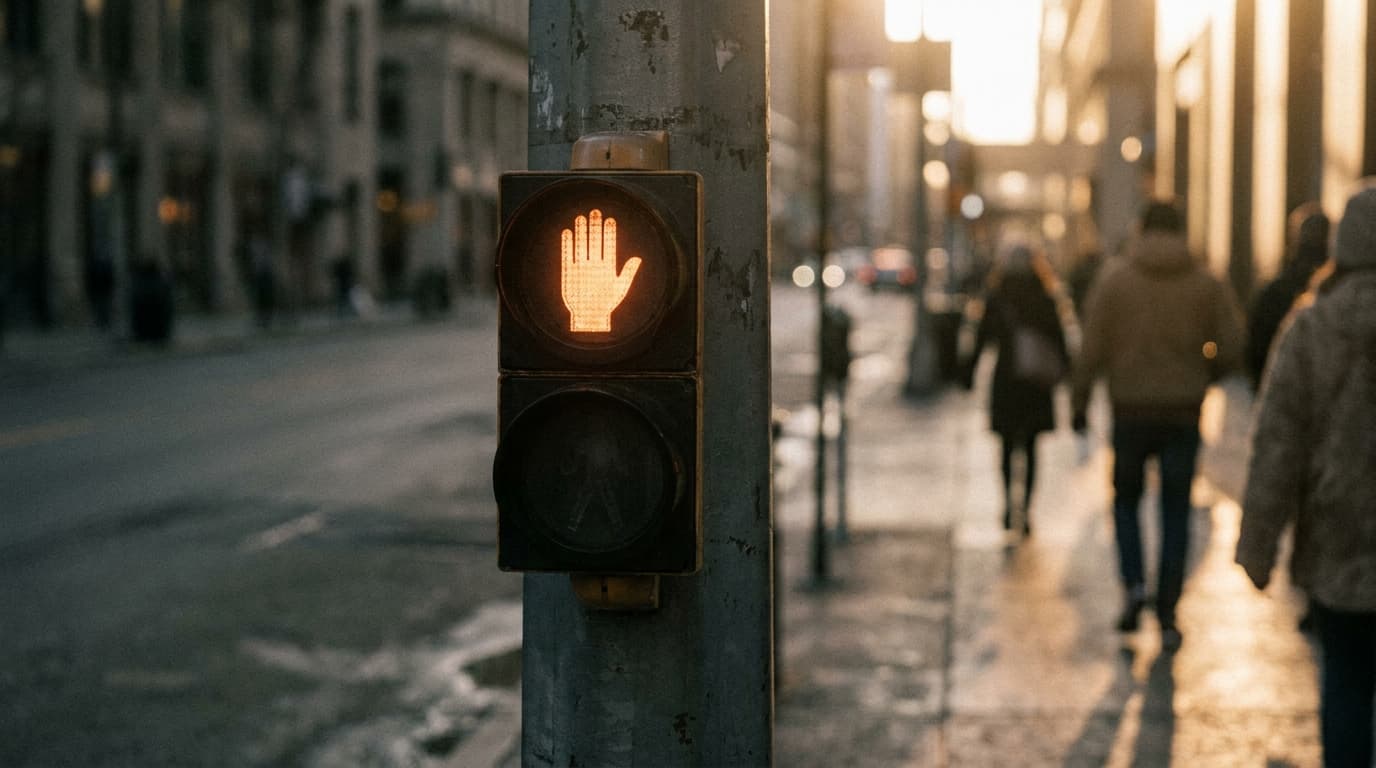
Jaywalking is still against the law in California, but since January 1, 2023 police may stop you for it only when there is an immediate danger of a collision. California Vehicle Code 21955(a) bars crossing between adjacent signal-controlled intersections except in a crosswalk, and 21954(a) requires a pedestrian outside a crosswalk to yield to vehicles close enough to be an immediate hazard. AB 2147 (Statutes of 2022, Chapter 957) added a stop limit to those sections and to the related signal and crosswalk rules, and Veh. Code 42001(b) caps a pedestrian infraction fine at $50. For how other states handle the same question, see our guide to jaywalking laws by state.
Information last verified on 2026-10-10. This article has not been reviewed by a licensed lawyer.
Jurisdiction scope: This article covers California state law: the pedestrian rights and duties sections of the Vehicle Code (Veh. Code 21949 to 21962) and the bicycle-lane rule in 21966, the crosswalk definition in 275, the signal rules in 21451 to 21453 and 21456, the infraction classification in 40000.1, the pedestrian fine cap in 42001(b), and AB 2147 (Statutes of 2022, Chapter 957). It does not cover the rules for blind pedestrians in 21963 and following, the full schedule of court fees and assessments, city or county ordinances, injury claims after a crash, or the law of other states.
Is jaywalking legal in California?
No, but the rules changed in 2023 in a way that matters on the street. The prohibitions are still in the Vehicle Code and a violation is still an infraction. What changed is when an officer may stop you for it: only when a reasonably careful person would realize there is an immediate danger of a collision.
California's pedestrian rules work in three layers:
- A yield duty, not a ban, for most crossings outside a crosswalk. Veh. Code 21954(a) requires a pedestrian outside a marked crosswalk or an unmarked crosswalk at an intersection to yield to vehicles "so near as to constitute an immediate hazard." Sections 21949 to 21962 contain no rule making every crossing outside a crosswalk unlawful regardless of traffic.
- A flat ban on signalized blocks. Between adjacent intersections controlled by traffic signals or by police officers, a pedestrian may cross only in a crosswalk (21955(a)).
- Local add-ons. Cities and counties may prohibit crossing at other than crosswalks by ordinance (21961(a)).
| Situation | California rule | Officer-stop limit? |
|---|---|---|
| Crossing outside a marked crosswalk or an unmarked crosswalk at an intersection | Yield to vehicles so near as to be an immediate hazard (21954(a)) | Yes (21954(c)) |
| Crossing between adjacent intersections controlled by signals or police officers | Only in a crosswalk (21955(a)) | Yes (21955(b)) |
| Starting to cross on a steady DON'T WALK, WAIT or upraised hand, or a flashing one without a countdown | Barred (21456) | Yes (21456(b)) |
| Facing a steady red or red arrow, with no pedestrian signal | May not enter the roadway (21453(d)) | Yes (21453(e)) |
| Facing a steady yellow, with no pedestrian signal | May not enter the roadway (21452(b)) | Yes (21452(c)) |
| Facing a green arrow, with no pedestrian signal | May not enter the roadway (21451(d)) | Yes (21451(e)) |
| Crossing where a tunnel or overhead crossing serves the location | Governed by 21953 | Yes (21953(c)) |
| Walking along a roadway outside a business or residence district | Close to the left-hand edge, with a right-edge exception (21956) | Yes (21956(c)) |
| Suddenly leaving a curb into the path of a vehicle that is an immediate hazard | Barred (21950(b)) | Yes (21950(e)) |
| Crossing outside a crosswalk where a local ordinance bans it | Governed by the local ordinance (21961(a)) | Yes (21961(b)) |
| Standing in the roadway to solicit a ride | Barred (21957) | 21957 is not among the sections AB 2147 amended |
| Walking along a bicycle path or lane next to an adequate pedestrian facility | Barred (21966(a)) | Yes (21966(b)) |
| Walking on a freeway or expressway where signs prohibit pedestrians | Barred once signs are posted (21960) | 21960 is not among the sections AB 2147 amended |
The 2023 reform: AB 2147 and the officer-stop limit
AB 2147 was chaptered as Chapter 957 of the Statutes of 2022. Its chaptered text describes it as "An act to amend Sections 21451, 21452, 21453, 21456, 21461.5, 21462, 21950, 21953, 21954, 21955, 21956, 21961, and 21966 of, and to add and repeal Section 21949.5 of, the Vehicle Code, relating to pedestrians." The amended pedestrian sections took effect January 1, 2023, and the current version of the pedestrian-signal section, 21456, became operative January 1, 2024.
The core of the reform is one clause, repeated across the pedestrian sections. In the signalized-block rule it reads:
"(b) (1) A peace officer ... shall not stop a pedestrian for a violation of subdivision (a) unless a reasonably careful person would realize there is an immediate danger of a collision with a moving vehicle or other device moving exclusively by human power. (2) This subdivision does not relieve a pedestrian from the duty of using due care for their safety." (Veh. Code 21955(b))
The same limit appears in 21954(c) for the yield rule, and in 21953(c), 21956(c), 21453(e), 21456(b) and 21950(e). It also reaches local ordinances: under 21961(b), a peace officer "shall not stop a pedestrian for a violation of an ordinance adopted by a local authority pursuant to this section, unless a reasonably careful person would realize there is an immediate danger of a collision with a moving vehicle or other device moving exclusively by human power."
Three points follow from the text:
- The prohibitions remain. AB 2147 did not repeal 21955(a) or 21954(a). It limits the stop, not the rule.
- The test is objective and narrow. The question is whether "a reasonably careful person would realize there is an immediate danger of a collision" with a moving vehicle or other device moving exclusively by human power. The danger must be immediate, and the standard is what a reasonably careful person would realize.
- Due care still applies. Subdivision (b)(2) of 21955 says the stop limit "does not relieve a pedestrian from the duty of using due care for their safety."
Crossing outside a crosswalk in California
Veh. Code 21954(a) is the general rule for crossing anywhere other than a crosswalk:
"(a) Every pedestrian upon a roadway at any point other than within a marked crosswalk or within an unmarked crosswalk at an intersection shall yield the right-of-way to all vehicles upon the roadway so near as to constitute an immediate hazard."
This is a duty to yield. It applies to vehicles "so near as to constitute an immediate hazard," not to every vehicle on the road. The phrase "unmarked crosswalk at an intersection" also matters. Veh. Code 275 defines a crosswalk as the extension of the sidewalk boundary lines across an intersection where the roads meet at approximately right angles (not from an alley across a street), or any part of a roadway marked for pedestrian crossing. So an intersection with sidewalks has crosswalks even without paint, and a pedestrian within one is outside 21954(a). But "there shall not be a crosswalk where local authorities have placed signs indicating no crossing."
The flat prohibition is 21955(a):
"(a) Between adjacent intersections controlled by traffic control signal devices or by police officers, pedestrians shall not cross the roadway at any place except in a crosswalk."
On a block with signals (or officers directing traffic) at both ends, a mid-block crossing outside a crosswalk is unlawful whether or not a car is coming. The 2023 limit governs only when an officer may stop someone for it.
Pedestrians in a crosswalk have their own duties. Under 21950(b), "No pedestrian may suddenly leave a curb or other place of safety and walk or run into the path of a vehicle that is so close as to constitute an immediate hazard. No pedestrian may unnecessarily stop or delay traffic while in a marked or unmarked crosswalk."
Walk signals in California
Veh. Code 21456 governs pedestrian signals. A steady "DON'T WALK" or "WAIT" or approved "Upraised Hand" symbol, or a flashing one without a countdown signal showing the time left to cross, "means a pedestrian facing the signal shall not start to cross the roadway in the direction of the signal." On WALK you may cross, but must yield to vehicles lawfully within the intersection when the signal is first shown (21456(a)(1)). A flashing DON'T WALK with a countdown lets you start, but you "must complete the crossing prior to the display of the steady 'DON'T WALK'" when the countdown ends (21456(a)(2)).
Where there is no pedestrian signal, the ordinary lights apply. On a circular green, a pedestrian may cross within any marked or unmarked crosswalk but must yield to vehicles lawfully within the intersection when the signal is first shown (21451(c)). A pedestrian facing a green turn arrow, a steady yellow, or a steady red or red arrow "shall not enter the roadway" (21451(d), 21452(b), 21453(d)).
These sections carry the officer-stop limit (21456(b)(1), 21451(e), 21452(c) and 21453(e)), so an officer may not stop a pedestrian for a signal violation unless a reasonably careful person would realize there is an immediate danger of a collision.
Walking along the road and on freeways
Outside towns, Veh. Code 21956 sets which side to walk on:
"(a) A pedestrian shall not walk upon a roadway outside of a business or residence district otherwise than close to the pedestrian's left-hand edge of the roadway. (b) A pedestrian may walk close to their right-hand edge of the roadway if a crosswalk or other means of safely crossing the roadway is not available or if existing traffic or other conditions would compromise the safety of a pedestrian attempting to cross the road."
Freeways work differently. Under 21960(a), the Department of Transportation and local authorities "may prohibit or restrict the use of the freeways, expressways, or any portion thereof by pedestrians, bicycles or other nonmotorized traffic" where vehicle access is completely or partially controlled. Under 21960(b), the prohibition "shall be effective when appropriate signs giving notice thereof are erected upon any freeway or expressway and the approaches thereto."
Even where pedestrians are banned, "the driver or passengers of a disabled vehicle stopped on a freeway or expressway may walk to the nearest exit, in either direction, on that side of the freeway or expressway upon which the vehicle is disabled, from which telephone or motor vehicle repair services are available" (21960(a)).
Local jaywalking ordinances in California
Veh. Code 21961(a) provides: "This chapter does not prevent local authorities from adopting ordinances prohibiting pedestrians from crossing roadways at other than crosswalks." A California city can therefore still ban mid-block crossing on its streets. Subdivision (b) applies the same stop limit to those ordinances, so the state test of an immediate danger of a collision governs a stop under a local rule too. Check your city's municipal code for any local crossing ordinance.
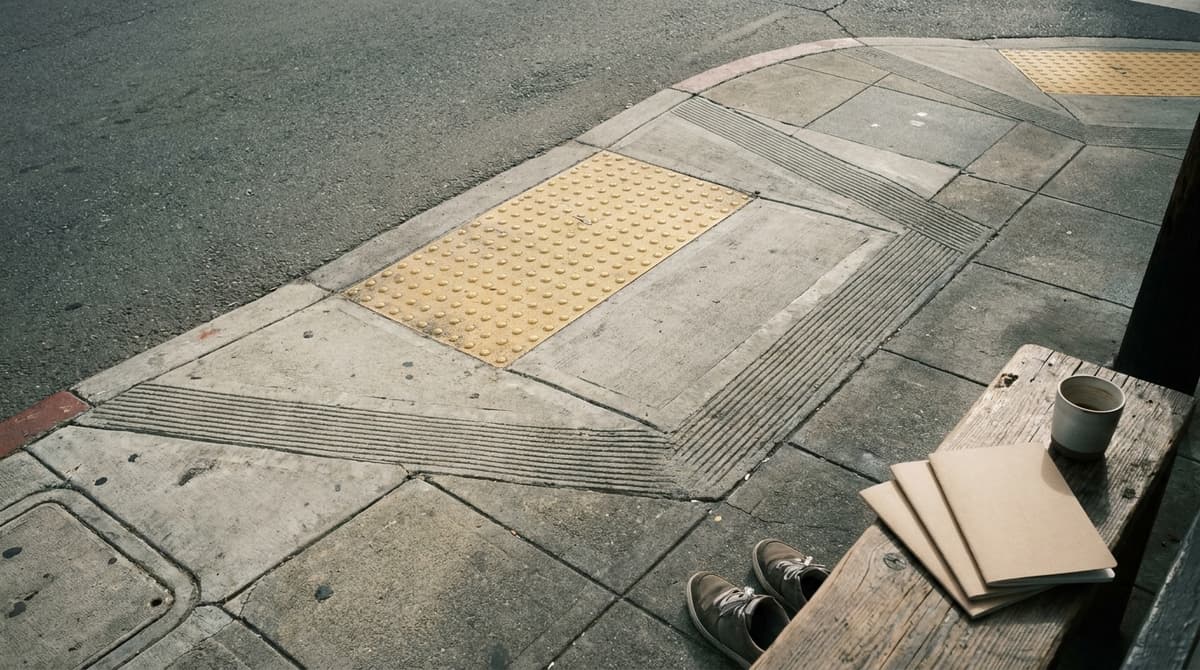
What drivers owe pedestrians in California
The driver's main duty is in Veh. Code 21950(a): "The driver of a vehicle shall yield the right-of-way to a pedestrian crossing the roadway within any marked crosswalk or within any unmarked crosswalk at an intersection, except as otherwise provided in this chapter."
Because an unmarked crosswalk at an intersection counts, a driver's duty to yield is not limited to painted crossings. Other driver duties sit alongside it:
- Slow down in crosswalks. A driver approaching a pedestrian in a marked or unmarked crosswalk "shall exercise all due care and shall reduce the speed of the vehicle or take any other action relating to the operation of the vehicle as necessary to safeguard the safety of the pedestrian" (21950(c)).
- Due care outside crosswalks too. The yield rule in 21954 "shall not relieve the driver of a vehicle from the duty to exercise due care for the safety of any pedestrian upon a roadway" (21954(b)).
- No passing a car stopped for a pedestrian. A driver approaching from the rear "shall not overtake and pass the stopped vehicle" at a marked or unmarked crosswalk (21951).
- Sidewalks. A driver, before driving over or upon any sidewalk, "shall yield the right-of-way to any pedestrian approaching thereon" (21952).
- Turning at signals. On green, "Any driver, including one turning, shall yield the right-of-way to other traffic and to pedestrians lawfully within the intersection or an adjacent crosswalk" (21451(a)), and a driver turning on red must yield to pedestrians lawfully within an adjacent crosswalk (21453(b)).
The officer-stop subdivisions in the crossing and signal sections also state that they do not relieve a driver of a vehicle from the duty of exercising due care for the safety of any pedestrian within the roadway; in the bicycle-lane rule, the same clause keeps that duty on bicyclists (21966(b)(3)). If you are hit while crossing, whether you were in a crosswalk, and whether a vehicle was an immediate hazard when you stepped out, can both come up. For how fault and insurance work after a crash, see California car accident laws. Riders of electric scooters follow a separate set of rules, covered in California e-scooter laws.
Jaywalking ticket fine in California
A pedestrian violation is an infraction. Veh. Code 40000.1 provides: "Except as otherwise provided in this article, it is unlawful and constitutes an infraction for any person to violate, or fail to comply with any provision of this code, or any local ordinance adopted pursuant to this code."
The fine is capped specifically for pedestrians. Veh. Code 42001(b) provides:
"(b) A pedestrian convicted of an infraction for a violation of this code or any local ordinance adopted pursuant to this code shall be punished by a fine not exceeding fifty dollars ($50)."
The $50 is the ceiling on the base fine itself, not the total. State penalty assessments, a surcharge and court fees are added. In the Judicial Council's 2026 Uniform Bail and Penalty Schedules, crossing between controlled intersections (21955(a)) and failing to yield outside a crosswalk (21954(a)) each carry a $25 base fine and a total bail of $210. Thirty counties, including Los Angeles and San Diego, may set totals above the uniform schedule (Penal Code 1463.28), so the amount on your notice controls.
The same schedule lists no DMV point for these pedestrian offenses, and Veh. Code 1803(b)(6) excuses courts from reporting "Violations for which a person was cited as a pedestrian" to the DMV.
Related pages
This article provides general legal information about California law, not legal advice. For advice about a specific situation, contact a lawyer licensed in California.
Last updated: 2026-10-10.
Frequently Asked Questions
Is jaywalking legal in California now?
Not entirely. Crossing between adjacent signal-controlled intersections outside a crosswalk is still prohibited (Veh. Code 21955(a)), and pedestrians outside a crosswalk must still yield to vehicles that are an immediate hazard (21954(a)). Since January 1, 2023, though, a peace officer may not stop a pedestrian for those violations unless a reasonably careful person would realize there is an immediate danger of a collision.
What is the fine for jaywalking in California?
Veh. Code 42001(b) caps the fine for a pedestrian convicted of a Vehicle Code infraction, or of a local ordinance adopted under the code, at $50. Assessments and fees are added: the Judicial Council's 2026 Uniform Bail and Penalty Schedules list a total bail of $210 for crossing between controlled intersections (21955(a)), and some counties may set higher totals, so the amount on your notice controls.
When can police stop you for jaywalking in California?
Under Veh. Code 21954(c), 21955(b) and the parallel clauses in related sections, only when a reasonably careful person would realize there is an immediate danger of a collision with a moving vehicle or other device moving exclusively by human power.
Is jaywalking a crime in California?
It is an infraction. Veh. Code 40000.1 makes a violation of any provision of the code, or of a local ordinance adopted under it, an infraction except as otherwise provided.
What did AB 2147 change?
AB 2147, chaptered as Chapter 957 of the Statutes of 2022 and effective January 1, 2023, amended the pedestrian and signal sections of the Vehicle Code so that a peace officer may not stop a pedestrian for those violations unless there is an immediate danger of a collision that a reasonably careful person would realize.
Can a California city still ban jaywalking?
Yes. Veh. Code 21961(a) lets local authorities adopt ordinances prohibiting pedestrians from crossing at other than crosswalks, but 21961(b) bars a peace officer from stopping a pedestrian under such an ordinance unless there is an immediate danger of a collision that a reasonably careful person would realize.
Which side of the road should I walk on in California?
Outside a business or residence district, Veh. Code 21956(a) requires walking close to your left-hand edge of the roadway. Under 21956(b), you may walk close to the right-hand edge if a crosswalk or other safe way to cross is not available or traffic or other conditions make crossing unsafe.
Can I walk on a California freeway?
Caltrans and local authorities may prohibit or restrict pedestrians on freeways and expressways with controlled access (Veh. Code 21960(a)). The prohibition takes effect when signs giving notice are posted on the freeway and its approaches (21960(b)). Even where pedestrians are banned, the driver or passengers of a disabled vehicle may walk to the nearest exit, in either direction, on the side where the vehicle is disabled, from which telephone or repair services are available (21960(a)).
Updates
Independently fact-checked against the cited primary sources
The Law Behind This Article
This article rests on the statutory provisions below, held in our own legal record and retrieved from the official source. Tap a section to read the operative text.
California Vehicle Code
§ 21955In force
(a) Between adjacent intersections controlled by traffic control signal devices or by police officers, pedestrians shall not cross the roadway at any place except in a crosswalk. (b) (1) A peace officer, as defined in Chapter 4.5 (commencing with Section 830) of Title 3 of Part 2 of the Penal Code, shall not stop a pedestrian for a violation of subdivision (a) unless a reasonably careful person would realize there is an immediate danger of a collision with a moving vehicle or other device moving exclusively by human power. (2) This subdivision does not relieve a pedestrian from the duty of using due care for their safety. (3) This subdivision does not relieve a driver of a vehicle from the duty of exercising due care for the safety of any pedestrian within the roadway.
Official text (excerpt) · last checked 2026-07-28 · Read the full text in our law library · Verify at leginfo.legislature.ca.gov
§ 21954In force
(a) Every pedestrian upon a roadway at any point other than within a marked crosswalk or within an unmarked crosswalk at an intersection shall yield the right-of-way to all vehicles upon the roadway so near as to constitute an immediate hazard. (b) The provisions of this section shall not relieve the driver of a vehicle from the duty to exercise due care for the safety of any pedestrian upon a roadway. (c) (1) A peace officer, as defined in Chapter 4.5 (commencing with Section 830) of Title 3 of Part 2 of the Penal Code, shall not stop a pedestrian for a violation of subdivision (a) unless a reasonably careful person would realize there is an immediate danger of a collision with a moving vehicle or other device moving exclusively by human power. (2) This subdivision does not relieve a pedestrian from the duty of using due care for their safety. (3) This subdivision does not relieve a driver of a vehicle from the duty of exercising due care for the safety of any pedestrian within the roadway.
Official text (excerpt) · last checked 2026-07-28 · Read the full text in our law library · Verify at leginfo.legislature.ca.gov
Search our full record of US law — 2.1 million sections, every state + federal →
Sources and References
- Cal. Veh. Code 21955 (crossing between signal-controlled intersections)(leginfo.legislature.ca.gov).gov
- Cal. Veh. Code 21954 (pedestrians outside crosswalks)(leginfo.legislature.ca.gov).gov
- AB 2147 (2022), Chapter 957, Statutes of 2022(leginfo.legislature.ca.gov).gov
- Cal. Veh. Code 42001 (fines for infractions)(leginfo.legislature.ca.gov).gov
- Cal. Veh. Code 21961 (local ordinances on pedestrian crossing)(leginfo.legislature.ca.gov).gov
- Cal. Veh. Code 21456 (pedestrian control signals)(leginfo.legislature.ca.gov).gov
- Cal. Veh. Code 21453 (red signals)(leginfo.legislature.ca.gov).gov
- Cal. Veh. Code 21956 (pedestrians walking on roadways)(leginfo.legislature.ca.gov).gov
- Cal. Veh. Code 21950 (right-of-way at crosswalks)(leginfo.legislature.ca.gov).gov
- Cal. Veh. Code 21960 (pedestrians on freeways and expressways)(leginfo.legislature.ca.gov).gov
- Cal. Veh. Code 40000.1 (violations as infractions)(leginfo.legislature.ca.gov).gov
- Cal. Veh. Code 21451 (green signals)(leginfo.legislature.ca.gov).gov
- Cal. Veh. Code 21452 (yellow signals)(leginfo.legislature.ca.gov).gov
- Cal. Veh. Code 275 (crosswalk defined)(leginfo.legislature.ca.gov).gov
- Cal. Veh. Code 21951 (vehicles stopped for pedestrians)(leginfo.legislature.ca.gov).gov
- Cal. Veh. Code 21952 (yield to pedestrians on sidewalks)(leginfo.legislature.ca.gov).gov
- Cal. Veh. Code 21957 (soliciting rides)(leginfo.legislature.ca.gov).gov
- Cal. Veh. Code 21966 (pedestrians in bicycle lanes)(leginfo.legislature.ca.gov).gov
- Cal. Veh. Code 1803 (court reports of convictions to DMV)(leginfo.legislature.ca.gov).gov
- Judicial Council of California, Uniform Bail and Penalty Schedules, 2026 edition (Traffic Infraction Fixed Penalty Schedule)(glenn.courts.ca.gov).gov