
California
California E-Scooter Laws: Sidewalk, Helmet & Age Rules (2026)
Independently fact-checked against primary sources (last audited July 23, 2026). · Law checked current as of August 8, 2026. · 4 primary sources cited on this page. How we verify our legal content

This article is general information about California e-scooter law and is not legal advice. If you were cited for a violation or injured while riding, talk to a California traffic or personal injury attorney, or review the statute directly through the California Legislative Information website. Information last verified on 23 July 2026.
Are e-scooters legal in California?
Yes. California has a dedicated statute for e-scooters, officially called "motorized scooters," codified at Vehicle Code Division 11.5 (Sections 21220 through 21235). This is not a state that treats e-scooters as an undefined vehicle or folds them into moped law by default; the legislature wrote a specific set of rules for them.
Privately owned e-scooters follow this statewide framework wherever you ride in California, whether that is a quiet residential street or a bike lane in a major city. Rental and shared e-scooters follow the same Vehicle Code rules as a baseline, but individual cities can layer additional conditions onto the companies operating shared-scooter programs within their limits. Los Angeles is a documented example: its shared-scooter program sets an 18-plus age floor and requires a California driver's license, both stricter than what state law requires of a privately owned scooter (see the Los Angeles section below).
What counts as an e-scooter in California
Vehicle Code Section 407.5(a) defines a motorized scooter as a two-wheeled device with handlebars that has either a floorboard designed to be stood on or a seat with footrests, and that is powered by an electric motor. Section 407.5(b) extends the same definition to scooters powered by other motor types built to the same specifications.
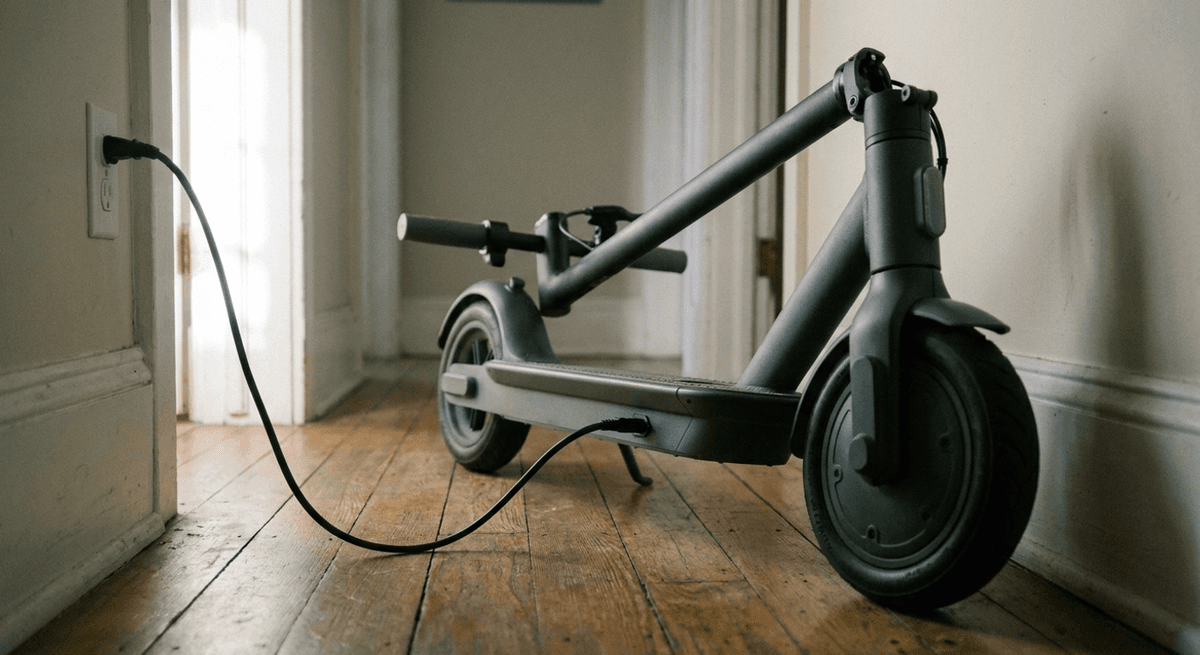
The definition specifically excludes motorcycles, motor-driven cycles, motorized bicycles, and mopeds, each regulated under its own separate part of the Vehicle Code. A device that does not fit the two-wheeled, stand-or-sit, electric-motor description in Section 407.5 is not a "motorized scooter" for purposes of Division 11.5, and a different set of rules may apply.
Every motorized scooter must have a brake capable of skidding the wheel on dry, level pavement under Section 21235(a). Riders also cannot raise the handlebars above shoulder height, tow another person or be towed, or leave the scooter lying on a sidewalk in a way that blocks pedestrians, under other parts of Section 21235.
Where you can ride
Section 21235(b) sets the speed rules, and the wording is easy to misread. The subsection first says a scooter cannot be operated on a highway with a speed limit above 25 mph unless the scooter stays inside a Class II or Class IV bikeway, and it lets a local authority raise that figure to 35 mph by ordinance. Read alone, that sounds like California allows 25 or 35 mph e-scooter riding.
It does not. The same subsection then states that the 15 mph maximum speed set in Section 22411 for motorized scooters applies on every highway, including bikeways, regardless of the higher speed limit posted for other traffic. In practice, the 25 mph and 35 mph figures only decide which higher-speed roadways a scooter is legally allowed onto at all; the actual speed ceiling for the scooter itself is 15 mph everywhere in the state. Some scooter-law summaries collapse this into "California scooters can go up to 25 mph," which the statute's own text does not support.
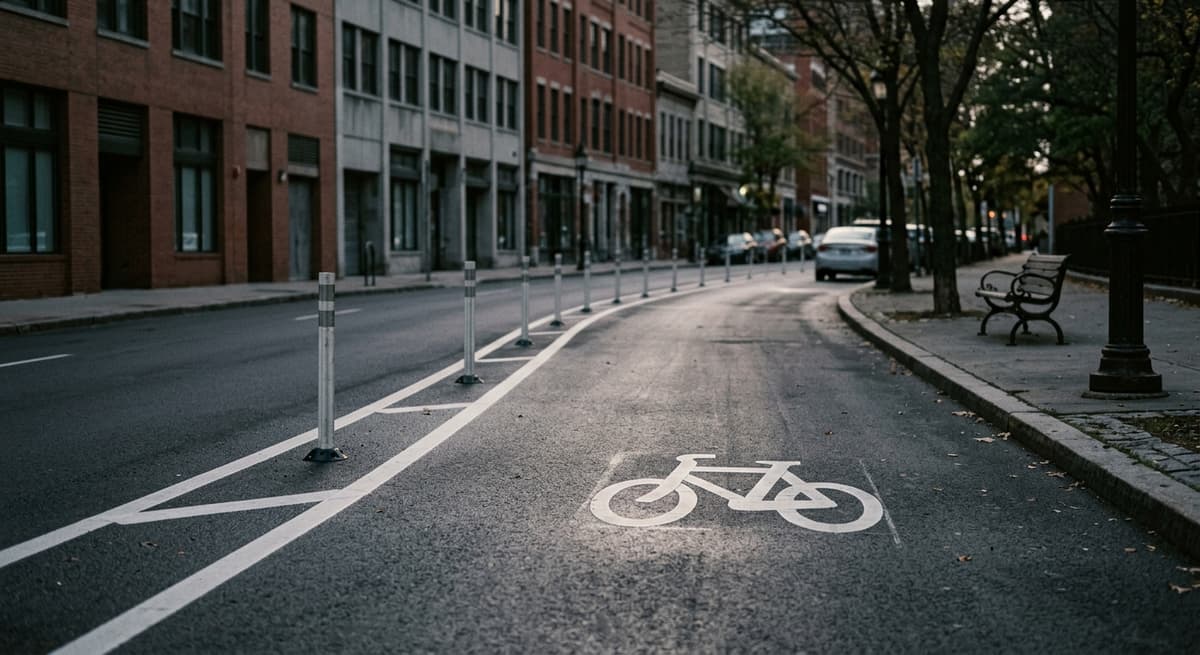
Where a roadway has a Class II bicycle lane, Section 21229(a) requires a scooter operator to ride within it, with exceptions for passing, for avoiding debris or other hazardous conditions, and for approaching a point where a right turn is authorized. Left turns are the one place a motorized scooter does not follow the bicycle rule: Section 21229(a)(2) requires the operator to stop and dismount as close as practicable to the right-hand curb or right edge of the roadway, then complete the turn by crossing the roadway on foot, subject to the rules that apply to pedestrians. Sidewalk riding is prohibited under Section 21235(g), with a narrow exception to enter or leave adjacent property; this is a statewide default, not a city-by-city choice.
Rider rules
Section 21235(d) requires an operator to hold a valid driver's license or an instruction permit. California issues instruction permits starting at 15 and a half, so the practical minimum age most riders reach is commonly described as 16, but the statute itself is keyed to license or permit status rather than a stated numeric age.
Helmets are required only for riders under 18, who must wear a properly fitted, fastened bicycle helmet meeting the Section 21212 standard, under Section 21235(c). California has no statewide helmet requirement for adult e-scooter riders.
The sections that define these rules do not include a state-level registration or insurance requirement. Passengers are not allowed under Section 21235(e), and a rider cannot carry a package or item that prevents keeping at least one hand on the handlebars.
Penalties
Violations of Division 11.5 are Vehicle Code infractions, but the sections that create the rider requirements above do not themselves spell out a statewide fine schedule. Fine amounts for traffic infractions in California are typically set through the state's uniform bail schedule process rather than written into the substantive rule itself, and courts and cities can differ on the amount actually charged for a given violation.
One concrete, documented example comes from Los Angeles: LADOT's own guidance states the fine for sidewalk riding in the city is $197. That figure is specific to Los Angeles and should not be assumed to apply statewide.
Enforcement in practice
No statewide e-scooter enforcement statistics were located for this article. Enforcement of Division 11.5, including the sidewalk ban and the 15 mph cap, is carried out by local police departments, and how actively any given rule is enforced varies by city and even by neighborhood.
Enforcement patterns do not change what the law actually requires. A sidewalk or intersection where sidewalk riding is common is not evidence that sidewalk riding is legal there; it remains a statewide violation under Section 21235(g) regardless of how often it is cited.
Los Angeles e-scooter rules
LADOT's official Micromobility guidance sets out the rules for the city's shared e-scooter program directly. Riders must be 18 years or older and must have a valid California driver's license, both stricter than the state's license-or-permit standard for privately owned scooters. Helmets are not required under the LADOT program, though the department says use is strongly recommended.
LADOT confirms the state's 15 mph cap and the state's sidewalk prohibition apply in Los Angeles, and states the sidewalk-riding fine is $197. The age and license conditions above are LADOT program requirements for its shared-scooter operators, not a separate Los Angeles ordinance governing every privately owned e-scooter in the city.
For how California's rules compare with other states, see RecordingLaw's e-scooter laws by state guide. Because DUI statutes are typically written around operating a vehicle rather than only a car, an e-scooter stop involving alcohol or drugs may fall under California's DUI laws. If you were injured in a crash involving an e-scooter, California's car accident laws cover how an injury claim generally works.
Frequently Asked Questions
Can I ride an e-scooter on the sidewalk in California?
No. Sidewalk riding is prohibited statewide under Vehicle Code Section 21235(g), with a narrow exception to enter or leave adjacent property. This applies everywhere in California, not only in cities with their own sidewalk ordinance.
Do I need to wear a helmet to ride an e-scooter in California?
Only if you are under 18. Section 21235(c) requires riders under 18 to wear a bicycle helmet meeting Section 21212 standards. California has no statewide helmet requirement for adult riders, though agencies like LADOT recommend one for everyone.
Do I need a license to ride an e-scooter in California?
Yes. Section 21235(d) requires a valid driver's license or instruction permit to operate a motorized scooter, which functions as the state's practical age floor rather than a stated numeric age.
How fast can an e-scooter legally go in California?
15 mph, on every highway and bikeway, under Section 21235(b). The 25 mph and 35 mph figures in the same subsection only govern which higher-speed roadways a scooter can use at all; they are not a higher speed cap.
Can a child ride an e-scooter in California?
State law requires a valid driver's license or instruction permit to operate a motorized scooter, which in practice keeps younger children off public roads and bikeways. Los Angeles's shared-scooter program separately requires riders to be 18 or older.
Is the e-scooter age rule the same everywhere in California?
No. State law sets a license-or-permit standard, but individual cities can layer stricter conditions onto shared-scooter operators. Los Angeles's LADOT program requires riders to be 18 or older with a California driver's license.
What is the fine for illegal e-scooter riding in California?
It depends on the violation and the city. Vehicle Code Division 11.5 violations are infractions, and the exact fine amount is generally set through each court's bail schedule rather than the statute itself. LADOT states the fine for sidewalk riding in Los Angeles is $197.
Can California cities ban e-scooters completely?
The sections of the Vehicle Code reviewed for this article give local authorities power to raise the road-class speed ceiling to 35 mph by ordinance, but no provision granting a blanket local ban on motorized scooters was found. That is an open question under other parts of the Vehicle Code not covered here.
Updates
Corrected the Class II bicycle lane rule: California Vehicle Code Section 21229(a)(2) requires a motorized scooter rider preparing to turn left to stop, dismount, and walk the scooter across the roadway on foot, rather than leaving the lane to turn like a bicycle.
Governing law re-checked for recent changes
Independently fact-checked against the cited primary sources
The Law Behind This Article
This article rests on the statutory provisions below, held in our own legal record and retrieved from the official source. Tap a section to read the operative text.
California Vehicle Code
§ 21235In forcecited in 2 of our articles
The operator of a motorized scooter shall not do any of the following: (a) Operate a motorized scooter unless it is equipped with a brake that will enable the operator to make a braked wheel skid on dry, level, clean pavement. (b) Operate a motorized scooter on a highway with a speed limit in excess of 25 miles per hour unless the motorized scooter is operated within a Class II or Class IV bikeway, except that a local authority may, by ordinance or resolution, authorize the operation of a motorized scooter outside of a Class II or Class IV bikeway on a highway with a speed limit of up to 35 miles per hour. The 15 mile per hour maximum speed limit for the operation of a motorized scooter specified in Section 22411 applies to the operation of a motorized scooter on all highways, including bikeways, regardless of a higher speed limit applicable to the highway. (c) Operate a motorized scooter without wearing a properly fitted and fastened bicycle helmet that meets the standards described in Section 21212, if the operator is under 18 years of age. (d) Operate a motorized scooter without a valid driver’s license or instruction permit.
Official text (excerpt) · last checked 2026-09-07 · Read the full text in our law library · Verify at leginfo.legislature.ca.gov
Cited in 1 court opinions in our collectionLatest citing opinion in our collection: 2023
Opinions citing this section in our collection:
- Hacala v. Bird Rides, Inc. (California Court of Appeal 2023)“…by improperly parked or abandoned motorized scooters. Thus, Vehicle Code section 21235 mandates that a motorized scooter opera…”
Identified automatically from the court opinions citing this section — not a ranking of which case controls.
Also relied on in: E-Scooter Laws by State: Sidewalk, Helmet & Age Rules (2026)
§ 407.5In force
(a) A “motorized scooter” is any two-wheeled device that has handlebars, has either a floorboard that is designed to be stood upon when riding or a seat and footrests in place of the floorboard, and is powered by an electric motor. This device may also be designed to be powered by human propulsion. For purposes of this section, a motorcycle, as defined in Section 400, a motor-driven cycle, as defined in Section 405, or a motorized bicycle or moped, as defined in Section 406, is not a motorized scooter. (b) A device meeting the definition in subdivision (a) that is powered by a source other than electrical power is also a motorized scooter. (c) (1) A manufacturer of motorized scooters shall provide a disclosure to buyers that advises buyers that the buyers’ existing insurance policies may not provide coverage for these scooters and that the buyers should contact their insurance company or insurance agent to determine if coverage is provided.
Official text (excerpt) · last checked 2026-07-28 · Read the full text in our law library · Verify at leginfo.legislature.ca.gov
§ 21229In force
(a) Whenever a class II bicycle lane has been established on a roadway, any person operating a motorized scooter upon the roadway shall ride within the bicycle lane, except that the person may move out of the lane under any of the following situations: (1) When overtaking and passing another vehicle or pedestrian within the lane or when about to enter the lane if the overtaking and passing cannot be done safely within the lane. (2) When preparing for a left turn, the operator shall stop and dismount as close as practicable to the right-hand curb or right edge of the roadway and complete the turn by crossing the roadway on foot, subject to the restrictions placed on pedestrians in Chapter 5 (commencing with Section 21950). (3) When reasonably necessary to leave the bicycle lane to avoid debris or other hazardous conditions. (4) When approaching a place where a right turn is authorized.
Official text (excerpt) · last checked 2026-07-28 · Read the full text in our law library · Verify at leginfo.legislature.ca.gov
§ 22411In force
No person shall operate a motorized scooter at a speed in excess of 15 miles per hour.
Official text (excerpt) · last checked 2026-07-28 · Read the full text in our law library · Verify at leginfo.legislature.ca.gov
§ 21212In force
(a) A person under 18 years of age shall not operate a bicycle, a nonmotorized scooter, or a skateboard, wear in-line or roller skates, or ride upon a bicycle, nonmotorized scooter, or skateboard as a passenger upon a street, bikeway, as defined in Section 890.4 of the Streets and Highways Code, or any other public bicycle path or trail unless they are wearing a properly fitted and fastened bicycle helmet that meets the standards of either the American Society for Testing and Materials (ASTM) or the United States Consumer Product Safety Commission (CPSC), or a standard subsequently established by those entities. This requirement also applies to a person who rides upon a bicycle while in a restraining seat that is attached to the bicycle or in a trailer towed by the bicycle. (b) A helmet sold or offered for sale for use by an operator or passenger of a bicycle, nonmotorized scooter, skateboard, or in-line or roller skates shall be conspicuously labeled in accordance with the standard described in subdivision (a), which shall constitute the manufacturer’s certification that the helmet conforms to the applicable safety standard.
Official text (excerpt) · last checked 2026-07-28 · Read the full text in our law library · Verify at leginfo.legislature.ca.gov
Cited in 3 court opinions in our collectionLatest citing opinion in our collection: 2025
Opinions citing this section in our collection:
- People v. Devon C. (California Court of Appeal 2000, 94 Cal. Rptr. 2d 513)“…von, several Vehicle Code sections must be analyzed. Vehicle Code section 21212, subdivision (a) provides: “A person un…”
- Hu v. City of San Jose (California Court of Appeal 2025)“…he “street” as that term is used in the helmet law found at Veh. Code, § 21212, subd. (a)].) The foray into oth…”
- In re D.G. CA6 (California Court of Appeal 2015)“…bicycle without a helmet; that prohibition is contained in Vehicle Code section 21212, subdivision (a). Failure to comply wit…”
Identified automatically from the court opinions citing this section — not a ranking of which case controls.
Search our full record of US law — 2.1 million sections, every state + federal →
Sources and References
- California Vehicle Code Section 21235 (motorized scooter operation rules)(leginfo.legislature.ca.gov).gov
- California Vehicle Code Section 407.5 (motorized scooter definition)(leginfo.legislature.ca.gov).gov
- California Vehicle Code Section 21229 (bicycle lane requirement)(leginfo.legislature.ca.gov).gov
- LADOT Micromobility program rules (Los Angeles Department of Transportation)(ladot.lacity.gov).gov
Paid attorney referral. RecordingLaw may receive compensation when you use an attorney-help link. RecordingLaw is not a law firm. Submitting a request does not guarantee that an attorney will accept your case and does not create an attorney-client relationship.