
Virginia
Virginia Court Records: How to Search, What's Public, and How Sealing Now Works (2026)
Independently fact-checked against primary sources (last audited August 10, 2026). · 3 primary sources cited on this page. How we verify our legal content

Virginia does not give the general public a free, statewide way to search court records remotely. The state's only remote-access system, OCRA, is reserved for attorneys and government agencies. Meanwhile, Virginia's record-sealing landscape changed in a real way this year: automatic and petition-based sealing took effect on July 1, 2026, adding a new remedy alongside the state's older expungement statute. This guide covers both.
Information last verified on 2026-08-10. This article has not yet been reviewed by a licensed lawyer.
No Public Remote Portal: How OCRA Actually Works
Virginia's Officer of the Court Remote Access system, known as OCRA, sounds like it might be a public case-search tool. It is not, and that limit is statutory rather than local policy. Code of Virginia § 17.1-293(E)(7) covers "providing secure remote access to nonconfidential court records, subject to any fees charged by the clerk, to members in good standing with the Virginia State Bar and their authorized agents, pro hac vice attorneys authorized by the court for purposes of the practice of law, and such governmental agencies as authorized by the clerk."
Those are the only user groups the statute names, so no individual Virginia county can open OCRA to the general public. Hanover County's own FAQ describes the system in the same terms, calling it "the Virginia General Assembly authorized system enabling secure remote access by subscribers to digital civil and criminal case files stored in the Supreme Court of Virginia's Case Imaging System (CIS)."
What each county does control is price. The statute makes remote access subject to "any fees charged by the clerk," so OCRA is administered county by county and subscription rates vary accordingly. Hanover County, one of the counties whose fee schedule is confirmed directly, charges $150.00 per attorney per year plus $50.00 per supervised staff member. Other Virginia counties set their own OCRA pricing, so a fee quoted for one county should not be assumed to apply elsewhere.
How the General Public Actually Checks a Virginia Case
Because OCRA is not a public tool, checking a case in a Virginia circuit or general district court runs through the clerk of that court, in person or by phone or written request, rather than through an online statewide search. Some individual courts may publish limited online case-status information of their own, but there is no confirmed statewide list of which courts do this, so check the specific court's own website or contact the clerk directly rather than assuming a portal exists.

Sealing Is Now Live in Virginia
Virginia's sealing law is not an upcoming change anymore. It took effect on July 1, 2026, and Virginia's State Crime Commission reported in January 2026 that the agencies responsible for building it, including the Virginia State Police, the Office of the Executive Secretary, the DMV, and the Virginia Court Clerks Association, all confirmed implementation was on schedule going into the launch.
The framework itself is not new. Chapter 23.2 of Title 19.2 was created by the 2021 Special Session I acts, chapters 524 and 542, and was amended in 2023 and again in 2025 before its delayed effective date arrived.
Under Code of Virginia § 19.2-392.5, sealing means the state will "prohibit public access to records relating to an arrest, charge, or conviction" held by the Central Criminal Records Exchange, any court, any police or sheriff's department, campus police, or the DMV, with limited exceptions for authorized internal government use. If a record is sealed, law enforcement responding to an outside inquiry must say no record exists, unless one of those exceptions applies. Sealing does not eliminate any obligation to pay fines, costs, or restitution, and it does not restore firearm rights on its own.
Two tracks now exist. Automatic sealing applies to a defined list of misdemeanor convictions, including petit larceny, shoplifting, trespassing, distribution of marijuana, and disorderly conduct, along with marijuana possession and certain non-conviction records. The Virginia State Police has until October 1, 2026 to transmit its first list of convictions eligible for automatic sealing, so the automatic track is still ramping up even though the underlying law is active. Petition-based sealing covers a wider range of misdemeanor and felony convictions and deferred dismissals, but it carries real exclusions: Class 1 through 4 felonies, sex offenses, violent felonies, firearm-related felonies, protective-order violations, hate crimes, and crimes against family or household members are not eligible.
This sealing framework sits alongside, not on top of, Virginia's expungement statute, which addresses certain non-conviction records through a separate and longer-standing process. One timing point matters if you are considering that route. The official text of § 19.2-392.2 currently carries two versions, one marked effective until December 1, 2026 and a rewritten one marked effective December 1, 2026. The description here reflects the version in force until that date, so anyone acting on the expungement track on or after December 1, 2026 should read the current text first. For a full eligibility walkthrough of both tracks, see the Virginia expungement laws guide.
Certified Copies and Practical Steps
For circuit courts, copy and certification fees are fixed by statute rather than set office by office. Code of Virginia § 17.1-275(A) provides that a clerk of a circuit court "shall, for services performed by virtue of his office, charge the following fees," and that schedule sets $0.50 for each page, or each image if the record is electronic, for a copy to go out of the office.
Certification is priced separately. For annexing the seal of the court and writing the clerk's accompanying certificate, the fee is $2, plus an additional $0.50 if you also ask for the judge's certificate.
That schedule controls. Subsection F provides that "the provisions of this section shall control the fees charged by clerks of circuit courts for the services above described," and the general access statute, § 17.1-208(B), routes copy requests to the same section.
Virginia's general district courts run on a different fee schedule. For a district court case, ask that clerk what the current charge is before requesting a copy.
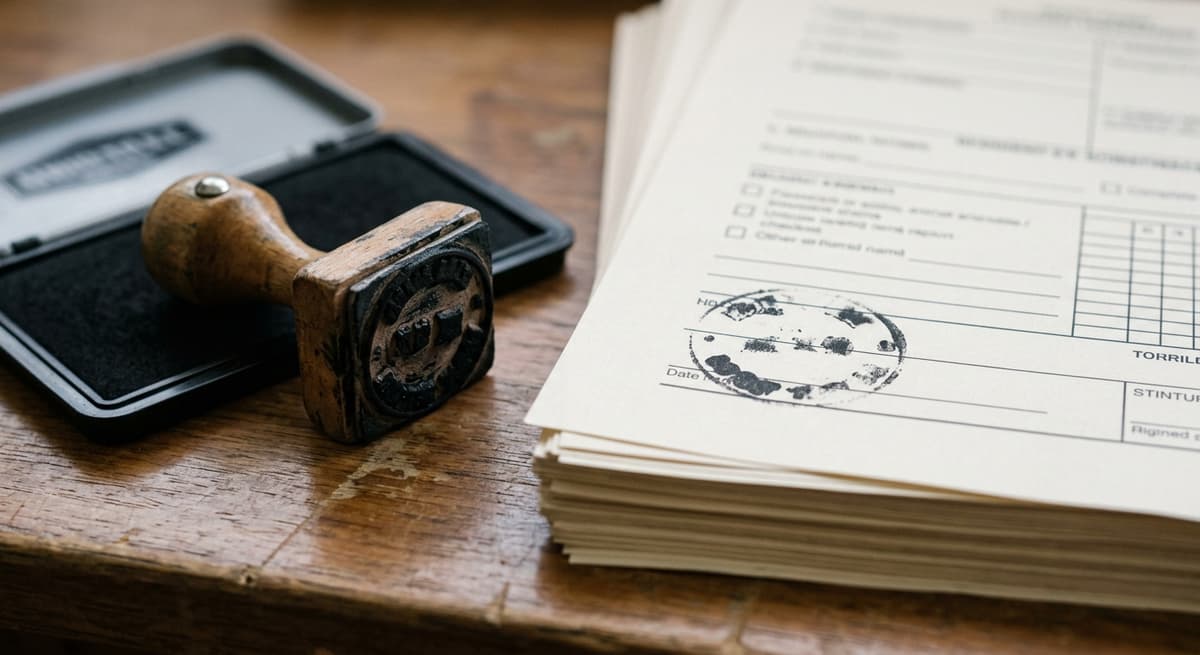
Using Virginia Court Records the Right Way
These access paths are built for checking your own case or a matter you are personally involved in, not for compiling background information on someone else. If a Virginia court record is being used to screen a job applicant or tenant, that use is governed separately by the federal Fair Credit Reporting Act, and OCRA's bar-and-agency-only design is not a substitute for FCRA-compliant screening. Under 15 U.S.C. § 1681c, records of criminal convictions are exempt from the standard seven-year reporting limit and can be reported indefinitely unless Virginia has sealed or expunged them.
Related Resources
Court Records by State covers the full 50-state picture. See also How to Look Up Court Records, Are Court Records Public?, Virginia Expungement Laws, Virginia Background Check Laws, Virginia Warrant Search, and Virginia Public Records Laws.
Disclaimer
This article provides general information about how Virginia's court record access and sealing law work. It is not legal advice. County fees, portal access, and statutes change; verify current details with the relevant clerk's office or a Virginia attorney before relying on anything here for a specific situation.

Last updated: 2026-08-10. Portal facts and fees reflect their published status as of August 2026. Scheduled refresh: a rewritten version of Code of Virginia § 19.2-392.2 takes effect December 1, 2026 and this page's expungement description must be rechecked then.
Frequently Asked Questions
Can the general public search Virginia court records online for free?
No. Virginia has no free statewide public portal. OCRA, the state's remote case-access system, is limited to Virginia State Bar members, their staff, and authorized government agencies.
What is OCRA and who can use it?
OCRA is Virginia's Officer of the Court Remote Access system for digital case files. Code of Virginia § 17.1-293(E)(7) limits secure remote access to members in good standing with the Virginia State Bar and their authorized agents, pro hac vice attorneys authorized by the court, and governmental agencies as authorized by the clerk. It is not open to the public, and that restriction is statewide rather than a choice each county makes.
How much does OCRA cost?
OCRA subscription fees are set by each county. Hanover County charges $150 per attorney per year plus $50 per supervised staff member, and other counties set their own pricing. Copy and certification fees are a separate matter and are fixed statewide for circuit courts by Va. Code § 17.1-275.
What does a certified copy of a Virginia circuit court record cost?
Va. Code § 17.1-275(A) sets $0.50 per page, or per image for an electronic record, for a copy to go out of the clerk's office, plus $2 for annexing the court's seal and the clerk's certificate and another $0.50 if a judge's certificate is requested. Subsection F makes that schedule controlling for circuit court clerks. General district courts use a different schedule, so confirm the charge with that clerk.
How does the general public check a Virginia court case?
Contact or visit the clerk of the circuit or general district court where the case was filed. There is no statewide public online search tool.
Is Virginia's new sealing law in effect yet?
Yes. Automatic and petition-based sealing took effect on July 1, 2026, and implementation was reported on schedule by the agencies responsible for building it.
What's the difference between Virginia's sealing law and its expungement statute?
Sealing lives in Chapter 23.2 of Title 19.2, which was created by the 2021 Special Session I acts, chapters 524 and 542, and amended in 2023 and 2025; its provisions became effective July 1, 2026. Virginia's expungement statute is a separate and older process that applies to certain non-conviction records, and a rewritten version of it, § 19.2-392.2, takes effect December 1, 2026.
What offenses are excluded from Virginia's petition-based sealing?
Class 1 through 4 felonies, sex offenses, violent felonies, firearm-related felonies, protective-order violations, hate crimes, and crimes against family or household members are not eligible for petition-based sealing.
Can I use Virginia court records to screen a tenant or job applicant?
You can attempt to search public records, but using them for an employment or housing decision is separately governed by the federal Fair Credit Reporting Act. This guide addresses personal lookups, not screening compliance.
Updates
Corrected the certified-copy section to give the statutory circuit-court fees set by Va. Code § 17.1-275, cited § 17.1-293(E)(7) as the statewide authority limiting OCRA access, fixed the attribution of the Virginia sealing framework to the 2021 Special Session I acts, and flagged the revised expungement statute taking effect December 1, 2026.
Independently fact-checked against the cited primary sources
The Law Behind This Article
This article rests on the statutory provisions below, held in our own legal record and retrieved from the official source. Tap a section to read the operative text.
Code of Virginia, Title 17.1: Courts of Record
§ 17.1-208Records, etc., open to inspection; copies; exceptionIn forcecited in 3 of our articles
A. For the purposes of this section, "confidential court records," "court records," and "nonconfidential court records" shall have the same meaning as set forth in § 17.1-292. B. Except as otherwise provided by law, any records that are maintained by the clerks of the circuit courts shall be open to inspection in the office of the clerk by any person and the clerk shall, when requested, furnish copies thereof subject to any reasonable fee charged by the clerk pursuant to § 17.1-275. No person shall be permitted to use the clerk's office for the purpose of making copies of records in such manner, or to such extent, as will, in the determination of the clerk, interfere with the business of the office or with its reasonable use by the general public. The certificate of the clerk to copies furnished by the clerk shall, if the paper copied be recorded in a bound volume, contain the name and number of the volume and the page or folio at which the recordation of the paper begins, or the instrument number as applicable, and the clerk may charge a fee therefor pursuant to § 17.1-275.
Official text (excerpt) · last checked 2026-09-02 · Read the full text in our law library · Verify at law.lis.virginia.gov
Cited in 4 court opinions in our collectionLatest citing opinion in our collection: 2013
Opinions citing this section in our collection:
- U.S. Inspect, Inc. v. McGreevy (Virginia Circuit Court 2000, 57 Va. Cir. 511)“…rt referred to Va. Code § 17-43, the predecessor statute to Va. Code § 17.1-208, which provides in pertinent part as fo…”
- Ostergren v. Cuccinelli (Court of Appeals for the Fourth Circuit 2010, 615 F.3d 263)“…erks make land records available for public inspection. See Va. Code § 17.1-208. Any person can review and copy land re…”
- McBurney v. Young (Supreme Court of the United States 2013, 569 U.S. 221)“…erk shall, when requested, furnish copies thereof." *230 Va.Code Ann. § 17.1-208 (Lexis 2010). Such records and papers i…”
Identified automatically from the court opinions citing this section — not a ranking of which case controls.
Also relied on in: How to Find Out if Someone Is Married or Divorced (Official Records Only), Virginia Marriage and Divorce Records: How to Get a Copy (2026)
Code of Virginia, Title 19.2: Criminal Procedure
§ 19.2-392.5Sealing defined; effect of sealingIn forcecited in 2 of our articles
A. As used in this chapter, unless the context requires a different meaning: "Ancillary matter" means any (i) violation or alleged violation of the terms and conditions of a suspended sentence, probation, or parole; (ii) violation or alleged violation of contempt of court; (iii) charge or conviction for failure to appear; or (iv) appeal from a bail, bond, or recognizance order. "Records related to an arrest, charge, or conviction" means (i) the record of any specific arrest, charge, or conviction that has been sealed pursuant to § 19.2-392.6:1, 19.2-392.7, 19.2-392.8, 19.2-392.10, 19.2-392.11, 19.2-392.12, 19.2-392.12:1, or 19.2-392.17 or (ii) any ancillary matter that was sealed pursuant to § 19.2-392.12 or 19.2-392.12:1.
Official text (excerpt) · last checked 2026-07-29 · Read the full text in our law library · Verify at law.lis.virginia.gov
Also relied on in: Virginia Expungement Laws: § 19.2-392.2 and Virginia's New Sealing Law
United States Code Title 15
§ 1681cRequirements relating to information contained in consumer reportsIn forcecited in 55 of our articles
Except as authorized under subsection (b), no consumer reporting agency may make any consumer report containing any of the following items of information: Cases under title 11 or under the Bankruptcy Act that, from the date of entry of the order for relief or the date of adjudication, as the case may be, antedate the report by more than 10 years. Civil suits, civil judgments, and records of arrest that, from date of entry, antedate the report by more than seven years or until the governing statute of limitations has expired, whichever is the longer period. Paid tax liens which, from date of payment, antedate the report by more than seven years. Accounts placed for collection or charged to profit and loss which antedate the report by more than seven years. Any other adverse item of information, other than records of convictions of crimes which antedates the report by more than seven years.
Official text (excerpt) · last checked 2026-09-16 · Read the full text in our law library · Verify at uscode.house.gov
Cited in 383 court opinions in our collectionLatest citing opinion in our collection: 2026
In the courts (editorial summary, independently checked):Katz v. Donna Karan Co. (2017) addressed the FACTA truncation rule in 1681c(g) and affirmed dismissal for lack of Article III standing, treating material risk of harm as a fact question. Edward Seamans v. Temple University (2014) held the seven-year window in 1681c(a)(4) is extended for an education loan only until that loan is repaid.
Opinions citing this section in our collection:
- Katz v. Donna Karan Co. (Court of Appeals for the Second Circuit 2017, 872 F.3d 114)✓A shopper sued two stores whose receipts printed the first six digits of his credit card number; the Second Circuit affirmed dismissal for lack of standing, seeing no clear error in the finding that those digits show only the card issuer, not a material risk of identity theft.
- Edward Seamans v. Temple University (Court of Appeals for the Third Circuit 2014, 744 F.3d 853)✓A defaulted university loan kept appearing on a borrower's credit reports after he repaid it because the school never reported the delinquency date; the Third Circuit held the Higher Education Act suspends section 1681c(a)(4)'s aging-off rule only until repayment.
- Gonzales v. Arrow Financial Services, LLC (Court of Appeals for the Ninth Circuit 2011, 660 F.3d 1055)✓A debt buyer offered to settle health club debts over seven years old, saying that if it was reporting the account the bureaus would be told it was settled; the Ninth Circuit, treating those debts as unreportable under section 1681c(a)(4), called that implication misleading.
Identified automatically from the court opinions citing this section — not a ranking of which case controls.
Also relied on in: How Long Does a Felony Stay on Your Record? (2026), Alabama Background Check Laws (2026 Guide), Louisiana Background Check Laws (2026 Guide)
Search our full record of US law — 2.1 million sections, every state + federal →
Sources and References
- Virginia State Crime Commission, Sealing of Criminal Records Update, January 2026(vscc.virginia.gov).gov
- Hanover County, Virginia, OCRA FAQ(hanovercounty.gov).gov
- Code of Virginia § 19.2-392.5, Sealing of Court Records(law.lis.virginia.gov).gov
- Cornell Legal Information Institute, 15 U.S.C. § 1681c (FCRA obsolete information)(law.cornell.edu)
- Code of Virginia § 17.1-275, Fees collected by clerks of circuit courts(law.lis.virginia.gov)
- Code of Virginia § 17.1-293(E)(7), secure remote access to nonconfidential court records(law.lis.virginia.gov)
- Code of Virginia § 17.1-208, Records open to inspection; copies furnished(law.lis.virginia.gov)
- Code of Virginia § 19.2-392.2, Expungement of police and court records (revised version effective December 1, 2026)(law.lis.virginia.gov)