
United Kingdom
UK Drug Laws: Class A, B and C Drugs and Penalties
Independently fact-checked against primary sources (last audited October 25, 2026). · 25 primary sources cited on this page. How we verify our legal content
UK drug laws make it a crime to possess, supply or produce a controlled drug, with maximum sentences set by its class: up to 7 years for possessing a Class A drug, 5 years for Class B and 2 years for Class C, and up to life for supplying Class A. The main law is the Misuse of Drugs Act 1971, which applies in England, Wales, Scotland and Northern Ireland. Two other regimes sit alongside it: temporary class drug orders for new substances, and the Psychoactive Substances Act 2016 for so-called legal highs.
How a possession case is actually dealt with differs more than the law itself. England and Wales use warnings and penalty notices for cannabis and khat, Scotland uses Recorded Police Warnings for all classes, and Northern Ireland relies on cautions and prosecution decisions. This page covers each, along with what a drug offence means for a criminal record check.
The three drug classes
The 1971 Act lists controlled drugs in Schedule 2, split into Class A, Class B and Class C. The schedule uses chemical names, so heroin appears as diamorphine, LSD as lysergide and magic mushrooms as fungus containing psilocin. The examples below use the everyday names gov.uk uses on its drugs penalties page.
| Class | Examples (gov.uk and Schedule 2) |
|---|---|
| Class A | Cocaine, crack cocaine, ecstasy (MDMA), heroin, LSD, magic mushrooms, methadone, methamphetamine (crystal meth), fentanyl, carfentanil, nitazenes |
| Class B | Cannabis and cannabis resin, amphetamines, barbiturates, codeine, GHB, GBL, ketamine, methylphenidate (Ritalin), synthetic cannabinoids, synthetic cathinones such as mephedrone |
| Class C | Anabolic steroids, benzodiazepines such as diazepam, khat, nitrous oxide, piperazines (BZP), tramadol, xylazine |
The class is the single biggest factor in sentencing. The Sentencing Council's possession guideline for England and Wales makes it the whole of step one: Class A is category 1, Class B category 2 and Class C category 3.

Maximum penalties for possession and supply
The maximum sentences come from Schedule 4 to the 1971 Act and are summarised by gov.uk. They are ceilings for the most serious cases tried in the Crown Court, not typical outcomes.
| Class | Possession | Supply, production or possession with intent to supply |
|---|---|---|
| Class A | Up to 7 years, an unlimited fine or both | Up to life, an unlimited fine or both |
| Class B | Up to 5 years, an unlimited fine or both | Up to 14 years, an unlimited fine or both |
| Class C | Up to 2 years, an unlimited fine or both | Up to 14 years, an unlimited fine or both |
| Temporary class drug | Not an offence; police can seize the substance | Up to 14 years, an unlimited fine or both |
Two points catch people out. First, only possession scales with the class: supply of a Class B drug and supply of a Class C drug carry the same 14-year maximum. Second, possessing anabolic steroids for personal use is not an offence, although supplying them is.
Cultivating a cannabis plant is a separate offence under section 6, with a maximum of 14 years on indictment. When possession is tried in a magistrates' court in England and Wales, the Sentencing Council gives the summary maximum as 12 months' custody or a level 4 fine for Class B, and 12 months or a level 3 fine for Class C.
Possession offences are either way offences, so they can be heard in the magistrates' court or the Crown Court. Our guide to magistrates' court vs Crown Court explains how that choice is made.
How possession is dealt with in England and Wales
Gov.uk says the penalty depends on the class and quantity of the drug, where the person and the drugs were found, their personal history, and other aggravating or mitigating factors. For supply, it says plainly that the police will probably charge.
For cannabis and khat only, the police have an escalating set of options. Gov.uk says officers can issue a warning or an on-the-spot fine of up to £90, and that repeat possession can lead to anything from treatment up to the maximum penalty. The Home Office penalty notice guidance describes three stages for England and Wales:
- a warning for a first offence;
- a penalty notice for disorder for a second offence;
- a charge for a third or later offence.
That guidance also says a penalty notice cannot be given for possession of any other drug, and that only one penalty notice for cannabis or khat should ever be given to a person. It dates from 2014 and remains on gov.uk; police keep discretion within it. If the person is under 18, gov.uk says the police may tell a parent, guardian or carer.
Possession of other drugs, or a case outside the escalation, can lead to a police caution or a charge. Some police forces run local diversion schemes, but these vary by force and are not set out in national law. Our guide to stop and search explains when officers can search you for drugs.
Prosecution guidance on medical use
The Crown Prosecution Service's drug offences guidance lists, as a public interest factor against prosecution, evidence that cannabis was being used to ease symptoms of a chronic medical condition. That is a factor a prosecutor weighs, not a legal defence, and it does not make possession lawful.

Sentencing guidelines in England and Wales
The Sentencing Council guidelines apply to adult offenders in England and Wales. The ranges below are guideline offence ranges, not the legal maxima set out above.
| Offence | Class A range | Class B range | Class C range |
|---|---|---|---|
| Possession | Fine to 51 weeks' custody | Discharge to 26 weeks' custody | Discharge to medium level community order |
| Supply or possession with intent | High level community order to 16 years' custody | Band B fine to 10 years' custody | Band A fine to 8 years' custody |
Both guidelines have been in effect since 1 April 2021. For supply, the court first decides the offender's role (leading, significant or lesser) and then the harm, which is mainly the quantity of drug. A leading role includes directing or organising buying and selling on a commercial scale. Where someone sells directly to users, including street dealing, the guideline says quantity is less indicative of harm.
The supply guideline also notes that the offence becomes triable only in the Crown Court where the defendant could receive the minimum sentence of seven years for a third Class A drug trafficking offence under section 313 of the Sentencing Code.
Recent reclassifications
Schedule 2 is amended by order. The changes made most recently, each checked against its order or the schedule's commencement notes, are:
| Change | Order | In force |
|---|---|---|
| Nitrous oxide added to Class C | SI 2023/1091 | 8 November 2023 |
| 14 nitazenes and brorphine added to Class A; cumyl-PeGaClone, diphenidine, ephenidine and methoxyphenidine added to Class B; remimazolam added to Class C | SI 2024/190 | 20 March 2024 |
| A generic definition covering nitazene variants and four acyl piperazine opioids plus two related bridged compounds added to Class A; 15 novel benzodiazepines and xylazine added to Class C | SI 2024/1361 | 15 January 2025 |
| Seven synthetic opioids placed under a temporary class drug order | SI 2026/613 | 11 June 2026 |
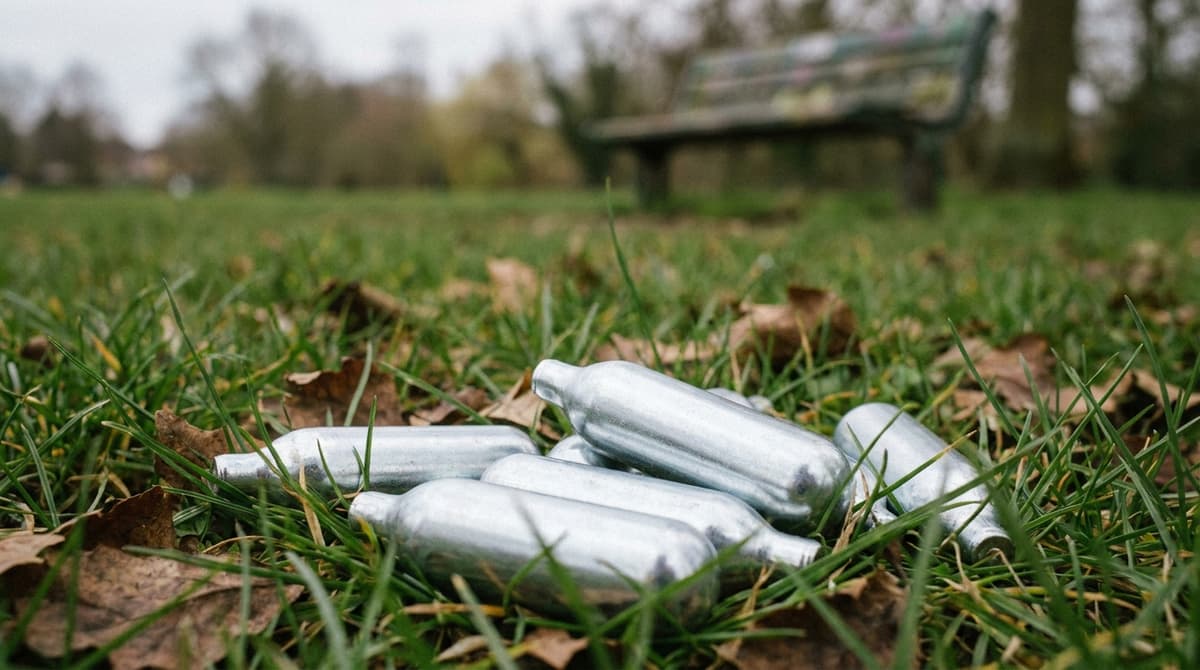
Before 8 November 2023, nitrous oxide was dealt with under the Psychoactive Substances Act, so producing or supplying it was illegal but simply having it was not. Since then possession is a Class C offence. The CPS explains that regulations for England, Wales and Scotland keep legitimate uses lawful, including in healthcare and the motor and catering industries, unless someone intends to inhale it wrongfully or knows, or is reckless about whether, someone else is likely to.
A further Misuse of Drugs Act 1971 (Amendment) Order 2026 has been published in draft on legislation.gov.uk. The draft would move the seven temporarily controlled opioids into Class A and add hexahydrocannabinol (HHC) and related compounds to Class B, among other changes. When we checked on 25 October 2026 it had not been made, so none of those changes is yet law.
Temporary class drug orders
Section 2A of the 1971 Act lets the Secretary of State bring a new substance under temporary control while it is assessed. It can only apply to a substance that is not already Class A, B or C. The order lapses after 40 days unless both Houses of Parliament approve it, and the control ends after one year, or earlier if the substance is permanently classified.
Possessing a temporary class drug is not an offence, though the police can seize it. Supplying or producing one carries up to 14 years. The CPS says these offences attract punishment similar to Class B drugs, with the exception of simple possession. The order now in force, SI 2026/613, covers seven synthetic opioids, including chlorphine, cychlorphine and etodezitramide.
Psychoactive Substances Act 2016
The Psychoactive Substances Act 2016 targets substances that affect a person's mental functioning or emotional state by stimulating or depressing the central nervous system, which covers many products once sold as legal highs. Controlled drugs, medicines, alcohol, nicotine, tobacco, caffeine and food are exempt.
It is an offence to produce, supply, offer to supply, import or export a psychoactive substance, or to possess one with intent to supply. Gov.uk says there is no penalty for carrying psychoactive substances unless you are in prison, where possession is an offence under section 9.
Under section 10, the production and supply offences carry up to 7 years on indictment, and possession in a custodial institution up to 2 years. Tried summarily, the maximum is the general limit in a magistrates' court in England and Wales, 12 months in Scotland and 6 months in Northern Ireland. Supply can be treated as aggravated where the offender used a courier under 18, or it happens near a school or in a custodial institution.
Cannabis, medicinal cannabis and CBD
Cannabis and cannabis resin are Class B. Since 1 November 2018, cannabis-based products for medicinal use have been moved to Schedule 2 of the Misuse of Drugs Regulations 2001, which allows them to be prescribed. Only doctors on the GMC specialist register can prescribe them, so a GP cannot, and the Home Office said in 2018 that, apart from Sativex, these products were unlicensed medicines. The Home Office circular covers the regulations for England, Wales and Scotland.
CBD is regulated mainly as food. The Food Standards Agency's CBD guidance, which applies to England and Wales, says CBD extracts, isolates and synthetic CBD are novel foods that need authorisation before they can be sold legally, and that none has yet been authorised. Hemp seeds, hemp seed oil and water infusions of hemp leaves are not novel foods.
The same guidance says CBD food products that contain controlled cannabinoids must be exempt products under the 2001 Regulations. Products that are not are likely to be controlled drugs. The FSA advises a provisional limit of 10mg of CBD a day and a safe upper limit of 70 micrograms a day of THC.
Kratom
We could not find a current official statement from the Home Office, the Advisory Council on the Misuse of Drugs or Parliament on the legal status of kratom, so this section sets out only what the sources show.
Kratom is not named in Schedule 2 to the 1971 Act as far as we found. The Psychoactive Substances Act 2016 applies to any substance capable of producing a psychoactive effect that is not an exempted substance. The exemptions in Schedule 1 cover controlled drugs, medicinal products (as defined in the Human Medicines Regulations 2012), alcohol, nicotine and tobacco, caffeine, and substances ordinarily consumed as food that do not contain a prohibited ingredient (an added psychoactive substance not authorised for use in food). Kratom is not named in the Act either way.
When the Bill was going through Parliament, the Home Secretary's October 2015 letter named kratom as an example of a harmful natural psychoactive substance and said she did not want the Bill limited to synthetic products. The same letter said the government was proposing an amendment to exempt all homeopathic and herbal products, which would continue to be regulated by medicines legislation. The exemption in the Act as passed is worded as one for medicinal products.
Whether a particular kratom product is a psychoactive substance under the Act, or falls within an exemption, would be for a court to decide on the facts, and we found no court decision or current official statement that settles it. If the Act does apply, its offences cover producing, supplying and importing. Simple possession outside a prison is not a Psychoactive Substances Act offence.
Scotland
The Misuse of Drugs Act 1971 and the Psychoactive Substances Act apply in Scotland in the same way, with the same maximum sentences on indictment. What differs is how possession cases are handled and who decides to prosecute.
In September 2021 the Lord Advocate, Scotland's chief prosecutor, extended the Recorded Police Warning guidelines to cover Class A. Police officers may now issue a Recorded Police Warning for simple possession of any class of drug; before the change this covered Class B and Class C only. The statement made four points clear:
- the scheme covers possession offences only, not supply;
- Recorded Police Warnings do not represent decriminalisation;
- neither offering nor accepting a warning is mandatory, so police can still report a case to the Procurator Fiscal and the person can refuse the warning;
- officers can still refer vulnerable people to support services.
The guidelines themselves are confidential. The cannabis and khat penalty notice escalation used in England and Wales does not apply in Scotland.
In 2023 the Lord Advocate wrote to the Scottish Parliament's Criminal Justice Committee that she was prepared to publish a prosecution policy saying it would not be in the public interest to prosecute users of a proposed Glasgow safer drug consumption facility for simple possession inside it. She stressed that a statement of prosecution policy does not, and could not, legalise or decriminalise drugs. The 1971 Act is unchanged, and supply is not covered.
Northern Ireland
The same Acts apply in Northern Ireland, and nidirect gives the same maximum sentences: 7, 5 and 2 years for possession of Class A, B and C, and life or 14 years for supply. The Home Office guidance on cannabis warnings and penalty notices is stated to be for England and Wales only.
According to nidirect, an adult found in possession should expect a caution, with any further action, such as prosecution, depending on a decision by the Public Prosecution Service. It says a person found with a Class A or Class B drug who has a history of drug offences will be prosecuted. A young person under 18 found with a Class C drug should expect a formal warning and a police caution, and may be referred to the police Youth Diversion Scheme.
Drug offences and criminal record checks
In England and Wales, the DBS filtering rules decide which old cautions and convictions appear on standard and enhanced certificates. A conviction that led to a custodial sentence is always disclosed. Otherwise, adult convictions are disclosed for 11 years, adult cautions for 6 years and youth convictions for 5 and a half years, and anything still unspent is disclosed too.
Supplying, or offering to supply, a controlled drug to a child under 16 is on the list of offences never filtered, as is supplying a psychoactive substance to a child under 16. Ordinary possession and supply offences are not on that list, so they can drop off once the time window has passed and the conviction is spent, unless a prison sentence was imposed.
For how long a conviction stays unspent, see spent convictions, and for the certificate levels see DBS checks. Scotland and Northern Ireland run separate disclosure systems through Disclosure Scotland and AccessNI.
Drugs and driving
Driving with certain drugs in the blood above set limits, or while impaired by drugs, is a separate offence under road traffic law. Our drug driving guide covers the limits and penalties.
Getting help after an arrest
Anyone held at a police station is entitled to free legal advice from a duty solicitor, whatever their income. If a case goes to court, criminal legal aid may cover representation. Our guides to being arrested and the right to remain silent explain what happens next, and the UK criminal law hub covers other offences.
Frequently Asked Questions
What are Class A drugs in the UK?
Class A is the most tightly controlled group under the Misuse of Drugs Act 1971. Gov.uk lists cocaine, crack cocaine, ecstasy (MDMA), heroin, LSD, magic mushrooms, methadone and methamphetamine (crystal meth). Fentanyl, carfentanil and the nitazene opioids are also Class A. Possession carries up to 7 years in prison and supply up to life.
What are Class B drugs?
Gov.uk lists amphetamines, barbiturates, cannabis, codeine, GHB, GBL, ketamine, methylphenidate (Ritalin), synthetic cannabinoids and synthetic cathinones such as mephedrone. Possession carries up to 5 years and supply or production up to 14 years.
What are Class C drugs?
Gov.uk lists anabolic steroids, benzodiazepines such as diazepam, khat, nitrous oxide and piperazines. Tramadol and xylazine are also Class C. Possession carries up to 2 years, except that possessing anabolic steroids for personal use is not an offence. Supply carries up to 14 years.
Is cannabis legal in the UK?
No. Cannabis and cannabis resin are Class B drugs. Since 1 November 2018 cannabis-based products for medicinal use can be prescribed, but only by doctors on the GMC specialist register, and in 2018 the Home Office said that, apart from Sativex, these products were unlicensed medicines. Other cannabis remains fully controlled.
Is it illegal to have laughing gas?
Yes, in most situations. Nitrous oxide became a Class C drug on 8 November 2023, so possession can carry up to 2 years in prison and supply up to 14 years. Regulations keep legitimate uses lawful, for example in healthcare, the motor trade and catering, but those exemptions fall away where someone intends to inhale it wrongfully or knows it is likely to be inhaled by someone else.
Is CBD legal in the UK?
The Food Standards Agency treats CBD extracts and isolates as novel foods that need authorisation before they can be sold as food, and it says none has yet been authorised. CBD food products that contain controlled cannabinoids must meet the exempt product rules in the Misuse of Drugs Regulations 2001, or they are likely to be controlled drugs. The FSA guidance applies to England and Wales.
Is kratom legal in the UK?
We could not find a current official statement on kratom. It is not named in Schedule 2 to the Misuse of Drugs Act 1971 as far as we found. In 2015 the Home Secretary named kratom as an example of a harmful natural psychoactive substance she did not want the Psychoactive Substances Bill to leave out, while also proposing to exempt herbal products. The Act as passed bans producing, supplying or importing psychoactive substances unless they are exempted, and we found no court decision or current official statement settling whether kratom is caught. Simple possession outside a prison is not an offence under that Act.
What happens if you are caught with cannabis for the first time?
In England and Wales, Home Office guidance sets out a warning for a first offence, a penalty notice of up to £90 for a second, and a charge for a third, with only one penalty notice ever to be given. The police keep discretion, and some forces run their own local schemes. In Scotland a Recorded Police Warning may be offered instead, and in Northern Ireland an adult should expect a caution or a prosecution decision.
Does a drug conviction show on a DBS check?
It can. Under the filtering rules for England and Wales, any conviction that led to a custodial sentence is always disclosed, and other adult convictions are disclosed for 11 years and adult cautions for 6 years, as are any that are still unspent. Supplying a controlled drug to a child under 16 is on the list of offences that are never filtered. Scotland and Northern Ireland run separate disclosure systems.
Updates
Independently fact-checked against the cited primary sources
Sources and References
- Misuse of Drugs Act 1971, Schedule 2 (controlled drugs by class)(legislation.gov.uk).gov
- Misuse of Drugs Act 1971, Schedule 4 (prosecution and punishment of offences)(legislation.gov.uk).gov
- Misuse of Drugs Act 1971, section 2A (temporary class drug orders)(legislation.gov.uk).gov
- Misuse of Drugs Act 1971, section 6 (cultivation of cannabis plant)(legislation.gov.uk).gov
- Gov.uk: Drugs penalties(gov.uk).gov
- Misuse of Drugs Act 1971 (Amendment) Order 2023, SI 2023/1091 (nitrous oxide)(legislation.gov.uk).gov
- Misuse of Drugs Act 1971 (Amendment) Order 2024, SI 2024/190(legislation.gov.uk).gov
- Misuse of Drugs Act 1971 (Amendment) (No. 2) Order 2024, SI 2024/1361(legislation.gov.uk).gov
- Misuse of Drugs Act 1971 (Temporary Class Drug) Order 2026, SI 2026/613(legislation.gov.uk).gov
- Draft Misuse of Drugs Act 1971 (Amendment) Order 2026(legislation.gov.uk).gov
- Psychoactive Substances Act 2016(legislation.gov.uk).gov
- Psychoactive Substances Act 2016, section 10 (penalties)(legislation.gov.uk).gov
- Crown Prosecution Service: Drug offences prosecution guidance(cps.gov.uk).gov
- Home Office: Penalty notices for disorder, police guidance (2014)(assets.publishing.service.gov.uk).gov
- Sentencing Council: Possession of a controlled drug guideline(sentencingcouncil.org.uk).gov
- Sentencing Council: Supplying or offering to supply a controlled drug guideline(sentencingcouncil.org.uk).gov
- Home Office Circular 018/2018: Rescheduling of cannabis-based products for medicinal use(gov.uk).gov
- Food Standards Agency: Cannabidiol (CBD) guidance(gov.uk).gov
- Home Secretary letter to Prof Les Iversen on the Psychoactive Substances Bill (27 October 2015)(assets.publishing.service.gov.uk).gov
- COPFS: Lord Advocate statement on diversion from prosecution (Recorded Police Warnings)(copfs.gov.uk).gov
- Lord Advocate letter to the Criminal Justice Committee on safer drug consumption facilities (11 September 2023)(parliament.scot).gov
- nidirect: Drugs and crime(nidirect.gov.uk).gov
- DBS: New filtering rules for DBS certificates(gov.uk).gov
- DBS: List of offences that will never be filtered from a DBS certificate(gov.uk).gov
- Psychoactive Substances Act 2016, Schedule 1 (exempted substances)(legislation.gov.uk).gov