Florida Workplace Recording Laws: Employee and Employer Rules (2025)

Florida's strict all-party consent requirement under Florida Statute 934.03 applies with full force in the workplace. Employees cannot secretly record conversations with coworkers, supervisors, or clients. Employers cannot secretly record employee conversations. The law makes no distinction between personal and professional settings when it comes to audio recording: if a conversation is private and the parties have not all consented, recording it is a third-degree felony.
This creates a challenging landscape for both employers who want to monitor workplace activity and employees who want to document misconduct. Understanding the specific rules for audio recording, video surveillance, and whistleblower protections is essential for anyone working in Florida.
Can Employees Record at Work in Florida?
Audio Recording by Employees
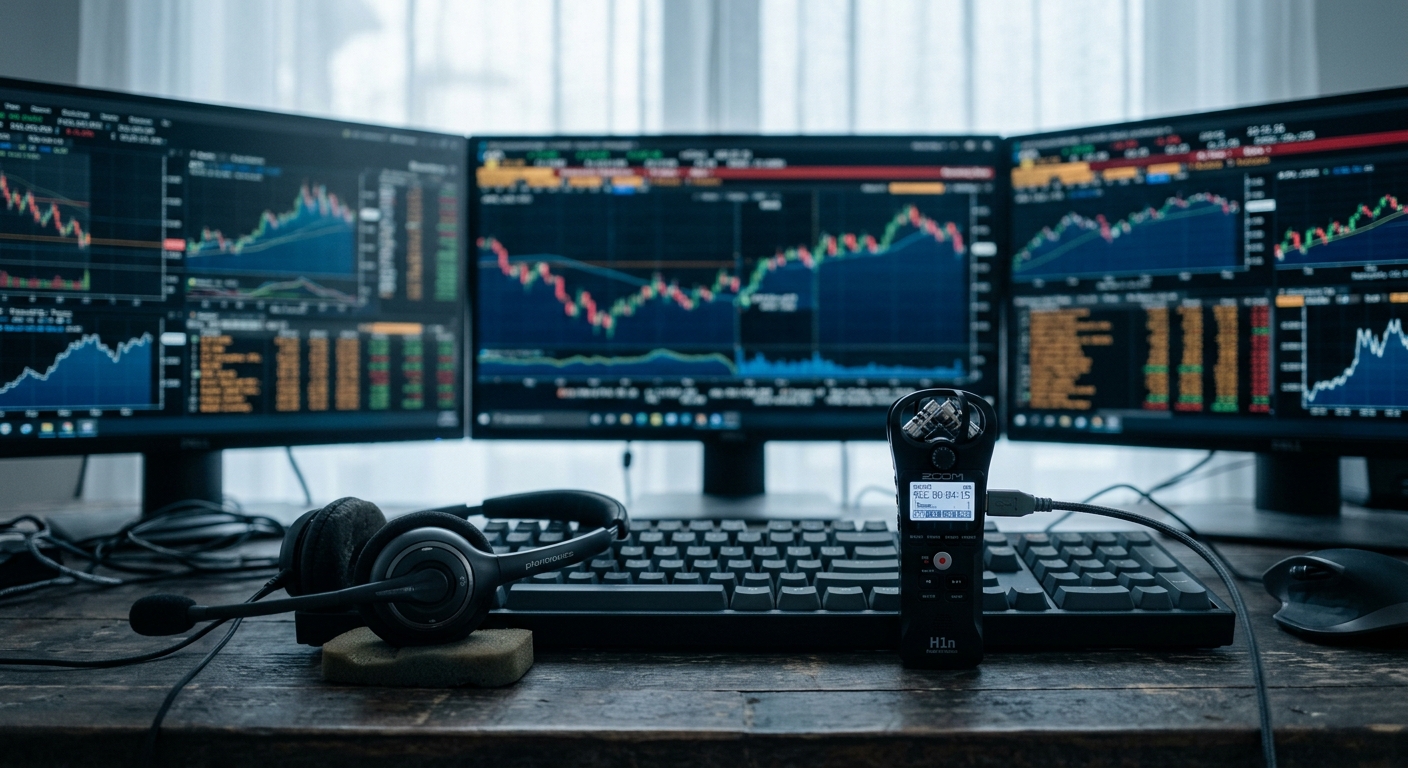
Under F.S. 934.03, employees in Florida cannot secretly record:
- Private conversations with coworkers
- Meetings with supervisors or managers
- Performance reviews or disciplinary sessions
- Phone calls with clients, customers, or vendors
- Any private workplace communication
The all-party consent rule means that every person participating in a conversation must agree before any recording takes place. An employee who uses a smartphone, voice recorder, or any other device to secretly capture a workplace conversation commits a third-degree felony punishable by up to 5 years in prison and a $5,000 fine.
No Exception for Documenting Misconduct
Unlike states such as California, which provides a crime-evidence exception allowing private citizens to record without consent](/us-laws/is-it-illegal-to-record-someone) when gathering evidence of serious crimes, Florida provides no such exception for private citizens. Only law enforcement officers acting under F.S. 934.03(2)(c) may conduct one-party consent recordings to obtain evidence of criminal activity.
An employee who secretly records a supervisor making harassing or discriminatory comments faces felony charges for the recording itself, and the recording will likely be inadmissible in court. If you need to preserve evidence of workplace misconduct in Florida, consult an employment attorney about legal options before recording anything.
When Employee Recording Is Legal
Employees can legally record workplace conversations when:
- All participants consent before the recording starts
- The conversation takes place in a public area where no party has a reasonable expectation of privacy (such as a loud conversation in a busy public cafeteria)
- The recording is authorized by law enforcement as part of an investigation
Can Employers Record Employees in Florida?
Employer Video Surveillance
Florida employers may install video surveillance cameras in workplace common areas, provided they follow certain guidelines:
Where video cameras are permitted:
- Lobbies and reception areas
- Hallways and corridors
- Production floors and warehouse spaces
- Parking lots and garages
- Building entrances and exits
- Common break rooms (video only, no audio)
Where video cameras are prohibited:
- Restrooms and bathrooms
- Locker rooms and changing areas
- Private offices where employees have a reasonable expectation of privacy (without notice)
- Any area designated for medical examinations or private conversations
Requirements for employer video surveillance:
- Employees must receive advance written notice that video surveillance is in use
- The notice should specify which areas are monitored
- Surveillance policies should be included in employee handbooks
- A legitimate business purpose must exist for the monitoring (security, loss prevention, safety)
Employer Audio Recording
Adding audio recording capabilities to workplace surveillance systems dramatically changes the legal requirements. Under F.S. 934.03, employers who capture audio of employee conversations must:
- Inform every employee that audio recording is taking place
- Obtain consent from every person whose conversations may be captured
- Post clear signage indicating audio monitoring is in effect
- Include audio monitoring policies in employee handbooks and onboarding materials
An employer who records audio of employee conversations without obtaining all-party consent faces the same criminal and civil penalties as any other person who violates Section 934.03: up to 5 years in prison, $5,000 in fines, and civil liability under F.S. 934.10.
Employer Monitoring of Electronic Communications
Florida employers may monitor electronic communications on company-owned devices and networks, but with certain restrictions:
- Company email on company devices: Employers generally have broad authority to monitor email on company-owned systems, especially when employees have been notified of the monitoring policy
- Personal devices: Employers have limited authority to monitor personal devices, even when they are used on company networks
- Telephone monitoring: Recording business phone calls requires compliance with F.S. 934.03. The common practice is to use an automated announcement ("This call may be recorded for quality assurance") at the start of each call
Workplace Recording and Florida Employment Law
Wrongful Termination Concerns
Florida is an at-will employment state, meaning employers can generally terminate employees for any lawful reason. An employer can fire an employee for recording workplace conversations, even if the recording was consensual. The at-will doctrine gives employers broad discretion in termination decisions.
However, termination for recording may be challenged if:
- The employee was recording in compliance with a law enforcement investigation
- The recording was related to reporting illegal activity through proper channels (whistleblower protection)
- The termination violates a specific employment contract provision
Hostile Work Environment and Harassment Documentation
Employees who experience workplace harassment or discrimination face a difficult situation in Florida. While secretly recording the harassment would be illegal, there are legal alternatives:
- Contemporaneous written notes: Document incidents immediately after they occur, including dates, times, locations, and witnesses
- Email follow-ups: Send an email to the harasser or supervisor summarizing what was said, creating a written record
- Report to HR: File formal complaints through the company's human resources department
- File a charge with the EEOC or FCHR: The Equal Employment Opportunity Commission and the Florida Commission on Human Relations investigate workplace discrimination complaints
- Consult an employment attorney: An attorney can advise on legal methods to preserve evidence
Florida Whistleblower Protections
Public Employee Whistleblower Act (F.S. 112.3187)
Florida Statute 112.3187 protects public employees who report violations of law, rule, or regulation that create a substantial and specific danger to public health, safety, or welfare, or that constitute acts of gross mismanagement, malfeasance, misfeasance, gross waste of public funds, or gross neglect of duty.
Protected activities include:
- Disclosing information about violations to an appropriate agency
- Being requested to participate in an investigation, hearing, or inquiry
- Refusing to participate in an activity that violates law
Important: This statute protects employees who report through proper channels. It does not authorize secret audio or video recording in the workplace. An employee who secretly records a conversation to support a whistleblower complaint still violates F.S. 934.03.
Private Sector Whistleblower Protection (F.S. 448.102)
Florida Statute 448.102 provides parallel protections for private sector employees who:
- Disclose or threaten to disclose an employer practice that violates a law, rule, or regulation
- Provide information or testimony in an investigation or proceeding
- Object to or refuse to participate in activity that violates a law, rule, or regulation
Like the public sector statute, this law protects reporting through proper channels but does not create an exception to Florida's wiretapping law.
Workplace Recording and Union Activity
The National Labor Relations Act (NLRA) protects employees' right to engage in concerted activity, including discussing wages, working conditions, and other employment terms. Under certain circumstances, the National Labor Relations Board (NLRB) has found that employer policies prohibiting all workplace recording may violate the NLRA by chilling employees' rights to document and discuss working conditions.
However, even if an employer's blanket no-recording policy is found to violate the NLRA, Florida's wiretapping statute still applies independently. An employee cannot secretly record audio of a conversation in Florida even if the employer's internal policy against recording is unenforceable under the NLRA.
Remote Work and Recording
With the growth of remote work, new recording issues have emerged:
Video Conferences
Recording a Zoom, Teams, or other video conference call requires consent from all participants under Florida law. If any participant is in Florida, the all-party consent rule applies. Most video conferencing platforms provide notification when recording begins, but the host should explicitly announce the recording and obtain verbal consent.
Virtual Interviews
Employers conducting virtual job interviews with Florida candidates must follow the same consent rules. Recording a video interview without the candidate's consent violates F.S. 934.03.
Monitoring Remote Employees
Employers who monitor remote employees' activities on company-provided equipment should:
- Disclose all monitoring practices in writing before monitoring begins
- Specify what activities are monitored (keystrokes, screen captures, audio, video)
- Limit monitoring to company-owned devices and work-related activities
- Avoid capturing audio of personal conversations that take place in the employee's home
Penalties for Workplace Recording Violations
| Violation | Penalty | Statute |
|---|---|---|
| Secret audio recording of workplace conversations | Third-degree felony: up to 5 years prison, $5,000 fine | F.S. 934.03 |
| Hidden cameras in restrooms or changing areas | Third-degree felony (19+): up to 5 years prison, $5,000 fine | F.S. 810.145 |
| Civil damages for illegal recording | $100/day or $1,000 (whichever is higher), plus actual and punitive damages | F.S. 934.10 |
| Retaliation against whistleblower | Civil remedies including reinstatement, back pay, and compensatory damages | F.S. 112.3187 / 448.102 |
More Florida Laws
- Florida Whistleblower Laws
- Florida Recording Laws
- Florida Recording Laws
- Florida Recording Laws
- Florida Recording Laws
- Florida Recording Laws
- Florida Recording Laws
- Florida Recording Laws
More Florida Recording Laws
Audio Recording | Video Recording | Voyeurism & Hidden Cameras | Workplace Recording | Recording Police | Phone Call Recording | Security Cameras | Recording in Public | Landlord-Tenant | Dashcam Laws | Schools | Medical Recording
Sources and References
- Florida Statute 934.03(flsenate.gov).gov
- Florida Statute 934.10(flsenate.gov).gov
- Florida Statute 112.3187 - Whistleblower Act(flsenate.gov).gov
- Florida Statute 448.102 - Private Sector Whistleblower(flsenate.gov).gov
- Florida Statute 810.145 - Digital Voyeurism(flsenate.gov).gov
- Florida Commission on Human Relations(fchr.myflorida.com).gov
- U.S. Equal Employment Opportunity Commission(eeoc.gov).gov