Syracuse Landlord Must Sell All Rentals in NY Lead Consent Order
Independently fact-checked against primary sources (last audited November 21, 2026). · 17 primary sources cited on this page. How we verify our legal content
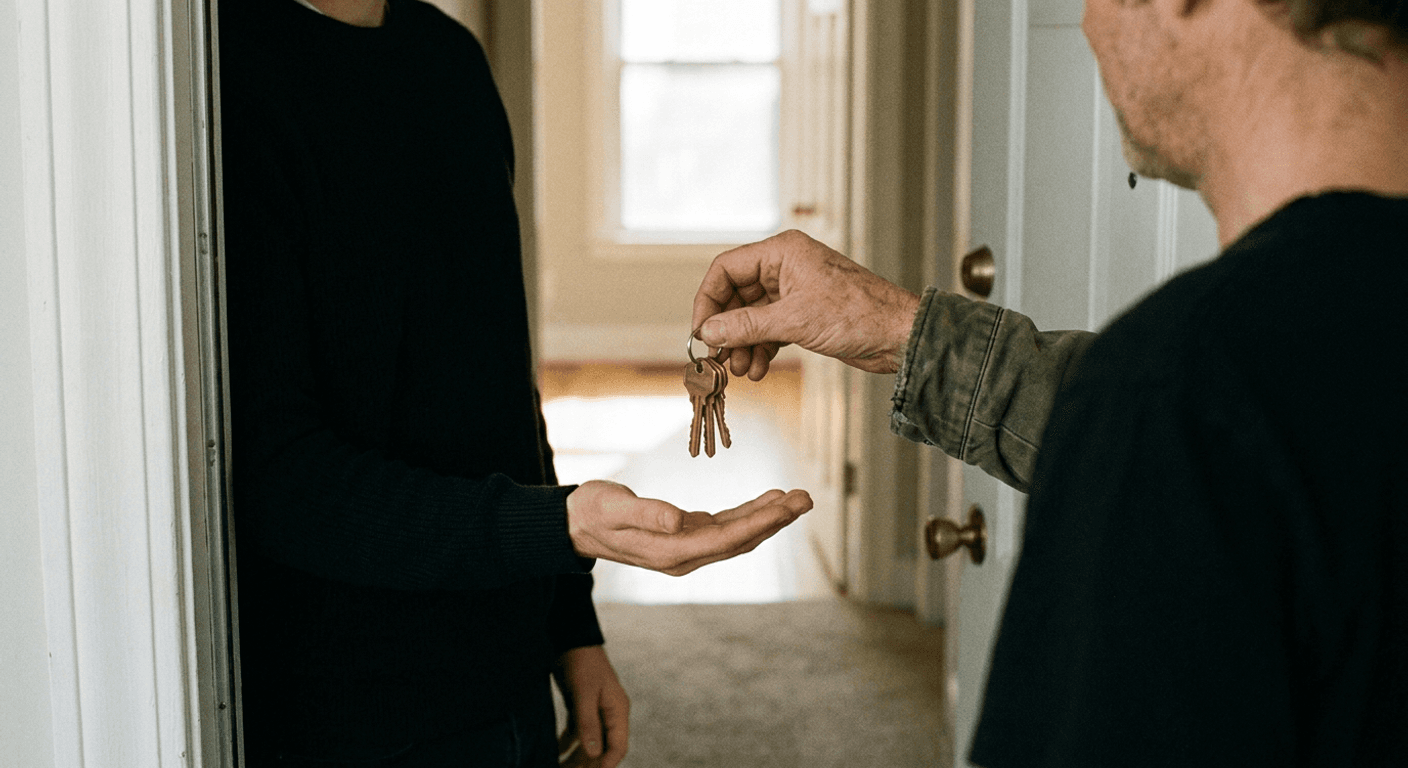
A New York judge has signed a consent order that sets the terms on which Syracuse landlord William D'Angelo may sell his residential rental properties and that, once all of those sales close, bars him permanently from owning or managing rental housing anywhere in the state. The Attorney General's announcement says the agreement requires him to sell every property within 180 days; the numbered paragraphs of the posted order set no such deadline. Justice Joseph E. Lamendola so-ordered it on November 19, 2026.
Information last verified on November 21, 2026. This is a developing story; we update it as the record changes.
Status: The consent order is signed. Justice Joseph E. Lamendola approved it for filing and so-ordered it on November 19, 2026, and it was filed that day as NYSCEF document 154 in Index No. 007822/2023, Supreme Court, Onondaga County. Paragraph 1(e) defines the Date of Entry as the date the Court Clerk enters the order, and the order's two entry-anchored deadlines, the 90-day remediation trigger in paragraph 8 and the 190-day compliance report in paragraph 13, run from that date; we could not reach the NYSCEF docket to confirm the clerk's entry date. The statewide ban in paragraph 10 operates only after all of the properties have been sold, so it is not in force today.
Jurisdiction scope: This article covers a consent order of the New York State Supreme Court in Onondaga County and the lead-hazard duties that bind residential landlords under federal law and New York State law. It does not cover New York City's separate lead paint regime, and it does not address lead in drinking water. For the general rules that govern residential leases across the state, see our guide to New York landlord-tenant law.
What Happened
Attorney General Letitia James announced on November 20, 2026 that William D'Angelo and Marpat, LLC had agreed to a consent order resolving the State's contempt motion. The order is NYSCEF document 154 in People of the State of New York v. William D'Angelo and Marpat, LLC, Index No. 007822/2023, in Supreme Court, Onondaga County, and Justice Joseph E. Lamendola signed it on November 19, 2026.
The case began on July 27, 2023, when the Attorney General, Onondaga County and the City of Syracuse filed a complaint under New York Executive Law § 63(12) and General Business Law § 349. The order's recitals describe the claims as including false disclosures and violations of Article X of the Onondaga County Sanitary Code, Chapters 27 and 54 of the Revised General Ordinances of the City of Syracuse, the New York State Property Maintenance Code, Real Property Law § 235-b(1), the Public Health Law and its regulations, and the federal lead disclosure and renovation rules.
The same court entered a consent judgment on June 18, 2024 requiring the defendants to identify and correct lead-based paint hazards at 18 named priority properties within 18 months, using OAG-approved work plans, EPA-certified firms and an OAG-approved monitor. The Attorney General announced that settlement in principle on February 9, 2024 and valued it at $310,000, including $80,000 in restitution for tenants.
According to the recitals, the defendants violated that judgment by failing to finish the projects within 18 months and by performing lead hazard control work without an approved work plan and without the monitor's oversight. The State moved for contempt on August 5, 2026. The order records that the court, having considered the matter, finds that the defendants violated the consent judgment and grants the State's motion, then orders that they may cure the violations by complying with the new terms. Paragraph 14 denies the State's motion in all other respects.
The operative bargain is an exit. Paragraph 2 permits the defendants to sell the remaining properties if they follow the order. Paragraph 3 requires written notice to the OAG of every proposed buyer, including the owners or members of any buying entity and the addresses of other property that buyer owns. Paragraph 4 gives the State the right to approve each buyer, in consultation with the City and County, by assessing that buyer's fitness as a residential rental property owner in New York, with approval not to be unreasonably withheld.
Ten of the 18 priority properties are listed in paragraph 1(b) as remaining properties, meaning a risk assessment identified lead hazards that had not been corrected and cleared. If one of those is still unsold 90 days after entry and is occupied, paragraph 8 requires D'Angelo to hire an EPA-certified firm to correct all lead hazards and to hire and pay a monitor to oversee the work and perform visual inspection and dust clearance testing, all at his own cost. Paragraph 8 contains no exception; the EPA-certified-buyer carve-out appears in paragraph 7 and applies only to a buyer's own remediation agreement.
Then comes the part the Attorney General led with:
"After all of the D'Angelo Properties have been sold, each of the D'Angelo Defendants are permanently prohibited from being involved in the management of any of the D'Angelo Properties, and may not own or manage any other residential rental property in New York State."
Source: Consent Order, People v. D'Angelo, Index No. 007822/2023 (Sup. Ct., Onondaga County, Nov. 19, 2026), para. 10
One point of difference is worth flagging. The Attorney General's announcement states that the agreement requires D'Angelo to sell all of his rental properties within 180 days. The numbered paragraphs of the order posted on the OAG's own website set out the sale process, the 90-day remediation trigger and a direction in paragraph 13 that the OAG report on compliance 190 days after entry, but they do not themselves recite a 180-day sale deadline. The order also refers to a form agreement at Appendix A that is not attached to the posted copy, and the June 2024 consent judgment, which paragraph 12 keeps in effect except where the new order conflicts with it, is a separate document we did not obtain.
The announcement adds facts that are the Attorney General's own account rather than findings in this order: that at least 16 children living in the properties tested positive for elevated blood lead levels, that an OAG investigation found roughly 336 lead-based paint violations across nearly two dozen properties, that a City inspection in June 2026 confirmed continuing violations, and that Justice Lamendola warned D'Angelo in open court that further non-compliance could bring additional penalties including jail. The OAG has published three counts: 336 violations over seven years when it sued in July 2023, at least 360 over eight years in the February 2024 announcement, and approximately 336 again in November 2026. The office has not explained the movement.
The order itself contains no admission or denial of liability. What it contains is a judicial finding that the 2024 judgment was violated, and a cure path.
What the Law Actually Says
Lead paint law for rental housing is layered. Federal rules set a floor that applies in every state, New York adds its own public health and habitability law on top, and counties and cities like Onondaga and Syracuse add local codes that the State can enforce alongside them.
The federal disclosure rule covers nearly every pre-1978 rental
Section 1018 of the Residential Lead-Based Paint Hazard Reduction Act of 1992, codified at 42 U.S.C. 4852d, is implemented twice over: by EPA at 40 CFR part 745 subpart F and by HUD at 24 CFR part 35 subpart A. The two texts are substantively parallel. They apply to "target housing," which 40 CFR 745.103 defines as housing built before 1978, excluding housing for the elderly or people with disabilities and zero-bedroom dwellings unless a child under six lives there.
Before a lease is signed, 40 CFR 745.107 requires the landlord to hand over an EPA-approved lead hazard pamphlet, disclose any known lead-based paint and known lead-based paint hazards, and provide any available records or reports. Section 745.113(b) requires a Lead Warning Statement in the lease, in the language of the contract, signed by both sides. Buyers also get a 10-day window to arrange a risk assessment or inspection under 745.110, unless the parties agree in writing on a different period or the buyer waives it in writing; tenants get no such window.
Read the opening of 745.107(a) closely, because it is the sentence most often misread: "Nothing in this section implies a positive obligation on the seller or lessor to conduct any evaluation or reduction activities." The federal disclosure rule compels honesty about what the landlord knows. It does not, by itself, compel abatement. Section 745.119 adds that nothing in subpart F relieves a seller, lessor or agent of any state or local law governing notice or disclosure of known lead-based paint or lead-based paint hazards. Abatement duties come from somewhere else entirely, which is where New York and Syracuse come in.
The disclosure rule has teeth. Under 40 CFR 745.118(c), a person who knowingly violates the subpart is jointly and severally liable to the purchaser or lessee for three times the damages that person incurred, and 745.118(d) lets a court award costs, reasonable attorney fees and expert witness fees to a prevailing claimant. Failure to comply with the disclosure, evaluation-opportunity, certification or agent-responsibility sections of subpart F is also a violation of section 409 of the Toxic Substances Control Act, 15 U.S.C. 2689.
Paid work that disturbs paint has its own rule
The phrase "EPA-certified firm" in the D'Angelo order is not loose language. Paragraph 1(f) defines it by reference to 40 CFR 745.89 and to sections 54-9 through 54-11 of the Syracuse Lead Abatement and Control Ordinance.
That federal section sits in the Renovation, Repair and Painting Rule, 40 CFR part 745 subpart E, which 745.80 and 745.82 apply to all renovations performed for compensation in target housing and child-occupied facilities, subject to narrow lead-free testing exceptions. Firms must be certified by EPA and recertified every five years under 745.89, and the work must be directed by a certified renovator under 745.90.
Section 745.84 requires the firm to deliver the lead hazard pamphlet to the owner, and to an adult occupant when the owner does not live there, no more than 60 days before the work starts. Section 745.85 then sets the work practices: post warning signs, isolate the work area so dust and debris cannot leave it, cover floors and seal ducts, and clean until no dust, debris or residue remains. Three practices are restricted outright. Open-flame burning or torching of painted surfaces is prohibited. Power sanding, grinding, planing, needle guns and abrasive blasting are prohibited on painted surfaces unless the machine has a shroud or containment system with a HEPA vacuum attachment. A heat gun may be used only below 1,100 degrees Fahrenheit. Under 745.87, failing to comply is a TSCA section 409 violation exposing the firm to civil and criminal sanctions under 15 U.S.C. 2615.
That framework explains the $37,500-per-property penalty in paragraph 9(a) of the order. It attaches to self-performed lead work precisely because the rule treats a trained, certified firm using contained methods as the thing that keeps dust out of a child's bedroom.
New York's own lead poisoning title
Article 13, title 10 of the New York Public Health Law is headed "Control of Lead Poisoning." Section 1372 forbids applying paint containing more than 0.06 percent metallic lead to any interior surface, window sill, window frame or porch of a dwelling. Section 1373 lets the health commissioner or a designee serve a written notice and demand to discontinue a paint condition conducive to lead poisoning in a designated high-risk area, order abatement after a hearing, and assess a penalty of up to $2,500 for a violation. Section 1373(5) adds that a tenant moving out does not discharge the owner's obligation to fix the condition.
Section 1374 is the provision landlords tend not to expect. If an owner fails to comply with an abatement order that provides for it, the issuing officer can ask a court to appoint a receiver of the rents of the dwelling, and the receiver applies the collected rent to the cost of the work. Section 1375 gives county and city health commissioners, and local housing code enforcement agencies they designate, the same authority within their jurisdictions as the State commissioner, which is one statutory basis for county and city lead enforcement, alongside the County Sanitary Code and City ordinances the 2023 complaint invoked directly.
Section 1377, added to the same title and carrying a note on the official text repealing it on November 3, 2028, directs the Department of Health, in consultation with the Division of Housing and Community Renewal, to build a registry of pre-1980 residential buildings with two or more units in communities of concern outside New York City, with owner certifications that the dwelling is free of lead paint hazards, audits of at least ten percent of those certifications, inspections no less frequent than every three years, dust wipe sampling under EPA protocols, and civil penalties under Public Health Law section 12 for a failure to file or a false certificate. The statutory text is on the books; the operating detail runs through regulations the commissioner is directed to promulgate, and we verified the statute rather than the state of the rollout.
Habitability, and the statute behind a statewide ban
Separately from the lead title, Real Property Law § 235-b implies a warranty of habitability into every written or oral residential lease in New York. The landlord is deemed to covenant that the premises are fit for human habitation and that occupants will not be subjected to conditions dangerous or detrimental to their life, health or safety. Subdivision 2 voids any waiver of that right as contrary to public policy, and subdivision 3 says a court need not require expert testimony to fix damages. The same section features in the rent and repair rules we cover in the state-by-state landlord-tenant guides.
The authority that made a statewide ban available in the first place is Executive Law § 63(12):
"Whenever any person shall engage in repeated fraudulent or illegal acts or otherwise demonstrate persistent fraud or illegality in the carrying on, conducting or transaction of business, the attorney general may apply, in the name of the people of the state of New York, to the supreme court of the state of New York, on notice of five days, for an order enjoining the continuance of such business activity or of any fraudulent or illegal acts, directing restitution and damages and, in an appropriate case, cancelling any certificate filed under and by virtue of the provisions of section four hundred forty of the former penal law or section one hundred thirty of the general business law, and the court may award the relief applied for or so much thereof as it may deem proper."
Source: N.Y. Exec. Law § 63(12)
The statute defines "repeated" to include repetition of any separate and distinct illegal act, or conduct affecting more than one person, and defines "persistent" illegality as the continuance or carrying on of illegal conduct. The remedies it names are an injunction against continuing the business activity or the illegal acts, restitution and damages, and, in an appropriate case, cancellation of a certificate filed under former Penal Law section 440 or General Business Law section 130. None of those is a landlord licence, because New York does not license residential landlords.
Analysis: Why This Matters
The following is analysis from the Recording Law Editorial Team.
Section 63(12) is not a licensing provision. Its lead remedy is an injunction against carrying on the business, alongside restitution, damages and certificate cancellation, and what this order does is convert that into a negotiated exit with a condition attached. Paragraph 10 is drafted as a consequence of completed sales, not as an injunction operating from the date of entry. That drafting choice is the whole structure of the deal: the defendants keep the ability to sell their own property, and the permanent bar attaches at the end of that process.
It is not the only New York housing matter this month to end in a remedy aimed at the person rather than the price of the conduct: a deed theft defendant was sentenced to 7 to 21 years on November 10, 2026.
Because the ban is back-loaded, the enforcement weight sits in the interim terms. A judicial finding that the 2024 judgment was violated is already on the record, the penalties accrue per property and per day under paragraph 9, and paragraph 13 requires the OAG to report on compliance 190 days after entry rather than waiting for a complaint. That is a materially different posture from the 2024 judgment, which set a deadline 18 months out and relied on a monitor and work plans to get there.
The most transferable idea in the order is the treatment of the buyers. A forced sale of hazardous housing can simply move the hazard to a new owner and a new set of tenants. Paragraph 7 blocks that by requiring any buyer of one of the ten remaining properties to sign an agreement with the State before closing, hire an EPA-certified firm, finish within 60 or 120 days depending on occupancy, and refrain from collecting rent or re-renting until the hazards are cleared to HUD standards. Paragraph 4's buyer-fitness review points the same way. Together they treat the hazard as attached to the building rather than to the owner's name.
One caution about reading the announcement as the record. The figure of 16 poisoned children is the Attorney General's account, stated in her February 2024 and November 2026 announcements; the July 2023 announcement of the complaint gave the figure as at least 15, and the 180-day sale deadline it describes is not stated in the numbered paragraphs of the posted order. Where a summary and a filed document differ, the document governs, and anyone tracking this matter should follow the docket.
What Happens Next
Two deadlines run from the Date of Entry, which the order defines as the day the Court Clerk enters it. At 90 days, any occupied remaining property that has not closed triggers D'Angelo's own obligation under paragraph 8 to hire an EPA-certified firm and a monitor at his expense. Buyer approvals run on a rolling 10-business-day clock under paragraph 5. At 190 days, paragraph 13 requires the OAG to report on compliance.
The event that would change the posture is a completed sale of the last property, which is what triggers the permanent bar in paragraph 10, or a further motion if the OAG's report identifies non-compliance. We are not predicting either outcome, and we will update this page as the record changes.
How This Affects You
The specific order binds two defendants in Onondaga County. The duties behind it bind landlords generally, and they are the part worth knowing.
If a rental was built before 1978, the federal disclosure package is not optional: the pamphlet, the disclosure of known lead-based paint and hazards, any available reports, and the signed Lead Warning Statement in the lease. Keeping a signed copy matters, because the disclosure rule's enforcement provisions turn on what was disclosed and when.
If anyone is paid to disturb paint in that building, the Renovation, Repair and Painting Rule applies to the firm doing the work, not only to large contractors. The rule carves out minor repair and maintenance, which 40 CFR 745.83 defines as work disturbing 6 square feet or less of painted surface per room inside, or 20 square feet or less outside, with no prohibited practices, window replacement or demolition. EPA's own guidance states that sole proprietorships and property management companies that perform such work must be certified. EPA maintains a lookup for lead-safe certified firms.
For tenants, the complaint routes are separate and can run in parallel. Local health departments and designated code enforcement agencies carry State lead authority under Public Health Law § 1375, which is why a Syracuse or Onondaga County inspection can produce violations enforceable by the State. Suspected disclosure or renovation-rule violations go to EPA, which runs the National Lead Information Center at 1-800-424-5323 and takes reports online. Blood lead testing for a child is arranged through a health care provider. Habitability claims under Real Property Law § 235-b are a civil matter between the parties, and the statute makes any lease clause waiving that warranty void.
Documenting conditions is its own question, and the answer varies by state; our page on recording and camera rules in New York rentals covers what the state's one-party consent rule does and does not permit. None of this is a substitute for advice about a particular tenancy.
This is general legal information, not legal advice. It covers a New York State Supreme Court consent order in Onondaga County, New York State statutes, and federal lead-based paint regulations, and it reflects sources verified on November 21, 2026. Laws change and this story is developing; consult a lawyer licensed in your jurisdiction about your specific situation.
Related articles
- New York landlord-tenant law
- Landlord-tenant rules state by state
- Recording and camera rules in New York rentals
- New York deed theft sentencing on November 10, 2026
Last updated: 2026-11-21. This is a developing story; details verified as of 2026-11-21.
Frequently Asked Questions
Is William D'Angelo banned from owning rental property in New York right now?
Not yet. Paragraph 10 of the November 19, 2026 consent order states that the permanent prohibition applies after all of the D'Angelo properties have been sold. Until those sales close, the order governs how he may sell and what he must remediate.
What does an EPA-certified firm mean?
It is a firm certified by EPA under 40 CFR 745.89, part of the Renovation, Repair and Painting Rule. Certification lasts up to five years, the work must be directed by a certified renovator under 40 CFR 745.90, and the firm must follow the containment, prohibited-practice and cleaning standards in 40 CFR 745.85.
Does federal law require a landlord to remove lead paint from an older building?
No. 40 CFR 745.107(a) states that nothing in the disclosure section implies a positive obligation to conduct evaluation or reduction activities. The federal rule compels disclosure of what the landlord knows. 40 CFR 745.119 preserves state and local notice and disclosure requirements, and separately New York Public Health Law article 13, title 10 and local codes can require abatement.
Can New York bar a person from being a landlord?
Executive Law 63(12) lets the Attorney General ask the Supreme Court for an order enjoining a business activity where a person has engaged in repeated illegal acts or shown persistent illegality. In this matter the bar came through a consent order the defendants agreed to and the court so-ordered, rather than through any licensing decision.
What happens to the tenants in these Syracuse properties?
Under paragraph 7, a buyer of one of the ten properties with uncorrected hazards must agree with the State before closing to clear them within 60 days of closing if the property is occupied, or 120 days if it is vacant, and may not collect rent from current tenants or rent out empty units until the hazards are cleared to HUD standards.
What should a tenant do about a suspected lead hazard?
Generally, the routes are a local health department or code enforcement complaint under the authority in Public Health Law 1375, a report to EPA for suspected disclosure or renovation-rule violations through the National Lead Information Center at 1-800-424-5323, and blood lead testing arranged through a health care provider. What fits a particular tenancy is a question for a lawyer licensed in that state.
Updates
Independently fact-checked against the cited primary sources
Sources and References
- Office of the New York State Attorney General, press release, "Attorney General James Permanently Bans Notorious Syracuse Landlord from Owning Rental Properties in New York" (November 20, 2026) (announcement of the consent order; source for the 180-day sale figure, the at-least-16-children figure, approximately 336 lead-based paint violations, the June 2026 City inspection, the 10 of 18 priority properties still carrying hazards, and the statement that Justice Lamendola warned the defendant in open court)(ag.ny.gov).gov
- Consent Order, People of the State of New York, Onondaga County and City of Syracuse v. William D'Angelo and Marpat, LLC, Index No. 007822/2023, NYSCEF Doc. No. 154 (Sup. Ct., Onondaga County, signed and so-ordered November 19, 2026) (12-page scanned PDF posted by the OAG; source for the recitals, the court's finding of violation, the definitions in paragraph 1, the sale and buyer-approval mechanics in paragraphs 2 to 7, the 90-day remediation trigger in paragraph 8, the $37,500 and $100-per-day penalties in paragraph 9, the conditional permanent bar in paragraph 10, the supersession clause in paragraph 12, the 190-day OAG compliance report in paragraph 13, and the judge's signature page)(ag.ny.gov).gov
- Office of the New York State Attorney General, press release, "Attorney General James Reaches $310,000 Settlement-in-Principle with Syracuse Landlord for Failing to Address Lead-Based Paint Hazards" (February 9, 2024) (source for the February 2024 settlement-in-principle, the $310,000 figure including $80,000 in tenant restitution, and the earlier at-least-360-violations count; also the source for the at-least-360-violations count over eight years and for the first appearance of the at-least-16-children figure, both in the same sentence of the February 9, 2024 announcement)(ag.ny.gov).gov
- Attorney General James Sues Syracuse Landlord for Failing to Properly Address Lead-Based Paint Hazards, New York State Office of the Attorney General press release (July 27, 2023) (announcement of the original complaint; source for the figure as pleaded, that the complaint alleges D'Angelo's violations caused at least 15 children to be poisoned by lead, and for the original count of 336 violations over seven years at 22 properties)(ag.ny.gov).gov
- 40 C.F.R. part 745, subpart F, Disclosure of Known Lead-Based Paint and/or Lead-Based Paint Hazards Upon Sale or Lease of Residential Property (eCFR text as issued November 19, 2026) (source for the target-housing definition in 745.103, the disclosure duties in 745.107, the 10-day evaluation opportunity in 745.110, the Lead Warning Statement in 745.113, the treble-damages and fee provisions in 745.118, and the state and local savings clause in 745.119)(ecfr.gov).gov
- 40 C.F.R. part 745, subpart E, Residential Property Renovation (the EPA Renovation, Repair and Painting Rule) (eCFR text as issued November 19, 2026) (source for the scope in 745.80 and 745.82, the pamphlet delivery window in 745.84, the work practice standards and prohibited practices in 745.85, enforcement in 745.87, firm certification in 745.89, and renovator certification in 745.90)(ecfr.gov).gov
- 24 C.F.R. part 35, subpart A, Disclosure of Known Lead-Based Paint and/or Lead-Based Paint Hazards Upon Sale or Lease of Residential Property (eCFR text as issued November 12, 2026) (HUD's parallel implementation of 42 U.S.C. 4852d, cited in the consent order's recitals)(ecfr.gov).gov
- New York Public Health Law, article 13, title 10, Control of Lead Poisoning (New York State Senate official statute text) (source for the structure of the state lead poisoning title)(nysenate.gov).gov
- New York Public Health Law § 1372, Use of leaded paint (source for the 0.06 percent metallic lead limit on interior surfaces, window sills, window frames and porches)(nysenate.gov).gov
- New York Public Health Law § 1373, Abatement of lead poisoning conditions (source for the notice and demand procedure in designated high-risk areas, the hearing, the penalty of up to $2,500, and the rule that a tenant's departure does not discharge the owner's obligation)(nysenate.gov).gov
- New York Public Health Law § 1374, Receivership (source for appointment of a receiver of the rents to fund abatement where an owner fails to comply with an order)(nysenate.gov).gov
- New York Public Health Law § 1375, Enforcement agencies (source for county and city health commissioners and designated local housing code enforcement agencies holding the same authority as the state commissioner within their jurisdictions)(nysenate.gov).gov
- New York Public Health Law § 1377, State rental registry and proactive inspections to identify lead hazards (most recent revision dated November 7, 2025; official text carries the note "NB Repealed November 3, 2028") (source for the pre-1980 two-or-more-unit registry outside New York City, owner certification, the ten percent audit requirement, the three-year inspection frequency, dust wipe sampling, and penalties under Public Health Law § 12)(nysenate.gov).gov
- New York Executive Law § 63(12) (source for the Attorney General's authority to seek an order enjoining a business activity on a showing of repeated or persistent fraud or illegality, and for the statutory definitions of "repeated" and "persistent")(nysenate.gov).gov
- New York Real Property Law § 235-b, Warranty of habitability (source for the implied covenant in every written or oral residential lease, the void-waiver rule in subdivision 2, and the no-expert-testimony rule in subdivision 3)(nysenate.gov).gov
- U.S. Environmental Protection Agency, Lead Renovation, Repair and Painting Program (source for the statement that sole proprietorships and property management companies performing covered work must be lead-safe certified, the certified-contractor lookup, and the National Lead Information Center number 1-800-424-5323)(epa.gov).gov
- U.S. Environmental Protection Agency, Real Estate Disclosures about Potential Lead Hazards (source for the plain-language summary of landlord and seller disclosure duties, the three-year record retention practice, and the route for reporting a suspected disclosure violation)(epa.gov).gov