
New Zealand
Jury Service in New Zealand: Who Can Be Summoned, Excused, and Paid
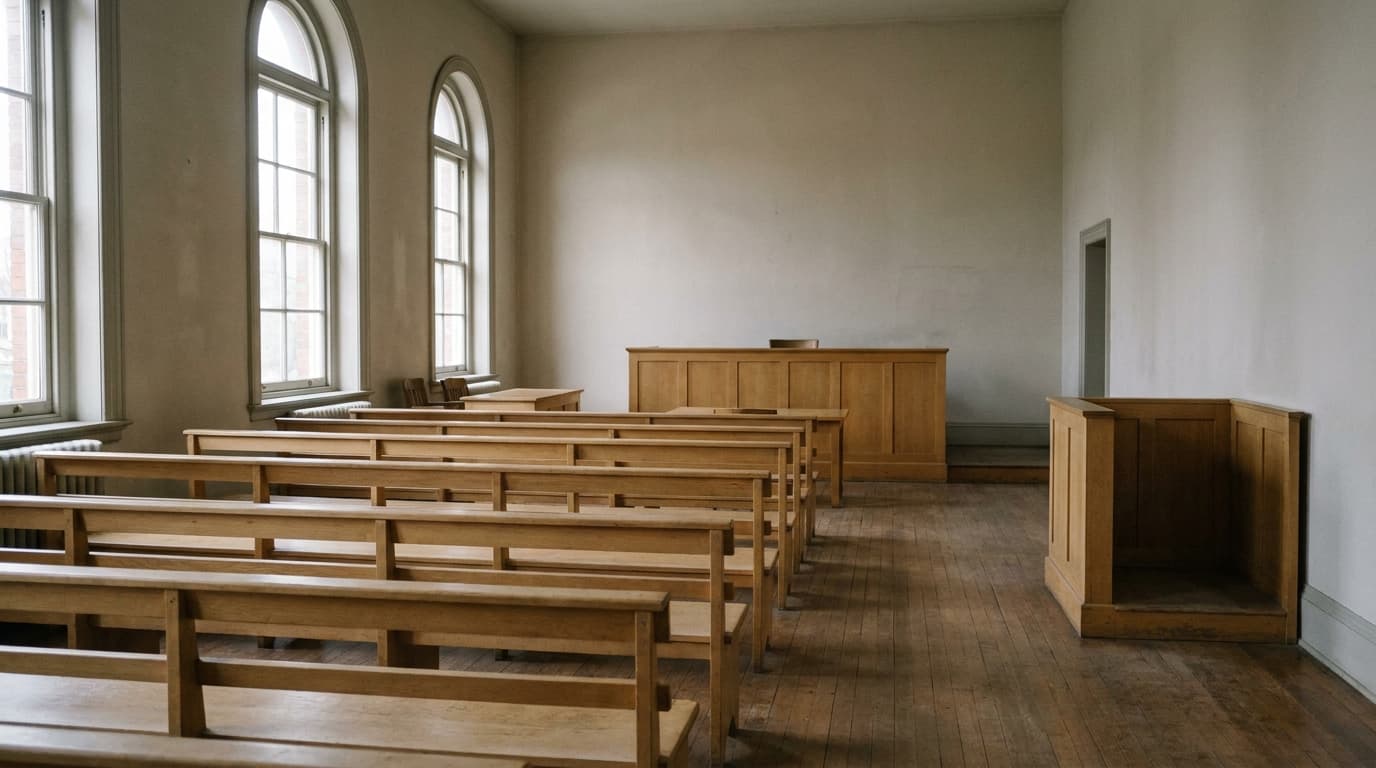
Jury service in New Zealand is drawn from people registered on the electoral roll, subject to a set of disqualifications and occupational exclusions. This page covers who can be summoned, who cannot serve, how to ask to be excused or deferred, and what jurors are paid.
This is general information about New Zealand law, not legal advice. For your own situation, consult a lawyer or your local Community Law centre.
Who can be summoned for jury service
The court selects potential jurors at random from the electoral roll, from people who live within 45 kilometres of the relevant court. Being on the electoral roll is what makes someone eligible to be summoned in the first place.
To be on the electoral roll, a person must be 18 years or older, and either a New Zealand citizen or a resident for electoral purposes, meaning someone living in New Zealand lawfully who is not required to leave within a specified time. Either way, the person must also have lived in New Zealand continuously for 12 months or more at some point in their life.
Who is disqualified because of a criminal conviction
The Juries Act 1981 permanently disqualifies anyone who has, at any time, been sentenced to imprisonment for life, imprisonment for a term of 3 years or more, or preventive detention.
There is also a rolling 5-year disqualification: anyone who, within the preceding 5 years, has been sentenced to imprisonment for a term of 3 months or more, or to home detention for a period of 3 months or more, cannot serve during that 5-year window.
This is a materially shorter and narrower test than the Clean Slate Act's 7-year no-conviction rule discussed below. Someone can clear the jury-service disqualification while still short of full Clean Slate eligibility, and the reverse is also possible.
Who is ineligible because of their occupation
A separate group of people is excluded from jury service because of their job, not their criminal history. This includes Members of Parliament and the Executive Council, the Governor-General, judges and Community Magistrates, Justices of the Peace, practising barristers and solicitors, police employees, staff of the Ministry of Justice and the Department of Corrections, and Parole Board members.
Clean Slate does not exempt you from jury service
The Clean Slate Act's 7-year no-conviction rule and the jury-service conviction disqualification are separate legal tests, with different lookback periods and different thresholds. Being eligible for automatic concealment under Clean Slate does not mean you are automatically qualified to serve on a jury, and being disqualified from jury service does not affect your Clean Slate eligibility. See the Clean Slate Act for the concealment-specific criteria.
How to ask to be excused
You can ask to be permanently excused from jury service when you respond to your summons, on grounds such as being aged 72 or over, having a permanent disability, or a chronic illness. The age for automatic excusal as of right rose from 65 to 72 on 21 February 2026, under the Juries (Age of Excusal) Amendment Act 2026.
You can also ask to be excused if you have served on a jury within the last 2 years, or on grounds of hardship where a deferral would not be practical. Supporting evidence, such as a medical certificate or a letter from an employer, generally strengthens a request. Only the court decides whether to grant an excusal; asking does not guarantee one.
How to defer jury service
If you cannot attend on the date you have been summoned but do not need a permanent excusal, you can ask to defer to a later date, for example because of a pre-booked medical appointment or work commitments. A deferral must be to a continuous four-week window within the following 12 months, and you can generally only be deferred once.
What happens if you ignore a jury summons
You must respond to a jury summons even if you do not think you will be able to attend, and you must turn up unless the court has told you in writing that you have been excused or deferred. Failing to attend without the court's approval can lead to a fine of up to $1,000.
Juror pay and expenses
Jurors are paid directly by the Ministry of Justice, not by their employer, for each half day spent at court, including time spent waiting to find out whether you have been selected. Current rates are $31 per half day for the first 5 days of attendance, rising to $40 per half day from the 6th day onward, with higher rates for evening and late sittings.
The Ministry also reimburses travel at 38 cents per kilometre between your home and the court, parking on production of a receipt, and public transport without a receipt. Jurors with children can claim childcare costs, up to $80 per day per child for professional childcare, or up to $40 per day per child for care from a family member, whānau member, friend, or neighbour.
Employers are not legally required to keep paying an employee's normal wage during jury service, though many choose to top up the Ministry's payment so the employee receives their usual pay.
Related New Zealand everyday law topics
For more on New Zealand criminal records and everyday legal topics, see the Clean Slate Act and the New Zealand everyday law section.
Frequently Asked Questions
Who can be summoned for jury service in New Zealand?
Anyone registered on the electoral roll who lives within 45 kilometres of the relevant court can be randomly selected. Being on the roll requires being 18 or over and either a New Zealand citizen or a permanent resident, and in both cases must have lived in New Zealand continuously for 12 months or more at some point.
What criminal convictions disqualify someone from jury service?
A sentence of life imprisonment, 3 years or more imprisonment, or preventive detention disqualifies someone permanently. A sentence of imprisonment or home detention of 3 months or more within the last 5 years disqualifies someone for that 5-year window.
Does the Clean Slate Act mean I don't have to do jury service?
No. Clean Slate eligibility and the jury-service conviction disqualification are different tests with different lookback periods. Meeting one does not determine the other.
At what age can I be excused from jury service as of right?
From age 72, since 21 February 2026. That threshold was previously 65 before the Juries (Age of Excusal) Amendment Act 2026 came into force.
How much are jurors paid in New Zealand?
Jurors are paid $31 per half day at court for the first 5 days, rising to $40 per half day from the 6th day, plus mileage of 38 cents per kilometre and, where needed, parking, public transport, and childcare costs.
What happens if I ignore a jury summons?
You must respond to the summons and attend unless the court has excused or deferred you in writing. Failing to attend without approval can lead to a fine of up to $1,000.
Sources and References
- Ministry of Justice - Jury service(justice.govt.nz).gov
- Ministry of Justice - Frequently asked questions (jury service)(justice.govt.nz).gov
- Ministry of Justice - Respond to a jury summons(justice.govt.nz).gov
- Ministry of Justice - Payment and support to help you attend jury service(justice.govt.nz).gov
- Ministry of Justice - Jury excusal age increase to 72(justice.govt.nz).gov
- Juries Act 1981(legislation.govt.nz).gov
- Vote NZ - Are you eligible to enrol and vote(vote.nz).gov