
Australia
Motor Accident Compensation in NSW: CTP Claims, Benefits and Time Limits
Independently fact-checked against primary sources (last audited August 19, 2026). · 4 primary sources cited on this page. How we verify our legal content
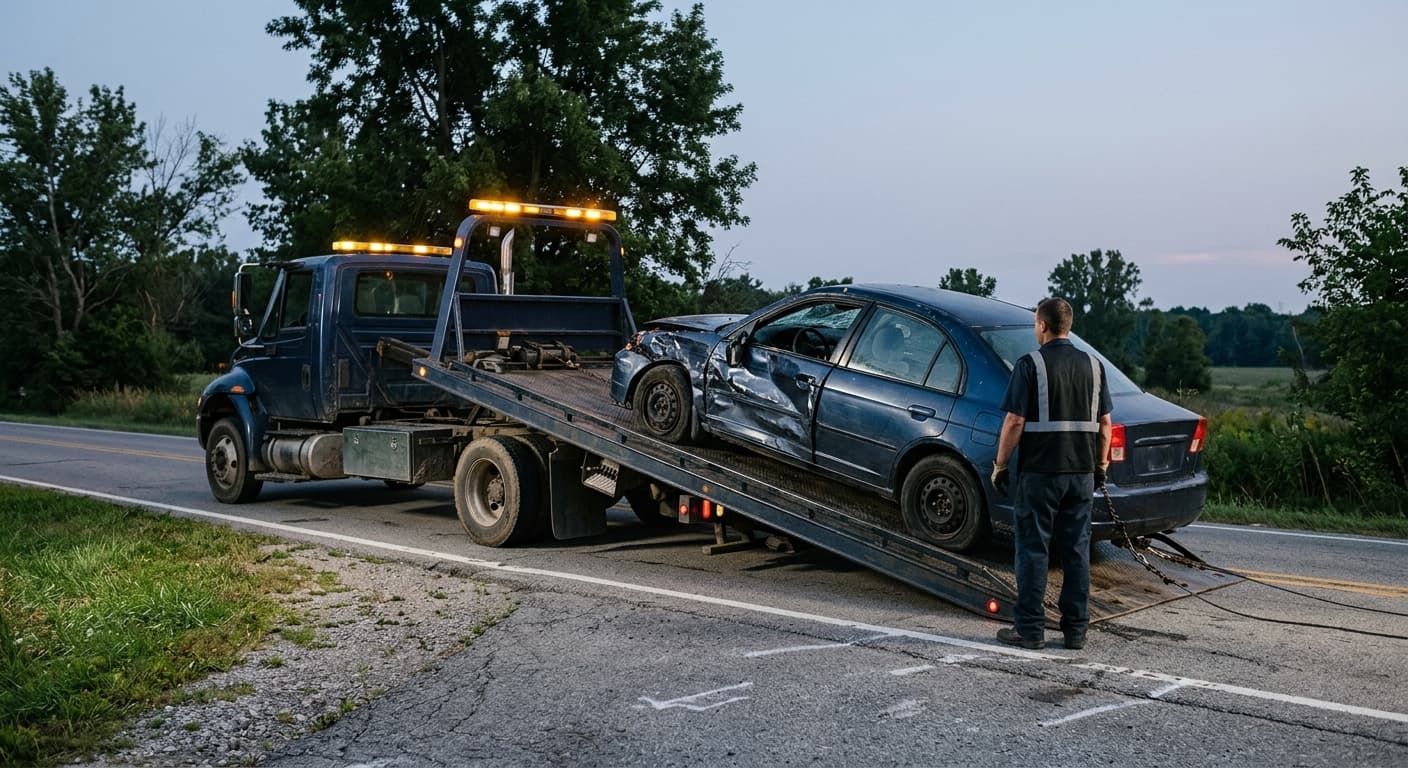
New South Wales runs a hybrid compulsory third party (CTP) scheme under the Motor Accident Injuries Act 2017, paying no-fault statutory benefits to almost anyone hurt in a motor accident while reserving common law damages for claimants who clear two separate legal gates.
How the scheme works
New South Wales compulsory third party (CTP) insurance, still widely known as the green slip, is currently governed by the Motor Accident Injuries Act 2017 (MAIA). MAIA applies to motor accidents from 1 December 2017 onward; the Act's own savings provisions repeatedly use that date as the fixed cutoff for earlier transitional rules. Accidents that happened before that date are still assessed under the earlier Motor Accidents Compensation Act 1999 (MACA), which remains in force for that purpose and is cross-referenced throughout MAIA's own text. A reader unsure which Act applies to an older accident should check the accident date against 1 December 2017 before relying on any MAIA-specific figure.
MAIA is a hybrid scheme with two main tracks. Part 3 sets out no-fault statutory benefits, available regardless of who caused the accident, subject to narrow exclusions such as driving an uninsured vehicle or committing a serious driving offence. Part 4 sets out fault-based common law damages, available only to claimants who clear the two gates described below. A narrower Part 5 mechanism also allows recovery in some no-fault accidents where responsibility cannot be established, such as certain single-vehicle accidents; that mechanism is separate from both the Part 3 and Part 4 tracks. The Act's own objects clause states that limiting benefits for soft tissue and non-recognised psychiatric injuries is intended to keep CTP premiums affordable, which is the policy reasoning behind the threshold injury concept described below.
Who is covered
MAIA defines an injured person broadly, without limiting coverage to a vehicle's driver. On its face the Act covers drivers, including an at-fault driver for statutory no-fault benefits (unless the vehicle was uninsured or the driver committed a serious driving offence), passengers, pedestrians and cyclists struck or affected by a vehicle's driving or a collision. A NSW CTP policy insures the vehicle's owner and any person who drives it, whether or not with the owner's consent, so an unauthorised driver is still covered by the vehicle's own policy, though the insurer can separately pursue that driver for reimbursement.
Where the at-fault vehicle is uninsured or cannot be identified, a claim can generally be brought against the Nominal Defendant instead, which stands in the vehicle owner or driver's place. For an unidentified, hit-and-run vehicle, the claimant must first make due inquiry and search to try to establish its identity, and the Nominal Defendant has 2 months to reject a claim on the ground that inquiry was not made, or lose that right. There is no Nominal Defendant claim if the injured person was trespassing on a road-related area at the time, and none if the vehicle, though not NSW-insured, was covered under another state's or the Commonwealth's own compulsory scheme (see interstate accidents, below).
Time limits and how to claim
Statutory benefits and common law damages are notified separately to the insurer, and each has its own deadline.

For statutory benefits, a claim must generally be made within 3 months of the accident. Lodging later than 28 days after the accident does not itself bar the claim within that 3-month window, but it does mean weekly payments only start running from the date the claim is actually made, not backdated to the accident date. A late claim, made after 3 months, can still proceed with a full and satisfactory explanation for the delay, provided it is made within 3 years of the accident, or concerns a death or an injury with permanent impairment of more than 10 percent.
For common law damages, notice to the insurer must generally be given within 3 years of the accident date; a late claim is possible with a satisfactory explanation, subject to the insurer's own right to object on delay grounds within a 2-month window. Separately, court proceedings on a damages claim generally cannot be commenced more than 3 years after the accident or death without the court's leave, and leave requires both a satisfactory explanation and that the likely total damages are at least 25 percent of the non-economic loss cap, a requirement that does not apply to a claimant under a legal incapacity due to age or mental capacity. Time does not run while a claim is with the Personal Injury Commission for assessment, plus 2 months after the assessment or exemption certificate issues. MAIA sets its own limitation regime for these claims rather than relying on the general Limitation Act 1969 that governs most other NSW civil claims; see our Australian statute of limitations guide for how the general civil deadlines work outside CTP.
The Act itself does not fix a police reporting deadline. It empowers the Motor Accident Guidelines to set a reporting requirement, and missing that requirement does not automatically bar a claim if the claimant gives a full and satisfactory explanation, or the Personal Injury Commission accepts sufficient cause existed. Claim forms are prescribed under those same Guidelines and are lodged with the relevant insurer.
Statutory no-fault benefits
Weekly statutory benefits are paid in tiers keyed to time since the accident. For the first 13 weeks, an eligible earner receives 95 percent of the gap between pre-accident and post-accident weekly earnings or capacity. From week 14 to week 78, the rate is 80 percent for a total loss of earnings or 85 percent for a partial loss. After week 78, the same 80 or 85 percent split applies, now keyed to loss of earning capacity rather than earnings, and becomes available to any claimant aged 18 or over regardless of earner status. The maximum weekly amount is set in the Act and indexed each year on or before 1 October, tied to average weekly earnings data; the current indexed figure is published by SIRA and should not be assumed from the amount set when MAIA commenced.
A claimant who is more than 61 percent at fault for the accident, or whose only injuries are threshold injuries (minor soft tissue injuries or psychological injuries that are not a recognised psychiatric illness), generally loses entitlement to weekly statutory benefits, and to treatment and care benefits, after 52 weeks. For other claimants, weekly benefits can continue to a maximum of 104 weeks, extending to 156 weeks where permanent impairment is 10 percent or less, or 260 weeks where it is more than 10 percent, when a damages claim is pending. This structure is what bridges a more seriously injured claimant from the statutory benefits track into the common law damages track described below.
Treatment and care benefits cover reasonable medical, hospital and rehabilitation expenses, and extend to a claimant's lost capacity to provide gratuitous domestic services to a dependant. Gratuitous attendant care itself, as opposed to domestic services, is not payable as a statutory benefit. Where a claimant's treatment and care needs are already covered by the Lifetime Care and Support Scheme described below, statutory benefits are not paid for the same needs, avoiding double payment between the two schemes.
Common law damages: two separate gates
Common law damages under Part 4 are gated in two stages, and the two gates should not be treated as one figure.
The first gate, section 4.4, is a complete bar: no damages, economic or non-economic, may be awarded to a claimant whose only injuries from the accident were threshold injuries. A threshold-injury-only claimant receives statutory benefits, capped at 52 weeks as described above, and has no common law route at all, regardless of any impairment percentage.
The second gate, section 4.11, applies only once the first gate is cleared, meaning the claimant has at least one non-threshold injury. It bars non-economic loss (pain and suffering) damages specifically, unless permanent impairment is more than 10 percent. Economic loss damages, covering lost earnings and earning capacity, are not subject to this 10 percent test. Where a claimant has both a physical injury and a psychological or psychiatric injury from the same accident, the two are assessed separately against the 10 percent threshold, and the claimant clears the gate if either category alone exceeds 10 percent.
The non-economic loss damages cap is indexed and, like the statutory benefits figures above, the current amount is published by SIRA. Future economic loss is discounted at a prescribed rate of 5 percent by default, unless the regulations set a different rate.
Catastrophic injury: the Lifetime Care and Support Scheme
Separately from a MAIA claim, the Lifetime Care and Support Scheme, administered by icare and funded by a levy on CTP premiums, provides no-fault support to people with a catastrophic injury from a motor accident, regardless of who was at fault, provided the eligibility criteria for both the accident and the injury are met. Eligible injury categories include spinal cord injury, brain injury, amputations, burns and permanent blindness, each assessed against its own severity criteria. Eligibility also requires the accident to have happened in NSW on or after 1 October 2006 for a child under 16, or 1 October 2007 for an adult, dates that predate MAIA and sit outside the MAIA/MACA accident-date split described above.

An accepted claimant first becomes an interim participant for 2 years, receiving reasonable and necessary treatment, rehabilitation and care with a case manager assigned, then can apply to become a lifetime participant, with support continuing for the rest of their life. The scheme interacts with a MAIA claim rather than replacing it entirely: statutory benefits are not paid for treatment and care needs already covered by Lifetime Care, and in some circumstances the Lifetime Care and Support Authority itself steps into the role of the relevant insurer for statutory benefits purposes.
Disputes and legal costs
Disputes are resolved by the Personal Injury Commission of New South Wales, established under the Personal Injury Commission Act 2020. The Act generally requires an internal review by the insurer itself before a claimant can escalate to the Commission for merit review or medical assessment; the insurer must complete and notify the result of an internal review within 14 days of the request. The Commission's medical assessment division resolves disputes over impairment degree, and its claims assessment division resolves damages claim disputes; court proceedings on a damages claim generally cannot begin until a claims assessment or exemption certificate has been obtained.
Legal costs are regulated. Regulations can fix maximum recoverable legal costs for a motor accidents matter, and can declare that no costs are payable at all for specified services. Notably, a legal practitioner is not entitled to recover legal costs for representing a claimant on a pure statutory benefits claim unless the regulations or the Commission specifically permit it, a rule consistent with the statutory benefits track being designed for a claimant to pursue without a lawyer.
Interstate accidents
A NSW CTP policy covers the use of the insured vehicle anywhere in the Commonwealth, not just in NSW, so a NSW-registered vehicle that causes an accident interstate is still covered by its NSW policy. Going the other direction, MAIA recognises another jurisdiction's compulsory scheme as satisfying its own coverage requirement: an interstate-registered vehicle that is validly covered by that jurisdiction's compulsory third party or motor accident scheme, and causes an accident in NSW, is treated as insured for MAIA purposes, and a claim generally proceeds against that vehicle's own interstate insurer or scheme rather than the NSW Nominal Defendant. Generally, the scheme that applies tracks which vehicle's compulsory insurance is in force rather than which state the accident happened in, but an interstate accident is exactly the kind of situation worth confirming directly with the relevant insurer before assuming how a specific claim will be handled.
Work journeys and other consequences
If the accident happened while driving for work, to work or from work, a workers compensation claim may also be available or required; see our NSW workers compensation guide for how that scheme works alongside a CTP claim. A CTP claim does not depend on the at-fault driver being convicted of anything, but a driver who caused the accident may separately face demerit points or drink driving penalties; see our guides to NSW demerit points and NSW drink driving penalties. For an overview of how CTP schemes compare across Australia, see our motor accident compensation hub.

Frequently Asked Questions
What is the difference between MAIA and MACA in NSW?
The Motor Accident Injuries Act 2017 (MAIA) governs accidents on or after 1 December 2017. The earlier Motor Accidents Compensation Act 1999 (MACA) still governs claims for accidents before that date and remains in force for that purpose.
How long do I have to make a CTP claim in NSW?
A statutory benefits claim must generally be made within 3 months of the accident, though lodging after 28 days means weekly payments only start from the date the claim is made. A damages claim must generally be notified within 3 years, and court proceedings generally cannot start more than 3 years after the accident without the court's leave.
Can I get CTP benefits if I caused the accident?
Statutory no-fault benefits are generally available even to an at-fault driver, unless the vehicle was uninsured or the driver committed a serious driving offence. Common law damages are different: a claimant more than 61 percent at fault loses statutory weekly benefits after 52 weeks and cannot recover damages for that share of responsibility.
What is a threshold injury?
A threshold injury is a minor soft tissue injury, such as to a muscle, tendon or ligament (not including a rupture), or a psychological or psychiatric injury that is not a recognised psychiatric illness. A claimant whose only injuries are threshold injuries cannot recover any common law damages, though statutory benefits are still available for up to 52 weeks.
What is the 10 percent impairment threshold for non-economic loss?
Once a claimant clears the threshold injury bar, non-economic loss (pain and suffering) damages are only available if permanent impairment is more than 10 percent. This is a separate, narrower test from the threshold injury bar, and it applies only to non-economic loss, not to economic loss such as lost earnings.
What happens if the other vehicle is unidentified or uninsured?
A claim can generally be made against the Nominal Defendant instead of the vehicle's owner or driver. For a hit-and-run vehicle, the claimant must first make due inquiry and search to try to identify it before the claim can proceed.
Where are NSW CTP disputes resolved?
Most disputes go first to an internal review by the insurer, then to the Personal Injury Commission of New South Wales for merit review, medical assessment or claims assessment, depending on what is in dispute.
Updates
Independently fact-checked against the cited primary sources
Sources and References
- Motor Accident Injuries Act 2017 (NSW), consolidated current text(legislation.nsw.gov.au).gov
- Motor Accidents Compensation Act 1999 (NSW), consolidated current text(legislation.nsw.gov.au).gov
- icare NSW, Who we care for (Lifetime Care and Support Scheme)(icare.nsw.gov.au).gov
- State Insurance Regulatory Authority (SIRA) NSW, What you can claim: income support at 95% then 85% of pre-accident earnings, the 28-day back-pay rule and treatment and care benefits (opened in a browser session on 18 August 2026)(sira.nsw.gov.au).gov