
District of Columbia
D.C. Theft Laws: $1,000 First-Degree Line, Penalties and Shoplifting
Independently fact-checked against primary sources (last audited October 14, 2026). · 24 primary sources cited on this page. How we verify our legal content
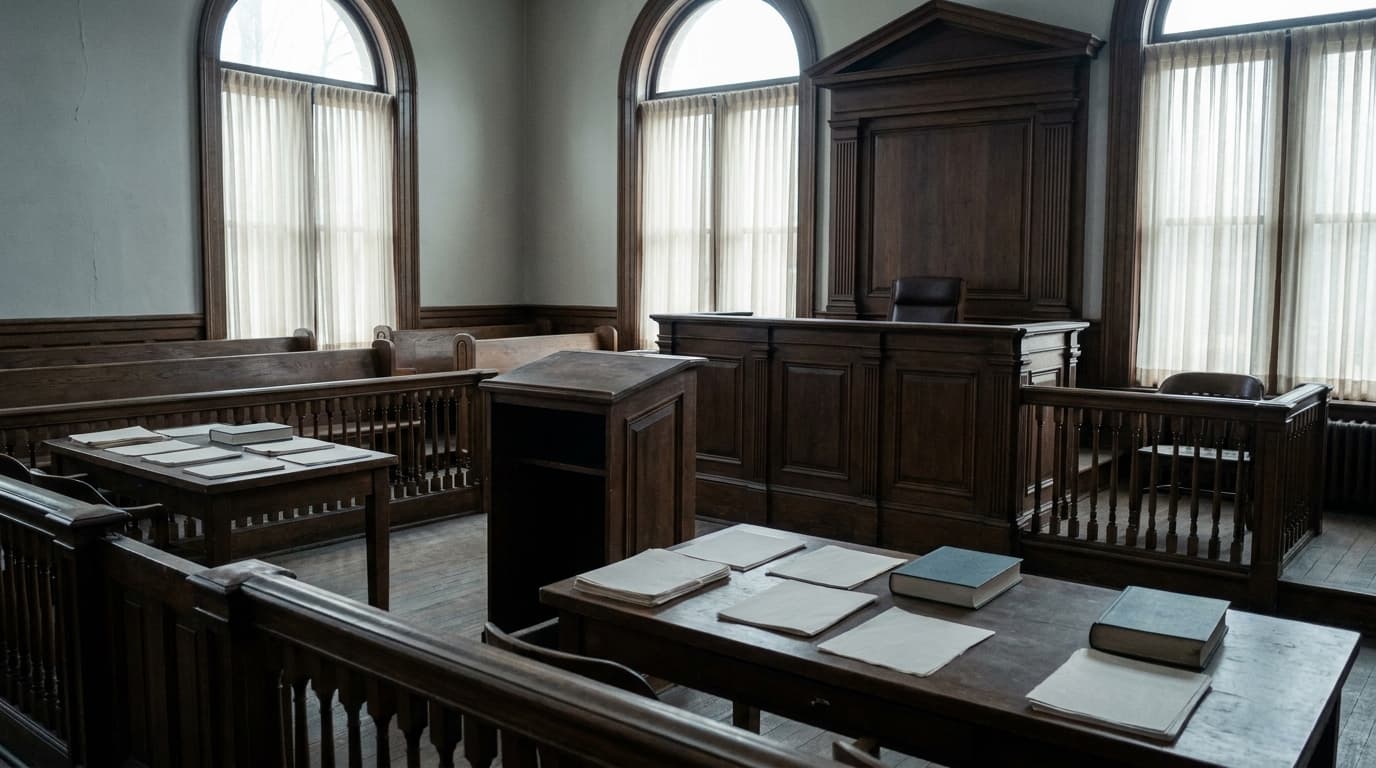
In the District of Columbia, theft of property worth "$1000 or more" is theft in the first degree, punishable by up to 10 years in prison (D.C. Code 22-3212(a)(1)), so exactly $1,000 falls in the higher tier. Theft of property that "has some value" below that line is theft in the second degree, punishable by up to 180 days (22-3212(b)). Shoplifting is a separate offense carrying up to 90 days (22-3213). For other states, see our guide to theft laws by state.
Information last verified on 2026-10-14. This article has not been reviewed by a licensed lawyer.
Jurisdiction scope: This article covers District of Columbia theft law in D.C. Code Title 22, chapter 32 (22-3201 to 22-3232), the fine schedule in 22-3571.01, the senior-victim enhancement in 22-3601, the repeat-felony statute 22-1804a, the merchant's civil recovery chapter in Title 27, chapter 1 (27-101 to 27-106), and, only where it reaches store theft, burglary under 22-801. It does not cover federal theft offenses, robbery, burglary generally, or identity theft and fraud schemes, which have their own pages linked below.
What counts as theft in D.C.
The District has one consolidated theft offense. Under D.C. Code 22-3211(b), "A person commits the offense of theft if that person wrongfully obtains or uses the property of another with intent: (1) To deprive the other of a right to the property or a benefit of the property; or (2) To appropriate the property to his or her own use or to the use of a third person."
"Wrongfully obtains or uses" means "(1) taking or exercising control over property; (2) making an unauthorized use, disposition, or transfer of an interest in or possession of property; or (3) obtaining property by trick, false pretense, false token, tampering, or deception," and it "includes conduct previously known as larceny, larceny by trick, larceny by trust, embezzlement, and false pretenses" (22-3211(a)). "Property" means "anything of value," including real property, services, credit, debt and "A government-issued license, permit, or benefit" (22-3201(3)).
Two details in the theft section:
- Leaving without paying. For services, leaving the place where they were obtained knowing or having reason to believe no payment was made, where payment is ordinarily made immediately or before departure, "shall be prima facie evidence that the person had committed the offense of theft" (22-3211(c)).
- Fare evasion. "A violation of § 35-252 shall not constitute a violation of this section" (22-3211(d)).
D.C. theft penalties: first and second degree
The D.C. Code does not use the terms petty theft or grand larceny, and the theft penalty section does not use the words felony or misdemeanor. The $1,000 line separates the two degrees.

| Value or circumstances | Offense | Statutory maximum (22-3212) | Fine under the general schedule (22-3571.01(b)) |
|---|---|---|---|
| Property that "has some value" | Theft in the second degree | 180 days | $1,000 |
| $1,000 or more | Theft in the first degree | 10 years | $25,000 |
| Two or more thefts within 6 months totaling $1,000 or more | Theft in the first degree | 10 years | $25,000 |
| First or second degree with 2 or more prior theft convictions | Enhanced theft | 15 years, with a 1-year mandatory minimum | $37,500 |
The fine figures come from the District's general fine schedule, which sets the maximum fine by the length of the maximum prison term: "$1,000 if the offense is punishable by imprisonment for 180 days, or 6 months, or less but more than 90 days," "$25,000 if the offense is punishable by imprisonment for 10 years or less but more than 5 years," and "$37,500 if the offense is punishable by imprisonment for 15 years or less but more than 10 years" (22-3571.01(b)(4), (7), (8)).
These are statutory maximums, not a prediction of any sentence. Other general provisions can raise them:
- Senior victims. A theft against "an individual who is 65 years of age or older, at the time of the offense, may be punished by a fine of up to 1 1/2 times the maximum fine otherwise authorized for the offense and may be imprisoned for a term of up to 1 1/2 times the maximum term of imprisonment otherwise authorized for the offense, or both" (22-3601(a), (b)). "It is an affirmative defense that the accused knew or reasonably believed the victim was not 65 years old or older at the time of the offense, or could not have known or determined the age of the victim because of the manner in which the offense was committed" (22-3601(c)).
- Prior felonies. "If a person is convicted in the District of Columbia of a felony, having previously been convicted of 2 prior felonies not committed on the same occasion, the court may, in lieu of any sentence authorized, impose such greater term of imprisonment as it deems necessary, up to, and including, 30 years" (22-1804a(a)(1)).
- Gain or loss. Where a person "derives pecuniary gain" from an offense or it causes "pecuniary loss to a person other than the defendant," the fine may be up to "the greater of twice the gross gain or twice the gross loss," but a fine above the general schedule is allowed only if the gain or loss "is both alleged in the indictment or information and is proven beyond a reasonable doubt" (22-3571.02(b)).
A lawyer licensed in the District can explain how these provisions apply to a particular case.
Repeat theft convictions
Under 22-3212(c), "A person convicted of theft in the first or second degree who has 2 or more prior convictions for theft, not committed on the same occasion, shall be fined not more than the amount set forth in § 22-3571.01 or imprisoned for not more than 15 years and for a mandatory-minimum term of not less than one year, or both. A person sentenced under this subsection shall not be released from prison, granted probation, or granted suspension of sentence, prior to serving the mandatory-minimum."
Prior convictions count if they are for violations of 22-3211, of "A statute in one or more jurisdictions prohibiting theft or larceny," or for "Conduct that would constitute a violation of section 22-3211 if committed in the District of Columbia" (22-3212(d)).
Adding thefts together
The District has two aggregation rules:
- Six months. First-degree theft applies when "The person commits theft twice or more within a period of 6 months and the aggregate value of property obtained is $1000 or more," and those thefts "may be aggregated and charged in a single count, in which event they shall constitute a single offense" (22-3212(a)(1)(B)). This six-month rule was added by D.C. Law 25-175, effective June 8, 2024.
- Single scheme. "Amounts or property received pursuant to a single scheme or systematic course of conduct in violation of § 22-3211 (Theft), § 22-3221 (Fraud), § 22-3223 (Credit Card Fraud), § 22-3227.02 (Identity Theft), § 22-3231 (Trafficking in Stolen Property), or § 22-3232 (Receiving Stolen Property) may be aggregated in determining the grade of the offense and the sentence for the offense" (22-3202).
A cross-reference in 22-3212(a)(2)
The current text of 22-3212(a)(1) contains only subparagraphs (A) and (B). Paragraph (a)(2) reads: "A conviction for first degree theft under paragraph (1)(C) of this subsection merges with any other conviction for robbery under § 22-2801, and malicious destruction of property under § 22-303, arising from the same act or course of conduct." The official code does not contain a paragraph (1)(C), and this page does not guess what the reference is meant to cover.
Shoplifting in D.C.
Shoplifting is its own offense. Under 22-3213(a), "A person commits the offense of shoplifting if, with intent to appropriate without complete payment any personal property of another that is offered for sale or with intent to defraud the owner of the value of the property, that person: (1) Knowingly conceals or takes possession of any such property; (2) Knowingly removes or alters the price tag, serial number, or other identification mark that is imprinted on or attached to such property; or (3) Knowingly transfers any such property from the container in which it is displayed or packaged to any other display container or sales package."
- Penalty. Shoplifting carries a fine set by 22-3571.01 "or imprisoned for not more than 90 days, or both" (22-3213(b)); for a 90-day offense the fine schedule sets $500 (22-3571.01(b)(3)).
- No attempt offense. "It is not an offense to attempt to commit the offense described in this section" (22-3213(c)).
- Theft also reaches stores. Theft from a merchant is still theft under 22-3211, and the civil recovery chapter applies to "fraud, shoplifting, or theft from a merchant" (27-102(a)).
Directing organized retail theft. Since June 8, 2024 (D.C. Law 25-175, the Secure DC Omnibus Amendment Act of 2024), "organized retail theft" means "acting in concert with one or more other persons to commit theft, as described in § 22-3211, of any merchandise with a value greater than $1,000 aggregated over a 90-day period with the intent to: (1) Sell, barter, or trade the merchandise for monetary or other gain; or (2) Fraudulently return the merchandise to a retail merchant" (22-3211.01(a)). "A person commits the offense of directing organized retail theft if any person acts as an organizer by recruiting, directing, or coercing individuals to commit organized retail theft," and that person "shall be guilty of a felony" punishable by up to 15 years (22-3211.01(b), (c)).
Burglary. Under 22-801(b), whoever, "either in the night or in the daytime, break and enter, or enter without breaking, any dwelling, bank, store, warehouse, shop, stable, or other building," with intent to carry away any part of it or any attached fixture "or to commit any criminal offense, shall be guilty of burglary in the second degree," punishable by "not less than 2 years nor more than 15 years." Burglary is otherwise outside the scope of this page.
Can a D.C. store detain someone suspected of shoplifting?
The District protects merchants rather than defining a detention power. Under 22-3213(d), a seller or its employee or agent "who detains or causes the arrest of a person in a place where the property is offered for sale shall not be held liable for detention, false imprisonment, malicious prosecution, defamation, or false arrest" if all four conditions are met:
- the person detaining "had, at the time thereof, probable cause to believe that the person detained or arrested had committed in that person's presence, an offense described in this section";
- "The manner of the detention or arrest was reasonable";
- "Law enforcement authorities were notified within a reasonable time"; and
- the person "was released within a reasonable time of the detention or arrest, or was surrendered to law enforcement authorities within a reasonable time."
Civil recovery: can a store demand money after shoplifting in D.C.?
Yes. Title 27, chapter 1 lets a merchant recover civil damages for "fraud, shoplifting, or theft." The liability section reads: "Anyone who commits an offense of fraud, shoplifting, or theft from a merchant shall be civilly liable to the merchant for treble the amount of actual damages; and (1) The retail value of any goods or merchandise stolen if the goods or merchandise are not recovered; (2) The loss of value of the goods or merchandise stolen if the goods or merchandise are recovered; or (3) A minimum of $50 in damages, whichever is greater" (27-102(a)).
- Parents. "The parent or guardian shall be liable for any acts or offenses committed by a juvenile under this chapter" (27-102(b)). A juvenile is "a person under 18 years of age" (27-101(2)).
- Written demand first. A merchant "may recover the damages by submitting written demand to the alleged offender or the parent or guardian of a juvenile alleged offender" (27-104(a)). The demand must be delivered or mailed "at least 30 days prior to the filing of any suit for damages," must "Specify the alleged criminal conduct and the damages incurred as a result of the conduct," and must state that if payment is not made or an agreement is not reached or kept within 30 days of service, the merchant may sue (27-104(b)).
- Receipt. After payment, "the merchant shall deliver or mail an acknowledgement of payment letter to the alleged offender within 5 business days of receipt of payment" (27-104(c)).
- No conviction needed. "A conviction or plea of guilty of fraud, shoplifting, or theft is not a prerequisite to the maintenance of a civil action authorized by this chapter" (27-103(c)). Recovery of damages "shall not prohibit criminal prosecution," and a civil recovery or finding of liability "shall not be admissible in a criminal proceeding" (27-103(a), (b)).
- Court and fees. Suit "may be brought in the Superior Court of the District of Columbia" (27-105), and "Attorneys' fees and costs shall be awarded under this chapter without regard to ability to pay" (27-106).
The statute sets what a merchant can recover; it does not say how any particular demand letter should be answered. A lawyer licensed in the District of Columbia can advise on a specific letter.
Other theft offenses with their own grades
These offenses in chapter 32 set their own penalties:

| Offense | Section | Statutory maximum |
|---|---|---|
| Taking property without right (takes and carries away property of another without right) | 22-3216 | 90 days |
| Unauthorized use of a motor vehicle | 22-3215(d) | 5 years; 10 years, consecutive, if used during or to facilitate a crime of violence; with 2 or more prior convictions for unauthorized use or first-degree theft, a fine of at least $5,000, or 30 months to 15 years, or both |
| Receiving stolen property | 22-3232(c) | 7 years at $1,000 or more; 180 days if the property "has some value" |
| Trafficking in stolen property (on 2 or more separate occasions) | 22-3231(d) | 10 years |
| Credit card fraud | 22-3223(d) | 10 years at $1,000 or more; otherwise 180 days |
| Theft of utility service (electricity or gas) | 22-3218.04 | 60 days; 180 days for a second or subsequent conviction |
Recent changes
- 2009. D.C. Law 18-88 replaced the $250 line in 22-3212 with $1,000, changed second-degree theft from "less than $250" to property that "has some value," and added the repeat-offender subsections (c) and (d), according to the official code's notes.
- 2024. The Secure DC Omnibus Amendment Act of 2024 (D.C. Law 25-175, effective June 8, 2024) added the directing organized retail theft offense (22-3211.01), rewrote 22-3212(a) so that two or more thefts within 6 months with an aggregate value of $1,000 or more are first-degree theft and may be charged as a single count, and amended the senior-victim enhancement in 22-3601.
Related legal issues
Fraud (D.C. Code 22-3221) and scams are covered in D.C. scam and fraud laws, and identity theft (22-3227.02) in D.C. identity theft laws. Sealing a theft record is covered in D.C. expungement laws, and time limits for charges in the D.C. statute of limitations.
Federal theft offenses are covered on our theft laws by state hub.
Related
- Theft laws by state
- District of Columbia scam and fraud laws
- District of Columbia identity theft laws
- District of Columbia expungement laws
- District of Columbia statute of limitations
This page provides general legal information about District of Columbia theft statutes as of October 14, 2026. It is not legal advice. For advice about a specific situation, contact a lawyer licensed in the District of Columbia.
Last updated: 2026-10-14.
Frequently Asked Questions
What is the felony theft amount in D.C.?
The D.C. theft penalty section does not use the word felony. The line is $1,000: theft of property worth $1,000 or more is first-degree theft, punishable by up to 10 years, while second-degree theft is punishable by up to 180 days (D.C. Code 22-3212).
Is stealing $1,000 first-degree theft in D.C.?
Yes. D.C. Code 22-3212(a)(1)(A) applies when the value of the property obtained or used is $1000 or more, so property worth exactly $1,000 is first-degree theft.
What is petty theft in D.C.?
The D.C. Code does not use the term petty theft. Theft of property that has some value, below the first-degree line, is theft in the second degree, punishable by up to 180 days and a fine up to $1,000 (22-3212(b), 22-3571.01(b)(4)).
Is shoplifting a felony in D.C.?
Shoplifting under D.C. Code 22-3213 carries up to 90 days. Theft from a store can also be charged as theft under 22-3211, which is first-degree theft at $1,000 or more, and entering a store with intent to commit a criminal offense is within the words of the second-degree burglary statute, punishable by 2 to 15 years (22-801(b)).
How much can a store charge for shoplifting in D.C.?
Under D.C. Code 27-102, a person who commits fraud, shoplifting or theft from a merchant is civilly liable for treble the amount of actual damages and the greater of the retail value of unrecovered goods, the loss of value of recovered goods, or $50. The merchant must send a written demand at least 30 days before suing, and no conviction is required (27-103, 27-104).
Are parents liable when a child shoplifts in D.C.?
Yes. The parent or guardian is liable for acts or offenses committed by a juvenile, meaning a person under 18, under the merchant civil recovery chapter (D.C. Code 27-101, 27-102(b)).
What is organized retail theft in D.C.?
Organized retail theft means acting in concert with others to steal merchandise worth more than $1,000 aggregated over 90 days to resell it or fraudulently return it. A person who recruits, directs or coerces others to do it commits a felony punishable by up to 15 years (D.C. Code 22-3211.01).
Updates
Independently fact-checked against the cited primary sources
The Law Behind This Article
This article rests on the statutory provisions below, held in our own legal record and retrieved from the official source. Tap a section to read the operative text.
Code of the District of Columbia, Title 22: Criminal Offenses and Penalties. - Chapter 32: Theft; Fraud; Stolen Property; Forgery; and Extortion. - Subchapter II: Theft; Related Offenses.
§ 22-3211Theft.In force
(a) For the purpose of this section, the term “wrongfully obtains or uses” means: (1) taking or exercising control over property; (2) making an unauthorized use, disposition, or transfer of an interest in or possession of property; or (3) obtaining property by trick, false pretense, false token, tampering, or deception. The term “wrongfully obtains or uses” includes conduct previously known as larceny, larceny by trick, larceny by trust, embezzlement, and false pretenses. (b) A person commits the offense of theft if that person wrongfully obtains or uses the property of another with intent: (1) To deprive the other of a right to the property or a benefit of the property; or (2) To appropriate the property to his or her own use or to the use of a third person.
Official text (excerpt) · last checked 2026-07-30 · Read the full text in our law library · Verify at github.com
§ 22-3212Penalties for theft.In force
(1) Theft in the first degree. – Any person convicted of theft in the first degree shall be fined no more than the amount set forth in § 22-3571.01, or incarcerated for no more than 10 years, or both, if: (A) The value of the property obtained or used is $1000 or more; or (i) The person commits theft twice or more within a period of 6 months and the aggregate value of property obtained is $1000 or more. (ii) When a person commits theft twice or more within a period of 6 months pursuant to sub-subparagraph (i) of this subparagraph, the thefts may be aggregated and charged in a single count, in which event they shall constitute a single offense. (2) A conviction for first degree theft under paragraph (1)(C) of this subsection merges with any other conviction for robbery under § 22-2801, and malicious destruction of property under § 22-303, arising from the same act or course of conduct.
Official text (excerpt) · last checked 2026-07-30 · Read the full text in our law library · Verify at github.com
§ 22-3213Shoplifting.In force
(a) A person commits the offense of shoplifting if, with intent to appropriate without complete payment any personal property of another that is offered for sale or with intent to defraud the owner of the value of the property, that person: (1) Knowingly conceals or takes possession of any such property; (2) Knowingly removes or alters the price tag, serial number, or other identification mark that is imprinted on or attached to such property; or (3) Knowingly transfers any such property from the container in which it is displayed or packaged to any other display container or sales package. (b) Any person convicted of shoplifting shall be fined not more than the amount set forth in § 22-3571.01 or imprisoned for not more than 90 days, or both. (c) It is not an offense to attempt to commit the offense described in this section.
Official text (excerpt) · last checked 2026-07-30 · Read the full text in our law library · Verify at github.com
§ 22-3211.01Directing organized retail theft.In force
(a) For the purpose of this section, the term "organized retail theft" means acting in concert with one or more other persons to commit theft, as described in § 22-3211, of any merchandise with a value greater than $1,000 aggregated over a 90-day period with the intent to: (1) Sell, barter, or trade the merchandise for monetary or other gain; or (2) Fraudulently return the merchandise to a retail merchant. (b) A person commits the offense of directing organized retail theft if any person acts as an organizer by recruiting, directing, or coercing individuals to commit organized retail theft. (c) A person who violates this section shall be guilty of a felony and, upon conviction, shall be fined no more than the amount set forth in § 22-3571.01, incarcerated for no more than 15 years, or both. (1) A conviction for directing organized retail theft merges with any other conviction for being an accomplice to theft under § 22-3211, an accomplice to shoplifting under § 22-3213, or an accomplice to burglary under § 22-801, or for criminal conspiracy under § 22-1805a, arising from the same act or course of conduct.
Official text (excerpt) · last checked 2026-07-30 · Read the full text in our law library · Verify at github.com
Code of the District of Columbia, Title 22: Criminal Offenses and Penalties. - Chapter 32: Theft; Fraud; Stolen Property; Forgery; and Extortion. - Subchapter I: General Provisions.
§ 22-3202Aggregation of amounts received to determine grade of offense.In force
Amounts or property received pursuant to a single scheme or systematic course of conduct in violation of § 22-3211 (Theft), § 22-3221 (Fraud), § 22-3223 (Credit Card Fraud), § 22-3227.02 (Identity Theft), § 22-3231 (Trafficking in Stolen Property), or § 22-3232 (Receiving Stolen Property) may be aggregated in determining the grade of the offense and the sentence for the offense.
Official text (excerpt) · last checked 2026-07-30 · Read the full text in our law library · Verify at github.com
§ 22-3201Definitions.In force
For the purposes of this chapter, the term: (1) “Appropriate” means to take or make use of without authority or right. (2) “Deprive” means: (A) To withhold property or cause it to be withheld from a person permanently or for so extended a period or under such circumstances as to acquire a substantial portion of its value; or (B) To dispose of the property, or use or deal with the property so as to make it unlikely that the owner will recover it. (2A) “Person” means an individual (whether living or dead), trust, estate, fiduciary, partnership, company, corporation, association, organization, union, government department, agency, or instrumentality, or any other legal entity. (3) “Property” means anything of value. The term “property” includes, but is not limited to: (A) Real property, including things growing on, affixed to, or found on land; (B) Tangible or intangible personal property; (C) Services; (D) Credit; (E) Debt; and (F) A government-issued license, permit, or benefit.
Official text (excerpt) · last checked 2026-07-30 · Read the full text in our law library · Verify at github.com
Code of the District of Columbia, Title 27: Merchant’s Civil Recovery for Criminal Conduct. - Chapter 1: Merchant’s Civil Recovery for Criminal Conduct.
§ 27-102Liability and damages.In force
(a) Anyone who commits an offense of fraud, shoplifting, or theft from a merchant shall be civilly liable to the merchant for treble the amount of actual damages; and (1) The retail value of any goods or merchandise stolen if the goods or merchandise are not recovered; (2) The loss of value of the goods or merchandise stolen if the goods or merchandise are recovered; or (3) A minimum of $50 in damages, whichever is greater. (b) The parent or guardian shall be liable for any acts or offenses committed by a juvenile under this chapter.
Official text (excerpt) · last checked 2026-07-30 · Read the full text in our law library · Verify at github.com
§ 27-104Merchant’s options.In force
(a) A merchant who suffers damages as a result of fraud, shoplifting, or theft, may recover the damages by submitting written demand to the alleged offender or the parent or guardian of a juvenile alleged offender. (b) The written demand shall: (1) Be delivered or mailed to the alleged offender, or parent or guardian of a juvenile alleged offender, at least 30 days prior to the filing of any suit for damages; (2) Specify the alleged criminal conduct and the damages incurred as a result of the conduct; (3) Specify the amount which the merchant is entitled to receive under this chapter and that if payment of this amount is made in accordance with the written demand or the terms of a written agreement between the merchant and the alleged offender or the parent or guardian of the juvenile alleged offender, within 30 days of the date of service of the demand, the merchant may bring suit for damages; and (4) Specify that if payment of the specified amount is not made, an agreement of payments is not reached, or payments are not made in accordance with the terms of an agreement, within 30 days of the date of service of the demand, the merchant may bring a suit for damages.
Official text (excerpt) · last checked 2026-07-30 · Read the full text in our law library · Verify at github.com
Search our full record of US law — 2.1 million sections, every state + federal →
Sources and References
- D.C. Code 22-3212: Penalties for theft(code.dccouncil.gov).gov
- D.C. Code 22-3213: Shoplifting(code.dccouncil.gov).gov
- D.C. Code 22-3211: Theft(code.dccouncil.gov).gov
- D.C. Code 22-3201: Definitions (chapter 32)(code.dccouncil.gov).gov
- D.C. Code 22-3571.01: Fines for criminal offenses(code.dccouncil.gov).gov
- D.C. Code 22-3601: Enhanced penalty for crimes against senior citizen victims(code.dccouncil.gov).gov
- D.C. Code 22-1804a: Penalty for felony after at least 2 prior felony convictions(code.dccouncil.gov).gov
- D.C. Code 22-3202: Aggregation of amounts received to determine grade of offense(code.dccouncil.gov).gov
- D.C. Code 27-102: Merchant civil recovery, liability and damages(code.dccouncil.gov).gov
- D.C. Code 22-3211.01: Directing organized retail theft(code.dccouncil.gov).gov
- D.C. Code 22-801: Burglary(code.dccouncil.gov).gov
- D.C. Code 27-101: Merchant civil recovery definitions(code.dccouncil.gov).gov
- D.C. Code 27-104: Merchant's options (written demand)(code.dccouncil.gov).gov
- D.C. Code 27-103: Criminal proceedings(code.dccouncil.gov).gov
- D.C. Code 27-105: Jurisdiction(code.dccouncil.gov).gov
- D.C. Code 27-106: Attorney's fees(code.dccouncil.gov).gov
- D.C. Code 22-3216: Taking property without right(code.dccouncil.gov).gov
- D.C. Code 22-3215: Unauthorized use of motor vehicles(code.dccouncil.gov).gov
- D.C. Code 22-3232: Receiving stolen property(code.dccouncil.gov).gov
- D.C. Code 22-3231: Trafficking in stolen property(code.dccouncil.gov).gov
- D.C. Code 22-3223: Credit card fraud(code.dccouncil.gov).gov
- D.C. Code 22-3218.04: Theft of utility service, penalties(code.dccouncil.gov).gov
- D.C. Code 22-3571.02: Alternative fines based on gain or loss(code.dccouncil.gov).gov
- D.C. Law 25-175, Secure DC Omnibus Amendment Act of 2024(code.dccouncil.gov).gov
Paid attorney referral. RecordingLaw may receive compensation when you use an attorney-help link. RecordingLaw is not a law firm. Submitting a request does not guarantee that an attorney will accept your case and does not create an attorney-client relationship.