
New York
Are Magic Mushrooms Legal in New York? Psilocybin Laws (2026)
Independently fact-checked against primary sources (last audited October 11, 2026). · 29 primary sources cited on this page. How we verify our legal content
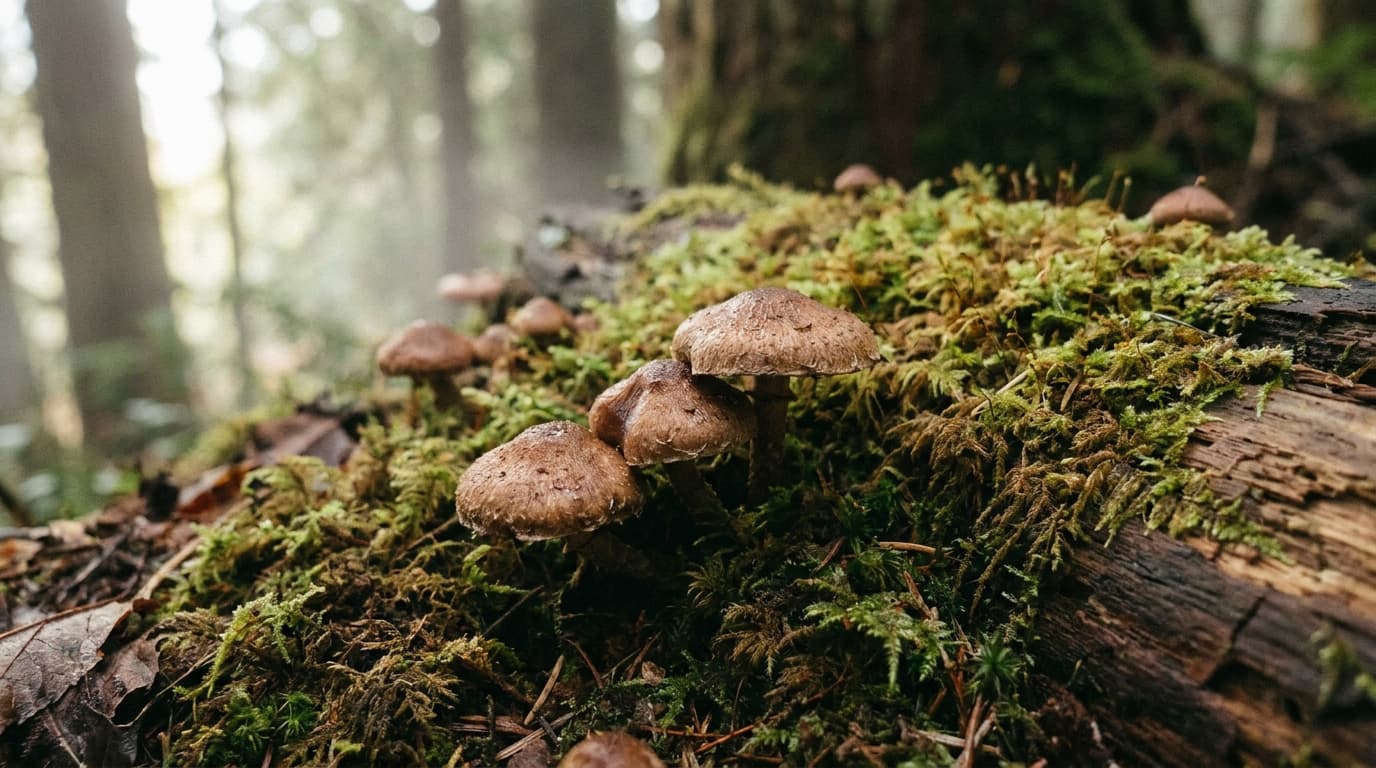
Magic mushrooms are not legal in New York. Their active compounds, psilocybin and psilocyn, are Schedule I hallucinogenic substances under Public Health Law 3306, and knowingly possessing any amount is a class A misdemeanor under Penal Law 220.03, rising to a class C felony at 25 milligrams or more; any sale, including giving it away, is at least a class D felony. New York has no decriminalization law and no psilocybin therapy program, and the 2025-2026 medical psilocybin bills were still in committee on October 11, 2026. For other states, see our guide to psilocybin mushroom laws by state.
Information last verified on 2026-10-11. This article has not been reviewed by a licensed lawyer.
Jurisdiction scope: This article covers New York state law: the Public Health Law 3306 schedules, the Penal Law Article 220 possession and sale offenses as they apply to psilocybin and psilocyn, the Penal Law sentencing and fine sections for those offenses, the Public Health Law research license, and the status of 2025-2026 psilocybin bills, with one paragraph on federal law. It does not cover county or city resolutions, prosecutors' charging policies, case law on how mushrooms are weighed, workplace or school policies, or other states' laws.
Are magic mushrooms legal in New York?
No. New York lists psilocybin and psilocyn in Schedule I(d), its list of hallucinogenic substances, at items (18) and (19) of Public Health Law 3306. The schedule reaches more than the pure chemicals:
"Unless specifically excepted or unless listed in another schedule, any material, compound, mixture, or preparation, which contains any quantity of the following hallucinogenic substances, or which contains any of its salts, isomers, and salts of isomers whenever the existence of such salts, isomers, and salts of isomers is possible within the specific chemical designation" (N.Y. Pub. Health Law 3306, Schedule I(d))
Section 3306 names the two compounds; it does not use the words mushroom or spore. Material is covered through its psilocybin or psilocyn content.
Penal Law 220.00(5) defines a "controlled substance" as any substance listed in the Section 3306 schedules, which brings psilocybin and psilocyn into every Article 220 offense. For the weight-based offenses, the Penal Law also places them in its stricter "hallucinogen" category. Section 220.00(9) defines a hallucinogen as "any controlled substance listed in paragraphs (5), (17), (18), (19), (20) and (21) of subdivision (d) of schedule I," and paragraphs (18) and (19) are psilocybin and psilocyn.
Psilocybin possession penalties in New York
Possession is graded by weight and by intent. The lowest offense needs no minimum amount:

"A person is guilty of criminal possession of a controlled substance in the seventh degree when he or she knowingly and unlawfully possesses a controlled substance" (N.Y. Penal Law 220.03)
| Offense | What the statute requires | Class | Section | Range (first offense) | Maximum fine |
|---|---|---|---|---|---|
| Criminal possession, seventh degree | Any amount of a controlled substance | Class A misdemeanor | 220.03 | Up to 364 days in jail | $1,000 |
| Criminal possession, fifth degree | Any amount of a controlled substance, with intent to sell | Class D felony | 220.06(1) | 1 to 2.5 years | $5,000 or double the gain |
| Criminal possession, fourth degree | A hallucinogen weighing 25 milligrams or more | Class C felony | 220.09(6) | 1 to 5.5 years | $15,000 |
| Criminal possession, third degree | A hallucinogen weighing 25 milligrams or more, with intent to sell | Class B felony | 220.16(5) | 1 to 9 years | $30,000 |
| Criminal possession, third degree | A hallucinogen, with intent to sell, after a prior Article 220 conviction | Class B felony | 220.16(2) | 1 to 9 years; 2 to 12 years if sentenced as a second felony drug offender (see below) | $30,000 |
| Criminal possession, third degree | A hallucinogen weighing 125 milligrams or more | Class B felony | 220.16(10) | 1 to 9 years | $30,000 |
| Criminal possession, second degree | A hallucinogen weighing 625 milligrams or more | Class A-II felony | 220.18 | Sentenced under Section 70.71 (not covered here) | $50,000 |
The jail limit for the misdemeanor comes from Penal Law 70.15(1), which says the sentence "shall not exceed three hundred sixty-four days," and the $1,000 fine limit from Section 80.05(1). The felony ranges are the determinate terms Section 70.70(2)(a) sets for a first-time felony drug offender: at least one year and up to nine years for a class B felony, up to five and one-half years for a class C felony, and up to two and one-half years for a class D felony. The felony fine limits come from Section 80.00(1)(c), which sets maximums for Article 220 felonies of $50,000 (A-II), $30,000 (B) and $15,000 (C). For a first-time felony drug offender, Section 70.70(2) also lets the court, in some cases, impose probation or a definite sentence of one year or less instead of a determinate prison term.
Section 220.06(1) makes possessing any amount of a controlled substance with intent to sell a class D felony. Possession with intent to sell also has a hallucinogen tier in Section 220.16 at 25 milligrams or more, or at any weight when the person has a prior conviction for an Article 220 offense. The Penal Law sets the hallucinogen thresholds by what the hallucinogen "weighs," without the "aggregate weight" wording it uses for some other drugs. This page does not address how New York courts apply the 25, 125 and 625 milligram thresholds to whole mushrooms.
Psilocybin sale penalties in New York
New York's sale offenses start at a felony. Section 220.31 makes knowingly and unlawfully selling any controlled substance criminal sale in the fifth degree, a class D felony, with no minimum amount. The word "sell" is broad:
"'Sell' means to sell, exchange, give or dispose of to another, or to offer or agree to do the same." (N.Y. Penal Law 220.00(1))
So giving psilocybin to a friend, or offering to, falls within the sale offenses.
| Offense | What the statute requires | Class | Section | Range (first offense) | Maximum fine |
|---|---|---|---|---|---|
| Criminal sale, fifth degree | Selling any amount of a controlled substance | Class D felony | 220.31 | 1 to 2.5 years | $5,000 or double the gain |
| Criminal sale, fourth degree | Selling a controlled substance on school grounds or a school bus | Class C felony | 220.34(7) | 1 to 5.5 years | $15,000 |
| Criminal sale, third degree | Selling a hallucinogen weighing 25 milligrams or more | Class B felony | 220.39(5) | 1 to 9 years | $30,000 |
| Criminal sale in or near school grounds | A sale covered by 220.39(1)-(8) upon school grounds or on a school bus | Class B felony | 220.44(2) | 2 to 9 years | $30,000 |
| Criminal sale, second degree | Selling a hallucinogen weighing 125 milligrams or more | Class A-II felony | 220.41 | Sentenced under Section 70.71 (not covered here) | $50,000 |
| Criminal sale, third degree | Selling any amount of a hallucinogen after a prior Article 220 conviction | Class B felony | 220.39(2) | 1 to 9 years; 2 to 12 years if sentenced as a second felony drug offender (see below) | $30,000 |
| Criminal sale to a child | A person over 21 making a sale covered by 220.34 or 220.39 to someone under 17 | Class B felony | 220.48 | 2 to 9 years | $30,000 |
Penal Law 220.00(14) defines school grounds to include publicly accessible areas, such as sidewalks, streets, parking lots, parks, stores and restaurants, within 1,000 feet of a school's property line.
Section 220.44 makes it a class B felony to sell a controlled substance in violation of any of subdivisions one through eight of Section 220.39, which include the 25 milligram hallucinogen sale, "when such sale takes place upon school grounds or on a school bus." Other subdivisions of Section 220.44 reach certain sales on the grounds of a child day care or educational facility. Section 70.70(2)(a)(i) sets a minimum of two years for the school-grounds class B felony in Section 220.44(2), rather than one. The location enhancements in Section 220.44 are sale offenses; the possession degrees in the table above are set by weight and intent.
The class D fine is not on the Article 220 schedule in Section 80.00(1)(c), so the general felony limit in Section 80.00 applies: $5,000 or double the defendant's gain from the offense.
Repeat offenders
A prior felony conviction raises the ranges. For a second felony drug offender whose prior felony was not a violent felony, Penal Law 70.70(3)(b) sets determinate terms of 2 to 12 years for a class B felony, 1.5 to 8 years for a class C felony, and 1.5 to 4 years for a class D felony; higher ranges apply under Section 70.70(4) when the prior felony was a violent felony. Separately, a prior Article 220 conviction turns possession of any amount of a hallucinogen with intent to sell into a class B felony under Section 220.16(2), and selling any amount of a hallucinogen after a prior Article 220 conviction is a class B felony under Section 220.39(2).
Overdose Good Samaritan protection
New York protects people who call for help in an overdose. Penal Law 220.78(1) provides:
"A person who, in good faith, seeks health care for someone who is experiencing a drug or alcohol overdose or other life threatening medical emergency shall not be charged or prosecuted for a controlled substance offense under this article ..., other than an offense involving sale for consideration or other benefit or gain" (N.Y. Penal Law 220.78)
The protection applies "with respect to any controlled substance ... that was obtained as a result of such seeking or receiving of health care." Section 220.78(2) gives the same protection to the person experiencing the overdose or emergency.
Section 220.03 repeats the protection within the seventh-degree possession offense itself: it is not a violation of that section when a person's unlawful possession is discovered as a result of seeking immediate health care, for another person or for themselves, because of an overdose or other life-threatening medical emergency.
Does New York have a psilocybin therapy or decriminalization law?
No. No New York statute decriminalizes psilocybin, creates a psilocybin therapy program, or removes psilocybin from Schedule I. None of the provisions in Section 3306 or Article 220 ties psilocybin's status to FDA approval of a psilocybin drug, but Public Health Law 3307(5) would require a state rule change if federal law moved psilocybin, or an FDA-approved psilocybin drug product, out of Schedule I (see the federal section below).
Several bills in the 2025-2026 session would change that, but none has passed:
| Bill | What it would do | Status on October 11, 2026 |
|---|---|---|
| S5303A / A2142A (Salazar / Paulin) | Authorize the use of psilocybin to treat qualified medical conditions and prohibit criminal diversion of medical psilocybin | Amended May 8, 2026 and recommitted to the Health committees in both houses |
| S495 / A3775 (Fernandez / Burke) | Medical psilocybin with a therapy grant program | In Senate Finance and Assembly Health committees; last action January 7, 2026 |
| S1801A / A3845A (Fernandez / Burke) | Psilocybin-assisted therapy pilot program for veterans and first responders | In Senate Health and Assembly Health committees; S1801A amended January 9, 2026 and A3845A amended January 8, 2026 |
These are bills, not law. Bills that do not pass by the end of the 2025-2026 two-year session lapse. Check S5303A and S1801A on the Senate site for current status.
The research license is not a treatment program
New York does allow licensed scientific research with Schedule I substances, under the Department of Health. Public Health Law 3324(1) states:
"No person within this state shall manufacture, obtain, possess, administer or dispense a controlled substance for purposes of scientific research, instruction or chemical analysis without having first obtained a license to do so from the department." (N.Y. Pub. Health Law 3324(1))
A research license is valid for two years from the date of issue (Section 3324(2)), and an applicant must be "able to comply with all applicable state and federal laws" (Section 3325(2)(d)). Section 3330 adds that no prescription may be made or filled for any Schedule I substance, and that a Schedule I substance may not be possessed, distributed, dispensed or administered except under that research title. The license covers research, instruction and chemical analysis; it is not a path to psilocybin treatment.
Federal psilocybin status
Federal law separately lists psilocybin and psilocyn in Schedule I (21 CFR 1308.11(d)(29)-(30), eCFR as of October 6, 2026), and simple possession of a controlled substance is a federal misdemeanor under 21 U.S.C. 844(a), punishable by up to one year and a minimum fine of $1,000 for a first offense. No DEA or HHS rescheduling notice or rule for psilocybin appears in the Federal Register through October 11, 2026. Executive Order 14401 (April 18, 2026) directs federal agencies to take steps on psychedelic drugs, including a rescheduling review, but it does not reschedule psilocybin. FDA's 2026 national priority vouchers and Breakthrough Therapy designations for psilocybin programs are, in FDA's words, not a determination of safety or effectiveness. New York's schedules are set out in Public Health Law 3306, but Section 3307(5) requires the Health Commissioner, by regulation or emergency regulation, to reclassify any compound, mixture or preparation containing a Schedule I substance into Schedule II, III, IV or V, or exempt it, if that same compound, mixture or preparation is rescheduled outside Schedule I or deleted as a controlled substance under the federal Controlled Substances Act. So a federal rescheduling of an FDA-approved psilocybin drug product would trigger it for that product; that alone would not change the status of psilocybin mushrooms. No such federal action has been taken for psilocybin. The psilocybin mushroom laws by state hub covers the federal layer in full.
Driving and criminal records
New York's drug-impaired driving offense covers psilocybin. Vehicle and Traffic Law 1192(4) bars operating a motor vehicle while ability is impaired "by the use of a drug as defined in this chapter," and Section 114-a defines a drug to include any substance listed in Public Health Law 3306. See New York DWI laws for those offenses and penalties.
A psilocybin possession or sale conviction is a criminal record, and most of the offenses above are felonies. Whether a conviction can later be sealed is covered in New York record sealing and expungement laws.
Related
- Psilocybin mushroom laws by state
- Is kratom legal in New York?
- New York DWI laws
- New York record sealing and expungement laws
Disclaimer: This article presents general legal information about New York state law as of 2026-10-11. It is not legal advice. For a specific situation, contact a lawyer licensed in New York.
Last updated: 2026-10-12.
Frequently Asked Questions
Are magic mushrooms legal in New York?
No. Psilocybin and psilocyn are Schedule I controlled substances under Public Health Law 3306, and knowingly possessing any amount is a class A misdemeanor under Penal Law 220.03, rising to a felony at 25 milligrams or more.
Is possession of psilocybin a felony in New York?
It depends on weight. Any amount is a class A misdemeanor (220.03), and any amount with intent to sell is a class D felony (220.06); 25 milligrams or more is a class C felony (220.09), 125 milligrams or more a class B felony (220.16), and 625 milligrams or more a class A-II felony (220.18).
What is the penalty for selling psilocybin in New York?
Any sale, including giving it away, is at least a class D felony under Penal Law 220.31. A sale of 25 milligrams or more is a class B felony (220.39), which carries 1 to 9 years for a first-time felony drug offender, and 125 milligrams or more is a class A-II felony (220.41).
Has New York decriminalized psilocybin?
No. No New York statute decriminalizes psilocybin or removes it from Schedule I, and the Penal Law Article 220 offenses apply statewide.
Is medical psilocybin legal in New York?
No. S5303A/A2142A would authorize psilocybin to treat qualified medical conditions, S495/A3775 would create medical psilocybin with a therapy grant program, and S1801A/A3845A would create a therapy pilot for veterans and first responders, but all three were in committee on October 11, 2026 and none is law.
Can you be charged for psilocybin if you call 911 for an overdose in New York?
Penal Law 220.78 says a person who in good faith seeks health care for someone experiencing a drug or alcohol overdose or other life-threatening medical emergency shall not be charged or prosecuted for an Article 220 controlled substance offense, other than an offense involving sale for consideration or other benefit or gain, for a controlled substance obtained as a result of seeking or receiving that care. Section 220.78(2) gives the same protection to the person experiencing the overdose.
Are psilocybin mushrooms federally illegal?
Yes. Psilocybin and psilocyn are listed in federal Schedule I at 21 CFR 1308.11(d)(29)-(30), and simple possession of a controlled substance is a federal misdemeanor under 21 U.S.C. 844(a).
Updates
Independently fact-checked against the cited primary sources
The Law Behind This Article
This article rests on the statutory provisions below, held in our own legal record and retrieved from the official source. Tap a section to read the operative text.
New York Public Health Law
§ 3306Schedules of controlled substancesIn forcecited in 2 of our articles
Schedules of controlled substances. There are hereby established five schedules of controlled substances, to be known as schedules I, II, III, IV and V respectively. Such schedules shall consist of the following substances by whatever name or chemical designation known: Schedule I. (a) Schedule I shall consist of the drugs and other substances, by whatever official name, common or usual name, chemical name, or brand name designated, listed in this section. (b) Opiates. Unless specifically excepted or unless listed in another schedule, any of the following opiates, including their isomers, esters, ethers, salts, and salts of isomers, esters, and ethers, whenever the existence of such isomers, esters, ethers and salts is possible within the specific chemical designation (for purposes of 3-methylfentanyl only, the term isomer includes the optical and geometric isomers): (1) Acetyl-alpha-methylfentanyl (N-{1-(-methyl-2-phenethyl) -4-piperidinyl} -N-phenylacetamide. (2) Acetylmethadol. (3) Allylprodine. (4) Alphacetylmethadol (except levo- alphacetylmethadol also known as levo-alpha-acetylmethadol, levomethadylacetate or LAAM). (5) Alphameprodine. (6) Alphamethadol.
Official text (excerpt) · last checked 2026-07-29 · Read the full text in our law library · Verify at legislation.nysenate.gov
Also relied on in: Is Kratom Legal in New York? Age 21 and 7-OH Rules (2026)
New York Penal Law
§ 220.03Criminal possession of a controlled substance in the seventh degreeIn force
Criminal possession of a controlled substance in the seventh degree. A person is guilty of criminal possession of a controlled substance in the seventh degree when he or she knowingly and unlawfully possesses a controlled substance; provided, however, that it shall not be a violation of this section when a person possesses a residual amount of a controlled substance and that residual amount is in or on a hypodermic syringe or hypodermic needle; nor shall it be a violation of this section when a person's unlawful possession of a controlled substance is discovered as a result of seeking immediate health care as defined in paragraph (b) of subdivision three of section 220.78 of this article, for either another person or him or herself because such person is experiencing a drug or alcohol overdose or other life threatening medical emergency as defined in paragraph (a) of subdivision three of section 220.78 of this article. Criminal possession of a controlled substance in the seventh degree is a class A misdemeanor.
Official text (excerpt) · last checked 2026-07-29 · Read the full text in our law library · Verify at legislation.nysenate.gov
§ 220.09Criminal possession of a controlled substance in the fourth degreeIn force
Criminal possession of a controlled substance in the fourth degree. A person is guilty of criminal possession of a controlled substance in the fourth degree when he knowingly and unlawfully possesses: 1. one or more preparations, compounds, mixtures or substances containing a narcotic drug and said preparations, compounds, mixtures or substances are of an aggregate weight of one-eighth ounce or more; or 2. one or more preparations, compounds, mixtures or substances containing methamphetamine, its salts, isomers or salts of isomers and said preparations, compounds, mixtures or substances are of an aggregate weight of one-half ounce or more; or 3. one or more preparations, compounds, mixtures or substances containing a narcotic preparation and said preparations, compounds, mixtures or substances are of an aggregate weight of two ounces or more; or 4. a stimulant and said stimulant weighs one gram or more; or 5. lysergic acid diethylamide and said lysergic acid diethylamide weighs one milligram or more; or 6. a hallucinogen and said hallucinogen weighs twenty-five milligrams or more; or 7.
Official text (excerpt) · last checked 2026-07-29 · Read the full text in our law library · Verify at legislation.nysenate.gov
§ 220.16Criminal possession of a controlled substance in the third degreeIn force
Criminal possession of a controlled substance in the third degree. A person is guilty of criminal possession of a controlled substance in the third degree when he knowingly and unlawfully possesses: 1. a narcotic drug with intent to sell it; or 2. a stimulant, hallucinogen, hallucinogenic substance, or lysergic acid diethylamide, with intent to sell it and has previously been con- victed of an offense defined in article two hundred twenty or the attempt or conspiracy to commit any such offense; or 3. a stimulant with intent to sell it and said stimulant weighs one gram or more; or 4. lysergic acid diethylamide with intent to sell it and said lysergic acid diethylamide weighs one milligram or more; or 5. a hallucinogen with intent to sell it and said hallucinogen weighs twenty-five milligrams or more; or 6. a hallucinogenic substance with intent to sell it and said hallucinogenic substance weighs one gram or more; or 7.
Official text (excerpt) · last checked 2026-07-29 · Read the full text in our law library · Verify at legislation.nysenate.gov
Search our full record of US law — 2.1 million sections, every state + federal →
Sources and References
- N.Y. Public Health Law 3306: Schedules of controlled substances(nysenate.gov).gov
- N.Y. Penal Law 220.00 (Article 220 definitions)(nysenate.gov).gov
- N.Y. Penal Law 220.03: Criminal possession of a controlled substance in the seventh degree(nysenate.gov).gov
- N.Y. Penal Law 220.09: Criminal possession of a controlled substance in the fourth degree(nysenate.gov).gov
- N.Y. Penal Law 220.16: Criminal possession of a controlled substance in the third degree(nysenate.gov).gov
- N.Y. Penal Law 220.18: Criminal possession of a controlled substance in the second degree(nysenate.gov).gov
- N.Y. Penal Law 70.15 (misdemeanor sentences)(nysenate.gov).gov
- N.Y. Penal Law 80.05 (misdemeanor fines)(nysenate.gov).gov
- N.Y. Penal Law 70.70 (felony drug offender sentences)(nysenate.gov).gov
- N.Y. Penal Law 80.00 (felony fines)(nysenate.gov).gov
- N.Y. Penal Law 220.31: Criminal sale of a controlled substance in the fifth degree(nysenate.gov).gov
- N.Y. Penal Law 220.34: Criminal sale of a controlled substance in the fourth degree(nysenate.gov).gov
- N.Y. Penal Law 220.39: Criminal sale of a controlled substance in the third degree(nysenate.gov).gov
- N.Y. Penal Law 220.44: Criminal sale of a controlled substance in or near school grounds(nysenate.gov).gov
- N.Y. Penal Law 220.41: Criminal sale of a controlled substance in the second degree(nysenate.gov).gov
- N.Y. Penal Law 220.78: Witness or victim of drug or alcohol overdose(nysenate.gov).gov
- S5303 (2025-2026 session): psilocybin for qualified medical conditions(nysenate.gov).gov
- S1801A (2025-2026 session): psilocybin-assisted therapy pilot for veterans and first responders(nysenate.gov).gov
- N.Y. Public Health Law 3324 (research licenses)(nysenate.gov).gov
- N.Y. Public Health Law 3325(nysenate.gov).gov
- 21 CFR 1308.11: Schedule I(ecfr.gov).gov
- 21 U.S.C. 844: Penalties for simple possession(law.cornell.edu)
- Executive Order 14401: Accelerating Medical Treatments for Serious Mental Illness, 91 FR 21709(federalregister.gov).gov
- FDA: Considerations for Potential Future Therapeutic Use of Psychedelic Drugs; Public Hearing, 91 FR 43095 (July 14, 2026)(federalregister.gov).gov
- N.Y. Vehicle and Traffic Law 1192(nysenate.gov).gov
- N.Y. Vehicle and Traffic Law 114-a: Drug(nysenate.gov).gov
- N.Y. Penal Law 220.06: Criminal possession of a controlled substance in the fifth degree(nysenate.gov).gov
- N.Y. Public Health Law 3307: Schedules, federal rescheduling(nysenate.gov).gov
- N.Y. Penal Law 220.48: Criminal sale of a controlled substance to a child(nysenate.gov).gov
- A3845A (2025-2026): Psilocybin assisted therapy pilot program for veterans and first responders(nysenate.gov).gov