
Utah
Utah Police Bodycam Laws: Activation, GRAMA & Release Rules
Independently fact-checked against primary sources (last audited August 20, 2026). · Reviewed by the RecordingLaw editorial team. · Law checked current as of August 20, 2026. · 4 primary sources cited on this page. How we verify our legal content
Utah has no law forcing every department to buy body cameras, but any agency that does must follow Utah Code § 77-7a-101 et seq. Release generally runs through GRAMA under § 77-7a-107, which sets no fixed retention day-count but adds a fast-track disclosure path for shootings, deaths, and serious injuries.
This page covers whether Utah police must use body cameras, when the camera has to be on, and how the public can get a copy of footage. It does not cover whether a civilian may record an on-duty Utah officer, a separate and well-settled question addressed on Recording Law's guide to recording police.
Are Utah police required to wear body cameras?
No. Utah has no statute requiring the Utah Highway Patrol, a county sheriff's office, or a city police department to equip officers with body cameras. What the state does have is a detailed regulatory framework, Utah Code § 77-7a-101 et seq., that applies once an agency chooses to use them. That structure dates to House Bill 300 in 2016 and has been amended several times since. The activation rules in § 77-7a-104 that are currently in force took effect May 7, 2025, and the Legislature has queued a further amendment to the deactivation provisions that takes effect January 1, 2027. Because adoption is voluntary, coverage varies by department, though most of Utah's larger municipal police departments, including Salt Lake City, run established programs with their own local ordinances layered on top of the state framework.
When must a Utah officer turn the camera on?
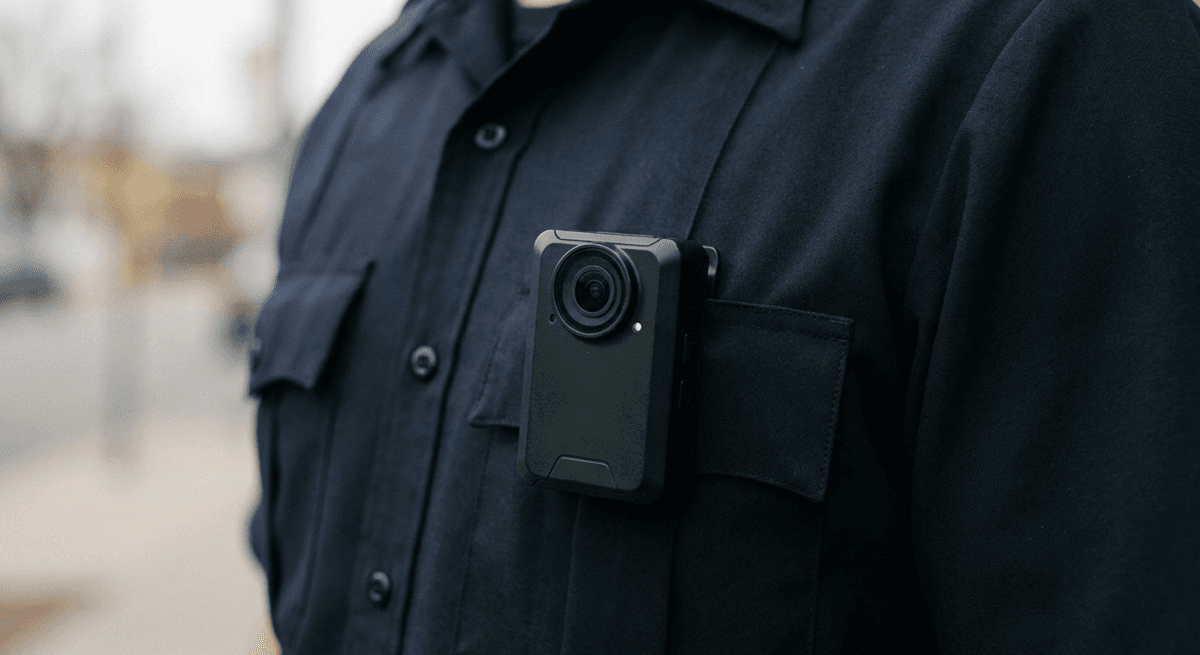
Utah Code § 77-7a-104 sets the activation rule for any agency that issues cameras. An officer must activate the body-worn camera before any law enforcement encounter, or as soon as reasonably possible afterward, and must wear it so it is visible to the person being recorded. The statute also restricts where cameras can run: an officer may not activate a camera inside a hospital, health care facility, human service program, or a health care provider's clinic, except during an actual law enforcement encounter and with the notice required under § 77-7a-105.
Those duties are not universal. Under § 77-7a-104(5), the requirements to wear the camera visibly, to activate it before an encounter, to record without interruption, to note the camera's presence in a report, and to file a written report after a violation do not apply to an officer assigned to a narcotics unit or task force engaged primarily in narcotics investigations, or to an officer engaged in an undercover operation.
The statute also spells out when an officer may lawfully switch a running camera off. Under § 77-7a-104(2)(i), an officer may deactivate to consult a supervisor or another officer, during a significant period of inactivity, at the request of a sensitive crime victim or witness where the officer believes the value of the information outweighs the value of the recording and records the request, or during an evidence-based lethality assessment with a victim of a domestic violence or sexual offense, so long as the camera is reactivated as soon as reasonably possible afterward.
Accountability runs through documentation rather than automatic suppression of evidence. If an officer deactivates the camera, or fails to activate it, in violation of the statute, the officer must document the reason in a written report. That written-report duty in § 77-7a-104(2)(j) attaches only to a deactivation or failure to activate that breaks the statute; the deactivations permitted by Subsection (2)(i) require no report. The law is explicit that a violation of the activation rule, by itself, cannot be the sole basis for dismissing a criminal case or charge, though it does not stop an agency from disciplining an officer under its own internal policy for failing to comply.
How long must Utah agencies keep body camera footage?
This is where a common assumption trips people up. Utah Code § 77-7a-107, titled "Retention and release of recordings," does not set a specific statewide number of days that footage must be kept. Subsection (1)(a) instead requires that a recording made by an officer on duty "shall be retained in accordance with applicable federal, state, and local laws," which routes the actual retention period to each agency's own records schedule rather than fixing one in this statute.
What § 77-7a-107(1) does fix is a check on outsourcing that decision. A political subdivision may not let a private vendor retain officer recordings if that vendor has authority to withhold the recording or to block the agency's own access to or disclosure of it, subject to a narrow grandfather clause for contracts already in place on May 7, 2018. An agency can still use a private company for storage or redaction services, so long as the company has no power to withhold footage or block the agency's access.
Can the public get a copy of Utah body camera footage?
Most requests run through Utah's general public-records law. Section 77-7a-107(2)(a) states that, except for the fast-track described below, release of an officer's recording "is subject to Title 63G, Chapter 2, Government Records Access and Management Act," meaning GRAMA's normal classification and appeal process applies. GRAMA's own protected-records section, § 63G-2-305, separately shields body camera video recorded inside a hospital, health care facility, clinic, or human service program, with an important carve-back: that protection does not extend to footage of an encounter that results in death or bodily injury, or that includes an officer firing a weapon. Section 77-7a-107(2)(b) also gives requesters a direct route around delay: if an agency denies access solely based on the pending-criminal-case exception in GRAMA § 63G-2-305(10)(b) or (c), the requester may immediately appeal that denial to district court rather than exhausting GRAMA's administrative appeal steps first.
The fast-track for shootings and serious injuries
Utah Code § 77-7a-107(3) creates a separate request path, outside GRAMA entirely under subsection (3)(e), for the incidents the public cares most about. Anyone may request footage of an encounter between an officer and a person that results in death or serious bodily injury, or during which an officer fires a weapon, by submitting the request to the agency that created the recording. That agency must then direct its records custodian to release the footage within 10 days after one of three trigger events: the prosecuting agency declines to file criminal charges over the incident; the prosecuting agency does file charges, and the judge handling the case is notified of the release request and determines that releasing the footage would not create a substantial likelihood of prejudicing a jury; or, if more than 10 days have passed since one of those events, the day the agency actually receives the request.
That fast-track has one built-in privacy check. Under § 77-7a-107(3)(d), the agency may not direct release if it has been notified that the person injured in the incident, or an immediate family member of someone injured or killed, has asked that the recording not be publicly distributed. That objection can pause a release that would otherwise be required on the statutory clock.
What happens when officers do not follow the rules
The activation duty in § 77-7a-104 depends on real compliance, and reporting suggests that compliance is uneven in practice. A December 2025 investigation by the Utah Investigative Journalism Project, published through Utah News Dispatch, filed more than 170 records requests with 48 local law enforcement agencies statewide and identified 25 officers across 11 agencies with confirmed body camera policy violations over the review period. The Ogden Police Department had the most, with six violations, followed by West Valley City with five and Salt Lake City and the Unified Police Department with three each. Two cases stood out for scale: a Unified Police Department officer, Mario Widdowson, uploaded no body camera video at all during the first three months of 2023 and was found to have failed to activate his camera 103 times in that period, while an Ogden officer's internal affairs investigation found 47 separate instances of failing to turn on his camera. Most documented violations in the review resulted in a formal reprimand rather than termination, illustrating that Utah's activation statute leans on agency-level discipline rather than exclusion of evidence to enforce day-to-day compliance.
Internal discipline is not the only consequence, though. Utah Code § 77-7a-104.1 lets a court in a jury trial give an adverse inference instruction, which tells jurors that an officer's failure to comply with a requirement of § 77-7a-104 may give rise to an adverse inference against that officer. The remedy is not automatic. The defendant seeking it must establish by a preponderance of the evidence both that the officer intentionally, or with reckless disregard of the statute, failed to comply, and that the failure is reasonably likely to affect the outcome of the trial. The court then weighs the degree of prejudice to the defendant, the materiality of the missing evidence, the strength of the remaining evidence, and the degree of fault of the officer or the employing agency, including whether either shows a pattern of intentional or reckless disregard of § 77-7a-104. If the instruction is given, the prosecutor must send the employing agency written notice after trial, including the order, the language of the instruction, and the outcome of the case.
This article provides general legal information about Utah body camera and public-records rules as of mid-2026. It is not legal advice. For help with a specific GRAMA request, consult a Utah attorney or the custodian agency's GRAMA coordinator.
For how other states handle bodycam mandates and public access, see Recording Law's Police Bodycam Laws hub.
More Utah Laws
Frequently Asked Questions
Do Utah police officers have to wear body cameras?
No. Utah has no statewide mandate. Any agency that chooses to use body cameras must follow the activation, retention, and release rules in Utah Code Title 77, Chapter 7a.
When does a Utah officer have to turn on the body camera?
Before any law enforcement encounter, or as soon as reasonably possible afterward, under Utah Code § 77-7a-104. The camera generally cannot be activated inside a hospital, health care facility, human service program, or clinic except during an actual encounter. Officers assigned to a narcotics unit or task force engaged primarily in narcotics investigations, and officers engaged in an undercover operation, are exempt from several of these duties under § 77-7a-104(5).
How long must Utah police keep body camera footage?
Utah Code § 77-7a-107 does not set a specific statewide number of days. It requires retention consistent with applicable federal, state, and local law, meaning the actual period comes from each agency's own records retention schedule.
Is police body camera footage public in Utah?
It can be, on request. Most footage is processed under the Government Records Access and Management Act (GRAMA), per § 77-7a-107(2)(a), and GRAMA's protected-records section, § 63G-2-305, adds specific rules for footage recorded inside a hospital, health care facility, clinic, or human services program.
How fast can I get Utah body camera footage after a police shooting?
Under the fast-track in § 77-7a-107(3), which applies to deaths, serious bodily injuries, and weapon discharges, the agency must direct release within 10 days after the prosecutor declines to file charges or a judge clears release as non-prejudicial, whichever applies.
Can Utah police refuse to release footage if the victim's family objects?
Yes, under the fast-track process. Section 77-7a-107(3)(d) lets an agency withhold release if the injured person, or the immediate family of someone injured or killed, has asked that the recording not be publicly distributed.
What happens if a Utah officer does not turn on the camera?
If the failure violated the statute, the officer must document the reason in a written report under § 77-7a-104(2)(j). A violation alone cannot be the sole basis for dismissing a criminal case, but under § 77-7a-104.1 a court may give the jury an adverse inference instruction where the defendant shows the officer intentionally or recklessly failed to comply and that the failure is reasonably likely to affect the trial's outcome. Agencies can also discipline officers internally; a 2025 investigation found dozens of confirmed violations across Utah agencies, most resulting in a formal reprimand.
Updates
Added Utah Code § 77-7a-104.1, which lets a court give the jury an adverse inference instruction against an officer who intentionally or recklessly failed to comply with the body-camera rules, and corrected the activation section to note the narcotics and undercover exemption in § 77-7a-104(5) and the deactivations the statute expressly allows without a written report.
Independently fact-checked against the cited primary sources; governing law re-checked for recent changes
Corrected the description of what Utah's GRAMA section 63G-2-305(64) actually protects: the statute's bodycam-specific exemption covers footage recorded inside a hospital, health care facility, clinic, or human services program; it does not include a general home-interior exemption.
Governing law re-checked for recent changes
Reviewed and approved by an editor
The Law Behind This Article
This article rests on the statutory provisions below, held in our own legal record and retrieved from the official source. Tap a section to read the operative text.
Utah Code, Title 77: Criminal Procedure
§ 77-7a-104Activation and use of body-worn cameras.In forcecited in 2 of our articles
(1) As used in this section: (a) "Health care facility" means the same as that term is defined in Section 78B-3-403. (b) "Health care provider" means the same as that term is defined in Section 78B-3-403. (c) "Hospital" means the same as that term is defined in Section 78B-3-403. (d) "Human service program" means the same as that term is defined in Section 26B-2-101. (2) Except as provided in Subsection (5), an officer using a body-worn camera: (a) shall verify that the equipment is properly functioning as is reasonably within the officer's ability; (b) shall report any malfunctioning equipment to the officer's supervisor if: (i) the body-worn camera issued to the officer is not functioning properly upon initial inspection; or (ii) the officer determines that the officer's body-worn camera is not functioning properly at any time while the officer is on duty; (c) shall wear the body-worn camera so that it is clearly visible to the individual being recorded; (d) shall activate the body-worn camera prior to any law enforcement encounter, or as soon as reasonably possible; (e) shall record in an uninterrupted manner until after the conclusion of a law enforcement…
Official text (excerpt) · last checked 2026-08-31 · Read the full text in our law library · Verify at le.utah.gov
Cited in 2 court opinions in our collectionLatest citing opinion in our collection: 2023
Opinions citing this section in our collection:
- State v. Alvarado (Court of Appeals of Utah 2023, 538 P.3d 633)“…2F encounter. 4 See Utah Code § 77-7a-104(4) (“An officer shall 3F…”
- State v. Jessop (Court of Appeals of Utah 2023, 540 P.3d 713)“…ble given the circumstances they were confronted with.” See Utah Code Ann. § 77-7a-104(4) (LexisNexis Supp. 2022). 6 The State…”
Identified automatically from the court opinions citing this section — not a ranking of which case controls.
Also relied on in: Utah Recording Laws (2026): One-Party Consent Rules
§ 77-7a-107Retention and release of recordings.In forcecited in 2 of our articles
(1) (a) Any recording made by an officer while on duty or acting in the officer's official capacity as a law enforcement officer shall be retained in accordance with applicable federal, state, and local laws. (b) Any recording made by an officer while on duty or acting in the officer's official capacity as a law enforcement officer may not be retained, electronically or otherwise, by a private entity if the private entity has any authority to: (i) withhold the recording; or (ii) prevent the political subdivision from accessing or disclosing the recording. (c) (i) Notwithstanding Subsection (1)(b), a political subdivision may continue to retain a recording in a manner prohibited under Subsection (1)(b) if the political subdivision is under contract with a private entity on May 7, 2018, and the contract includes terms prohibited by Subsection (1)(b). (ii) A political subdivision may not renew a contract described in Subsection (1)(c)(i).
Official text (excerpt) · last checked 2026-07-29 · Read the full text in our law library · Verify at le.utah.gov
Also relied on in: Utah Police Report: How to Get a Crash Report, Incident Report, or Body Camera Video
§ 77-7a-105Notice and privacy.In force
(1) An officer with a body-worn camera shall give notice, when reasonable under the circumstances: (a) to: (i) the occupants of a private residence in which the officer enters and in which a body-worn camera is in use; or (ii) a health care provider present at a hospital, a health care facility, human service program, or a health care provider's clinic in which the officer enters and in which a body-worn camera is in use; and (b) either by: (i) wearing a body-worn camera in a clearly visible manner; or (ii) giving an audible notice that the officer is using a body-worn camera. (2) An agency shall make the agency's policies regarding the use of body-worn cameras available to the public, and shall place the policies on the agency's public website when possible.
Official text (excerpt) · last checked 2026-07-29 · Read the full text in our law library · Verify at le.utah.gov
§ 77-7a-104.1Adverse inference jury instruction.In force
(1) As used in this section, "adverse inference instruction" means an instruction that: (a) is provided to a jury in accordance with Utah Rules of Criminal Procedure, Rule 19; and (b) directs the jury that an officer's failure to comply with a requirement of Section 77-7a-104 may give rise to an adverse inference against the officer. (2) (a) A court presiding over a jury trial may provide an adverse inference instruction if the defendant seeking the adverse inference instruction establishes by a preponderance of the evidence that: (i) an officer intentionally or, with reckless disregard of a requirement of Section 77-7a-104, failed to comply with a requirement of Section 77-7a-104; and (ii) the officer's failure to comply with the requirement of Section 77-7a-104 is reasonably likely to affect the outcome of the defendant's trial.
Official text (excerpt) · last checked 2026-07-29 · Read the full text in our law library · Verify at le.utah.gov
Cited in 1 court opinions in our collectionLatest citing opinion in our collection: 2023
Opinions citing this section in our collection:
- State v. Alvarado (Court of Appeals of Utah 2023, 538 P.3d 633)“…th section 77-7a-104. Then in 2020, the legislature enacted Utah Code section 77-7a-104.1 (the Adverse Inference Statute), which…”
Identified automatically from the court opinions citing this section — not a ranking of which case controls.
Utah Code, Title 63G: General Government
§ 63G-2-305Protected records.In forcecited in 3 of our articles
The following records are protected if properly classified by a governmental entity: (1) trade secrets as defined in Section 13-24-2 if the person submitting the trade secret provides the governmental entity with the information specified in Section 63G-2-309; (2) (a) commercial information or nonindividual financial information obtained from a person if: (i) disclosure of the information could reasonably be expected to result in unfair competitive injury to the person submitting the information or would impair the ability of the governmental entity to obtain necessary information in the future; (ii) the person submitting the information has a greater interest in prohibiting access than the public in obtaining access; and (iii) the person submitting the information provides the governmental entity with the information specified in Section 63G-2-309; or (b) confidential economic development information: (i) (A) if the information is related to an economic development opportunity; (B) that a person provides to a governmental entity involved with recruiting or negotiating with the person to expand the person's existing business within the state or bring a new business to the…
Official text (excerpt) · last checked 2026-07-29 · Read the full text in our law library · Verify at le.utah.gov
Cited in 7 court opinions in our collectionLatest citing opinion in our collection: 2026
Opinions citing this section in our collection:
- Southern Utah Wilderness Alliance v. Automated Geographic Reference Center (Utah Supreme Court 2008, 620 Utah Adv. Rep. 8)“…duct and as attorney-client privileged communications under Utah Code sections 63G-2-305(16) to (18). Therefore, the district co…”
- Schroeder v. Utah Attorney General's Office (Utah Supreme Court 2015, 794 Utah Adv. Rep. 109)“…the Quicken Summary. ¶12 The court also determined that Utah Code section 63G-2-305 shielded the Post-it Note from disclosu…”
- Big Game Forever v. Peterson (Court of Appeals of Utah 2024, 551 P.3d 411)“…ned that [subcontractor names] are protected records” under Utah Code section 63G-2-305. ¶8 Peterson appealed to the Depar…”
Identified automatically from the court opinions citing this section — not a ranking of which case controls.
Also relied on in: Utah Court Records: How to Search, What's Public, and How to Seal Them (2026)
Search our full record of US law — 2.1 million sections, every state + federal →
Sources and References
- Utah Code § 77-7a-107 (Retention and release of recordings)(le.utah.gov).gov
- Utah Code § 77-7a-104 (Activation and use of body-worn cameras)(le.utah.gov).gov
- Utah Code § 63G-2-305 (Government Records Access and Management Act; protected records)(le.utah.gov).gov
- Utah H.B. 300 (2016), Body-Worn Cameras for Law Enforcement Officers(bja.ojp.gov).gov
- Utah News Dispatch / Utah Investigative Journalism Project, "Failure to activate: When Utah officers violate body-cam policies"(utahnewsdispatch.com)
- Reporters Committee for Freedom of the Press, Open Government Guide: Utah(rcfp.org)
- Utah Code § 77-7a-104.1 (Adverse inference jury instruction)(le.utah.gov)