
Kentucky
Kentucky Pepper Spray and Stun Gun Laws (2026)
Independently fact-checked against primary sources (last audited September 23, 2026). · 13 primary sources cited on this page. How we verify our legal content
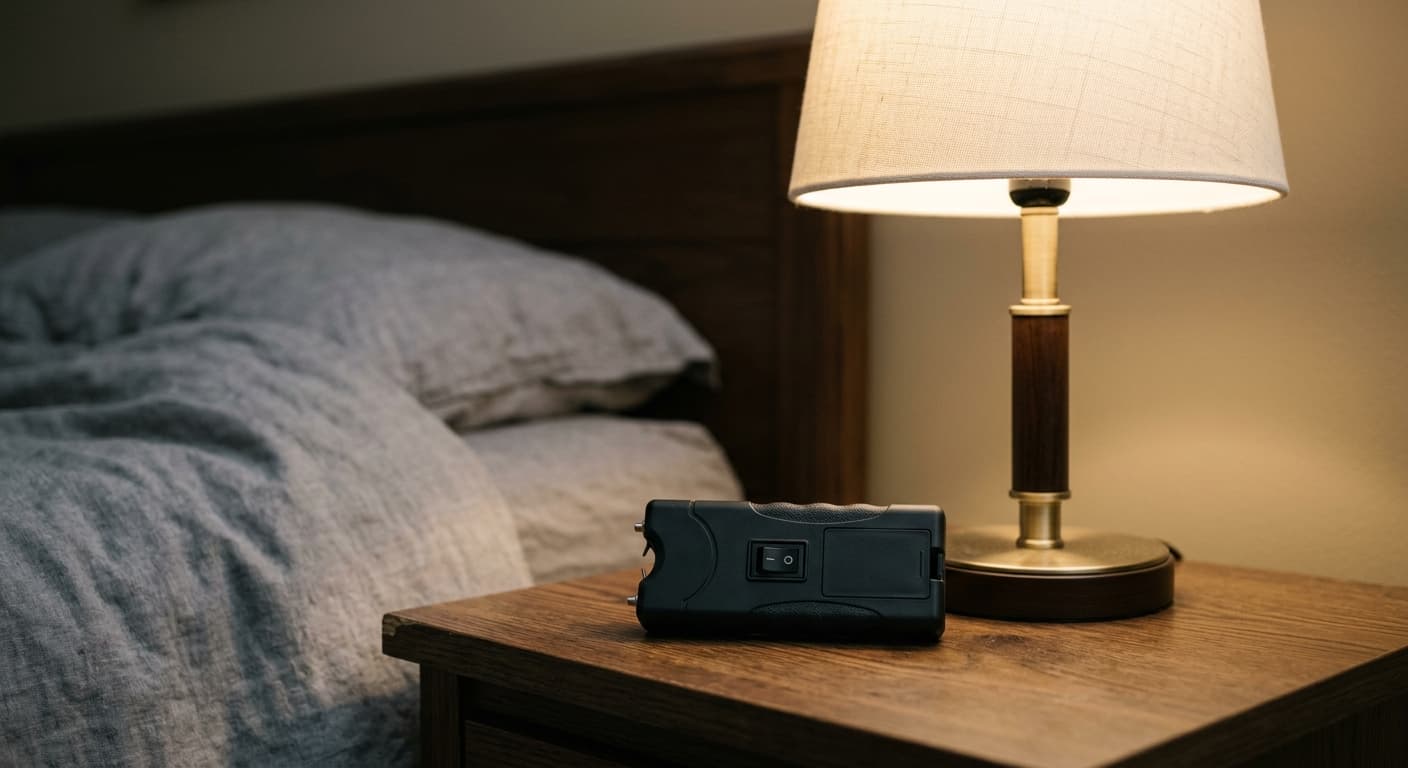
Kentucky has no statute that names pepper spray or a stun gun as a regulated item, and the reason traces back to one definition. Kentucky's "deadly weapon" definition is a closed, enumerated list, and neither device is on it, which means the statutes built around that term, concealed carry and the K-12 school-weapon felony among them, do not reach either device the way they reach a knife or a firearm. A separate, broader school-discipline statute does reach them, through Kentucky's "dangerous instrument" catch-all rather than "deadly weapon."
Jurisdiction scope: This page covers Kentucky state law only, principally KRS 500.080, 508.010, 508.020, 527.020, 527.040, 527.070, 158.150, and 65.870. It does not cover Kentucky's concealed-deadly-weapon license statute (KRS 237.110) in detail, which governs firearms rather than pepper spray or stun guns, or local municipal ordinances.
Is pepper spray legal to carry in Kentucky?
Yes. Chapter 527 sets no age, permit, capacity, or purchase restriction for pepper spray. Kentucky's concealed-weapons offense, KRS 527.020(1), makes it a crime to carry "concealed a firearm or other deadly weapon on or about his or her person in violation of this section," but the term that does the work is "deadly weapon," and Kentucky's Penal Code defines that term for the whole code at KRS 500.080(4) as a closed list: a weapon of mass destruction; any weapon from which a shot readily capable of producing death or serious physical injury may be discharged; any knife other than an ordinary pocket knife or hunting knife; a billy, nightstick, or club; a blackjack or slapjack; nunchaku karate sticks; a shuriken or death star; or artificial knuckles made from metal, plastic, or similar hard material. Pepper spray does not appear anywhere in that list, so KRS 527.020 does not reach it regardless of the "in violation of this section" qualifier, which exists because subsection (4) lets an eligible adult twenty-one or older carry a concealed deadly weapon, one that is on the list, without a license under KRS 237.109; that 2019 change means even an enumerated deadly weapon is not automatically a crime to carry concealed.

That does not mean using pepper spray offensively is risk-free. KRS 500.080(3) separately defines "dangerous instrument" as "any instrument, including parts of the human body when a serious physical injury is a direct result of the use of that part of the human body, article, or substance which, under the circumstances in which it is used, attempted to be used, or threatened to be used, is readily capable of causing death or serious physical injury." Kentucky's assault statutes are written around both terms together: assault in the first degree (KRS 508.010) applies when a person "intentionally causes serious physical injury to another person by means of a deadly weapon or a dangerous instrument," a Class B felony, and assault in the second degree (KRS 508.020) applies the same "deadly weapon or dangerous instrument" language to a lower injury threshold, a Class C felony. Because pepper spray can meet the "dangerous instrument" test when used against someone, offensive use can be charged as a felony assault even though simple possession is not restricted at all.
Are stun guns legal to carry in Kentucky?
Yes, for the same reason. A stun gun does not appear on KRS 500.080(4)'s closed "deadly weapon" list, so KRS 527.020's concealed-carry offense does not reach it, and Chapter 527 sets no age minimum, permit requirement, or possession restriction specific to a stun gun, taser, or other electronic weapon. As with pepper spray, using a stun gun to injure someone can still be charged as felony assault under KRS 508.010 or 508.020 through the "dangerous instrument" catch-all, since a device capable of causing death or serious physical injury under the circumstances of its use meets that definition regardless of whether it is separately named as a "deadly weapon."

Kentucky's felon-weapons statute, KRS 527.040, "Possession of a firearm by convicted felon," is written throughout in terms of "firearm," with no reference to "deadly weapon" or "dangerous instrument." Its possession offense, penalties, and exceptions all track firearm possession specifically, so it does not, on its own text, independently bar a convicted felon from possessing a stun gun or pepper spray.
Where you can't carry either device, and preemption
Kentucky's K-12 school-weapon statute, KRS 527.070, makes it a Class D felony to knowingly possess, deposit, or carry, openly or concealed, "any firearm or other deadly weapon, destructive device, or booby trap device" in a public or private school building or bus, or on school grounds, outside specific exceptions for law enforcement, ROTC and team-duty carrying, hunting, and authorized events. Because this felony also runs on the closed "deadly weapon" definition in KRS 500.080(4), it does not reach pepper spray or a stun gun criminally, any more than the concealed-carry statute does; the statute expressly does not apply to postsecondary institutions in any event.

But a separate, non-criminal school-discipline statute does reach both devices. KRS 158.150(1)(a) makes "the carrying or use of weapons or dangerous instruments... on school property, as well as off school property at school-sponsored activities," cause for suspension or expulsion, a discretionary standard rather than a defined list. KRS 158.150(2)(a)3 goes further and requires each local school board to adopt a policy expelling, for at least twelve months, a grade six through twelve student determined "to have recklessly, with a deadly weapon or dangerous instrument, or intentionally caused or attempted to cause physical injury to a school district employee," expressly directing the board to use the "dangerous instrument," "deadly weapon," and "physical injury" definitions in KRS 500.080, the same broad catch-all discussed above. A Kentucky student carrying pepper spray or a stun gun onto school property therefore faces the discretionary suspension-or-expulsion standard in KRS 158.150(1)(a), and a student who injures a school employee with either device faces the mandatory twelve-month expulsion policy in KRS 158.150(2)(a)3, even though neither device triggers the KRS 527.070 felony. Kentucky's Penal Code contains no other place-based criminal restriction naming either device.
Kentucky's firearms preemption statute, KRS 65.870, bars a city, county, urban-county, charter county, or other local government body from occupying "any part of the field of regulation of the manufacture, sale, purchase, taxation, transfer, ownership, possession, carrying, storage, or transportation of firearms, ammunition, components of firearms, components of ammunition, firearms accessories, or combination thereof"; a violating local rule is void. That statute's text is scoped to firearms, ammunition, and firearms accessories; it does not mention pepper spray or a stun gun, so it does not, on its own text, bar a Kentucky city or county from adopting a stricter local rule for either device the way it bars local firearm regulation.
Federal law: what it does and does not reach
No federal statute regulates a civilian's purchase or possession of pepper spray or a stun gun. Federal law matters in three places.
Federal buildings. Under 18 U.S.C. § 930(a), whoever knowingly possesses or causes to be present "a firearm or other dangerous weapon in a Federal facility (other than a Federal court facility)" faces a fine, imprisonment of up to 1 year, or both. Subsection (e) sets up to 2 years for a federal court facility, and subsection (b) up to 5 years where the weapon is intended to be used in a crime. Section 930(g)(2) defines the term:
The term "dangerous weapon" means a weapon, device, instrument, material, or substance, animate or inanimate, that is used for, or is readily capable of, causing death or serious bodily injury, except that such term does not include a pocket knife with a blade of less than 2½ inches in length.
The definition names neither device. Whether a particular spray or stun gun is "readily capable of" causing serious bodily injury is a question of fact the statute does not answer. Subsection (d)(3) exempts "the lawful carrying of firearms or other dangerous weapons in a Federal facility incident to hunting or other lawful purposes," and subsection (h) requires notice of the ban to be posted at each public entrance. A "Federal facility" is "a building or part thereof owned or leased by the Federal Government, where Federal employees are regularly present for the purpose of performing their official duties."
Air travel. The Transportation Security Administration's screening rules, which are agency policy rather than statute, bar both devices from carry-on bags. One 4 fl. oz. (118 ml) container of mace or pepper spray is permitted in checked baggage if it has a safety mechanism to prevent accidental discharge, and sprays containing more than 2 percent by mass of tear gas (CS or CN) are prohibited in checked baggage. Tasers, stun guns and other electro-shock weapons may travel in checked baggage only if transported so the device cannot discharge accidentally. Airlines may set stricter rules.
National parks. National Park Service regulations prohibit possessing, carrying or using a "weapon" in a park area except as the regulations provide (36 CFR 2.4(b)(1)). 36 CFR 1.4 defines "weapon" to include an "irritant gas device" and any "weapon the possession of which is prohibited under the laws of the State in which the park area or portion thereof is located."
Disclaimer: This article provides general legal information about Kentucky's pepper spray and stun gun laws as of September 2026. It is not legal advice. Consult a lawyer licensed in Kentucky for advice about a specific situation.
For a state-by-state comparison, see pepper spray and stun gun laws by state. Kentucky's self-defense statutes are covered separately on the Kentucky self-defense laws page.
Statutes cited reflect their in-force version as of 2026-09-18. Last updated: 2026-09-18.
Frequently Asked Questions
Is it legal to carry pepper spray concealed in Kentucky?
Yes. Kentucky's concealed-weapons offense, KRS 527.020(1), makes it a crime to carry a deadly weapon concealed 'in violation of this section,' and applies only to a 'deadly weapon,' a term KRS 500.080(4) defines as a closed list of items (weapons of mass destruction, firearms, certain knives, clubs, blackjacks, nunchaku, shuriken, and artificial knuckles) that does not include pepper spray either way. Since 2019, subsection (4) also lets an eligible adult twenty-one or older carry a concealed deadly weapon without a license under KRS 237.109.
Do you need a permit for a stun gun in Kentucky?
No. Chapter 527 sets no permit requirement, age minimum, or other restriction on civilian possession of a stun gun, because a stun gun is not on KRS 500.080(4)'s closed list of items that count as a 'deadly weapon' under Kentucky's Penal Code.
Can using pepper spray or a stun gun on someone still be a crime in Kentucky?
Yes. Kentucky's assault statutes (KRS 508.010, 508.020) apply to injury caused 'by means of a deadly weapon or a dangerous instrument,' and 'dangerous instrument' is a broad catch-all under KRS 500.080(3) for any instrument, article, or substance that, under the circumstances in which it is used, attempted to be used, or threatened to be used, is readily capable of causing death or serious physical injury. Offensive use of pepper spray or a stun gun against another person can meet that definition and be charged as a felony assault, even though simple possession is legal.
Can a student be suspended or expelled for having pepper spray or a stun gun at a Kentucky school?
Yes, even though neither device triggers Kentucky's KRS 527.070 school-weapon felony, which is limited to the closed 'deadly weapon' list. KRS 158.150(1)(a) makes carrying or using 'weapons or dangerous instruments' on school property cause for suspension or expulsion, and KRS 158.150(2)(a)3 requires a mandatory twelve-month expulsion policy for a grade six through twelve student who injures a school employee with a 'deadly weapon or dangerous instrument,' using the same broad KRS 500.080 definition that covers pepper spray and a stun gun used offensively.
Does Kentucky preempt local pepper spray or stun gun ordinances?
Not under its firearms preemption statute. KRS 65.870 bars local regulation of 'firearms, ammunition, components of firearms, components of ammunition, firearms accessories' specifically; its text does not extend to pepper spray or stun guns, so it does not bar a Kentucky city or county from regulating those devices the way it bars local firearm regulation.
Updates
Independently fact-checked against the cited primary sources
Sources and References
- KRS 500.080 - Definitions for Kentucky Penal Code ('deadly weapon' closed list; 'dangerous instrument' catch-all)(apps.legislature.ky.gov).gov
- KRS 527.020 - Carrying concealed deadly weapon(apps.legislature.ky.gov).gov
- KRS 508.010 - Assault in the first degree (deadly weapon/dangerous instrument enhancement, Class B felony)(apps.legislature.ky.gov).gov
- KRS 508.020 - Assault in the second degree (deadly weapon/dangerous instrument enhancement, Class C felony)(apps.legislature.ky.gov).gov
- KRS 527.040 - Possession of firearm by convicted felon, exceptions (scoped to 'firearm' only)(apps.legislature.ky.gov).gov
- KRS 527.070 - Unlawful possession of a weapon on school property, posting of sign, exemptions(apps.legislature.ky.gov).gov
- KRS 65.870 - Local firearms control ordinances prohibited(apps.legislature.ky.gov).gov
- KRS 158.150 - Suspension or expulsion of students (weapons/dangerous instruments cause for discipline; mandatory 12-month expulsion for injuring a school employee with a deadly weapon or dangerous instrument)(apps.legislature.ky.gov).gov
- KRS 237.109 - Authorization to carry concealed deadly weapons without a license(apps.legislature.ky.gov).gov
- 18 U.S.C. § 930 - Possession of firearms and dangerous weapons in Federal facilities(law.cornell.edu)
- Transportation Security Administration - What Can I Bring? Pepper Spray(tsa.gov).gov
- Transportation Security Administration - What Can I Bring? Stun Guns/Shocking Devices(tsa.gov).gov
- 36 CFR 1.4 - National Park Service definitions (weapon)(ecfr.gov).gov
- 36 CFR 2.4 - Weapons, traps and nets(ecfr.gov).gov