
Florida
Florida Pepper Spray and Stun Gun Laws (2026)
Independently fact-checked against primary sources (last audited September 23, 2026). · 14 primary sources cited on this page. How we verify our legal content

Florida allows adults to carry pepper spray and a nonlethal stun gun for self-defense, openly or concealed, without a license, but the statutory path each device takes to get there is different, and Florida separately restricts both devices for minors, felons, and school property.
Jurisdiction scope: This page covers Florida state law only, principally Fla. Stat. Sections 790.001, 790.01, 790.053, 790.054, 790.06 (including its place restrictions in subsection (12)), 790.115, 790.18, 790.22, and 790.23. Section 790.06's licensing criteria are covered only as they bear on the two devices this page addresses, not as a full guide to Florida's concealed weapons license.
Is pepper spray legal to carry in Florida?
Yes, both openly and concealed, without a license, as long as it meets Florida's statutory definition. Fla. Stat. Section 790.001(4)(b) defines "self-defense chemical spray" as "a device carried solely for purposes of lawful self-defense that is compact in size, designed to be carried on or about the person, and contains not more than two ounces of chemical." That same subsection defines "tear gas gun" and "chemical weapon or device" to mean "any weapon of such nature, except a device known as a 'self-defense chemical spray.'" A compliant spray is written out of the categories the rest of Chapter 790 uses to restrict chemical weapons.
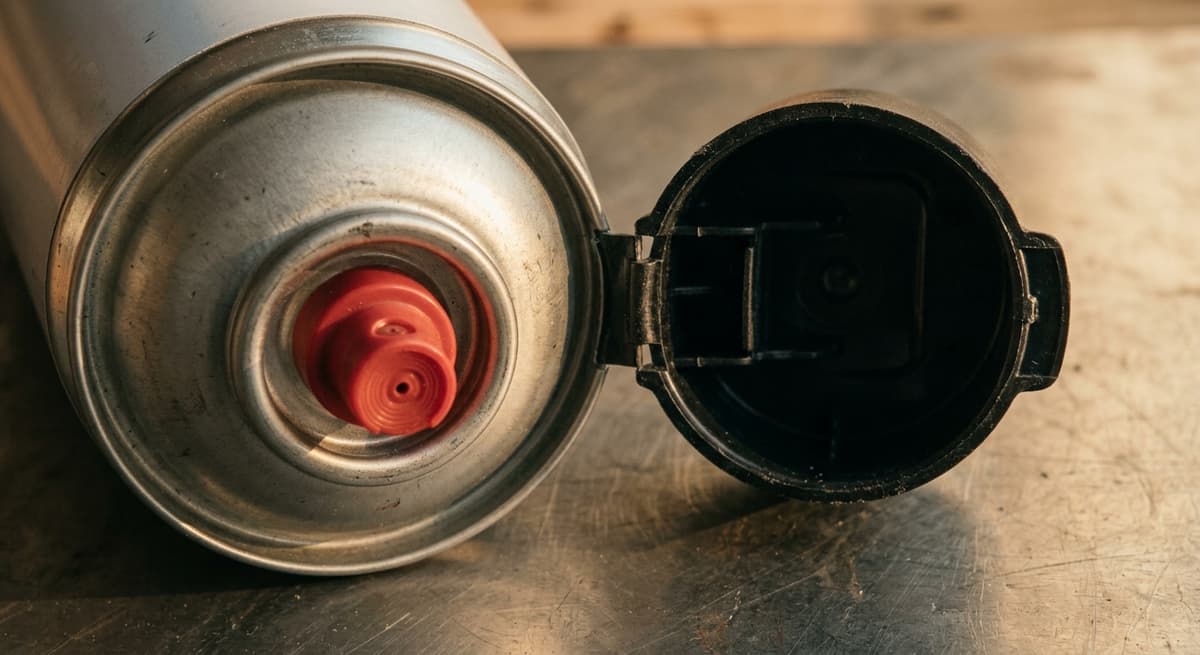
Two separate provisions confirm the result for each way of carrying it. Section 790.053(2)(a) lists "a self-defense chemical spray" among the items a person may openly carry for lawful self-defense. Section 790.01(5)(b)1 separately provides that a person "does not violate this section" (the concealed-carry offense) by carrying, concealed, "a self-defense chemical spray" for purposes of lawful self-defense; that exception applies whether or not the carrier holds a Section 790.06 license.
Chapter 790 does not name self-defense chemical spray in either its minor-use restriction (Section 790.22, which names only BB guns, air or gas-operated guns, and electric weapons or devices) or its dealer-sale-to-minors restriction (Section 790.18, which lists firearms, certain knives, brass knuckles, and electric weapons or devices, but not a chemical spray). No purchase license, sale restriction, or independent age minimum specific to self-defense chemical spray appears in either section.
Are stun guns legal to carry in Florida?
Legal for adults to carry, openly or concealed, but through a narrower statutory path than pepper spray, and with age and sale restrictions pepper spray does not have. Florida defines "electric weapon or device" broadly, in Section 790.001(7), as "any device which, through the application or use of electrical current, is designed, redesigned, used, or intended to be used for offensive or defensive purposes, the destruction of life, or the infliction of injury."
For open carry, Section 790.053(1) provides that "[e]xcept as otherwise provided by law and in subsection (2), it is unlawful for any person to openly carry on or about his or her person any firearm or electric weapon or device." Subsection (2)(b) then exempts, for purposes of lawful self-defense, "a nonlethal stun gun or dart-firing stun gun or other nonlethal electric weapon or device that is designed solely for defensive purposes," covering an ordinary civilian stun gun or taser. Violating Section 790.053 is a second degree misdemeanor under subsection (3).
For concealed carry, Section 790.01(2) makes carrying "a concealed weapon or electric weapon or device" a first degree misdemeanor for a person who is not licensed under Section 790.06 and does not otherwise meet that section's licensing criteria. Section 790.01(5)(b)2 is the express carve-out for a stun gun: a person "does not violate this section" by carrying, concealed, "a nonlethal stun gun or dart-firing stun gun or other nonlethal electric weapon or device that is designed solely for defensive purposes," for purposes of lawful self-defense. Section 790.06(1)(a) separately defines "concealed weapon or concealed firearm," for purposes of the license itself, to include "a handgun, electric weapon or device, tear gas gun, knife, or billie," so a person may still choose to carry one under a Section 790.06 license instead of relying on the self-defense exception.
A Section 790.06 license does not authorize carrying into every place, however. Section 790.06(12)(a) lists fifteen places a license "does not authorize any person to openly carry a handgun or carry a concealed weapon or concealed firearm into," among them any police, sheriff, or highway patrol station; any detention facility, prison, or jail; any courthouse or courtroom; any polling place; a meeting of a county, school district, municipal, or special district governing body, or of the Legislature; any elementary or secondary school facility or administration building or career center; the alcohol-service portion of a licensed bar; and the passenger terminal and sterile area of an airport. Because Section 790.06(1)(a)'s own definition of the weapon a license covers includes an electric weapon or device, this list reaches a licensee carrying a stun gun, and knowingly and willfully violating it is a second degree misdemeanor under Section 790.06(12)(d). That definition also names a tear gas gun, but Section 790.001(4)(b) writes a compliant self-defense chemical spray out of the term tear gas gun, so a two-ounce self-defense spray is not a concealed weapon for purposes of Section 790.06 and this list does not reach it. Paragraph 13 of that list is written specifically for a stun gun: a college or university facility is off the license's reach "unless the licensee is a registered student, employee, or faculty member of such college or university and the weapon is a stun gun or nonlethal electric weapon or device designed solely for defensive purposes and the weapon does not fire a dart or projectile."
Two Florida statutes place age and sale limits on an electric weapon or device that do not apply to pepper spray. Section 790.22(1) prohibits "the use for any purpose whatsoever of BB guns, air or gas-operated guns, or electric weapons or devices, by any minor under the age of 16 years" unless supervised by a consenting adult; any adult responsible for the welfare of a child under 16 who knowingly permits the child to use or possess one in violation of that rule commits a second degree misdemeanor under Section 790.22(2). Section 790.18 makes it "unlawful for any dealer in arms to sell or transfer to a minor any firearm, pistol, Springfield rifle or other repeating rifle, bowie knife or dirk knife, brass knuckles, or electric weapon or device," a felony of the second degree.
Prohibited persons: felons and other listed people
Florida's felon-weapons statute treats the two devices differently. Section 790.23(1) makes it unlawful for a person who has been convicted of a felony, or who falls into several other listed categories (including a person under 24 found to have committed a delinquent act that would be a felony if committed by an adult), "to own or to have in his or her care, custody, possession, or control any firearm, ammunition, or electric weapon or device." That is a flat possession ban reaching a stun gun regardless of whether it is carried openly or concealed. The same subsection separately bars carrying "a concealed weapon, including a tear gas gun or chemical weapon or device"; because compliant self-defense chemical spray is excluded from "chemical weapon or device" by Section 790.001(4)(b)'s own definition, that concealed-carry clause does not reach a compliant spray the way it reaches a stun gun.
Section 790.23(2) exempts a person "convicted of a felony whose civil rights and firearm authority have been restored" or "whose criminal history record has been expunged pursuant to s. 943.0515(1)(b)." Violating Section 790.23 is a felony of the second degree under subsection (3), rising to a felony of the first degree under subsection (4) for a person who qualifies for the criminal-gang penalty enhancements in Section 874.04.
Restricted places: Florida schools
Section 790.115 contains two separate offenses, and they have different triggers. The possession offense, Section 790.115(2)(a), provides that "a person shall not possess any firearm, electric weapon or device, destructive device, or other weapon as defined in s. 790.001, including a razor blade or box cutter, except as authorized in support of school-sanctioned activities, at a school-sponsored event or on the property of any school, school bus, or school bus stop." It carries no 1,000-foot radius and no school-hours limit, and the section defines "school" to mean "any preschool, elementary school, middle school, junior high school, secondary school, career center, or postsecondary school, whether public or nonpublic." Willfully and knowingly violating it is a felony of the third degree under Section 790.115(2)(b), reduced by subsection (2)(e) to a misdemeanor of the second degree for a person who is authorized to carry a concealed weapon or concealed firearm under Section 790.01(1). Law enforcement officers as defined in Section 943.10 are excepted under subsection (3).
The separate exhibition offense, Section 790.115(1), applies more narrowly: exhibiting a listed weapon, including an electric weapon or device, "in the presence of one or more persons in a rude, careless, angry, or threatening manner and not in lawful self-defense," at a school-sponsored event, on school grounds, or "within 1,000 feet of the real property that comprises a public or private elementary school, middle school, or secondary school, during school hours or during the time of a sanctioned school activity," is also a felony of the third degree. Subsection (1) does not apply, however, to exhibiting a firearm or weapon on private real property within 1,000 feet of a school by the property owner or by someone whose presence there the owner authorized, licensed, or invited.
Self-defense chemical spray is not separately named in either offense. Section 790.001(20) defines the borrowed term as "any dirk, knife, metallic knuckles, slungshot, billie, tear gas gun, chemical weapon or device, or other deadly weapon except a firearm or a common pocketknife, plastic knife, or blunt-bladed table knife," and Section 790.001(4)(b) writes a compliant spray out of both of the chemical items on that list, so Section 790.115 does not reach it as a named weapon the way it reaches a stun gun or a firearm. What is left is the residual phrase "other deadly weapon," which no Florida statute applies to a two-ounce self-defense spray by name, so a school's own rules, not Section 790.115, are the practical limit.
Penalties for misusing either device
Beyond the school and felon statutes above, Florida names both devices in three more offenses. Section 790.054 makes it a felony of the third degree to knowingly and willfully use "a self-defense chemical spray, a nonlethal stun gun or other nonlethal electric weapon or device, or a dart-firing stun gun against a law enforcement officer engaged in the performance of his or her duties," regardless of whether the device was otherwise lawfully possessed. Section 790.10 makes it a misdemeanor of the first degree to exhibit a listed weapon, including an electric weapon or device, "in the presence of one or more persons ... in a rude, careless, angry, or threatening manner, not in necessary self-defense." Section 790.07(1) makes it a felony of the third degree to display, use, threaten, or attempt to use "any weapon or electric weapon or device" while committing or attempting to commit a felony, or while under indictment. Section 790.01(6) confirms that the concealed-carry exceptions above do not shield a person from prosecution for the use of an electric weapon or device, a dart-firing stun gun, or a self-defense chemical spray "during the commission of any criminal offense under s. 790.07, s. 790.10, s. 790.23, or s. 790.235, or for any other criminal offense."

Federal law: what it does and does not reach
No federal statute regulates a civilian's purchase or possession of pepper spray or a stun gun. Federal law matters in three places.
Federal buildings. Under 18 U.S.C. § 930(a), whoever knowingly possesses or causes to be present "a firearm or other dangerous weapon in a Federal facility (other than a Federal court facility)" faces a fine, imprisonment of up to 1 year, or both. Subsection (e) sets up to 2 years for a federal court facility, and subsection (b) up to 5 years where the weapon is intended to be used in a crime. Section 930(g)(2) defines the term:
The term "dangerous weapon" means a weapon, device, instrument, material, or substance, animate or inanimate, that is used for, or is readily capable of, causing death or serious bodily injury, except that such term does not include a pocket knife with a blade of less than 2½ inches in length.
The definition names neither device. Whether a particular spray or stun gun is "readily capable of" causing serious bodily injury is a question of fact the statute does not answer. Subsection (d)(3) exempts "the lawful carrying of firearms or other dangerous weapons in a Federal facility incident to hunting or other lawful purposes," and subsection (h) requires notice of the ban to be posted at each public entrance. A "Federal facility" is "a building or part thereof owned or leased by the Federal Government, where Federal employees are regularly present for the purpose of performing their official duties."
Air travel. The Transportation Security Administration's screening rules, which are agency policy rather than statute, bar both devices from carry-on bags. One 4 fl. oz. (118 ml) container of mace or pepper spray is permitted in checked baggage if it has a safety mechanism to prevent accidental discharge, and sprays containing more than 2 percent by mass of tear gas (CS or CN) are prohibited in checked baggage. Tasers, stun guns and other electro-shock weapons may travel in checked baggage only if transported so the device cannot discharge accidentally. Airlines may set stricter rules.
National parks. National Park Service regulations prohibit possessing, carrying or using a "weapon" in a park area except as the regulations provide (36 CFR 2.4(b)(1)). 36 CFR 1.4 defines "weapon" to include an "irritant gas device" and any "weapon the possession of which is prohibited under the laws of the State in which the park area or portion thereof is located."
Disclaimer: This article provides general legal information about Florida's pepper spray and stun gun laws as of September 2026. It is not legal advice. Consult a lawyer licensed in Florida for advice about a specific situation.
For a state-by-state comparison, see pepper spray and stun gun laws by state. Florida's self-defense statutes are covered separately on the Florida self-defense laws page.
Statutes cited reflect their in-force version as of 2026-09-18. Last updated: 2026-09-18.
Frequently Asked Questions
How much pepper spray can you legally carry in Florida?
Florida's 'self-defense chemical spray' definition, Fla. Stat. Section 790.001(4)(b), caps a compliant device at two ounces of chemical and requires it to be compact and carried solely for lawful self-defense. A spray meeting that definition may be carried openly under Section 790.053(2)(a) or concealed under Section 790.01(5)(b)1, without a license.
Do you need a permit to carry a stun gun concealed in Florida?
No. Section 790.01(5)(b)2 lets a person carry, concealed, a nonlethal stun gun, dart-firing stun gun, or other nonlethal electric weapon or device designed solely for defensive purposes, for lawful self-defense, without a Section 790.06 license. Section 790.053(2)(b) provides the same result for open carry.
Can a minor buy or use a stun gun in Florida?
A dealer may not sell or transfer an electric weapon or device to a minor; Section 790.18 makes that a felony of the second degree. A minor under 16 also may not use an electric weapon or device unless supervised by a consenting adult under Section 790.22(1), and any adult responsible for the welfare of a child under 16 who knowingly permits the child to use or possess one in violation of that rule commits a second degree misdemeanor under Section 790.22(2). Neither section names pepper spray.
Can a felon carry pepper spray or a stun gun in Florida?
A felon may not own or possess a stun gun under any circumstances unless civil rights and firearm authority have been restored, or the record has been expunged; Fla. Stat. Section 790.23(1) bars possessing 'any firearm, ammunition, or electric weapon or device,' a second degree felony. That statute also bars a felon from carrying a concealed 'tear gas gun or chemical weapon or device,' but a compliant self-defense chemical spray is defined out of that category, so the concealed-carry clause does not reach it the same way.
Are stun guns or pepper spray allowed on Florida school grounds?
An electric weapon or device, including a stun gun, may not be possessed at a school-sponsored event or on the property of any school, school bus, or school bus stop, under Fla. Stat. Section 790.115(2)(a); this covers preschools through postsecondary schools, with no distance radius or time limit. Violating it is a third degree felony, reduced to a second degree misdemeanor for a person authorized to carry a concealed weapon under Section 790.01(1). Self-defense chemical spray is not named in that provision because Section 790.001(4)(b) writes it out of the 'tear gas gun' and 'chemical weapon or device' items on the borrowed weapon list in Section 790.001(20); that list also ends in the residual phrase 'other deadly weapon,' which no Florida statute applies to a compliant spray by name. Separately, Section 790.06(12)(a)13 says a concealed weapons license does not authorize carrying into a college or university facility unless the licensee is a registered student, employee, or faculty member carrying a stun gun or nonlethal electric weapon designed solely for defensive purposes that does not fire a dart or projectile; that carve-out does not reach elementary, middle, or secondary schools, or a dart-firing stun gun.
Updates
Independently fact-checked against the cited primary sources
Sources and References
- Fla. Stat. 790.001 - Definitions ('self-defense chemical spray' 2 oz. compact device; 'tear gas gun'/'chemical weapon or device' excludes it; 'electric weapon or device'; 'concealed weapon'; 'weapon')(leg.state.fl.us).gov
- Fla. Stat. 790.01 - Carrying of concealed weapons or concealed firearms (self-defense chemical spray and nonlethal stun gun exception, subsection (5)(b))(leg.state.fl.us).gov
- Fla. Stat. 790.06 - License to carry concealed weapon or concealed firearm (definition includes electric weapon or device, tear gas gun)(leg.state.fl.us).gov
- Fla. Stat. 790.053 - Open carrying of weapons (self-defense chemical spray and nonlethal stun gun exceptions)(leg.state.fl.us).gov
- Fla. Stat. 790.18 - Sale or transfer of arms to minors by dealers(leg.state.fl.us).gov
- Fla. Stat. 790.22 - Use of BB guns, air or gas-operated guns, or electric weapons or devices by minor under 16; limitation(leg.state.fl.us).gov
- Fla. Stat. 790.23 - Felons and delinquents; possession of firearms, ammunition, or electric weapons or devices unlawful(leg.state.fl.us).gov
- Fla. Stat. 790.115 - Possessing or discharging weapons or firearms at a school-sponsored event or on school property prohibited(leg.state.fl.us).gov
- Fla. Stat. 790.054 - Prohibited use of self-defense weapon or device against law enforcement officer; penalties(leg.state.fl.us).gov
- Fla. Stat. 790.07 and 790.10 - Weapons offenses during a felony; improper exhibition of a dangerous weapon(leg.state.fl.us).gov
- 18 U.S.C. § 930 - Possession of firearms and dangerous weapons in Federal facilities(law.cornell.edu)
- Transportation Security Administration - What Can I Bring? Pepper Spray(tsa.gov).gov
- Transportation Security Administration - What Can I Bring? Stun Guns/Shocking Devices(tsa.gov).gov
- 36 CFR 1.4 - National Park Service definitions (weapon)(ecfr.gov).gov
- 36 CFR 2.4 - Weapons, traps and nets(ecfr.gov).gov