
Connecticut
Connecticut Pepper Spray and Stun Gun Laws (2026)
Independently fact-checked against primary sources (last audited September 23, 2026). · 14 primary sources cited on this page. How we verify our legal content
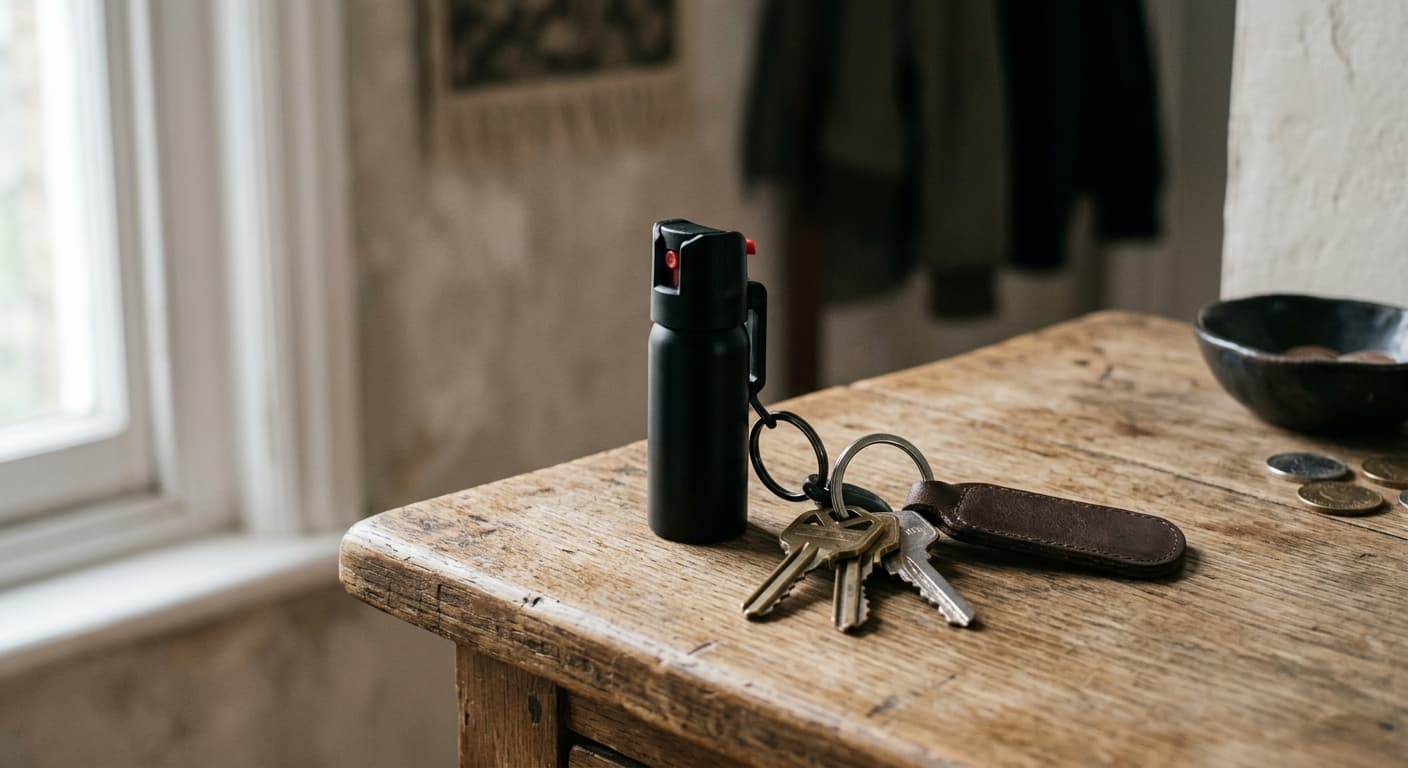
Connecticut treats an "electronic defense weapon," its statutory term for a stun gun, as a felony to carry or keep in a vehicle unless the holder is 21 or older and holds one of four specific Connecticut firearm permits or certificates; selling one to a minor or to anyone without that permit is also a felony. Pepper spray and tear gas are not named in the general prohibitions of Connecticut's carrying or vehicle-weapons statutes, so ordinary self-defense carry is not itself listed as an offense, but a 2025 amendment wrote a narrow security-officer exception into the carrying statute for a "less lethal weapon," a term a companion statute defines as a baton or pepper spray, and both statutes end in a catch-all for "any other dangerous or deadly weapon or instrument" that the new exception suggests can reach it. The Connecticut Supreme Court has separately held that pepper spray can be a "dangerous instrument" when it is used to injure someone.
Jurisdiction scope: This page covers Connecticut state law only, principally Conn. Gen. Stat. §§ 53-206, 53-206k, 29-38, 29-161q, 53a-3, 53a-61, 53a-216, 53a-217, 53a-217b, and 53a-167c. It does not cover Connecticut's handgun eligibility certificate or pistol permit statutes in detail or local municipal ordinances.
Is pepper spray legal in Connecticut?
Yes, for ordinary self-defense carry, in the sense that § 53-206(a)'s own list of named items does not include tear gas, mace, pepper spray, or any other chemical spray, so it is not a per se prohibited or permit-requiring item. Connecticut's core dangerous-weapons carrying statute, § 53-206(a), lists specific items by name: "any BB. gun, blackjack, metal or brass knuckles, or any dirk knife, or any switch knife, or any knife having an automatic spring release device by which a blade is released from the handle, having a blade of over one and one-half inches in length, or stiletto, or any knife the edged portion of the blade of which is four inches or more in length, any police baton or nightstick, or any martial arts weapon or electronic defense weapon, as defined in section 53a-3, or any other dangerous or deadly weapon or instrument." A chemical spray is not among those named items, and Connecticut's vehicle-weapons statute, § 29-38(a), lists the same items for a vehicle. Both statutes end with the same catch-all, "any other dangerous or deadly weapon or instrument," language that is not limited to the items named ahead of it. A 2025 amendment, Public Act 25-157, added a narrower exception at § 53-206(b)(2) for "the carrying of a less lethal weapon, as defined in section 29-161q, by a licensed security officer or a person who meets the requirements of subsection (h) of section 29-161q while engaged in the pursuit of such officer's or person's official duties," and § 29-161q(b) defines "less lethal weapon" as "a baton or oleoresin capsicum spray, commonly referred to as 'O.C. spray' or 'pepper spray.'" That exception is written for licensed security officers on duty, not the general public, but its existence is evidence the Legislature reads § 53-206(a)'s catch-all as capable of reaching OC spray in the first place; the statute's text does not resolve whether ordinary carrying by someone outside that exception falls inside the catch-all.

Conn. Gen. Stat. § 53a-3(7) defines "dangerous instrument" as "any instrument, article or substance which, under the circumstances in which it is used or attempted or threatened to be used, is capable of causing death or serious physical injury." In State v. Ovechka, 292 Conn. 533 (2009), the Connecticut Supreme Court held that the evidence was sufficient for a jury to find that pepper spray used against a neighbor was such a dangerous instrument, and that the Appellate Court's contrary sufficiency ruling had improperly invaded the jury's fact-finding province; the Court reversed that judgment and remanded the case for the defendant's remaining claims, so the second-degree assault conviction under § 53a-60(a)(2) was not itself reinstated by this ruling. Separately, § 53a-167c(a)(3) makes it a class C felony, when done with intent to prevent a reasonably identifiable peace officer, firefighter, or other listed emergency or health care personnel from performing their duties and while that person is acting in the performance of those duties, to use "any mace, tear gas or any like or similar deleterious agent" against them. No Connecticut statute sets an age minimum, capacity limit, or permit requirement for buying or carrying pepper spray for ordinary self-defense.
Is a stun gun legal in Connecticut?
Yes, but on much more restrictive terms than pepper spray. Connecticut's statutory term for a stun gun is "electronic defense weapon," defined in Conn. Gen. Stat. § 53a-3(20) as "a weapon which by electronic impulse or current is capable of immobilizing a person temporarily, including a stun gun or other conductive energy device." A 2021 amendment, Public Act 21-31, redefined this term to delete a requirement that the weapon not be capable of inflicting death or serious physical injury, broadening the category of devices it covers.

Carrying an electronic defense weapon is a class E felony under § 53-206(a), the same as carrying an unlicensed dirk knife or a set of brass knuckles, unless an exception applies. Section 53-206(b)(6) states the exception directly: the carrying statute "shall not apply to... the carrying of an electronic defense weapon, as defined in section 53a-3, by any person who is twenty-one years of age or older and possesses a permit or certificate issued under the provisions of section 29-28, 29-36f, 29-37p or 29-38n." Carrying a stun gun on the person is lawful only for someone 21 or older who holds one of those four specific permits or certificates, all of which are Connecticut firearm-related credentials; there is no separate stun-gun-only permit. Keeping a stun gun in a vehicle is a distinct offense with a parallel exception: § 29-38(a) makes it a class D felony to knowingly have an electronic defense weapon, or several other listed items, in any vehicle a person owns, operates, or occupies, and "the presence of any such weapon... in any vehicle shall be prima facie evidence of a violation of this section by the owner, operator and each occupant thereof." Section 29-38(b)(6) provides the identical 21-plus-permit exception for the vehicle offense.
Selling side restrictions are separate and specific: § 53-206k states, "Any person who sells or transfers an electronic defense weapon, as defined in section 53a-3, to any person who is under twenty-one years of age or does not possess a permit or certificate issued under the provisions of section 29-28, 29-36f, 29-37p or 29-38n shall be guilty of a class D felony." That permit requirement is what makes a stun gun effectively a permit-conditioned purchase and carry in Connecticut, unlike the license-free rule most other states apply to the device.
Prohibited persons and penalties
Connecticut restricts who may possess an electronic defense weapon well beyond the standard felon-in-possession rule. Conn. Gen. Stat. § 53a-217 makes criminal possession of a firearm, ammunition, or an electronic defense weapon a class C felony for a list of people, for which two years and one day of the sentence imposed may not be suspended or reduced by the court, and $5,000 of the fine imposed may not be remitted or reduced by the court unless it states its reasons on the record. A qualifying felony conviction bars possession with no time limit at all, reaching a felony "committed prior to, on or after October 1, 2013." Three separate misdemeanor branches follow, and only one carries a time window: a misdemeanor violation of the controlled-substance statute, § 21a-279, on or after October 1, 2015, under (a)(1)(B), has no time limit; a misdemeanor violation of the specified assault, threatening, harassment, and related offenses listed in (a)(1)(C), committed on or after October 1, 2013, bars possession only "during the preceding twenty years," so that 20-year window belongs to subparagraph (C) alone; and a misdemeanor family-violence-crime conviction committed on or after October 1, 2023, under (a)(1)(D), has no time limit either. Possession is also barred for a person adjudicated delinquent for a serious juvenile offense; someone discharged within the preceding 20 years after being found not guilty of a crime by reason of mental disease or defect; a person subject to a qualifying restraining, protective, or foreign protective order; a person with specified recent psychiatric-hospital confinement or admission; a person subject to a firearms seizure order issued before June 1, 2022, or a risk protection order or risk protection investigation order issued on or after that date; and a person barred under the federal prohibited-person categories in 18 U.S.C. § 922(g)(2), (g)(4), or (g)(9). This list extends prohibited-person status well beyond a felony conviction, unlike the narrower felon-only bars many other states apply to a stun gun.
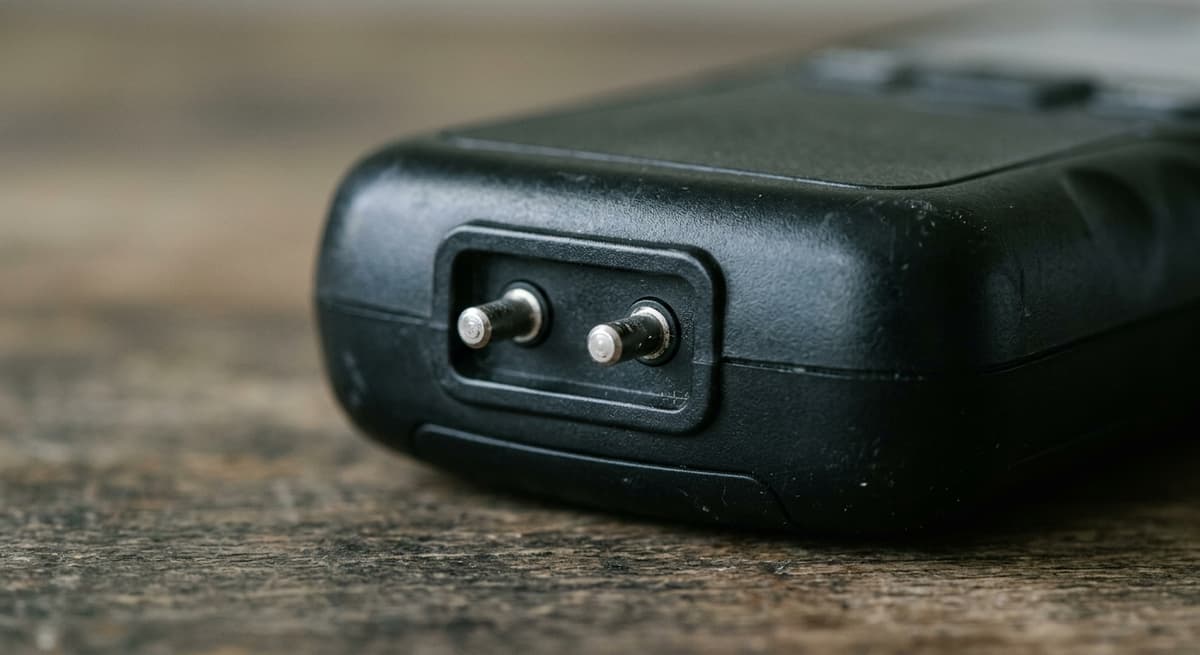
Using or threatening to use an electronic defense weapon while committing another class A, B, or C, or unclassified felony is a separate offense, criminal use of a firearm or electronic defense weapon, under § 53a-216. Subsection (b) states: "Criminal use of a firearm or electronic defense weapon is a class D felony for which five years of the sentence imposed may not be suspended or reduced by the court." Subsection (a) limits how that offense combines with the underlying felony: "No person shall be convicted of criminal use of a firearm or electronic defense weapon and the underlying felony upon the same transaction but such person may be charged and prosecuted for both such offenses upon the same information." A person cannot be convicted of both offenses for the same transaction, though both may be charged; the five-year non-suspendable term attaches to a conviction for criminal use itself, not as an addition stacked on top of a separate conviction for the underlying felony.
Connecticut's school-grounds weapons felony, § 53a-217b(a), makes a person guilty "when, knowing that such person is not licensed or privileged to do so, such person possesses a firearm or deadly weapon, as defined in section 53a-3," in or on the real property comprising a public or private elementary or secondary school or at a school-sponsored activity, a class D felony under subsection (c). The exemptions in subsection (b) are written for "the otherwise lawful possession of a firearm" only, so they do not extend to a deadly weapon. Section 53a-3(6) defines "deadly weapon" as "any weapon, whether loaded or unloaded, from which a shot may be discharged, or a switchblade knife, gravity knife, billy, blackjack, bludgeon, or metal knuckles," a list that does not name a stun gun or a chemical spray, and adds: "The definition of 'deadly weapon' in this subdivision shall be deemed not to apply to section 29-38 or 53-206 and does not include an electronic defense weapon when used by a peace officer," a clause a 2025 amendment, Public Act 25-29, added to this subdivision. That sentence states which sections the § 53a-3(6) definition does not govern, 29-38 and 53-206, which is why those two sections carry their own separate weapon lists; it does not, by itself, say a stun gun falls outside the definition, and the clause added in 2025 excluding "an electronic defense weapon when used by a peace officer" implies the opposite for anyone else, that an electronic defense weapon can be a § 53a-3(6) deadly weapon in other hands. Whether § 53a-217b can therefore reach a stun gun on school grounds is an open question the statute's text does not resolve. A chemical spray is not named in § 53a-3(6)'s enumeration and is not evidently affected by the 2025 amendment. A stun gun remains subject to the permit rules in § 53-206 and § 29-38 wherever it is carried, including on or near school property.
Carrying an electronic defense weapon without a qualifying exception under § 53-206 is a class E felony; keeping one in a vehicle without the exception is a class D felony under § 29-38; selling or transferring one to a person under 21 or without a required permit is a class D felony under § 53-206k. Causing physical injury to another person by means of a deadly weapon, a dangerous instrument, or an electronic defense weapon, with criminal negligence rather than intent, is assault in the third degree under § 53a-61(a)(3), a class A misdemeanor that carries a mandatory, non-suspendable one-year prison term under § 53a-61(b), a penalty an ordinary self-defense user is more likely to face than the felonies above. There is no equivalent dedicated possession-permit penalty for pepper spray, since § 53-206(a)'s own list does not name the device, though § 53a-167c(a)(3) carries its own class C felony penalty for using mace or tear gas against protected personnel with intent to prevent them from performing their duties. The assault statutes reach a spray through the dangerous-instrument route rather than by name: § 53a-61(a)(3) covers causing physical injury with criminal negligence "by means of a deadly weapon, a dangerous instrument or an electronic defense weapon," so the same mandatory, non-suspendable one-year term applies to a pepper spray injury on the authority of Ovechka above, and § 53a-60(a)(2), the offense at issue in that case, makes causing physical injury with intent by means of a dangerous instrument assault in the second degree, a class D felony under § 53a-60(b), or a class C felony if the offense resulted in serious physical injury.
Federal law: what it does and does not reach
No federal statute regulates a civilian's purchase or possession of pepper spray or a stun gun. Federal law matters in three places.
Federal buildings. Under 18 U.S.C. § 930(a), whoever knowingly possesses or causes to be present "a firearm or other dangerous weapon in a Federal facility (other than a Federal court facility)" faces a fine, imprisonment of up to 1 year, or both. Subsection (e) sets up to 2 years for a federal court facility, and subsection (b) up to 5 years where the weapon is intended to be used in a crime. Section 930(g)(2) defines the term:
The term "dangerous weapon" means a weapon, device, instrument, material, or substance, animate or inanimate, that is used for, or is readily capable of, causing death or serious bodily injury, except that such term does not include a pocket knife with a blade of less than 2½ inches in length.
The definition names neither device. Whether a particular spray or stun gun is "readily capable of" causing serious bodily injury is a question of fact the statute does not answer. Subsection (d)(3) exempts "the lawful carrying of firearms or other dangerous weapons in a Federal facility incident to hunting or other lawful purposes," and subsection (h) requires notice of the ban to be posted at each public entrance. A "Federal facility" is "a building or part thereof owned or leased by the Federal Government, where Federal employees are regularly present for the purpose of performing their official duties."
Air travel. The Transportation Security Administration's screening rules, which are agency policy rather than statute, bar both devices from carry-on bags. One 4 fl. oz. (118 ml) container of mace or pepper spray is permitted in checked baggage if it has a safety mechanism to prevent accidental discharge, and sprays containing more than 2 percent by mass of tear gas (CS or CN) are prohibited in checked baggage. Tasers, stun guns and other electro-shock weapons may travel in checked baggage only if transported so the device cannot discharge accidentally. Airlines may set stricter rules.
National parks. National Park Service regulations prohibit possessing, carrying or using a "weapon" in a park area except as the regulations provide (36 CFR 2.4(b)(1)). 36 CFR 1.4 defines "weapon" to include an "irritant gas device" and any "weapon the possession of which is prohibited under the laws of the State in which the park area or portion thereof is located."
Disclaimer: This article provides general legal information about Connecticut's pepper spray and stun gun laws as of September 2026. It is not legal advice. Consult a lawyer licensed in Connecticut for advice about a specific situation.
For a state-by-state comparison, see pepper spray and stun gun laws by state. Connecticut's self-defense statutes are covered separately on the Connecticut self-defense laws page.
Statutes cited reflect Connecticut's 2026 Supplement, current through the 2025 regular session. Last updated: 2026-09-22.
Frequently Asked Questions
Do you need a permit to carry a stun gun in Connecticut?
Yes. Conn. Gen. Stat. 53-206(b)(6) exempts only a person 21 or older who holds a permit or certificate issued under 29-28, 29-36f, 29-37p, or 29-38n from the state's felony carrying statute. Without that age and permit, carrying an electronic defense weapon is a class E felony under 53-206(a).
Can you keep a stun gun in your car in Connecticut without a permit?
No. Conn. Gen. Stat. 29-38(a) makes it a class D felony to knowingly have an electronic defense weapon in a vehicle a person owns, operates, or occupies, and its presence is prima facie evidence of a violation against the owner, operator, and every occupant. The same 21-plus-permit exception in 29-38(b)(6) applies.
Is pepper spray legal to carry in Connecticut?
Generally yes, though the answer is not as flat as it looks. Section 53-206(a)'s own list of named carrying-statute items does not include tear gas, mace, or pepper spray, so ordinary self-defense carry is not listed there by name. But both 53-206(a) and the vehicle-weapons statute (29-38) end in a catch-all for any other dangerous or deadly weapon or instrument, and a 2025 amendment added an exception at 53-206(b)(2) naming a 'less lethal weapon,' defined at 29-161q(b) as a baton or oleoresin capsicum (pepper) spray, for a licensed security officer on duty, evidence the Legislature reads that catch-all as capable of reaching OC spray. The Connecticut Supreme Court has separately held pepper spray can be a dangerous instrument under 53a-3(7) when used to injure someone, in State v. Ovechka, 292 Conn. 533 (2009); using mace or tear gas against police, fire, or certain medical personnel with intent to prevent them from performing their duties is a separate class C felony under 53a-167c(a)(3).
Who is banned from possessing a stun gun in Connecticut?
More people than just convicted felons. Conn. Gen. Stat. 53a-217 makes possessing an electronic defense weapon a class C felony, for which two years and one day of the sentence imposed may not be suspended or reduced, for anyone with a qualifying felony conviction (no time limit), a misdemeanor violation of specified assault, threatening, harassment, and related offenses committed within the preceding 20 years, certain other misdemeanor drug or family-violence convictions with no time limit, a serious-juvenile-offense delinquency adjudication, a not-guilty-by-reason-of-mental-disease-or-defect discharge within 20 years, specified recent psychiatric confinement, a qualifying restraining or protective order, or a firearms seizure or risk protection order.
What is the penalty for using a stun gun during a crime in Connecticut?
Criminal use of a firearm or electronic defense weapon, Conn. Gen. Stat. 53a-216, is a class D felony carrying a five-year portion of the sentence a court may not suspend or reduce. A person cannot be convicted of both this offense and the underlying felony for the same transaction, though both may be charged.
Can you carry a stun gun or pepper spray on Connecticut school grounds?
Connecticut's school-grounds weapons felony, 53a-217b(a), requires the state to prove that the person, 'knowing that such person is not licensed or privileged to do so,' possessed a firearm or a deadly weapon as defined in 53a-3, on school property or at a school-sponsored activity; the deadly-weapon list in 53a-3(6) does not name a stun gun or a chemical spray. A 2025 amendment added language excluding 'an electronic defense weapon when used by a peace officer' from that definition, which implies a stun gun in someone else's hands can be a 53a-3(6) deadly weapon; whether 53a-217b can reach a stun gun on school grounds is therefore an open question the statute's text does not resolve. A chemical spray is not named in 53a-3(6) and is not evidently affected by that amendment. A stun gun still requires the 21-plus-permit exception under 53-206 wherever it is carried, including at school.
Updates
Independently fact-checked against the cited primary sources
Sources and References
- Conn. Gen. Stat. 53-206 (2026 Supplement, as amended by Public Act 25-157) - Carrying of dangerous weapons prohibited (electronic defense weapon listed, class E felony, 21-plus-permit exception at (b)(6), less-lethal-weapon security-officer exception at (b)(2))(cga.ct.gov).gov
- Conn. Gen. Stat. 53-206k - Conditions for sale or transfer of electronic defense weapons; penalty (class D felony)(cga.ct.gov).gov
- Conn. Gen. Stat. 29-38 - Weapons in vehicles; penalty; exceptions (class D felony, prima facie evidence, 21-plus-permit exception at (b)(6); unchanged by the 2025 session)(cga.ct.gov).gov
- Conn. Gen. Stat. 29-161q(b) - Qualifications of security officers; definition of 'less lethal weapon' (baton or oleoresin capsicum/pepper spray)(cga.ct.gov).gov
- Conn. Gen. Stat. 53a-3 (2026 Supplement, as amended by Public Act 25-29) - Definitions ((6) deadly weapon, excludes 29-38/53-206, excludes an electronic defense weapon used by a peace officer; (7) dangerous instrument; (20) electronic defense weapon)(cga.ct.gov).gov
- Conn. Gen. Stat. 53a-216 - Criminal use of firearm or electronic defense weapon (class D felony, 5-year non-suspendable minimum, anti-stacking clause)(cga.ct.gov).gov
- Conn. Gen. Stat. 53a-217 - Criminal possession of a firearm, ammunition or an electronic defense weapon (class C felony, prohibited-persons list, mandatory two years and one day non-suspendable and $5,000 non-remittable fine portion)(cga.ct.gov).gov
- Conn. Gen. Stat. 53a-217b - Possession of a weapon on school grounds (class D felony, limited to firearm or 53a-3(6) deadly weapon)(cga.ct.gov).gov
- Conn. Gen. Stat. 53a-167c - Assault of public safety, emergency medical, public transit or health care personnel (mace/tear gas used with intent to prevent duties, class C felony)(cga.ct.gov).gov
- Conn. Gen. Stat. 53a-61(a)(3), (b) - Assault in the third degree by means of an electronic defense weapon with criminal negligence (class A misdemeanor, mandatory non-suspendable one-year term)(cga.ct.gov).gov
- State v. Ovechka, 292 Conn. 533 (2009) - pepper spray as a dangerous instrument under 53a-3(7)(courtlistener.com)
- 18 U.S.C. § 930 - Possession of firearms and dangerous weapons in Federal facilities(law.cornell.edu)
- Transportation Security Administration - What Can I Bring? Pepper Spray(tsa.gov).gov
- Transportation Security Administration - What Can I Bring? Stun Guns/Shocking Devices(tsa.gov).gov
- 36 CFR 1.4 - National Park Service definitions (weapon)(ecfr.gov).gov
- 36 CFR 2.4 - Weapons, traps and nets(ecfr.gov).gov