
Georgia
Georgia Nursing Home Camera Laws: Nuckles v. State and No Statute
Independently fact-checked against primary sources (last audited August 14, 2026). · 4 primary sources cited on this page. How we verify our legal content
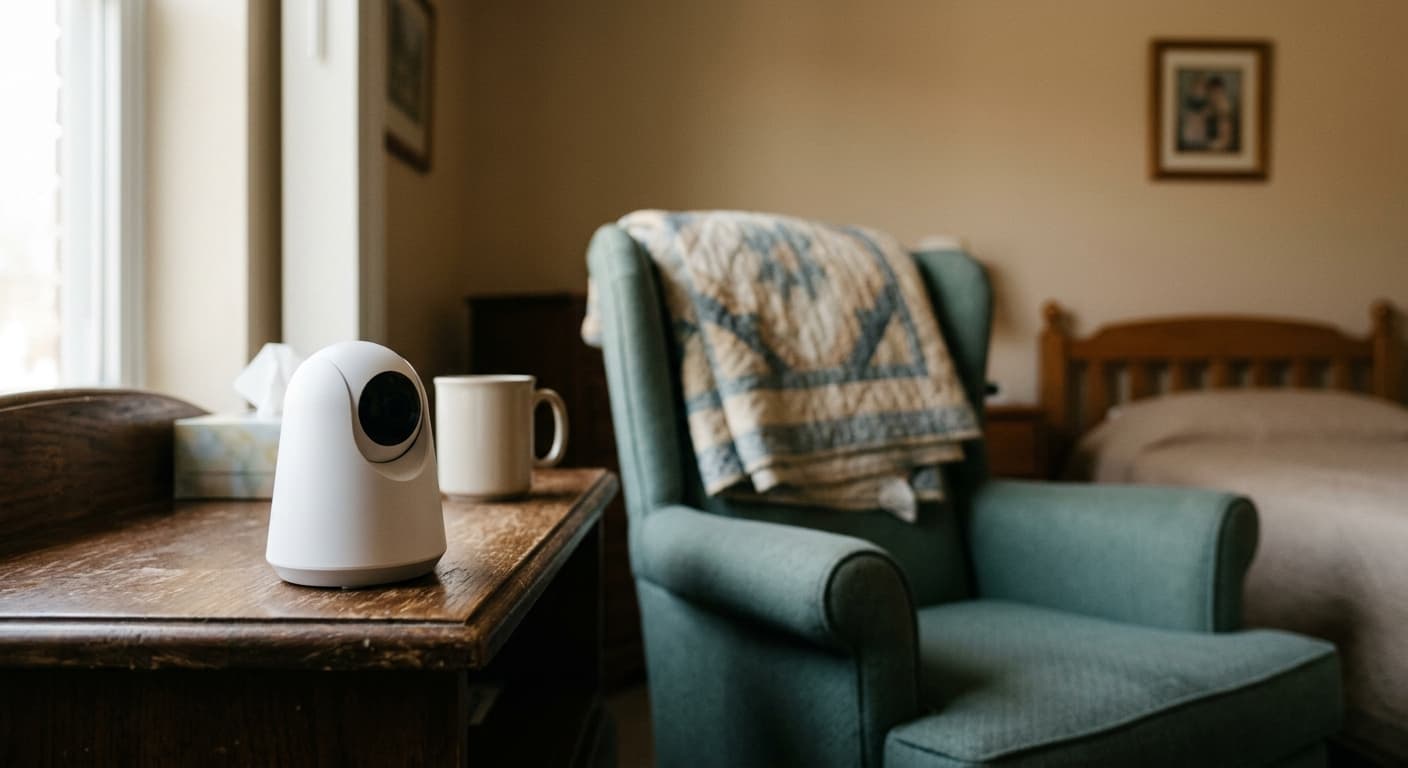
Georgia has no statute giving a nursing home resident or family a right to install a monitoring camera. Two bills that would have created one died without reaching the Governor, and the state’s best-known case on hidden nursing home cameras, Nuckles v. State, is a narrower ruling than it is often described as.
Information last verified on 2026-08-14. This article has not yet been reviewed by a licensed lawyer.
This article covers Georgia law as it stands for a nursing home resident or family considering a monitoring camera: the absence of a facility-specific statute, the general video-surveillance and eavesdropping statutes that fill the gap, the Nuckles case and its real limits, and the prior bills that failed. It does not address Georgia’s general recording law outside a care facility; see Georgia Recording Laws for that framework.
Does Georgia Have a Nursing Home Camera Law?
No. O.C.G.A. Title 31, Chapter 8, "Care and Protection of Indigent and Elderly Patients," contains no provision addressing cameras, video monitoring, or electronic surveillance anywhere in the chapter. A commonly circulated claim that O.C.G.A. section 31-8-110 authorizes nursing home electronic monitoring is false; that section actually governs a resident’s right to choose their own pharmacy and pharmacist, and has nothing to do with cameras. Georgia’s Department of Community Health nursing home licensing regulations, Ga. Comp. R. & Regs. Chapter 111-8-56, are silent on cameras as well.
Because no statute exists, a Georgia nursing home resident or family has no state-mandated consent form, no notice requirement, and no anti-retaliation protection specific to installing a camera. Georgia’s Security Exception and its general recording-consent statutes, described below, are what actually govern the question today.
Georgia's Video Consent Rule and the Security Exception
Georgia's general video-surveillance statute, O.C.G.A. section 16-11-62(2), makes it unlawful for any person to use a device to observe, photograph, or record another person’s activities in a private place without the consent of everyone observed, unless an exception applies. This is an all-party consent standard for video, which is a different rule from Georgia’s one-party consent standard for recorded conversations under a separate statute, O.C.G.A. section 16-11-66. The two statutes should not be confused: section 16-11-66 covers phone calls and in-person conversations, while section 16-11-62 covers video and photographic surveillance of someone’s activities, and it is the video statute that governs a nursing home camera.
The relevant exception is the Security Exception at section 16-11-62(2)(B), which allows an owner or occupier of real property to use a device to observe, photograph, or record activity on the property for security purposes, crime prevention, or crime detection, in an area where there is no reasonable expectation of privacy. This is the provision the Georgia Supreme Court applied in Nuckles v. State, discussed below, to hold that a resident qualifies as an "occupier" of their own nursing home room.
Nuckles v. State: What It Actually Held
Nuckles v. State, 310 Ga. 624, 853 S.E.2d 81 (2020), is the case most often cited on this topic in Georgia, and it is genuinely relevant, but its holding is narrower and differently framed than "residents have a right to record."
The case arose from a criminal prosecution, not a civil dispute. An 89-year-old rehab facility resident’s son, worried about his father’s care, installed a hidden camera disguised as an alarm clock in his father’s shared room. After the resident died, footage from the camera was used to prosecute a rehab facility employee, Wanda Nuckles, for depriving an elder person of essential services. Nuckles moved to suppress the video as an illegal recording under section 16-11-62(2). The Georgia Supreme Court held the recording fell within the Security Exception: the resident qualified as an "occupier of real property" even though he did not own the room, the camera served a security purpose, and Nuckles herself, as staff performing her duties in a resident’s room she did not control, had no reasonable expectation of privacy there.
The practical takeaway for a Georgia family is that a hidden camera installed in a resident’s own room, capturing staff conduct during their work in that room, is both lawful to record and admissible against staff in a later proceeding, even without staff consent, because staff lack a reasonable expectation of privacy while working there. What Nuckles does not do is establish some broader, freestanding right for a resident to record. It is a statutory-construction ruling about who counts as an "occupier" and whose privacy expectations control, decided in a criminal-evidence posture. It does not resolve what happens if the person captured is a roommate, a roommate’s visitor, or the resident’s own conversation with a doctor, situations where a different privacy interest could be in play.
Two Failed Bills
Georgia has tried twice to enact a nursing home electronic monitoring statute, and both attempts died without reaching the Governor.
House Bill 605 (2021-2022) came the furthest, and its content changed in a way that matters directly for the hidden-camera question this page covers. As passed by the House in March 2021, the bill would have created a disclosed-camera framework, definitions, consent requirements, notice to the facility, a room-relocation option if a roommate refused consent, installation and cost rules, and a prohibition on obstructing or destroying a device, but it also would have barred using footage from any hidden or undisclosed camera in a civil lawsuit or administrative proceeding. That provision would have undercut the protection Nuckles v. State already gives families today, which is exactly why AARP, the Alzheimer's Association, and the Georgia Council on Aging opposed the bill as written. The Senate amended it 49-3 in late March 2021, including a floor amendment from Sen. Burt Jones that passed 29-21 and struck the hidden-camera evidence ban, restoring the status quo Nuckles protection. House sponsor Rep. Sharon Cooper did not accept the Senate's changes, and the House voted 77-88 to reject them on March 31, 2021, killing the bill for the session. It was never reconciled between the chambers and never sent to the Governor. Senior care advocates treated that outcome as a win, not a loss: without HB 605, Georgia families kept the hidden-camera evidence rights Nuckles already gave them, rather than trading them for a narrower, disclosed-camera-only statute.
House Bill 849 (2019-2020), introduced by Rep. Demetrius Douglas (D-Stockbridge) and covering assisted living, personal care homes, skilled nursing, and intermediate care facilities, died earlier and less dramatically. It never advanced past a routine second reading in the House and expired when the 2019-2020 legislative biennium adjourned sine die on June 26, 2020, a session interrupted for three months that spring by the COVID-19 suspension.
A live, direct search of the current 2025-2026 session’s bill text turned up nothing on this subject. No new Georgia bill addressing nursing home electronic monitoring is currently pending.
Practical Guidance Under the No-Statute Reality
Without a statute, a Georgia family’s options run through the facility’s own policy and the Security Exception described above, not a state-mandated procedure.
- Check the admission agreement. Georgia facilities set their own camera policies in the absence of a statute, and some already address monitoring devices directly.
- A hidden camera capturing only video, in the resident’s own room, has a real legal foothold under Nuckles, because the resident (through a family member acting for them) is an "occupier" under the Security Exception. This is not a guarantee of admissibility or legality in every scenario, particularly where a roommate or visitor's privacy interest is implicated rather than staff performing work duties.
- Get a roommate’s consent where the room is shared, even though no statute requires it. A roommate’s own privacy interest is a live, unresolved issue that Nuckles did not address.
- Treat audio differently from video. Section 16-11-62 governs video and photographic surveillance; recording a conversation involves the separate one-party consent statute at section 16-11-66, which permits a participant to consent on their own behalf but does not resolve a non-participant’s privacy interest in a conversation the camera happens to capture.
Hidden Cameras: The Practical and Legal Risk
Nuckles gives a Georgia family more legal footing for a hidden camera than most bill states currently have, but it is a case about a specific fact pattern, not a blanket rule. It protected recordings of staff performing work duties in the resident’s room, reasoning that staff have no reasonable expectation of privacy there. It says nothing about a camera that primarily records a roommate, a roommate’s family, or private medical conversations, where a different privacy interest could be at stake and the Security Exception’s reasoning may not extend as cleanly.
There is also a practical risk separate from the legal one: a facility that discovers an undisclosed camera, hidden or not, can treat it as a violation of the admission agreement, and Georgia has no statute barring a facility from responding with discharge or non-renewal the way the failed HB 605 would have. Families should weigh both the legal footing Nuckles provides and the practical facility-relations risk before relying on a hidden device.
That legal footing is also not permanently settled. HB 605, as the House originally passed it in 2021, would have barred hidden-camera footage from being used in a civil or administrative case at all, a real, recent legislative attempt to narrow the Nuckles protection rather than expand it. The bill died only because the Senate stripped that provision and the House then rejected the Senate's more protective version outright, not because lawmakers affirmatively chose to preserve the status quo. A future bill could revisit the same ground.
Using Camera Footage as Evidence of Abuse or Neglect
Camera footage that appears to show abuse or neglect, whether recorded openly or covertly, can support a report to the Georgia Long-Term Care Ombudsman Program or the Georgia Department of Community Health, and Nuckles itself is a direct example of footage supporting a criminal prosecution. Footage generally works alongside the resident’s medical records, staffing records, and care plan rather than establishing a claim by itself. For a broader look at how a nursing home abuse or neglect claim works, see Nursing Home Abuse & Neglect.
Harmed by a product or exposure? Speak with an attorney about your options
If you or a loved one may have been harmed, you can speak with an attorney about your legal options at no cost. Whether you have a claim depends on the specific facts. This is attorney advertising, not a guarantee that you qualify or of any particular outcome.
The Georgia Long-Term Care Ombudsman Program
The Office of the State Long-Term Care Ombudsman, administratively housed in the Georgia Department of Human Services’ Division of Aging Services, is the state’s established channel for residents and families to raise care concerns, including anything a camera reveals. The program’s official site is georgiaombudsman.org, reachable at 1-866-552-4464.

Related Resources
- Nursing Home Camera Laws by State covers which states have an enacted electronic monitoring statute and how Georgia compares.
- Georgia Recording Laws covers the state’s general one-party consent framework for conversations outside a nursing facility.
- Nursing Home Abuse & Neglect covers how an abuse or neglect claim works once evidence, including camera footage, is in hand.
Last updated: 2026-08-14.
Frequently Asked Questions
Is it legal to put a hidden camera in a Georgia nursing home room?
Georgia has no statute directly addressing this, but the Georgia Supreme Court’s Nuckles v. State decision found a hidden video camera in a resident’s own room lawful under the Security Exception when it captured staff performing their duties, because staff lack a reasonable expectation of privacy there. This is not a blanket right to record; it applies to a specific fact pattern.
What did Nuckles v. State actually decide?
Nuckles was a criminal case about whether hidden camera footage of a staff member could be used as evidence. The Georgia Supreme Court held the recording was lawful under the Security Exception because the resident was an "occupier" of the room and staff had no reasonable expectation of privacy while working there. It is not a civil ruling giving residents a general right to record.
Is O.C.G.A. section 31-8-110 a Georgia nursing home camera law?
No. This is a commonly repeated but false claim. Section 31-8-110 actually governs a nursing home resident’s right to choose their own pharmacy and pharmacist. It has nothing to do with cameras or monitoring.
Is Georgia a one-party or all-party consent state for nursing home cameras?
It depends on what is being recorded. Georgia is one-party consent for phone calls and conversations under O.C.G.A. section 16-11-66. Video and photographic surveillance of someone’s activities is governed by a separate statute, section 16-11-62, which requires consent from everyone observed unless an exception like the Security Exception applies.
Did Georgia ever come close to passing a nursing home camera law?
Yes. House Bill 605 passed the Georgia House in 2021, then passed the Senate with amendments, but died when the House rejected the Senate’s changes later that year. No Georgia bill on this subject is currently pending in the 2025-2026 session.
Where do I report suspected abuse if I see something on a camera in Georgia?
Contact the Georgia Long-Term Care Ombudsman Program at georgiaombudsman.org or 1-866-552-4464, or the Georgia Department of Community Health. Footage can support a report or a civil claim, though it is typically reviewed alongside medical and staffing records.
Updates
Corrected the description of Wanda Nuckles in Nuckles v. State to a rehab facility employee, since the opinion notes the record does not establish her job role.
Removed an inaccurate section-count figure from the description of O.C.G.A. Title 31, Chapter 8; the underlying point that the chapter contains no camera or monitoring provision is unchanged.
Independently fact-checked against the cited primary sources
The Law Behind This Article
This article rests on the statutory provisions below, held in our own legal record and retrieved from the official source. Tap a section to read the operative text.
Official Code of Georgia Annotated
§ 16-11-62Eavesdropping, surveillance, or intercepting communication which invades privacy of another; divulging private message.In forcecited in 25 of our articles
It shall be unlawful for: (1) Any person in a clandestine manner intentionally to overhear, transmit, or record or attempt to overhear, transmit, or record the private conversation of another which shall originate in any private place; (2) Any person, through the use of any device, without the
Official text (excerpt) · last checked 2026-08-31 · Read the full text in our law library · Verify at legis.ga.gov
Cited in 94 court opinions in our collectionLatest citing opinion in our collection: 2026
In the courts (editorial summary, independently checked):Kelley v. State (1998) held OCGA 16-11-62(2) reached a guardian who photographed a nude 16-year-old in the family bathroom, with no exception for family members. Burgeson v. State (1996) held a conversation recorded in a patrol car was not covered, because no reasonable expectation of privacy existed there.
Opinions citing this section in our collection:
- Burgeson v. State (Supreme Court of Georgia 1996, 267 Ga. 102)✓Police secretly recorded two arrestees talking in the back of a patrol car. The court held a police car is much like a jail cell, with no reasonable expectation of privacy, so intercepting that conversation did not offend OCGA 16-11-62 and the tape was admissible.
- Kelley v. State (Court of Appeals of Georgia 1998, 233 Ga. App. 244)✓A guardian photographed her 16-year-old niece nude and passed out in the family bathtub. The court held OCGA 16-11-62(2) reaches any person with no family exception, that the film need not be developed, and that a jury could find the bathroom a private place.
- Dobbins v. State (Supreme Court of Georgia 1992, 262 Ga. 161)“…th the consent of one of the parties to the conversation. OCGA § 16-11-62 (1) provides that: It shall be unlawf…”
Identified automatically from the court opinions citing this section — not a ranking of which case controls.
Also relied on in: Georgia Data Privacy Laws: Breach Notification & Consumer Rights (2026), Georgia Ring Doorbell Laws: What You Need to Know in 2026, Georgia Surveillance Camera Laws (2026 Guide)
§ 16-11-66Interception of wire, oral, or electronic communication by party thereto; consent requirements for recording and divulging conversations to which child under 18 years is a party; parental exception.In forcecited in 19 of our articles
(a) Nothing in Code Section 16-11-62 shall prohibit a person from intercepting a wire, oral, or electronic communication where such person is a party to the communication or one of the parties to the communication has given prior consent to such interception. (b) After obtaining the consent…
Official text (excerpt) · last checked 2026-08-31 · Read the full text in our law library · Verify at advance.lexis.com
Cited in 43 court opinions in our collectionLatest citing opinion in our collection: 2020
In the courts (editorial summary, independently checked):State v. Cohen (2017) held OCGA 16-11-66(a) reaches only intercepted wire, oral, or electronic communications, so one party's consent does not authorize secretly video recording others in a private place. Bishop v. State (1999) barred vicarious parental consent under the text in force before the 2000 amendment.
Opinions citing this section in our collection:
- Dobbins v. State (Supreme Court of Georgia 1992, 262 Ga. 161)✓An investigator recorded a child's call to the defendant using only her father's consent and no warrant; the Supreme Court held the state had neither an investigation warrant nor valid consent of a party to the call, so the recording and its fruits were inadmissible.
- State v. Cohen (Supreme Court of Georgia 2017, 302 Ga. 616)✓A housekeeper secretly videoed her employer naked at home; the Supreme Court held the one-party-consent rule of OCGA 16-11-66(a) covers only intercepted wire, oral or electronic communications and does not permit video recording without the consent of all observed.
- State v. Madison (Court of Appeals of Georgia 2011, 311 Ga. App. 31)✓A molestation complainant secretly videoed the defendant in his law office; the court read the 16-11-66(a) participant exception to reach section 16-11-62, but found no wire, oral or electronic communication captured, so it affirmed suppression. Cohen overruled that reading.
Identified automatically from the court opinions citing this section — not a ranking of which case controls.
Also relied on in: Georgia Recording Laws (2026): One-Party Audio, All-Party Video, Georgia AI Meeting Recording Laws (2026), Georgia Audio Recording Laws: One-Party Consent Rules and Penalties (2026)
§ 31-8-110Right to select pharmacy or pharmacist; charges for pharmaceutical supplies and services; information as to purpose and effects of drugs.In force
(a) Each resident or guardian shall be permitted to select the pharmacy or pharmacist of his choice for those pharmaceutical supplies and services not provided by the facility as a part of the basic rate.…
Official text (excerpt) · last checked 2021-08-17 · Read the full text in our law library
Search our full record of US law — 2.1 million sections, every state + federal →
Sources and References
- Nuckles v. State, 310 Ga. 624 (2020), full opinion(courtlistener.com)
- Georgia House Bill 605 (2021-2022), official bill status and vote history(legis.ga.gov).gov
- Georgia Health News, "Bills on patient visitations, nursing home cameras fail to clear General Assembly" (Apr. 1, 2021), reporting the Senate's hidden-camera-evidence amendment and the House's final rejection vote(georgiahealthnews.com)
- Ga. Comp. R. & Regs. Chapter 111-8-56, Department of Community Health nursing home rules(rules.sos.ga.gov).gov
- Georgia Long-Term Care Ombudsman Program, Department of Human Services(aging.georgia.gov).gov
- Georgia Long-Term Care Ombudsman Program, official site(georgiaombudsman.org).gov