
Illinois
Illinois Noise Laws: Quiet Hours, Noise Complaints and Fines
Independently fact-checked against primary sources (last audited October 10, 2026). · 39 primary sources cited on this page. How we verify our legal content
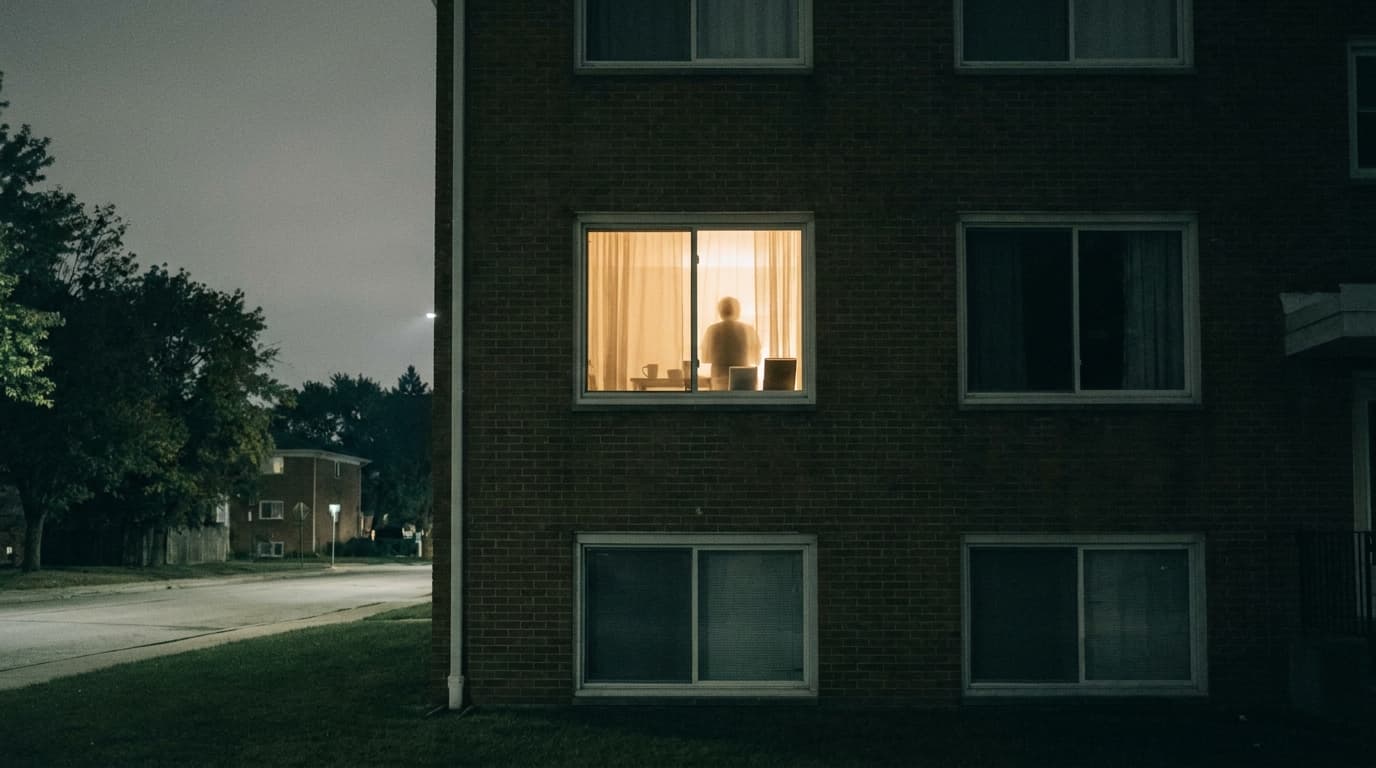
Illinois has a statewide noise law on the books, but the state agency says it does not run a program to enforce it. Title VI of the Illinois Environmental Protection Act (415 ILCS 5/23 to 5/25) and the Pollution Control Board's noise rules (35 Ill. Adm. Code 900 and 901) prohibit noise that crosses a property line and unreasonably interferes with the enjoyment of life, using daytime hours of 7 a.m. to 10 p.m. and nighttime hours of 10 p.m. to 7 a.m. Yet the Illinois EPA states: "The Illinois EPA does not have an active noise control program under state regulations." In practice, noise complaints go to local police and to city and county ordinances, backed by the disorderly conduct statute (720 ILCS 5/26-1, a Class C misdemeanor) and the vehicle code's 75-foot car stereo rule (625 ILCS 5/12-611, a petty offense with a fine of up to $50; paying the ticket without a court appearance costs the $164 Schedule 12 assessment). To compare other states, see our guide to noise ordinance laws by state.
Information last verified on 2026-10-10. This article has not been reviewed by a licensed lawyer.
Jurisdiction scope: This article covers Illinois state law on noise: Title VI of the Environmental Protection Act and its penalty section (415 ILCS 5/23, 24, 25, 42); the Pollution Control Board's noise rules in 35 Ill. Adm. Code Parts 900, 901 and 902; disorderly conduct and misdemeanor and petty offense sentencing (720 ILCS 5/26-1; 730 ILCS 5/5-4.5-60, 5-4.5-65, 5-4.5-75); the Vehicle Code's tire noise, horn, muffler, engine brake and sound amplification sections (625 ILCS 5/11-505, 12-601, 12-602, 12-602.1, 12-611, 16-104); the written guilty plea route for minor traffic offenses (Ill. S. Ct. R. 529; 705 ILCS 135/15-60); the motorboat muffler rule (625 ILCS 45/4-3); municipal and home rule powers (65 ILCS 5/1-2-1, 1-2-1.1, 11-5-2, 11-60-2; Ill. Const. art. VII, sec. 6); firearm range, off-road riding facility and right-to-farm protections (740 ILCS 130/4.1, 130/5; 740 ILCS 70/3, 4.5); and state campground rules (17 Ill. Adm. Code 130). Statute text is the compiled version the Illinois General Assembly publishes. It does not cover the text of any city, village or county noise ordinance (including Chicago's), aircraft operations, workplace noise, or the law of other states.
Illinois noise laws at a glance
| Rule | What it covers | Penalty |
|---|---|---|
| Environmental Protection Act Title VI and 35 Ill. Adm. Code 900 to 901 | Sound crossing a property line that causes noise pollution or exceeds the Board's octave-band limits (the octave-band limits do not apply to households, religious institutions, parks, construction equipment or daytime lawn care, 901.107) | Civil penalty up to $100,000, plus up to $25,000 per day the violation continues (415 ILCS 5/42(a)) |
| Disorderly conduct (720 ILCS 5/26-1(a)(1)) | Knowingly doing any act in such unreasonable manner as to alarm or disturb another and to provoke a breach of the peace | Class C misdemeanor: up to 30 days; fine of $75 to $1,500; 30 to 120 hours of community service where available |
| Car stereos (625 ILCS 5/12-611) | Sound system heard outside the vehicle from 75 feet or more while operated on a highway | Petty offense, fine up to $50; $164 Schedule 12 assessment to pay without a court appearance (Rule 529) |
| Mufflers and exhaust (625 ILCS 5/12-602) | Excessive or unusual noise, cutouts, louder-than-original exhaust | Petty offense for a first or second conviction ($75 to $1,000; $164 Schedule 12 assessment to pay without a court appearance under Rule 529); Class C misdemeanor for a third within a year (16-104) |
| Engine brakes (625 ILCS 5/12-602.1) | Commercial vehicle engine braking where a county or municipality has posted signs | Equipment violation, $75 fine |
| Local ordinances (65 ILCS 5/11-5-2, 11-60-2, 1-2-1) | Quiet hours, decibel limits, construction hours and other local rules | Set by the ordinance; see the limits below |
| DNR campgrounds (17 Ill. Adm. Code 130) | Quiet hours 10 p.m. to 7 a.m. | Class B misdemeanor |
| Motorboats (625 ILCS 45/4-3) | Muffler limit of 90 decibels (SAE J2005) and 75 decibels measured from the shoreline (SAE J1970) | Class B misdemeanor for a first offense; Class A misdemeanor for a repeat within 3 years |
The Illinois Environmental Protection Act noise rules
Title VI of the Environmental Protection Act addresses noise. Its stated purpose is "to prevent noise which creates a public nuisance" (415 ILCS 5/23). The core prohibition is in Section 24:

"No person shall emit beyond the boundaries of his property any noise that unreasonably interferes with the enjoyment of life or with any lawful business or activity, so as to violate any regulation or standard adopted by the Board under this Act."
The closing clause matters. Section 24 is tied to the Board's regulations: the violation is noise that unreasonably interferes "so as to violate any regulation or standard adopted by the Board." Section 25 authorizes the Board to adopt "regulations prescribing limitations on noise emissions beyond the boundaries of the property of any person," but provides that "No Board standards for monitoring noise or regulations prescribing limitations on noise emissions shall apply to any organized amateur or professional sporting activity except as otherwise provided in this Section."
What the Board's rules say
The Board's general rule, 35 Ill. Adm. Code 900.102, provides: "A person must not cause or allow the emission of sound beyond the boundaries of that person's property, as defined in Section 25 of the Environmental Protection Act [415 ILCS 5/25], that causes noise pollution in Illinois or violates any provision of this Chapter."
Section 900.101 supplies the definitions that apply across the noise rules:
"Daytime hours": 7:00 am to 10:00 pm, local time. ... "Nighttime hours": 10:00 pm to 7:00 am, local time. ... "Noise pollution": the emission of sound that unreasonably interferes with the enjoyment of life or with any lawful business or activity.
These are not quiet hours in the everyday sense. They are the two periods for which the Board's numeric limits apply. Those limits, in 35 Ill. Adm. Code 901.102, are not a single decibel reading. They are tables of "allowable octave band sound pressure level[s]" for sound from a "property-line noise source" on Class A, B or C land to receiving Class A land, and the nighttime limits are lower than the daytime ones. The rule adds: "Sound pressure levels must be measured at least 25 feet from the property-line noise source." The land classes are defined in 35 Ill. Adm. Code 901.101; Class A covers residential land and the other uses listed there, including religious institutions and parks. Because the limits turn on octave-band measurements, applying them takes a sound level meter that measures by frequency band and a reading of the tables in the rule itself.
The numeric limits have exceptions in 35 Ill. Adm. Code 901.107. Sections 901.102 through 901.106 "do not apply to sound emissions from land used as specified by LBCS Codes 1100, 6600 and 5500," which Appendix B lists as private household, religious institutions and parks. They also do not apply to "lawn care maintenance equipment and agricultural field machinery used during daytime hours" or to "equipment being used for construction." Sound from a neighboring house is therefore judged under the general noise pollution standard in 900.102, not the octave-band tables.
The penalty for violating the state noise rules
The Act's general penalty section covers the noise rules. Under 415 ILCS 5/42(a), "any person that violates any provision of this Act or any regulation adopted by the Board ... shall be liable for a civil penalty not to exceed $100,000 for the violation and an additional civil penalty not to exceed $25,000 for each day during which the violation continues." These are maximum civil penalties.
Who enforces Illinois's state noise law
The state agency that would normally investigate pollution says it does not handle noise. The Illinois EPA's pollution complaint page states: "The Illinois EPA does not have an active noise control program under state regulations. If you have a complaint about excessive noise, the following contacts found on our Noise Pollution page may help."
The Illinois Pollution Control Board's FAQ explains the consequence: "IEPA, however, no longer has the resources to operate a noise program. Accordingly, IEPA is no longer investigating alleged noise pollution. ... As IEPA no longer runs a noise program, it suggests that you consider reporting your noise concern to the local police or health department. Local authorities may provide you with guidance, or take steps on their own to enforce the State's noise laws."
That leaves two state-law routes:
- Local police or health department. The Board's FAQ names these as the first contact, and local authorities may enforce the State's noise laws on their own.
- A formal complaint to the Board. Anyone may file one. The Board, however, "hears and decides environmental enforcement actions, but does not prosecute them or investigate alleged pollution," so the person who files carries the burden of proving the violation. The Board's FAQ page links its complaint forms.
Disorderly conduct for loud noise
Illinois's disorderly conduct statute does not mention noise by name. The clause that reaches loud behavior is 720 ILCS 5/26-1(a)(1): "A person commits disorderly conduct when he or she knowingly: (1) Does any act in such unreasonable manner as to alarm or disturb another and to provoke a breach of the peace."
All of those elements must be met. The person must act knowingly, in an unreasonable manner, so as to alarm or disturb another, and to provoke a breach of the peace.
Penalty. "A violation of subsection (a)(1) of this Section is a Class C misdemeanor" (26-1(b)). For a Class C misdemeanor, "The sentence of imprisonment shall be a determinate sentence of not more than 30 days," and "Unless otherwise specified by law, the minimum fine is $75. A fine not to exceed $1,500 for each offense or the amount specified in the offense, whichever is greater, may be imposed" (730 ILCS 5/5-4.5-65(a), (e)). In addition, "a court shall order any person convicted of disorderly conduct to perform community service for not less than 30 and not more than 120 hours, if community service is available in the jurisdiction and is funded and approved by the county board of the county where the offense was committed" (26-1(c)).
Car stereos, exhaust, horns and engine brakes
Car stereos. Under 625 ILCS 5/12-611:
"No driver of any motor vehicle within this State shall operate or permit operation of any sound amplification system which can be heard outside the vehicle from 75 or more feet when the vehicle is being operated upon a highway, unless such system is being operated to request assistance or warn of a hazardous situation. This Section does not apply to authorized emergency vehicles. Any violation of the provisions of this Section shall be a petty offense punishable by a fine not to exceed $50."
The rule applies "when the vehicle is being operated upon a highway." For loud music from a parked car, check the local ordinance.
Mufflers and exhaust. Under 625 ILCS 5/12-602, every motor vehicle on the highways "shall at all times be equipped with an adequate muffler or exhaust system in constant operation and properly maintained to prevent any excessive or unusual noise." The section continues: "No such muffler or exhaust system shall be equipped with a cutout, bypass or similar device. No person shall modify the exhaust system of a motor vehicle in a manner which will amplify or increase the noise of such vehicle above that emitted by the muffler originally installed on the vehicle."
Section 12-602 sets no penalty of its own, so the Vehicle Code's general penalty applies: "Every person convicted of a violation of any provision of this Code for which another penalty is not provided shall, for a first or second conviction thereof, be guilty of a petty offense and, for a third or subsequent conviction within one year after the first conviction, be guilty of a Class C misdemeanor" (625 ILCS 5/16-104). For a petty offense, "Unless otherwise specified by law, the minimum fine is $75. A defendant may be sentenced to pay a fine not to exceed $1,000 for each offense or the amount specified in the offense, whichever is less" (730 ILCS 5/5-4.5-75(a)).
Paying a ticket without going to court. A petty offense under the Vehicle Code is a "Minor Traffic Offense" (Ill. S. Ct. R. 501(f)). Under Illinois Supreme Court Rule 529(a), minor traffic offenses, except those requiring a court appearance under Rule 551 and those that may be satisfied under Rule 531, "may be satisfied without a court appearance by a written plea of guilty ... and payment of an amount equal to the Schedule 12 assessment." State law sets that assessment at $164 (705 ILCS 135/15-60). That route covers the car stereo rule and a first or second exhaust conviction.
Tire squealing. "No person shall operate any motor vehicle in such a manner as to cause or allow to be emitted squealing, screeching or other such noise from the vehicle's tires due to rapid acceleration or excessive speed around corners or other such reason" (625 ILCS 5/11-505). The section does not apply to an emergency vehicle responding to a call or pursuing a violator, emergency operation to avoid imminent danger, or a sanctioned raceway or event that is not part of a highway. It sets no penalty of its own, so 16-104 applies.
Vehicle sound limits. The Pollution Control Board's Part 902 also sets operating sound limits for motor vehicles. For passenger cars and other vehicles of 8,000 pounds or less, the limit on highways with speed limits of 35 miles per hour or less is 74 dB(A), or 76 dB(A) on a grade exceeding 3%, measured at 50 feet from the centerline of the lane of travel (35 Ill. Adm. Code 902.120(b)).
Horns. Under 625 ILCS 5/12-601(a), a vehicle operated on a highway must have a horn "capable of emitting sound audible under normal conditions from a distance of not less than 200 feet, but no horn or other warning device shall emit an unreasonable loud or harsh sound or a whistle. The driver of a motor vehicle shall when reasonably necessary to insure safe operation give audible warning with his horn but shall not otherwise use such horn when upon a highway."
Engine brakes. "A county or municipality may post signs that prohibit the driver of a commercial vehicle ... from operating or actuating any engine braking system that emits excessive noise" (625 ILCS 5/12-602.1(a)). The rule "does not apply to the use of an engine braking system that has an adequate sound muffling system in proper working order that prevents excessive noise" (12-602.1(c)), and "A violation of this Section is an equipment violation punishable by a fine of $75" (12-602.1(e)). It is a defense that the driver used the engine brake "in an emergency to avoid a collision with a person or another vehicle on the highway" (12-602.1(d)).
Local noise ordinances and quiet hours
The quiet hours enforced in a neighborhood come from the city, village or county noise ordinance. State law gives local governments several sources of power:

- Noise. "The corporate authorities of each municipality may prevent or suppress riots, routs, affrays, noises, disturbances, trespasses, and disorderly assemblies in any public or private place" (65 ILCS 5/11-5-2).
- Nuisances. "The corporate authorities of each municipality may define, prevent, and abate nuisances" (65 ILCS 5/11-60-2).
- Home rule. Under the Illinois Constitution, "A County which has a chief executive officer elected by the electors of the county and any municipality which has a population of more than 25,000 are home rule units. Other municipalities may elect by referendum to become home rule units. Except as limited by this Section, a home rule unit may exercise any power and perform any function pertaining to its government and affairs including, but not limited to, the power to regulate for the protection of the public health, safety, morals and welfare" (Ill. Const. 1970, art. VII, sec. 6(a)).
- Ordinance penalties. Under 65 ILCS 5/1-2-1, a municipal fine or penalty generally may not "exceed $750," and "no imprisonment authorized in Section 1-2-9 for failure to pay any fine, penalty or cost shall exceed 6 months for one offense." Alternatively, a municipality may pass ordinances "not inconsistent with the criminal laws of this State, to regulate any matter expressly within the authorized powers of the municipality, or incidental thereto, making violation thereof a misdemeanor punishable by incarceration in a penal institution other than the penitentiary not to exceed 6 months" (65 ILCS 5/1-2-1.1). Section 1-2-1.1 states that it "shall not apply to or affect ordinances now or hereafter enacted pursuant to" Section 11-5-2, the noise power, among others. The Constitution limits home rule units only on the power "to punish by imprisonment for more than six months" (art. VII, sec. 6(e)), so check a home rule city's own ordinance for its fine amounts.
The County Code's general powers section, 55 ILCS 5/5-1005, does not mention noise or nuisances. A county without home rule may still have a noise rule elsewhere in its code, so check the county ordinances directly.
To find your rule, open your city or village municipal code (or your county code if you live in an unincorporated area) and search for "noise." The ordinance will give any quiet hours, decibel limits, construction hours and the fine.
What to do about a loud neighbor in Illinois
- Call the local police non-emergency line. Police enforce local noise ordinances and the disorderly conduct statute, and the Pollution Control Board suggests local police or the health department for noise concerns.
- Check your local ordinance. It usually supplies the specific hours and limits that a state rule does not.
- Consider a formal Board complaint for a persistent source, such as equipment at a neighboring business. The Board decides the case but does not investigate it, so the complainant must prove the violation of the octave-band limits or the noise pollution standard. The octave-band limits do not apply to sound from a private household (901.107(a)), so a complaint about a neighboring home rests on the noise pollution standard in 900.102.
- Renters should also read Illinois landlord-tenant laws for the rules between landlords and tenants.
Campgrounds, shooting ranges and farms
State campgrounds. On Illinois Department of Natural Resources campgrounds, "Quiet hours shall prevail in the campground between 10:00 p.m. and 7:00 a.m. During this time no noise or light shall be emitted beyond the individual's immediate campsite that would be disturbing to others" (17 Ill. Adm. Code 130.140(c)). "Any person who violates any provision of this Part shall be guilty of a Class B Misdemeanor" (130.150(d)). For a Class B misdemeanor, the jail term is "not more than 6 months," and "Unless otherwise specified by law, the minimum fine is $75. A fine not to exceed $1,500" may be imposed (730 ILCS 5/5-4.5-60).
Firearm ranges. Under 740 ILCS 130/5, "An owner or operator of a firearm range in existence on January 1, 1994, is immune from any criminal liability arising out of or as a consequence of noise or sound emissions resulting from the normal use of the firearm range. An owner or operator of a firearm range is not subject to any action for public or private nuisance or trespass and no court in this State shall enjoin the use or operation of a firearm range on the basis of noise or sound emissions resulting from the normal use of the firearm range." A range placed in operation after January 1, 1994, gets the same protection only if it meets one of the conditions in 130/5(c), such as having all firing areas at least 1,000 yards from any occupied permanent dwelling on adjacent property, being enclosed by a structure that absorbs or contains the sound, complying with local zoning, or being operated by a government or licensed by the Department of Natural Resources.
Off-road riding facilities. Under 740 ILCS 130/4.1(b), "An owner or operator of an off-road riding facility in existence on January 1, 2002 is immune from any criminal liability arising out of or as a consequence of noise or sound emissions resulting from the use of the off-road riding facility." Such an owner or operator "is not subject to any action for public or private nuisance or trespass, and no court in this State may enjoin the use or operation of an off-road riding facility on the basis of noise or sound emissions." A facility opened after that date is protected only if it meets one of the conditions in 130/4.1(c): operating areas at least 1,000 feet from any occupied permanent dwelling on adjacent property when it opened, zoning that did not prohibit it, or government operation or a Recreational Trails of Illinois Act grant. That civil immunity "does not apply if there is willful or wanton misconduct outside the normal use of the off-road riding facility" (130/4.1(d)).
Boats. A motorboat must have an effective muffler, which may not exceed 90 decibels on the SAE J2005 stationary test, and "No person may operate a motorboat on the waters of this State in a manner to exceed a noise level of 75 decibels" measured under SAE J1970 from any point on the shoreline or on the water within 20 feet of it (625 ILCS 45/4-3(A), (B)). A violator must install an effective muffler and pass the stationary test, and is "subject to a Class B misdemeanor for the first offense and a Class A misdemeanor for any subsequent offense occurring within 3 years of the date of the most recent offense" (45/4-3(F)). A Class A misdemeanor carries a jail term of less than one year and a fine of $75 to $2,500 (730 ILCS 5/5-4.5-55).
Farms. Under the Farm Nuisance Suit Act, "No farm or any of its appurtenances shall be or become a private or public nuisance because of any changed conditions in the surrounding area occurring after the farm has been in operation for more than one year, when such farm was not a nuisance at the time it began operation, provided, that the provisions of this section shall not apply whenever a nuisance results from the negligent or improper operation of any farm or its appurtenances" (740 ILCS 70/3). In a nuisance action against a farming operation, "a prevailing defendant shall recover the aggregate amount of costs and expenses determined by the court to have been reasonably incurred in the defense of the nuisance action, together with a reasonable amount for attorney fees" (740 ILCS 70/4.5).
Airports. Public Act 104-0751 added 620 ILCS 35/16 to the Permanent Noise Monitoring Act, requiring that, "Beginning no later than December 31, 2030 and every 5 years thereafter, the airport sponsor shall prepare or cause to be prepared a noise contour study for each covered airport under its jurisdiction." Covered airports are commercial airports with more than 150,000 operations.
Fireworks rules are covered in Illinois fireworks laws.
Related pages
- Noise ordinance laws by state
- Illinois landlord-tenant laws
- Illinois fireworks laws
- Indiana noise ordinance laws
- Wisconsin noise ordinance laws
This article provides general legal information about Illinois law, not legal advice. For advice about a specific situation, contact a lawyer licensed in Illinois, your local government or the Illinois Pollution Control Board.
Last updated: 2026-10-10.
Frequently Asked Questions
What are the quiet hours in Illinois?
For neighborhoods, quiet hours are set by your city, village or county ordinance. The state Pollution Control Board rules use daytime (7 a.m. to 10 p.m.) and nighttime (10 p.m. to 7 a.m.) periods for their sound limits (35 Ill. Adm. Code 900.101), which do not apply to sound from a private household or construction equipment (901.107), and Illinois DNR campgrounds observe quiet hours from 10 p.m. to 7 a.m. (17 Ill. Adm. Code 130.140(c)).
Does the Illinois EPA handle noise complaints?
No. The Illinois EPA states that it does not have an active noise control program under state regulations, and the Pollution Control Board says the agency is no longer investigating alleged noise pollution. The Board suggests reporting a noise concern to the local police or health department.
Can I file a noise complaint with the Illinois Pollution Control Board?
Yes. Anyone may file a formal complaint with the Board under the Environmental Protection Act, but the Board hears and decides cases and does not investigate or prosecute them, so the person filing carries the burden of proof. The Board's octave-band limits do not apply to sound from a private household (35 Ill. Adm. Code 901.107(a)), so a complaint about a neighboring home rests on the general noise pollution standard. A violation of a Board regulation can carry a civil penalty of up to $100,000 plus up to $25,000 for each day it continues (415 ILCS 5/42(a)).
Is a loud party disorderly conduct in Illinois?
It can be if a person knowingly does an act in such unreasonable manner as to alarm or disturb another and to provoke a breach of the peace (720 ILCS 5/26-1(a)(1)). That is a Class C misdemeanor, punishable by up to 30 days in jail and a fine of $75 to $1,500, and the court must order 30 to 120 hours of community service where it is available and funded.
How loud can car music be in Illinois?
A driver may not operate a sound amplification system that can be heard outside the vehicle from 75 or more feet when the vehicle is being operated on a highway, unless it is used to request assistance or warn of a hazard (625 ILCS 5/12-611). A violation is a petty offense with a fine of up to $50. Paying the ticket by written guilty plea without a court appearance costs the $164 Schedule 12 assessment (Ill. S. Ct. R. 529; 705 ILCS 135/15-60).
What is the fine for a loud exhaust in Illinois?
Section 12-602 sets no penalty of its own, so 625 ILCS 5/16-104 applies: a first or second conviction is a petty offense, and a third within one year of the first is a Class C misdemeanor. A petty offense carries a fine of $75 to $1,000 unless the law specifies otherwise (730 ILCS 5/5-4.5-75). A first or second conviction is a minor traffic offense that can be paid by written guilty plea without a court appearance for the $164 Schedule 12 assessment (Ill. S. Ct. R. 529; 705 ILCS 135/15-60).
Can a town ban truck engine braking in Illinois?
A county or municipality may post signs prohibiting commercial vehicle drivers from using an engine braking system that emits excessive noise; it does not apply to a brake with an adequate sound muffling system in proper working order. A violation is an equipment violation with a $75 fine, and it is a defense that the driver used the brake in an emergency to avoid a collision (625 ILCS 5/12-602.1).
Updates
Independently fact-checked against the cited primary sources
The Law Behind This Article
This article rests on the statutory provisions below, held in our own legal record and retrieved from the official source. Tap a section to read the operative text.
Illinois Compiled Statutes Chapter 415, Act 5 (Environmental Protection Act)
§ 24In force
Official text (excerpt) · last checked 2026-07-29 · Read the full text in our law library · Verify at ilga.gov
Illinois Compiled Statutes Chapter 720, Act 5 (Criminal Code of 2012)
§ 26-1Disorderly conductIn forcecited in 2 of our articles
(a) A person commits disorderly conduct when he or she knowingly: (1) Does any act in such unreasonable manner as to alarm or disturb another and to provoke a breach of the peace; (2) Transmits or causes to be transmitted in any manner to the fire department of any city, town, village or fire protection district a false alarm of fire, knowing at the time of the transmission that there is no reasonable ground for believing that the fire exists; (3) Transmits or causes to be transmitted in any manner to another a false alarm to the effect that a bomb or other explosive of any nature or a container holding poison gas, a deadly biological or chemical contaminant, or radioactive substance is concealed in a place where its explosion or release would endanger human life, knowing at the time of the transmission that there is no reasonable ground for believing that the bomb, explosive or a container holding poison gas, a deadly biological or chemical contaminant, or radioactive substance is concealed in the place; (3.5) Transmits or causes to be transmitted in any manner a threat of destruction of a school building or school property, or a threat of violence, death, or bodily harm directed…
Official text (excerpt) · last checked 2026-07-29 · Read the full text in our law library · Verify at ilga.gov
Cited in 148 court opinions in our collectionLatest citing opinion in our collection: 2026
Opinions citing this section in our collection:
- People v. Swenson (Illinois Supreme Court 2020, 450 Ill. Dec. 116)“…or disturb another and to provoke a breach of the peace[.]” 720 ILCS 5/26-1(a)(1) (West 2014). ¶ 16 Defendan…”
- People v. Sypien (Illinois Supreme Court 2001, 198 Ill. 2d 334)“…believing that such an offense * * * has been committed[.]" 720 ILCS 5/26-1(a)(4) (West 1998). Section 15 of Publ…”
- People v. McLENNON (Appellate Court of Illinois 2011, 957 N.E.2d 1241)“…olation of section 26-1(a)(1) of the Criminal Code of 1961 (720 ILCS 5/26-1(a)(1) (West 2008)). Defendant was sente…”
Identified automatically from the court opinions citing this section — not a ranking of which case controls.
Also relied on in: Illinois Surveillance Camera Laws (2026 Guide)
Illinois Compiled Statutes Chapter 625, Act 5 (Illinois Vehicle Code)
§ 12-611No driver of any motor vehicle within this State shall operate or permit operation of any sound amplification system which can be heard outside the vehicle from 75 or more feet when the vehicle is being operated upon a highway, unless such system is being operated to request assistance or warn of a hazardous situationIn force
This Section does not apply to authorized emergency vehicles. Any violation of the provisions of this Section shall be a petty offense punishable by a fine not to exceed $50.
Official text (excerpt) · last checked 2026-07-29 · Read the full text in our law library · Verify at ilga.gov
Search our full record of US law — 2.1 million sections, every state + federal →
Sources and References
- 415 ILCS 5/23, Environmental Protection Act Title VI, Noise: declaration(www.ilga.gov).gov
- 35 Ill. Adm. Code 900.101, Definitions(ilga.gov).gov
- Illinois EPA, Pollution Complaint(epa.illinois.gov).gov
- 720 ILCS 5/26-1, Disorderly conduct(www.ilga.gov).gov
- 625 ILCS 5/12-611, Sound amplification(www.ilga.gov).gov
- 415 ILCS 5/24, Prohibition of noise emissions(www.ilga.gov).gov
- 35 Ill. Adm. Code 900.102, Prohibition of noise pollution(ilga.gov).gov
- 35 Ill. Adm. Code 901.102, Sound emitted to Class A land(ilga.gov).gov
- 730 ILCS 5/5-4.5-65, Class C misdemeanors; sentence(www.ilga.gov).gov
- 625 ILCS 5/12-602, Mufflers, prevention of noise(www.ilga.gov).gov
- 625 ILCS 5/16-104, Penalties(www.ilga.gov).gov
- 730 ILCS 5/5-4.5-75, Petty offenses; sentence(www.ilga.gov).gov
- 65 ILCS 5/11-60-2, Municipal power over nuisances(www.ilga.gov).gov
- Illinois Constitution of 1970, Article VII, Section 6, Powers of home rule units(www.ilga.gov).gov
- 17 Ill. Adm. Code 130, Camping on Department of Natural Resources Properties(www.ilga.gov).gov
- 415 ILCS 5/25, Board regulations on noise(www.ilga.gov).gov
- 35 Ill. Adm. Code 901.101, Classification of land(ilga.gov).gov
- 415 ILCS 5/42, Civil penalties(www.ilga.gov).gov
- Illinois Pollution Control Board, Frequently Asked Questions(pcb.illinois.gov).gov
- 625 ILCS 5/12-601, Horns and warning devices(www.ilga.gov).gov
- 625 ILCS 5/12-602.1, Engine braking(www.ilga.gov).gov
- 65 ILCS 5/1-2-1, Municipal ordinance penalties(www.ilga.gov).gov
- 65 ILCS 5/1-2-1.1, Ordinance violations as misdemeanors(www.ilga.gov).gov
- 55 ILCS 5/5-1005, County powers(www.ilga.gov).gov
- 730 ILCS 5/5-4.5-60, Class B misdemeanors; sentence(www.ilga.gov).gov
- 740 ILCS 130/5, Firearm range noise immunity(www.ilga.gov).gov
- 740 ILCS 70/3, Farm Nuisance Suit Act, farms not nuisances(www.ilga.gov).gov
- 740 ILCS 70/4.5, Costs and fees(www.ilga.gov).gov
- Public Act 104-0751, adding 620 ILCS 35/16, Noise contour studies(www.ilga.gov).gov
- 35 Ill. Adm. Code Part 901, including 901.107 Exceptions and Appendix B(www.ilga.gov).gov
- 35 Ill. Adm. Code Part 902, Sound emission standards for motor vehicles(www.ilga.gov).gov
- 65 ILCS 5/11-5-2, Municipal power over noises and disturbances(www.ilga.gov).gov
- Illinois Supreme Court Rule 529, Written pleas of guilty in minor traffic offenses(www.illinoiscourts.gov).gov
- Illinois Supreme Court Rule 501, Definitions(www.illinoiscourts.gov).gov
- 705 ILCS 135/15-60, Schedule 12(www.ilga.gov).gov
- 740 ILCS 130/4.1, Off-road riding facilities; liability(www.ilga.gov).gov
- 625 ILCS 5/11-505, Tire noise(www.ilga.gov).gov
- 625 ILCS 45/4-3, Motorboat mufflers(www.ilga.gov).gov
- 730 ILCS 5/5-4.5-55, Class A misdemeanors; sentence(www.ilga.gov).gov